 50 punkti
Autor soovib selle materjali allalaadimise eest saada 50 punkti.
50 punkti
Autor soovib selle materjali allalaadimise eest saada 50 punkti.
 ~ 1 leht
Lehekülgede arv dokumendis
~ 1 leht
Lehekülgede arv dokumendis
 2013-09-08
Kuupäev, millal dokument üles laeti
2013-09-08
Kuupäev, millal dokument üles laeti
 4 laadimist
Kokku alla laetud
4 laadimist
Kokku alla laetud
 0 arvamust
Teiste kasutajate poolt lisatud kommentaarid
0 arvamust
Teiste kasutajate poolt lisatud kommentaarid
 honeymuffin
Õppematerjali autor
honeymuffin
Õppematerjali autor
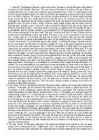
Exposing the Human Condition in Antigone Heroism entails several things; a selfless act, courage, or the accomplishments of bold and daring expeditions. A hero can also mean courage in the face of death. Others may view this type of hero as stupid, or a martyr. Every hero has faults and these faults along with heroic deeds make the man or woman; a hero, heroine. "Antigone" would be considered a hero in the sense of being a martyr. Because of her love for her family Antigone wanted to give her brother a proper burial, and even though he did evil deeds, she respected him. She believed that all of the dead were in a state of equality. When faced with the decision to obey the King or obey her heart, she says on page 23, in lines 86-90: "I will bury him myself./If I die for doing that, good:/I will stay with him, brother;/and my crime will be devotion." This decision, to bury her brother, was very heroic in that even though she knew death was at stake,
· Hobbes leviathan · Locke second treatise of government · Rousseau - social contract · Montesquieu - The Spirit of the Laws · Kant idea for a universal history from a cosmopolitan point of view · Hegel - philosophy of right Key dates 1603 Shakespear's King Lear , Death of the Queen Elizabeth 1. 1618-48 The Thirty Year's War 1649 Execution of Charels 1 of England, Establishment of Oliver Cromwell's Prodecorate 1651 Hobbes' Leviathan(1588-1679) 1660 The Restoration of Charels 2. as king of England 1688 The Glorious Revolution of Willim and Mary in England 1689 John Locke publishes Two Treatises of Goverment 1707 formation of the British Parliament Social Contract philosophy: The reasons for entering a social contract and the responsibilities of the goverment *Hobbes: To preserve one's safety *Locke: To preserve one's safety and property *Rosseau: To preserve one's safety, property and freedom, but to guarantee the latter, the goverment also
Ameerika Kirjandus 30.01.13 Naturalism · France, Emile Zola · Put down his theory in 1879: Le Roman Experimental, attempt to explain the development of human society throuch biological laws · Outlook is deterministic, pessimistic, fatalistic (fate or biology) · Man as an animal-clever than other beasts, still explainable within the framework · Man is not a free agent, is govern by something · Unable to determine his own faith · Hereditary · Naturalists tried to apply in fiction the processes of natural sciences · Writers task is to record facts, systems of behaviour, living conditions, never revealing any natural unbiased (completely natural) · Point of view: amoral-outside the category of morality, neither good or bad · Naturalist find it absurd to blame the wicked. These criminals are doing what nature, environment, their unconscious tells them to do. Naturalists do not judge their characters, they sim
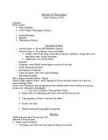
History of Philosophy James Thurlow, Ph.D. 01.02.2012 Books to read · Plato's Republic · G.W.F. Hegel's Philosophy of History 1. Greek philosophy 2. Republic 3. Philosophy of History Ancient Greece - Ancient Greece vs. Persia (300-Herodotus) Salamis - Ancient Greece vs. Troy (Homer-screen writer)Iliad o Achilles- Hero of the heroes (main hero in Greece)- handsome, strong, brave, fast, anger(tema viga), young, bad temper o Agamemnon- son of King Atreus - Olympics - Sculptures- more lifelike, human figures come out of the stone - Greek liked physical beauty - Development of medicine - Greeks are pirates, they steal- high technology - Bad tempered people Men's progress towards freedom. (Hegel) Persia is under emperor Xerxes- slaves, fighting for Xerxes and their country, but it does not mean any
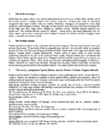
1. Beowulf. The dating of Beowulf is still controversial. The poem is one of the earliest and greatest monuments of the Germanic literatures. The main stories of the poem (the fights of B.) are versions of common folk-tales, but the poet also introduces many incidental stories, some of which belong to the world of ancient Germanic legend. He writes his folk-tales and legends in a web of other events, mainly set in the Baltic Kingdoms. He shows a very rich and leisurely portrayal of this Baltic world, providing many customs like the close relationship between lord and man in the war-band and others. All this encouraged the supposition that the unknown author of the poem was himself a bard of the ancient type portrayed within the poem (a lord's scoop). However, many people propose that the author could be Christian poet, perhaps a monk, versed not only in old native traditions, but also in the culture and literature of the Latin Church, and whose purpose of writin
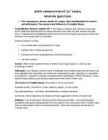
British Literature in the 20th-21st Century REVISION QUESTIONS 1. The Contradictory, diverse, chaotic 20th century. New developments in science and philosophy. The essence and influence of Freudian theory. Contradictory, diverse, chaotic 20th c- simultaneous rejection and invocation of the past. While modernists apotheosized the creative geniuses of the past, they also rejected old poetic forms. Challenge old and established beliefs and more and more people had access to books and education more people went to universities. profound change in morals: · No universal value and perspective on things · Multiple truths, multiple perspectives · Nothing has inherent (kaasasündinud, sisemist) importance · Life lacks purpose Science: Albert Einstein-general theory of relativity had a huge impact on culture as well. Everything is relative. Philosophy: Henri Bergson (French) came to challenge the
Commonplace subjects are described in elevated, heroic style of classical epic. By parody and deliberate misuse of heroic language, emphasises triviality of subject. Moral Essays, Epistle to Augustus, The Epilogue to the Satires, Epistle to Dr Arbuthnot John Dryden: satires good-tempered, smth devastating scorn, has genius for verse rhytm, exceptional expressiveness of language. MacFlecknoe, Absalom and Achitophel, The Medal. Johnson: London, TheVanity of Human Wishes. 23. Augustan reflective and nature poetry (Winchilsea, Thomson, Denham, Dyer, Akenside, Pomfret, Pope) Especially first half of the 18th C. Presented idealized rural idyll as an aid to reflection, philosophical meditation and personal introspection. Influence from Horace (treated themes that are stock for reflections for the ordinary man, delicacy of language and clarity of definition). Augustans took his decorum – a delicate adjustment between language,
patterns to appeal to the broadest cross-section of the public. At the Disney studios, I saw the application of simple story principles, such as making the main character a "fish out of water," that became tests of a story's power to appeal to a mass audience. T h e minds guiding Disney at that time believed that there were proper questions to ask of a story and its characters: Does it have conflict? Does it have a theme? Is it about something that can be expressed as a well-known statement of folk wisdom like "Don't judge a book by its cover" or "Love conquers all"? Does it present the story as a series of broad movements or acts, allowing audiences to orient and pace themselves in the narrative? Does it take viewers someplace they've never been, or make them see familiar places in new ways? D o the characters have relevant back- stories and plausible motivations to make them relatable to the audience? D o they XVII
 annaabi.ee







Kõik kommentaarid