Leidsid 33 sarnast õppematerjali, mis on seotud failiga "Presentation EU institutions". Need materjalid aitavad sul teemat sügavamalt mõista.
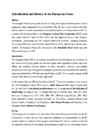
council, location, brussels, founded, legislation, parliament, institutions, years, president, belgium, member, parlament, objective, smooth, development, single, market, term, five, claude, juncker, ansip, states, strasbourg, france, luxembourg, tasks, members, antonio, roles, stagesIntroduction and history of the European Union History The European Union is set up with the aim of ending the frequent and bloody wars between neighbours, which culminated in the Second World War. The idea is that countries who trade with one another become economically interdependent and so more likely avoid conflict.The ancestor of the European Union is the European Coal and Steel Community (ECSC) which was created with the Treaty of Paris (1951) and was signed by France, Italy, Belgium, Netherlands, Luxembourg and West Germany (total of 6 countries). European Economic Community (EEC) was created with the Treaty of Rome (1958), establishing a customs union (tolliliit). The European Union (EU) was created by the Maastricht Treaty which came into effect on November 1st 1993. Introduction The European Union (EU) is an economic and political union.EU policies aim to ensure the free movement of people, goods, services, and capital, enact legislation in justice and home
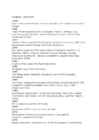
European Union Exam 1949 France, UK and the Benelux countries decide to set in place a Council of Europe. 1951 Treaty of Paris signed by the Six (Belgium, France, Germany, Italy, Luxembourg, Netherlands), establishing the European Coal and Steel Community (ECSC). 1957 Treaties of Rome establish the European Economic Community (EEC) and the European Atomic Energy Community (Euratom). 1959 July, seven countries of the Organisation for European Economic Co- operation (OEEC) – Austria, Denmark, Norway, Portugal, Sweden, Switzerland and the UK – decide to establish a European Free Trade
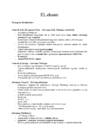
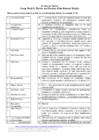
EL eksam European Institutions Council of the European Union – Euroopa Liidu Nõukogu (ministrid) - Legislative ja budgetary - Peab läbirääkimisi õigusaktide üle ja võtab need vastu (väga oluline otsustaja) otsustajaks vaja majorityt - Koordineerib liikmesriikide poliitikaid (majandus, haridus, kultuur, tööhõive jne) - Arendab EL ühist välis- ja julgeolekupoliitikat - Sõlmib rahvusvahelisi lepinguid (annab komisjonile volitused pidada EL nimel läbirääkimisi)
TALLINN UNIVERSITY The Law School Law The European Union Law The EU institutions Lecturer: Matti Kauppi Student: Viktoria Gratšjova Tallinn, 2014 The institutions of the European Union form a complex and unique polity and, in determining whether or not this structure and the law making powers granted to each respective institution are inherently undemocratic, it is vital to define what is meant by the term ‘democratic’. In his Gettysburg address Abraham Lincoln referred to a government which was ‘of the people, by the people, for the people’and it is by this criterion that democracy is often judged. These
Kolga-Jaani 2010 Site map What does European Union?...........................................................3 The main aurthorities....................................................................4 Information...............................................................................5 What does European Union? European integratsion process began in 1951, when concluded European Coal and Steel Community founding agreement between Belgium, Netherland, Luxenbourg, Italy, France and West Germany. It was to prevent armed conflicts between the Member States. EU is economic and political partnership between 27 democratic European countries (Austria, Belgium, Bulgaria, Cyprus, the Czech Republic, Denmark, Estonia, Finland, France, Germany, Greece, Hungary, Ireland, Italy, Latvia, Lithuania, Luxembourg, Malta, the Netherlands, Poland, Portugal, Romania, Slovakia, Slovenia, Spain, Sweden, and the United Kingdom) .
The European Union (EU) is an economic and political union where are 27 member states drom European continent. The EU operates through a system of independent institutions and decisions are made by the member countries. EUs population is of over 500 million inhabitants which is 7.3% of the world population, there are 23 different languages and for now 17 countries are using EUs common currency Euro. EU was founded after World War II, when Europe was struggeling in social and political devastations. In 1948 a congress in Hague was held to discuss ideas about the development of European political co-operation. There were many important political figures such as Konrad Adenauer and Winston Churchill. On 9th May in 1950 French Minister of Foreign Affairs proposed that France and the Federal Republic of Germany should combine their coal and steel resources and let other European countries join also
The Membership of World Organisations Merilin Tamme Xa Tallinna Järveotsa Gymnasium 2008 The schedule · 04.04.1949 establishment of NATO. · 1951 Supreme Headquarters Allied Power Europe (SHAPE) was created near Paris in France. Later, SHAPE was relocated to Mons in Belgium. · 1952 Greece and Turkey join NATO. · 1955 Western Germany joins NATO. · 1982 Spain joins NATO. · 1991 Rome summit. Estonia is one of the founding members of the NACC. · January 1994 Brussels summit. Estonia joins PFP on 3 February. · March 1995 Estonia submits the first Individual Partnership for Peace (IPP) to NATO. It contains priority areas of cooperation with NATO and future cooperation events, altogether in 23 subject fields.
Archbishop In Christianity, an archbishop is a bishop of higher rank or office. Like popes, patriarchs, metropolitans, cardinal bishops, diocesan bishops, and suffragan bishops, archbishops are in the highest of the three traditional orders of bishops, priests, also called presbyters, and deacons. An archbishop may be granted the title, or ordained as chief pastor of a metropolitan see or another episcopal see to which the title of archbishop is attached. Bishop is an ordained or consecrated member of the Christian clergy who is generally entrusted with a position of authority and oversight. Some Protestant churches including the Lutheran and Methodist churches have bishops serving similar functions as well, though not always understood to be within apostolic succession in the same way. One who has been ordained deacon, priest, and then bishop is understood to hold the fullness of the (ministerial)
List and explain the main scope. Articles 26 and 28-37 of the Treaty on the Functioning of the European Union (TFEU). Prohibition of charges having an effect equivalent to that of customs duties: Articles 28(1) and 30 TFEU, or to describe it a bit more easier, The Court of Justice of the European Union had found that any type of extra charges or however it may be called or applied to a product produced and being sold in any Member State should not be charged with any fees or any extras that in the end will have the same effect on a product price as a custom duty. Examples: Cases 2/62 and 3/62 of 14 December 1962, and Case 232/78 of 25 September 19791 Prohibition of measures having an effect equivalent to quantitative restrictions: Articles 34 and 35 TFEU Provided option gives manufacturers and distributers more freedom for a single product to move
EU Internal Market Law Mid-term online evaluation assignment for Distance Learning Students The Assignment: Hypothetical Case In the Member State A several NGOs, uniting parents concerned with safety of children and young adults, ordered a study of dog attacks on people (and especially children) resulting in deaths or maiming. The aim of the study was to identify, if possible, the dog breeds of potentially enhanced danger for people. The study’s results showed that pit bulls and their close mixes as well as Rottweilers and their close mixes were jointly responsible for over 70% of attacks. The authors of the study explained
Tallinn University TURKEY AND THE EUROPEAN UNION Tallinn 2013 INTRODUCTION The accession negotiations and the forthcoming Turkish accession present challenges to both Turkey and the EU. It is widely accepted that Turkey's accession would be different from previous enlargements because of the combined impact of Turkey's population, size, geographical location, economic, security and military potential. The case of Turkey will be different and more challenging from previous accessions for a number of reasons, some of them are presented below. Turkey is a country with a large population and geographic area. With a population of 74 million today, it is projected that it could be the largest member state at the time of accession. As a Moslem secular country, Turkey will also add a new demographic and religious dimension to the EU
benefit) 2. Developing democracy, especialliy in eastern Partnership Countries- (definately mutual benefit). 3. The trade and wider `deep and comprehensive free trade area (DCFTA) policy (mutal benefit and business benefit). 3.Is the purpose of ENP to prepare EU Eastern Partners for the EU membership? Should it be? Bring arguments! For which (if any) of the EaP countries do you see as perspective EU member states? The European Neighbourhood Policy (ENP) is not about membership of the EU. It is a response to long-standing requests from many of these countries for closer relations, founded on partnership and joint ownership. If an accession perspective were to be offered at some point in the future to any of the countries covered by the ENP, this would be a separate process. The main purpose is to develop free trading between EU and Eastern Partnership
The European Union (EU) is an economic and political partnership between 27 democratic European countries. EU population is almost a half milliard European union stands for caring and fair community. All EU members are devoted to peace, democracy, human rights respecting and working together to spread these values all the world. History The beginning of EU might consider the year 1951, when European Coal and Steel Community (ECSC) was constitute. Six countries joined with it for peace: Belgium, Netherlands, Luxembourg, Italy, France and Germany. With that move, coal and steel industry were put under one organisation, so war was almost impossible between these six country. Cooperation in different areas improved, when in 25. March 1957 Treaties of Rom , European Economic Community and European Atomic Energy Community memorandum of association were signed. These were sundry organisations. But they had one name- European Community
Milestones in Estonian History The Estonians are a Finno-Ugric people who came from the area near the Urals and the Volga and Oka rivers. They migrated westward to the Baltic shores some 5, 000 years ago. In the ninth century A.D. Viking ships invaded Estonia and the country became a vital link in the sea-trade between East and West. By the 12th century, the Arabian geographer al-Idrisi had placed the city on his maps. In the 13th century, Tallinn joined the Hanseatic League, the union of European commercial towns that stretched from London to Novgorod. Pärnu, Viljandi and Tartu were also members. Estonia became a vital link in the sea-trade between East and West.
*Estonians conquered by the crusaders 1208 *Reformation 16th century establishments of new school, Estonians first book appeared in 1525 *Tartu University 1632 founded by King Gustavus II Adolphus, classical university, member of the Coimbra group *Abolition of serfdom 1816 *Song festival 1869 in Tartu, an organiser was J.V.Jannsen, 822 singers, men only *Declaration of independence 24th February 1918 *War of independence 1918-1920 during the Russian Civil War, resulted in a victory for Estonia *Deportation 1949 *Estonia becomes independent 20th August 1991 *Joining EU 1st May 2004
Terms Expressions / collocations (nt obey/abide by the law) Explaining AWOL absence without a leave Legal English can be divided into 3 levels. We learn the first one, which is needed for the other two! You have to know the vocabulary etc. Second level has to do with legal contracts... The third level both 1 and 2 and explaining... We learn the vocabulary + explaining. Process of law-making draft law/bill (seaduseelnõu) is developed draft is sent to the parliament readings(amendments made to the law (seadusemuudatused)pass/ adopt the lawpass on to the presidentproclame (väljakuulutama) or veto or sent to supreme court (riigikohus) (may declare it un-constitutional)it has to be published in the state gazette (riigiteataja) Vald rural municipality Kihelkond - parish Come/enter into force - jõustuma Legislative bodys seadusandlikud organid Curia.europa.eu Eur-lex.europa.eu c-200/02 Zhu Chen
Single European Act: harmonisation of health and safety conditions at work; possibility for social partners at European level to negotiate collective agreements + Community policy for economic and social cohesion. Maastricht treaty: promotion of high level of employment and social protection was officially introduced as one of tasks conferred to the European Community. Amsterdam treaty: encourages cooperation between Member states in order to combat social exclusion. European Council – Lisbon: aimed to make the EU the most competitive economy in the world and achieving full employment by 2010. Treaty of Nice: adopted European social policy agenda up to 2005, converting the political commitments made at Lisbon into concrete action. Treaty of Lisbon: emphasizes EU’s social objectives, among which full employment (social employment policy), solidarity between generations and protection of the rights of the child are mentioned + Charter of Fundamental
outlook on the future. Population of Western Ukraine largely supports politics paying EU card (Yusteshenko, Tymoshenko), while industrial Eastern regions support Yanukovych as Politian closely associated with better relation / integration with Russia. 1.1.2. Post-Independent Ukraine. Economy and politics 1990-s When Ukraine became independent in 1991, there were expectations that it would in the near future become a wealthy free market democracy and a full member of the European and Euro-Atlantic communities. Ukraine never fulfilled those expectations. Instead, it is seen as an underachiever, sometimes as a sick man of Europe, and perhaps even as a potentially failed state thanks to its geopolitical situation, historical burdens, and the mistakes made in institutional development and policy. Economically, Ukraine has grown along with the region. As such, growth rates have not been
1. The Queen’s official title. Elizabeth the Second, by the Grace of God, of the United Kingdom of Great Britain and Northern Ireland and of Her other Realms and Territories Queen, Head of the Commonwealth, Defender of the Faith. 2. The Queen’s working day. Starts after breakfast. Reads the newspapers which are prepared by the Press Secretary, and a report on the previous day’s proceedings in the Parliament and the letters she receives. Also phone calls. Once a month she attends the Privy Council in order to give Royal Assent to various items of government legislation. Discusses domestic matters with the Master of the Household. Towards the end of the day, there is always another pile of official papers and reports waiting to be read or acted upon. The business on constitutional monarchy never ends. 3. Who is the present heir to the throne
with an average elevation of about 50 metres above sea level. South-eastern and eastern parts of Estonia are higher than the western parts. The relief of the present-day landscape was shaped during the Ice Age. Ice sheet has carried large boulders and limestone blocks here, not to mention that the hilly terrain in Estonia was also shaped by the continental ice and the melting water. The land is rising 25 cm every one hundred years. In folklore, many features of the relief are explained by the activities of giants such as the legendary national hero Kalevipoeg. The Haanja and Otepää Uplands are particularly rich in Hills. It is here that You find Big Egg Hill, the highest point in the Baltic states with 318 metres above sea level. 4. Land regions The northern coast features a steep limestone bank, the Baltic glint, which is one of the world's most important denudations of Ordovician sedimentary rocks. The
Sixty-four species of mammals have been recorded in Estonia, three of them have been introduced: the racoon dog, the American mink and the muskrat. A couple of species have been re-introduced The European beaver, who was hunted to extinction by the end of the 19th century. A vital population of them now exists in Estonia once again. Another re- introduced species is the red deer. An attempt has been made in Estonia in recent years to disperse the population of wolves, encouraging their spread in areas where their colonies have disappeared, and restricting their numbers in other places where it is too high. About 350 bird species have been recorded in Estonia. More than 200 of them breed in Estonia. Due to the vast preserved natural landscapes, large raptorial birds, such as the golden eagle and eagle owl have made Estonia their home. It is the small islets, however, that can really be called bird paradise
it got its first permanent building the Kadriorg Palace, built in the 18th century. In 1929 the palace was expropriated from the Art Museum in order to rebuild it as the residence of the President of Estonia. The Art Museum of Estonia was housed in several different temporary spaces, until it moved back to the palace in 1946. In September, 1991 the Kadriorg Palace was closed, because it had totally deteriorated by then. At the end of the year the Supreme Council of the Republic of Estonia decided to guarantee the construction of a new building for the Art Museum of Estonia in Kadriorg. Untill then the Knighthood House at Toompea Hill served as the temporary main building of the Art Museum of Estonia. The exhibition there was opened on April 1, 1993. Art Museum of Estonia premanently closed down the exhibitions in that building in October 2005. At the end of the 1970s, in the 1980s the first branches of the Art Museum of Estonia were founded
special care home eriline hooldekodu 115. non-citizen mittekodanik 116. receive a petition saama kaebuse 117. administrative agency haldusorgan/riigiasutus 118. administrative official haldusametnik 119. to perform procedural acts teostama protseduurilisi toiminguid 120. in cooperation with the petitioner koostöös kaebajaga 3 121. the accused süüdistatav 122. the complaint was founded or not kaebus oli põhjendatud või mitte 123. to supervise the legality of the activities of state officials kontrollida/jälgida riigiametnike tegevuse legaalsust 124. cases of maladministration halduse omavoli juhtumid 125. ignorance of good administration practice and customs hea halduse praktika ja tavade eiramine 126. fundamental rights põhiõigused 127. to reinstate the situation endise olukorra taastamine 128. to compensate the damages kahjusid hüvitama 129
Gaelic Alba. The use of the words Scots and Scotland to encompass all of what is now Scotland became common in the Late Middle Ages. History Repeated glaciations, which covered the entire land-mass of modern Scotland, have destroyed any traces of human habitation that may have existed before the Mesolithic period. It is believed that the first post-glacial groups of hunter-gatherers arrived in Scotland around 12,800 years ago, as the ice sheet retreated after the last glaciation. Groups of settlers began building the first known permanent houses on Scottish soil around 9,500 years ago, and the first villages around 6,000 years ago. The well-preserved village of Skara Brae on the Mainland of Orkney dates from this period. Neolithic habitation, burial and ritual sites are particularly common and well-preserved in the Northern Isles and Western Isles, where lack of trees led to most structures
do belong to a “goods” category so as it is described in CJEU case law that a good is a product which can be valued in money and which is capable of forming the subject of commercial transactions. Therefore PB&R company and its business is selling dogs, or shall I say goods not just on a local fields, but the movement of goods is linked to abroad EU countries by making a profit of it I shall conclude that it involves a “movement of goods within the EU Member States” (Articles 26 and 37). 2. Is there a restriction of trade in goods? a. Can we name an animal, or to be more exact a dog as a “good” – yes, in accordance of Article 13 TFEU: “In formulating and implementing the Union's agriculture, fisheries, transport, internal market, research and technological development and space policies, the Union and the Member
Scholars of comparative law often overlooked family law as an important and distinctive site for the contestation of norms and values, perhaps because they viewed family law as too political for the technical inquiry carried out by comparativists. Other scholars characterized the family as a unique place, the opposite of the market, where traditional rather than modern discourses are at play and where moral and religious values, often in tension with secular visions, shape legal institutions. Family law scholars tended to focus on single legal regimes, rarely opening their inquiry to comparative methods. 3.Actors in CL The modern founding figure of comparative and anthropological jurisprudence was Sir Henry Maine, a British jurist and legal historian. In his 1861 work Ancient Law: Its Connection with the Early History of Society, and Its Relation to Modern Ideas, he set out his views on the development
potential has also strengthen its strategic bargaining position (White 2011: 659). As a tool for the administration, the party may not have a noteworthy role in policy-making, nor does it yet fill the requirements in terms of chronological dominance, but it can be seen as a force for structuring the public policy agenda. Structuring Political Competition In July 2000, in his first ,,state of the nation" speech at the annual opening of Parliament, president Putin turned to the legislature to express his dissatisfaction with the state of country's party system and made clear his intention to improve this. A year later, at one of his press conferences Putin declared: ,,If there are de facto two-, three-, and four-party systems in developed, civilized countries, why do there have to be 350 or 5,000 parties in Russia? This is a kind of Bacchanalia, not democracy"(Rose et al. 2011: 46). Putin's main aim
in 1139, claiming to be the oldest European nation-state. In the 15th and 16th centuries, as the result of pioneering the Age of Discovery, Portugal expanded western influence and established the first global empire, becoming one of the world's major economic, political and military powers. In addition, the Portuguese Empire was the longest-lived of the modern European colonial empires, spanning almost 600 years, from the capture of Ceuta in 1415 to the handover of Macau in 1999 and grant of sovereignty to East Timor in 2002. The empire spread throughout a vast number of territories that are now part of 53 different sovereign states. However, the country's international status was greatly reduced during the 19th century, especially following the Independence of Brazil, its largest colony. After the 1910 revolution deposed the monarchy, the democratic but unstable Portuguese First Republic was
British Parliament Structure and Functioning of the British Parliament today Britain is a parliamentary monarchy . The British Parliament is a bicameral parliament , that is to say that it is made up of two chambers, or two "Houses"; above the two Houses, but in an essentially formal role , there is the Sovereign - king or queen - also known as "the crown." Role of the Sovereign The British monarch has all authority, but no power. The Sovereign appoints the Prime Minister, and every year opens the sessions of parliament, in a historical and ritual ceremony called the State Opening of Parliament . Historically, this ceremony used to take place in the
Investor's Handbook A Legal Guide to Business in Georgia · Start Up · Privatization · Labor Legislation February 2011 1st Edition 1 CYAN MAGENTA YELLOW BLACK 1 This brochure is a publication by the Georgian National Investment Agency (GNIA) and was prepared by Georgian law firm Mgaloblishvili, Kipiani, Dzidziguri (MKD). The Brochure is intended to be a general guidance on start up, privatization and labor relations. It is thus not
The army established Roman rule in the south and SW of the country. The Romans started to introduce their laws to a new province of the Roman Empire and started to build good roads. Officials were appointed (governors, procurators to collect taxes, look after the estates and mines and se that the gold, silver, iron and lead were exported back to Rome). Introduced schools,a new language Latin, large farms (villas), baths. In AD 410 they had to leave . roman occupation lasted nearly 400 years. They left behind very little. Roman province of Britannia covered most of present-day England and Wales. 4. Latin influence on English *The influence of Latin is noticeable also in the names of European cities: the Latin noun colonia (settlement, colony) may be found in numerous place-names: Lincoln, Colchester, Cologne ; from Latin word castrum (military camp) were derived English affixes -chester and -castle:
33,939 sq km is land surface. Country's capital and largest city is Amsterdam. Population is about 16 million. 3 Chapter 1 The Netherlands 1.1 Mainly about the Netherlands Netherlands is also known unofficially as Holland. Netherlands is bordered on the north and west by the North Sea, on the east by Germany and on the south by Belgium. With Belgium and Luxembourg, the Netherlands forms the Low, or Benelux, Countries. The Netherlands Antilles and Aruba, islands in the Caribbean, are part of the Netherlands. Country's capital and largest city is Amsterdam (see also Appendix 1). National holiday is Queen's Day on 30 th April. And the mother tongue is Dutch. (5) The Kingdom of the Netherlands has three parts and two countries in the Caribbean, the Netherlands Antilles and Aruba. With an area of 41,528 kilometers and a population of 16
Most often, this together with the high rate of return on invested capital is a crucial factor in the decision to enter the Russian market. One possible way to full implementation of business activities on the territory of the Russian Federation - is the creation of a legal entity. An enterprise with foreign capital - is created on the territory of the Russian business- organization whose founders are foreign citizens or organizations. Russian legislation provides for the establishment of enterprises in Russia as a 100-percent foreign ownership and joint - with the participation of Russian and foreign shareholders. Established on the territory of the Russian Federation entity with absolute or partial foreign ownership will operate within the framework of the Russian legislation. That is, the laws of a foreign investor is limited to a choice of the legal form of the enterprise, defined deadlines
 annaabi.ee