Leidsid 33 sarnast õppematerjali, mis on seotud failiga "Past Progressive (Past Continuous) ". Need materjalid aitavad sul teemat sügavamalt mõista.
action, final, puts, emphasis, course, exceptions, come, agree, vowel, consonant, doubled, travel, while, continuous, positive, negative, adding, coming, dropped, changed, british, english, travelling, lying, playing, football, actions, happening, same, dinner, dishes, going, having, breakfast, phone, suddenly, rang, signal..and if either the present continuous or you don't hurry up you're going to the 'going to' future. However, miss it!") when we use the present continuous, there is more of a suggestion that an arrangement has already been made. •I'm going to see him./I'm seeing him. •I'm going to do it./I'm doing it. FUTURE CONTINUOUS WILL BE + ING (WILL BE GOING) The future continuous refers to an unfinished action or event that will be in progress at a time later than now. It is used: 1)To project ourselves into the future and see something happening: This time next week I will be sun-bathing in Bali. 2)To refer to actions/events that will happen in the normal course of events: I'll be seeing Jim at the conference next week. 3)In the interrogative form, especially with 'you', to distinguish between a simple request for information and an invitation: Will you be coming to the party tonight
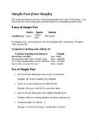
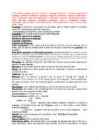
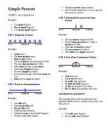
Simple Past (Past Simple) The simple past expresses an action in the past taking place once, never, several times. It can also be used for actions taking place one after another or in the middle of another action. Form of Simple Past Positive Negative Question I did not no differences I spoke. Did I speak? speak. For irregular verbs, use the past form (see list of irregular verbs, 2nd column). For regular verbs, just add "ed". Exceptions in Spelling when Adding `ed' Exceptions in spelling when adding ed Example after a final e only add d love loved
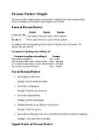
Present Perfect Simple The present perfect simple expresses an action that is still going on or that stopped recently, but has an influence on the present. It puts emphasis on the result. Form of Present Perfect Positive Negative Question I / you / we / the I have spoken. I have not spoken. Have I spoken? y he / she / it He has spoken. He has not spoken. Has he spoken? For irregular verbs, use the participle form (see list of irregular verbs, 3rd column). For regular verbs, just add "ed". Exceptions in Spelling when Adding `ed' Exceptions in spelling when adding ed Example
, Look! Rules · in general (regularly, often, never) · right now ex. Colin plays football every Tuesday. ex. Look! Colin is playing football now. · present actions happening one after another · also for several actions happening at the same ex. First Colin plays football, then he watches TV. time · action set by a timetable or schedule ex. Colin is playing football and Anne is watching. · arrangement for the near future ex. The film starts at 8 pm. ex. I am going to the cinema tonight. · daily routine · only for a limited period of time (does not ex. Bob works in a restaurant
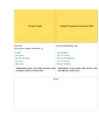
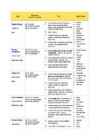
tense Affirmative/Negative/Question Use Signal Words always, every ..., action in the present Simple Present A: He speaks. never, normally, N: He does not speak. taking place once, never or often, seldom, Q: Does he speak? several times sometimes, usually if sentences type I
Negative I/he/she/it was not /wasn’t you/we/they were not /weren’t Question Was I/he/she/it? Were you/we/they? 2 The spelling of endings in the Past Simple Regular verbs have -ed in the Past Simple tense. look looked call called 1. If the verb ends in -e, we just add -d. hope hoped save saved 2. When a verb ends in a consonant + -y, the -y changes into -ied. hurry hurried copy copied 3. If a one-syllable verb ends with one vowel and one consonant, we double the consonant. beg begged plan planned We also double the consonant in words of more than one syllable, if the last syllable is stressed. permit permitted prefer preferred In British English l is usually doubled, even if the syllable is unstressed.
The population of the world is increasing fast. 3. Arrangements for the future. I am flying to Toronto next Friday. Negative form: We aren't (are not) working at the moment. I am not enjoying this show very much. Question form: Are they playing football in the park right now?Why is she laughing? Signal words: at the moment, now, right now, Listen!, Look! etc. PRESENT PERFECT (täisminevik) Form: have/has + past participle (3. põhivorm) Use: 1. An action in the past, where the fact, not the time, is important. I have been to England four times. 2. An action in the past that has a result now. She has lost her keys. 3. Something that began in the past and still continues now. He has been in hospital since Monday. Negative form: We haven't (have not) done our homework yet. He hasn't (has not) visited his granny since August. Question form: Have we met before
english-4u.de/plural_ex6. htm Singular + s parrot – parrots apple – apples girl – girls Words ending with y if a consonant is written before. ----> ies lolly – lollies story – stories strawberry – strawberries but: boy – boys toy - toys bay - bays Words ending with ch, x, s, sh, o ----> es
3 TALLEGG 11 MIZDE 4 VESITERM 12 LADA 5 STOW 13 SCHWUNG 6 KALEV 14 MAIASMOKK 7 YAMAHA 15 ISKU 8 ESTRAVEL 2 Affirmative tense Use Signal Words Negative/Questions · action in the present taking always, Present Simple A: He speaks. place once, never or several every ..., N: He does not speak. normally, often, Q: Does he speak? times seldom, · facts sometimes,
It gives you an idea of what grammar is about. Read and remember it. Every name is called a noun, Pronoun As field and fountain, street and town. Noun In place of noun the pronoun stands, As he and she can clap their hands. The adjective describes a thing, As magic wand or bridal ring. Adjective Most verbs mean action, something done, Verb To read and write, to jump and run. How things are done the adverbs tell, As quickly, slowly, badly, well. ition Adverb Prepos The preposition shows relation, As in the street or at the station.
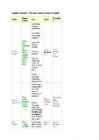
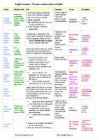
English Grammar - The most common tenses in English Signal Example Tense Use Form words s something happens repeatedly how often something happens every one action day follows sometim another es I work always infinitive Present things in he/she/it he works often Simple general + s I go usually he goes seldom
The spelling of endings in the Present Simple In the third person singular (he/she/it), a present simple verb ends in -s. I know he knows I work she works 1 After s, sh, ch and x we add -es. I pass it passes I wash she washes I catch he catches I mix he mixes 2 Some verbs ending in o have -es. I go he goes I do she does 3 When a verb ends in a consonant + y, the y changes to -ies. I hurry he hurries I copy she copies 2 Whe do not change y after a vowel. I stay he stays I enjoy he enjoys When to use the Present Simple The Present simple generally refers to: · Facts that are always true Water boils at 100 degrees Celsius. · Habits and repeated actions British people drink a lot of tea.
affirmative negative interrogative every day something happens repeatedly sometimes how often something happens always I work. I don't work. Do I work? one action follows another often Infinitive He works. He doesn't work. Does he work? Simple Present things in general usually he/she/it + -s I go. I don't go. Do I go? after the following verbs (to love, seldom to hate, to think, etc
Anglo Frisian » English 2. How to classify words into different word classes? (definition is that enough?, morphology, distribution and function tests); Grammatical categories for nominals, verbs, adjectives. "A set of words like dog, child, cat, man, bird where the individual words are mutually substitutable is known as a word class..." Definitions a) A noun is the name of a person, place or thing. b) A verb expresses an action, process or state. c) An adjective is a describing word which modifies a noun. "Although such definitions will identify many members of a word class, linguists generally agree that they need to be supplemented by formal tests. e.g. sincerity Sincerity can be frightening misery Lee is misery itself. Such miseries are uncommon Distribution: - a distribution test Kim is an engine driver
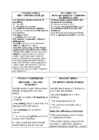
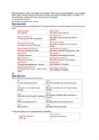
Affirmative tense Use Signal Words /Negative/Question · always · action in the present taking place Simple Present A: He speaks. · every ... once, never or several times N: He does not speak. tegevus, mis toimub ühe korra, mitte · never Lihtolevik Q: Does he speak? · normally
etc, at night/the weekend, on Fridays etc. Present Continuous · Actions taking place at or arount the moment of speaking (The kids are watching TV..) · Fixed arrangements in the near future (I'm going to the dentist tomorrow) · Currently changing ang developing situations (The number of burgularies is increasing) · With ,,Always" to express anger or irritation at a repeated action (You're always forgetting..) TIME EXPRESSIONS USED WITH PRESENT CONTINUOUS: now, at the moment, at present, these days, nowadays, still, today, tonight etc. Present Perfect · Action happened at an unstated time in the past. Emphasis on the action, time is unimportant or unknown. (I have washed the car) · Action started in the past and continues up to the present, especially with stative verbs (I have known her for six years)
Examples: · I lived in Brazil for two years. · You called Debbie. · Shauna studied Japanese for five years. · Did you call Debbie? · They sat at the beach all day. · You did not call Debbie. · They did not stay at the party the entire time. USE 1 Completed Action in the Past · We talked on the phone for thirty minutes. · A: How long did you wait for them? B: We waited for one hour. USE 4 Habits in the Past Examples: · I saw a movie yesterday. · I didn't see a play yesterday. · Last year, I traveled to Japan. Examples:
(the Raj) · 1803 Louisiana, was bought from the French. · 1890 Florida was bought from Spain. · 1835 English educational system was introduced in India · Hindi, the official language, has influenced English spoken in India and it now has a distinctive national character. · Late 18th century more English influence was seen in Asia and in the South Pacific. · Beginning of 19th century - English had spread to virtually every corner of the world. In the course of the 19 and 20 centuries, the number of speakers only grew. The Inner / Outer / Expanding Circle Expanding: English as a foreign language Outer: English as a 2nd language Nigeria, Tanzania
Subject + HAS/HAVE + BEEN + Verb+ING (continuous form) I have been working as a teacher for 30 years. What have you been doing? Use the Present Perfect Continuous: Continuation in the Present: to show that something started in the past and continues in the present. Past actions recently stopped: to talk about actions that began in the past and have recently stopped. Temporary Actions and Situations: when an action or situation is temporary. Positive Sentences: Subject HAVE/HAS BEEN Verb (continuous form) e.g. he, she, a dog, etc. + + + e.g. walking, going, taking, etc Questions: HAVE/HAS Subject BEEN Verb (continuous form) + e.g. he, she, a dog, etc
The play had started when I arrived. NO CHANGE POSSIBLE past perfect continuous past perfect continuous I'd already been living in London for five NO CHANGE POSSIBLE years. Other verb forms Other verb forms also sometimes change: will would I'll come and see you soon. He said he would come and see me soon. can could I can swim under water for two He said he could swim under water for two minutes. minutes. had to must He said that all tickets had to be bought in All tickets must be bought in advance.
Nouns: sin, fool, death, tragedy Verbs: destroy, offend, steal, ploth (sepitsema) Positive notions Adj: polite, refine, pure, noble, manly Nouns: virtue, beauty, love, bliss Verbs: worship, save, protect 2 This connotation depends on the thing the word stands by. IC may also depend on the structure of the words. Such words usually contain negative affixes, e.g abnormal, heartless, unpopular, illegal, injustice. 3 Inherent connotation in synonymic sets that occupy ,,The final places". e.g big vs tremendeous (emotional difference), interesting vs amazing, good vs marvellous Such words are emotionally coloured/ charged. The expressive use of language depends on the ability to choose the proper word among those that mean the same thing. The scholar R.M.Eastman illustrates this point : ,,You might speak of a fragrance of a certain perfume if you liked it, of it's reek (hais) if you didn't or simply odor if you didn't care." Phonesthemes A type of inherent connotation
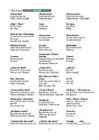
Yo (no lo) se. ehn-tyen-deh oo-sted / ehn-tyen- noh ehn-tyen-doh yoh noh loh seh dehs I (don't) understand. I (don't) know. Do you understand? (formal / informal) ¿Puede ayudarme? Claro / Claro que sí ¿Cómo? pweh-deh ah-yoo-dar-meh klah-roh / klah-roh keh see koh-moh Can you help me? (formal) Sure / Of course What? Pardon me? ¿Dónde está / Dónde están... ? Aquí / Ahí Hay / Había... dohn-deh eh-stah / dohn-deh eh- ah-kee / ah-ee eye / ah-bee-ah stahn Here / There There is / are... / There was / were... Where is ... / Where are ... ? ¿Cómo se dice ____ en español? ¿Qué es esto
By the time I got to the station, the train had left. Compare this with: The train left five minutes before I got to the station. In this example, the sequence of events is made clear by before. The Past Perfect is not used simply to describe an event in the distant past. There must be another past event, less far away in the past, with which it contrasts. When the company went bankrupt, it had lost over a million pounds. The Past Perfect is used to make clear that one action in the past happened before another action in the past. When we arrived home, Anna had gone to bed. George didn’t want to come to the cinema with us because he had already seen the film twice. It was my first time in an airplane. I was very nervous because I hadn’t flown before. 2 Past Perfect Continuous (Progressive) The Past Perfect Continuous is had been + an -ing-form.
same for a long time: Like; dislike; hate; prefer; want; believe; know; belong to; need; seem; feel Do you like music? NOT Are you liking music? I hate horror films. NOT I'm hating horror films. 2. Sometimes these verbs have two meanings and we can use the continuous form for one meaning. My teacher feels I should have more speaking practice Poor Sam. He's feeling awful. He's got a headache. What do you think of our new course book? You look worried. What are you thinking about? I see what you mean. Sorry. I can't meet you tonight. I'm seeing a friend of mine. 3. Some verbs which are connected with our senses (sight, taste, hearing, etc.) are not normally used in the continuous: Smell; hear; taste; sound; see. Does this cheese smell bad to you? NOT Is this cheese smelling bad to you? The past- narrative tenses Past simple We use the past simple: 1
anymore. In this case we can use adverbs of frequency month/two years/three years ago, in 1964, etc. Past Was/were+I-ing 1. actions which was in progress at a stated time in the past. We don't While, when, as I was doing my Countinuous know when the action started or finished homework when 2. past action which was in progress when another action interrupted somebody knocked on it. my door. 3
though the general tendency is towards more regularity/iconicity so the number of suppletive forms has decreased.In the text: goon to go wenden - to turn Gan was suppletive in Old English, past form: eode.Eode was supplanted by went (past form of wenden) at the end of the Middle English period.To wend has survived in Modern English in phrases such as to wend one's way, we wended homewards (ironic usage). Thus: suppletivity- suppletion different parts of one and the same paradigm come from what were originally different paradigms (different words with close meanings or words in different but close dialects).Suppletion embraces verbs, adjectives, nouns. Be was/were been (Old English beon/wesan) (am, art, is, are); in Old English some suppletive forms were used parallel to one another) Good better best Bad worse worst Much more most Little less least Estonian: hea parem (cf "paras" fitting, in Finnish "the best" - metonymical link),
well might must must not need needn't ought to shall shan't should will won't would wouldn't Can and be able to: · Can you play the piano? · I'm not able to come to the game on Friday. Must and have to: · The tennis match must be over by now. (I'm sure it is). · I have to get up early tomorrow to catch the train to the office. 9. The passive voice: The Passive uses the SUBJECT + TO BE + PAST PARTICIPLE Subject verb `to be' past participle Simple present: The house is cleaned every day.
Present perfect you have walked. You have been walking. I have run. I have been running. Past Perfect You had walked. You had been walking. I had run. I had been running. Future Perfect You will have walked You will have been walking. I will have run. I will have been running. The Simple Present Tense Expresses a habit or often repeated action. Adverbs of frequency such as, often, seldom, sometimes, never, etc. are used with this tense. She goes to work everyday. They always eat lunch together. On your handout, write one sentence that reflects SIMPLE PRESENT: something you do often, sometimes, never, seldom The Simple Present Tense This tense also expresses general truths or facts that are timeless. Snow falls in the December in Minnesota.
(NOT This needs to be thought some more.) 6. Don't use a present tense after It's time. It's time you went home. (NOT It's time you go home.) It's time we invited Bill and Sonia. (NOT It's time we invite Bill and Sonia.) 7. Use was/were born to give dates of birth. I was born in 1975. (NOT I am born in 1975.) Shakespeare was born in 1564. 8. Police is a plural noun. The police are looking for him. (NOT The police is looking for him.) I called the police, but they were too busy to come. 9. Don't use the to talk about things in general. Books are expensive. (NOT The books are expensive.) I love music. (NOT I love the music.) 10. Use had better, not have better. I think you'd better see the doctor. (NOT I think you have better see the doctor.) We'd better ask John to help us. 11. Use the present progressive am playing, is raining etc to talk about things that are continuing at the time of speaking. I'm playing very badly today. (NOT I play very badly today.) Look
Ref your phone call about the maintanance of field vehicles. As I said on the phone, in the past couple of months I've noticed that the standard of service which this company provides has got worse and worse and that this has caused us lots of difficult problems. Our own maintanance people have done some checks of their own recently and have found that AMC's works have really gone down. We had two trucks doing nothing since five days because the Autocheck people didn't come out when we called them though it says in their contract that they'll get here inside 24 hrs. and also twice trucks have break down inside of 3 days of Autocheck servicing them. These are some of the examples of the problems we've been having though before this the work they did on our vehicles was always quite OK. We've made lots of compleints to the Autocheck Manager about the work Autocheck
Loan words (Old Norse, Old French). Dual pronouns. Determiners - no separate definite article. Strong and weak verbs. Word order relatively free with tendencies towards SVO. SVO, SOV, VSO most common. Adposition and podposition were both possible (eesliide ja tagaliide). About syntax: clauses were joined much simpler than nowadays, using and, then etc. Because of case syncretion the word order in a sentence became much more important to be able to tell the difference between words. FIRST CONSONANT SHIFT (GRIMM'S LAW) Grimm's Law (also known as the First Germanic Sound Shift or Rask's rule) is a set of statements named after Jakob Grimm describing the inherited Proto-Indo-European (PIE) stop consonants as they developed in Proto-Germanic (the common ancestor of the Germanic branch of the Indo- European family) in the 1st millennium BC. It establishes a set of regular correspondences between early Germanic stops and fricatives and the stop consonants of certain other centum Indo-European
English Grammar - The most common tenses in English Tense Signal words Use Estonian Form Examples · something happens repeatedly *korduv tegevus every day · how often something happens *püsiv olukord sometimes, *tulevikus · one action follows another I work Present twice a week toimuv, seotud · things in general infinitive he works Simple always, often sõiduplaanidega · after the following verbs (to love, he/she/it + s I go
Tenses Present simple: Key words: always, sometimes, usually, ? do I/you/we they speak English? rearly, seldom, often, every does He/she/it speak English? Millal kasutatakse? igapäevase, harjumispärase, teatud aja järel korduva + I/you/we/they speak engish tegevuse väljendamiseks He/she/it speaks english? Example sentence: The President of The -do not(don't) speak English. USA lives in The White House. Carol does not (doesn't) speak english. usually brushes her teeth twice a day. Present continuous: ? Am I speaking English? Key words: now at the moment, look! Are you/we/they speaknig English? Listen! Is he/she/it speaking English? Millal kasutatakse? Hetkel toimuva, aga mõnikord ka pikema ajutise tegevuse +
 annaabi.ee