Leidsid 33 sarnast õppematerjali, mis on seotud failiga "Margaret Thatcher". Need materjalid aitavad sul teemat sügavamalt mõista.
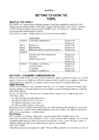
thatcher, margaret, lose, strong, crisis, prone, enact, conviction, person, treble, conservative, project, fixed, belief, inform, allow, permit, destroy, completely, steals, something, suddenly, critical, firmly, loyal, steady, affected, dangerous, times, came, became, member, parliament, term, roberts, during, work, land, prime, first, woman, politicsduc carry, lead conducive duct carry, lead conduct fac do, make facsimile fact do, make manufacture fect do, make perfect form shape uniform fort strong fortify geo earth geography gram write telegram graph write autograph homo same homophone log speech, study of dialog logy speech, study of analogy man hand manage
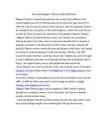
How has Margaret Thatcher affected Britain Margaret Thatcher is former British politician who served as Prime Minister of the United Kingdom from 1979 to 1990 and leader of the conservative party from 1975 to 1990. She is the first and only woman to hold either post. Since her resignation, Thatcher has remained active in the politics of the United Kingdom, as well as the world. She was raised to the House of Lords by the conferment of a life peerage as Baroness Thatcher. Margaret Thatcher has affected Britain in many ways. Thatcher was committed to reducing the power of the trades unions. Several unions launched strikes in response to legislation introduced to curb their power, but these actions eventually collapsed, and gradually Thatcher's reforms reduced the power and influence of the unions. Also, though an early backer of decriminalization of male homosexuality, Thatcher, at the 1987
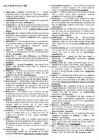
etc, or to tell them that they must leave: Hospitals now 3. antagonise v - to annoy someone very much by doing tend to discharge patients earlier than in the past. something that they do not like: Matt wasn't the sort of välja laskma man to antagonize people. vastuollu sattuma, vastu 20.disheartened adj - [dis'h:t()n] disappointed, so that seisma you lose hope and the determination to continue doing 4. antiquated adj - ['æntikweitid] old-fashioned and not something: If young children don't see quick results, suitable for modern needs or conditions - used to show they grow disheartened. disapproval [= outdated]: antiquated laws; ajast ja 21.disillusioned (by/with) adj - [,disi'lu:()nd] arust, iganenud disappointed because you have lost your belief that 5
not in love with young Victoria, and that he entered into a relationship with her in order to gain social status (he was a minor German prince) and out of a sense of duty (his family desired the match). Whatever Albert's original reasons for marrying Victoria may have been, theirs proved to be an extremely happy marriage. [3] Early Reign In 1837 Queen Victoria took the throne after the death of her uncle William IV. Due to her secluded childhood, she displayed a personality marked by strong prejudices and a willful stubbornness. Barely eighteen, she refused any further influence from her domineering mother and ruled in her own stead. Popular respect for the Crown was at a low point at her coronation, but the modest and straightforward young Queen won the hearts of her subjects. She wished to be informed of political matters, although she had no direct input in policy decisions. The Reform Act of 1832 had set the standard of legislative authority residing in the
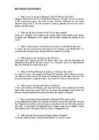
REVISION QUESTIONS 1. What do you know about Margaret Thatcher? Winston Churchill? Margaret Thatcher was the first female Prime Minister in Europe. She was a member of the conservative party. She died recently. Winston Churchill was the Prime Minister during WW II. He was excellent in making speeches, but he was a heavy drinker and also smoker. 2. What are the main countries of the UK and their capitals? There are 4: England with London as the capital; Wales with Cardiff as the capital; Scotland with Edinburgh as the capital; and Northern Ireland with Belfast as the capital. 3
Countess Constance de Markievicz(first female MP elected in 1918). Nancy Astor was the first elected female MP to take up her seat in Parliament (1919). She was the Conservative MP for Plymouth Sutton until 1945. Margaret Bondfield was the first woman to hold a ministerial position in government. She was then promoted by Prime Minister Ramsay MacDonald in 1929 as the Minister for Labour, also making her the first female member of the cabinet. Margaret Thatcher was the longest serving prime minister of the 20th century. Baroness Janet Mary Young was the first woman to hold the role of Leader of the House of Lords. The Leader of the House of Lords is responsible for organising House business and representing the House of Lords on formal occasions. The first and only female Speaker of the House of Commons was Betty Boothroyd. The Speaker keeps order and oversees the business of the House of Commons.
being ran over by the Danes Ordered a massacre for Danes Danish king Swein conquered England and Ethelred was sent to exile in Normandy, he returned and got a victory over the danes, Canute/Cnut Cnut was the king of Denmark, Norway and England, all England in 1016, was set out to rule as a rightful king Acted ruthlessly to secure the trone: seversl elading English killed Issued laws, founded monasterys, was a strong, efficient king, after his death the empire fell apart Pointed several English as bishops in Denmark, divided kingdom into 4 earldoms, while abroad The vikings of Normandy 789 first ships to England Big raid in Kent 835. three decades of yearly attacks, arrival of a full-scaled army Reasons_ Growth of population in Vikings home landin many european countries from 850´s onwards In Ireland, ScotlandWales and Cornwall-
century they had also settled in parts of mainland Scotland, for example Shetland and the Isle of Man. The Viking settlers were integrating with the local Gaelic population. Wales was not colonised by the Vikings as heavily as eastern England. The Vikings did, however, settle in the south around St. David's among other places. *Ethelred the Unready and Danegeld Of all the kings in English history, Ethelred II has perhaps the worst reputation. By the end of his reign, he'd managed to lose almost all of England to Viking Invaders. Ethelred was faced with a very large Viking fleet. This fleet was led by Olaf a Norwegian with ambitions to reclaim the Danelaw to his country. After military setbacks Ethelred was able to come to terms with Olaf, who returned to Norway. While this arrangement won him some respect, England faced further raids from Viking. Ethelred fought these off, but in many cases bought them off by payment of what was to become known as Danegeld.
The Cabinet meets at the Prime Minister's house - la Downing Street. The Cabinet works as a team and all ministers must accept the decisions of the 'group'. The team of ministers must always agree in public because they are collectively responsible for the decisions they make. If a minister cannot agree with all the others, he usually resigns from the cabinet. Cabinet meetings are held in private and the details must remain secret for at least 30 years. It has been argu ed that Margaret Thatcher tried to change this st yle of cabinet and she was forced to resign when the other ministers could not agree with her. Cabinet ministers cannot, however. do as they please! They are responsible to Parliament and must answer questions from. backbenchers in the House of Coinmons. Even the Prime Minister must answer questions every Tuesday and Thursday in the Commons - this is called Prime Minister's Question Time and can be one of the most interesting discussions in British politics
Roman province of Britannia covered most of present-day England and Wales. 4. Latin influence on English *The influence of Latin is noticeable also in the names of European cities: the Latin noun colonia (settlement, colony) may be found in numerous place-names: Lincoln, Colchester, Cologne ; from Latin word castrum (military camp) were derived English affixes -chester and -castle: Manchester, Lancaster, Newcastle; Latin word portus (seaport) in Portsmouth *-tor - person, doer, masculine form. The suffix is attached to the stem: victor (`winner', from the verb vincere `to win'), spectator (spectare). *-orium - place, where the activity marked with the verb occurs: dormitorium (dormire `to sleep'). In English the suffix is -ory: dormitory. *tas - it denotes an abstract notion, derives from the adjective: celebritas (celeber), libertas (liber), universitas (universus). In English the suffix is -ty: celebrity, liberty, university.
always understood to be within apostolic succession in the same way. One who has been ordained deacon, priest, and then bishop is understood to hold the fullness of the (ministerial) priesthood, given responsibility by Christ to govern, teach and sanctify the Body of Christ, members of the Faithful. Priests, deacons and lay ministers cooperate and assist their bishop(s) in shepherding a flock. Vicar/ priest is a representative, deputy or substitute; anyone acting "in the person of" or agent for a superior (compare "vicarious" in the sense of "at second hand"). Linguistically, vicar is cognate with the English prefix "vice", similarly meaning "deputy". Minister In Christianity, a minister is someone who is authorized by a church, or other religious organization, to perform functions such as teaching of beliefs; leading services such as weddings, baptisms or funerals; or otherwise providing spiritual guidance to the community.
Years 1154-1485 Henry I was the first unquestioned ruler. One of the most important kings in the Middle Ages. He had lands in Britain & France. Then the government was the monarch, a person, not a place. He had more land than any pervious king. After his marriage to Eleanor of Aquitaine, he also ruled the lands south of Anjou. His empire stretched from the Scottish border to the Pyrenees. England provided most of its wealth, but the heart was Anjou. Henry II began to regain royal control. During the war some barons had become very powerful. He pulled down some of their castles. He tried to restore law & order. He wanted the same kind of justice to be used everywhere
Thomas Paine (1737-1809) and Thomas Jefferson (1743-1826). The common sense and witty aphorisms of Franklin's popular Poor Richard's Almanac series appealed to colonial readers. Franklin also wrote effectively on the question of allegiance to the British crown but it was his protégé, Thomas Paine, who inspired colonists during the dark days of the Revolution with his stirring pamphlet Common Sense (1776), which sold over half a million copies, and American Crisis Papers (1776-1783). Thomas Jefferson was also an influential political writer. He made important contributions to the 85 essays of The Federalist papers, which effectively outlined the Am governmental system and the basic principles of republican theory. Jefferson also wrote the Declaration of Independence (1776), which identifies the moment in which the nation was born, and in stirring language explains the reasons for its birth.
· Point of view: amoral-outside the category of morality, neither good or bad · Naturalist find it absurd to blame the wicked. These criminals are doing what nature, environment, their unconscious tells them to do. Naturalists do not judge their characters, they simply report. Try to describe facts like they are. Naturalists depict the lower, coarser forms of life. · Drab, squallid set of scene. Revolting, disgusting · Characters are people with strong animal desires · Neurotic characters unable to understand the forces that control them · By the end of the 18th century the naturalism depicts in europe, but stars to become the literature method no 1 in america · Naturalism appealed American authors because they found it very right to describe what was going on in the turn of century in America · They wanted something fresh, new · They were disgusted by romantics · Showed the harsh tone in moral life
And when the party entered the assembly room it consisted of only five altogether--Mr. Bingley, his two sisters, the husband of the eldest, and another young man. Mr. Bingley was good-looking and gentlemanlike; he had a pleasant countenance, and easy, unaffected manners. His sisters were fine women, with an air of decided fashion. His brother-in-law, Mr. Hurst, merely looked the gentleman; but his friend Mr. Darcy soon drew the attention of the room by his fine, tall person, handsome features, noble mien, and the report which was in general circulation within five minutes after his entrance, of his having ten thousand a year. The gentlemen pronounced him to be a fine figure of a man, the ladies declared he was much handsomer than Mr. Bingley, and he was looked at with great admiration for about half the evening, till his manners gave a disgust which turned the tide of his popularity; for he was discovered to be proud; to be above his company, and above
/ wicce f.) is a practitioner of witchcraft. Historically, it was widely believed that witchcraft involved the use of these powers to inflict harm upon members of a community or their property, and that all witches were in league with the devil. Since the mid 20th century, the term witchcraft has sometimes been used to distinguish between bad witchcraft and good witchcraft, with the latter often involving healing. Human misfortune was often blamed on a supernatural entity or a known person in the community. Reasons for accusations of witchcraft fall into four general categories: · A person was caught in the act of positive or negative sorcery · A well-meaning sorcerer or healer lost their clients' or the authorities' trust · A person did nothing more than gain the enmity of their neighbours · A person was reputed to be a witch and surrounded with an aura of witch-beliefs
your mind or to try to convince you of anything, but to bring about a shift in consciousness; that is to say, to awaken. In that sense, this book is not “interesting”. Interesting means you can keep your distance, play around with ideas and concepts in your mind, agree or disagree. This book is about you. It will change your state of consciousness or it will be meaningless. It can only awaken those who are ready. Not everyone is ready yet, but many are, and with each person who awakens, the momentum in the collective consciousness grows, and it becomes easier for others. If you don’t know what awakening means, read on. Only by awakening can you know the true meaning of that word. A glimpse is enough to initiate the awakening process, which is irreversible. For some, that glimpse will come while reading this book. For many others who may not even have realized it, the process has already begun. This book will help them recognize it. For some, it may have
I. There is also a two-minute silence at 11am on Remembrance Day, which is the 11th hour of the 11th day of the 11th month. 36. History of Irish State. Ireland was brought under English rule in the 12th century, but it proved difficult to dominate the Irish people – especially since Ireland was largely Catholic. When Henry VIII broke away from the Roman Catholic Church, Catholic Ireland became even harder to rule, since for them, the most powerful person was the Pope. After Queen Elizabeth I defeated the Irish army in the battle of Kinsale in 1601, a large number of Protestants came to Ireland, settling down mostly in the northern part of the island. Conflicts between the Protestant settlers and the Irish Catholics arose. The Act of Union in 1801 made England and Ireland one country with one parliament in London. During the 19th century, more and more people in Ireland wanted to regain its
"It is not composed, as in Europe, of great lords who posses everything, and of a herd of people who have nothing". During the period of enlightenment the people of America came to realize that if they work hard enough that what they earn is for them to keep. There are no Kings or Dictators ruling the lower class. There is a huge amount of personal and financial freedom to be gained in American during this time. Crevecoeur states that "each person works for himself". American became a classless society during the Enlightenment period where each individual was allowed as much room to grow as needed. The Age of Romanticism. The early romantic writers. Washington Irving as a transitional figure from the traditions of the Enlightenment to those of Romanticism. Romanticism (or the Romantic era/Period) was an artistic, literary, and intellectual movement that originated in Europe toward the end of the 18th
financial problems were discussed. In order to make it easier to put the decisions taken into practice, each Shire had to elect a number of knights to attend at these meetings at report the decisions to their Shires. Edward I continued this experiment and in 1295 called a parliament that became known as the Model Parliament. The House of Commons as a separate Chamber resulted from the unofficial meeting of these knights and burgesses. The person chosen to speak for these commoners in Parliament became known as the speaker. The Hundred Years War fought between France and England had a devastating effect on the English economy. The high taxation necessary to finance the war and the Black Death (1348) led to such extreme hardship for the peasant class that there was a revolt in 1381. Although the Peasant's Revolt was soon put down, it led to greatly improved conditions for
Many people have contributed to my thinking and have been invisible guides as these chapters came to- gether. I would like to first thank my friend Mark Victor Hansen, who introduced me many years ago to Emmet Fox, perhaps the finest spiritual thinker of the twentieth century. Ernest Holmes, founder of Science of Mind, opened my eyes and heart to the incredible universe of potential contained within each person when they changed their thinking and changed their lives. Great spiritual teachers such as Charles Fillmore, Neville, Eric Butterworth, Wayne Dyer, and Roberto Assagioli have had a profound influence on my thinking. I would also like to thank those great practical thinkers on suc- cess who have had such a wonderful influence on me—and on the world—such as Napoleon Hill, Maxwell Maltz, Claude Bristol,
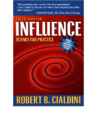
The others-representatives of certain charitable agencies, for instance-have had the best of intentions. No matter. With personally disquieting frequency, I have al- ways found myself in possession of unwanted magazine subscriptions or tickets to the sanitation workers' ball. Probably this long-standing status as sucker accounts for my interest in the study of compliance: Just what are the factors that cause one person to say yes to another person? And which techniques most effectively use these factors to bring about such compliance? I have wondered why it is that a re- quest stated in a certain way will be rejected, but a request that asks for the same favor in a slightly different fashion will be successful. So in my role as an experimental social psychologist, I began to research the psychology of compliance. At first the research took the form of experiments per-
hypothetical situations can hardly relate to real situations. The ticking bomb argument looks at the hypothetical case where a leader of a state is asked to give their permission to torture a captured rebel leader because he (probably) knows the locations of a few explosives that are spread around the city in different apartment buildings. In case they are not found within 24 hours, they will explode and many will be left dead (Walzer, 1973). Is it justified to torture this person to find out where the bomb is? This essay will look in to how it has according to the thinkers in the strand of consequentialism / utilitarianism been labelled justifiable to use torture techniques in combating terrorism and will present the reasons for why this controversial behaviour that democratic governments have been proven to conduct and still are being accused of until the current day is irrational and dangerous. Theoretical justification of torture
1 I take after my mum 2 1 disorientated 5 withdrawn 7 granted 12 Although 2 the spitting image 2 distraught 6 preoccupied 3 a strong family resemblance 4 1 F 2 T 3 F 4 F 5 T 3 bewildered 7 circumspect between 4 overwhelmed 5 1 ignore 4 lot of my dad's traits 3 1 f hindsight 4 c evocative 5 comes to, more in common 2 broadened out
She was nominated for a Golden Globe for the performance and was praised by critics.[15] Bosley Crowther of The New York Times proclaimed: "Hold on to your chairs, everybody, and get set for a rattling surprise. Marilyn Monroe has finally proved herself an actress." In his autobiography, Movie Stars, Real People and Me, director Joshua Logan wrote: "I found Marilyn to be one of the great talents of all time... She struck me as being a much brighter person than I had ever imagined, and I think that was the first time I learned that intelligence and, yes brilliance have nothing to do with education." Monroe in a promotional still for The Prince and the Showgirl, 1957.The second movie filmed under her production company was The Prince and the Showgirl co-starring Laurence Olivier. Olivier, who directed the movie, said Monroe was "a brilliant comedienne, which to me means she is also an
Introduction Body conclusion Lõikude vahele 1 rida, taandrida ei jäeta! Argumendid millegi poolt, argumendid millegi vastu. Väldime I-vormi, vaid kasutame passive-vormi. Lõhikesi vorme ei kasutata! (don't) 150 sõna Teema "should mery-killing be punished?" HOMEWORK Terms to explain: Nation - a country, especially when thought of as a large group of people living in one area with their own government, language, traditions, etc: Stranger someone whom you do not know Citizen - a person who is a member of a particular country and who has rights and obligations because of being born there or because of being given them Penalty - a punishment for doing something that is against a law Government - the group of people who officially control a country System of courts - a set of connected positions which operate together to ensure ... ? To commit a crime to do sth that is forbidden by law Corruption - illegal, immoral or dishonest behaviour, especially by people in positions of
· Threat to a couple's shared re a l i t i e s n e c e s s i t a t i n g construction of new shared realities · But, His & Her realities can be markedly different HERS HIS · "Cataclysmic Role Failure": (1) Retreat from · Crisis of Masculinity: (1) `Hegemonic interaction with the `fertile' world (2) Become too focussed on masculinity' `infertility' (2) Expectation that men will not be: (a) weak (b) vulnerable (c) "It was as if a part of me had died, a part of me was emotional d) losing physical control. never going to be fulfilled. Grieving to hold a baby...a · Will always be:
• A revised chapter which looks back at the Star Wars phenomenon and analyzes the six feature films as an epic on the theme of father-son relationships • New illustrations and diagrams that give additional depth to the mythic principles • A final chapter, "Trust the Path," an inspiring call to adventure for those who want to discover themselves through writing "This book is like having the smartest person in the story meeting come home with you and whisper what to do in your ear as you write a screenplay. Insightfor insight, step for step, Chris Vogler takes us through the process of connecting theme to story and making a script come alive. " - Lynda Obst, Producer, Sleepless in Seattle, How to Lose a Guy in 10 Days; Author, Hello, He Lied
British Parliament Structure and Functioning of the British Parliament today Britain is a parliamentary monarchy . The British Parliament is a bicameral parliament , that is to say that it is made up of two chambers, or two "Houses"; above the two Houses, but in an essentially formal role , there is the Sovereign - king or queen - also known as "the crown." Role of the Sovereign The British monarch has all authority, but no power. The Sovereign appoints the Prime Minister, and every year opens the sessions of parliament, in a historical and ritual ceremony called the State Opening of Parliament . Historically, this ceremony used to take place in the Autumn; but since 2012, it has been brought forward to May. This is the only regular time when the members of both Houses come together. During the ceremony, the Sovereign reads out the government's intended programme. The "Queen 's Speech" is a summary of the programme "his" or "her" government intends to implement in the next twelve
Negative connotation becomes stronger in the following emphatic instruction. e.g You impudent pup!, You filthy swine!, You lazy dog! 7 Sometimes, adjectives are used as nouns and then they become expressive and often colloquial. e.g Listen, my sweet, come on, lovely. Abstract nouns may be used for concrete objects and then these nouns become emotional. e.g the old oddity instead of an odd old person, the litte eccentricity =>eccentric child The possessive case may be added to a phrase or sentence, the result is quite humorous. e.g She is the best boy I used to go to with's mother. Who is she? He is the niece I told you about's husband. The ending of the plural ('s) may be added to a sentence and the effect is colloquial. e.g ,,I'm sorry for you" is worse twenty I told you so's. Abstract nouns used in the plural They become expressive when used. E
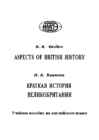
N. A. Vavilov ASPECTS OF BRITISH HISTORY Н. А. Вавилов КРАТКАЯ ИСТОРИЯ ВЕЛИКОБРИТАНИИ Учебное пособие на английском языке Москва Институт международного права и экономики имени А. С. Грибоедова 2008 2 УТВЕРЖДЕНО кафедрой лингвистики и переводоведения Вавилов Н.А. Краткая история Великобритании: Учебное пособие на английском языке. – 2-е изд., пересмотр. и испр. – М.: ИМПЭ им. А.С. Грибоедова, 2008. �
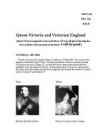
of Our Life in the Highlands' and 'More Leaves' in 1868 and 1884 respectively.) She was given religious instruction and lessons in French, Latin, German, Italian, arithmetic, drawing, music, geography and history . A young Victoria In 1837 Queen Victoria took the throne after the death of her uncle William IV. Due to her secluded childhood, she displayed a personality marked by strong prejudices and a willful stubbornness. Barely eighteen, she refused any further influence from her domineering mother and ruled in her own stead. Popular respect for the Crown was at a low point at her coronation, but the modest and straightforward young Queen won the hearts of her subjects. She wished to be informed of political matters, although she had no direct input in policy decisions. The Reform Act of 1832 had set the standard of
depression. Possibly increases risk of getting colds and flu. Regular users can become tolerant to ecstasy. Why Are Illegal Drugs Dangerous? Illegal drugs aren't good for anyone, but they are particularly bad for a kid or teen whose body is still growing. Illegal drugs can damage the brain, heart, and other important organs. Cocaine, for instance, can cause a heart attack - even in a kid or teen. While using drugs, a person is also less able to do well in school, sports, and other activities. It's often harder to think clearly and make good decisions. People can do dumb or dangerous things that could hurt themselves - or other people - when they use drugs. How Are Teens Affected? Young people are at risk for contracting HIV and developing AIDS. According to CDC, about 38,490 young people age 13 to 24 in the United States had been diagnosed with AIDS by the end of 2003. And the trend was increasing-from 3
 annaabi.ee