Leidsid 33 sarnast õppematerjali, mis on seotud failiga "Inglise keele stilistika II". Need materjalid aitavad sul teemat sügavamalt mõista.
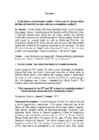
words, mean, means, here, speech, other, slang, sentences, part, come, call, stylistic, motion, peak, express, create, thing, phrase, speak, such, poet, colour, special, function, belong, comes, often, marks, there, object, body, author, paragraph, letter, based, emotionalriter, language, effect, know, letters, punctuation, full, rhythm, stand, meaning1. STYLE The term "style" is polysemantic (has many meanings): a Latin word "stilus" originally meant a writing instrument used by ancient people. Already in classical Latin the meaning was extended to denote the manner of expressing one's ideas in written or oral form. Jonathan Swift defined style as "proper words in proper places". In present day English the word "style" is used in about a dozen of principle meanings: 1. the characteristic manner in which a writer expresses his/her ideas (e.g. style of Byron) 2. the manner of expressing ideas, characteristic of a literary movement or period 3. the use of language typical of a literary genre (e.g. the style of a comedy, drama, novel). 4. the selective use of language that depends on spheres / areas of human activity (e.g
STYLISTICS 1. Style, stylistics, a survey of stylistic studies The term ,,style" is polysemantic. Latin ,,stilus"--a writing instrument used by the ancients for writing on waxed tablets. Soon, the meaning was extended to denote the manner of expressing one's ideas in written or oral form. Jonathan Swift said: ,, Style is proper words in proper places" Present day--half a dozen meanings: · the characteristic manner in which a writer expresses his ideas (Style of Byron) · the manner of expressing ideas characteristic of a literary movement or period (symbolism, romanticism) · the use of lg. typical of a literary genre (comedy, drama, novel) · the selective use of lg that depends on spheres of human activity. These
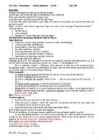
FGI 1081 Stilistika (Irina Ladusseva) Kab. 420 2 AP Ends with an exam; lasts only for 1 semester. At the exam you get 2 questions and an exercise (50 sentences: establish the device used, recognize it, and name it). Care about the pronunciation of the terms. Books: - I. Galperin "Stylistics" - I. Ladusseva "Rhythm and Text" - I. Ladusseva "Vocabulary and Style" - I. Ladusseva "Stylistic practice: Book I, Book II" - I
Style The term style is a polysemantic one. The latin word ,,stilus" meant a writing instrument used by the ancients for writing on waxed tablets. Already, in classical latin the meaning of style was extended to denote the manner of expressing one's ideas in written or oral form. One of the abts/the best was given by Jonathan Swift: ,,Proper words in proper places." In present- day english, the world style is used in about half a dozen basic meanings. 1. the characteristic manner in which a writer expresses his ideas. Some speak about the style of Hemingway, Dickens etc. 2. the manner of expressing ideas, characteristic of a literary movement or period. Style of symbolism, romanticism 3. the use of language to pick a literary genre-comedy, novel, drama, O.D (poetic form) etc. 4
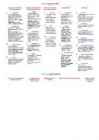
LEXICAL STYLISTIC DEVICES Based on: interaction of lexical and interaction of denotational interaction of primary circumlocution other cases contextual meaning and emotional meaning and secondary meaning 1. EPITHET 1. METAPHOR indicates individual 1. ZEUGMA 1. PERIPHRASIS 1. BATHOS based on similarity of 2 evaluation of sth
• Martin Luther – his role in the history of translation studies. Lived during the 15th century. He was a priest, theologian & translator. During that time, the Bible’s were only available in either Latin or Hebrew, which made it very difficult for common people to understand. He came out with a radical plan to translate the Bible into local languages (the first language was German – translated by Martin Luther). This inspired many other translators during that period. • What happened in the 19th and 20th century in translation studies? When and who created the term ‘translation studies’? Translation Studies – James S. Holmes - 1972 Ferdinand de Saussure – Lived during the 19th and 20th century. He was a Swiss linguist and a semiotician. He is widely considered one of the fathers of 20th-century linguistics and one of two major fathers (together with Charles Sanders Peirce) of semiotics/semiology
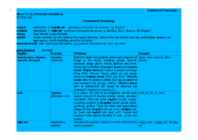
g. Estonian, Latin, Russian, Old English) ending lõpp (käände- ja pöördelõpud) marker tunnus (mitmuse, oleviku, lihtmineviku, tingiva kõneviisi, käskiva kõneviisi, kaudse kõneviisi, umbisikulise tegumoe, ma- tegevusnime, oleviku kesksõna, mineviku kesksõna) derivational affix liide, tuletusliide, tuletusafiks (e.g. postwar, anti-American, wiser, greenish) parts of speech sõnaliigid English Estonian Definition Example noun (proper, common, nimisõna, Refers to words which denote classes and categories of book, water, sincerity, Mary, concrete, abstract) substantiiv things in the world, including people, animals, Estonia
collaborate with supervisor (a topic has to be narrowed down). Background studies who else has written about this topic (what has been already done and what else I can do here). Papers of this kind test logical thinking. What is assessed: - the ability to collect material (both theoretical (who has written about it) and practical; - the ability to classify it (grouping ability); - the ability to describe the material ("some say this ..., they are not wrong, but other say that ...." Etc.); - the ability to draw conclusions (on theoretical and practical materials); - your personal contribution (do something that no one has done before); - talking about the material (as if you are speaking to the first year student avoid sophistication in language, that may sound unnatural). Comment on examples (from where the example is taken how it is used explain all). NB! Comments everywhere. You have right to:
Review questions English lexicology Size of English vocabulary. Average speaker 45,000-60,000 words, a total of about 200,000. Core and periphery. English has been heavily influenced by other languages. 31.8 % comes from Old English, 45% comes from French, 16,7% comes from Latin, 4,2% other germanic languages and 2,3 other languages. The very core is mono-syllabic (93 of the first 100 words and the other seven are two-syllabic). The core vocabulary is predominantly germanic. Native and foreign element. Native words belong to very important semantic group (modal verbs-shall, will, can, may; pronouns- I, you, he, my, his; preps- in, out, under; numerals and conjunctions::but, till, as. Native words are head, arms, back; mother, brother, son, wife; snow, rain, wind, sun; cat, sheep, cow; old, young, cold, hot, dark; do, make, go, come, see
Broadly, there are three aspects to the study which are Pragmatics (studies the use of language → interested in the gap between the sentence’s meaning and the speaker’s meaning). Semantics (concerned with the meaning of the language aspects and the way they change, also how objects and language and thinking and language are related). Syntax (concerned with the rules [grammar] and how sentences and words are formed). Synchronic approach to language → A focus in language study on how language exists in one moment in time, not at how this language came to be the way it is now. Example Estonian in the 21st century. Diachronic approach to language → A focus in language study on how a language has changed over some period of time. In a way it is comparing language to what it was and how it is now. For example comparing 18th century and 19th century Estonian.
than read books or move outside. And another thing is that teachers are less capable in using technological appliances. But the latter mentioned fact is an advantage for us teachers as well. It gives us an opportunity to provide our students to experience success. They can help and assist us if we need some technological help. Another thing is that in schools, in classes generally students are not allowed to use their appliances, so it means they have to communicate verbally as well. I think that teachers should be creative to blend so-called digital learning/teaching with old-fashioned learning/teaching. · Sir Ken Robinson: Do schools kill creativity? Sir Ken Robinson claims in the clip that " creativity in education is as important as literacy, we should treat it with the same status." I totally agree with all what he said. We have very strict education systems that don't
society for communication and self-expression. - human language at all levels is rule- or principle-governed. Linguistics: the scientific study of human natural language Synchronic approach to language: Diachronic approach to language: Linguistic competence: Linguistic performance: What is grammar?: "The sounds and sound patterns, the basic units of meaning, such as words, and the rules to combine them to form new sentences constitute the grammar of a language" Prescriptive grammar vs. Descriptive garmmar: Descriptive grammar: the systematic study and description of a language. Descriptive grammar refers to the structure of a language as it is actually used by speakers and writers. Prescriptive grammar: a set of rules and examples dealing with the syntax and word structures of a language, usually intended as an aid to the learning of that language. Prescriptive grammar refers
LEXICOLOGY 1. Size of English vocabulary 1) Old English – 50,000 to 60,000 words Vocabulary of Shakespeare OE – homogeneous; 1/3 of the vocabulary has survived • 884,647 words of running text About 450 Latin loans (Amosova) • 29,000 different words (incl. work, working, Viking invasions added 2,000 worked, which are counted here as separate 2) Middle English – 100,000 – 125,000 words) English becomes heterogeneous (Norman French, • 21,000 words English, Latin), hybrid of Germanic and Romance languages Norman French influence – about 10,000 words, 75 % are still in use (Baugh) Latin influence continues 3) Early Modern English – 200,000 – 250,000 English becomes a polycentric language; polyglot,
Philosophy of Language Philosophy of Language: a Contemporary Introduction introduces the student to the main issues and theories in twentieth and twenty-first-century phi- losophy of language, focusing specifically on linguistic phenomena. Topics are structured in four parts in the book. Part I, Reference and Referring, includes topics such as Russell's Theory of Descriptions, Donnellan's distinction, problems of anaphora, the description theory of proper names, Searle's cluster theory, and the causalhistorical theory. Part II, Theories of Meaning, surveys the competing theories of linguistic mean- ing and compares their various advantages and liabilities. Part III, Pragmatics and Speech Acts, introduces the basic concepts of linguistic pragmatics,
gives a complete picture of voc. Practical value lies in using and appretiating the lg more conciously. There is diachronic (historical) L that studies origin and development; syncronic studies voc at a given historical period. There are general L (studies words disregarding particular features of any particular lg); special L (studies specific features of a separate lg, there is Engl that bases on general L); contrastive (compares vocabularys in different languages). 2. Connection of L with other linguistic disciplines a) the word performes a certain grammatical function (nt, he always misses the class, how many misses are there; the girl powders her nose, soliders face powder)In speech words are combined according to grammatical rules. The plural of nouns may carry a new meaning (nt, arms-weapons, looks-appearance, works-plant) b)connected with phonetics. The meaning of a word is expressed by sounds and it depends on the order of sounds(spoonerism)
apposition a grammatical construction in which two usually adjacent nouns having the same referent stand in the same syntactical relation to the rest of a sentence (as the poet and Burns in “a biography of the poet Burns”) back-reference In grammatical analysis, the term reference is often used to state a relationship of identity which exists between grammatical units, e.g. a pronoun 'refers' to a noun or noun phrase. When the reference is to an earlier part of the discourse, it may be called a 'back-reference' (or anaphora); collective noun Collective noun is the name we give to a group of nouns to refer to them as one entity. A crew of sailors. A flock of birds. A range of mountains. conjunction any member of a small class of words distinguished in manylanguages by their function as connecto rs between words, phrases,clauses, or sentences, as and, because, but, however. content words Content words are words that have meaning
2 6. Some adverbs have the same form as the adjective. This is the case with hard, fast, late. Adjective Adverb Jack is a very fast runner. Jack can run very fast. Ann is a hard worker. Ann works hard. Ann hardly ever works hard. The train was late. Tom got up late this morning. NB! hardly means very little, nearly not; hard means very much 7. Many adverbs end in -ly, because many adjectives can be made into adverbs by adding –ly. E.g. quick/quickly, slow/slowly, brave/bravely, careful/carefully, bad/badly: They didn’t go out because it was raining heavily. Colin was disappointed to see how badly his son had done at the exam. NB! At the same time there are some adjectives which end in –ly as well. The
English lexicology 1. Size of English vocabulary Vocabulary is a sum total of words used in a language by speakers or for dictionary-making. Active and passive vocabulary. The Old English vocabulary was homogenous. There were about 50 000 – 60 000 words, 1/3 of which have survived. o About 450 loans from Latin o About 2000 from the Viking invasions. The Middle-English vocabulary became a heterogeneous hybrid of Germanic and Romanic languages. 100 000 to 125 000 words. o About 10 000 loans from Norman French, 75% are still in use o Continuing Latin influence Early Modern English. 200 000 – 250 000 words
Phonology. Mid-term 2. Syllable - is a phonological unit consisting of one or more phonemes. In phonetics a syllable is a unit which consists of a centre, that has little or no obstruction to airflow; it is comparatively louder than other sounds. In phonology syllables are the possible combinations of phonemes. The syllable consists of - onset, nucleus, coda. (every syllable has a nucleus: vowel, syllabic l, or m, n). Rhyme/rime nucleus + coda; the nucleus and the coda constitute a sub-syllabic unit rhyme. Words rhyme, when their nucleus and coda are identical. (E.g 'cr-o-wn', 'd-o-wn'). The hierarchical structure of the syllable: Onset the beginning of the syllable
Tests Superstar 1 Luke Prodromou Test 1 Name____________________ Class_______ Use your English 1 Complete these sentences using the correct form (present simple or present continuous) of the verb in brackets. _ 1 She is in a band and she _________________________________ (record) a CD at the moment. _ 2 She is an actress and often _________________________________ (appear) on television. _ 3 At the moment she _________________________________ (have) a rest because she is tired. _ 4 Mike is a doctor and he _________________________________ (live) in Manchester.
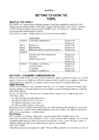
CHAPTER 1 GETTING TO KNOW THE TOEFL WHAT IS THE TOEFL? The TOEFL is a comprehensive English language examination required by more than 3,000 colleges and universities in the United States, Canada, and other parts of the world. In addition, foreign born professionals frequently need a TOEFL score for certification to practice their profession in the United States or Canada. The TOEFL is a timed test that consists of the three sections listed here. THE TOEFL Section 1 Listening Comprehension 50 questions 35 minutes
tips and useful language notes Book 1 Anne Seaton · Y. H. Mew Three Watson Irvine, CA 92618-2767 Web site: www.sdlback.com First published in the United States by Saddleback Educational Publishing, 3 Watson, Irvine, CA 92618 by arrangement with Learners Publishing Pte Ltd, Singapore Copyright ©2007 by Saddleback Educational Publishing. All rights reserved. No part of this book may be reproduced in any form or by any means, electronic or mechanical, including photocopying, recording, or by any information storage and retrieval system, without the written permission of the publisher. ISBN 1-59905-201-6 Printed in the United States of America 13 12 11 10 09 08 07 9 8 7 6 5 4 3 2 1 Introduction Grammar is a very old field of study. Did you know that the sentence was first divided into subject and verb by Plato,
though the general tendency is towards more regularity/iconicity so the number of suppletive forms has decreased.In the text: goon to go wenden - to turn Gan was suppletive in Old English, past form: eode.Eode was supplanted by went (past form of wenden) at the end of the Middle English period.To wend has survived in Modern English in phrases such as to wend one's way, we wended homewards (ironic usage). Thus: suppletivity- suppletion different parts of one and the same paradigm come from what were originally different paradigms (different words with close meanings or words in different but close dialects).Suppletion embraces verbs, adjectives, nouns. Be was/were been (Old English beon/wesan) (am, art, is, are); in Old English some suppletive forms were used parallel to one another) Good better best Bad worse worst Much more most Little less least Estonian: hea parem (cf "paras" fitting, in Finnish "the best" - metonymical link),
· How do they differ? · Which extracts are examples of formal letters? · How is the reader addressed in a formal letter? · What are the closing remarks for formal letters? · What is the salutation in a friendly letter? · How would you end extracts 1,2,3 ? · How would you begin the extracts 4 and 5? 1. Dear Mr Miller, I received your kind invitation to the reception. Unfortunately, owing to other commitments. I will be unable to attend ... 2. Dear Ralph, l just got your invitation to the company's event. l `m afraid I can't make it because I've a/ready made plans which l can "t change ... 3. Dear Sirs, I am writing to complain about the poor quality of the items which I received from your company. I have no other alternative but to cancel the order which 1 placed earlier this week ... 4. ... thus, I recommend that you accept this advice on the matter
Pay particular attention to the following: · Appropriate Subject Heading Take care to prepare your reader by introducing the subject appropriately in your subject heading. · Carefully Organized Information If a reader needs to be persuaded or convinced, your information will need careful planning and organizing. · Correct Grammar and Spelling Train yourself to check for major grammatical errors, words which are commonly misspelt and sentences which are incomplete. · Suitable Style and Tone The style and tone must match the message and its reader. You cannot, for example, write a memo to a colleague in the same style and tone as you might use when speaking on the telephone to a friend. · Logically Connected Ideas Finally, your ideas must be suitably connected so that the reader can identify related ideas while reading through and gradually understanding the
symbolism, from the point of view of the numerous studies his being protagonist. Larkin was not one of the major essay writers in the history of British literature. He never wrote a text comparable with Wordsworth’s “Preface” to Lyrical Ballads, Shelley’s “A Defence of Poetry” or Eliot’s “Tradition and the Individual Talent”. This lack of a conceptualized theory, however, does not indicate a lack of principles. In the first part of this study I will offer an outline of Larkin’s poetics, based on the form and the style he used to use, to get in to a second part in which I will assess the way he presents and expresses his ideas. 1.CHAPTER I 1.1. LARKIN STUDIES POINTS OF VIEW: BIOGRAPHY AND POETRY In the collection of essays edited by Stephen Regan (Philip Larkin, 1997) we can find some underlying question as: are we discussing the poem or the poet? Or, in
.......................7-8 Practice Online (TPO)......................................................................................................8-9 Conclusion.........................................................................................................................10 2 Introduction This chapter documents the advent and rise of automated essay scoring (AES) as a means of both assessment and instruction. The first section discusses what AES is, how it works, and who the major purveyors of the technology are. The second section describes outgrowths of the technology as it applies to on-going projects in measurement and education. In 1973, the late Ellis Page and colleagues at the University of Connecticut programmed the first successful automated essay scoring engine, "Project Essay Grade (PEG)" (1973)
Essay 200 (+/- 10%) words The text consists of 4-5 paragraphs discussing a specified topic. Usually the task contains points you have to discuss. Make sure they are all covered! Keep in mind! Formal language – no slang, so contracted forms, colloquialisms, try to avoid repetition of words. Indented lines! Clear paragraphs with one central idea. Avoid strong feelings 8everybody hates... it is absurd to believe...) and strong personal expressions Use generalization (children assume…), but do not use overgeneralizations (all children assume…) At least 2 linking words per paragraph (separate them from the rest of the sentence by commas!) that show the connection between paragraphs. Make references to other sources (Police officials believe that…)
information is given about the problem that is going to be discussed. The angle from which the problem is going to be looked upon in the essay is also stated. In longer essays these are in different paragraphs, in shorter ones they can be in one paragraph. The body of the essay usually consists of several paragraphs, the number of which depends on the length of the essay. Each paragraph should begin with a topic sentence. The following sentences should enlarge on the theme, give examples, etc. If it is an essay discussing the advantages and disadvantages of something, the advantages should be grouped together and so should be the disadvantages. One paragraph should only talk about one thing, aspect, etc. If a new thought begins, a new paragraph should be started, too. In essays that express the writer's opinion mainly, one paragraph (usually the last one before the conclusion) should be reserved for the opposing viewpoint.
Louise Erdrich Love Medicine Assignment 2 (pp. 4384) 1. Define the following words and expressions (considering the context) and reproduce (in your own words) the situations in which they appear in the book: the marrow of something (44) - The soft stuff inside of a bone is called marrow. ... From this biological kind of marrow comes a figurative meaning of marrow -- the essence of something. S The convent is on top of the high hill and from its window the Sisters can see the marrow of the town.
(www.ahdictionary.com). How did it get its name? It is difficult to say when the term submarine sandwich was first used for these types of large sandwiches. Although it is quite obvious that the sandwich got its name because of its long shape that resembles submarines, there are several myths around the origin of the term. The first theory is that at the beginning of World War II a sandwich was specifically created in a restaurant in Scollay Square in Boston to appeal to the mean serving at Charlestown Navy Yard. Because it resembled a submarine for its shape, people began to call them “submarine sandwiches”. According to another version, the sandwich was created during World War II by an Italian shopkeeper named Benedetto Capaldo in New London, CT. When the navy servicemen from the submarine base in the town of Groton across the river began ordering 500 sandwiches a day, the sandwich became irrevocably associated with submarines.
Louise Erdrich Love Medicine Assignment 1 (pages 142) 1. Define the following words and expressions (considering the context) and reproduce (in your own words) the situations in which they appear in the book: a beacon (2) (AmE) a fire or light set up in a high or prominent position as a warning, signal, or celebration, it appears as a metaphor to describe a white egg in her hand. Situation: June walked through the door and toward blue egg in the white hand of Andy, which she compares with a beacon in the murky air. a turtleneck (2) - Example
PSYCHOLOGY PART 1: CORE Biological level of analysis Outline principles that define the biological level of analysis. 1) Behavior can be innate, because it is genetically based. Evolution may play a key role in behavior. 2) Animals may be studied as a means of understanding human behavior. 3) There are biological correlates of behavior. Cognitions, emotions and behaviors are products of the anatomy and physiology of our nervous and endocrine system. Explain how principles of the biological level of analysis may be demonstrated in research. 1) Correlational studies: Study by Buss, who hypothesized that across cultures, men will prefer to marry younger women because of greater reproductive
 annaabi.ee