Leidsid 33 sarnast õppematerjali, mis on seotud failiga "Inglise keele põhitõed algajale". Need materjalid aitavad sul teemat sügavamalt mõista.
english, present, perf, ques, action, examples, exercise, exercises, thing, since, words, verb, perfect, sing, talk, night, late, live, happen, nouns, during, simple, there, aren, days, till, doesn, working, plural, before, clock, express, actions, happened, connection, still, count, something, names, usually, morning, watching, mount, cold, speak, tenseBook 1 BASIC ENGLISH BASIC ENGLISH GRAMMAR GRAMMAR BASIC ENGLISH GRAMMAR Book 1 Book 1 Younger students at beginning to intermediate levels will greatly benefit from this step-by-step approach to English grammar basics. This is the ideal supplement to your language arts program whether your students are native
Windows are not made of wood. Simple Present · · New York is a small city. It is not important that this fact is untrue. [VERB] + s/es in third person USE 3 Scheduled Events in the Near Examples: Future · You speak English. · Do you speak English?
'How are you?' Very often people expect you to say something positive. Here's a breakdown of how you can express how you really are without complaining too much. · Fine, thanks. / On top of the world, thanks. · OK, thanks · Not so bad, thanks. / Can't complain, thanks. · So so, thanks. / So and so, thanks. · Not so good, actually 1 The English alphabet Spelling Work with your partner and spell out first your name and then some names of places. Write down each letter as you hear it, and then say the word. The English alphabet on the phone: You might find the following alphabet (used by international airlines) useful when trying to spell a word on the telephone. A Alpha O Oscar Ä Alpha-Echo Ö Oscar-Echo
The population of the world is increasing fast. 3. Arrangements for the future. I am flying to Toronto next Friday. Negative form: We aren't (are not) working at the moment. I am not enjoying this show very much. Question form: Are they playing football in the park right now?Why is she laughing? Signal words: at the moment, now, right now, Listen!, Look! etc. PRESENT PERFECT (täisminevik) Form: have/has + past participle (3. põhivorm) Use: 1. An action in the past, where the fact, not the time, is important. I have been to England four times. 2. An action in the past that has a result now. She has lost her keys. 3. Something that began in the past and still continues now. He has been in hospital since Monday. Negative form: We haven't (have not) done our homework yet. He hasn't (has not) visited his granny since August. Question form: Have we met before
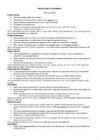
TIME CLAUSES Present Simple · Permanent states, facts (Tom works..) · Repeated and habitual actions, routines (She usually goes..) · Laws of nature and general truths (The sun sets in the west) · Timetables and programmes · Sporting commentaries, rewiews (Beckham wins the ball, crosses and Owen scores) · Feelings and emotions (I love Tallinn..) TIME EXPRESSIONS USED WITH PRESENT SIMPLE: usually, often, always, every day/week etc, in the morning/evening etc, at night/the weekend, on Fridays etc. Present Continuous · Actions taking place at or arount the moment of speaking (The kids are watching TV..) · Fixed arrangements in the near future (I'm going to the dentist tomorrow) · Currently changing ang developing situations (The number of burgularies is increasing)
Golden Grammar rules 1. Don't use an with own. Sue needs her own room. (NOT Sue needs an own room.) I'd like a phone line of my own. (NOT ... an own phone line.) 2. Use or rather to correct yourself. She's German or rather, Austrian. (NOT She's German or better, Austrian.) I'll see you on Friday or rather, Saturday. 3. Use the simple present play(s), rain(s) etc to talk about habits and repeated actions. I play tennis every Saturday. (NOT I am playing tennis every Saturday.) It usually rains a lot in November. 4. Use will ..., not the present, for offers and promises. I'll cook you supper this evening. (NOT I cook you supper this evening.) I promise I'll phone you tomorrow. (NOT I promise I phone you tomorrow.) 5. Don't drop prepositions with passive verbs. I don't like to be shouted at. (NOT I don't like to be shouted
Linguistic competence: Linguistic performance: What is grammar?: "The sounds and sound patterns, the basic units of meaning, such as words, and the rules to combine them to form new sentences constitute the grammar of a language" Prescriptive grammar vs. Descriptive garmmar: Descriptive grammar: the systematic study and description of a language. Descriptive grammar refers to the structure of a language as it is actually used by speakers and writers. Prescriptive grammar: a set of rules and examples dealing with the syntax and word structures of a language, usually intended as an aid to the learning of that language. Prescriptive grammar refers to the structure of a language as certain people think itshould be used. Phonology: the subfield of linguistics that studies the structure and systematic patterning of sounds in human language. Phonetics: of the acoustic detail of speech sounds and how they are articulated. Phone: [p] A phone is actual pronunciation of a phoneme
The Present Simple is the most basic tense in the English language. It is an interesting tense because it can be used Present Simple to express the future. Generally, though, we use it to Basic form describe the present activities or to talk about routines or Subject + Verb + -s (present form) John lives in New York. We play football every day. You are really kind. The meeting starts at 3 PM. Use the Present Simple: with state verbs. to talk about situations in life that last a relatively long time. when an event is certain to happen in the future.
Will + infinitive (will go) Am/is/are going to + infinitive (is going to rain) 1.A decision at the moment of 1.Future plans made before the speaking: moment of speaking: A: 'I'm cold'. A: 'We've run out of milk.' B: 'I'll close the window'. B: 'I know, I'm going to buy some.' 2.Prediction based on opinion: 2.Prediction based on present I think the Conservatives will win the evidence: next election. Look at those boys playing football! 3.A future fact: They're going to break the window. He will be ten next year. 4.Promises / requests / refusal / willingness: I'll help you with your homework. Will you give me a hand? 5.In the same way as the future continuous, but with state verbs: I'll be at the station when you arrive. 'Shall' is used mainly in the forms 'shall I
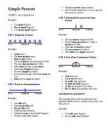
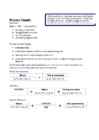
Simple Present Present Progressive/Continious (99%) infinitive form of 'be' and verb + ing (3rd person singular: infinitive + 's') I speak I am speaking you speak you are speaking he / she / it speaks he / she / it is speaking we speak we are speaking
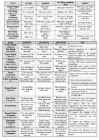
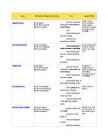
englisch-hilfen.de LEARNING ENGLISH ONLINE Examples Examples Examples Tense Signal words Use Form affirmative negative interrogative every day something happens repeatedly sometimes how often something happens always I work
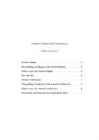
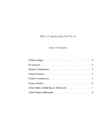
Present Simple and Continuous Table of Contents Present Simple ..................................................................... 2 The spelling of endings in the Present Simple ....................... 2 When to use the Present Simple ........................................... 3 The verb 'be' ......................................................................... 4 Present Continuous.............................................................. 5 The spelling of endings in the Present Continuous................ 5 When to use the Present Continuous.................................... 6 State verbs and event (action or dynamic) verbs ................... 7 Present Simple
........................................................5 Word Order in Negative Sentences......................................................6 Word Order in General Questions.........................................................7 Word Order in Special Questions ..........................................................8 Word Order in Subject Questions ..........................................................9 Types of Sentences There are four basic types of sentences in English. AFFIRMATIVE and NEGATIVE sentences both end with a full stop ( ) : . I live in Tallinn. I do not live in Tallinn. I never watch soap operas. INTERROGATIVE sentences end with a question mark ( ? ) : Do you live in Tallinn? Why do you never watch soap operas? EXCLAMATORY and IMPERATIVE sentences end with an exclamation mark ( ! ) : What a beautiful day! Do your homework at once! Parts of the Sentence The basic parts of the sentence are: THE SUBJECT (WHO? WHAT?) ,
Tests Superstar 1 Luke Prodromou Test 1 Name____________________ Class_______ Use your English 1 Complete these sentences using the correct form (present simple or present continuous) of the verb in brackets. _ 1 She is in a band and she _________________________________ (record) a CD at the moment. _ 2 She is an actress and often _________________________________ (appear) on television. _ 3 At the moment she _________________________________ (have) a rest because she is tired. _ 4 Mike is a doctor and he _________________________________ (live) in Manchester. _ 5 I _________________________________ (start) work at 8.30 every morning.
Get/ Have something TENSE ACTIVE PASSIVE WHEN? done Present Simple Am/is/are + Every day, year, often, I pv + do/does Have/ get + sth+ III pv Lihtolevik III pv usually, always Past Simple Yesterday, last year,
tense Affirmative/Negative/Question Use Signal Words always, every ..., action in the present Simple Present A: He speaks. never, normally, N: He does not speak. taking place once, never or often, seldom, Q: Does he speak? several times sometimes, usually if sentences type I
adjective + preposition omadussõna + eessõna proud of, good at, married to adverb particle Some verbs are followed by adverb particles. Examples are: put on, take off, give away, bring up, call in. Sometimes the particle is detached from the verb and put after the object. •He took his boots off. •They called the doctor in. apposition a grammatical construction in which two usually adjacent nouns having the same referent stand in the same syntactical relation to the rest of a sentence (as the poet and Burns in “a biography of the poet Burns”) back-reference
That'll be Jim at the door. (This means that I suppose it is Jim.) 2. Will is also used to express an immediate decision, when we decide on something or agree to do it more or less at the moment of speaking. I’ll take this one. Decisions expressed with going to refer to a more distant point in the future. 3. Will does not express an intention. For that we use be going to. 2 Be going to We use the present tense of the verb be in the right form + going to + verb. I am going to travel I’m going to travel he/she is going to play he’s/she’s going to play we/you/they are going to drive we’re/you’re/they’re going to drive Negative I am not going to work I’m not going to work he/she is not going to fly he/she isn’t going to fly we/you/they are not going to walk
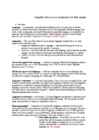
English structure revision for the exam 1. Terms Language → A systematic, conventional (tavakohane) use of sounds, signs or written symbols in a human society for communication and self-expression. Human language at all levels is rule- or principle- governed (valitsema) meaning that language corresponds to the grammar. Natural language is usually spoken, while language can also be encoded into symbols (such as letters, morse etc) For example: Estonian, English. Linguistics → The scientific study of human natural language. Broadly, there are three aspects to the study which are Pragmatics (studies the use of language → interested in the gap between the sentence’s meaning and the speaker’s meaning). Semantics (concerned with the meaning of the language aspects and the way they change, also how objects and language and thinking and language are related).
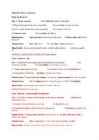
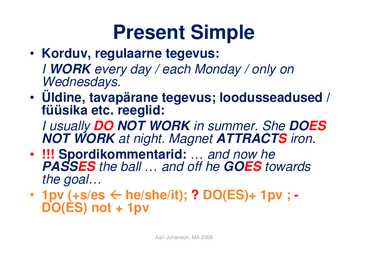
Present Simple · Korduv, regulaarne tegevus: I WORK every day / each Monday / only on Wednesdays. · Üldine, tavapärane tegevus; loodusseadused / füüsika etc. reeglid: I usually DO NOT WORK in summer. She DOES NOT WORK at night. Magnet ATTRACTS iron. · !!! Spordikommentarid: ... and now he PASSES the ball ... and off he GOES towards the goal... · 1pv (+s/es Å he/she/it); ? DO(ES)+ 1pv ; - DO(ES) not + 1pv Aari Juhanson, MA 2008 Present Progressive · Hetkel toimuv, pooleliolev tegevus: S/he IS TALKing on the phone now. I AM READing an interesting book. · Ajutine, regulaarsele ja tavapärasele vastanduv tegevus (tulevikku viitav): This summer they ARE not GROWing cucumbers as usual. They'RE GROWing tomatoes instead. · !!! Halvakspanu väljendus harjumuspärase tegevuse kohta: He IS always COMPLAINing! · BE (am/is/are) + 1pv-ing Aari Juhanson, MA 2008 Present Perfect ON -NUD
ACTIVE TENSES Active form You use an active verb when you want to say that the subject of a sentence does something. · [Thing doing action] + [verb] + · +[thing receiving action] · Examples The professor (subject doing action) teaches (verb) · the students (object receiving action). · Mary (subject doing action) · washes (verb) · the dishes ( object receiving action). The tenses of the verb 1.Present (olevik) 2.Past (minevik) 3.Future (tulevik) 4.Future in the past (kaudne tulevik) Iga aeg võib esineda neljas eri rühmas 1.IndefiniteTenses (üldajad) 2.Continious Tenses (kestvad ajad) 3.Perfect Tenses (perfekti ajad) 4
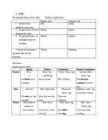
Moved to Cali 2005 Was Born Traveled to Europe Husband 1978 School graduates @ Oxford 1999 Started Got married School 1983 2008 2 The Six English Verb Tenses Three Simple Tenses Simple continuous Present You walk. You are walking I run. I am running. Past You Walked You were walking. I ran. I was running. Future You will walk. You will be walking. I will run. I will be running. Three Perfect Tenses Perfect continuous
7. Verb: The principal forms of the verbs: Verbil on 4 põhivormi: Regular verb Irregular verb 1. the base form Talk Speak üldoleviku tüvivorm 2. the past form/ -ed form Talked Spoke üldmineviku vorm 3. the past participle (-ed Talked Spoken participle) mineviku kesksõna 4. the present participle (- Talking Speaking ing participle) oleviku kesksõna The tenses: Expressing the future: Simple Perfect Continuous Perfect Continuous Present Base Have / has + to be + base+ ing has/ have been +s + pariticiple base+ -ing
He greeted me in a most friendly manner. (adverb) I don’t like your cowardly behaviour. (adjective) He betrayed me in a most cowardly way. (adverb) 8. Sentence Adverbs are words or phrases like certainly, perhaps, luckily, of course. They say something about the situation described in the whole sentence. Fortunately, the weather stayed fine. We’ll probably have to wait for another bus. This one is full. I certainly didn’t expect such a beautiful present! He was late, of course. 3 Position of Adverbs Adverbs of Manner normally come 1. 1) at the end of a statement: Since then I have answered all the letters personally. 2) in shorter sentences they can stand in front of the verb: He quietly shut the door. 3) but after the verb to be Mary is frequently late. 2. before Adjectives and other Adverbs: reasonably cheap (adverb + adjective)
Style The term style is a polysemantic one. The latin word ,,stilus" meant a writing instrument used by the ancients for writing on waxed tablets. Already, in classical latin the meaning of style was extended to denote the manner of expressing one's ideas in written or oral form. One of the abts/the best was given by Jonathan Swift: ,,Proper words in proper places." In present- day english, the world style is used in about half a dozen basic meanings. 1. the characteristic manner in which a writer expresses his ideas. Some speak about the style of Hemingway, Dickens etc. 2. the manner of expressing ideas, characteristic of a literary movement or period. Style of symbolism, romanticism 3. the use of language to pick a literary genre-comedy, novel, drama, O.D (poetic form) etc. 4
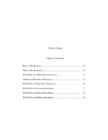
......................................117 Chaos and Higher Order.............................................................................118 Good and Bad.............................................................................................119 Not Minding What Happens.......................................................................120 Is That So?..................................................................................................121 The Ego and the Present Moment .............................................................122 The Paradox of Time...................................................................................124 Eliminating Time.........................................................................................125 The Dreamer and the Dream.......................................................................127 Going Beyond Limitation...........................................................................128
We/you/they have made We/you/they have not made Have we/you/they made? Täismineviku väljendab: · Tegevust, mis toimus enne kõnemomenti, kuid mille tagajärg on kõnelejale tähtis. John has arrived. I have finished writing a letter. Oh God! I have cut my finger. · Tegevust, mis algas enne kõnemomenti, kestab selleni või jätkub edasi. Tegevus võib olla määratletud sõnadega since, for. They have lived here for two years. · Tegevust, mis lõpeb enne mingit tegevust või muutust tulevikus, näiteks ajamääruslausetes, kus kasutatakse sidesõnu when, until, till, before jt. Katie will go for a walk when she has finished her homework. Pane tähele! Täisminevikku saab kasutada koos just, already, yet. Hello! Have you just called me? When is Tom leaving? He has already gone. I have not eaten yet.
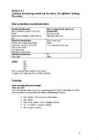
1. Active/Passive Active - the professor teaches the students. Passive - The students are taught by the professor 2. Present Simple [VERB] + s/es in third person. Tegevus on korduv või tavapärane. You speak English. I play tennis. Cats like milk. The train leaves tonight at 6 PM. I am here now. Active= Once a week, Tom cleans the car. Passive= Once a week, the car is cleaned by Tom. 3. Present Continuous [am/is/are + present participle]. Tegevus toimub/ei toimu praegusel hetkel. You are watching TV. You are learning English now. I am studying to become a doctor. I am meeting some friends after work. Active= Right now, Tom is writing the letter. Passive= Right now, the letter is being written by Tom. 4. Past Simple [VERB+ed] or irregular verbs. Tegevus algas/lõppes minevikus täpsel ajal. . You called Debbie. I saw a movie yesterday. I finished work, walked to the beach, and found a nice place to swim
Present Perfect Simple and Present Perfect Continuous Table of Contents Present Perfect Simple.............................................................................2 When to use the Present Perfect Simple ...........................................2 Present Perfect Continuous ...................................................................3 When to use the Present Perfect Continuous..................................4 Time expressions with Present Perfect...............................................5 Present Perfect Simple The Present Perfect is the present tense of have + a past participle I have washed / I’ve washed you have written /you’ve written he/she/it has worked /he’s/she’s/it’s worked we have forgotten /we’ve forgotten they have gone /they’ve gone
you are, they are. He is jane he/she/it isn't Is he/she/it German? No I'm not, you aren't, he/she/it isn't, we aren't, She is marta we aren't are we German? you aren't, they aren't. It is a school. you aren't are you German? We are students they aren't are they German? You are in class 12 They are teachers Unit 2 / present simple + - ? yes- I do, you do, he/she/it does. I work I don't work Do I work no I don't, you don't, he/she/it doesn't You work you don't work do you work? He/she it works he/she/it doesn't works does he/she/it work We work we don't work do we work
1E Past perfect simple and lesson their in. 4 started, was talking 4 It could be that they're in a maths 5 found, was living continuous page 8 lesson. 4 1 has/had just arrived 1 1 had been having hits since 1992 5 It looks as if one of them is asleep. 2 was she doing 2 had been writing songs since 1998 6 It's clear that the girl in the front 3 worked/was working 3 had been working as a DJ for six
Studium Units 1-4 e-formaat Toimetatud Tartu Emajõe Koolis Toimetaja I. Tars Tartus, 2016 Elektroonilisse vormingusse kohandatud õpikus kasutatud märgised, mis aitavad otsingukäsu kasutamisel navigeerida * Tavakirjas leheküljenumbri ees on kolm järjestikust sidekriipsu, tühik ja vastava lehekülje number, näiteks, --- 5; * peatüki ette on kirjutatud kolm x-i, tühik ja vastava peatüki number, näiteks xxx 5; * visuaalne info on pandud kahekordsete ümarsulgude vahele. I Love English 6 töövihik sobib inglise keele õpetamiseks 8. klassis Töövihik vastab riiklikule õppekavale Retsenseerinud Piret Kärtner, Viive Latt, Ingrit Tera Toimetanud Viiu Menning, Nicola Fyfe, Tiina Helekivi Kujundanud ja küljendanud Eve Kurm Tehniliselt toimetanud Andero Kurm Illustreerinud Ülle Meister Esikaas: Boswell and Dr. Johnson (foto Scanpix). Vaata Unit 20. Autoriõigus: Mare Jõul, Ülle Kurm, 2009 Kirjastus Studium, 2009 Kõik õigused on kaitstud
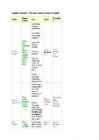
English Grammar - The most common tenses in English Signal Example Tense Use Form words s something happens repeatedly how often something happens every one action day follows sometim another es I work always infinitive Present things in he/she/it he works often Simple general + s I go usually he goes seldom
 annaabi.ee