Leidsid 33 sarnast õppematerjali, mis on seotud failiga "Gerunds and infinities". Need materjalid aitavad sul teemat sügavamalt mõista.
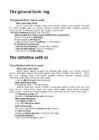
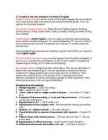
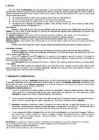
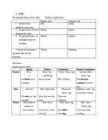
infinitive, verbs, mean, gerund, refer, remember, means, here, forget, without, object, prefer, action, stand, feel, hear, bear, happen, consider, phrases, could, know, beach, afford, expect, intend, pretend, wish, sleep, cause, encourage, order, tell, difference, meaning, forgot, something, drinking, coffee, situations, infinitives, considered, flatThe gerund form -ing The gerund form -ing is used: After some main verbs. (admit, appreciate, consider, delay, deny, detest, dislike, enjoy, escape, face, feel like, finish, forgive, give up, imagine, involve, mention, mind, miss, postpone, practise, prefer, put off, recommend, resent, risk, suggest, understand) I do not recommend going to that restaurant. After an adjective, verb or noun followed by a preposition. She is really good at swimming. He apologised to arriving late.
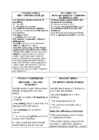
Neti Habakuk Margit Mölder Forming: infinitive+ ing (I+ing) USING: 1) In some fixed expressions (As well as I+ing.., It is no good I+ing.., It is no use I+ing.., can not bear I+ing.., can not help I+ing.., worth I+ing..) 2) After prepositions (before I+ing.., of I+ing.., for I+ing.., by I+ing.., at I+ing..) 3) After verbs (enjoy, admit, consider, can`t stand/ help/ bear, deny, avoid, mind, suggest, understand) 4) With from and to with some verbs (He prevented her from leaving. Look forward to I+ing.., Get used to I+ing..) Forming: to+ verb I (to+v) USING: 1) After some adjectives (happy to+v.., wrong to+v..) 2) To express purpose (She went to Spain to meet her friend.) 3) After some nouns ( decision to+v.., time to+v.., wish to+v..) 4) After some main verbs ( appear, agree, ask, begin, choose, decide, expect, happen, help, hope, learn, like, love, mean, offer, prepare,
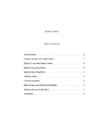
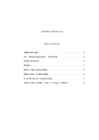
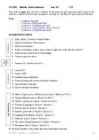
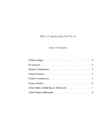
Modal Verbs Table of Contents Introduction ......................................................................... 2 Characteristics of Modal Verbs ............................................. 2 When to use the Modal Verbs ............................................... 3 Expressing permission.......................................................... 3 Expressing obligation ........................................................... 3 Making offers........................................................................ 5 Making requests ................................................................... 6 Expressing possibility/probability......................................... 7
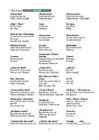
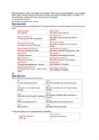
What is your name? (formal) What is your name? (informal) My name is... Mucho gusto. / Encantado. Señor / Señora / Señorita Igualmente. moo-choh goo-stoh / en-cahn- sayn-yor / sayn-yor-ah / ee-guahl-mehn-tay tah-doh sayn-yor-ee-tah Same here. / Same to you. Nice to meet you. Mister / Mrs. / Miss ¿De dónde eres? ¿De dónde es usted? Yo soy de... day dohn-day eh-rehs day dohn-day ehs oo-sted yoh soy day Where are you from? Where are you from? (formal) I'm from..
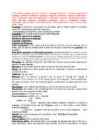
consider, considers, considered Open vs. Closed class words: In linguistics, a closed class (or closed word class) is a word class to which no new items can normally be added, and that usually contains a relatively small number of items. Typical closed classes found in many languages are adpositions (prepositions and postpositions), determiners, conjunctions, and pronouns.[1] Contrastingly, an open class offers possibilities for expansion. Typical open classes such as nouns and verbs can and do get new words often, through the usual means such as compounding,derivation, coining, borrowing, etc. [2] Syntax: studies how words group together to make phrases and sentences. Sentences are not simply random strings of words; they conform to specific patterns determined by the syntactic rules of the language. The syntactic rules in a grammar must account for the grammaticality of sentences, word
adjective + preposition omadussõna + eessõna proud of, good at, married to adverb particle Some verbs are followed by adverb particles. Examples are: put on, take off, give away, bring up, call in. Sometimes the particle is detached from the verb and put after the object. •He took his boots off. •They called the doctor in. apposition a grammatical construction in which two usually adjacent nouns having the same referent stand in the same syntactical relation to the rest of a sentence (as the poet and Burns in “a biography of the poet Burns”) back-reference
Nouns can be divided into proper nouns and common nouns. Proper nouns give names to people and things (Tony Blair, Greece). Nouns which are not proper nouns are common nouns (table, boy, heat). Concrete nouns refer to physical entities that can be observed and measured (cat, garage, soldier). Abstract nouns refer to abstractions that cannot be observed and measured (competition, conscience). verb tegusõna, In a clause, the verb is an obligatory and the most walk, put, do, be, must
I'm Jane Smith. My name's John Smith. Informal introduction Hi. John. Jane. Hello. Titles: Mr Mrs Miss Ms Ms is a modern form of address for women. It replaces the traditional forms of Mrs and Miss. Greetings Good morning/afternoon/evening! 'How are you?' Very often people expect you to say something positive. Here's a breakdown of how you can express how you really are without complaining too much. · Fine, thanks. / On top of the world, thanks. · OK, thanks · Not so bad, thanks. / Can't complain, thanks. · So so, thanks. / So and so, thanks. · Not so good, actually 1 The English alphabet Spelling Work with your partner and spell out first your name and then some names of places
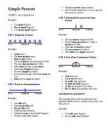
3. Use the simple present play(s), rain(s) etc to talk about habits and repeated actions. I play tennis every Saturday. (NOT I am playing tennis every Saturday.) It usually rains a lot in November. 4. Use will ..., not the present, for offers and promises. I'll cook you supper this evening. (NOT I cook you supper this evening.) I promise I'll phone you tomorrow. (NOT I promise I phone you tomorrow.) 5. Don't drop prepositions with passive verbs. I don't like to be shouted at. (NOT I don't like to be shouted.) This needs to be thought about some more. (NOT This needs to be thought some more.) 6. Don't use a present tense after It's time. It's time you went home. (NOT It's time you go home.) It's time we invited Bill and Sonia. (NOT It's time we invite Bill and Sonia.) 7. Use was/were born to give dates of birth. I was born in 1975. (NOT I am born in 1975.) Shakespeare was born in 1564. 8. Police is a plural noun.
1 Anne Seaton · Y. H. Mew Three Watson Irvine, CA 92618-2767 Web site: www.sdlback.com First published in the United States by Saddleback Educational Publishing, 3 Watson, Irvine, CA 92618 by arrangement with Learners Publishing Pte Ltd, Singapore Copyright ©2007 by Saddleback Educational Publishing. All rights reserved. No part of this book may be reproduced in any form or by any means, electronic or mechanical, including photocopying, recording, or by any information storage and retrieval system, without the written permission of the publisher. ISBN 1-59905-201-6 Printed in the United States of America 13 12 11 10 09 08 07 9 8 7 6 5 4 3 2 1 Introduction Grammar is a very old field of study. Did you know that the sentence was first divided into subject and verb by Plato, the famed philosopher from ancient Greece? That was about 2,400 years ago
Type 2 Type 1 If he came back late last night, he won't be on time for work today. Type 2 Type 3 If you were polite, you wouldn't have talked to him like that. Type 3 Type 2 If he hadn't missed the bus, he would be here now. Wishes We can use wish / if only to express a wish. Verb tense Example Use I wish I was on holiday now. Wish / if only To say that we would like sth. (but I'm not) + past simple/ to be different about a present
· With ,,Always" to express anger or irritation at a repeated action (You're always forgetting..) TIME EXPRESSIONS USED WITH PRESENT CONTINUOUS: now, at the moment, at present, these days, nowadays, still, today, tonight etc. Present Perfect · Action happened at an unstated time in the past. Emphasis on the action, time is unimportant or unknown. (I have washed the car) · Action started in the past and continues up to the present, especially with stative verbs (I have known her for six years) · Recently completed action (I have finished my essay) TIME EXPRESSIONS USED WITH PRESENT PERFECT: for, since, already, always, just, ever, never, so far, today, this week/month etc. lately, recently, still (in negations) etc. Present Perfect Continuous · To put emphasis on the duration of an action which started in the past and continues up to the present (We have been cleaning the house all morning)
speaker the way the language should be written or spoken in order for the speaker to appear correct or educated. It could be said that this is an academic and strictly correct language use. For example: Never use ain’t Don’t split an infinitive (To quickly run) Descriptive grammar → Underlies the actual usage of speakers of the language. Grammar also has many components: Phonetics → The study of the acoustic detail of speech sounds and how they are articulated. Phone is a smallest unit of sound in human
Modals Sandra Haar Form 11 I am going to talk about... Can Could May Might Must Should Would Ought to Excercises References How do we use modal verbs? Affirmative: Subject + modal + infinitive, Example: She should stay Negative: Subject + modal(n`t) + infinitive, Example: She shouln`t stay Interrogative: (Wh) Modal + Subject + Infinitive, Example: Why should she stay? Can Ability to do something in the present-I can speak English. Permission to do something in the present-Can I go to the cinema? Request - Can you wait a moment, please? Offer- I can lend you my car till tomorrow. Suggestion- Can we visit Grandma at the weekend?
They are stigmatized as shameful and inferior, socially lower. Judging people by their accent might, however, be offensive. These varieties are connected to race in US and class in UK. Grammatical and lexical differences throughout the world in the English language are rather insignificant . Most oftenly pronounciation is the most significant/different. Deviations from the standards: 1. Multiple negations ,,I didn't do nothing." 2. Ain't negative of ,,have" or ,,be" 3. ,,Never" used to refer to a single occasion in the past ,,I never done it" (I didn't do it) 4. Extension of 3rd person ending ,,s" to 1st and 2nd person forms ,,I/You wants" (used by the working class) 5. Regularisation of ,,be" ,,Me/You/They was" 6. Regularisation of some irregular verbs draw/drawed/have drawed; go/went/have went 7. Optional ,,-ly" ending on adverbs ,,He writes real quick." 8. Unmarked plurality on amounts of measurement after numerals 10 pound, 20 year 9
FUTURE SIMPLE BE GOING TO Will + infinitive (will go) Am/is/are going to + infinitive (is going to rain) 1.A decision at the moment of 1.Future plans made before the speaking: moment of speaking: A: 'I'm cold'. A: 'We've run out of milk.' B: 'I'll close the window'. B: 'I know, I'm going to buy some.' 2.Prediction based on opinion: 2.Prediction based on present I think the Conservatives will win the evidence: next election
15 monophtongs, (7 long, 7 short, 1 central), 4 diphtongs, 17 consonants. Free variaton of R, and it was pronounced everywhere. Very much Germanic in character. Quite some special consonants that no longer exist. About morphology: synthetic with numerous aglutinating tendencies. System of tenses Germanic, but with a reduction of tenses. Paradigmatic leveling; Stress shift; Word order; Loan words (Old Norse, Old French). Dual pronouns. Determiners - no separate definite article. Strong and weak verbs. Word order relatively free with tendencies towards SVO. SVO, SOV, VSO most common. Adposition and podposition were both possible (eesliide ja tagaliide). About syntax: clauses were joined much simpler than nowadays, using and, then etc. Because of case syncretion the word order in a sentence became much more important to be able to tell the difference between words. FIRST CONSONANT SHIFT (GRIMM'S LAW)
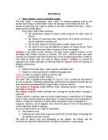
.................................................. 3 Whole ................................................................................... 4 Both, either and neither ....................................................... 4 Few/a few – a little/little....................................................... 5 A lot of/lots of – much/many................................................ 5 Some, any + -body / -one, + -thing, + -where ........................ 6 Some and any Some and any mean a certain number or amount. They are used with or instead of plural or uncountable nouns. Some is a possible plural form of a/an and one: Have a biscuit/some biscuits. I bought a cake/some cakes. Some, any and none can be used with of + the/this/these/those (+ ...) Some of the staff can speak Portuguese. Did any of your photos come out well? You can take any of these. Some is used: • with affirmative verbs: They bought some honey.
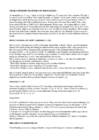
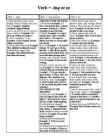
Verb + -ing or to Verb + -ing Verb + -ing and to Verb + to 1) Stop, postpone, admit, avoid, CHANGE IN THE MEANING: 1) Offer, decide, hope, deserve, imagine, finish, consider, deny, risk, 1) Remember Example: 1. I promise, agree, plan, manage, afford, fancy. Example: Suddenly know I locked the door. I clearly threaten, refuse, arrange, fail, forget, everybody stopped talking. remember locking it. 2. Please learn. Example: It was late, so we 2) Give up, put off, go on / carry on, remember to post the letter. decided to take a taxi home. keep or keep on. Example: I've 2) Regret Example: 1. I regret 2) Seem, appear, tend, pretend, given up reading newspapers. saying what I said. I shouldn't claim. Example: They seem to have
follows it (except for cases of extreme contrast). Incorrect: She was late for class, because her alarm clock was broken. Incorrect: The cat scratched at the door, while I was eating. Correct: She was still quite upset, although she had won the Oscar. (This comma use is correct because it is an example of extreme contrast) b. Common introductory phrases that should be followed by a comma include participial and infinitive phrases, absolute phrases, nonessential appositive phrases, and long prepositional phrases (over four words). Having finished the test, he left the room. To get a seat, you'd better come early. After the test but before lunch, I went jogging. The sun radiating intense heat, we sought shelter in the cafe. c. Common introductory words that should be followed by a comma include yes, however, well. Well, perhaps he meant no harm. Yes, the package should arrive tomorrow morning.
ideas. 40. Science is like country music--those guys can't resist a clever turn of phrase. 41. Some of the worst warmongers are frustrated peacemakers. 42. Stuff that's "over your head" is only a problem if you don't look up. 43. Technology should be made idiot-proof but it should not thereby be made genius-proof. 44. The bullshit isn't all in one place. 45. The fact that there's demand for your stuff does not mean that it's true, beautiful, or ethical. 46. The heart must go out but it must not bleed. 47. The mind must be used to navigate through the complications of the mind. 48. The only animal in the forest that deserves to be hunted is the hunter. 49. The only real superpower is the power to pay attention. 50. The only thing wrong with strong epithets is their misapplication. 51. There's a stupid way of thinking that would make doing the right thing contingent on
- I. Ladusseva "A Guide to Punctuation" EXAMINATION TOPICS: 1. Style, stylistics, a survey of stylistic studies 2. Inherent connotations. Phonesthemes Use lecture notes 3. Adherent connotations 4. Stylistic morphology: articles, nouns, pronouns, adjectives, verbs, adverbs, number * 5. Expressiveness on the level of word-building 6. Phonetic expressive means Study independen tly 7. Phonetic SD ("Rhythm And Style") 8. Lexical SD* 9. Syntactic SD* Use lecture notes 10. Graphical means and devices 11
g. the style of a comedy, drama, novel). 4. the selective use of language that depends on spheres / areas of human activity (e.g. style of fiction, scientific prose, newspapers, business correspondence, etc.). STYLISTICS Stylistics is the study of style. The very term "stylistics" came in more common use in English only some 45 years ago. Stylistics is a part of style; it studies principles of selecting and using different linguistic means (grammatical and phonetic) that serve to render shades of meaning. The Stylistics of language studies stylistic devices and expressive shades of linguistic units (words, construction of phrases). The Stylistics of speech studies individual texts viewing the way the message or content is expressed. Literary Stylistics concentrates on artistic expressiveness that characterizes a literary work, a writer, or a whole time period.
· I play tennis. · She does not play tennis. USE 4 Now (Non-Continuous Verbs) · Does he play tennis? · The train leaves every morning at 8 AM. · The train does not leave at 9 AM. · When does the train usually leave? · She always forgets her purse. · He never forgets his wallet. Examples: · Every twelve months, the Earth circles the Sun. · I am here now. · Does the Sun circle the Earth? · She is not here now. · He needs help right now. USE 2 Facts or Generalizations · He does not need help now. · He has his passport in his hand. · Do you have your passport with you?
All tickets must be bought in advance. advance. shall should What shall we do about it? He asked what we should do about it. may might May I smoke? He asked if he might smoke. Things are slightly more complicated with imperatives. tell + infinitive positive imperative He told me to shut up. Shut up! tell + not + infinitive negative imperative He told me not to do it again. Don't do that again! ask + infinitive imperatives as requests He asked me to give him some money. Please give me some money.
These are called functional styles or registers (fiction, newspaper) Stylistics is the study of style. However, for some reason, English stylistics is less developed than French, German or Russian. The term ,,stylistics"came into more common use in English only some 35 years ago. It was recorded much earlier; in 1882 as "the study of literary style, the study of stylistic features" Stylistics is a branch of linguistics that studies principles of selecting different linguistic means for passing on thoughts and emotions. It studies: · Different functional styles, styles of genres, individual styles · Expressive, emotional features of different language units Stylist--a writer or a speaker skilled in a literary style Stylistition--a scholar who studies stylistics The word "style" is applied to many things. A linguistic style is a variety of subsystem of lg with its peculiar vocabulary, phraseology, grammatical and phonetic features that are
day Past base+ed Had + participle Was/were Had been verb + ing Base + ing I had been walking. He went to a club Mary had read the They were ast night. book. watching. Future Will infinitive Will + have Will+ base+ ing Will + have without to.. + been+ ing He will leave.. I will have a word You will be I will have been with you. watching working Present Future
elegant use of language by developing and polishing stylistic devices. In the 18th century, an individualistic-psychological view on style and stylistics emerges. The late 19th and and early 20th centuries witnessed a utilitarian approach to stylistics. The tendency to regard stylistics as an applied science has been particularly marked in english- 1 speaking countries. It was believed here that the main aim of stylistics is to improve the style of the writer and of a textbook, that is to show how better to express one's thoughts. Of foreign linguists, it is the french Ch.Balley, G.Marduzeon who in the 20th century made a definite contribution. This happened because of the centuries-old tradition in France of interest in style. The classical works on english stylistics are those by the german scholars: Ph.Aronstein, M.Deutschbein, I.Galperin
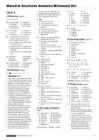
again to keep the noise down. between Paul and Joe. 1D Sporting origins page 67 2 She recognised him at once. 2 Phobias can be genetically 3 He's working at his father's shop inherited. 1 1 staunchly / resolutely for the time being. 3 When it comes to politics, 2 By and large 4 They'll be here any moment now. Edward and his dad have a lot in 3 swiftly 5 Everybody makes mistakes once common. 4 loosely in a while. 4 Luke is the spitting image of Matt 5 categorically 6 My brother was still a baby at the Damon. 6 widely time
I/you/he/we/they won’t write Question Will you/he/she/we/they come? 1. We often use will as a neutral way of expressing the future. We use will to say what we know or think about the future. It is known as the predictive future, and describes known facts, or what we suppose is true. I’ll be late home this evening. The company will make a profit next year. This can also take the form of an assumption: That'll be Jim at the door. (This means that I suppose it is Jim.) 2. Will is also used to express an immediate decision, when we decide on something or agree to do it more or less at the moment of speaking. I’ll take this one. Decisions expressed with going to refer to a more distant point in the future. 3. Will does not express an intention. For that we use be going to. 2 Be going to We use the present tense of the verb be in the right form + going to + verb.
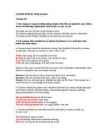
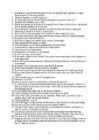
They usually go to bed at about midnight. 2 Macmillan Publishers Limited 2001. This sheet may be photocopied for use in class. 8 ____________________________________________________________________________________________ Yes, we own a BMW. 9 ____________________________________________________________________________________________ I don't know what the word means. Look it up in a dictionary. 10 ____________________________________________________________________________________________ No, I don't like the Spice Girls. Marks: /10 Words, words, words 4 Complete these sentences using the correct form of the words below. There is one extra word which you do not need to use.
A woman who would please her husband's eyes Alone, wants no such wealth of fineries. CLEANTE But, madam, after all . . . MADAME PERNELLE Sir, as for you, The lady's brother, I esteem you highly, Love and respect you. But, sir, all the same, If I were in my son's, her husband's, place, I'd urgently entreat you not to come Within our doors. You preach a way of living That decent people cannot tolerate. I'm rather frank with you; but that's my way-- I don't mince matters, when I mean a thing. DAMIS Mr. Tartuffe, your friend, is mighty lucky . . . MADAME PERNELLE He is a holy man, and must be heeded; I can't endure, with any show of patience, To hear a scatterbrains like you attack him. DAMIS What! Shall I let a bigot criticaster Come and usurp a tyrant's power here? And shall we never dare amuse ourselves Till this fine gentleman deigns to consent? DORINE If we must hark to him, and heed his maxims, There's not a thing we do but what's a crime;
Kirjastus Studium, 2009 Kõik õigused on kaitstud. Ilma autoriõiguse omaniku eelneva kirjaliku loata pole lubatud ühtki selle töövihiku osa paljundada ei elektroonilisel, mehaanilisel ega muul viisil. Töövihik on kooskõlas 2009. a uuendatud õppekomplektiga I Love English 6. Tartu, 2014 ISBN 978-9949-436-59-0 Kirjastus Studium Riia 15b, Tartu 51010 www.studium.ee Trükitud OÜ Greif trükikojas Lohkva, Luunja vald Tartumaa 62207 --- 3 xxx 1. The Big Apple 1. Write the verbs in the present continuous or the past continuous tense. Do you remember? am is are was were verb -ing 1 Sorry. I ... (write) a report at the moment. I can't come with you. 2 When Peter arrived, his friends ... (play) football. 3 I ... (sleep) when the alarm went off in my sister's room. 4 Dad's mobile phone is switched off because he ... (fly) to Paris. He's on the plane at the moment. 5 I ... (read) an interesting book. It's a collection of memories. 6 Leo was late again. He ..
 annaabi.ee