 10 punkti
Autor soovib selle materjali allalaadimise eest saada 10 punkti.
10 punkti
Autor soovib selle materjali allalaadimise eest saada 10 punkti.
 ~ 4 lehte
Lehekülgede arv dokumendis
~ 4 lehte
Lehekülgede arv dokumendis
 2012-05-03
Kuupäev, millal dokument üles laeti
2012-05-03
Kuupäev, millal dokument üles laeti
 9 laadimist
Kokku alla laetud
9 laadimist
Kokku alla laetud
 0 arvamust
Teiste kasutajate poolt lisatud kommentaarid
0 arvamust
Teiste kasutajate poolt lisatud kommentaarid
 Marian97
Õppematerjali autor
Marian97
Õppematerjali autor
ground. All surviving churches, except one timber church, are built of stone or brick and in some cases show evidence of re-used Roman work. Art Anglo-Saxon art is mainly known today through illuminated manuscripts. Although they are the most well known to have survived. Perhaps the best known piece of Anglo-Saxon art is the Bayeux Tapestry which was commissioned by a Norman patron from English artists working in the traditional Anglo-Saxon style. The most common example of Anglo-Saxon art is coins, with thousands of examples extant. Anglo-Saxon artists also worked in fresco, ivory, stone carving, metalwork and enamel, but few of these pieces had survived. Literature Anglo-Saxon literary works include genres such as epic poetry, hagiography, sermons, Bible translations, legal works, chronicles, riddles, and others. The most famous works from this
blankets draped over one shoulder. Their pants ended halfway between their knees and ankles. They decorated the seams of their pants with silver buttons. Men · Primitively the men dressed in deerskin shirts, hip-leggings, moccasins, and native blankets. These were superseded by what has been the more universal costume during the present generation: close-fitting cotton or velvet shirt, without collar, cut rather low about the neck and left open under the arms. Men · A traditional man would wear cotton pants, a concho belt, and velvet or crushed velvet shirt. A man and wife will usually wear matching outfits. The only traditional head dress worn is worn by a man. Aside from the Navajo bun, positioned in the back of the head, there would be a scarf, folded to make a long thin (belt looking) scarf. This would be tied above one ear. Women · The women also borrowed the Mexican style of dressing. The women wore woolen
1. Feminism movement, ideology to defend women’s rights Suffrage – right to vote 2. Feminism isn’t a unitary movement because it represents different women and different experiences for them in different parts of the world. Different ideologies 3. Three waves of feminism • 1st wave – early 19th century – early 20th century (Political rights, suffrageright to vote) • 2nd wave – 1960s1980s (Social inequalities, gender norms, Women's Liberation Movement) • 3rd wave – 1990s2000s (ideas are the same, but they wanted to get rid of things the second wave had failed to do); feminisms, expansion, multiplicity, postcolonialism. 4. Anne Bradstreet the first feminist 17th century; the most prominent of early English poets of North America and first female writer in the British North Amer
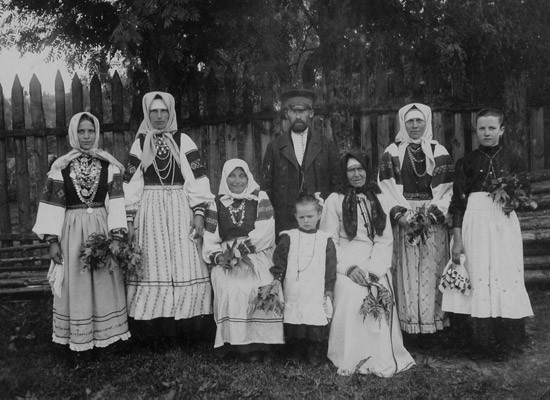
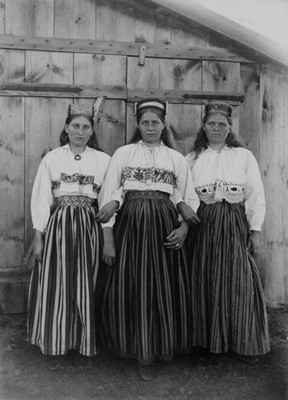
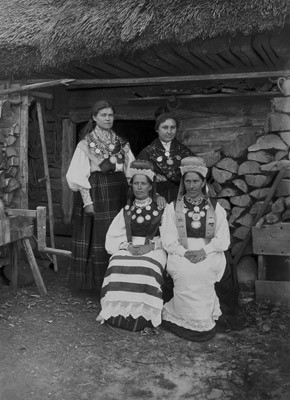
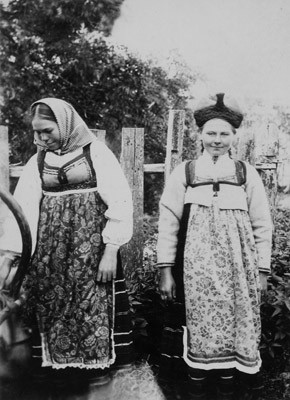
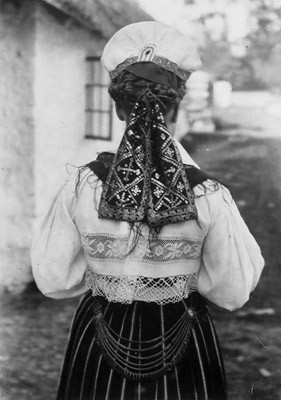
Setomaa The extreme south-eastern corner of Estonia - this is the location of SETOMAA, a peculiar historical and ethnical province in Estonia. Setomaa is bounded in the north-east by Lake Pihkva, in the east and south-east by Russia, in the south by Latvia and in the west by Võru County. The greatest extent from north to south is 65 km and from east to west 40 km. Today Setomaa is divided between three administrative units: Võru and Põlva counties of Estonia and Pechorsky district of Russia. On the territory of Estonia, Setomaa comprises four municipalities: Misso, Meremäe, Värska and Mikitamäe municipalities.
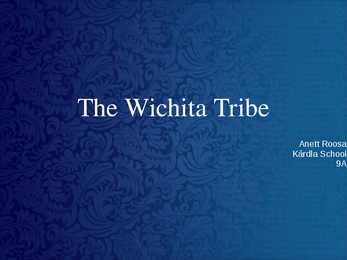
The Wichita Tribe Anett Roosa Kärdla School 9A Wichita Tribe Were original people of southern Oklahoma and northern Texas, but after Europeans arrived, population pressures forced them further north into Kansas, where the city of Wichita is named for them. Most Wichita people are living in Oklahoma today. Speak English today. Some also speak their native Wichita language The Wichita Nation has its own government, laws, police, and services Before becoming a civilization, they tattooed their faces, arms, and chests. They were a steadfast and peaceful people. They had about 500 warriors in their tribe. The Wichita's chief from the past was WeeTaRa ShaRo. People History of population The Wichita had a large population in the time of Coronado and Ona
Uusikaupunki, was a relatively static period in Estonian history with few momentous events. This was the time of the crystallization and the culmination of serfdom, when various socio- political and cultural undercurrents were also active, preparing the ground for the industrial society and the national-democratic movement in the second half of the 19th century. The 1710 of the corporations of knights and towns, until Alexander II (18551881), established the relationships between Estonia, Livonia and the Russian Empire. The Baltic Landesstaat reached its full development. The freedom of action in the new provinces was naturally granted to one of the most firm ideological pillars of the tsarist empire -- the Russian orthodox church; though as the Landeskirche in the Estonian and Livonian territories, the Lutheran church long maintained a de facto predominance. The most important organ of Baltic German local government was the Diet, consisting of all
Tallinn English College Topic Estonia Tallinn 2008 1. Introduction Estonia is a small country about the size of Switzerland, or New Hampshire and Massachussetts combined. Estonia is named after the people called "Ests" who lived in the region in the 1 st century AD. The Republic of Estonia is one of the three countries commonly known as the "Baltic States". The other Baltic States are Latvia and Lithuania. 2. Geographical position Estonia is situated in northeastern Europe. Estonia is bounded on the north by the Gulf of Finland, on the east by Russia, on the south by Latvia and on the west by the Baltic Sea. In the north it borders on Finland. The coastline of the Baltic Sea in Estonia is characterized by numerous gulfs and bays, the biggest of them
Holidays, Festivals, Cultural events TALLINN - If you're looking for entertainment in Estonia this summer, you are really spoiled for choice. Festivals and events dedicated to the consumption of beer are a lot of fun, but if you want to get the true feel of the country, you need something a little more ethnic. Like a town fair. Just as July becomes August, the seaside town of Haapsalu will host a grand spectacle of rural Estonian entertainment. The White Lady Days is a summer celebration filled with amusement for all the family. Held in and
 annaabi.ee










Kõik kommentaarid