Leidsid 33 sarnast õppematerjali, mis on seotud failiga "Essential Vocabulary töö". Need materjalid aitavad sul teemat sügavamalt mõista.
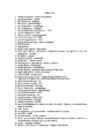
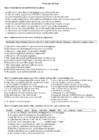
court, claim, legal, evidence, person, action, power, civil, matter, laws, hagi, force, trial, judge, rights, capacity, enforce, süüd, party, judgment, matters, hear, crime, criminal, order, pass, statement, parties, active, impose, settle, acts, cause, case, obligation, present, serve, perform, session, behaviour, protect, panema, rule, void, amendEssential Vocabulary - I The role of law in society 1. juriidilised kohustused – legal obligations 2. kannatanud pool, kahjukannataja – injured party 3. vaidlusi lahendama (kohtus) – to settle a dispute in a court of law 4. riskeerima tehingute tegemisega – to risk making transactions 5. õigusnõustamist otsima – to seek legal advice 6. tagama, et leping kehtiks – to ensure that the contract would be valid 7. õiguslikke vahendeid kasutama – to use legal means 8. harjuma õiguslikke vahendeid kasutama – to get accustomed to using legal means 9. omama teadmisi millestki – to have knowledge of smth 10. ette kirjutama, ettekirjutus, ettekirjutav – to prescribe, prescription, prescriptional 11. karistust kandma – to serve punishment (ka to suffer a penalty) 12
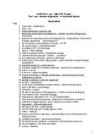
descriptive law (kirjeldav õigus) - laws which simply describe how people or even natural phenomenas usually behave nation (riik) - country with its own goverment citizen (kodanik) - person native of a country; realationship between country and a person stranger (välismaalne) - person who is unfamiliar, from another country penalty (karistus) - punishment fixed by law, as for a crime or from any soical groups goverment (valitsus) - organization which controlls a stre or community System of Courts (kohtusüsteem) - organization applying law in the name of states to commit a crime (kuritegu läbi viima) - breaking a law, usually given out by the goverment fine (trahv) - certain sum of money person pays for breaking a law
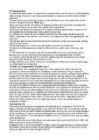
Prescriptive law – prescribe how people ought to behave Descriptive law – describes the way people or natural phenomena behave Break the law – do something illegal Penalty – punishment Government – system by which a state or community is controlled Law – the system of rules System of courts – all judicial institutions Enforce – to make people obey the law Authority – a group of people with official responsibility for a particular area of activity /the moral or legal right or ability to control Prescribe – to tell someone what they must have or do, or to make a rule of something Impose The word law can have several meanings, it can be divided into prescriptive and descriptive law. Descriptive law – describes the way people or natural phenomena behave, e. g. law of gravity Prescriptive law – prescribe how people ought to behave e.g. speed limits In all societies relations between people are regulated by prescriptive law; customs (informal
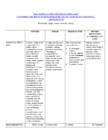
ATTORNEY-AT- LAW WHAT DO THEY A notary public of the A judge presides over The prosecutor has Attorney at law or DO? common law is a a courtroom, hearing three main tasks: attorney-at-law, public officer evidence, making usually abbreviated in constituted by law to decisions on motions. to investigate everyday speech to serve the public in The judge is crimes, attorney, is the non-contentious responsible for to decide whether preferred term for a
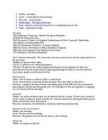
11.02.09 INGLISE KEEL Palju aega läheb. 10 nädalat aint. One of the ESP courses. What we are going to do, what is needed: · What we do - 1 test, on words. · 2 Essays, that means that we have to look into academic writing · Homereading we read a case from European Court of Justice thingy. · Oral thing. · 90% you have to attend · Have to prepare for class and take part of it etc What we learn: Terms Expressions / collocations (nt obey/abide by the law) Explaining AWOL absence without a leave Legal English can be divided into 3 levels. We learn the first one, which is needed for the other two! You have to know the vocabulary etc. Second level has to do with legal contracts..
Units 12-18 1. system of pandects pandektiline süsteem 2. general provisions üldosa 3. law of property asjaõigus 4. family law perekonnaõigus 5. law of sucession pärimisõigus 6. law of obligations võlaõigus 7. General Part of the Civil Code Act TsÜS 8. Law of Property Act AÕS 9. Family Law Act perekonnaseadus 10. Law of Succession Act PäRS 11. Law of Obligations Act VÕS 12. persons and transactions isikud ja tehingud 13. natural persons 14. legal persons 15. passive legal capacity õigusvõime 16. active legal capacity (an ability to independently asume civil rights and incur civil obligations) teovõime 17. live birth elussünd 18. bequeath property pärandama 19
eelkõige reguleeritud ... abil/kaudu/alusel 6. the Constitution of the Republic of Estonia EV PS 7. the Citizenship act kodakondusseadus 8. according to § 8 - § 8 alusel/järgi 9. right to õigus millelegi 10. shall be acquired by birth omandatakse sünniga 11. proceeds from the principle tuleneb ... printsiibist 12. any child found in Estonia iga Eestist leitud laps 13. at the request of the child's legal guardian lapse seadusliku esindaja/hooldaja nõudel/palvel 14. guardianship agency eestkosteasutus 15. to acquire (apply for?) Estonian citizenship taotlema Eesti kodakondsust 16. unless kui just 17. to receive saama/omandama 18. to receive Estonian cs. through naturalisation naturalisatsioon/(i) alusel kodakondsuse saamine 19. provides conditions näeb ette tingimused 20. an alien välismaalane
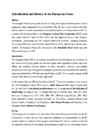
1.Common law A common law legal system is a system of law characterized by case law which is law developed by judges through decisions of courts and similar tribunals a common law system is based on legal precedents. The roots of the common law legal systems can be traced back to the first common law system created in England during the Middle Ages. Today, most countries that once had ties to England, including the United States, Australia, New Zealand, and Hong Kong, to name a few, operate under common law. Aside from Great Britain, the majority of the countries in Europe operate under a version of civil law modeled after the Roman legal system created centuries ago
The European Union (EU) is an economic and political union.EU policies aim to ensure the free movement of people, goods, services, and capital, enact legislation in justice and home affairs, and maintain common policies on trade, agriculture, fisheries, and regional development. Within the Schengen Area, passport controls have been abolished.The monetary union was established in 1999 and came into full force in 2002. It is currently composed of 18 member states that use the euro as their legal tender. At the moment there are 28 member states in the EU. To become a member, a country must meet the Copenhagen criteria. These require a stable democracy that respects human rights and the rule of law; a functioning marketeconomy; and the acceptance of the obligations of membership, including EU law. No member state has ever left the Union. After 1952, there have been 7 enlargements: 1973, 1981, 1986, 1995, 2004 (including Estonia), 2007, 2013.
E.g. traffic signs are almost the same everywhere, why? Because of certain int conventions that require the states to have more or less unified traffic signs. States apply international regulations to national regulations and they have to be in accordance with each other, the states can always specify these regulations. Therefore, PIL regulates people indirectly. Another unique feature: domestic law sources have a clear pyramid (top to bottom: constitution, laws, individual contracts, they cannot contradict each other) and all sources are written. In PIL there is no such hierarchy, but there are primary sources (all are equally important) and secondary sources and all are not written. Primary sources: written documents (int treaties, conventions, declarations etc), international customary law (legally binding), fundamental principles (legally binding).
breeds which were classified as dangerous by the study. The company has strong connections to breeders in different EU countries. The prohibition of dealing (selling and importing) in pit bulls and Rottweilers has hit noticeably company’s profits potentially driving it out of business or leading to change of its specialization. 1 Questions: 1. Can the PB&R Company successfully claim any violation of the EU law related rights? 1.1. Goods? Yes, Articles 34 and 35 TFEU cover all types of imports and exports of goods and products. The range of goods covered is as wide as the range of goods in existence, so long as they have economic value: ‘by goods, within the meaning of the … Treaty, there must be understood products which can be valued in money and which are capable, as such, of forming the subject of commercial transactions’1
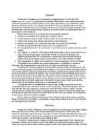
Estonian Court System Estonia has a three-level court system. Estonian court system consists of four country courts, two administrative courts, three circuit courts and supreme court. Country courts and administrative courts are the courts of first instance, circuit courts are courts of appeal and the supreme court, situated in Tartu, is the court of the highest instance The Supreme Court is also the constitutional review court. In the structure of four country courts(Harju, Pärnu, Tartu and Viru) operate courthouses in every country seat(in Ida- Virumaa and Harjumaa there are three courthouses)In the structure of two administrative courts(in Tallinn and Tartu) there are four courthouses: in Tallinn, Tartu, Jõhvi and Pärnu. Three circuit courts are situated in Tallinn, Tartu and Jõhvi. The supreme court The Supreme Court is the court of the highest instance, which shall review
- Pursuant to Articles 4 and 10(2) of the The Directive on veterinary and zootechnical checks, dogs may be the subject of trade in principle only if certain conditions are met (Case C-301/14 Pfotenhilfe-Ungarn eV V Ministerium für Energiewende, Landwirtschaft, Umwelt und ländliche Räume des Landes Schleswig- Holstein). c. Are there any measures that may restrict such an action or inaction for free trade within Member States? - According to articles 34 and 35, there could not be any restrictions on export or import of goods within the Member States. A measure having equivalent effect has been defined in Dassonville. d. Are there any restrictions for animal trading for commercial or non-commercial purposes? – yes. Pursuant to Article 3(1) of the Directive on veterinary and
as well as the displaced, throughout sustaining their survival throughout the humanitarian aid program that the organization is conducting. SAA is part of the Coalition for a Democratic Syria, a coalition of Syrian American organizations which includes six organizations which are United for a Free Syria, Syrian Expatriates Organization, the Syrian Emergency Task Force, Christian Syrians for Democracy and Association of free Syrians. 4. Judicial system and its functionality The Syrian legal system is based partly on French law and partly on Syrian statutes. Investigating magistrates determine whether a case should be sent to trial. Minor infringements are handled by peace courts, more serious cases go to courts of first instance. There are civil and criminal appeals courts, the highest being the Court of Cassation. Separate state security courts have jurisdiction over activities affecting the security of the government. In addition, Shari'ah courts apply
Law-makers breaking the law: torture as a justified interrogation technique? 1 Introduction It was Jeremy Bentham who thought of a famous method to give ethics a rational basis. He was fed up with the penal laws where offenders met corporate punishment and together with Cesario Beccaria he stood up to torture, corporal punishment, and the death penalty. He resisted against irrational moral emotions as the instigation for ethical conduct, saying only reasonable grounds could justify the moral decisions of individuals and legislators. And now his theory of is the one that is known for justifying torture (Verplaetse, 2008).
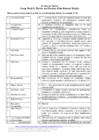
advokaatide juhedaja - instructing solicitors for prosecution and defence alaealiste kohus - Juvenile court armuandmine - Mercy edasikaebamine - Appeal haldusõigus - Administrative law/ public law juriidilisele kaitsele - Judicial protection kaitse - Defence kaitsja - Councel for the defence kannatav pool - Injured party karistama - Punish karistust andma/täide viima - Meting out punishment karm karistus a harsh sentence kautsjon - Bail kirjalik laim - Libel kirjutatud seadus/parlamendi aktidel põhinev seadus - Statute law/statutory law kohtu asja võitma win a case
6 Art 5(1)(f) - Bozano v France (1987) CASE OF BOZANO v. FRANCE (18 December 1986) The applicant, an Italian national, was tried in absentia by an Italian court for abduction and murder and sentenced to life imprisonment. Three years later, he was arrested in France by the police, but a formal request for extradition was refused by the Limoges Court of Appeal as the conviction in absentia was incompatible with French public policy. The applicant remained in residence in the Limoges area awaiting trial by the French courts for other offences. On the day that an order was made committing him for trial, the applicant was abducted by French policemen, served with a deportation order (which was over one month old) and forcibly taken to the Swiss border where he was handed to the Swiss authorities. Following proceedings in
whether or not this structure and the law making powers granted to each respective institution are inherently undemocratic, it is vital to define what is meant by the term ‘democratic’. In his Gettysburg address Abraham Lincoln referred to a government which was ‘of the people, by the people, for the people’and it is by this criterion that democracy is often judged. These principles are reflected in having equal access to power and in being equal before the law. It must be considered not only whether law making powers are granted to elected persons, but also whether the balance of power between institutions within the European Union promotes the ideals of democracy. Firstly,the democratic nature of the European Union must be measured by the extent to which its institutions (particularly those with executive and legislative power) are elected bodies of persons
/ wicce f.) is a practitioner of witchcraft. Historically, it was widely believed that witchcraft involved the use of these powers to inflict harm upon members of a community or their property, and that all witches were in league with the devil. Since the mid 20th century, the term witchcraft has sometimes been used to distinguish between bad witchcraft and good witchcraft, with the latter often involving healing. Human misfortune was often blamed on a supernatural entity or a known person in the community. Reasons for accusations of witchcraft fall into four general categories: · A person was caught in the act of positive or negative sorcery · A well-meaning sorcerer or healer lost their clients' or the authorities' trust · A person did nothing more than gain the enmity of their neighbours · A person was reputed to be a witch and surrounded with an aura of witch-beliefs
Finland judicial system Roadmap Finnish judicial system General courts Administrative courts Special courts Lay judges in Finland The Finnish judicial system consist of: ● Courts ● Prosecution service ● Enforcement authorities ● Prison and probation service ● Bar Association General courts 1.District Courts 2.Courts of Appeal 3.Supreme Court District court ( Finnish: käräjäoikeus) 27 district courts Criminal cases, civil cases and petitionary matters Chief Judge and District Judges Courts of Appeal 5 courts Chief Justice and Senior Justices Appointed by the president The Supreme Court Helsinki President and 18 justices Function is to rule on important points of law Gives advice to President and Ministry of Justice Administrative courts Regional Administrative Court 8 courts The judicial oversight of administrative acts is the task of the administrative courts.
privatization policy was one of the important reforms of Georgian Government, that was ad- dressed to denationalization of the remained state property in order to attract foreign investments, increase and develop the private sector and effective use of country resources. Georgia is a business-friendly state that strives to make Georgia the best destination for business- es. The reforms and creation of the right legal base have played a significant role in Georgia's economic growth. The Government of Georgia stays committed to its economic reform agenda and intends to implement further reforms to improve its investment climate and stimulate eco- nomic growth. This means more reforms and more initiatives in a range of fields aimed at further improvement of investment climate and progress in terms of the ease of doing business.
The Wallace Monument commemorates William Wallace, the 13th-century Scottish hero. The death of Alexander III in March 1286, followed by the death of his granddaughter Margaret, Maid of Norway, broke the succession line of Scotland's kings. This led to the intervention of Edward I of England, who manipulated this period of confusion to have himself recognised as feudal overlord of Scotland. Edward organised a process to identify the person with the best claim to the vacant crown, which became known as the Great Cause, and this resulted in the enthronement of John Balliol as king. The Scots were resentful of Edward's meddling in their affairs and this relationship quickly broke down. War ensued and King John was deposed by his overlord, who took personal control of Scotland. Andrew Moray and William Wallace initially emerged as the principal leaders of the resistance to English rule in what became known as the Wars of Scottish Independence
ensures the most efficient use of world-wide resources. 4 Economic Union D Approach to attaining a common market underpinned by the principles of non-discrimination, market access and concept of comparative federalism. States retain power to regulate as long as national regulation does not interfere with `federal` law. 5 Free trade E Common foreign and security policies first appear at the stage of integration called ...
h) The two men were arrested before they could commit/make/perform any more crimes. i) I had to take the company to court/justice/law to get the money they owed me. j) Smoking is compulsory/prohibited/refused near the petrol tanks. Task 2. Match word in the box with a suitable description (a-l). blackmailer; forger; hooligan; murderer; shoplifter; vandal; burglar; hijacker; kidnapper; pickpocket; smuggler; witness a) This person takes control of a plane or boat by force hijacker b) This person sees what happens during a crime or accident c) This person brings goods into the country illegally d) This person might steal food from a supermarket e) This person kills someone on purpose f) This person takes people and demands money for their return. g) This person makes illegal copies of paintings, documents, etc. h) This person damages other people's property i) This person might steal your wallet in a crowd j) This person steals from houses
· Hobbes leviathan · Locke second treatise of government · Rousseau - social contract · Montesquieu - The Spirit of the Laws · Kant idea for a universal history from a cosmopolitan point of view · Hegel - philosophy of right Key dates 1603 Shakespear's King Lear , Death of the Queen Elizabeth 1. 1618-48 The Thirty Year's War 1649 Execution of Charels 1 of England, Establishment of Oliver Cromwell's Prodecorate 1651 Hobbes' Leviathan(1588-1679) 1660 The Restoration of Charels 2. as king of England 1688 The Glorious Revolution of Willim and Mary in England
Lugemismatejal: Äri eripärad Venemaal Created by Sergei Proskura Tartu 2013 TABLE OF CONTENTS INTRODUCTION ....................................................................................................................................... 3 1. LEGALIZATION OF A COMPANY WITH A FOREIGN OWNER IN RUSSIA ....................................... 4 1.1. Laws ............................................................................................................................................. 4 1.2. Documents for registration of the company ........................................................................... 5 1.3. The Head of the new company ............................................................................................... 6 1.4. Payment of the authorized capital of the company ........................................
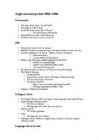
· The end of the Anglo-Saxon era · The Bayeux Tapestry · Depicts the events before and during the battle · Weaving organised by William's wife · William = William the Conqueror Trilingual culture · For roughly 300 years after the conquest, three languages were used in Britain. · Anglo-Norman (Norman French) · The Norman nobility · The language of the state, the court and law · Middle English · 90% of the population · Latin · The language of the Church · Trilingual culture: folklore in Anglo-Saxon, romances in French, religious writings in Latin. Language and social class · French-speaking Normans · The lords and the barons · English-speaking Saxons · The peasants · Cow, pig, sheep the living animals · Anglo-Saxon origin
Enhanced cooperation – a procedure of flexibility allowing those member states that wish to proceed more rapidly in a specific policy area to do so Treaty of Nice - 2003 - Cosmetic changes only - Increase of EP seatus - Sanctions against member states - Proclamation of charter of rights Charter of Fundamental Rights - A document which has been updated in the light of changes in society It entrenches: - All rights found in the case law of the court of justice - The rights and freedoms enshrined in the ECHR - Other rights from the common traditions of EU members Includes third generation rights – data protection, bioethics 3 stages towards Euro - 1990 abolition of all restrictions on the movement of capital - 1994 european monetary institute - 1999 – fixing of conversion rates - 2002 – euro banknotes Crises - Brexit - Far right and populism - Eurozone crisis - Migration
world, Lebron James. At that time it was eight times the budget, which was approved by the Estonian Government. So it was a heavy sum to pay. In Britain I think they can only blame themselves. You see, unlike many other nations, the UK has no single core constitutional document. In this sense, it is said not to have a written constitution, but much of the British constitution is embodied in written documents, within statues, court judgments and treaties. So in my opinion that's a stupid system. Because if you watch other countries how much do they pay for compensation claims then it's nothing. Though in other countries there are huge sums what civilians get from companies. A former female police officer was awarded an estimated £1,000,000 in a package, after complaining of bullying and sexual and racial harassment. For instance I think it's absolutely ridiculous to get a million for that
tekitab või mõtleb endale välja haigussümptomeid. Rangelt öelduna tähendab MSBP, et inimesel on Münchauseni sündroom ja see psühhopatoloogia avaldub lapse läbi. Munchaussen syndrome by proxy Munchausen syndrome by proxy (MSP) is an uncommon disorder first described by Roy Meadow in 1977. It was so named because of its similarity to Mun- chausen syndrome, a factitious disorder in which a person intentionally produces or fabricates physical symptoms in him- or herself.' In MSP the symptoms are intentionally produced o r fabricated in a child by a parent, usually the mother MSBP is a syndrome in which perpetrators either harm a child in their care or achieve harm through their insistence on medical tests and treatments for non-existent, fabricated or ecacerbated conditions. Abuse may go on for some time, and sometimes this abuse results in the child's death.
7. Stonehenge. Stonehenge was produced by a culture that left no written records. Built on Salisbury Plain, in Wiltshire, England some time between 5,000-4,300 years ago. One of the most famous megaliths in the world, dating from prehistoric times. Stonehenge consists of circles of stone arranged in complex patterns, and their origin is still being explored. Some of the stones come from over 200 miles away in Wales. There is little or no direct evidence revealing the construction techniques used by the Stonehenge builders. It was probably associated with sun-worship and other rites of prehistoric people. It appears to function as a kind of astronomical clock. Conceivable reports and implications about a secret government conspiracy, which seeks to hide the irrefutable evidence of extraterrestrial origins. 8. The Roman Conquest. Julius Caesar’s first raid was 55 BC
of tasks conferred to the European Community. Amsterdam treaty: encourages cooperation between Member states in order to combat social exclusion. European Council – Lisbon: aimed to make the EU the most competitive economy in the world and achieving full employment by 2010. Treaty of Nice: adopted European social policy agenda up to 2005, converting the political commitments made at Lisbon into concrete action. Treaty of Lisbon: emphasizes EU’s social objectives, among which full employment (social employment policy), solidarity between generations and protection of the rights of the child are mentioned + Charter of Fundamental rights as having the same binding force as the treaties: recognizes the so-called “solidarity rights” such as workers’ right to information and consultation and the right to collective bargaining and to fair and just working
and Somalia) represented a significant shift in the status of children in society. The UNCRC is the first legally binding law under International Law that has granted children with the recognition as respected individuals with rights of their own. 8 The UNCRC states that all children regardless of their `race, colour, sex, language, religion, political or other opinion, national, ethnic or social origin (Article 2) are entitled to the set of `economic, social, cultural, civil and political rights (Article 4)`.9 The Convention provides a framework stating that children not only have the right to be cared for, provided for and protected but also have the right to participate in the matters that affect their daily lives (Article 12). 10 The Article 12 states that; 8 Howe Brian and Covell Katherine, 2007, p.20. 9 Unicef, The United Nations Convention on The Rights of The Child (2014). http://www.unicef.org.uk/Documents/Publication- pdfs/UNCRC_PRESS200910web
 annaabi.ee