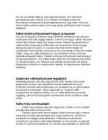
since at least half of the folk in a parish could read and a third write In 1739, the first bible was completely translated to Estonian 19th to early 20th century In the end of 19th century, 94% of Estonians could read and 48% could write It was still possible to learn only in German or Russian High level of educatation caused the national awakening The first school with the possibility to learn in Estonian was built in 1906 in Tartu Education in the Republic of Estonia (19181940) Cultivated people started to regulate and reform the Estonian language The activity of Teachers Union picked up University of Tartu became an Estonianlanguage institution The Soviet regime In the 1949, basic education lasted for 7 years, but in the 60's 8 years were made compulsory 99% of 18 year olds had acquired secondary education, but only 43 % continued to learn in a university Education nowadays Consists of primary, secondary, high or vocational schools and universities
There were 22 professional fish farms in Estonia in 1998. Among them were 14 rainbow trout farms. These were producing mainly large rainbow trout. Only recently small demand for portion size trout has occurred in Estonia. Trout was reared in flow through ponds on river or spring water or in net cages in effluent channel of an electric power station. The most important enterprises were Viru Salmo and Saare Kalakasvatus, which owned several different production units. Three enterprises cultivated common carp in stillwater ponds, the most important among them being Ilmatsalu Kala and Haaslava carp farm of R.Kalda. In 1998 285 t of large rainbow trout. 598 kg of trout caviar and 23 t of common carp were produced. There were 328 ha of ponds, 17 th m3 of fish tanks and basins and 1600 m3 of net cages. The total value of farmed fish production was roughly 13 mln. Estonian kroons (approximately 0.9 mln USD). There were five hatcheries producing only fish juveniles for
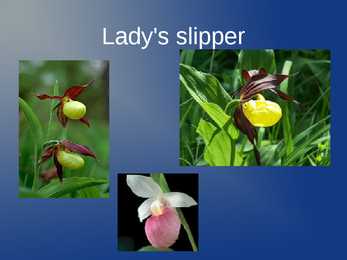
Nerveroot, Whippoorwill's-shoe and Yellow Indian Shoe. Bionominal name- Cypripedium pubescens. The plant comes into flowering age only after 10-15 years. Height is 12-30 inches tall. Are found across much of North America, as well as in parts of Europe. This plant grows in the wild in forest lands and meadows, but owing to excessive harvesting, lady's slipper is seldom found growing in the wild. However, to a certain extent, this herb is also cultivated. This plant has only 2 leaves. The color of lady's slipper flowers varies from yellowish to purplish- brown and are borne at the top of an elongated stalk. One petal of the flower changes into a structure akin to a yellow sac, known as the `slipper'. The herb has a plump rootstock that gives rise to numerous curved stems covered with bristles. The stems bear alternate leaves and typical golden yellow blooms. Lady's slipper is a gorgeous member of the orchid family and
many cultures are enjoyed by all and especially marketed to tourists who wish to sample the large variety of South African cuisine. In addition to food, music and dance feature prominently. Christmas in South Africa Christmas in South Africa is a summer holiday. Schools are closed, and camping is the order of the day. In South Africa there is no snow, but it has many flowers, many beautiful varieties of cultivated and wild flowers being in their full pride. Decoration Homes are decorated with pine branches, and all have the decorated Christmas fir in a corner, with presents for the children around. At bedtime on Christmas Eve, children may also hang up their stockings for presents from Father Christmas. Christmas dinner Many South Africans have a Christmas dinner in the open-air lunch.
those peoples. There are over 500 recognized native American tribes in America. Agriculture and hunting There were four basic ways for people in ancient societies to find food: hunting and fishing, gathering, farming, and raising domesticated animals. Over the course of thousands of years, American indigenous peoples domesticated, bred and cultivated a large array of plant species. These species now constitute 5060% of all crops in cultivation worldwide. The Inuit (Eskimos) and some Indian tribes of the far north relied almost entirely on hunting
The Tiger is the national animal of India. Tiger is also called the lord of Jungles. The national animal of India, is a rich-colored well-striped animal with a short coat. As the national animal of India, tiger symbolizes India's wildlife wealth. The combination of grace, strength, agility and enormous power has earned the tiger great respect and high esteem. The Mango (Known as "Aam" in Hindi) is the national fruit of India. The fruit Mango is one of the most widely cultivated fruits of the tropical world. This juicy, delicious fruit is a rich source of Vitamins A, C and D. There are over 100 varieties of mangos in India, in a in different sizes, shapes and colors. Lotus is the National Flower of India. It is a sacred flower and occupies a unique position in the art and mythology of ancient India and has been an auspicious symbol of Indian culture since time immemorial.
chernozems. 11. How are animals adapted to life in temperate grassland? The animals that live in grasslands have adapted to dry, windy conditions. There are grazing animals (that eat the grass), burrowing animals, and their predators; insects are abundant. A moderate of level species diversity exists on a grassland. 12. Name some temperate grassland animals. Rhea, saiga, Mongolian gerbil, Prairie dog, bison, coyote, 13. What cultivated plants are grown in temperate grassland? Perennial ryegrass and White Clover 14. How are gullies (gully – uhtorg) formed and how do they restrict human activity? (vt. õpik lk 62) A gully is a landform created by running water, eroding sharply into soil, typically on a hillside. Gullies resemble large ditches or small valleys, but are metres to tens of metres in depth and width. When the gully formation is in process, the water flow rate can be
canopy over the forest floor. The undergrowth or understory in a rainforest generally consists of shade-tolerant shrubs, herbs, ferns, small trees and large woody vines. The temperature ranges from 5°C to 50°C. Human uses of tropical and subtropical forests: o Habitation - Humans have and do exploit rainforests for food and shelter in several parts of the world. o Cultivated foods and spices - Coffee, chocolate, bananas etc. all originally came from tropical rainforests, and are still mostly grown in regions that were formerly primary forest. o Pharmaceutical and biodiversity resource - Tropical rainforests are called the 'world's largest "pharmacy"' because of the large amount of natural "medicines" there. o Tourism - People travel both nationally and internationally to experience rainforests firsthand.
cropped up. Joining the European Union has had a positive effect on Estonian agriculture as we can now sell food products to other European countries. Milk cattle, also pigs and poultry are the main farm animals raised in Estonia. Field crops include cereal crops, potatoes and vegetables. Plant products are mostly for internal use, a considerable amount of meat is imported. Some dairy products and some specific products e.g. cultivated and wild berries, mushrooms, ecologically pure produce etc are for export. The forest is among Estonia's most important natural resources and a source of a considerable amount of raw material. Wooden construction details, wooden furniture and wooden houses are being exported. The main export destinations are Finland, Sweden, Germany, Norway and Great Britain. Estonian cellulose and paper industries have a long history, some factories have been in operation since the mid-19th century
Other major usage of corn is animal feed. 3.2. Wheat Wheat is one of the leading staple crops in the world. Its production grew dramatically between 1961 and 2007, from 222.4-607 million tons. Wheat has high concentration in Western Europe, eastern USA, and China and India. Global wheat production is focused in relatively high-yielding areas: about 40% of the world's wheat output comes from the 20% of cropped areas reporting to highest yield (Pardey, 2011). Although wheat is the most cultivated Margit Tepner k0848752 crop in the world, it is not a major crop for biofuels. Wheat prices have seen the most dramatic rise amongst all cereals, but the use of wheat for biofuels production is modest and, therefore, an argument that biofuels currently compete with wheat production bears little weight (Timilsina, 2011; Defra 2008). Nevertheless, wheat is produced in countries, where consumption of biofuels is projected to grow the most, such as the USA and Europe and that
Arusaam kaasaegse süstemaatika jagunemisest kaheks väga erinevaks osaks on äärmiselt oluline. Karl Popper väitis, et teaduslik hüpotees peab olema falsifitseeritav ja et teooriat ei saa nimetada teaduslikuks kui seda ei ole võimalik ümber lükata. Viis rahvusvahelist nomenklatuuri koodeksit: ·International code of botanical nomenclature ·International code of zoological nomenclature ·International code of nomenclature for cultivated plants ·International code of nomenclature of bacteria ·International code of virus classification and nomenclature Vienna Code eessõna: "Unambiguous names of organisms are essential for effective scientific communication: names can only be unambiguous if there are internationally accepted rules governing their formation and use." Taksonite tunnused Organismide tunnuste (atribuutide) uurimine, analüüsimine ja kirjeldamine on süstemaatiku üks olulisemaid töövaldkondi
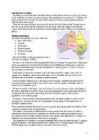
valley for the production of raisins First settlers and aborigines The first people who arrived australia were the Aborigines. They arrived there about 50 000 years ago. The word `aboriginal' means `the first' or `earliest known'. The word was first used in Italy and Greece to describe people who lived there. More than 30 000 years ago the population of the world was small. People lived in family groups. There wereno cities or anything like that. There were no cultivated crops, animals werenot herded for food and metalworking was yet to be discovered. It is not known from where the aboriginals began their journey, but it is certain that they used some kind of a craft to cross the water between the islands to the north and reach the southern continent. This voyage is the earliest evidence of sea travel by prehistoric men. The first aborigines found an Australia with a better environment than today
Agriculture:Nowadays only about 4% of the workforce is engaged in agriculture and the sector yields just slightly less than 3% of the overall production. Milk cattle, also pigs and poultry are the main farm animals raised in Estonia. Field crops include cereal crops, potatoes and vegetables. Plant products are mostly for internal use, a considerable amount of meat is imported. Some dairy products and some specific products e.g. cultivated and wild berries, mushrooms, ecologically pure produce etc -are for export. The figures of productivity of the Estonian agriculture are surpassed by those of many climatically better situated countries, but the local produce contain considerably less chemicals and organic farming is gaining popularity. The forest is among Estonia's most important natural resources and a source of a considerable amount of raw material. Although just 1.2% of Estonia's workforce is
World Service, which broadcast in 37 languages. - - the seat of the BBC is in London - - the total number of program hours is 800; one week audience of an English programs is about 25 mil people, the total week audience (with other 36 languages) is about 120 mill people - - there work about 120 journalists - - at the listening centre they listen to other 35 languages and many programs they want to find out some new news TV TV is maybe the most widespread media in cultivated countries. It is a media with the biggest strengths it can influence us very much because of its `moving pictures'. With coming of communication satellites you can choose from variety programs (news, children's programs, programs with lots of films...). They use lots of advertisements because they want to earn money (if the channel is more popular they earn more money). Some people say that it is needless to have so much adverts but I
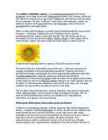
degree of variability. With a little practice, however, the most common species can be readily recognized. The Common Sunflower has a long history of association with people. Nearly 3,000 years ago it was domesticated for food production by the Native Americans. The seeds of the wild type of sunflower are only about 5 mm. long. It was only through careful selection for the largest size seeds over hundreds of years that the cultivated sunflower was produced. Lewis and Clark made mention in their journals of its usage by the plains Indians. It was brought back to the Old World by the early European explorers and widely cultivated there also. Today it is a common alternative crop in the Great Plains and elsewhere for food and oil production. Next time you munch down on some sunflower seeds, thank the many generations of Native Americans whose careful husbandry gave us this valuable food item.
The first people who arrived to Australia were the Aborigines. They arrived there about 50 000 years ago. The word aboriginal means the first or earliest known. The word was first used in Italy and Greece to describe people who live there. 6 More than 30 000 years ago the population of the world was small. People lived in family groups. There were no cities or anything like that. There were no cultivated crops, animals were not herded for food and metalworking was yet to be discovered. It is not known from where the aboriginals bean their journey, but it is certain that they used some kind of a craft to cross the water between the islands to the north and reach the southern continent. This voyage is the earliest evidence of sea travel by prehistoric man. The firs Aboriginals found an Australia with a better environment than today. Large
142.Convent- nunnaklooster, klooster 143.Conventional traditsiooniline, tavaline 144.Conventional urban landscape- tavapärane linnamaastik 145.Convey a feeling tunne endasi andma 146.Copse- salu, võsa 147.Courtyard-õuemaa 148.Coverage kate 149.covered pipes- kaetud torud 150.Creeper- ronitaim 151.Crucial part oluline osa 152.Crucial to maintaning oluline säilitada 153.Crudely rohmakalt 154.Cultivate- viljelema 155.Cultivated- kasvatatud, istutatud D 156.Deciduous- heitleheline, pudenev puu 157.Deciduous plants lehtilangetav taim 158.Deck- põrand, laudis 159.Decline vähenema 160.Decomposition - lagunemine 161.Decorative arts- dekoratiivkunst 162.Decorative tree- dekoratiivne puu 163.Demiurge- looja 164.Denote- märkima, tähendama, näitama 165.Densely populated tihedalt asustatud 166.Densely- tihedasti, kompaktselt 167.Descending kahanev 168
The demand is now so intense that since 1988 all tickets have been sold in advance to manage and control the numbers. Everyone complains constantly: the Press grumbles about its ticket allocation; the public grows weary of beating sun or pelting rain and never finding enough places to sit; some exhibitors dislike the rule forbidding them to sell their plants until the end of the last day, while others object to bought-in plants rather than self-cultivated ones going on display at the Show. Until 1987 it was daunting, because there was no limit on visitor numbers. Its known that, in 1987, there were 247,000 visitors. There may have been even more before that but we do not have accurate numbers. In 1988, they limited first time the number of visitors. Also, for the first time, they charged RHS Members for their Chelsea tickets. There were protest and 10,000 Members resigned in disgust, yet 20,000 joined the Society, happy to pay when they
The strips were scattered over the field, so everybody had strips on both good & bad land. In the field all strip-owners had to grow the same crop. The common crops were wheat, rye, oats & barley. They also grew peas, beans & lentils. Each family had a number of strips, oxen were shared, so the villagers worked more closely together. They had no fertilizers. The method they used is known as forced rotation of crops. The following year the field lay in fallow. The piece of land not cultivated was called waste land. The pastures & meadows were common. Besides tilling the soil, the Anglo-Saxons were also occupied with cattle-breeding, hunting & fishing. The peasants of the village formed a community. The Anglo-Saxons had Trial by Ordeal. In the 7-9th cent. the situation started to change. Not all member stayed equal. Military leaders & elders possessed more land & cattle and slaves. Land became private property, could be sold or presented or given in return for debts to another owner
Kaitsepiire, põrkepiire 79. Crash helmet 36. Kaitsekiiver 80. Crawler shovel, Caterpillar shovel 37. Roomikekskavaator 81. Crawler tractor 38. Roomiktraktor 82. Cross, crossing 39. Ristmik 83. Cross-drain 40. Põikdreen 84. Crossroads 41. Neljakülgne ristmik 85. Cross-wals 42. Ülekäigurada 86. Cultivated land 43. Põllumaa 44. Culvert 44. Truup 45. Curb 45. Äärekivi 46. Curing 46. Kõvenemine 47. Cutting of timber, Felling operations 47. Metsalangetamine 48. Cycleway 48. Jalgrattatee DEF vocabulary 1. Dead load 1. Omakaal 2. Deceleration 2. Aeglustus 3
The biggest companies are BP energy, Vodafone, GlaxoSmithKlein, HSBC Holdings, Royal Bank of Scotland, etc. The main revenue sources were taxes on income, taxes on expenditure, National Insurance Contributions, taxes on capital. The profile of British industry has changed greatly since WW II. About 70% today work in service industries. Agriculture takes up almost 80% of the land but employs only 1-2% of the total workforce. Mainly wheat, barney, oilseed rape, sugar beet, peas and beans are cultivated. 7 Britain is one of the world's leading tourist destinations. Britain is well-know for its big airports, safe roads and extensive rail network. 6) Famous people of Britain Famous writers: William Shakespeare, Brontë sisters (Charlotte, Emily, and Anne), Jane Austen, Agatha Christie, J. R. R. Tolkien, Charles Dickens and J. K. Rowling. Famous Poets: Lord Byron, Robert Burns, and Thomas Hardy. Famous Composers:
Aborigines could reach Australia from the north. When they finally got to Australia, it was in a much better condition than nowadays. There were large animals, who are now extinct, that provided much meat. The Aborigines lived in harmony with the environment. Because they were cut off from the rest of the world, Aborigines could not trade goods, acquire animals or crop seed, which was very important because the land did not contain any cultivated crops. Aborigines lived in clans that all had occupied a piece of land. Nobody thought about selling, buying or trading land because the clan was a part of the land they owned. Finding food was not easy at that time. In some areas, both men and women had to spend over half 2 of each day on hunting or gathering food. In some areas, mostly inland, there was always a
The languages most commonly spoken in Australia are English, Italian, Greek, Cantonese, Arabic, Vietnamese and Mandarin. The native Australians Aboriginal flag The word "aboriginal" means "the first" or "earliest known". Australia may well be the home of the worlds first people. More than 30,000 years ago the population of the world was small, and people lived in family groups, hunting, fishing and food gathering. There where no cultivated crops, animals were not herded for food and metalworking was yet to be discovered. At that time, known as the last great Ice Age, Australia was joined to New Guinea. Islands such as Java and Borneo were larger than today, sea passages between them narrower. This made it possible for the ancestors of the people now called Australian Aboriginals to reach Australia from lands to the north. It is not known from where the Aboriginals began their journey, but it is certain that people
others. Today, Canada is the leading producer of potash and is estimated to rank in the top five global producers of aluminum, diamonds, cobalt, nickel, platinum, tungsten, uranium and sulphur Alberta is the country's largest producer of crude oil and gas products (especially natural gas) 13. Which is the main crop grown in the Prairie Provinces? The main crop is wheat, but barley, brassica, canola, and oats are also cultivated. 14. The political and language situation in Quebec. Why do the Quebecois want to be called a distinct society? French is the official language of Quebec 15. What is Nunavut? Nunavut is a territory in Northern Canada. Its' capital is Iqaluit It is Inuits' territory The USA 1. According to J. F. Kennedy, which were the three strong forces that made people migrate to the US? religious persecution, political oppression, and economic hardship 2
Floating equipment and fixed traps extending above the sea surface are more likely to become contaminated by floating oil whereas submerged nets, pots, lines and bottom trawls are usually well protected, provided they are not lifted through an oily sea surface. Experience from major spills has shown that the possibility of long-term effects on wild fish stocks is remote because the normal over-production of eggs provides a reservoir to compensate for any localised losses. Cultivated stocks are more at risk from an oil spill: natural avoidance mechanisms may be prevented in the case of captive species, and the oiling of cultivation equipment may provide a source for prolonged input of oil components and contamination of the organisms. The use of dispersants very close to mariculture facilities is ill-advised since tainting by the chemical or by the dispersed oil droplets may result.
stylistics, german or russian. The very term stylistics came into more common use in english only some 30-40 years ago. It was however recorded much earlier that is in 1882 for the first time, meaning ,,The Study of literary style, the study of stylistic features." A short history of the development of stylistics Stylistics is regarded a relatively new branch of philology, yet its roots go back as far as ancient Greece and Rome, where the rhetoricians (retoorikud) cultivated the art of clear and elegant use of language by developing and polishing stylistic devices. In the 18th century, an individualistic-psychological view on style and stylistics emerges. The late 19th and and early 20th centuries witnessed a utilitarian approach to stylistics. The tendency to regard stylistics as an applied science has been particularly marked in english- 1 speaking countries
After 1660. 2 main themes: sex (whoring), drinking.Charles II’s court wa despite of its cloak of Anglican conformity, far more inclined to accept and enjoy sexual, religious and verbal licence. Cultured but lusty court. Sexual hints flourished. Stimulated and fostered the stricter disciplines of poetic satire, which fed on contradictions, the ironies and hypocrisies of society. Sharpness of wit, degree of profanity (pühaduseteotus) or ribaldry (nilbus), cultivated laziness, ministerially abetted (õhutatud) twists of laws and distractions of his mistresses. John Wilmot, Earl of Rochester: writer of satirical and bawdy poetry. To a Lady in a Letter, Song, A Song Charles Sackville: The Advice, from the Latin Sir Charles Sedley: Song Dryden: 14. Restoration drama (Dryden, Etheridge, Wycherley, Congreve) Theatres closed in Civil War, resumed in altered society of Restoration, florishing after Puritan regime.
00 8.40 30.00 210.00 25.00 Boreal forest 12.00 800.00 9.60 20.00 240.00 25.00 Mediterranean open forest 2.80 750.00 2.10 18.00 50.40 24.00 Desert and semidesert scrub 18.00 90.00 1.62 0.70 12.60 7.78 Extreme desert, rock, sand or ice 24.00 3.00 0.07 0.02 0.48 6.67 sheets Cultivated land 14.00 650.00 9.10 1.00 14.00 1.54 Swamp and marsh 2.00 2,000.00 4.00 15.00 30.00 7.50 Lakes and streams 2.00 250.00 0.50 0.02 0.04 0.08 Total continental 149.00 774.51 115.40 12.57 1,873.42 16.23 Open ocean 332.00 125.00 41.50 0.003 1.00 0.02 Upwelling zones 0
and nitrogen and promotes the growth of algae. (A) conceals (B) boosts (C) disrupts (D) halts 13. Evidence that harmful effects may result from small amounts of radiation has prompted concern about low level irradiation from various sources. (A) minimized (B) exaggerate (C) generated (D) sustained 14. Large sponges often harbor smaller organisms. (A) shelter (B) reject (C) avoid (D) consume 15. Most varieties of squash were cultivated by American Indian civilizations. (A) bartered (B) grown (C) eaten (D) gathered 16. The sugar maple grows to a height of 120 feet and has a dense crown of leaves that turns bright red in the fall. (A) vibrant (B) thick (C) remarkable (D) large 17. The sumacs grown for landscape use display a graceful style with spectacular fall colors and colorful fruit clusters. (A) elude (B) maintain (C) develop (D) exhibit 18
Stylistics studies everything that makes the text or the utterance special. It cuts across all the basic linguistic sciences: · Phonetics--silent, sleepy streets · Morphology--speak, spoke, spake · Syntax--he came in-in came he · Lexicology--finish-terminate (synonymic pairs) A survey of the development of stylistic studies: It is a relatively new branch in philology; yet, its roots go back as far as ancient Greek and Rome where the rhetoricians cultivated the art of clear and elegant use of language. 18th cent--emerged an individualistic-psychological view on style and stylistics. According to that, style bears the stamps of individual usage: every writer has a unique pattern of habits and abilities that form his style. Fr. Poet Buffon: "Style is the man himself." Late 19th, early 20th century--appeared a utilitarian approach to style remotely linked with ancient rhetoric. It became important to improve the style of a text and show the
Emperor. But Anee, did not suit. The marriage was a disaster, the alliance failed. The union was never consummated, divorce was therefore easy. Catherine Howard 5th wife. Attractive, lighthearted, fun-loving, ahigh-spirited flirt. Had been ammaid of honour to Anne of Cleves. She kept lovers before and after marring henry. Few years after the wedding she was executed for adultery. Catherine Parr 6th wife. Twice widowed. Cultivated Erasmian, did much to preserve a humanist reform, until it could re-emerge in the reign of Edward VI. Marriage was harmonious. King´s death ended their marriage. Thomas Cromwell and the dissolution of the monasteries An English statesman and advisor of Henry VII. Deeply unpopular in England. Pesudaded Henry VIII to marry Anee of Cleves, king withdrew his support. Cromwell was executed in the Tower. Major assignment- dissolution of the monasteries.
Structure: depends on myth. 3 parts, Telemachus, the adventures of Odysseus, the return, Penelope (last chapter) The use of myth. Structure: the myth of odysseus->ulysses. Philosophical level, structural level, action level, Giovanni Battista Vico. History of the world, the age of gods, the age of heroes, the age of me, the cycle begins again. A complete man, a modern hero. The characters: Stephen, Bloom, Molly an d their mythological counterparts. Stephen-young, refined (peen), sensitive, cultivated, arrogant. Disappointed, a hamlet figure, returns to Ireland upon the dying wish of his mother. A sense of guilt. Earns by teaching-hates. History is a nightmare which I am trying to awake. Walks on the beach and meditates. A different kinds of stream of consciousness. Telemachus-- figure in Greek mythology, the son of Odysseus and Penelope, and a central character in Homer's Odyssey. The first four books in particular focus on Telemachus' journeys in
J. Joyce "Ulysses" in last chapter for 44 pages comes no single mark of punctuation but nevertheless it has 8 paragraphs. Why? Because his wife's birthday is on the 8 th of some month. It is very individual. STYLISTICS AS A SCIENCE. SURVEY OF THE DEVELOPMENT OF STYLISTIC STUDIES. Stylistics is regarded as a relatively new branch of philology, yet its roots go back as far as ancient Greece and Rome, when the rhetoricians cultivated the art of clear and elegant use of language developing and polishing stylistic devices basically. In the 18th century there emerged an individualistic psychological view of style and stylistics. According to this view style bears the stamp of individual usage, that is every writer has a unique pattern of habits that form his style (e.g. W. Woolf - some of her starting phrases begin with "For")
11 reaalsusega. Revolutsioon - palun väga, mine osta endale nahktagi ja sõida Pariisi. Täielik asjastumine Maailm on hüperreaalne. Tegeliku ja mittetegeliku vahel ei ole vahet. See tähendab, et inimene ei ole lihtsalt manipuleeritud (nagu Marcusel) vaid täielik passiivsus, must auk, mille peale projekteeritakse pilte. Ma armastan sind Æ nagu poeedid ütlevad - ma armastan sind (ZiZek) "The postmodern attitude [is described] as that of a man who loves a very cultivated woman and knows he cannot say to her "I love you madly" because he knows that she knows (and that she knows that he knows) that these words have already been written by Barbara Cartland." (U. Eco) Lury (1994) kui küsida, milline on ideaalne suurkorporatsoon, siis öeldakse, et suur, sõbralik, soe ja sinu rahaga ettevaatlik. Kas see on tegelikult nii või sellepärast, et kõik suurkorporatsioonid on tahtnud, et nendest nii mõeldakse? Ei ole võimalik teada saada.
national musical culture. Taking into account the harsh conditions under the Russian regime, their energy and activity deserve the highest praise. From the very beginning a strong tendency toward a programmatic approach in Estonian symphonism may be observed: it is obvious in the stout dramatics (Tobias, Kapp), as well as in colourful landscape depictions (Lüdig, Eller). In retrospect, the music generally appears to be substantial; the composers cultivated mostly shorter forms. In several works a bias towards new horizons was obvious. Considering the style, most of the musical output was strongly influenced by a classical-romantic trend. The tsarist period had been the infancy of Estonian music: there were very few profound, philosophical reflections on the hard times and the destiny of Estonians. THE INDEPENDENT REPUBLIC OF ESTONIA: THE INTRODUCTION OF INNOVATIONS FROM WESTERN ART AND THE EVOLUTION OF NATIONALLY ORIENTED MUSICAL TRENDS.
branch from the trunk of the spruce. He balanced it in that hand for a moment, and then threw it with blinding speed, shattering it against another huge tree, which shook and trembled at the blow. And he was in front of me again, standing two feet away, still as a stone. "As if you could fight me off," he said gently. I sat without moving, more frightened of him than I had ever been. I'd never seen him so completely freed of that carefully cultivated facade. He'd never been less human... or more beautiful. Face ashen, eyes wide, I sat like a bird locked in the eyes of a snake. His lovely eyes seem to glow with rash excitement. Then, as the seconds passed, they dimmed. His expression slowly folded into a mask of ancient sadness. "Don't be afraid," he murmured, his velvet voice unintentionally seductive. "I promise..." He hesitated. "I swear not to hurt you." He seemed more concerned with convincing himself than me.
4%), in 25 recombinant DNA technology or that has countries (15 developing and 10 industrial incorporated a gene sequence into its genome. countries worldwide), involving more than That sequence can be of the same species as 13.3 million of farmers (James 2008). In happened with the first commercially avail- addition, the tendency is to increase not just able GMO in 1995, the Flav Savr™ tomato, the cultivated area, but also the number of or a sequence derived from a different species different traits and plant species transformed. than that of the recipient, which is called To date, cultivated GM crops mainly include sensu stricto transgene. However, both terms four plant species: soybean (53%), maize are used nowadays without distinction. GMO (30%), cotton (12%), and canola (5%). The have been developed from the three domains: most common dominant traits introduced are
 annaabi.ee