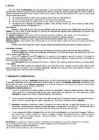
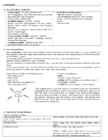
g. big tremendous "tremendous" has emotional colouring; interesting amazing; good marvelous, etc.). The expressive use of language depends on the ability to choose the proper word among those that denote the same thing. 4. IC may comprise the stylistic colouring of the word that is the word belonging to a certain style of language. Words are then either neutral formal informal (or: neutral colloquial literary). This colouring (formal informal) is always present in a word (e.g. "drink" (neutral) "beverage" (literary) "pull" (colloquial); "home" (neutral) "residence" (literary) "digs" (colloquial). Phonestheme is a subtype of IC. This is a repeated combination of sounds that has a more or less clearly perceived meaning. E.g. "fl" combination of sounds conveys the idea of airiness, brightness with the implication of insecurity;
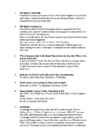
e.g. neg--nasty, dirty; death, fool; steal, destroy · Depend on the structure of the word, mainly on the presence of negative prefixes and suffixes. It is purely linguistic e.g. heartless, impolite, abnormal · Be present in words in synonymic sets that occupy the so-called "final places" e.g. big--tremendous, like--worship · Depend on the stylistic colouring of the word. Literary, colloquial groups. Such words are firmly associated with that style. However, when a colloquial word appears in a literary speech, the result is humour or irony because of the clash in the stylistic colouring. Phonesthemes--a subtype of inherent connotation--a recurrent combination of sounds, yet, not a morpheme, that has more or less clearly felt meaning. e.g. flight, flimsy, flippant--suggest lightness, grace, insecurity e.g
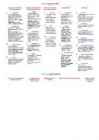
(dead (faded due to long use "green grass"; grammatical relation plain & short (Author mentions: elevated +down- -"mouth of a bottle"), (trite (through constant use) - to-earth; colloquial + formal voc.; trite "a ray of hope"- original to 2 w-s in the expression a colloquial w-s to distinguished original; types: context ("opened roundabout way to
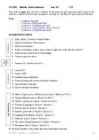
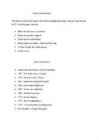
5. Expressiveness on the level of word-building 6. Phonetic expressive means Study independen tly 7. Phonetic SD ("Rhythm And Style") 8. Lexical SD* 9. Syntactic SD* Use lecture notes 10. Graphical means and devices 11. Common literary and common colloquial vocabulary 12. Special literary vocabulary 13. Special colloquial vocabulary 14. Metre in English poetry. Modifications of metre ("Rhythm and Text") 15. Typically English stanzas ("Rhythm and Text") 16. Rhythm in poetry and in prose ("Rhythm and Text") Study independently 17. Varieties of language (I
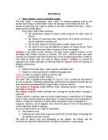
Categories: syntactic stylistic devises based on: SDD: based on ABSENCE OF LOGICALLY REQUIRED ELEMENTS OF SPEECH ELLIPSIS ELLIPSIS or ELLIPTICAL SENTENCES means leaving out one or both principle members of the sentence that is the subject or predicate. NT: Where is the man I'm going to marry? - Out in the garden. (no subject) What is he doing out there? - Annoying father. Here, in the dialogue, ellipsis creates the colloquial tone of the utterance. It also renders realistically the way the characters speak. The elliptical sentences convoy/render carelessness, familiarity, harshness. It makes the utterance tens and emotional or helps to stress most important elements. NT: I went to Oxford, as one goes to exile; she to London. APOSIOPESIS (Greek - silence) it is called break-in-the-narrative. APOSIOPESIS is an unfinished sentence where the speaker or writer suddenly stops in the middle, as if unable
When you communicate with someone on the Internet,remember that other people's opinios may be different form yours. Try not to hurt their feelings. Respect other people's time When you send an email to someone, they need time to read it. So be sure that they don't have to spend too much time reading it. Keep your emails and online messages shot.Dont write in capital letters. It looks as if you're shouting and it is also difficul to read . Never send chain. Netiquette, a colloquial portmanteau of network etiquette or Internet etiquette, is a set of social conventions that facilitate interaction over networks, ranging from Usenet and mailing lists to blogs and forums.
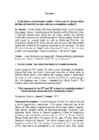
The second one is expressed by emotional, emphatic shades of meaning that are attached to the main content. Stylistics studies this latter information type. Every speaker has experienced that the form of speech may vary depending on a speaker, the listener and the circumstances in which both find themselves. 2 Separate words neutral literary colloquial eat partake gobble die expired go west kill slay Do in, make away begin commence Get going Stylistics is a very special signs because it has no fixed, single unit of study. Stylistics studies everything that makes the text expressive
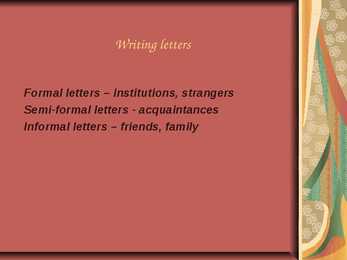
depending on the style of the letter. In every type of letter: YOU MUST NOT USE ANY SLANG! aint conna wanna etc. Grammar Formal and semiformal letters: Impersonal style Complex sentence structure Passive Voice Single word verbs Noncolloquial English Formal language Only facts Few adjectives No use of short forms Few pronouns Informal letters: Personal style Short Use of colloquial English Use of idioms and literature expressions Phrasal verbs Pronouns Chatty Wide use of descriptive adjectives Short forms
g. name or code of the course, then issue, topic etc) If the matter is urgent, you may write so on the "Subject" line Start and end your email properly (also making sure the other person knows who you are) "you" is spelled with a capital letter only at the beginning of a sentence, NEVER in the middle In official emails do not abbreviate (e.g., "I am" instead of "I'm", "do not" instead of "don't", "cannot" instead of "can't" etc). Also, do not use colloquial expressions such as "fyi" etc. Pay attention to punctuation and spelling use spell check. Specifics beginning a letter If you don't know the name of the recipient: Dear Sir/Madam, To whom it may concern, If you know the name of the recipient: Dear Mr/Ms Jones, If you know the name and it's informal (or you have been writing emails to each other back and forth quite a lot already): Hello! Hello, Mary, Dear Mary,
How does the United States influence Estonia? United States of America is one of the most influencial countries in the world. It influences the whole world with their political views, military forced etc. To my mind, one of the biggest influences that the United States has on us is the language. Estonian language surely is very beautiful but has a lot of loans from other languages. Also in colloquial language, especially with the younger generation, we switch a lot of words. Like instead of saying "vabandust" we say "sorry". Estonia is not economically dependent on the United States because they are not one of our most important trading partners, but as the economics of the United States has a great influence on the world economy, they can still indirectly have an influence on Estonian economy. Estonia is mainly influenced by the Americanization that is taking over the whole world
How does the United States influence Estonia? United States of America is one of the most influencial countries in the world. It influences the whole world with their political views, military forced etc. To my mind, one of the biggest influences that the United States has on us is the language. Estonian language surely is very beautiful but has a lot of loans from other languages. Also in colloquial language, especially with the younger generation, we switch a lot of words. Like instead of saying "vabandust" we say "sorry". Estonia is not economically dependent on the United States because they are not one of our most important trading partners, but as the economics of the United States has a great influence on the world economy, they can still indirectly have an influence on Estonian economy. Estonia is mainly influenced by the Americanization that is taking over the whole world
come to his apartment. The teacher asks Holden what does he want from his life and tries to give good advice to the boy. In the evening Holden returns to see Phoebe and takes her to a amusing park. Watching his sister riding on a carousel laughing brings out Holdens tears, and almost causes him a nervous breakdown. The story ends with Holden talking to a psychiatrist, who tries to ,,open him up". Although, critics have chewed on it for a long time, it was an interesting book, writen in a colloquial style, which really fits for younger people to read. Thatswhy I would reccomend ,,The Catcher in the Rye" to people my age. Andreas Kahk 10.ac
53. Võistlev, konkureeriv competitive 54. Kaha jalaga maas downto-earth 55. Lojaalne loyal 56. Seltskondlik, sõbralik sociable 57. Intellektuaalne võimekus intellectual ability 58. Võimekus ability 59. Arukas, intelligentne intelligent 60. Terane, tark bright 61. Taibukas clever 62. Terane sharp 63. Nupukas, kaval shrewd 64. Võimeline able 65. Andekas gifted 66. Andekas, talendikas talented 67. Nutikas brainy 68. Kõnekeelne colloquial 69. Puuduv võimekus lacking ability 70. Rumal stupid 71. Mõtlematu, kergemeelne foolish 72. Poole aruga half-witted 73. Lihtsameelne, kohtlane siple 74. Rumaluke silly 75. Mõttelage, rumal, totakas brainless 76. Napakas daft 77. Juhm dumb 78. Aeglase taibuga dim 79. Salakaval, riuklik cunning 80. Kalav, salatsev, üleannetu sly 81. Ellusuhtumine attitudes towards life 82. Vaatab helgemalt küljelt looks on the bright side 83
works-plant) b)connected with phonetics. The meaning of a word is expressed by sounds and it depends on the order of sounds(spoonerism) c)history of the lg helps to understand ahanges in the meanings of words (nt, legend ment a book where a life of saints was described) d)stylistics is the sign of expressive means of the language. The same idea may be expressed in different ways and so may aquire a new meaning.(nt, good-bye is neutral, ta-ta is colloquial, father- parent, daddy) In some words we may find transfer meanings (methapfor- the flowers nodded their heads), metonymy (nt, how many vendes, macaroni) 3. Extra-and intralinguistic connection of words. Extral are those between a word and reality (nt, farm firmus (latin) that ment hard.) The answer lies in historical condition. Word ,,firma" ment stable payment. Finally it ment ,,tenant`s dwelling (elamine)
B. the truck pulled away form the loading dock after unloading. PULL BACK = A. score a goal or point when behind B. retreat to previous position C. decide not to do something previously planned. A. The teamed pulled back to even after two quick goals. B. The soldiers pulled back after the initial attack. C. They pulled back form the investment saying ti was ultimately too risky. PULL DOWN = A. demolish B. depress someone C. earn (colloquial) A. They pulled down the old sports stadium to build a new one. B. John was really pulled down by his recent divorce. C. How much do you pull down a month, he asked? PULL FOR = support; especially teams Who are you pulling for in the cup finals? PULL IN = A. train or bus arrival at a station B. attract a crowd C. earn A. The train pulled in right on time. B. The comedy act really pulled in the crowds, didn't they? C. I pulled in more this year than last year. How about you? PULL OFF = A
carry through- to survive carry through- to accomplish, complete successfully pull ahead- overtake, move into the lead or in front pull apart- top from fighting pull apart- weaken an argument or theory pull out- bus or train leaving station pull out- move into traffic pull out- withdraw pull back- score a goal or point when behind pull back- retreat to previous position pull back- decide not to do something previously planned pull down- demolish pull down- depress someone pull down- earn (colloquial) see off- to accompany one to the point of departure for a trip and saygood-bye upon departure see off- to accompany someone who is leaving something see off- to escort someone away from something see off OUT?????- chase somebody or something away see about- to confer with someone about someone or something see about- to investigate see about- to get information see over- to be able to have a view over st such as a wall, fence etc. see out- to escort (a guest) to the door
Examples include food, rent, jewelry, gasoline and medical expenses but do not include the purchase of new housing. I (investment) includes business investment in equipments for example and does not include exchanges of existing assets. Examples include construction of a new mine, purchase of software, or purchase of machinery and equipment for a factory. Spending by households (not government) on new houses is also included in Investment. In contrast to its colloquial meaning, 'Investment' in GDP does not mean purchases of financial products. Buying financial products is classed as `saving', as opposed to investment. G (government spending) is the sum of government expenditures on final goods and services. Examples includes salaries of public servants, purchase of weapons for the military, and any investment expenditure by a government. It does not include any transfer payments, such as social security or unemployment benefits.
1815 Hebrew melodies 1816 Parisina; The Prisoner of Chillon; The Dream; Prometheus; Darkness 1817 Manfred-a ghost story; The Lament of Tasso 1818 Beppo 1819 Mazeppa; The Prophecy of Dante 1820 Marino Faliero 1821 Sardanapalus; The Two Foscari; Cain 1819-1824 Don Juan a long, digressive satiric poem, based on the legend of Don Juan, which Byron reverses, portraying Juan as someone who is easily seduced by women. Characteristics of Byron's poetry: Strength and masculinity Unflowery and colloquial language Strong feelings Little use of imagery P.B.Shelley major works: 1813 Queen Mab; A Philosophical Poem; With Notes was the first large poetic work a foundation to his theory of revolution brought along by nature and the virtuousness of humans. 1815 Alastor, or The Spirit of Solitude Alastor comes from Roman mythology, meaning "evil genius". The name does not refer to the hero or Poet of the poem, but instead to the spirit who divinely animates the Poet's imagination.
Othello makes a speech about how he would like to be remembered, then kills himself with a sword. The play ends with a speech by Lodovico, who gives Othello's house and goods to Gratiano and orders that Iago be executed. Conclusion: In conclusion, the book had advantages and disadvantages. I liked, that it was a play and it didn't have a lot of epic parts (in case of Shakespeare's book) and that it was long enough for a play. The disadvantages were, that I actually didn't understand the colloquial language very well. Thats why I confess, that I had some help from the book translated into Estonian language, but I read both of the books through. Otherwise, it was a readable book, definitely a tragedy and well- written. The author absolutely achieved his purpose. I would definitely recommend it to everybody, especially younger girls, because there is a lot written about love, evil people and their thoughtless acts, it is just what people experience mostly in their younger age.
not the main meaning-bearing part (known as the `root'). The -ed of walked and the dis- of dislike are examples. Prefixes an element placed in the beginning of the word to adjust or to qualify its meaning. (Become, forget, within, dismiss) Suffixes an element placed in the end of the word to form a derivative. (maker, actor, artist, vixen) Infixes an element placed in the middle of the word. Almost no true infixes in English, except for colloquial speech and chemical terminology. (Shiznit) Combining forms A modified form of an independent word that occurs only in combination with words, affixes, or other combining forms to form compounds or derivatives, as electro- in electromagnet or geo- in geochemistry. Back-formation new words are formed by taking away affixes. (nt, connection, to connect). This process is based on analogy. Back-form is word building and it means coining verbs
an example sentence. What does it mean that people are socially more close or distant? How is this indicated in speech? How is politeness indicated in speech? Officialese – The consumption of any nutriments whatsoever is categorically prohibited in this establishment. Official – The consumption of nutriments is prohibited. Formal – You are requested not to consume food in this establishment. Neutral – Eating is not allowed here. Informal – Please don't eat here. Colloquial – You can't feed your face here. Slang – Lay off the nosh. Taboo – Lay off the bloody nosh. What actually determined the degree of distance and formality may be social status (people from lower statuses will address those at a higher status differently than they would someone on the same level as them) or the authority that comes with knowledge (scientific texts may use extremely formal and rigid language for instance). But social distance
whereas an item like cordial is probably more literary (more likely to be written than spoken), whereas an item like cardiac is more scientific (and perhaps more technical as well). If you refer to your heart as your ticker, you have chosen a more colloquial or slangy term. 3. Native and foreign element. Native vocabulary. 3 strata: Indo-European words mother, father, night, foot, heart, bear (bore, born), see names of close relatives, names of natural objects, parts of the body, numerals Germanic words friend, bridge, ship, life, heaven, glass, death, make v, meet v
quiet down and move on or he’d have to arrest him for disturbing the peace. During the 17th and 18th century when slavery existed in the United States, house slaves were slaves who worked and often lived in the house of the slave-owner. They usually lived more comfortably than field slaves. A pejorative term house Negro/house Nigger was sometimes used in reference to the black slaves instead. The term comes from Malcolm X’s speech "Message to the Grass Roots" (1963). Massa refers to the colloquial black English pronunciation of master, used by black slaves when addressing the masters of the house they worked in. The earlier version of nigger was neger (in Scottish and northern England dialect), coming from French nègre and from Spanish negro. The term carried contempt and rejection towards the blacks from the earliest usage, but it could sometimes be used without deliberate insult. Today, the term is considered extremely insensitive and pejorative, and is discouraged from use
classes and urban population, as Russian peasants from the countryside continued to speak in their own dialects. By the mid-20th century, such dialects were forced out with the introduction of the compulsory education system that was established by the Soviet government. Despite the formalization of Standard Russian, some nonstandard dialectal features (such as fricative [] in Southern Russian dialects) are still observed in colloquial speech. History The history of Russian language may be divided into the following periods. Kievan period and feudal breakup The Moscow period (15th17th centuries) Empire (18th19th centuries) Soviet period and beyond (20th century) Judging by the historical records, by approximately 1000 AD the predominant ethnic group over much of modern European Russia, Ukraine and Belarus was the Eastern branch of the Slavs, speaking a closely related group of dialects
wishes/Yours, Mike. 4. Remember that it is not necessary to write addresses in the exam. Style in formal and informal letters Formal letters Greeting: Dear Sir/Madam / Mr bobbins, Informal letters · impersonal style Greeting: Dear Julie, · complex sentence structure - frequent · personal, short, zappy style use of Passive Voice - single word · use of slang or colloquial English use of verbs - non-colloquial English -- formal idioms/phrasal verbs language · pronouns are often omitted · each paragraph develops one specific · chatty, wide use of descriptive adjectives topic · use of short forms · only facts, infrequent use of descriptive Best wishes / Love / Yours / Regards.
Supervisors are: 1. Suliko Liiv (country study, grammar, contrastive studies, methodology) 2. Liliana Skopinskaja (methodology) 3. Jaanika Marley (foneetika, methods) 4. Ene Alas (translation, methods) 5. Paul Rüsse (literature (Am.,Br.), methods) 6. Annika Namme (American literature, methods) 7. Irina Ladusseva (lexicology, methods, stylistics) Choose your topic and find a supervisor. Language needs to be very transparent, but do not use colloquial elements and abbreviations (e.g. I'll, you're). Start collecting the expressions you like (e.g. "many" "the abundance" etc.) How to elaborate a topic? collaborate with supervisor (a topic has to be narrowed down). Background studies who else has written about this topic (what has been already done and what else I can do here). Papers of this kind test logical thinking. What is assessed:
tabloid stories have defamed them. 23. Compacts- a broadsheet-quality newspaper printed in a tabloid format (slightly taller), especially one in theUnited Kingdom. The term as used for this size (not to be confused with 108 × 171 mm or 4.25 × 6.75 inches paper sizes) came into its current use when The Independent began producing a smaller format edition for London's commuters, designed to be easier to read when using mass transit. 24. Page three girls- a colloquial term for a feature formerly included in the British tabloid newspaper The Sun. The phrase originates with the publication of a large photograph of a topless, bare-breasted female glamour model usually published on the print edition's third page. The feature first appeared in the newspaper on 17 November 1970 and on the official Page 3 website since June 1999, which it still continues. 25. Quality newspapers- a category of newspapers in national circulation distinguished by their seriousness
Larkin”, it is equally significant to make a distinction between the poet and the persona in his poems. He argues, furthermore, that a linguistic or stylistic approach is much more fruitful in the analysis of poetry in general, and Larkin’s poems in particular, than a thematic one. Regan quotes some authors who maintain the view that Larkin’s stylistic effects are based upon a combination of metaphoric (literary) and metonymic (colloquial) language. He, however, can fully accept the method based upon this stylistic distinction only if it analyses poetry in the context of the society in which it was written. Similarly, Regan acknowledges the achievements of what he calls the “symbolist approach”, since it points out the link between Larkin and (both French and English) symbolism. Again, however, he sees it as problematic that this approach tends to view literary trends outside their social context
His keen wit and incisive satire earned him praise from both critics and peers. American author William Faulkner called Twain "the father of American literature." Twain began his career writing light, humorous verse but evolved into a grim, almost profane chronicler of the vanities, hypocrisies and murderous acts of mankind. At mid-career, with Huckleberry Finn, he combined rich humor, sturdy narrative and social criticism. Twain was a master at rendering colloquial speech and helped to create and popularize a distinctive American literature built on American themes and language. Many of Twain's works have been suppressed at times for various reasons. Adventures of Huckleberry Finn has been repeatedly restricted in American high schools, not least for its frequent use of the word "nigger," which was a common term when the book was written. Unfortunately, a complete bibliography of his works is nearly impossible to compile because
The gospels were kept safe from the Vikings and are now in display in the Library of the British Museum. 28. Downing Street. A little by-street running off Whitehall. Since 1732 no. 10 has been the residence of the British Prime Minister. The Cabinet meets there in the Cabinet Room. 11 Downing Street is the official residence of the Chancellor of the Exchequer. The expression “Downing Street” in colloquial use often refers to the government. 29. The Tower of London. UNESCO World Heritage Site. Date back to 1066. The tower has had many functions, having served as a royal residence, armory, treasury, mint and, most famously, as a prison for the enemies of the crown. The Tower is home to the English Crown Jewels. There are many ceremonies in the Tower. A small group of people can attend the Ceremony of Keys which has taken place for centuries at
Puritan poetry is logical and undecorated in style; it strives to render God’s word directly, undecorated by human wit. John Donne (1572–1631) – a puritan poet who rebelled against established traditions in poetry. Uses a lot of colloquial (characteristic of or appropriate to ordinary or familiar conversation rather than formal speech or writing; informal) words and original metaphors. He only has one sonnet that conforms to traditional rules; his songs are not lyrical at all.
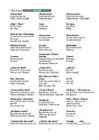
What a united family! Cuánto expresses quantity, and agrees in gender and number with the adjective that follows. It can also be followed by a verb, in which case there is no agreement. Furthermore, lo que can replace cuánto when a verb follows. ¡Cuánta comida! How much food! / There's a lot of food! ¡Cuánto comes! How you eat! / You eat a lot! Cómo expresses the manner in which something is done. It can only be followed by a verb. ¡Cómo baila! How he dances! / He dances well! 88. Colloquial Expressions la pandilla group of friends ¡qué pasada! that's awesome! el colega / el socio friend ¡qué rollo! it's boring! el profe teacher ¡chulo! ¡chula! great! el cole middle school ser un lince to be very clever un(a) chaval(a) guy/girl llevarse un chasco to be disappointed
But do looking at the options, so that MW Yes. Definitely. You see many of us try to get your hands on this they can anticipate the missing have all these questions like why book. It's a wonderful read. word themselves without getting the ocean is salty but lakes aren't, The language is efficient yet distracted. If they cannot make a or we'd like to know how much the colloquial so you won't be blinded choice for one of the items, tell them Earth weighs, and how it's possible with science. And to top it off, to eliminate the answers that are to know. Or how big an atom is. Bryson is unfailingly witty and clearly wrong, and then focus on the Well, the author of today's book entertaining, making you laugh
as small, thin and frail. Dickinson's most psychologically complex poems explore the theme that the loss of hunger for life causes the death of self and place this at "the interface of murder and suicide". Gospel poems Throughout her life, Dickinson wrote poems reflecting a preoccupation with the teachings of Jesus Christ and, indeed, many are addressed to him. She stresses the Gospels' contemporary pertinence and recreates them, often with "wit and American colloquial language".Scholar Dorothy Oberhaus finds that the "salient feature uniting Christian poets ... is their reverential attention to the life of Jesus Christ" and contends that Dickinson's deep structures place her in the "poetic tradition of Christian devotion" alongside Hopkins, Eliot and Auden. In a Nativity poem, Dickinson combines lightness and wit to revisit an ancient theme: "The Savior must have
related to the Japanese Bobtail rather than the Manx. There have been claims of an American Bobtail cat breed which resulted from bobcat/domestic cat crosses in the late 1970s. The breeder indicated that bobcats will mate with female Siamese cats because the scent of a Siamese female in season resembles that of a sexually receptive female bobcat. Bobcats can and do mate with domestic cats to produce at least some fertile offspring. The Si-Bob (Si-Bobtail) is not a formal breed. It is the colloquial name for colourpointed cats of Japanese Bobtail or American Bobtail type. These are not recognised as part of the main breeds and their breeding is not actively encouraged, but they are attractive crossbreds not unlike the Thai Bobtails. Si-Bobtails occur naturally in Japan. The PixieBob (1995) was, and sometimes still is, reputed to be derived from natural bobcat/domestic hybrids and to have inherited its tail from the bobcat. It is a polydactyl
 annaabi.ee