 50 punkti
Autor soovib selle materjali allalaadimise eest saada 50 punkti.
50 punkti
Autor soovib selle materjali allalaadimise eest saada 50 punkti.
 ~ 2 lehte
Lehekülgede arv dokumendis
~ 2 lehte
Lehekülgede arv dokumendis
 2011-01-19
Kuupäev, millal dokument üles laeti
2011-01-19
Kuupäev, millal dokument üles laeti
 7 laadimist
Kokku alla laetud
7 laadimist
Kokku alla laetud
 0 arvamust
Teiste kasutajate poolt lisatud kommentaarid
0 arvamust
Teiste kasutajate poolt lisatud kommentaarid
 kuklikemees
Õppematerjali autor
kuklikemees
Õppematerjali autor
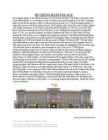
Buckingham Palace About Buckingham Palace Buckingham Palace serves as both the office and London residence of Her Majesty The Queen. It is one of the few working royal palaces remaining in the world today. During the summer, visitors can tour the nineteen State Rooms, which form the heart of the Palace. These magnificent rooms are decorated with some of the greatest treasures from the Royal Collection, including paintings by Rembrandt, Rubens and Canaletto and sculpture by Canova. History Buckingham Palace history is going back to the time of Queen Victoria in 1837 . Then, the Palace has been serving as the London Royal residence. In 1703, the Duke of Buckingham had created the Buckingham House. In 1761, George III (1738 1820) buy it
Buckingham Palace • Buckingham Palace is the official London residence and principal workplace of the British monarch. Located in the City of Westminster, the palace is a setting for state occasions and royal hospitality. Buckingham Palace: • was built in 1705 for Duke of Buckingham and is originally known as Buckingham House. • George III bought Buckingham House in 1761 for his wife Queen Charlotte to use as a comfortable family home close to St James's Palace, where many court functions were held. Buckingham House became known as The Queen's House. • During the 19th century it was enlarged, principally by architects John Nash and Edward Blore, forming three wings around a central courtyard. Before reconstruction Nowadays • Buckingham Palace has 775 rooms. These include 19 State rooms, 52 Royal and guest bedrooms, 188 staff bedrooms, 92 offices and 78 bathrooms. In measurements, the building
Buckingham Palace By Eliise Sau · Buckingham palace is the London residence and administrative headquarters* of the reigning monarch of the United Kingdom. · The palace is often at the centre of state occasions and royal hospitality. · It has been a focal point for the British people at times of national rejoicing and mourning. Peakontor* Buckingham Palace History · Buckingham House was designed by William Winde and this facade* evolved into today´s Grand Entrance. · Goring House was possibly the first house erected within the site around 1624. · The Queen's House was intended as a private retreat for King George III`s wife, Queen Charlotte and 14 of their 15 cildren were born there. The Queen's House Goring house Fassaad* Home of the monarch
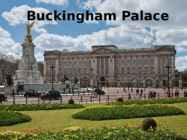
Buckingham Palace The history of the original building dates back to the early 1700's and finally became the official residence of the British monarch in 1837 after Queen Victoria came to the throne. George III bought Buckingham House in 1761 for his wife Queen Charlotte to use as a comfortable family home close to St James's Palace, where many court functions were held. Buckingham House became known as the Queen's House, and 14 of George III's 15 children were born there. Buckingham Palace is not only the home of the Queen and Prince Philip but also the London residence of the Duke of York (Prince Andrew) and the Earl and Countess of Wessex (Prince Edward and his wife) and their daughter. The 19 State Rooms at the palace are regularly used by the Royal family to entertain guests on their State, ceremonial and official visits to the United Kingdom
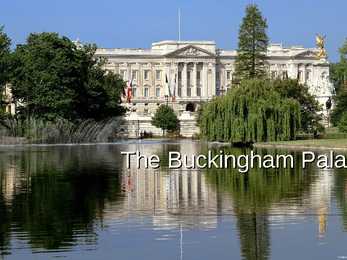
The Buckingham Pala Table of contents Introduction General information History Today Interior Visiting Conclusion References The end Introduction I chose the Buckingham Palace for my topic, because i have always been eager to know more about the house where the British Monarch lives in. The Buckingham Palace Located in the City of Westminster The official London residence of the Queen State occasions and royal entertaining Tourist attraction History Built in 1702 Originally called as the Buckingham House In 1761, King George III bought the house and the building became known as the Queen's House George IV, decided to double the size of the house and transform it into a palace History In 1837 Queen Victoria became the first monarch to use Buckingham Palace as
London important sights guide Roman period 20th century · Big Ben is the nickname for the great bell of the clock at the north end of the Palace of Westminster in London and is often extended to refer to the clock or the clock tower as well. It is the largest four-faced chiming clock and the third-tallest free-standing clock tower in the world. The clock first ticked on 31 May 1859. The pendulum is installed within an enclosed windproof box sunk beneath the clockroom. It is 3.9m long,
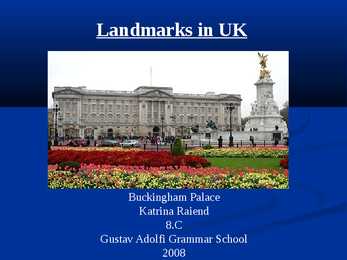
Landmarks in UK Buckingham Palace Katrina Raiend 8.C Gustav Adolfi Grammar School 2008 So what it is? Buckingham Palace is one of the most popular landmarks in United Kingdom. It is the London home for the royal family. Every year, over 50 000 invited guest are enertained at garden parties, receptions, and banquets . History of Buckingham Palace Buckingham palace was originally built for Duke of Buckingham in 1703 but later it was acquired by George lll in 1761 as a private resident. Buckingham Palace finally became the official royal palace of the British monarch on the accession of Queen Victoria in 1837. Inside of the palace.. The palace contains 77,000 square metres of floorspace. It also includes music room, green and white drawing room, gallerys, many bedrooms, suits and many more rooms. GREEN DRAWING ROOM
West. Alfred's men took London in 886 and repaired the walls of the old Roman city. In 1016 the Vikings attacked London again but the Saxons fought them off. The attacks ceased when the Danish king Cnut came to power in 1017. Cnut managed to unite the Danes with the Anglo-Saxons, and invited Danish merchants to settle in the city. London prospered under Cnut, but on his death the city reverted to Anglo-Saxon control under Edward the Confessor. He built a wooden palace at Westminster, were the parliament met later. This is why Westminster became the seat of government not the city of London itself. Edward the Confessor also built Westminster Abbey. He ruled until his death in 1065, after which King Harold was crowned. Norman period( Medieval London) 1066 In 1066 in the Battle of Hastings the Normans were victorious and William was crowned King. William granted the citizens of London special privileges, but he also built a castle in the
 annaabi.ee








Kõik kommentaarid