Leidsid 33 sarnast õppematerjali, mis on seotud failiga "Betoon". Need materjalid aitavad sul teemat sügavamalt mõista.
ability, there, steel, first, such, marine, mainly, than, structure, including, areas, react, means, construction, material, structures, lifetime, however, physical, attacks, frost, fire, acids, liquid, finally, process, caused, usually, fill, found, road, brief, overview, know, cement, gravel, limestone, granite, plus, sand, bridges, parking, brick· Diffusivity- situation where gas or liquid will be transmitted through the substance. · Sorptivity- a process where liquid is absorbed by capillarity Curing Degradation of concrete · Chemical affects- reactions with sulfates, sea water, acids and alkalis · Physical affects- frost, fire, wind and water erosion Degratation of concrete Frost damage Sea water attack Durability of steel in concrete · Shear strenght Corrosion · Compensate tendons, stressed areas Thank you for listening!
Introduction (slide 2) In this presentation I'd like to give a brief overview of clay bricks. I'll speak about 15min to allow time for questions at the end. Firstly clay bricks are known for centuries as one of the most solid and reliable structural elements is set to play a role in reducing global warming. Apart form the many benefits obtained from using clay bricks in construction, such as their durability, insulation properties and aesthetic qualities, recent findings show that they also produce less carbon emissions than any other masonry material. History (slide 3) In more detail the earliest bricks were dried bricks, meaning they were formed from clay- bearing earth or mud and dried usually in the sun until they were strong enough for use. The oldest discovered bricks, originally made from shaped mud and dating before 10000 BC, were
Bassano a Grappa near Venice (Italy). In the same context, some bridges have been moved when unable to function at their original location. It is not unusual in the USA, for example, to relocate a metal truss bridge to a less travelled road when it can no longer handle the traffic; the same probably holds true for other countries. This is within the functional tradition of some bridge types and should not be viewed as a negative factor in determining the integrity of a relocated structure. The definition of authenticity is in the process of being expanded to include intangible values such as a bridge that embodies the spirit or character of a people or place, as New York City is embodied in the Brooklyn Bridge, San Francisco in the Golden Gate, London in Tower Bridge, Sydney (Australia) in the Harbour Bridge, or Bosnia-Herzegovina in the recently destroyed Stari Most in Mostar. Bridges nominated for World Heritage listing also must have legal protection and management
................................................................................ 53 15.4 How coal is used.......................................................................................................54 15.4.1 For electric power..............................................................................................54 15.4.2 For industry....................................................................................................... 54 15.4.3 For making steel................................................................................................ 54 15.4.4 For export.......................................................................................................... 55 15.5 Coal and the environment.........................................................................................55 NATURAL GAS.................................................................................................................55 ................
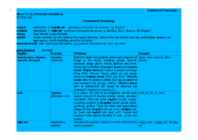
derivational affix liide, tuletusliide, tuletusafiks (e.g. postwar, anti-American, wiser, greenish) parts of speech sõnaliigid English Estonian Definition Example noun (proper, common, nimisõna, Refers to words which denote classes and categories of book, water, sincerity, Mary, concrete, abstract) substantiiv things in the world, including people, animals, Estonia inanimate things, places, events, qualities, and states. Nouns can be divided into proper nouns and common nouns. Proper nouns give names to people and things (Tony Blair, Greece). Nouns which are not proper
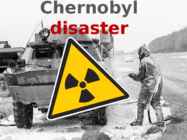
constructed to provide cooling water for the reactors. The 1986 Chernobyl accident On 25 April the reactor crew at Chernobyl 4 began preparing for a test to determine how long turbines would spin and supply power to the main circulating pumps following a loss of main electrical power supply. This test had been carried out at Chernobyl the previous year, but the power from the turbine ran down too rapidly, so new voltage regulator designs were to be tested. A series of operator actions, including the disabling of automatic shutdown mechanisms, preceded the attempted test early on 26 April. By the time that the operator moved to shut down the reactor, the reactor was in an extremely unstable condition. The interaction of very hot fuel with the cooling water led to rapid steam production and an increase in pressure. The overpressure caused the cover plate of the reactor to become partially detached, rupturing the fuel channels and jamming all the control rods, which by
1 Wave energy Introduction to wave energy There are several possibilities to harvest different forms of energy from the sea. One of these options is the usage of waves for the generation of electricity. The devices needed to perform this task are called wave energy converters. Wave energy is indirect solar energy in twice. At first there is the wind, which is caused by variations in atmospheric pressure due to a differential solar heating of earth's surface by the sun. Different regions of pressure drives a force which rises a movement of atmospheric air masses that causes the earths wind system. If wind strikes over the surface of an open water, waves are induced. First they are very flat with only a low level of energy. When there is a long distance over
EHITUSTEADUSKOND Ehitustootluse instituut KUIDAS MUUDAB MUDELPROJEKTEERIMINE TERASKONSTRUKTSIOONIDE PROJEKTEERIMIST, VALMISTAMIST JA EHITAMIST? HOW ARE 3D AND BIM CHANGING THE DESIGN, FABRICATION AND CONSTRUCTION OF COMPLEX STEEL STRUCTURES? EPJ 60 LT Üliõpilane: Tanel Friedenthal Juhendaja: Prof. Roode Liias Kaasjuhendaja: Prof. Carrie S. Dossick Tallinn, 2010.a. Olen koostanud lõputöö iseseisvalt. Kõik töö koostamisel kasutatud teiste autorite tööd, olulised seisukohad, kirjandusallikatest ja mujalt pärinevad andmed on viidatud.
.....................................................................................9 11. Materials Used..........................................................................................10 12. Appendices...............................................................................................11 Introduction I chose the Tallinn's Seaplane Harbour because of its secluded nature combined with great value. I want know to why it was forgotten for such a long time, what makes it unique and what are the future plans concerning this architectural wonder. History Early History At the end of 1913, research work commenced on constructing an airfield which was to be built as part of the Peter the Great's sea fortress (nowadays Patarei). For this purpose, 6,000 square fathoms of land was appropriated a couple of hundred meters in the direction of Paljassaare. The
Modulus is needed to Modulus values at determine deflection other temperatures and buckling from and design life are design loads required for design Determination of Modulus 1% Proportional Limit 85% of Tangent Modulus Properties of Materials Hoop Stress Ring Bending Strain Importanceof Strain Property Comparison to other materials ABS 1% PE 4.0% PVC-U 1% PVC-O 1.3% Steel & DICL Not relevant GRP 0.2 to 0.6 % Stiffness AS 2566.1 ABS is classified as a rigid thermoplastic over its working temperature range of -30º to 70ºC Stiffness AS 2566.1 ·2 year value can be used where soil support is provided ·50 year value should be used in poor soils Creep Variation of properties in time Long Term Loading/Stress Relaxation Reverse Loading/Stress Magnitude Repetitive Loading/Fatigue Creep Intermittent Loading This is also
Inviting questions If anyone has any questions, please feel free to interrupt at any time. If you have any questions, please stop me at any time, and I will be happy to answer them. If you have any questions, please feel free to interrupt. Please interrupt me if there's something which needs clarifying. Otherwise, there'll be time for discussion at the end. Discouraging questions (during the presentation/talk) I'd be glad to answer any questions at the end of my talk. At the end of my talk, there will be a question and answer session. I would appreciate it if you could keep your questions until then. I'll be happy to answer any questions you have at the end of my presentation THE MAIN POINTS TO REMEMBER The beginning Making it interesting Say hallo Visual Say who you are Quote Give purpose and main points Surprising fact
characterization (mainly in terms of porosity and permeable structures). It is refined and separated, most easily by boiling point, into a large number of consumer products, from petrol (or gasoline) and kerosene to asphalt and chemical reagents used to make plastics and pharmaceuticals. Petroleum is used in manufacturing a wide variety of materials, and it is estimated that the world consumes about 88 million barrels each day. The use of fossil fuels such as petroleum can have a negative impact on Earth's biosphere, releasing pollutants and greenhouse gases into the air and damaging ecosystems through events such as oil spills. Concern over the depletion of the earth's finite reserves of oil, and the effect this would have on a society dependent on it, is a field known as peak oil. Etymology The word "petroleum" comes from Greek: πέτρα (petra) for rock and Greek: ἔλαιον (elaion) for oil
Accessible- easy for anyone to obtain and use Admittedly- used for saying that you admit something is true, especially when this makes your main idea weaker Affordable- cheap enough for ordinary people to afford Agricultural- relating to farming Alcoves- a small area in a room that is created by building part of one wall further back than the rest of the wall Ample- enough, and often more than you need Attic- the room in a house under the roof Bedsit- a room that you rent that is used for both living and sleeping in Brick pillars- Bungalow- a house that is all on one level Caravan- BRITISH a vehicle that people can live and travel in on holiday. Caravans are usually towed (=pulled) by a car. The American word is trailer Carpenter- someone whose job is to make things from wood, or to repair things that are made of wood
...................................................................... ....18 4. Sources............................................................................................................... .......19 Renewable energy Renewable energy is energy generated from natural resources--such as , wind, rain, tides and geothermal heat--which are renewable (naturally replenished). In 2006, about 18% of global final energy consumption came from renewables, with 13% coming from traditional biomass, such as wood-burning. Hydroelectricity was the next largest renewable source, providing 3% (15% of global electricity generation),followed by solar hot water/heating, which contributed 1.3%. Modern technologies, such as geothermal energy, wind power, solar power, and ocean energy together provided some 0.8% of final energy consumption. While there are many large-scale renewable energy projects and production, renewable technologies
amylopectin. In industry, starch is converted into sugars, for example by malting, and fermented to produce ethanol in the manufacture of beer, whisky and biofuel. It is processed to produce many of the sugars used in processed foods. The biggest industrial non-food use of starch is as an adhesive in the papermaking process. Starch can be applied to parts of some garments before ironing, to stiffen them. Mixing most starches in warm water produces a paste, such as wheatpaste, which can be used as a thickening, stiffening or gluing agent. Slide 3 Starch is the major component of natural food, sometimes taking about 70% of the mass. Therefore it is important to know how starch content and its characteristics like size, cell thickness change starch digestion in gastrointestinal tract. Slide 4 In mammals starch is hydrolysed by enzymes into glucose through several steps. The first
10 Fig. 5: Electrodispersion caused by varying conductivity of buffer and sample Unsymmetrical peaks are caused by different conductivity and, at the same time, by an electric field. If the sample has a higher mobility, i.e. higher conductivity than the buffer, then on the both sides (on the front, and on the end of sample zone) appears excessive field gradient in the transition zone. The stress gradient in the end zone of the sample is directed the same as the migration of the sample, so that the sample components in transition zone are accelerated back towards the transition zone
Engineering, Technion Israel Institute of Technology Consultant: Roode Liias- Professor and Dean, Faculty of Civil Engineering, Tallinn University of Technology Title: Integration of Lean Construction and Building Information Modelling Archived: University of Applied Sciences, Faculty of Construction ABSTRACT This research can be divided into two. The first part investigates the current state of the construction industry, while the second part looks at new emerging business models in particular, Lean Construction (LC) and Building Information Modelling (BIM), as well as an integration of these two. Given that the construction industry does not have a particularly good reputation among the public, the first part of this thesis focuses mainly on this problem and its sources. It is the reason why we need
Handbook of Meat Processing Handbook of Meat Processing Fidel Toldrá EDITOR A John Wiley & Sons, Inc., Publication Edition first published 2010 © 2010 Blackwell Publishing Blackwell Publishing was acquired by John Wiley & Sons in February 2007. Blackwell’s publishing program has been merged with Wiley’s global Scientific, Technical, and Medical business to form Wiley-Blackwell. Editorial Office 2121 State Avenue, Ames, Iowa 50014-8300, USA For details of our global editorial offices, for customer services, and for information about how to apply
THE CITY OF LONDON History The City of London occupies one square mile in the middle of the capital. It once made up entire town of London, surrounded by the wall first built by Romans. The Romans also built a bridge over the Thames and there has been one in the same area ever since. The Roman Londinium grew up on the northern side of the bridge. In AD 61 the native Celtic tribe, led by Queen Boudicca, rose up against the Romans. They burnt down Londinium to the ground and killed most of its inhabitants. Roman armies eventually defeated Boudicca and Londinium was rebuilt. At the end of the fourth century AD the Roman Empire began to crumble and the Roman armies were recalled from Britain to defend Rome itself
nutrients, pH, and many other factors which may vary between locations but also within a single plot and over very small distances (OECD, 2007). Nevertheless of the quantity of microflora, biomass of all microorganisms living in soil play an important role in the functioning of entire soil ecosystems because their enormous biochemical activity (Barabasz et al. 2002). Soil microflora cycles carbon, nitrogen, phosphorus, and sulfur, plays a role in soil structure formation, decomposition of organic matter, toxin removal, promoting plant growth, and in changes in vegetation (Canbolat at al. 2005 and Martin et al. 2012). Therefore, soil microflora plays a major role in preservation and the balance of life. Because of active role of soil micro- population, the diminution in microbial activity is always alarming (Barabasz et al. 2002). Factors influencing soil microflora Soil microorganisms depend on soil for their nutrition, growth and activity
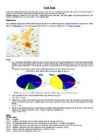
Acid Rain Acid rain is any precipitation that is unusually acidic. It possesses elevated levels of hydrogen ions(it has low pH level). Acid rain is caused by emissions of carbon dioxide, sulfur dioxide and nitrogen oxides, which react with water molecules. Distilled water(doesn't contain CO 2), has pH level 7. Liquids with pH level less than 7 are acidic, liquids with pH level greater than 7 are alkaline. Unpolluted rain has a pH level over 5.7, so it is slightly acidic. Affected areas Places significantly impacted by acid rain around the globe include most of eastern Europe from Poland northward into Scandinavia, the eastern third of the United States and southeastern Canada. Other affected areas include the southeastern coast of China and Taiwan Causes · It is caused when sulfur dioxide and nitrogen oxides are released into the air
is a great challenge because I have not done anything like this before, especially in English. Primary goal for me is to improve my knowledge about renewable energy and also usage of English language. This report is going to talk about biogas. It provides a brief review of usage and future prospects of the biogas. I have tried to make this report as understandable as possible. By the end of this report I want to come to a conclusion whether biogas is the best source of future energy or are there any other sources that are better. What is biogas? Typically it refers to the gas produced by the anaerobic digestion or fermentation of organic matter including manure, sewage sludge, municipal solid waste, biodegradable waste. If opportunely refined it can be used for electricity production. Also for space-, water- or process heating. Unintentional production of biogases has been an ongoing issue in many regions of
casualties, and is one of only two classified as a level 7 event (the maximum classification) on the International Nuclear Event Scale (the other being the Fukushima Daiichi nuclear disaster in 2011). • The battle to contain the contamination and avert a greater catastrophe ultimately involved over 500,000 workers and cost an estimated 18 billion rubles (18 billion $USD) . During the accident itself, 31 people died, and long-term effects such as cancers and deformities are still being accounted for. • The Soviet government also cut down and buried about a square mile of pine forest near the plant to reduce radioactive contamination at and near the site. Chernobyl’s three other reactors were subsequently restarted but all eventually shut down for good, with the last reactor closing in 1999. The Soviet nuclear power authorities presented their initial accident report to an International Atomic
most frequent words, and vague fuzzy peripherial words. Core meaning is the meaning which is at the centre of the word.periphery – vague. Formal usage (often polysyllabic words) from Norman French (rank, courtliness,refinement). Learning, science, abstraction: Latin, and Greek. The core vocabulary is predominantly Germanic (the, I, you, etc.) Only 4 of the topranked one hundred words in the Brown Corpus are of foreign origin. 93 of the first one hundred words in the Brown Corpus are monosyllabic, and the remaining have two syllables (only, about, other, also, many even people) Origin of the ten 10000 most frequent words: Example of stratification • Old English 31.8 % heart • French 45 % core ME [origin unknown] (!) • Latin 16
words; syntax. Language: a systematic, conventional use of sounds, signs or written symbols in a human society for communication and self-expression. - human language at all levels is rule- or principle-governed. Linguistics: the scientific study of human natural language Synchronic approach to language: Diachronic approach to language: Linguistic competence: Linguistic performance: What is grammar?: "The sounds and sound patterns, the basic units of meaning, such as words, and the rules to combine them to form new sentences constitute the grammar of a language" Prescriptive grammar vs. Descriptive garmmar: Descriptive grammar: the systematic study and description of a language. Descriptive grammar refers to the structure of a language as it is actually used by speakers and writers. Prescriptive grammar: a set of rules and examples dealing with the syntax and word structures of a language, usually intended as an aid to the learning of that language
Savanna A savanna is a grassland ecosystem with scattered trees or shrubs. In savannas trees are small or widely spaced so that the canopy does not close. It is often believed that savannas are characterized by widely spaced, scattered trees, however in many savanna communities tree densities are higher and trees are more regularly spaced than in forest communities. The open canopy allows sufficient light to reach the ground to support an unbroken herbaceous layer consisting primarily of C4 grasses. Savannas are also characterised by seasonal water availability, with the majority of rainfall being confined to one season of the year. Savannas can be associated with several types of biomes. Savannas are frequently seen as a transitional zone, occurring between forest and desert or prairie.
Terms Language → A systematic, conventional (tavakohane) use of sounds, signs or written symbols in a human society for communication and self-expression. Human language at all levels is rule- or principle- governed (valitsema) meaning that language corresponds to the grammar. Natural language is usually spoken, while language can also be encoded into symbols (such as letters, morse etc) For example: Estonian, English. Linguistics → The scientific study of human natural language. Broadly, there are three aspects to the study which are Pragmatics (studies the use of language → interested in the gap between the sentence’s meaning and the speaker’s meaning). Semantics (concerned with the meaning of the language aspects and the way they change, also how objects and language and thinking and language are related). Syntax (concerned with the rules [grammar] and how sentences and words are formed).
In my essay I will describe the most characteristic features of the Maori people and the aborigines. I will divide the essay in 3 parts the Maori people, the aborigines and their comparison. Maori are the host people of New Zealand. Their name is derived from Ma-Uri which means the children of heaven. The arrival of the Maori people to New Zealand is considered to be somewhat of a mystery. It is known that first Polynesians arrived to New Zealand about 1000 years ago, when navigator Kupe discovered the land in 950 AD. He named it Aotearoa The Land of the Long White Cloud. Although these facts can be debatable, I will focus my attention on this interpretation of Maori history. After the Maori arrived to New Zealand, they started to develop into tribes and sub tribes, this tribal system is still in use. Their culture had almost no influence from the rest of the world
Genetic modification of food results in increased toxins and diseases as genes from an allergic plant can transfer to target plant. Genetically modified crops can cause serious environmental problems as an engineered gene may prove toxic to wildlife. Another drawback is that increased use of toxins to make insect resistant plant can cause resultant organisms to become resistant to antibiotics. FIND OUT 5 REASONS TO AVOID GM FOOD. If humans continue moving forward in such a harmful way towards the future, then there will be no future to consider. Although it’s true that we cannot physically stop our ozone layer from thinning there are still so many things we can do. Sustainability is the key to prevent or reduce the effect of environmental issues. There is now clear scientific evidence that humanity is living unsustainably, and that an unprecedented collective effort is needed to return human use of natural resources to within sustainable limits
How to Write a Design Report Summary A design report is the written record of the project and generally is the only record that lives once the design team disbands at the end of the project. The report has three sections. The first section describes the problem that was being solved and provides the background to the design. The second section describes the design and the third section evaluates how well the design worked by comparing its performance to the design requirements. The report starts with a short executive summary that contains a synopsis of the three sections. The body of the report is relatively short. Appendices to the
Water Purification What is water purification? Water purification generally means freeing water from any kind of impurity it contains, such as contaminants or micro organisms. Water purification is not a very one-sided process; the purification process contains many steps. The steps that need to be progressed depend on the kind of impurities that are found in the water. This can differ very much for different types of water. In which ways is polluted water treated? Settling Before the purification process begins some contaminants, such as oil, can be settled in a settling tank. They can then be removed easily, after
cascade of intracellular signalling leading to changes in the membrane potential. AMINO ACID – A chemical made of carbon, oxygen, hydrogen and nitrogen, which is a building unit of all proteins* and other biologically important substances. AMINO ACID NEUROTRANSMITTERS – A group of fast acting neurotransmitters* which includes glutamate (excitatory) and GABA (gamma-amino butyric acid, inhibitory). AMNESIA – Loss of memory. AMYGDALA – A structure in the forebrain which is a component of the limbic* system. It is implicated in control of emotions. ANTAGONIST – A chemical which blocks receptors* and stops (inhibits) the effects of agonists*. ANTERIOR – Towards the front, e.g. anterior cingulate cortex – frontal part of the cingulate cortex (part of the brain). ANTEROGRADE AMNESIA – Inability to remember new information since the moment, which triggered amnesia (e.g. stroke, head trauma).
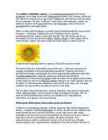
arranged (korraldatud, ettekavatsetud)spirally(spiraalselt). Typically each floret is oriented(suunitlusega) toward(poole) the next by approximately(umbkaudu, ligikaudu) the golden angle(parima nurga alla), producing a pattern(muster, lõikeleht, seaduspärasus) of interconnecting spirals where the number of left spirals and the number of right spirals are successive Fibonacci numbers.(fibonacci arv/ rida) Typically, there are 34 spirals in 1 direction(suund, juhatamine, juhis) and 55 in the other; on a very large sunflower you may see 89 in one direction and 144 in the other. The disc florets mature(täiskasvanud ; valmima, kääritama ) into what are traditionally called "sunflower seeds", but are actually the fruit (an achene) of the plant. The true seeds are encased(ümbritsetud, koorikus) in an inedible husk (söögikõlbmatu, mittesöödav, kest, aganad ; kroovima, koorima)
 annaabi.ee