Leidsid 33 sarnast õppematerjali, mis on seotud failiga "Alexander Nevski katedraal". Need materjalid aitavad sul teemat sügavamalt mõista.
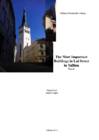
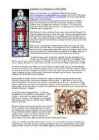
orthodox, alexander, cathedral, russian, church, designed, mikhail, professor, petersburg, academy, arts, built, order, between, during, period, country, part, empire, oldest, dedicated, 1242, towers, hold, powerful, bells, them, tonnes, making, religion, christianity, mostly, within, ethnic, first, mention, dates, tourism, ideas, place, printKunda Ühisgümnaasium Tallin Old Town Report Student: Kristin Karu Teacher: Kristi Aron Kunda 2012 The Alexander Nevsky Cathedral The Alexander Nevsky Cathedral is an orthodox cathedral in the Tallinn Old Town,Estonia. It was built to a design by Mikhail Preobrazhensky in a typical Russian Revivalstyle between 1894 and 1900, during the period when the country was part of theRussian Empire. The Alexander Nevsky Cathedral is Tallinn's largest and grandest orthodox cupola cathedral. It is dedicated to Saint Alexander Nevsky who in 1242 won the Battle of the Ice on Lake Peipus, in the territorial waters of present-day Estonia. The late Russian patriarch, Alexis II, started his priestly ministry in the church. Interior of the Cathedral.
Kunda Gymnasium Rait Türkel Old Tallinn Report Instructor:Teacher Kristi Aron Kunda 2012 Introduction Like most cities with an eight-hundred-year-old past, Tallinn is a patchwork of historic areas. The city's pride and joy is without a doubt its Medieval Old Town, but equally enchanting is the Kadriorg district, a throwback to the time when Estonia was ruled by the Russian Tsars. Tallinn is the capital and largest city of Estonia. It occupies an area of 159.2 km2 with a population of 416,470. It is situated on the northern coast of the country, on the shore of the Gulf of Finland, 80 km south of Helsinki, east of Stockholm and west of Saint Petersburg. Tallinn's Old Town is in the list of UNESCO World Heritage Sites. It is ranked as a global city and has been listed among the top 10 digital cities in the world
person, born in a legal marriage between two free people and having lived in the town for at least 3 months, could apply to the Magistracy for citizenship. Serfs could escape from serdom after having successfully hidden in town for a year and a day. Two parts remained separated until the end of the 19th century. Four Names Lyndanise - mentioned by Henricus de Lettis in his Chronicle; derives from the name Linda - the wife of Kalev and mother of Kalevipoeg Koluvan - mentioned in Russian chronicles; derives from the hero Kalev from our national epic Reval - comes from the German words “REH” and “FALL”, meaning the falling of the deer; could be deers trying to escape from the Danes, running down the Toompea hill Tallinn - the word origins from estonian language, could mean “taani-linn”, “tali-linn” or “talu- linn”; Reval was replaced when Estonia became independent Symbols
Tallinn Mustamäe College G2K Jaana-Kristiina Jõgevest The Four oldest churches of Tallinn Report Supervisor: Ingrid Teigar Tallinn 2009 The Dome Church The Danes began fortification of Toompea after the conquest of Tallinn in 1219 and probably also built the first church there. It was presumably a wooden building located at the site of the present cathedral. However, a serious conflict with the Order of the Brothers of the Sword broke out soon as the latter wanted to gain control of the entire Estonia. The order succeeded in subordinating Tallinn and the whole of North Estonia to its rule in 1227. The monks of the Dominican Order began the construction of a stone church in Toompea in 1229
Uusikaupunki, was a relatively static period in Estonian history with few momentous events. This was the time of the crystallization and the culmination of serfdom, when various socio- political and cultural undercurrents were also active, preparing the ground for the industrial society and the national-democratic movement in the second half of the 19th century. The 1710 of the corporations of knights and towns, until Alexander II (18551881), established the relationships between Estonia, Livonia and the Russian Empire. The Baltic Landesstaat reached its full development. The freedom of action in the new provinces was naturally granted to one of the most firm ideological pillars of the tsarist empire -- the Russian orthodox church; though as the Landeskirche in the Estonian and Livonian territories, the Lutheran church long maintained a de facto predominance.
cities in northern Europe. In 1629 Sweden took control of the whole of Estonia. Though hard times continued, the period that followed is known as the "good old Swedish era": foundations were laid for the Estonian school system, the privileges of the nobility were curtailed, local peasants were granted the right to own property, and so on. Peter the Great wanted to open a window onto Europe for Russia so he started the Northern War in 1700. Estonia remained under Russian rule and the Baltic-German nobility vowed allegiance to the Tsar; the barons were restored their former privileges. In 1870 a railway line was opened from St. Petersburg to Tallinn. Tallinn grew into a major port and an industrial centre. Estonians became conscious of their national identity. Tartu was the centre of the movement of national awakening. On 24 February 1918, Estonia was proclaimed an independent democratic republic. Tallinn developed into a modern European capital
Russian philology The meaning of the word "philology" is "love for word". This is love that unites teachers and researchers of modern and Classical languages and literature, interpreters and diplomats, journalists and publishers, writers and poets. Russian philologis are highly demanded in various spheres of scholarly research and education, in the mass media, in civil service at the Ministry of Foreign Affairs, in archives, libraries, museums, in travel agencies, as well as Russian and international companies. Curriculum within in philological faculty includes courses of Russian and European languages and literature, courses of Linguistics and Theory of Literature for students to familiarize themselves with various schools and trends of Russian and foreign philology. The core curriculum also includes a number of Liberal Arts courses (Philosophy, History, Psychology, Pedagogy), as well as courses of basic mathematics and computer studies, and
Sculptures and monuments St. John's Lutheran Church St John's Church was probably built in the first third of the 14th century. There is no other brick church decorated with so much terracotta plastic in Europe Eduard Tubin Monument The Eduard Tubin monument, marking the 100th birthday of the composer, was dedicated in 2005. The authors of the statue are sculptor Aili Vahtrapuu, architect Veronika Valk, with sound installations by Louis Dandrel.Eduard Tubin (1905-1982) was a versatile composer and conductor, one of the most recognized symphonists throughout history. He served as concert master and conductor at the Vanemuise Theatre
Tallinn grew rapidly and had developed into a well-known trading centre by the 15th century. Unfortunately, prosperity did not last long due to the weakening of the Hanseatic League, epidemics, hunger and wars. Sweden finally managed to take control of the whole of Estonia in 1629. Their rule ended after the Northern War in 1710 when Estonia was joined to the Russian Empire. Life changed for the better thanks to the opening of a railway line from St. Petersburg to Tallinn in 1870. Tallinn grew into a major port and an industrial centre, with huge shipyards. Interest in culture grew and Estonians became conscious of their national identity, dreams of independence gained ground. On 24 February 1918 Estonia was declared an independent country and Tallinn became the capital of the Republic of Estonia. During World War II Estonia was occupied by both German and Russian invaders and Tallinn suffered heavily
· Establishment of independent Estonia · Tightening of American immigration laws · Estonian immigration to the United States slowed down dramatically 1924 The Estonian quota fixed at 116; even this small annual quota was not used up *After World War II = In the post World War II years, all three Baltic nations maintained consulates in the United States · About 15,000 Estonians came to the United States · This group was strongly anti-Communist and nationalistic 3. Russian colonization of America. What has preserved from this period to the present? The Russian colonization of the Americas covers the period, from 1732 to 1867, when the Tsarist Imperial Russian Empire laid claim to northern Pacific Coast territories in the Americas. The Russians were primarily interested in the abundance of fur-bearing mammals on Alaska's coast, as stocks had been depleted by overhunting in Siberia.
It is the story of a poor girl who falls in love with the son of the village elder, and disguises herself as a choirboy in order to sneak into the castle. But, alas, the lord of the manor's son discovers the deception. He is overcome by jealous rage and orders his men to seal the girl inside the thick stone walls while still alive. Turned into an incarnation of undying love, the White Lady now appears every August, on the night of the full moon, in the Dome Church chapel window. Haapsalu is seven-and-a- quarter centuries old this year, and the townsfolk intend to make it a celebration to remember. The annual dance and light show dedicated to the Lady alone involves over 100 performers - and you'll have several chances to catch it over the four days of the event. Musical shows, dances and contests of strength and skill will be held all over town.
limestone Land use: arable land: 6.54%, permanent crops: 0.02%, other: 93.44% (2005) Environment current issues: air pollution from manufacturing and power plants contributing to acid rain; water pollution from industrial wastes, agricultural chemicals; habitat loss threatens wildlife populations (Central Intelligence Agency, 2012, ISSN 15538133). 2.1.3 People and Society Ethnic groups: Finn 93.4%, Swede 5.6%, Russian 0.5%, Estonian 0.3%, Roma (Gypsy) 0.1%, Sami 0.1% (2006) Languages: Finnish (official) 91.2%, Swedish (official) 5.5%, other (small Sami and Russian speaking minorities) 3.3% (2007) Religions: Lutheran Church of Finland 82.5%, Orthodox Church 1.1%, other Christian 1.1%, other 0.1%, none 15.1% (2006) Population: 5,262,930 (July 2012 est.) Life expectancy at birth: total population: 79.41 years male: 75.94 years, female: 83.02 years (2012 est.) Health expenditures: 11.7% of GDP (2009)
census and also straight roads, central heating and concrete. Anglo- Saxons around AD 400 Anglo- Saxons were warrior farmers from Germany, Denmark and the Netherlands. Later in the 5th century, Anglo-Saxons settled just west of Londinium, around the Strand, and formed the town of Lundenwic. The area of the old Roman city became a landing-place for ships and a centre for trade.The first English King to convert to Christianity, King Ethelbert, founded St Paul's Cathedral in 604. The Vikings 8th and 9th century By the 9th century, London was a very prosperous trading centre, and its wealth attracted the attention of Danish Vikings. The Danes periodically sailed up the Thames and attacked London. In 851 some 350 longboats full of Danes attacked and burned London to the ground. King Alfred the Great totally defeated the Danes in 878 and they split the country between them. The Danes took eastern England including London while Alfred took the South and West
Estonian sculptors, has been standing for several decades. Lai Street stretches from Nunne Street to Pikk Street. Parallel with Pikk Street, Lai Street, too, ends at the Great Coast Gate (first mentioned 1359). Lai Street is very wide considering that it was laid out in the Middle Ages. This is because it sprang up on both sides of former city wall. Lai is quite a peaceful street with few shops. However, it has three museums and two theatres. The main entrance into St Olaf´s Church also faces the street. Several Lai Street houses have kept their Gothic appearance and even interiors, although we can also notice moderate Nordic Baroque, Neoclassicicm, Historicism and even Art Nouveau. The origin of the name "Lai" Lai Street belongs among the oldest streets of Tallinn. Despite its length and width its share in the city's inner traffic is fairly modest. The extraordinary width of the street is likely due to
The throne of England passed to Canute the Great. The new king married Emma of Normandy and the couple had a son, Hardicanute. Edward lived in exile until 1041. At the death of Canute in 1035, Edward led an abortive attempt to capture the crown for himself. He was recalled, for some reason, to the court of Hardicanute. Edward was crowned at the cathedral of Winchester, the royal seat of the West Saxons on 3 April 1043. According to those who compiled the Anglo- Saxon Chronicle, the first thing Edward did, despite his religious views, was to deprive his mother of all of her estates and reduce her to relative poverty. It is said that Edward blamed her for his miserable and lonely childhood.
The two longest rivers are the Võhandu and the Pärnu and the widest is Emajõgi. About 50% of the country is covered by forests while wetlands cover 30%. The landscape of Estonia, through covering a small area, is varied and unique. Lake Peipsi is Estonia's largest lake and Europe's fourth largest freshwater lake. 5. Symbols The flag The Estonian blue-black and white national flag was originally the flag of the Estonian Students' Society and was consecrated in Otepää Church in 1884. Today there is a memorial plaque on the church wall commemorating the event. The Flag Museum, opened in an annex in 1996, attracts tourists who take an interest in the history of the flag. After about half a century, during which it was prohibited by the Soviet authorities, the flag was seen again in public for the first time in Tartu in May 1988. 24 February 1989, Estonia, still part of the Soviet Union, hoisted its tricolor on the tower of Pikk Hermann in Tallinn. Since then the
RUNNING HEAD: RUSSIA Russia Throughout the History U.S Government Table of Contents 1. Introduction 2. History of Russia 3. Russia nowadays 4. Important people in Russia throughout the history 5. Conclusion 6. References Introduction- Russia Throughout the History Russia is a one of the biggest countries is the world. The first clues about Russian history are from as early as the 9th century. Russia has suffered through rough times in war, mad leaders and tough life amongst the locals. Over times the country has had several different names and political systems. They have been an empire ruled by a czar, a communist nation, and a democratic federation. Nowadays the country's official name is the Russian Federation ("Basic facts about,"). The head of the executive branch in Russia is the president who works with the prime
The store occupies a 5-acresite and has over one million square feetof selling space in over 330 departments . · Hyde Park is one of the largest parks in central London, England and one of the Royal Parks of London, famous for its Speakers' Corner. It covers 142 hectares. The park was the site of The Great Exhibition of 1851, for which the Crystal Palace was designed by Joseph Paxton. The park is divided in two by the Serpentine. · Jewel Tower in London is one of only two surviving sections of the medieval royal Palace of Westminster. It was built in approximately 1365 to house the treasures of Edward III and its alternative name was the "King's Privy Wardrobe". It displays a fascinating exhibition about the history of Parliament `Parliament Past and Present', and the second
It had been thought that there have been at least six ravens in residence at the tower for centuries. The legend says that if the ravens ever leave the Tower of London, the White Tower, the monarchy, and the entire kingdom would fall. Charles, following the time of the English Civil War, superstition or not, was not prepared to take the chance, and instead had the observatory moved to Greenwich. Wild ravens were once used for "cleaning" the execute site. St. Paul's Cathedral By this time England had been invaded by the Normans under William the Conqueror and so the new building was in the Norman style and took over 200 years to complete. It was the largest building in the country and was built of imported Caen stone. It was even bigger than the present day St Paul's and its spire was the tallest ever built. When the spire was struck by lightning in the mid 16th century, it was not rebuilt. During the English Civil War and the period of the Cromwell's rule, the
Boivoj as the main seat of the Pemysl dynasty. Vysehrad sometimes served as an alternative in the 10th and 11th centuries. Christianity became the state religion under the rule of the pious Wenceslas (Václav in Czech), duke of Bohemia (r c 925-29), now the chief patron saint of the Czech people. Wenceslas was the 'Good King Wenceslas' of the well-known Christmas carol written in 1853 by English clergyman John Mason Neale. Neale, a scholar of eastern European church history, had read about St Wenceslas' legendary piety, and based his carol on the story of the duke's page finding strength and warmth by following in the footsteps of his master as they carried food, wine and firewood to a poor peasant on a freezing cold Boxing Day. The unfortunate Wenceslas was murdered by his own brother, Boleslav; the Chapel of St Wenceslas in St Vitus Cathedral is decorated with scenes from the saint's life.
Denmark attempted to take possession of northern Estonia. Estonia was consolidated under the two forces by 1227. Northern Estonia remained a possession of Denmark until 1346. Tallinn (known as Reval at the time) was given its Lübeck Rights in 1248 and joined the Hanseatic League at the end of the 13th century. In 1343, the people of northern Estonia and Saaremaa rebelled against the rule of the Germans in the St. George's Night Uprising, which was put down by 1344. There were unsuccessful Russian invasions in 1481 and 1558. After 1524, during the Protestant Reformation, Estonia converted to Lutheranism. Estonia regained its independence on August 20, 1991, with the Singing Revolution during the Soviet military coup attempt in Russia and the following collapse of the Soviet Union. The first country to diplomatically recognize Estonia's reclaimed independence was Iceland closely followed by Denmark. The last Russian troops left on August 31,
River. Tacitius, the Roman historian, was the first one to mention it (AESTI), while the Arab scholar alIdrisi was the first one to mark it on a map (as ASTLANDA). To the ancient Scandinavians the land was known as EISTLAND; to modern Scandinavians it is known as ESTLAND. Most contemporary languages use the Latin name ESTONIA. FLAG The Estonian blueblackandwhite national flag was originally the flag of the Estonian Student's Society, consecrated in Otepää Church in 1884. today there is a memorial plaque on the church wall commemorating the event. The Flag Museum attracts tourists who take an interest in the history of the flag. After about half a century, during which it was prohibited by the Soviet authorities, the flag was sen again in public for the first time in Tartu. Many elderly people were carrying the flags they had kept in secret hiding places durin the Soviet years; tears were rolling down their cheeks. On 24 February
Facts and figures 3 Geography 3 Climate 3 Nature 4 History 5 Economy 6 Culture 6 Biggest towns 7 Language 8 3 Facts and figures The Republic of Estonia is a small country. Covering only 45, 228 sq km it is slightly bigger than Denmark, Belgium or Switzerland. Estonia's population is under 1.4 million. The official language is Estonian but since very many Russians live here Russian is also wide spread. The capital of Estonia is Tallinn. The currency used in Estonia is Eesti kroon. The Estonian national flag is blue-black-white. It was originally the flag of the Estonian Students' Society. The flag was first consecrated in Otepää Church in 1884. For a while, during the Soviet occupation, the flag was banned but it was again seen in public in Tartu in May 1988. The national flower is cornflower, the national bird is barn swallow and the national stone is limestone.
Though hard times continued, the period that followed is known as the good old Swedish era': foundations were laid for the Estonian school system, the privileges of the nobility were curtailed, local peasants were granted the right to own property, and so on. Meanwhile, different countries fought for domination in the Baltic region. Russia started the Northern War in 1700. Peter the Great had made it his aim to conquer Estonia and `open a window onto Europe' Together with the Russian troops, the plague came again and thousands of people died. A Russian general described the time after the war as follows: "Between Narva and Riga one can hear neither a dog barking nor a rooster crowing" Estonia remained under Russian rule and the Baltic- German nobility vowed allegiance to the Tsar., the barons were restored their former privileges. Life changed for the better thanks to the opening of a railway line from St. Petersburg to Tallinn in 1870
Henry won the throne when he defeated Richard III at the Battle of Bosworth Field. He was the last king of England to win his throne on the field of battle. He was successful in restoring the power and stability of the English monarchy after the political upheavals of the Wars of the Roses. He founded a long-lasting dynasty and was peaceably succeeded by his son, Henry VIII, after a reign of 23 years. Church of England - the officially established Christian church in England and the oldest in the worldwide Anglican Communion. The Church of England understands itself to be both Catholic and Reformed. 19. The Elizabeth Age - was a time associated with Queen Elizabeth I's reign (15581603) and is often considered to be the golden age in English history. It was the height of the English Renaissance and saw the flowering of English poetry, music and literature. This was also the time
The winning project was submitted by a Danish company, Christiani & Nielsen (project manager Herluf Trolle Forchhammer and constructor Sven Schulz) and it comprised of three shell concrete domes with a general plan of 50x100 meters. On June 9th the same company, "Christiani & Nielsen" was also given the task of constructing the hangars. The company had an advantage, because it had a representative office in St. Petersburg and was involved in the construction of Noblessner's slipway. The actual construction commenced on July 5th, 1916 on the site officially named as Tallinn's Seaplane Harbour and in parallel with the hangars port piers were also constructed. On October 13th, 1917, the construction team received an order to suspend all construction due to the war. Fortunately the hangars were almost ready by that time (only short of large-scale
The oldest preserved book written in Estonian, a catechism, dates from 1535. Tartu University was established in 1632, on orders from Sweden's King Gustav II Adolf. Literacy spread. The Bible was translated into Estonian in 1739(pole vaja teada). A period of wars began in the 16th century, bringing parts of Estonia under the control of Russia, Denmark, Poland and Sweden. For most of the 17th century, Sweden ruled Estonia. In the 18th century Russian Tsar Peter the Great joined Estonia to his empire. The first true political parties emerged(Where established) at the turn of the century, demanding autonomy for Estonia. Following the Russian Revolution of 1917, Estonia declared independence from Russia on Feb. 24, 1918. Independent Estonia made large strides between wars. World War II ended Estonia's independence. The country was occupied by the Soviet Army in June 1940.Thousands of Estonians were killed or deported to Siberia
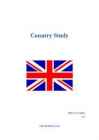
religion became very important. The Vikings settled mainly in Scotland and Ireland, the Danes in the north and east of England. Local Anglo-Saxons lost their power in 1066 to Norman conqueror William the Conqueror. Medieval Britain Centralised / 'sentrlazd / tsentraliseeritud, kesestatud Administration / dmn'stren / valitsus, juhtkond The Normans introduced the feudal system, strengthened the power of the King and the Church. England became a strong country under military rule. The Normans enjoyed absolute power: they built castles and destroyed villages. The main language spoken was Norman French which influenced the development of English. Main Events of the Period Canonised / 'kænnasd / pühakuks kuulutatud Charter / 't:t / üürima, harta Latter / 'læt / viimane, lõpupoolne
who after leaving London Bridge tube station walk across the bridge itself in order to reach the City of London. Nelson's Column Raised in 1843 and now one of London's best-loved monuments, commemorates the one-armed, one-eyed admiral who defeated Napoleon at the Battle of Trafalgar, but paid for it with his life. Piccadilly Circus During the weekends' Piccadilly Circus is packed with people. Known for its glowing billboards. St. Paul's Cathedral the present structure is the fifth cathedral to be built on the site. The weddings of the Prince and Princess of Wales, the funeral of Sir Winston Churchill and many other occasions have graced this spiritual centre. Built of Portland stone with a Dome that rises to 365 feet and with Great Paul, the largest bell in England, this has to be one of biggest sight sees in London. Globe Theatre the theatre, which is known for an absent roof, stands on the north-western coast of the Thames river
The first inhabitants of Finland were the Sami (Lapp) people. When Finnish speakers migrated to Finland in the first millennium B.C., the Sami were forced to move northward to the arctic regions, with which they are traditionally associated. The Finns' repeated raids on the Scandinavian coast impelled Eric IX, the Swedish king, to conquer the country in 1157. It was made a part of the Swedish kingdom and converted to Christianity. By 1809 the whole of Finland was conquered by Alexander I of Russia, who set up Finland as a grand duchy. The period of Russification (18091914) sapped Finnish political power and made Russian the country's official language. When Russia became engulfed by the March Revolution of 1917, Finland seized the opportunity to declare independence on Dec. 6, 1917. The USSR attacked Finland on Nov. 30, 1939, after Finland refused to give in to Soviet territorial demands. The Finns staged a strong defense for three months
· the permanent exhibition of classics of Estonian art (18th century II World War), the permanent exhibition of Estonian art from 1945-1991 and contemporary art at Kumu Art Museum; · ecclesiastical Medieval and Baroque art from the period between 13th 18th century, silverware of guilds, craft corporations, Brotherhood of the Black Heads and churches at Niguliste Museum; · European and Russian art from the period between 16th 20th century in the Kadriorg Palace, and a valuable collection of the 16th 20th c. art from Western Europe, Russia and China, donated to the museum by Johannes Mikkel, at Mikkel Museum at Kadriorg Art Museum; · Art of Adamson-Eric (19021968), one of the most outstanding Estonian painters of the 20th century, at Adamson-Eric Museum;
Denmark. Only in1629 the whole mainland Estonia became subject to Sweden. Under Swedish rule the University of Tartu was founded in 1632 and also the oldest school working on the same premises was founded in Tallinn (GAG).After the Northern War (1700-1721) Estonia became a province of Russia. During that period the gentry of Baltic-German origin prevailed in Estonia. They kept estates in Estonia until 1919. Under Russian rule the Palace of Kadriorg was built and the park was laid out. The National Awakening in the middle of the 19th century brought rapid advances in the Estonian education system, general living conditions and culture. The national epic "Kalevipoeg" was published, theatre and music societies appeared and the 1st Song Festival was held in Tartu in 1869. Since then the Song Festivals have become a national tradition, being held every 4-5 years. This all lead to Estonia's independence
population (Rozenberg 1990). Language While Catalan and Spanish are the official languages of Ibiza, a "dialectal variation [of Catalan]...called Eivissenc or Ibicenco is more readily spoken by both the residents and those of Formentera. Additionally, because of the influence of tourism (see below) and expatriates living in or maintaining residences on the island other, atypical languages, such as English, German and Russian are also spoken. Polylinguality is the norm, not the exception. Tourism Nightlife Ibiza is considered a popular tourist destination, especially due to its legendary and at times riotous nightlife centered around two areas: Ibiza Town, the island's capital on the southern shore and Sant Antoni to the West. Well-known nightclubs are Privilege (the largest club in the world), Eden (the busiest nightclub in Sant
 annaabi.ee