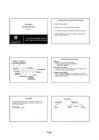
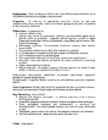
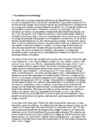
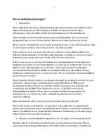
· Society 7 8 The Affect-Trauma THE THEORY Model (1885-1899) Fonagy and Higgitt (1984) review Outcomes Freud's theory in relation to 3 · Identification of unconscious motives phases: repression and psychological determinism · The Affect-Trauma Model · Development of the `talking cure'- (1885-1899) central feature of psychoanalysis. · Topographical Model of the Mind · Power of sex (1900-1920) · `Studies on Hysteria' published (1885)
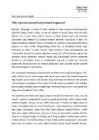
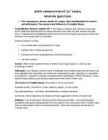
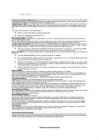
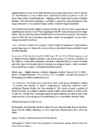
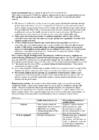
Areas of Psychology Specializations in psychology Specializations in psychology · Most psychologists are involved in the areas of clinical and counseling psychology. · The primary focus of clinical psychologists is the diagnosis and treatment of mental and behavioral disorders. What is a main difference between a psychologist and psychiatrist? Modern psychology PSYCHOANALYSES (psychoanalytic perspective) Sigmund Freud (1856 1939) · Our behaviour comes from unconscious drives and problems arise from unsolved conflicts in the unconscious mind · Usually stemming from our childhood · Used dream analyses to explore unconscious mind Behaviorist perspective · Was founded by John B. Watson. · Focuses on our observable behaviours (thoughts and hidden parts of the mind are not relevant) that can be measured objectively · Observes the influence of rewards and punishments · Classical and operant conditioning Humanistic perspective
Marketing Metaphoria Maarja Salu MSI I kursus Marketing Metaphoria reveals the powerful unconscious viewing lenses called "deep metaphors" that shape what people think, hear, say, and do. Why do... ... advertising campaigns and new products often fail? ... consumers feel that companies don't understand their needs? Because... ... marketers themselves don't think deeply about consumers' innermost thoughts and feelings. Marketing Metaphoria should convince you that everything consumers think and do is influenced at unconscious levels and it will
from library. When she reaches the location of the noise, she sees Jimmy shot in the arm, laying in the library. He tells everyone how he valiantly fought the intruder but wasn't able to stop him from getting the formula. It was then that Bundle realized that the packet contained the formula and she had intercepted it before it eas stolen, when Bundle goes to accuse the members of the Seven Dials group she finds Bill laerns that unconscious and is herself knocked out. When she comes to, Bundle learns that Jimmy and been arrested, in the murders of her two friends and he steged the fight and shot himself in the arm. The Seven Dials group was after him and now they had him so they wanted Bundle to take the place of one of the Seven Dials members that tied. Bill was so happy that she was alive that he proposed to her. I really liked this book for its suspenseful quality and its unexpected outcome.
offers a better explanation of human visual perception. According to top-down perceptual processing theorists, perception is the end result of an indirect process that involves making inferences about the world based on knowledge and expectations. An example of this process is Gregory's (1980) constructivist theory. He suggests that to avoid sensory overload, we need to select from the information surrounding us, therefore, we often supplement perception with unconscious inferences. Thus he argues that perception begins with an incomplete retinal image that is two- dimensional, flat and size depends on distance. He says that perception is a constructive process in which the two-dimensional retinal image is elaborated to a three- dimensional picture in our brain, based on personal knowledge and experience. In other words the processes of perception is essentially affected by our expectations and probability in perceiving the world
she is only twenty-two. Moreover, Gurov is from Moscow, the former capital of Russia and still a center of power and culture, and occupies a high social position through his marriage whereas Anna has fallen socially, having moved -- because of her marriage -- from St. Petersburg, the current seat of government and culture of the Russian empire, to the remote provincial capital of Saratov. Anna's not switching from vy to ty with Gurov is an obvious reminder to readers Greenberg unconscious After presenting these details, Chekhov subtly weaves in Gurov's mind an associative link between his daughter and Anna: 'As he went to bed he remembered that she had only recently left her boarding school, that she had been a schoolgirl like his own daughter' Every time the voices of his children doing their homework reached him in his study in the stillness of the evening, every time he heard a popular song or some music in a restaurant,
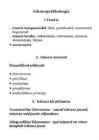
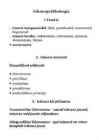
antikateksis anticathexis ·kaks instinktide rühma Eros ja Thanatos asendamine displacement ego energia - identifitseerumine II Alateadvus tsentraalne osa isiksuses Topograafiline isiksuse mudel kontiinum: alateadvus-teadvus a. teadvus conscious see, mida igal ajahetkel oleme võimelised teadvustama b. eelteadvus preconscious mõtted, mälestused, tajud c. alateadvus unconscious motiivid, soovid, vajadused, tungid alateadvus eelteadvus teadvus III Isiksuse struktuur Miski Id alateadvus eksisteerib sünnihetkel kontrollimatu, organiseerimatu, irratsionaalne Naudinguprintsiip pleasure printciple Rahuldada saab: a) refleks reflex action kaasasündinud reaktsioon b) primaarne protsess primary process tungi rahuldava objekti kujutlemine
antikateksis anticathexis ·kaks instinktide rühma Eros ja Thanatos asendamine displacement ego energia - identifitseerumine II Alateadvus tsentraalne osa isiksuses Topograafiline isiksuse mudel kontiinum: alateadvus-teadvus a. teadvus conscious see, mida igal ajahetkel oleme võimelised teadvustama b. eelteadvus preconscious mõtted, mälestused, tajud c. alateadvus unconscious motiivid, soovid, vajadused, tungid alateadvus eelteadvus teadvus III Isiksuse struktuur Miski Id alateadvus eksisteerib sünnihetkel kontrollimatu, organiseerimatu, irratsionaalne Naudinguprintsiip pleasure printciple Rahuldada saab: a) refleks reflex action kaasasündinud reaktsioon b) primaarne protsess primary process tungi rahuldava objekti kujutlemine
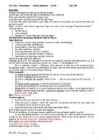
4. Mental energy (`libido') cathartic treatment Page Freud: landmarks Freud: Basic theses of psychoanalysis · 1896 - Introduces term `psychoanalysis' · "mental processes are in themselves unconscious and that of all mental life it is only certain individual acts and portions that are · 1900 - `The Interpretation of Dreams' conscious" · 1901 - `The psychopathology of Everyday Life' · 1906 - Jung begins psychoanalysis · "instinctual impulses can only be described as sexual, both in the
devices. Expressions 1) To sit on one's couch- ühe koha peal istuma 2) Be forced to sift- läbi vaatama/sõeluma 3) High definition- kõrgkvaliteediline 4) Widget-based system- vidinatel põhinev süsteem 5) Affected by the limits- piirangute poolt mõjutatud 6) One of the primary forces- üks juhtuvaid jõude 7) Tremendous success- tohutu edu 8) The true value of teamwork- koostöö tõeline eesmärk 9) To stay focused- keskenduma 10) In an unconscious effort- alateadlik püüe 11) Marvellous feat of engineering- imeline saavutus inseneriteaduses 12) Base in its own right- põhineb oma õigusel 13) Matter of dispute- vaidluse olulisus 14) The ability to type- võime trükkida 15) To pluck from the air- õhust välja noppima 16) Greatly expanded- suurelt laiendatud 17) Major technological breakthrough- peamine tehniline läbimurre 18) Number of different approaches- mitmed erinevad lähenemisviisid
suunamine mõtetesse objektist, mis suudab vajadusi rahuldada; leida objekt Idi vajaudtse rahuldamiseks, arvestada Superego'ga. Superego keeldude internaliseerimine, süütunde osa käitumise regulatsioonis, isiksuse moraalne pool. Elu- ja surmainstinkt : libido (seksuaalenergia-> eluks seotud vajalike instinktide energia) ; pinge vähenemine vajaduste rahuldamise teel) JUNG - The personal unconscious and the collective unconscious arheotüübid (collective unconscious) The persona - mask osa individuaalsusest varjatud, osa isiksusest jääb maski taha 1. Anima naiselik alge mehes 2. Animus maskuliinne komponent naistes 3. Varu (the shadow) isiksuse tume pool, agressiivsed tendentsid inimeses; selle pojitseerimine maailmale (deemonid, kurat jne); ühiskonnavaenulikkuse tõttu alla surutud;
thoughts that you regard as the absolute truth – does not make you spiritual no matter what the nature of those beliefs is. In fact, the more you make your thoughts (beliefs) into your identity, the more cut off you are from the spiritual dimension within yourself. Many “religious” people are stuck at that level. They equate truth with thought, and as they are completely identified with thought (their mind), they claim to be in sole possession of the truth in a n unconscious attempt to protect their identity. They don’t realize the limitations of thought. Unless you believe (think) exactly as they do, you are wrong in their eyes, and in the not-too-distant past, they would have felt justified in killing you for that. And some still do, even now. The new spirituality, the transformation of consciousness, is arising to a large extent outside of the structures of the existing institutionalized religions
Manipulation of bodily self consciousness" Science. 317, lk 1096-1099 · Osis, K (1974) ,,Perspectives for out-of-body research" Research in Parapsychology, lk 110-113 · Wiseman, R (2011)"Out-of-body experiences" Paranormality, Macmillan, Mackays, UK, lk 13-57 Artiklid: · Blackmore, S.J. (1987) ,,Where am I?: Perspectives in imagery, and the out-of-body experience" Journal of Mental Imagery, 11, lk 53-66 · Debner, J. A.; Jacoby, L. L. (1994) ,,Unconscious Perception: Attention, Awareness, and Control" Journal of Experimental Psychology: Learning, Memory, and Cognition, American Psychological Association Inc, 20 (2), 304-317 · Hayden Ebbern, Sean Mulligan ja Barry Beyerstein (1996) "Maria's NDA: Waiting for the other shoe to drop" Skeptical Inquirer, 20(4), lk 27-33 · Klauer, K. C; Musch, J; Naumer, B (2000)Psychological Review, Vol 107(4), Oct 2000, lk 852-884 · Sireteanu R, Oertel V, Mohr H, Linden D, Singer W, (2008)
Body language Body language means communication with the movement or position of the human body. It can be conscious or unconscious. It is something that is noticed by everybody but is not always given enough attention. We sometimes ignore it and try to hide behind words, but we should never forget that we cannot fool everyone! Children react to body language because they experience the world through intuition. The same can be true for adults when feelings are involved. People who are in bad shape emotionally will often place great importance in it. In fact, they
Teadlik meel (conscious mind) on see mida sa iga hetk suudad teadvustada, hetke tunded, mälestused, mõtted, fantaasiad ja mida iganes veel. Teadlikusega on tihedalt seotud eelteadlikus (preconscious), mida tänapäeval ehk mäluks kutsutakse. Mõtted mida sa parajasti just ei mõtle, kuid mille peale mõtlemine ei ole raske ja mida sa lihtsalt meelde võid tuletada. Keegi ei vaielnud sellise jaotuse vastu, kuid Freud väitis, et see on vaid aju väiksem osa. Enamus ajust on alateadvus (unconscious). Siia hulka kuuluvad kõik need osad mille peale ei saa lihtsalt mõelda. Asjad mis pole meie teadvusele lihtsalt kätte saadavad tihti tegelikult defineerivadki selle, näiteks instiktid ja alateavusesse surutud traumade mälestused ja emotsioonid, mis on liiga valusad, et neid läbi elada kuuluvad siia alla. Freudi teooria järgi on alateadvus meie motivatsiooni aluseks. Motivatsioon võib väljenduda lihtsa nälja või seksi sooviga, neurootiliste sundlustega nagu näiteks viha, või
They were followed by photographers on motorbikes. Henri Paul, the driver, gave gas. When the speed limit was 80km/h, then he drove at 180km/h. Shortly after the entrance to the tunnel he completely lost control over the car. The car skidded, lurched from side to side and finally crashed at high speed into the 13th concrete post. Nobody in the car wore a seatbelt. The driver and Dodi died immediately. The second bodyguard was in critical position and unconscious. Diana made rowing movements with her arms, when injured people do this, it means that they are not receiving enough oxygen. On the second carriageway was driving a doctor Frederic Maillez. When he saw the accident, he stopped his car, took his emergency bag and ran to help the victims. He gave bodyguard medical attention and went to Diana. He laid oxygen mask to Diana's mouth. The ambulance was meanwhile underway. It took almost an hour until the victims could be taken out of the wreck
The essence of Freudian theory: the process in the human psyche Superego-society, conscience, morals, traditions, religion, a moral censor Ego-rational behavior, motivation, self-identification, conscious decisions Id-instincts, natural responses, the pleasure principle, aggressive instincts, the death wish Influence: In art and literature, Freud's theories influenced surrealism . Like psychoanalysis, surrealistic painting and writing explores the inner depths of the unconscious mind. Freudian ideas have provided subject matter for authors and artists. Critics often analyze art and literature in Freudian terms. 2. Literary Modernism and its sub-movements. The influence of Structuralism and psychoanalysis. Main characteristic features of Modernism. Denial of conventions, traditional structure, plot and presentation of character. The stream of consciousness. Allusiveness. Virginia Woolf's Modern Fiction as a
connotations. In the present context the term is used to designate the view that words to draw upon (e.g., discovery, theory, model, measurement, etc.), there are actually do not have meanings in the abstract. Words are used by people in particular fewer significant unique topics than one might imagine. For example, the concept of sociohistorical situations, and they mean whatever those people take them to mean. unconscious mental acts may be treated as a unique problem of psychology or The pragmatist accepts the need for the robust explications of the semanticists, but psychoanalytic theory, or as a species of the more general problem of unobservable insists that they must be bound by spatiotemporal and cultural constraints. For entities. The Heisenberg indeterminacy relation may be regarded as a unique problem of
senses of other characters, is a concretion of disturbing Beauty impinging on a possessive world. One has noticed that readers, as they wade on through the salt waters of the Saga, are inclined more and more to pity Soames, and to think that in doing so they are in revolt against the mood of his creator. Far from it! He, too, pities Soames, the tragedy of whose life is the very simple, uncontrollable tragedy of being unlovable, without quite a thick enough skin to be thoroughly unconscious of the fact. Not even Fleur loves Soames as he feels he ought to be loved. But in pitying Soames, readers incline, perhaps, to animus against Irene: After all, they think, he wasn't a bad fellow, it wasn't his fault; she ought to have forgiven him, and so on! And, taking sides, they lose perception of the simple truth, which underlies the whole story, that where sex attraction is utterly and definitely lacking in one partner to a union, no amount of pity, or
hold on grasp tightly; persevere; wait while telephoning hold out continue to resist; persevere; persist keep on continue keep up maintain the required pace or standard; continue let up diminish in intensity lie down recline look on be a spectator make out progress; succeed make up become reconciled move over move to the side pan out turn out well; be successful pass out become unconscious pass on die pick up grow; increase pull in arrive pull out deport pull through survive (barely) ride over ride to where someone is run away escape; leave; leave quickly without permission run down slowly lose power so as to stop functioning run off depart running; drain sell out sell the ownership or responsibility settle up pay one's bills or debts show off boast by words or actions
Dreams and Social Behavior: More than 95 percent of our dreams are peopled with others and most revolve around our relations with them. Culture- culture affects not only what dream is about but also how the dreamer thinks about it when she recalls it later on. In some societies including our own, dreams are generally dismissed as nonsensical fancies, irrelevant to real life. Dreams and internal conflict- according to Freud, dreams are product of an elaborate clash between two contending forces-unconscious primitive urges of our biological heritage and the civilizing constaints imposed by society. The disguise explains why dreams are so often odd and senseless. Senselessness is only on the surface, a cunning mask that lets us indulge in the unacceptable wish without realizing that iti is unacceptable. ' some distortions involve various transformations of the unacceptable themes, one is symbolism'. ( riding a horse and walking up a staircase refer to intercourse and passion ).
The magistrate tried to question Oliver but he couldn't speak, and finally fainted. The magistrate began to sentence him to three months of heavy labor, when a winded man ran into the office and demanded to speak. He was the bookseller that Mr. Brownlow had been shopping with when the robbery had occurred. The bookseller had seen the whole robbery and testified that Oliver had not committed the crime. The magistrate releases Oliver and Mr. Brownlow takes him, unconscious, with him in his coach along with the savior bookseller. Chapter 12: Mr. Brownlow took Oliver to his house, where he was unconscious for days. Oliver awakes from his illness to find a sweet old woman, Mrs. Bedwin, taking care of him. She nurses him back to health and Mr. Brownlow comes to visit him to inquire after his health. Oliver begins to get his strength back and is very grateful to both Brownlow and Bedwin for taking care of him. Once he is
with the capital letter (e.g. According to G. B. Shaw, "Economy is the art of making the most of life."). 2. With the proceeding clause (subj. + predic.) we use a comma or a colon (normally a colon) (e.g. The professor said: "Let's consider what Carl Jung has claimed."). 3. With a quoted word or phrase we need quotation marks alone. The quoted word or phrase starts with a lower case letter (e.g. According to Jung, the "something greater" is the unconscious, which he defines as "a natural phenomenon producing symbols that prove to be meaningful.") FGI 1811 Proseminar I. Ladusseva 6 4. With the quotations interrupted by the author we need commas on both sides of the author's words. Here quotation forms one sentence so only first letter is capital (e.g. "Ideas," writes Carl Jung, "spring from something greater than the personal human being.").
personal energies, and that they also configure the awareness and experience of each one of us, may be perceived in another connection mentioned by the psychologist C. G. Jung: Every Roman was surrounded by slaves. The slave and his psychology flooded ancient Italy, and every Roman became inwardly, and of course unwittingly, a slave. Because living constantly in the atmosphere of slaves, he became infected through the unconscious with their psychology. No one can shield himself from such an influence (Contributions to Analytical Psychology, London, 1928).
the Acts. Diaries – her inner struggle, key to her creative manner and writing process. Finding one’s voice meant for her to “speak in tongues”; spontaneous and uncontrollable, NOT a conscious effort. Role of the unconscious. Mrs Dalloway – one day, June 20, 1923, in London. Very accurate historically and topographically. Presents only what is necessary. Big Ben – symbol of time; opposition between the time of the clock and the time of the mind.
can be used not only to alter bad situations, mentally for the better, but is also used to exacerbate bad situations in the mind, which in turn could lead to depression and anxiety ( Segerstrom et al., 2000; Nolen-Hoeksema, 2000; Connor & Leonard, 1998) or ill health (Janine , 2007). Thus, it has become clearer that emotions influence not only our mood but also physiological functions. Sculkin (2003) noted that the appraisal systems, particularly the unconscious mechanisms, are pervasive throughout the nervous system therefore it is crucial to expand the methods of measuring it. Figure 1 Figure 1. A process model of emotion regulation (Gross, 2001). Emotion regulation in relation.. 9 Much of ER is measured by self-reports, although some current research in to ER has used physiological measurements such as blood pressure in emotion suppression (Butler et al
seda tähele panna ja see eksisteerib minu jaoks reaalsuses. See, mida igal ajahetkel oleme võimelised teadvustama. Nt kui meile ei meeldi mingi kehaosa, siis seda kehaosa meie jaoks ei eksisteeri (hüsteeria).Hüpnoosi all olevad hüsteeria patsiendid tundsid valu jne. Eelteadvus (preconscious) – mõtted, mälestused, tajud. Relakseeritud seisundis kutsub esile kõik mis mu sees on. Mõtted ja mälestused tulevad kuskilt. Alateadvus (unconscious) – need mälestused, mida ei mäleta tulevad alateadvusest ehk isiksuse osast, milles pole võimalik teadvustamine. Seal eksisteerivad kõik motiivid, soovid, vajadused, tungid. Isiksuse struktuur: id, ego, superego. Isiksus koosneb kolmest osast: Miski ehk id – kõik mis on seotud vajaduste, instinktide ja kaasasündinud kalduvustega. Üles ehitatud naudingu printsiibile. Inimese olemus sünnihetkest on saada rahuldus. ID on pime, tahab, aga ei tea mida tahab. Rahuldada saab:
which occur in the dreams of all people and the myths of all cultures. Jung sug gested that these archetypes reflect different aspects of the human mind — that our personalities divide themselves into these characters to play out the drama of our lives. H e noticed a strong correspondence between his patients' dream figures and the common archetypes of mythology. H e suggested that both were coming from a deeper source, in the collective unconscious of the human race. T h e repeating characters of world myth such as the young hero, the wise old man or woman, the shapeshifter, and the shadowy antagonist are the same as the fig ures who appear repeatedly in our dreams and fantasies. That's why myths and most stories constructed on the mythological model have the ring of psychological truth. Such stories are accurate models of the workings of the human mind, true maps of the psyche
· Unable to determine his own faith · Hereditary · Naturalists tried to apply in fiction the processes of natural sciences · Writers task is to record facts, systems of behaviour, living conditions, never revealing any natural unbiased (completely natural) · Point of view: amoral-outside the category of morality, neither good or bad · Naturalist find it absurd to blame the wicked. These criminals are doing what nature, environment, their unconscious tells them to do. Naturalists do not judge their characters, they simply report. Try to describe facts like they are. Naturalists depict the lower, coarser forms of life. · Drab, squallid set of scene. Revolting, disgusting · Characters are people with strong animal desires · Neurotic characters unable to understand the forces that control them · By the end of the 18th century the naturalism depicts in europe, but stars to become
· Kõik kannatused pole seotud elustiiliga ja ka kõigeadekvaatsem elustiil ei välista kannatusi · Analüütiline uurimine peab algama ESIMESEST hetkest. Kuidas astub patsient ruumi jne. · Käitumist tuleb jälgida ja hinnata ning siis panna mingisse mustrisse, et tekiks arusaam. · Lauda ei tohi olla intervjuu juures, sest nõustamine peaks olema sõbralik ja võrdne C.G.Jung Analüütiline psühhoteraapia ,,Psychology of the Unconscious" 1912 Jungi Isiksuseteooria aspekte · Dünaamilise terviku põhimõte . · Individuaalne alateadvus ning kollektiivne alateadvus. · Psüühika teadvustatud pool ning ligipääsmatu pool · ,,Mina" kui arhetüüpiline energia, mis annab käsklusi ja liidab isiksuse tervikuks, mina olulisim osa on EGO. · Vari isiksuse need aspektid, mille lähemast tundmaõppimisest oleme mingil põhjusel hoidunud ehk loomuse tumedam pool
maailma psüühikaga, mis on puhas id. Id on psüühika kõige suurem osa, “jäämäe veealune osa”, kui Freudi sõnu kasutada. Id on psüühika liikumapanev osa, kuna alateadlikud tungid tekitavad lahendusele tungides vastuolusid ja võitlust. PSÜHHOANALÜÜTILISE TEOORIA OLULISEMAD MÕISTED Psüühika topograafiline mudel on S. Freudi esimene psüühilise aparaadi teooria. Selle järgi sisaldab psüühika 3 osa: (1) Mitteteadvuslik (unbewusste; unconscious), mille sisuks on tõrjutud mõtted, elamused, unistused - tungid. Need ei ole teadvusele kättesaadavad. Mitteteadvuse töö toimub primaarprotsessilise mõtlemisviisi järgi ehk, teisiti öeldes, seal kulgevad esmased protsessid (primary process thinking). Mitteteadvuses olevad tungid üritavad leida väljapääsu ja murda end teadvusse. Seda takistab tsensuur eelteadvuse ja mitteteadvuse piiril. (2) Eelteadvuslik (vorbewusste; preconscious), mille sisuks on momendil või üldse
homes are characterized by love, laughter, and happiness for every- one who lives there. ■ THE DETERMINANT OF SELF-ESTEEM Your level of self-esteem is largely determined by how closely your self-image—your current performance and behavior—matches your self-ideal—your picture of how you would perform if you were at your very best. You are always comparing your actual performance with your ideal performance at an unconscious level. Whenever you feel that you are living up to your very best, you feel terrific about yourself.Your self-esteem soars.You feel happy and fulfilled. Whenever you do or say something that is not in keeping with your ideals or the best of which you feel you are capable, your self- esteem goes down. Whenever there is a wide separation between the person you are in the moment and the ideal person you want very
1960 'Turn on' meant go within to activate your neural and genetic equipment. Become sensitive to the many and various levels of consciousness and the specific triggers that engage them. Drugs were one way to accomplish this end. 'Tune in' meant interact harmoniously with the world around you - externalize, materialize, express your new internal perspectives. Drop out suggested an elective, selective, graceful process of detachment from involuntary or unconscious commitments. 'Drop Out' meant self-reliance, a discovery of one's singularity, a commitment to mobility, choice, and change. Unhappily my explanations of this sequence of personal development were often misinterpreted to mean 'Get stoned and abandon all constructive activity'. New Age travellers (Heatherington) - majad on ratsionaalsuse pealesurumine. Alguses vastuseis nagu moraalse paanika ajal 60ndatel. Kaks kõige kuulsamat ja vanemat ökokogukonda on Findhorn (loodi 1962)
they first felt the urge to move, the time of `conscious will'. The average time of this `W judgement', as Libet called it, was 206 ms before the onset of muscle activity (Figure I). Libet also measured the preparatory brain activity preceding voluntary action, or readiness potential (RP), in the same trials. RP onset preceded W judgement by several hundred milliseconds. This suggests that the initiation of action involves an unconscious neural process, which eventually produces the conscious experience of intention. Conscious intentions therefore occur as a result of brain activity, and do not cause brain activity. Libet's experiment has been widely criticized [5]. The particular numerical values in such studies depend strongly on how the subject divides attention between the clock and their internal stream of consciousness. The temporal
make an effective contribution to military action, it shall be presumed not to be used. If there was a military object and there is suspect that it has been converted to a civilian object then the attack should be stopped immediately. Combatants can kill combatants ONLY if they are not "Hors de combat". A person hors de combat is: Persons under the protection of GC; Prisoner of war; Expresses intention to surrender; If rendered unconscious or otherwise incapacitated by wounds or sickness and is therefore incapable of protecting himself. Provided that in any of these cases he abstains from any hostile act and does not attempt to escape. If a person uses his or her status to achieve better military advantage, then it is a war crime. Armed forces Combatants all members of armed forces, except medical and religious personal. Army in
the man out. Today, the newspapers wrote that during the last three weeks of winter, 120 people died in Poland, frozen. This guy could have been 121-that night the temperature was -21C. He should be grateful to your book that he is alive. Author's note: Several years ago, I was involved in a rather serious automobile accident that oc- curred at an intersection. Both I and the other driver were hurt: He was slumped, unconscious, over his steering wheel while I had staggered, bloody, from behind mine. Cars began to roll slowly past us; their drivers gawked but did not stop. Like the Polish woman, I had read the book, too; so, I knew what to do. I pointed directly at the driver of one car: "Call the police." To a sec· and and third driver: "Pull over, we need help." Not only was their aid rapid, it was infectious. More drivers began stopping-spontaneously-to tend to the other victim
statements) is actually correct, his argument does not show that. The basic idea of conversational implicature is almost universally accepted, as are most of its standard uses in philosophy. But Grice's theory of it is now not so widely granted. There are two main direct complaints. First, some 162 Pragmatics and speech acts philosophers are suspicious of the amount of complex but nearly instanta- neous and almost entirely unconscious reasoning posited by Grice's theory. (Read through Grice's template again, and see how long it takes you.)4 But then, in many walks of life we do a great deal of reasoning very quickly and subconsciously. The second and more serious complaint is due to Harnish (1976), Sperber and Wilson (1986) and especially Davis (1998): Most cases of Gricean reason- ing divide into two stages, an initial negative stage and a subsequent positive stage
There was no life in him. He was gray as death with deep shadows in all the angles and planes of his breathtaking face. "What are you doing?" I whispered. He backed up, as if he wanted to be as far away from me as he could get. "I can't stay." It worried me that I felt a surge of relief at the thought of being alone. "We agreed-no running." "That was before I attacked you!" he snapped, showing the first sign of spirit in over an hour. "You were unconscious." "You're not going to be a victim ever again, Eva. My God...what I almost did to you..." He turned his back to me, his shoulders hunched in a way that scared me as much as the attack had. "If you leave, we lose and our pasts win." I saw my words hit him like a blow. Every light in my room was on, as if electricity alone could banish all the shadows on our souls. "If you give up now, I'm afraid it'll be easier for you to stay away and for me to let you. We'll be over, Gideon."
she could see in the light from the TV. But when she was done, she simply sat, looking at the blank walls with her timeless eyes. Jasper, too, seemed to have no urge to pace, or peek through the curtains, or run screaming out the door, the way I did. I must have fallen asleep on the couch, waiting for the phone to ring again. The touch of Alice's cold hands woke me briefly as she carried me to the bed, but I was unconscious again before my head hit the pillow. 21. PHONE CALL I could feel it was too early again when I woke, and I knew I was getting the schedule of my days and nights slowly reversed. I lay in my bed and listened to the quiet voices of Alice and Jasper in the other room. That they were loud enough for me to hear at all was strange. I rolled till my feet touched the floor and then staggered to the living room. The clock on the TV said it was just after two in the morning
 annaabi.ee