Leidsid 33 sarnast õppematerjali, mis on seotud failiga "The London Underground". Need materjalid aitavad sul teemat sügavamalt mõista.
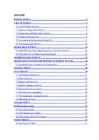
underground, metro, tube, lines, travel, first, oldest, station, longest, really, good, names, than, greater, serves, miles, circle, district, finally, waterloo, color, coded, brown, yellow, doesn, cost, store, rides, money, january, wooden, deep, electric, trains, today, fourth, york, interesting, europe.....................................................................lk7 Summary....................................................................................................lk8 Used in the literature...................................................................................lk9 Introduction I chose this topic because it is interesting to know about London.London is one of the impotrtant cities in Europe .I also think that everyone would like to travel in London. 3 London history During the 19th century, London was transformed into the world's largest city and capital of the British Empire. Its population expanded from 1 million in 1800 to 6.7 million a century later. During this period, London became a global political, financial, and trading capital
King Alfred the Great repopulated and fortified the city. Edward the Confessor started to build a new royal palace at Westminster and raised London to the level of capital. William the Conqueror started the construction of the Tower of London and his successor William II enlarged it and constructed Westminster Hall. The two centres which were to characterise the English capital for many years emerged: The City of L and Westminster. In 1193 Londoners elected Henry Fitzalwin their first Mayor and in 1209 a stone bridge was built to replace the earlier wooden one, which was the first real London Bridge. In 1349 the Black Death killed thousands of citizens. During the reign of Elizabeth I, the first map of L was published and the Globe Theatre built. Many people perished In the Plague (1603) and in the following Great Plague (1664-1665). It was ended by the Great Fire on Sept 2, 1666. It destroyed many houses and churches including St Paul's, and the Royal Exchange
The Romans finally invaded Britain in AD 43 from Kent. The Romans lead by Julius Caesar attempted to invade Britain twice before that in 55 and 54 BC but the invasions were unsuccessful. They made their way to the river Thames and sailed up it. The Romans knew it was important to control a crossing point at the river Thames, so they decided to build a settlement on the north bank. Although small settlements had been built on the banks of the Thames, the Romans were the ones who built the first city. They called their city Londinium. The Roman engineers noticed that the point where the swampy river narrowed would make an ideal crossing point, they built London Bridge. Less than 20 years later the native Iceni tribe, led by Queen Boudicca, rose up against the Romans in revenge for mistreatment and burnt Londinium to the ground. The well disciplined Roman army defeated her forces and Londinium was rebuilt. By AD 100 it had also become the capital of the Roman province. A
Scottish Highlands, where it is possible to go skiing. If it does snow heavily in other parts of Britain, the country often comes to a standstill. Trains, buses and planes are late. Contrary to popular opinion, it doesn't rain all the time. There is certainly steady rainfall throughout most of the year, but the months from September to January are the wettest. Thanks to the rain Britain has a richly fertile countryside which is famous for its deep green colour. History The first inhabitants were Iberians and Celts who settled on the land and were often at war with eaeh other. In AD 43 the Roman Emperor Claudius invaded, and made Britain a Roman province. Julius Caesar had previously visited Britain to have a look around. The Romans stayed for three hundred years, and built villas, roads and towns. Many Roman remains can be visited in Britain today. Later, Christian missionaries ca me from other parts of the Roman Empire to bring Christianity to the people.
politics, education, entertainment and even fashion contribute to its status as a major global city. London is a major tourist attraction with four world heritage sites, several royal parks and numerous iconic landmarks such as the Houses of Parliament, Towe Bridge, the Tower of London, Westminster Abbey and the London Eye. 2. History Although there is some evidence of a permanent settlement before the Romans came in 43 A.D., it is more accepted by historians that the Romans were the first. The settlement was called Londinium. The first London lasted for just seventeen years, for around AD 61, a tribe of Celts led by Queen Boudica stormed London, burning it to the ground. The next heavily-planned London prospered and surpassed Colchester (another major city at the time) as the capital of the Roman province of Britannia. At its height in the 2nd century, Roman London had a population of about 60,000. However, by the 3 rd century, the city fell into a decline due to trouble in the
anything that she wanted to do. She didn't think she could survive. Meanwhile, Les didn't seem to mind at all. He was able to light a few candles and he could still read his books, practice his trumpet, and hang out and play cards with his family. The two friends then realized that there was a big difference in their lifestyles and the amount of energy they used. So Jules decided she should figure out how much energy Les used and then compare her energy consumption to how much she really needed. To do this, they figured out how much energy Jules was using for entertainment, light, heating and cooling, cleaning, preparing food, transportation, and communication devices. They discovered that the amount of energy used for any purpose could be measured in different ways. Light bulbs are measured in watts. Air conditioners and hot water heaters are measured in BTUs, while energy used by cars is measured in gallons of fuel.
London important sights guide Roman period 20th century · Big Ben is the nickname for the great bell of the clock at the north end of the Palace of Westminster in London and is often extended to refer to the clock or the clock tower as well. It is the largest four-faced chiming clock and the third-tallest free-standing clock tower in the world. The clock first ticked on 31 May 1859. The pendulum is installed within an enclosed windproof box sunk beneath the clockroom. It is 3.9m long, weighs 300 kg and beats every 2 seconds. The clockwork mechanism in a room below weighs 5 tons. · Buckingham Palace is the official London residence of the British monarch. Originally known as, the building which forms the core of today's palace was a large townhouse built for the Duke of
inscribed on the World Heritage List. Others may be candidates for listing given adequate study, comparison, and evaluation. Not every potential World Heritage bridge candidate is cited. It is the job of TICCIH and its member countries to identify and make a case for outstanding bridges so they can be appreciated and protected like the great architectural and natural monuments already designated. Introduction The first bridges were natural, such as the huge rock arch that spans the Ardèche in France, or Natural Bridge in Virginia (USA). The first man-made bridges were tree trunks laid across streams in girder fashion, flat stones, such as the clapper bridges of Dartmoor in Devon (UK), or festoons of vegetation, twisted or braided and hung in suspension. These three types - beam, arch, and suspension - have been known and built since ancient times and are the origins from which
capital. The population is about 19 million people and growing. New South Wales is the most populated state and Victoria is the most densely populated state. The national language is English. It is English because British settlers came to live in Australia in the past and they brought convicts with them who were also British. Symbols. The Australian Flag came into being after the federation of the Australian States into the Commonwealth of Australian on the first January, 1901. The Commonwealth Blue Ensign was selected as a result of a public competition (over 30 000 designs were submitted). In the upper left corner there is the Union Jack that is the national flag of England. It denotes Australia's historical links with Great Britain. Under the flag there is the Commonwealth star which has seven tips. Six of them represent the states and the last one is for the Commonwealth of Australia. The Southern Cross is in the right. It consists of five stars
One of the mysteries is how it was built at all with the technology of the time. Another is its purpose. It appears to function as a kind on astronomical clock and we know it was used by the Druids for ceremonies marking the passing of the seasons. It appears in number of novels. These days it is not only the interest of tourists but is also a gathering point of certain minority groups. It is now fenced off to protect it from damage. 3. The Roman conquest Julius Caesar's first raid was in 55 BC but the romans left. Ad 43- the Romans came to stay. The army established Roman rule in the south and SW of the country. The Romans started to introduce their laws to a new province of the Roman Empire and started to build good roads. Officials were appointed (governors, procurators to collect taxes, look after the estates and mines and se that the gold, silver, iron and lead were exported back to Rome). Introduced schools,a new language Latin, large farms (villas), baths.
....................................................... ................................. Climate............................................................................................. ................................. States and Territories.......................................................................................... .......... Industry............................................................................................. ................................. Aborigines and first settlers.......................................................................................... Sports............................................................................................. .................................... Culture............................................................................................. .................................. Factfile Australia is the only country in the worlf that fills the whole continent.
travel) to Canada to practise in a training camp. I'm sure sometime in the future she ... (11 win) an Olympic medal. By that time, I ... (12 be) a famous author and she ... (13 ask) me to write a book about her way to the top. That's why I ... (14 start) taking notes of her and my other classmates' results. 3. Complete the exercise with the verbs in the past simple, the past continuous, or the past perfect tense. Do you remember? I went I was / we were going I had gone I couldn't wait for the first day of school to show off the new bike which I ... (1 get) as a birthday present. As I ... --- 5 (2 want) to look cool riding up to the front steps, I ... (3 put) on my new skirt. When I ... (4 reach) the school, I ... (5 make) a big mistake and ... (6 smile) at my friends instead of watching where I was going. While I ... (7 wave) at my best friend, I couldn't brake, and I ... (8 hit) the steps. I ... (9 fail) off my bike and ... (10 tear) my skirt. What a great start to the new year! 4
These include: Manchester, Leeds, Liverpool, Newcastle, Sheffield, Bristol, Coventry, Leicester, Nottingham and Hull. England features mostly low hills and plains. the Lake District in the north- west features some of England's most beautiful landscapes, and includes Scafell Pike at 978 m, the highest point of England. There are also some important rivers in England and the most significant ones are Thames, Severn (the longest river in Great Britain) and Avon. The flag of England is a red cross on a white background. It is also on the Union Jack. Scotland is in the northern part of Britain. It covers a little less than 80000 square kilometres and this is about one third of Great Britain. The population of Scotland is about 5 million people. There are three official languages spoken there: English, Scots, Gaelic. Edinburgh, the country's capital and second largest city, is one of Europe's
Plateau. In the very southwest there are thin forests of evergreen trees. Most of Australian trees are kinds of eucalyptus (or gum tree to Australians) and acacia (wattle of Australians). Eucalyptuses give the people timber and eucalyptus oil. Of 600 kinds of acacias the golden wattle, the national flower of Australia, is the best known. Of other trees there grow bottle trees in the savannas, tree ferns in the tropical forests and many others. Lakes Australia has much underground water. There are only few lakes which are full of water only after it rains. The biggest lake is Lake Eyre which is a salt lake. The natural lakes of the interior of continental Australia are salt lakes. Fed by streams and rivers, they receive water rarely. Lake Eyre, Torrens, Frome and Gairdner are the remains of a vast inland sea which once extended south from the Gulf of Carpentaria. Rivers Australia has only few rivers. Many of them are full of water only after it rains. There are
Almost all of the remainder is used by the industrial sector. Nonhydro renewable electricity energy consumption expanded slowly from 1,278 to 1,360 trillion Btu between 2002 and 2006. Increases in wind consumption were partially offset by decreases in biomass. Nonelectric uses of renewable energy made up the balance (2,693 trillion Btu or 39 percent) of renewable energy consumption. Nonelectric uses include applications such as wood for space heating, noncentral station solar, process heat from biomass for manufacturers, geothermal heat pumps and direct use of geothermal, biofuels for transportation and losses and coproducts from the production of biofuels. Over the last five years the share of renewable energy consumed for nonelectric use expanded from 33 to 39 percent. Types Wind Energy Wind power is the conversion of wind energy into a useful form, such as electricity, using wind turbines
enter the country and can live and work there without restriction. Generally, in order to have the right of abode in a certain country, a person must be a citizen of that country. Those with permanent residency of the country generally have a de facto right of residence but it can be revoked in certain circumstances, for example for being convicted of crimes. 16. Print media- (newspapers and magazines). Print media is one of the oldest and basic forms of mass communication. It includes newspapers (national, regional and local), magazines and other forms of printed journals. All of them have established online presences. However, the digital reach of the various titles differs greatly: whereas over half of The Guardian and The Telegraph readers are based online now, 91% of The Times readers still read its print version. 17. Fleet Street- the home of the British press until the 1980s; a metonym for the British national press.
All rights reserved. No part of this book may be reproduced in any form or by any means, electronic or mechanical, including photocopying, recording, or by any information storage and retrieval system, without the written permission of the publisher. ISBN 1-59905-201-6 Printed in the United States of America 13 12 11 10 09 08 07 9 8 7 6 5 4 3 2 1 Introduction Grammar is a very old field of study. Did you know that the sentence was first divided into subject and verb by Plato, the famed philosopher from ancient Greece? That was about 2,400 years ago! Ever since then, students all over the world have found it worthwhile to study the structure of words and sentences. Why? Because skill in speaking and writing is the hallmark of all educated people. Lesson by lesson, this book provides basic instruction in the eight parts of speech--nouns, pronouns, verbs, adjectives, adverbs, prepositions, conjunctions, and
should be remembered that American English has about 10 times more speakers than the RP and thus the significance of it in the today’s world should not be underestimated. 2) Submarine sandwich is ‘a large sandwich consisting of a long roll split lengthwise and filled with layers of meat, cheese, tomatoes, lettuce and condiments’ (www.ahdictionary.com). How did it get its name? It is difficult to say when the term submarine sandwich was first used for these types of large sandwiches. Although it is quite obvious that the sandwich got its name because of its long shape that resembles submarines, there are several myths around the origin of the term. The first theory is that at the beginning of World War II a sandwich was specifically created in a restaurant in Scollay Square in Boston to appeal to the mean serving at Charlestown Navy Yard. Because it resembled a submarine for its shape, people began to call them “submarine
5 The thief grabbed my bag and ran The photos are connected with the 1B Past and perfect tenses off. topic of school. Both photos show page 4 6 He dropped a leaf into the water students in class. In the first photo I imagine that 1 1 ate and watched it drift under the they're about 13 years old. 2 have/'ve met bridge. It looks like a science lesson 3 have/'ve caught 7 As she got older, her health
9 Did he reading when he heard the scream? ____________________________________________________________________________________________ 10 Which book did you enjoying most? ____________________________________________________________________________________________ Marks: /10 Words, words, words 4 Write the words which mean the following. The first letter of each word has been provided. 1 Children wear this to school to make them look the same. u______________________ 2 A jacket and trousers made from the same material. s ______________________ 3 A man wears this round his neck and over his shirt to make him look smart. t _______________________ 4 We wear these to protect our clothing
Under surface pressure and temperature conditions, lighter hydrocarbons methane, ethane, propane and butane occur as gases, while pentane and heavier ones are in the form of liquids or solids. However, in an underground oil reservoir the proportions of gas, liquid, and solid depend on subsurface conditions and on the phase diagram of the petroleum mixture. An oil well produces predominantly crude oil, with some natural gas dissolved in it. Because the pressure is lower at the surface than underground, some of the gas will come out of solution and be recovered (or burned) as associated gas or solution gas. A gas well produces predominantly natural gas. However, because the underground temperature and pressure are higher than at the surface, the gas may contain heavier hydrocarbons such as pentane, hexane, and heptane in the gaseous state. At surface conditions these will condense out of the gas to form natural gas condensate, often shortened to condensate
bushlands and rainforests. The wet forests occupy the narrow region in the east. Most of the animals, birds and insects live in that region, because there is enough food. The savannas which are grasslands with some trees are mostly in the west. Farther west are the bushlands. The real deserts occupy the centre of the Western Plateau. In the very south west there are thin forests of evergreens trees. Australia is the driest inhabited continent, the flattest, and has the oldest and least fertile soils. Only the south-east and south-west corners of the continent have a temperate climate. The northern part of the country, with a tropical climate, has vegetation consisting of rainforest, woodland, grassland, mangrove swamps and desert. Climate is highly influenced by ocean currents, including the El Niño southern oscillation. 4. Land regions Mountains The Great Dividing Range runs along the Pacific ocean. These mountains are very old and much of worn
contrary. (kig, keg, kag, kog, kug) which was has the greatest and which has the smallest illumination. All the people guessed the same way. 7. Phonetic stylistic devices Onomatopoeia--echo writing. It is a combination of sound, which suggests acoustic features of objects or actions. There are traditional cases that are registered in dictionaries (buzz, rattle, splash, squeak) More original, expressive cases combine nonce coinages (the train choo-chooed to the station, Prr-umph! A devastating crush was heard) Alliteration--the use of words that begin with the same sound in order to make a special effect, especially in poetry. It goes back to Anglo-Saxon poetry. It may convey various shades of meaning. F at the beginning may imitate blowing wind. In that case alliteration becomes onomatopoeic in quality. The function of alliteration depends on the peculiar context; its rhythmical value goes hand in hand with the connotations it evokes. According to Boulton:
the summer months. The outback receives almost no rainfall. Tasmania is cooler and wetter than the rest of Australia. The only places where snow falls are in the southeast and Tasmania. History Sixty million years ago Australia and its nearby islands were separated from the rest of the world by a great upheaval. They were cut off from Asia by the ocean. Almost no animals and few people visited Australia before the English colonists. The first people in Australia were the Aborigines. They came there more than 50,000 years ago. They were the only inhabitants. They were living in the Stone Age. Their only weapons were simple spears and boomerangs. They raised no crops and had no heards of tame animals. For food the hunted, fished and gathered wild fruit and nuts. Their tribes had very well worked out customs. Chinese sailors visited Australia 2,500 years ago. Australia remained unknown for
This was not likely to happen in ASCII text, but is very likely with binary data. This is known as a data will not acknowledge after the error checking. EOT (End of Transmission) framing/error detection: · Type of CRC (2B or 4B) transparency problem an can be rectified with byte stuffing (for byte-oriented protocols) and bit ·Indicates that a station has no data to transmit. Has 2 address fields (source & destination) for multiaccess · Disable or select authentication stage (PAP, CHAP, EAP) stuffing (for bit-oriented protocols)
Facts and figures The Republic of Estonia is a small country. Covering only 45, 228 sq km it is slightly bigger than Denmark, Belgium or Switzerland. Estonia's population is under 1.4 million. The official language is Estonian but since very many Russians live here Russian is also wide spread. The capital of Estonia is Tallinn. The currency used in Estonia is Eesti kroon. The Estonian national flag is blue-black-white. It was originally the flag of the Estonian Students' Society. The flag was first consecrated in Otepää Church in 1884. For a while, during the Soviet occupation, the flag was banned but it was again seen in public in Tartu in May 1988. The national flower is cornflower, the national bird is barn swallow and the national stone is limestone. The Estonian national anthem called "My Native Land, My Pride and Joy" was composed in 1848 by Friedrich Pacius. The Estonian language words were written by J. V. Jannsen. It was officially adopted after the War of Independence in 1920
HECHO EN CHICAGO, U.S.A. SIGNET, SIGNET CLASSICS, SIGNETTE, MENTOR AND PLUME BOOKS are published by The New American Library, Inc., 1301 Avenue of the Americas, New York, New York 10019 FIRST PRINTING, FEBRUARY, 1973 PRINTED IN THE UNITED STATES OF AMERICA To my Parents and my Grandmother Contents A Note on the Abridged Version Preface A Few Words 1. One Day of Magic: I 2. One Day of Magic: II 3. The First 3,000 Years 4. The Rise of the West 5. On the Origin of a Species 6. The Era of the Black Chambers 7. The Contribution of the Dilettantes 8. Room 40 9. A War of Intercepts 10. Two Americans 11. Secrecy for Sale 12. Duel in the Ether: I 13. Duel in the Ether: II 14. Censors, Scramblers, and Spies 15. The Scrutable Orientals 16. PYCCKAJI Kranrojioras 17. N.S.A. 18. Heterogeneous Impulses 19. Ciphers in the Past Tense 20. The Anatomy of Cryptology Suggestions for Further Reading Index
Despite the city's turbulent history, Prague's progress in recent years has been more stately than revolutionary. The booming tourism sector and a solid industrial base have left its citizens in better economic shape than the rest of the country. Unemployment is minimal, the shops are full, and façades that were crumbling a decade ago have been given face-lifts. Big new shopping malls and multiplex cinemas are popping up all over the place, there's a huge new sporting and events arena, the metro system is being extended and a new floodprotection system has been installed. There are downsides, of course. Rumours of corruption in City Hall are rife, affordable 6 housing remains in short supply, the health system is under strain, and traffic congestion and crime rates are up. Despite this, the mood of the city remains buoyant.
choice very good pakeha non-Maori New Zealander rattle your crikey wow! hurry up dags crook unwell she'll be right not a problem cup of tea, cuppa stubby small bottle of beer coffee dairy corner store stuffed really tired dunny toilet suss to figure out fizzy drink soda pop ta thanks flash looking good tata goodbye good on ya, well done take-aways fast food mate! affirmative good as gold take a hike go away! answer hard yakka hard work tea dinner
9A TALLINN Report Supervisor: Inge Välja Tallinn 2006 Order of contents: 1.Introduction 2.Toompea 3.Lower Town 4.Kadriorg and Pirita 5.Museums 1. Introduction Tallinn, the capital of Estonia, lies on the Baltic Sea. It is on almost the same latitude east St. Petersburg in Russia, Stockholm in Sweden and Stavanger in Norway, and covers 158 sq km. Tallinn was first marked on a map of the world by the Arab geographer al-Idrisi in 1154, its name then being Kolyvan (probably derived from the name Kalev). In the 13th-century Chronicle of Henricus de Lettis the town was called Lyndanise. Later came Reval (presumably after the old county of Rävala), the name used by the Germans who ruled the country for seven centuries. Russians then modified Reval to Revel. For Estonians, the town came to be called Tallinn from Taanilinn (Danish
of fiction, scientific prose, newspapers, business correspondence, etc.). These are called functional styles or registers. Stylistics is the study of style. In spite of the variety of styles English Stylistics has not been discussed on the same scale as French or German stylistics; it has not been discussed thoroughly. The very term "stylistics" came in more common use in English only some 45 years ago. However, it was recorded for the first time much earlier in 1882, meaning "the study of literary style, the study of stylistic features" (Oxford Dictionary). Stylist is a writer / speaker skilled in a literary style (e.g. Hemingway is considered a peculiar stylist used a lot of repetitions). Stylistician is a scholar (a student). Style is applied to many things: clothing, architecture, hairstyles, etc. A linguistic style
interests of students. But certainly the most numerous is the Scout Association, founded in 1908 for boys and in 1910 for girls by Lord Baden-Powel. The Scout movement is to encourage a sense of adventure and of responsibility for others among young people. The programme of training is planned to develop intelligence and practical skills, to promote health and a sense of service. Scout training is complementary to the ordinary education. Scouts train in mapping, signalling, first aid and all the skills that arise from camping and similar outdoor activities. British scouts take part in international scout meetings, which are held approximately every four years. The membership in this or that youth organization is not compulsory in Great Britain. But everyone can find the activity he likes most. Climate in Great Britain The British Isles which are surrounded by the ocean have an insular climate.
This is Jane Smith. I'm Jane Smith. My name's John Smith. Informal introduction Hi. John. Jane. Hello. Titles: Mr Mrs Miss Ms Ms is a modern form of address for women. It replaces the traditional forms of Mrs and Miss. Greetings Good morning/afternoon/evening! 'How are you?' Very often people expect you to say something positive. Here's a breakdown of how you can express how you really are without complaining too much. · Fine, thanks. / On top of the world, thanks. · OK, thanks · Not so bad, thanks. / Can't complain, thanks. · So so, thanks. / So and so, thanks. · Not so good, actually 1 The English alphabet Spelling Work with your partner and spell out first your name and then some
 annaabi.ee