Leidsid 33 sarnast õppematerjali, mis on seotud failiga "Street Art". Need materjalid aitavad sul teemat sügavamalt mõista.
street, graffiti, work, paint, bank, banksy, artists, king, writer, piece, writers, wall, vandalism, walls, other, them, image, sign, part, spray, pieces, know, letter, project, could, there, political, movement, thing, late, letters, face, best, artwork, artistic, through, train, europe, surface, installation, works, popular, often, considered, startedPaintings became gradually more elaborate. During mid-C18, the new immigrants introduced the style of Rococo (gracious, charming and pretty). Exemplary artist. John Singleton Copley (late-C18). He was self-taught and pursued truth in the characters of his sitters and their surroundings. He emphasized the hands of his sitters. After moving to England, he adopted history paintings. Subsidiary artists: Thomas Smith, the Gansevoort Limner, John Smibert, Robert Feke, John Wollaston, Joseph Blackburn, Benjamin West. Republican Period Portraiture. The Revolutionary War sparked the interest in portraits of national heroes and statesmen. Portraiture remained "practical", was official and private. The first museums were established and first art exhibitions held. Realism persisted. Peale employed trompe-l'oeil ("deception", giving the impression of three dimensions). Peale,
Paintings became gradually more elaborate. During mid-C18, the new immigrants introduced the style of Rococo (gracious, charming and pretty). Exemplary artist. John Singleton Copley (late-C18). He was self-taught and pursued truth in the characters of his sitters and their surroundings. He emphasized the hands of his sitters. After moving to England, he adopted history paintings. Subsidiary artists: Thomas Smith, the Gansevoort Limner, John Smibert, Robert Feke, John Wollaston, Joseph Blackburn, Benjamin West. Republican Period Portraiture. The Revolutionary War sparked the interest in portraits of national heroes and statesmen. Portraiture remained "practical", was official and private. The first museums were established and first art exhibitions held. Realism persisted. Peale employed trompe-l'oeil ("deception", giving the impression of three dimensions). Peale,
When the French revolution started, Jacques-Louis David was as passionate towards politics as he was towards his art. He joined the National Convention, staged Republic marches and attacked the Royal Academy. His actions almost ended with him being guillotined but fortunately he was only sentenced a time in prison. Thereupon, with the rise of Napoleon, David was released from the prison and became the Emperors new personal painter. (Graham-Dixon, 2008, p.268) With regard to the French artists in general, in the 18th century they were dependent on the Academy and therefore very restricted by formalities. King Louis XIV had forced painters to be extremely classical in their style and keep the paintings as clear and formal as possible. (Friedlaender, 1952, p.5) By the second half of the century political changes allowed art to be freer and therefore classicism started to bear a rather political note. Political art, various
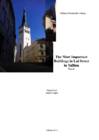
Tallinna Mustamäe College The Most Important Buildings in Lai Street in Tallinn Report Supervisor: Ingrid Teigar Tallinn 2014 Table of Contents Introduction.............................................................................. 3 Lai Street in general.................................................................. 4 The origin of the name "Lai"...................................................... 4 1 Lai Street / 4 Nunne Street...................................................... 5 17 Lai Street............................................................................. 6 23 Lai Street............................................................................. 6 27 Lai Street...................................................
located 15 minutes walking time from the center of the city. The program includes Estonian bands and international acts as well featuring over a 100 concerts on more than 10 stages. Õllesummer is a friendly, safe and joyful event that attracts many tourists and visitors of Tallinn. Next Õllesummer festival will take place between 8-12 July 2009 in Tallinn Song Festival Grounds and offers again a huge variety of Estonian and International artists, special projects for the whole family. Beer culture plays a basic role in Õllesummer the festival has its origins in a beer festival and up to this day more than a hundred different beers from around the world can be tasted at Õllesummer.Food is offered at a number of different cuisine restaurants and cafes. Over the years many performers and starts have appeared at the festival. In 2007 more than a hundred performers appeared at more than ten stages
Estonian cultural life is manifold and intense, initiated by the National Awakening movement during the second half of the 19th century. Estonian folk arts date back to the remote past. In Estonia there are 27 higher educational establishments, among them seven universities with more than 25,000 students and post-graduates (1996); the oldest is Tartu University (founded in 1632), which enjoys a high international reputation. In Estonia there are unions of writers, artists, composers, actors, cinematographers etc; ten professional theatres, two film studios, and the state institution Estonian Concert Agency. The first Estonian book was published in 1525; in 1996 2,234 books and booklets were published in Estonian. The first film company began in 1920. A National Broadcasting Company was established in 1924, and Estonian Television in 1955. Unique in their dimensions and popularity, with up to 30,000 singers and
Arab geographer al-Idrisi in 1154. The Estonians were the first to build a stronghold on the spot of the Toompea Hill, but the real Tallinn was built by the Danes who conquered the north of Estonia in 1219. Legend has it that one day, when the Danes were about to lose a bloody battle, the sky suddenly opened and a red flag with a white cross on it dropped down upon them from the heaven. This is how the Danes obtained their national flag. In 1346 the Danish king sold his Estonian lands to the Teutonic Order, who a year later resold them to the Livonian Order. The Germans renamed Tallinn and called it Reval. Toompea became the seat of the German-born gentry. A fortified wall was built between Toompea (the Upper Town) and the Lower Town, as there were conflicts between the two. The Lower Town was the home of simple people, the artisans and the merchants. The doors and gates in the wall were locked at night.
consciousness and seriousness. Writers became socially minded. Politically and economicallt the rise of trade unions. Communist party in the usa became quite popular. Partly because of the russian revolution, which had huge impact all over the world. Writers became more critical and more bitter. One zanr that was proletarian literature, pro communist, left wing. The most famous representative was Michael Gold. The most interesting style was modernist combined with realism. The most interesting writer of this period was John Dos Passos 1896-1970. He is linked to the 1930's, the period of fear, unemployment, the rise of facism, market crashing. Came from an interesting background, grandfather was portugese, his mother came from puritan New England. Father was a lawyer and importand figure on wall street. He was born into a well off family and this is a paradox about him. Upper middle class family, yet his political views were very radical, he was extremely well educated
Purpose was pure entertainment. Gradually those projectors were becomeing populars. Were many fun fairs. Werent no distripution. Pathe-inventor of film industry. Whole principle was affected by hollywood. Rent out cameras and projectors, you make money from rents. The infrastructure with making money. Studium. Black maria-first film studio. It was turnable to catch light. George melies(1861-1938) Brought the film from the street to studio. Magic. He was hacing a background in the theater and was a musician and thought that it is a good idea do produce fictional movies. He was disliked by lumiere brothers, they thought that cinema should be documentary. He was the man who did it all. You can tell cinema storys if u use tricks, costumes, you create illusiona nd tricks in technological way. ,,special effects". He was interested how to make things to look like magic. Some tricks came by accident
they deemed "inalienable." Democracy: The colonies had no say in the formation of the government, and had no representation in the lawmaking process. Consequently, they were attracted to the idea of democracy, where the government is "of the people, by the people, for the people," as Lincoln later expressed in his Gettysburg Address. Religious Tolerance: Much impetus for the ideas of religious tolerance came from the rule of King George II, who was a staunch Catholic and did not allow freedom of religion to Protestants in New England. Voltaire was among the first to denounce Christianity and other organized religions as mere ploys to support monarchy. What emerged was Deism, which was more or less a new religion that considered reason its foundation. In Deism, there is no interference by a deity, and man controls his own destiny.
novel. Traditionally Daniel Defoe’s Robinson Crusoe (1719) or Moll Flanders (1722); nowadays Aphra Behn’s Oroonoko published in 1688 is cited as the first English novel. Aphra Behn is also the first English professional female literary writer. So many candidates because it is not clear what qualifies as a novel and what not. End of the 17th century – emergence of the reign of common sense introduced by John Locke (1632–1704). According to him, there are limits to the human intelligence and
Superego-society, conscience, morals, traditions, religion, a moral censor Ego-rational behavior, motivation, self-identification, conscious decisions Id-instincts, natural responses, the pleasure principle, aggressive instincts, the death wish Influence: In art and literature, Freud's theories influenced surrealism . Like psychoanalysis, surrealistic painting and writing explores the inner depths of the unconscious mind. Freudian ideas have provided subject matter for authors and artists. Critics often analyze art and literature in Freudian terms. 2. Literary Modernism and its sub-movements. The influence of Structuralism and psychoanalysis. Main characteristic features of Modernism. Denial of conventions, traditional structure, plot and presentation of character. The stream of consciousness. Allusiveness. Virginia Woolf's Modern Fiction as a theoretical platform for Modernism. Criticism of Realist literary method.
only Queen Victoria has reigned longer. Her Silver and Golden Jubilees were celebrated in 1977 and 2002; her Diamond Jubilee is being celebrated during 2012. Cultural Life in Great Britain Artistic and cultural life in Britain is rather rich, like in most of the European countries. It has passed several main stages in its evelopment. The Saxon King Alfred encouraged the arts and culture. The chief debt owed to him by English literature is for his translations of and commentaries on Latin works. Art, culture and literature flourished during the Elizabethan age, during the reign of Elizabeth I; it was the period of English domination of the oceans and colonies, and, due to the strong political and economic position of the country, there were few obstacles in the way of the cultural development
· Unfortunately, her lifestyle was too expensive so the family was left heavily in debt. · It was Horace Walpole who described Ham House as a `Sleeping Beauty`. · Today the house boasts one of the finest Stuart interiors in the country, lavish plasterwork, silverwork, tapestries, silk damasks. · Located - Richmond Park. Fitzroy House · Fitzrovia dates back to the 18th century and has been for many years well known for its writers and artists. · From H.G. Wells and George Orwell, to Charles Dickens and Virginia Woolf - its inhabitants have left an indelible mark. · Although it is well known that the Irish playwright George Bernard Shaw resided in Fitzroy Square, it is a lesser-known fact that he also lived with his mother on the 1st floor of 37 Fitzroy Street from 1881-1882. · 75 years later, writer and philosopher L. Ron Hubbard made 37 Fitzroy Street his London base.
1. The Jacobean masque Elizabethan one nation culture, now cultural polarisation between the new courtly culture and the rest of the country. Court in cultural isolation. Ben Jonson. King and courtiers were close to universally recognised ideal types (conflict with the reality). Mysticism. Emergence of perspective view, stage machinery, artificial light, revolution. The stage cast the monarch in the focal point (the lines of perspective of the stage met there. Inigo Jones. Masque an educative vehicle, towards classical antiquity and architecture. Tide towards absolute monarchy. Masque – linked poetry and moral philosophy into art.
worked towards religious, moral and societal reforms. The writings and ideas of John Calvin, a leader in the Reformation, gave rise to Protestantism and were pivotal to the Christian revolt. They contended that The Church of England had become a product of political struggles and man-made doctrines. The Puritans were one branch of dissenters who decided that the Church of England was beyond reform. Escaping persecution from church leadership and the King, they came to America. Of Plymouth Plantation Of Plymouth Plantation is the single most complete authority for the story of the Pilgrims and the early years of the Colony they founded. Written between 1620 and 1647, the journal describes the story of the Pilgrims from 1608, when they settled in the Netherlands, through the 1620 Mayflower voyage, until the year 1647. The book ends with a list, written in 1650, of Mayflower passengers and what happened to them.
agriculture. In each town, a main hall was in the centre. The architectural character of Anglo- Saxon ecclesiastical buildings range from Coptic influenced architecture in the early period; basilica influenced Romanesque architecture; and in the later Anglo-Saxon period, an architecture characterised by pilaster-strips, blank arcading, baluster shafts and triangular headed openings. There are few remains of Anglo-Saxon architecture, with no secular work remaining above ground. All surviving churches, except one timber church, are built of stone or brick and in some cases show evidence of re-used Roman work. Art Anglo-Saxon art is mainly known today through illuminated manuscripts. Although they are the most well known to have survived. Perhaps the best known piece of Anglo-Saxon art is the Bayeux Tapestry which was commissioned by a Norman patron from English artists working in the traditional Anglo-Saxon style
3) JAMES WATT He was born in the small port of Greenock on the river Clyde in Scotland in 1736. His father was a mathematical-instrument maker and also kept a shop to supply ships with goods for their voyages. James was a delicate boy and often suffered from headaches. That is why he could not go to school at the age when other children did. His mother taught him to read and his father taught him writing and arithmetic. He had very good memory and a natural love of work. He liked mathematics and was also fond of designing and making things. James was an observant and thoughtful boy. When James was able to go to school, he was sent to a private school. He learnt many subjects there. In his spare time James began to make experiments. He built a small electrical apparatus with which he gave his friends shocks that made them jump. When James was 18 he decided to become a professional instrument- maker. He could not find anyone to teach him, so he went to London
10.oktoober 2011 Art versus Nonsense What is beauty ? Why do we find certain things beautiful ? Beauty is something that everyone is familiar with. It can't just be defined as something that may look good. It can be a feeling, a piece of art, music, or words. Anything can be beautiful depending on the person, beauty truly is in the eye of the beholder. The music of songbirds is not generally considered art to us, but to birds it may be. The study of beauty is something not easily perfected because there is no absolute and true single beautiful thing in the world. Ideas of what is beautiful and what isn't change quickly, one day something may be thought of as "in" and the next day "out
Philip Larkin’s Poetry: Themes, Form, Style, Imagery and Symbolism Author: Sandra Olivares González Tutor: Jesús Marín Calvarro Degree in English Studies, English Department, Faculty of Philosophy and Letters, University of Extremadura Cáceres, 29th January 2016 Philip Larkin’s Poetry: Themes, Form, Style, Imagery and Symbolism The aim of this work is to obtain some characteristics of the poetry of Philip Larkin, such us the origin of his themes, the way in which he writes his poems and the symbolism he uses (which is a very controversial topic because some assume that he does use it, while some others say that he uses it in an ironic way). In this work we tried to make a revision on the vision of Larkin through the studies that had been made on him, and on the basis of it we can say, that the voice of Larkin still clearly contemporary
Kristi . 8a. klass LONDON History .... There were some people living on the banks of the Thames when the Romans came to England in 43 AD . The Romans built houses , a port and a bridge over the river and named the place Londinium. In September 1666 , when the Great Fire destroyed four fifts of the wooden buildings . The fire began in the kitchen of the King ´s baker in Pudding Lane and lasted for five days . London . London is an exiting city . The population of London is about seven million people and it is made up of the people of very many nationalities . There are nine piers where you can get a boat and enjoy numerous sights like .... The Tower of London Click to edit Master text styles Second level Third level
final home of the artist. Kadriorg Art Museum The Kadriorg palace and park were founded by the Russian czar Peter I. According to the designs of the architect Niccolo Michetti, invited from Rome, the palace was built after the Italian villas, consisting of a main building and of two annexes. The well-preserved great hall is one of the best examples of Baroque architecture not only in Estonia but also in the whole Northern Europe. Besides Russian and Italian artists, masters from Stockholm, Riga and Tallinn took part in its building work. The two-storied hall is decorated with rich stucco work and ceiling paintings. The vestibule and some other rooms in the main building, as well as some of the stoves have retained their 18th-century appearance. The park was named Kadriorg (Catherine's Valley) after the empress Catherine I. Most of the Russian rulers, from Peter's daughter Elizabeth, to the last Romanov emperor Nicholas II,
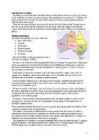
People Today Australians are mostly white, but before the first fleet reached Australia in 1788, there were only black people. Most of them live near coasts as the climate there is more fertile and human-friendly. Still there are people who like to live in the country, as there is much land and peace. However, because schools are thousands of kilometers away, children have to learn using special programs on the TV and radio. People living in big cities do not all use cars for moving. Getting to work with a bicycle or with even a sailing boat is not strange in Australia. Aborigines are described in the History topic History Aborigines Anthropologists say that the Aborigines were the first humans in the world. Even the word "aboriginal" means "the first" or "earliest known". It is confirmed that people lived in Australia about 40000 years ago. At that time, which is called the last great Ice Age, Australia was joined with New Guinea.
BOOKS (From Wikipedia, the free encyclopedia) A book is a set or collection of written, printed, illustrated, or blank sheets, made of paper, parchment, or other various material, usually fastened together to hinge at one side. A single sheet within a book is called a leaf, and each side of a leaf is called a page. A book produced in electronic format is known as an electronic book (e-book). Books may also refer to works of literature, or a main division of such a work. In library and information science, a book is called a monograph, to distinguish it from serial periodicals such as magazines, journals or newspaper. The body of all written works including books is literature. In novels and sometimes other types of books (e.g. biographies), a book may be divided into several large sections, also called books (Book 1, Book 2, Book 3, etc.). A lover of books is usually referred to as a bibliophile, or, more informally, a bookworm.
kool Research work Styles in interior design nimi TALLINN2010 Interior design is a multifaceted profession in which creative and technical solutions are applied within a structure to achieve a built interior environment. The interior design process follows a systematic and coordinated methodology, including
Later came Reval (presumably after the old county of Rävala), the name used by the Germans who ruled the country for seven centuries. Russians then modified Reval to Revel. For Estonians, the town came to be called Tallinn from Taanilinn (Danish town) after Danish conquest in the 13th century. Over the course of time, Taanilinn was shortened to Tallinn The place is believed to have been settled by Finno-Ugric peoples about 2500 BC. The Danes, led by King Valdemar II, conquered northern Estonia in 1219. Legend has it that one day, when the Danes were about to lose a bloody battle, the sky suddenly opened and a red flag with a white cross on it dropped down upon them from the heavens. This is allegedly how the Danes obtained their national flag, the Dannebrog in a battle against the Estonians. In the middle of the 14th century Denmark sold its possessions in Estonia to the German Teutonic Order
Estonia was also shaped by the continental ice and the melting water. The land is rising 25 cm every one hundred years. In folklore, many features of the relief are explained by the activities of giants such as the legendary national hero Kalevipoeg. The Haanja and Otepää Uplands are particularly rich in Hills. It is here that You find Big Egg Hill, the highest point in the Baltic states with 318 metres above sea level. 4. Land regions The northern coast features a steep limestone bank, the Baltic glint, which is one of the world's most important denudations of Ordovician sedimentary rocks. The glint rises to its highest point (56m) at Ontika. Estonia has over 1,500 islands. The largest of them are Saaremaa, Hiiumaa, Muhu and Vormsi. There are over 1,400 lakes in Estonia, biggest being Lake Peipsi and Lake Võrtsjärv, while the deepest is Rõuge Suurjärv. The two longest rivers are the Võhandu and the Pärnu and the widest is Emajõgi
The coat of arms features a kangaroo and an emu. The kangaroo and emu are chosen for the coat of arms of Australia because they can only move forward just like Australia. The national anthem of Australia is "Advance Australia Fair". This replaced the "God Save the Queen" as Australia's national anthem in 1984. Aboriginal art uses Earth Colours(white, red, orange, brown). These are the colours of the desert. Aboriginal artists made their paints from natural materials. Aboriginal paintings also use lots of dots. They used their fingers or sticks. There weren't any art shops where they could buy brushes. Aboriginal art includes lots of symbols for the natural things around them. Australia got its independence in 1st Jan 1901. The Commonwealth of Australia is a constitutional monarchy, in practise a parliamentary democracy. The head of state is the Queen of the United Kingdom. Governor-General
active from the 14th century til 1930. founded a military organisation, but became social one. Estonians were never accepted into guilds. Town Wall Fat margaret and great coastal gate They were built not only to defend the city from the seaward side of town, but also to impress any visitors arriving via the harbour.The Great Coastal Gate, along with the Viru Gates, are the last of six gates that controlled access to the town in Medieval times. The gate system here on Pikk street originated in the 1300s, but it was during reconstruction in the early 16th century that the Fat Margaret cannon tower was added. Built from 1511 to 1530, this hefty, round tower has a diameter of 25 metres, a height of about 20 metres, and walls up to 5 metres thick. The origins of Fat Margaret's name are a mystery. Some theories insist it was named for one of its larger cannons, while others hint at a cook called Margaret who once worked here. In any case, the
The term style is a polysemantic one. The latin word ,,stilus" meant a writing instrument used by the ancients for writing on waxed tablets. Already, in classical latin the meaning of style was extended to denote the manner of expressing one's ideas in written or oral form. One of the abts/the best was given by Jonathan Swift: ,,Proper words in proper places." In present- day english, the world style is used in about half a dozen basic meanings. 1. the characteristic manner in which a writer expresses his ideas. Some speak about the style of Hemingway, Dickens etc. 2. the manner of expressing ideas, characteristic of a literary movement or period. Style of symbolism, romanticism 3. the use of language to pick a literary genre-comedy, novel, drama, O.D (poetic form) etc. 4. the selective use of language that depends on spheres of human activity fiction, scientific prose, newspapers, official documents, business correspondenc etc.
of Leonardo Da Vinci. Many of the first camera obscuras were large rooms like that illustrated by the Dutch scientist Reinerus Gemma-Frisius in 1544 for use in observing a solar eclipse. The image quality was improved with the addition of a convex lens into the aperture in the 16th century and the later addition of a mirror to reflect the image down onto a viewing surface. Giovanni Battista Della Porta in his 1558 book Magiae Naturalis recommended the use of this device as an aid for drawing for artists. First photographs taken with camera obscura were mostly landscapes, the reason for that was a long exposure time. And because landscapes do not move it was a perfect option. They were also used to take family photos or portraits, but it worked a little bit differently than it does nowadays. For example, you had to stay still for a long time for it not to turn out foggy. The camera was also used to capture historical events.
North American land east to west. Ratified in 1788, the Constitution serves as the supreme American law in organizing the government; the Supreme Court is responsible for upholding Constitutional law. Slavery was abolished in 1865 by the Thirteenth Amendment to the United States Constitution. In later years, civil rights were extended to women and black Americans. The Progressive Era marked a time of economic growth for the United States, advancing to the Roaring Twenties. However, the Wall Street Crash of 1929 led to the Great Depression, a time of economic downturn and mass unemployment. Consequently, the U.S. government established the New Deal, a series of reform programs that helped "the forgotten men". The New Deal had varied success. However, once the U.S. entered World War II in December 1941, the economy quickly recovered, so much that the U.S. became a world superpower by the dawn of the Cold War. During the Cold War, the U.S
Currency: New Zealand dollar (NZD) Area: 270,534 sq km Population: 4,347,000 (February 2009 est.) Language: English, Maori, and New Zealand sign language Religion: unspecified/none 43%, Anglican 17%, Roman Catholic 14%, Presbyterian 11%, Methodist 3%, Pentecostal 1.7%, Baptist 1.3%, other Christian 9%, other 3% Culture New Zealanders have made a profound impact in the areas of art, poetry, music, film, and architecture. Not only have the artists reached local recognition, but also gained worldwide apperception. New Kiwi self-confidence is revealed intensely in literature, film and theater. Opera diva Kiri Te Kanawa performs regularly nationally and internationally. Writers such as Witi Ihimaera, Albert Wendt, Patricia Grace, and Keri Hulme are also international figures. Fine Arts In the past, Kiwis were hostile towards art. In 1982, the McDougall Gallery in Christchurch
 annaabi.ee