Leidsid 33 sarnast õppematerjali, mis on seotud failiga "Sissejuhatus erialasesse õiguskeelde (inglise keel)". Need materjalid aitavad sul teemat sügavamalt mõista.
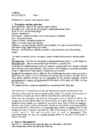
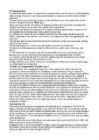
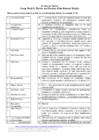
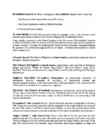
court, legal, person, case, crime, someone, part, othering, civil, courts, decision, something, laws, criminal, power, offence, judge, country, another, commit, wrong, proper, defend, govern, propert, exam, action, property, gain, serviceere, government, degree, sent, cause, nation, between, party, cases, crimes, evidence, lawyer, political, fairTOPICS For the PRELIM Year 1 Put down 10-12 relevant terms and retell about: 1. Prescriptive and descriptive law Prescriptive law – prescribe how people ought to behave Descriptive law – describes the way people or natural phenomena behave Break the law – do something illegal Penalty – punishment Government – system by which a state or community is controlled Law – the system of rules System of courts – all judicial institutions Enforce – to make people obey the law Authority – a group of people with official responsibility for a particular area of activity /the moral or legal right or ability to control Prescribe – to tell someone what they must have or do, or to make a rule of something Impose The word law can have several meanings, it can be divided into prescriptive and descriptive law. Descriptive law – describes the way people or natural phenomena behave, e. g
11.02.09 INGLISE KEEL Palju aega läheb. 10 nädalat aint. One of the ESP courses. What we are going to do, what is needed: · What we do - 1 test, on words. · 2 Essays, that means that we have to look into academic writing · Homereading we read a case from European Court of Justice thingy. · Oral thing. · 90% you have to attend · Have to prepare for class and take part of it etc What we learn: Terms Expressions / collocations (nt obey/abide by the law) Explaining AWOL absence without a leave Legal English can be divided into 3 levels. We learn the first one, which is needed for the other two! You have to know the vocabulary etc. Second level has to do with legal contracts... The third level both 1 and 2 and explaining... We learn the vocabulary + explaining.
non-contentious responsible for to decide whether preferred term for a matters usually assuring the law is or not to instigate practising lawyer in concerned with followed and carried (põhjustama, certain jurisdictions estates, deeds, powers- out in every case. kaasa tooma) legal of-attorney, and Judges also read proceedings foreign and through court to appear in court international business. documents and may A notary's main research legal issues. functions are to administer oaths and affirmations, take affidavits and statutory declarations, witness
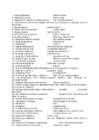
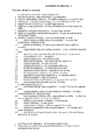
9. seadust järgima obey law, observe law 10. seaduskuulekad inimesed law-abiding people 11. seadust jõustama enforce law 12. alaealised minors 13. õiguskaitseorganid law enforcement agencies 14. süütegusid uurima investigate offences 15. karistust määrama impose punishment on 16. kuritegu sooritama commit crime 17. seaduse mittetundmine ignorance of law 18. süüd välistav asjaolu defence, preclusion of guilt 19. üldriiklikud seadused national laws 20. kohalikud seadused local laws, by-laws 21. asutuse põhikiri statute 22. ajutine ametist/spordist kõrvaldamine (n,v) suspension, suspend 23. väljaheitmine (n,v) expulsion, expel 24
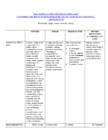
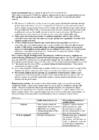
Humanitarian doctrine if a certain country violates human rights very severely and if other attempts have failed to prevent and stop this, then war can be used as a method to stop this stuff. Süüria chemical weapons doctrine is one of the strongest doctrine ever, respected by almost everyone, that's why people are so shocked about the events there. It's a grave violation of PIL. If there's enough evidence that chemical weapons were used, then war is basically a legal method, but not fully, because it isn't one of the reasons that allows war as a method to resolve conflict. Differences: Public International Law Private International Law = conflict of laws Subjects States, intergovernmental Regulates relations between
1.Common law A common law legal system is a system of law characterized by case law which is law developed by judges through decisions of courts and similar tribunals a common law system is based on legal precedents. The roots of the common law legal systems can be traced back to the first common law system created in England during the Middle Ages. Today, most countries that once had ties to England, including the United States, Australia, New Zealand, and Hong Kong, to name a few, operate under common law. Aside from Great Britain, the majority of the countries in Europe operate under a version of civil law modeled after the Roman legal system created centuries ago
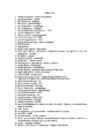
Essential Vocabulary - I The role of law in society 1. juriidilised kohustused – legal obligations 2. kannatanud pool, kahjukannataja – injured party 3. vaidlusi lahendama (kohtus) – to settle a dispute in a court of law 4. riskeerima tehingute tegemisega – to risk making transactions 5. õigusnõustamist otsima – to seek legal advice 6. tagama, et leping kehtiks – to ensure that the contract would be valid 7. õiguslikke vahendeid kasutama – to use legal means 8. harjuma õiguslikke vahendeid kasutama – to get accustomed to using legal means 9. omama teadmisi millestki – to have knowledge of smth 10. ette kirjutama, ettekirjutus, ettekirjutav – to prescribe, prescription, prescriptional 11. karistust kandma – to serve punishment (ka to suffer a penalty) 12
The European Union (EU) is an economic and political union.EU policies aim to ensure the free movement of people, goods, services, and capital, enact legislation in justice and home affairs, and maintain common policies on trade, agriculture, fisheries, and regional development. Within the Schengen Area, passport controls have been abolished.The monetary union was established in 1999 and came into full force in 2002. It is currently composed of 18 member states that use the euro as their legal tender. At the moment there are 28 member states in the EU. To become a member, a country must meet the Copenhagen criteria. These require a stable democracy that respects human rights and the rule of law; a functioning marketeconomy; and the acceptance of the obligations of membership, including EU law. No member state has ever left the Union. After 1952, there have been 7 enlargements: 1973, 1981, 1986, 1995, 2004 (including Estonia), 2007, 2013.
EU Internal Market Law Mid-term online evaluation assignment for Distance Learning Students The Assignment: Hypothetical Case In the Member State A several NGOs, uniting parents concerned with safety of children and young adults, ordered a study of dog attacks on people (and especially children) resulting in deaths or maiming. The aim of the study was to identify, if possible, the dog breeds of potentially enhanced danger for people. The study’s results showed that pit bulls and their close mixes as well as Rottweilers and their close mixes were jointly responsible for over 70% of attacks
The geography of Syria is primarily semiarid and desert plateau with a double mountain belt in the west. The government system is a republic under authoritarian regime. The chief of state is the President and the head of government is the Prime Minister. Syria has a mixed economy in which there is limited private freedom but the economy remains highly controlled by the government. Syria is a member of the Council of Arab Economic Unity (CAEU). Two-thirds of Syria is desert; the other third is part of the Fertile Crescent along the Mediterranean coast. About 80 percent of the population lives in that fertile region. The total population of Syria is a little over 13 million. Half the people live in cities, 4 million in Damascus alone. Arabic is the official language of the Syrian Arab Republic and the language is spoken by nearly all Syrians. French is the second-most- common language. However, it has started to be rivaled by English.
(Verplaetse, 2008). Since 9/11 and the following fight against terrorism it became clear that the Bush administration thought of torture as something justifiable while it goes against all possible agreed upon treaties and conventions. One could indeed possibly think of situations that could serve as an exception to the prohibition of torture but these hypothetical situations can hardly relate to real situations. The ticking bomb argument looks at the hypothetical case where a leader of a state is asked to give their permission to torture a captured rebel leader because he (probably) knows the locations of a few explosives that are spread around the city in different apartment buildings. In case they are not found within 24 hours, they will explode and many will be left dead (Walzer, 1973). Is it justified to torture this person to find out where the bomb is? This essay will look in to how it has according to the thinkers in the strand of
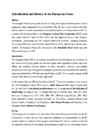
Social Problems Crime In the sociological field, crime is the breach of a rule or law for which some governing authority or force may ultimately prescribe a punishment. The word crime originates from the Latin crimen. When society deems informal relationships and sanctions insufficient to create and maintain a desired social order, there may result more formalized systems of social control imposed by a government, or more broadly, by a State. With the institutional and legal machinery at their disposal, agents of the State can compel individuals to conform to behavioural codes and punish those that do not
Laws are historical conventions, people can be forsed to be free. State of nature Hobes: state of nature is a state of conflict, a state of war. Locke: state of nature is peaceful, all men are equal. They treat others as themselves. Rousseau - people in the state of nature were neither good or bad. Man was like an animal not posessing any needs besides the primary ones. The bad habits of men are byproducts of ingaging in a civil society. All men are equal Sovereign Hobbes: can not be overthrown and can do whatever the fuck it wants. The best one is monarch. Locke: can be overthrown, if fails to do the job. Criticises monarch for haveing hereditary power. Prefers election for a term. Democracy? Rousseau: aristocracy, if not hereditary. (monarchy represents particular will) Authority in the social contract Hobbes: the sovereign Locke: The law over the sovereign
1. Can the PB&R company successfully claim any violation of the EU law related rights? Examination 1. Can we say that an animal (a dog) is a good? – Yes. According to Article 13 TFEU dogs do belong to a “goods” category so as it is described in CJEU case law that a good is a product which can be valued in money and which is capable of forming the subject of commercial transactions. Therefore PB&R company and its business is selling dogs, or shall I say goods not just on a local fields, but the movement of goods is linked to abroad EU countries by making a profit of it I shall conclude that it involves a “movement of goods within the EU Member States” (Articles 26 and 37). 2
the consequences of you and anyone else acting or refraining to act on the information contained in this brochure or for any decision based on it. The brochure is published with support of the German Development Cooperation Deutsche Gesellschaft für Internationale Zusammenarbeit GmbH (GIZ). Findings, conclusions and comments made in the publication do not necessarily reflect the opinion of GIZ. This publication may not be reproduced in whole or in part without the written permission of the copyright holder. © Deutsche Gesellschaft für Internationale Zusmmenarbeit GmbH (GIZ), 2011. 2 CYAN MAGENTA YELLOW BLACK 2 Introduction For the past few years, Georgian government has carried out a number of significant economic reforms in various fields in order to create attractive business environment and to breathe a new life into Georgian economy
HOL_6012 EU Internal Market Group Work 2: EU Internal Market and Free Movement of Goods (Ch. 18 and 19 CdB) 1. What are the main Treaty applicable to free movement of goods? List and explain the main scope. Articles 26 and 28-37 of the Treaty on the Functioning of the European Union (TFEU). Prohibition of charges having an effect equivalent to that of customs duties: Articles 28(1) and 30 TFEU, or to describe it a bit more easier, The Court of Justice of the European Union had found that any type of extra charges or however it may be called or applied to a product produced and being sold in any Member State should not be charged with any fees or any extras that in the end will have the same effect on a product price as a custom duty. Examples: Cases 2/62 and 3/62 of 14 December 1962, and Case 232/78 of 25 September 19791
In addition to the dynamic pace of development of the economy, Russia offers to foreign investors increasing every year the market of goods and services to consumer and business. Most often, this together with the high rate of return on invested capital is a crucial factor in the decision to enter the Russian market. One possible way to full implementation of business activities on the territory of the Russian Federation - is the creation of a legal entity. An enterprise with foreign capital - is created on the territory of the Russian business- organization whose founders are foreign citizens or organizations. Russian legislation provides for the establishment of enterprises in Russia as a 100-percent foreign ownership and joint - with the participation of Russian and foreign shareholders. Established on the territory of the Russian Federation entity with absolute or partial foreign
Units 12-18 1. system of pandects pandektiline süsteem 2. general provisions üldosa 3. law of property asjaõigus 4. family law perekonnaõigus 5. law of sucession pärimisõigus 6. law of obligations võlaõigus 7. General Part of the Civil Code Act TsÜS 8. Law of Property Act AÕS 9. Family Law Act perekonnaseadus 10. Law of Succession Act PäRS 11. Law of Obligations Act VÕS 12. persons and transactions isikud ja tehingud 13. natural persons 14. legal persons 15. passive legal capacity õigusvõime 16. active legal capacity (an ability to independently asume civil rights and incur civil obligations) teovõime 17. live birth elussünd 18. bequeath property pärandama 19
always understood to be within apostolic succession in the same way. One who has been ordained deacon, priest, and then bishop is understood to hold the fullness of the (ministerial) priesthood, given responsibility by Christ to govern, teach and sanctify the Body of Christ, members of the Faithful. Priests, deacons and lay ministers cooperate and assist their bishop(s) in shepherding a flock. Vicar/ priest is a representative, deputy or substitute; anyone acting "in the person of" or agent for a superior (compare "vicarious" in the sense of "at second hand"). Linguistically, vicar is cognate with the English prefix "vice", similarly meaning "deputy". Minister In Christianity, a minister is someone who is authorized by a church, or other religious organization, to perform functions such as teaching of beliefs; leading services such as weddings, baptisms or funerals; or otherwise providing spiritual guidance to the community.
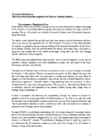
Estonian Court System Estonia has a three-level court system. Estonian court system consists of four country courts, two administrative courts, three circuit courts and supreme court. Country courts and administrative courts are the courts of first instance, circuit courts are courts of appeal and the supreme court, situated in Tartu, is the court of the highest instance The Supreme Court is also the constitutional review court. In the structure of four country courts(Harju, Pärnu, Tartu and Viru) operate courthouses in every country seat(in Ida- Virumaa and Harjumaa there are three courthouses)In the structure of two administrative courts(in Tallinn and Tartu) there are four courthouses: in Tallinn, Tartu, Jõhvi and Pärnu. Three circuit courts are situated in Tallinn, Tartu and Jõhvi. The supreme court The Supreme Court is the court of the highest instance, which shall review
eelkõige reguleeritud ... abil/kaudu/alusel 6. the Constitution of the Republic of Estonia EV PS 7. the Citizenship act kodakondusseadus 8. according to § 8 - § 8 alusel/järgi 9. right to õigus millelegi 10. shall be acquired by birth omandatakse sünniga 11. proceeds from the principle tuleneb ... printsiibist 12. any child found in Estonia iga Eestist leitud laps 13. at the request of the child's legal guardian lapse seadusliku esindaja/hooldaja nõudel/palvel 14. guardianship agency eestkosteasutus 15. to acquire (apply for?) Estonian citizenship taotlema Eesti kodakondsust 16. unless kui just 17. to receive saama/omandama 18. to receive Estonian cs. through naturalisation naturalisatsioon/(i) alusel kodakondsuse saamine 19. provides conditions näeb ette tingimused 20. an alien välismaalane
constructed beyond that line). Three years after the battle the Roman armies had withdrawn to the Southern Uplands. They erected Hadrian's Wall to control tribes on both sides of the wall, and the Limes Britannicus became the northern border of the empire, although the army held the Antonine Wall in the Central Lowlands for two short periods--the last of these during the time of Emperor Septimius Severus from 208 until 210. The extent of Roman military occupation of any significant part of Scotland was limited to a total of about 40 years, although their influence on the southern section of the country occupied by Brythonic tribes such as the Votadini and Damnonii would still have been considerable. A replica of the Pictish Hilton of Cadboll Stone. Medieval period The Kingdom of the Picts (based in Fortriu by the 6th century) was the state which eventually became known as "Alba" or "Scotland"
also whether the balance of power between institutions within the European Union promotes the ideals of democracy. Firstly,the democratic nature of the European Union must be measured by the extent to which its institutions (particularly those with executive and legislative power) are elected bodies of persons. The European Union is governed by seven institutions; the European Parliament, the European Council, the Council of the European Union (the Council), the European Commission, the Court of Justice of the European Union, the European Central Bank and the Court of Auditors.The first four of these hold the executive and legislative power of the European Union. Of these four institutions, the only one directly elected is the European Parliament whose 736 members are elected every 5 years; each citizen in each member state having the right to vote. Seats are subsequently assigned to member-states in accordance with
the trough, to begin with. The first question includes material amenity's, and dividing rights and liberties.(Wolff, 1996) What is power? It is ability to influence others to do something they otherwise would not. Also, others can be affected with threats and force. (Kilp, 2010) Political power includes also right to force the others and to punish them if they disobey. Who should have that kind of power? Actually the political power is quite mysterious by itself. If someone has legitimate political power over me then he or she has a right to force me to do things that they want.(Wolff, 1996) But how can other person have rights to tell me what I have to do? It feels insulting if someone says to me what I have to do especially if he or she thinks that he or she has a right to punish me if I disobey. But of course there is a different view. We need to think about, how will the others behave if they were not held back by laws
tekitab või mõtleb endale välja haigussümptomeid. Rangelt öelduna tähendab MSBP, et inimesel on Münchauseni sündroom ja see psühhopatoloogia avaldub lapse läbi. Munchaussen syndrome by proxy Munchausen syndrome by proxy (MSP) is an uncommon disorder first described by Roy Meadow in 1977. It was so named because of its similarity to Mun- chausen syndrome, a factitious disorder in which a person intentionally produces or fabricates physical symptoms in him- or herself.' In MSP the symptoms are intentionally produced o r fabricated in a child by a parent, usually the mother MSBP is a syndrome in which perpetrators either harm a child in their care or achieve harm through their insistence on medical tests and treatments for non-existent, fabricated or ecacerbated conditions. Abuse may go on for some time, and sometimes this abuse results in the child's death.
/ wicce f.) is a practitioner of witchcraft. Historically, it was widely believed that witchcraft involved the use of these powers to inflict harm upon members of a community or their property, and that all witches were in league with the devil. Since the mid 20th century, the term witchcraft has sometimes been used to distinguish between bad witchcraft and good witchcraft, with the latter often involving healing. Human misfortune was often blamed on a supernatural entity or a known person in the community. Reasons for accusations of witchcraft fall into four general categories: · A person was caught in the act of positive or negative sorcery · A well-meaning sorcerer or healer lost their clients' or the authorities' trust · A person did nothing more than gain the enmity of their neighbours · A person was reputed to be a witch and surrounded with an aura of witch-beliefs
9th of May 2014 Word Count: 8,800 `Submitted in partial fulfilment of the requirements for the degree of B.A. International Relations` Table of Contents Abstract 3 Introduction 4 Chapter 1: Citizenship, Children`s Rights and Participation: from the UN to the UK 6 Chapter 2: Citizenship Education in Wales………………………………………………14 Active Citizenship in Cadle Primary School: A Case Study 20 Conclusion 29 Bibliography 32 Appendices Appendix 1: The United Convention of the Rights of the Child Appendix 2: Interview with Jamie Richards, the Head Teacher of Cadle Primary School 2 Abstract: Children inherently have had a rather tenuous relationship with citizenship. Similarly to how
state to govern at a subnational level, such as a regional, local, or state level. It is a form of decentralization. Devolved territories have the power to make legislation relevant to the area. 10. Devolved powers- the Scottish Parliament and the Welsh and Northern Ireland Assemblies are devolved powers, subordinate to the UK Parliament. 11. Constituent country- a term sometimes used in contexts in which a country makes up a part of a larger political entity, such as a sovereign state. The term constituent country does not have any defined legal meaning, and is used simply to refer to a country which is a constituent part of something else. 12. The Commonwealth- The Commonwealth of Nations, commonly known as the Commonwealth is an intergovernmental organization of 53 member states that were mostly territories of the former British Empire. The Commonwealth operates
funding available to support social inclusion and combat discrimination. Creating more and better jobs is one of the main goals of the EU 2020 Strategy. The integrated guidelines contain 3 EU headline targets on employment: - Labour market: increase the labour market participation of people aged 20-64 to 75% by 2020; through, inter alia, greater participation of young people, older workers and low-skilled workers and better integration of legal migrants. - Social inclusion and combating poverty: lift at least million people out of the risk of poverty and exclusion. - Improving the quality and performance of education and training systems: reduce drop-out rates to 10% and increase the share of 30-34 year-olds having completed tertiary or equivalent education to at least 40%. 3. Legal sources for Italian individual labour law
unity. So the flag therefore remains unchanged despited of EU enlargements. Anthem This is the anthem not only of the European Union but also of Europe in a wider sense. The melody comes from the Ninth Symphony, what is composed in 1823 by Ludwig Van Beethoven. In 1972, the Council of Europe took Beethoven's "Ode to Joy" theme as its anthem. It's without words. Euro The euro is the legal tender for around 329 million people in 16 EU countries. The symbol for the euro is . The euro paper money is identical in all countries but each country design its own coins with one common side and one side displaying a distinctive national emblem. Motto EU motto is ,,United in diversit" The motto means that, via the EU, Europeans are united in working together for peace and
activities to attract more foreign investments. IP security: Ukraine is a country which has a high respect for intellectual property rights. The country recently upgraded its IP laws making them in par with the laws of other developed nations. (http://www.bpmwatch.com/knowledgebase/know-emerging-bpo-destination-ukraine/) Language skills remain the major limitation for Ukraine for BPO industry growth. In my experience it's very difficult to hire a person with right set of skills and good command in English on top. Seems that all foreign language speaking Ukrainians are already recruited by call centers. 21 Regional Structure of Ukraine's IT Outsourcing Industry Source: Report Exploring Ukraine IT Outsourcing Industry 2012 Kiev Kyiv region is the largest outsourcing and software development center in Ukraine. A great
world, Lebron James. At that time it was eight times the budget, which was approved by the Estonian Government. So it was a heavy sum to pay. In Britain I think they can only blame themselves. You see, unlike many other nations, the UK has no single core constitutional document. In this sense, it is said not to have a written constitution, but much of the British constitution is embodied in written documents, within statues, court judgments and treaties. So in my opinion that's a stupid system. Because if you watch other countries how much do they pay for compensation claims then it's nothing. Though in other countries there are huge sums what civilians get from companies. A former female police officer was awarded an estimated £1,000,000 in a package, after complaining of bullying and sexual and racial harassment. For instance I think it's absolutely ridiculous to get a million for that
business principles of efficiency. NPM is based on the understanding that all human behavior is always motivated by self-interest and, specifically, profit maximization. Epistemologically, it shares with STE the quantification myth, i.e. that everything relevant can be quantified; qualitative judgments are not necessary. It is popularly denoted by concepts such as project management, flat hierarchies, customer orientation, abolition of career civil service, depolitization, total quality management, and contracting-out. NPM comes from Anglo-America, and it was strongly pushed by most of the International Finance Institutions (IFI's) such as the World Bank and the IMF. It originates from the 1980s with their dominance of neo-liberal governments (especially Thatcher and Reagan) and the perceived crisis of the Welfare state, but it came to full fruition in the early 1990s. NPM is part of the neo-classical economic
 annaabi.ee