Leidsid 33 sarnast õppematerjali, mis on seotud failiga "Pronouns". Need materjalid aitavad sul teemat sügavamalt mõista.
noun, pronoun, nouns, pronouns, person, thing, ours, examples, subject, selves, other, relative, them, object, definite, here, indefinite, case, singular, plural, yours, words, specific, things, refer, look, these, whom, told, another, there, represent, gender, clause, myself, distance, those, than, whose, mary, function, anneli, place, instead, repeatadjective + preposition omadussõna + eessõna proud of, good at, married to adverb particle Some verbs are followed by adverb particles. Examples are: put on, take off, give away, bring up, call in. Sometimes the particle is detached from the verb and put after the object. •He took his boots off. •They called the doctor in. apposition a grammatical construction in which two usually adjacent nouns having the same referent stand in the same syntactical relation to the rest of a sentence (as the poet and Burns in “a biography of the poet Burns”) back-reference In grammatical analysis, the term reference is often used to state a relationship of identity which exists between grammatical units, e.g. a pronoun 'refers' to a noun or noun phrase. When the reference is to an earlier part of the discourse, it may be called a 'back-reference' (or anaphora); collective noun
grammatical shape of the word, the meaning of the word stays the same. For example: consider, considered, considers. Open class words (content words) → These are the word classes that take in new words, for example by adding affixes to them or borrowing words from other languages. In English these words are most commonly nouns, verbs (not auxiliaries), adjectives and adverbs. Closed class words (function words) → These are words that do not take in any new words. In English the word classes are prepositions, pronouns, determiners and conjunctions. Syntax is the study of how sentences are formed in a language. For example what is the word order ( in English
Linguistic competence: Linguistic performance: What is grammar?: "The sounds and sound patterns, the basic units of meaning, such as words, and the rules to combine them to form new sentences constitute the grammar of a language" Prescriptive grammar vs. Descriptive garmmar: Descriptive grammar: the systematic study and description of a language. Descriptive grammar refers to the structure of a language as it is actually used by speakers and writers. Prescriptive grammar: a set of rules and examples dealing with the syntax and word structures of a language, usually intended as an aid to the learning of that language. Prescriptive grammar refers to the structure of a language as certain people think itshould be used. Phonology: the subfield of linguistics that studies the structure and systematic patterning of sounds in human language. Phonetics: of the acoustic detail of speech sounds and how they are articulated. Phone: [p] A phone is actual pronunciation of a phoneme
1. Nouns: how is the plural formed? The plural form of most nouns is created simply by adding the letter s: · more than one snake / snakes · more than one ski / skis · more than one Barrymore / Barrymores Words that end in -ch, x, s or s-like sounds, however, will require an -es for the plural: · more than one witch / witches · more than one box / boxes · more than one gas / gases · more than one bus / buses · more than one kiss / kisses
marker tunnus (mitmuse, oleviku, lihtmineviku, tingiva kõneviisi, käskiva kõneviisi, kaudse kõneviisi, umbisikulise tegumoe, ma- tegevusnime, oleviku kesksõna, mineviku kesksõna) derivational affix liide, tuletusliide, tuletusafiks (e.g. postwar, anti-American, wiser, greenish) parts of speech sõnaliigid English Estonian Definition Example noun (proper, common, nimisõna, Refers to words which denote classes and categories of book, water, sincerity, Mary, concrete, abstract) substantiiv things in the world, including people, animals, Estonia inanimate things, places, events, qualities, and states. Nouns can be divided into proper nouns and common
greatly benefit from this step-by-step approach to English grammar basics. This is the ideal supplement to your language arts program whether your students are native English speakers or beginning English language learners. Skill-specific lessons make it easy to locate and prescribe instant reinforcement or intervention. · Illustrated lessons are tightly focused on core concepts of grammar · Nearly 70 practice exercises are included for ready reinforcement · A wealth of examples are provided on every topic · Concise explanations are bolstered by extra grammar tips and useful language notes Book 1 Anne Seaton · Y. H. Mew Three Watson Irvine, CA 92618-2767 Web site: www.sdlback.com First published in the United States by Saddleback Educational Publishing, 3 Watson, Irvine, CA 92618 by arrangement with Learners Publishing Pte Ltd, Singapore
....................................................... 4 Both, either and neither ....................................................... 4 Few/a few – a little/little....................................................... 5 A lot of/lots of – much/many................................................ 5 Some, any + -body / -one, + -thing, + -where ........................ 6 Some and any Some and any mean a certain number or amount. They are used with or instead of plural or uncountable nouns. Some is a possible plural form of a/an and one: Have a biscuit/some biscuits. I bought a cake/some cakes. Some, any and none can be used with of + the/this/these/those (+ ...) Some of the staff can speak Portuguese. Did any of your photos come out well? You can take any of these. Some is used: • with affirmative verbs: They bought some honey. • in questions where the answer ‘yes’ is expected: Did some of you sleep on the board
a, an un (oon) una (oon-ah) some unos (oon-ohs) unas (oon-ahs) this este esta these estos estas that ese esa those esos esas that aquel aquella those aquellos aquellas El is also used with feminine nouns beginning with a or ha when the accent is on the first syllable. Words that end in -o and -or are generally masculine, with a few exceptions: la mano (hand), la foto (photo). Words that end in -a are generally feminine, with a few exceptions: el mapa (map), el problema (problem). Other feminine words end in -ción, -tad, -dad, or -tud. Use the ese forms to mean that when what you are talking about is near the person you are addressing
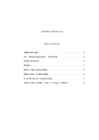
The Article Table of Contents General Rules....................................................................... 2 The Definite Article ............................................................... 5 Names that take the Definite Article...................................... 6 No article.............................................................................. 7 Countable and uncountable nouns ....................................... 9 General Rules There are two articles in the English language – the Indefinite Article and the Definite Article. The Indefinite Article has two forms – a and an (a precedes words beginning with a consonant sound and an precedes words beginning with a vowel sound). It comes from the Old English word ãn, which meant one. The Definite Article is the. It comes from the Old English word ţis, which meant this.
CHARACTERISTIC FEATURES OF OLD ENGLISH - 15 monophtongs, (7 long, 7 short, 1 central), 4 diphtongs, 17 consonants. Free variaton of R, and it was pronounced everywhere. Very much Germanic in character. Quite some special consonants that no longer exist. About morphology: synthetic with numerous aglutinating tendencies. System of tenses Germanic, but with a reduction of tenses. Paradigmatic leveling; Stress shift; Word order; Loan words (Old Norse, Old French). Dual pronouns. Determiners - no separate definite article. Strong and weak verbs. Word order relatively free with tendencies towards SVO. SVO, SOV, VSO most common. Adposition and podposition were both possible (eesliide ja tagaliide). About syntax: clauses were joined much simpler than nowadays, using and, then etc. Because of case syncretion the word order in a sentence became much more important to be able to tell the difference between words. FIRST CONSONANT SHIFT (GRIMM'S LAW)
· Verbs--hope, wish, and want (clever people everywhere. I wish to goodness we had a few fools left) · Repeated words (German art, G science and G culture) · Character's voice may be specified (hatred, she said with he voice trembling with pleasure) · Words with inherent connotation may change it in context, that is, pos may become negative and vice versa 4. Stylistic morphology: articles, nouns, pronouns, adjectives, verbs, adverbs, numerals Articles: · Article with proper names adds a colloquial touch (The Hardys, a Miss Smith) · The indefinite article (a) with a family name creates an evaluative meaning (a Caruso) · A+names of common, undistinguished names suggests contempt (a Malone, a Smith) · A may convey the meaning of belonging to a famous or aristocratic family (a Tudor) · In enumeration adj
Adherent connotation is the shade of meaning the word requires in a particular context only. Outside this context this shade of meaning is not present. INHERENT CONNOTATION (IC) 1. IC may be secured by the very object, quality or notion that word denotes. Positively charged words are: noble, manly, virtue, beauty, love, etc. Negatively charged words: nasty, vulgar, greedy, sin, death, fool, etc.). This connotation is called referential; it depends on the referent (mean the thing the word stands for). 2. IC may depend on the structure of the word. Such words normally have a transparent structure and more often negative affixes are used (e.g. unkind, impolite, injustice, heartless, etc.). This kind of connotation is purely linguistic. 3. Emotional connotation characterizes words in synonymic sets that occupy the so-called final position (e.g. big
üle pakkuma. Inherent connotation 1 IC may be secured by the very object, quality or notion that the word stands for. People appreciate certain notions, as either positive or negative. Negative notions Adj: dirty, nasty, vulgar, obscene, greedy Nouns: sin, fool, death, tragedy Verbs: destroy, offend, steal, ploth (sepitsema) Positive notions Adj: polite, refine, pure, noble, manly Nouns: virtue, beauty, love, bliss Verbs: worship, save, protect 2 This connotation depends on the thing the word stands by. IC may also depend on the structure of the words. Such words usually contain negative affixes, e.g abnormal, heartless, unpopular, illegal, injustice. 3 Inherent connotation in synonymic sets that occupy ,,The final places". e.g big vs tremendeous (emotional difference), interesting vs amazing, good vs marvellous Such words are emotionally coloured/ charged. The expressive use of language depends on the ability to choose the proper word among those that mean the same thing
Ladusseva "Stylistic practice: Book I, Book II" - I. Ladusseva "A Guide to Punctuation" EXAMINATION TOPICS: 1. Style, stylistics, a survey of stylistic studies 2. Inherent connotations. Phonesthemes Use lecture notes 3. Adherent connotations 4. Stylistic morphology: articles, nouns, pronouns, adjectives, verbs, adverbs, number * 5. Expressiveness on the level of word-building 6. Phonetic expressive means Study independen tly 7. Phonetic SD ("Rhythm And Style") 8. Lexical SD* 9. Syntactic SD* Use lecture notes 10. Graphical means and devices 11
http://www.english-4u.de/a_an_some_ex1.htm ◦ *some bananas *some cats *some monkeys *some 2. http://www.english-4u.de/a_an_some_ex3.htm balls ◦ *some eggs*some oranges *some umbrellas *some 3. http://www.english-4u.de/a_an_some_ex6.htm eagles We us the • when we talk about a specific thing. • when it is clear which thing or person we mean. A – AN - THE • when there is only one of something. Examples:
Part III, Pragmatics and Speech Acts, introduces the basic concepts of linguistic pragmatics, includes a detailed discussion of the problem of indirect force and surveys approaches to metaphor. Part IV, new to this edition, examines the four theories of metaphor. Features of Philosophy of Language include: · new chapters on Frege and puzzles, inferentialism, illocutionary theories of meaning, and relevance theory · chapter overviews and summaries · clear supportive examples · study questions · annotated further reading · glossary Praise for the First Edition: "This exceptional text fulfils two essential criteria of a good introduc- tory textbook in the philosophy of language: it covers a broad range of topics well, all of which are the basis of current active research, and does so in an accurate manner accessible to undergraduate students." Mike Harnish, University of Arizona ". .
You are going to eat. You aren't going to eat are you going to eat? He/she/it is going to eat He/she/it isn't going to eat is he/she/it going to eat? We are going to eat we aren't going to eat are we going to eat? You are going to eat you aren't going to eat are you going to eat? They are going to eat they aren't going to eat are they going to eat? Plural of nouns nimisõnade mitmus - s a window windows a student students a key keys, a roof roofs -es sõna lõpulisetele ch, sh, s, ss, x, o A watch- watches, a bush- bushes, a bus buses, a class classes, a fox foxes, a potato potatoes, a tomato- tomatoes, a book books, a key keys, a box boxes, miss misses, wash-washes, mix-mixes, go-goes, do-does. -ies consonant +-y
The candle is always on the table. Küünal on alati laua peal. Let`s go the cinema. Lähme kinno. · Määrav artikkel esineb siis, kui on tegemist järgarvuga, ülivõrdes oleva omadussõnaga või sõnadega same, right, wrong, following. You are the best! Sa oled parim! She said the same thing as you did. Ta ütles seda sama asja, mis sinagi. · Määravat artiklit kasutatakse ka ilmakaartest ja muusikainstrumentidest rääkides. I can play the violin. Ma oskan mängida viiulit. The wind blows from the east. Tuul puhub idast. 3. Loendamatud nimisõnad · Kui loendamatuid nimisõnu kasutatakse üldises tähenduses, siis artikkel puudub. Time went quickly. Aeg möödus kiiresti. Gold is expensive
Reported speech is often also called indirect speech. When we use reported speech, we are usually talking about the past (because obviously the person who spoke originally spoke in the past). The verbs therefore usually have to be in the past too. For example: "I'm going to the cinema". He said he was going to the cinema. Basic tense chart The tenses generally move backwards in this way (the tense on the left changes to the tense on the right): present simple past simple I'm a teacher. He said he was a teacher
Strong syllables - has as its nucleus one of the vowel phonemes but not "schwa" Weak syllables has 4 types of nucleus 1) the vowel ,,schwa" 2) a close front unrounded vowel in the general area of i: and ý 3) a close back unrounded vowel in the general area of u: and 4) a syllabic consonant Close front vowels occur in word-final weak syllables (as in happy), weak initial syllables (as in react) and in unstressed personal pronouns (be, the), when preceding a vowel. NB. i: or ý, as in ,,easy, busy", is transcribed as i Close back vowels occur in unstressed syllables, when not preceding a consonant (you, to, into, do) and in unstressed syllables in all positions (through, who). NB. u: or , as in ,,food to eat", is transcibed as u ,,schwa" - is a reduced vowel that is in weak syllables only, and it's sound quality is mid and central. E.g. carrot, perhaps, attend.
These varieties are connected to race in US and class in UK. Grammatical and lexical differences throughout the world in the English language are rather insignificant . Most oftenly pronounciation is the most significant/different. Deviations from the standards: 1. Multiple negations ,,I didn't do nothing." 2. Ain't negative of ,,have" or ,,be" 3. ,,Never" used to refer to a single occasion in the past ,,I never done it" (I didn't do it) 4. Extension of 3rd person ending ,,s" to 1st and 2nd person forms ,,I/You wants" (used by the working class) 5. Regularisation of ,,be" ,,Me/You/They was" 6. Regularisation of some irregular verbs draw/drawed/have drawed; go/went/have went 7. Optional ,,-ly" ending on adverbs ,,He writes real quick." 8. Unmarked plurality on amounts of measurement after numerals 10 pound, 20 year 9. Different forms of the relative pronoun ,,The man what lives there."/ ,,The man as lives there." 10
I don't like to be shouted at. (NOT I don't like to be shouted.) This needs to be thought about some more. (NOT This needs to be thought some more.) 6. Don't use a present tense after It's time. It's time you went home. (NOT It's time you go home.) It's time we invited Bill and Sonia. (NOT It's time we invite Bill and Sonia.) 7. Use was/were born to give dates of birth. I was born in 1975. (NOT I am born in 1975.) Shakespeare was born in 1564. 8. Police is a plural noun. The police are looking for him. (NOT The police is looking for him.) I called the police, but they were too busy to come. 9. Don't use the to talk about things in general. Books are expensive. (NOT The books are expensive.) I love music. (NOT I love the music.) 10. Use had better, not have better. I think you'd better see the doctor. (NOT I think you have better see the doctor.) We'd better ask John to help us. 11
ends with their tryst in Moscow and a wrenching discussion of the impossibility of their situation -- he cannot leave his wife because of the loss of status and wealth that a divorce would entail, and she cannot leave her husband and family for much the same reason -- yet they pledge to one another to carry on with their aff air because they are now clearly in love with one another. Just after sex TY What is missing from this passage in English is the asymmetrical use o the second-person pronouns in the Russian original. Gurov addresses Anna throughout as ty while she addresses him throughout as vy. Because of his unhappy marriage and the ease with which he had always been able to enter into brief aff airs, Gurov had long considered women "a lower breed." So now, aft er he and Anna have had sex, he addresses Anna as he would anyone who had proven herself to be of the "lower breed," with a slight degree of contempt. Untranslatable "You" in Chekhov's Lady with Lapdog 293
The business text must therefore be easily and quickly read and its message must be understood exactly as intended. If you learn to recognize and avoid the more common errors of information control, grammar and style, you will achieve this aim. You will write more confidently and more correctly if you check everything you write. Pay particular attention to the following: · Appropriate Subject Heading Take care to prepare your reader by introducing the subject appropriately in your subject heading. · Carefully Organized Information If a reader needs to be persuaded or convinced, your information will need careful planning and organizing. · Correct Grammar and Spelling Train yourself to check for major grammatical errors, words which are commonly misspelt and sentences which are incomplete.
Reported Speech (in other words Indirect Speech) If we report what another person has said, we usually do not use the speaker's exact words (direct speech), but reported (indirect) speech. Therefore, you need to learn how to transform direct speech into reported speech. We use reported speech when we are saying what other people say, think or believe. - Example: If this verb is in the present tense (says), it's easy. We just put 'she says' and then the sentence. When we are reporting things in the present, future or present perfect we don't change the tense. :
..). It's very nice to see you all here today. I'm very pleased to be here. I'm glad you could all make it. Thanks for inviting me. Thank you (all) for coming. Title/Subject I'd like to talk (to you) today about ... I'm going to present the recent ... explain our position on ... introduce ... brief you on ... inform you about ... describe ... The subject of my talk focus presentation topic paper (academic) speech (usually to public audience) Purpose/Objective My purpose/objective/aim today is ... What I want to do this morning is ... I'm here today to ... We are here today to decide ... agree ... learn about ... The purpose of this talk is to update you on ...
CITATION FORM The citation form of the lexeme is the form that is employed to refer to the lexeme; it is also the form that is used for the alphabetical listing of lexemes in a conventional dictionary. In English, the citation form of a noun is the singular: e.g., mouse rather than mice. For multi-word lexemes which contain possessive adjectives or reflexive pronouns, the citation form uses a form of the indefinite pronoun one: e.g., do one's best, perjure oneself. In many languages, the citation form of a verb is the infinitive: French aller, German gehen, Spanish ir. In English it usually is the full infinitive (to go) although alphabetized without 'to' (go); the present tense is used for some defective verbs (shall, can, and must have only the one form). In Latin, Ancient Greek, and Modern Greek (which has no infinitive), however, the first person
trite-original (genuine "asked ("shout silently"); may comparison ("no moustache the way"); expressed become colloquial phrase 3. SEMANTICA more than"), words: 4. EPIGRAM by nouns or substantivized ("awfully nice"). Function LLY FALSE CHAIN resemble, seem, numerals "pale eighteen"). to stress contradictory enumerating short statement which stresses an remind. (+clichés idea. Is independent when taken
Letters Letters FORMAL, INFORMAL, TRANSACTIONAL TASK 1 Read the extracts and answer the questions. · Where are the extracts from? · What is the purpose of each letter? · How do they differ? · Which extracts are examples of formal letters? · How is the reader addressed in a formal letter? · What are the closing remarks for formal letters? · What is the salutation in a friendly letter? · How would you end extracts 1,2,3 ? · How would you begin the extracts 4 and 5? 1. Dear Mr Miller, I received your kind invitation to the reception. Unfortunately, owing to other commitments. I will be unable to attend ... 2. Dear Ralph,
me. 15) Are you interested........literature? 16) It depends........the weather. 17) Do you agree........me? 7. Translate using the Modal Verbs. ( 5 points ) 1) Kas sa oskad malet mängida?( oskus ) 2) See on saladus. Sa ei tohi seda kellelegi rääkida.( keeld ) 3) Me peame kiirustama.( käsk ) 4) Kate peaks vähem maiustusi sööma.( soovitus ) 5) Kas ma tohin sinuga kaasa tulla?( luba ) 8. Complete these sentences by adding suitable Personal and Possessive Pronouns. ( 5 points ) e.g. Mary and I do our homework together. 1) If you can`t ski, we will teach........ 2) How will you spend........holiday? 3) She put on.......hat and left the room. 4) Robin works during........holidays to earn money. 5) "Hands up!" shouted the masked man and they all put........hands up. 6) In the evening the boys watched TV with........parents. 7) Before going to the cinema Mary washed........hair. 8) May I borrow........book. I`ve lost.....
Chinese Pidgin English a pidgin lexically based on English and influenced by Chinese developed in 17th century in China Began to decline during the 19th century, when standard English began to be taught in schools Chinese Pidgin English Some characteristics: Based on a vocabulary of 700 English words Grammar and syntax are simple and positional (grammatical categories are indicated by the position of words in a sentence) Lack of plural personal pronouns Chinese Pidgin English Example sentences: Hab gat rening kum daun (Have got raining come down) “There is rain coming down” Tumoro mai no kan kum (Tomorrow my no can come) “Tomorrow I can't come” Mai no hab kachi basket (My no have catch basket) “I didn't bring a basket” Creole language a natural language developed by mixing two parent laguages arose as the result of European maritime power Vocabulary mostly supplied by the parent
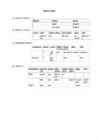
Word order: positive sentences subjects verb(s) object I speak English. I can speak English. Negative sentences subject verbs Indirect object Direct object place time I will not you the story at Tomorro tell school w. Subordinate Clauses conjunction subject verb(s) Indirec Direct place time t object object
separate lg, there is Engl that bases on general L); contrastive (compares vocabularys in different languages). 2. Connection of L with other linguistic disciplines a) the word performes a certain grammatical function (nt, he always misses the class, how many misses are there; the girl powders her nose, soliders face powder)In speech words are combined according to grammatical rules. The plural of nouns may carry a new meaning (nt, arms-weapons, looks-appearance, works-plant) b)connected with phonetics. The meaning of a word is expressed by sounds and it depends on the order of sounds(spoonerism) c)history of the lg helps to understand ahanges in the meanings of words (nt, legend ment a book where a life of saints was described) d)stylistics is the sign of expressive means of the language. The same idea may be expressed in different ways and so may aquire a new meaning
 annaabi.ee