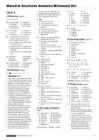
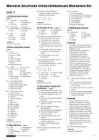
Leidsid 33 sarnast õppematerjali, mis on seotud failiga "Perfect, past continious". Need materjalid aitavad sul teemat sügavamalt mõista.
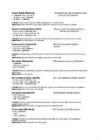
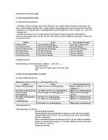
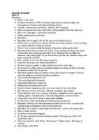
kaashäälik, points, lõpetatud, perfect, simple, täishäälik, hobi, while, ärritav, presentINGLISE KEEL Sisukord Sisukord 2 Ajavormid Tense vorms 3 Lihtolevik The present simple 3 Lihtminevik The past simple 3 Lihttulevik The future simple 3 Kestev olevik The present continuous 3 Kestev minevik The past continuous 4 Kestev tulevik The future conrinuous 4 Täisminevik The present perfect 4 Enneminevik The past perfect 4 Ennetulevik Future perfect 5 Üldminevik Past tense 5 Üldtulevik Future indefinite 5 Artiklid ja eessõnad 7
INGLISE KEEL Sisukord Sisukord.................................................................................................................................. 2 Ajavormid Tense vorms.......................................................................................................3 Lihtolevik The present simple..................................................................................... 3 Lihtminevik The past simple....................................................................................... 3 Lihttulevik The future simple...................................................................................... 3 Kestev olevik The present continuous......................................................................... 3 Kestev minevik The past continuous
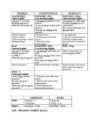
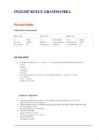
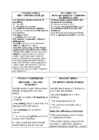
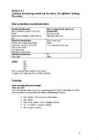
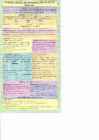
SIMPLE CONTINUOUS PERFECT I (-s) DO/DOES AM/IS/ARE + ING HAVE/HAS + III pv. I learn English I am learning English I have learned English. I get up at 7 every day. I'm reading a good book at the I've learned 10 words today. He doesn't get up at 7. moment. He hasn't learned any new What time do you get up? He isn't reading anything at the words today. moment
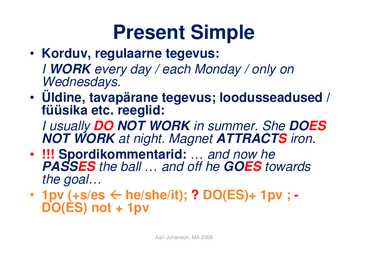
Present Simple · Korduv, regulaarne tegevus: I WORK every day / each Monday / only on Wednesdays. · Üldine, tavapärane tegevus; loodusseadused / füüsika etc. reeglid: I usually DO NOT WORK in summer. She DOES NOT WORK at night. Magnet ATTRACTS iron. · !!! Spordikommentarid: ... and now he PASSES the ball ... and off he GOES towards the goal... · 1pv (+s/es Å he/she/it); ? DO(ES)+ 1pv ; - DO(ES) not + 1pv Aari Juhanson, MA 2008 Present Progressive · Hetkel toimuv, pooleliolev tegevus: S/he IS TALKing on the phone now. I AM READing an interesting book. · Ajutine, regulaarsele ja tavapärasele vastanduv tegevus (tulevikku viitav): This summer they ARE not GROWing cucumbers as usual. They'RE GROWing tomatoes instead. · !!! Halvakspanu väljendus harjumuspärase tegevuse kohta: He IS always COMPLAINing! · BE (am/is/are) + 1pv-ing Aari Juhanson, MA 2008 Present Perfect ON -NUD
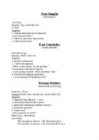
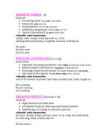
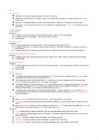
Past Simple (lihtminevik) -ed / II pv. Kasutus: Ago, yesterday, last. ?/- Did Tegevus: 1. Toimus minevikus ja on lõppenud. ,,I met him yesterday" 2. Used To, mineviku harjumused. ,,I used to play tennis." Past Continius (kestev minevik) was/were + ing Kasutus: When, while, as Tegevus: 1. ajutised sündmused. 2. 2 või enam tegevust ,,While i was reading, he was garding." 3. minevikus katkestatud tegevus ,,I was having a shower, when the phone rang." 4. konktreetne kellaaeg minevikus ,, I was watching TV yesterday at 5!" Present Perfect (täisminevik,olevikuaeg) have/has + III pv. Kasutus: Never, ever, already, yet, before, since, for. Tegevus: 1. tegevused alg. Minevik -> now
..), siis jäetakse by- fraas ära. Aktiivlause muutmine passiivlauseks: 1. Leiame sihitise ja muudame ta aluseks. 2. Määrame öeldise ajavormi ja asendame ta passiivi vastava ajaga 3. Leiame aluse ja muudame ta eessõna by abil sihitiseks. Example: Jane baked a cake.-active sentence A cake was baked by Jane.-passive sentence Exampple: My bike was stolen. Tence Subject Verb Object Simple Present Active: Rita writes a letter Passiv: A Letter is written by Rita Simple Past Active: Rita wrote a letter Passiv: a letter was written by Rita Present perfect Active: Rita has written a letter
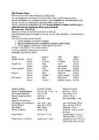
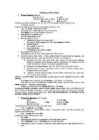
TENSES. ACTIVE VOICE. 1. Present Simple (üldolevik) I (he, she, it s) he works Eitav,küsiv do (I, you, we, they) he does not work does (he, she, it) does he work? Verbidele, mis lõpevad infinitiivis ss, -sh, -ch, -x või o, lisatakse ainsuse 3. pöördes es he touches, she goes Verbidel, mis lõpevad y-ga, mille ees on konsonant, muutub y->ies
.............................................................................................................................................. 13 Ajavormid Present simple (The earth goes round the sun) Reeglid, absoluutsed tõed Rutiin ja harjumused Püsivad situatsioonid või olukorrad Tabelid, ajagraafikud Present continuous (She is driving to work) Käsil olev tegevus Ajutine tegevus; pooleli olev Ettekorraldatud tegevus tulevikus Ärritus Present perfect (He has lost his key) Sündmus minevikus, tagajärg olevikus Üksik või korduv tegevus, mille aeg ei ole oluline (I have been in the USA)
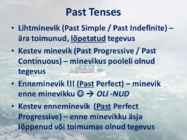
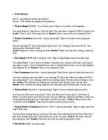
Past Tenses • Lihtminevik (Past Simple / Past Indefinite) – ära toimunud, lõpetatud tegevus • Kestev minevik (Past Progressive / Past Continuous) – minevikus pooleli olnud tegevus • Enneminevik !!! (Past Perfect) – minevik enne minevikku OLI -NUD • Kestev enneminevik (Past Perfect Progressive) – enne minevikku äsja lõppenud või toimumas olnud tegevus Created by Aari Juhanson, MA 2009 Past Simple • Ära toimunud (regulaarne) tegevus: I WORKED yesterday. S/he didn’t WORK last Monday. • Lõpetatud tegevus: I already CALLED them today. (I’m not going to call again!) Which countries did you VISIT? (You’re back …) BUT: Which countries have you VISITED so far? (You’re not back yet or you travel regularly …) • Jutustused, mineviku sündmuste kirjeldus: Once upon a time there LIVED a Garfield who HAD many friends. The first one WAS Odie, … • 2pv;
He works He don't work Does he work PRESENT CONTINUOUS [ is + ing] kestev olevik · tegevused, mis praegu leiavad aset. Karl is doing his homework at the moment. · plaanitud tegevus lähitulevikus. I am going to school tomorrow. · kui midagi toimub/muutub praegu. The number of burglaries is increasing. · alati sama korduv tegevus. You are always eating, when i wake up. väljendid, mida kasutatakse: now, at the moment, at present, these days, nowdays, still, today, tonight etc. He is working He isn't working Is he working PRESENT PERFECT [have/has + ed] täisolevik · algab minevikus ja kestab siiani · just lõpetatud tegevus, mille tegevused ilmuvad olevikus · teadmata aeg, kui midagi on minevikus juhtunud. väljendid, mida kasutatakse: for, since, already, always, just ever, never, so far, today, this week/month etc, how long, lately, recently, still, etc. He has worked He hasn't worked Has he worked
Present Continuous (kestev olevik) Be(am, is, are), kasutatakse jaatavates, + be (am, is, are) + 1.põhivorm ing eitavates ja küsilausetes. - be (am, is, are) + not+ 1.põhivorm -ing ? be (am, is, are) + 1.põhivorm ing Väljendab: Praegu toimuvat tegevust, praeguse momendi vältel toimuvat tegevust, ettekavatsetud tegevus tulevikus Spikkrisõnad: now, at the moment, at 6'clock, today Present perfect (täisminevik) Have, has kasutatakse kõikides + have, has + 3.põhivorm lausetes - have, has + not + 3.põhivorm ? have, has + 3.põhivorm Väljendab: Äsja lõppenud tegevust, täna/sel nädalal/sel kuul/sel aastal toimunud tegevust, tegevust, mida on/ei ole kunagi tehtud Spikkrisõnad: today, this week, this year, already, yet, just, never, ever, for, lately
1. Active/Passive Active - the professor teaches the students. Passive - The students are taught by the professor 2. Present Simple [VERB] + s/es in third person. Tegevus on korduv või tavapärane. You speak English. I play tennis. Cats like milk. The train leaves tonight at 6 PM. I am here now. Active= Once a week, Tom cleans the car. Passive= Once a week, the car is cleaned by Tom. 3. Present Continuous [am/is/are + present participle]. Tegevus toimub/ei toimu praegusel hetkel. You are watching TV. You are learning English now. I am studying to become a doctor. I am meeting some friends after work. Active= Right now, Tom is writing the letter. Passive= Right now, the letter is being written by Tom. 4. Past Simple [VERB+ed] or irregular verbs. Tegevus algas/lõppes minevikus täpsel ajal. . You called Debbie. I saw a movie yesterday. I finished work, walked to the beach, and found a nice place to swim
He/she/it is going He/she/it is not going Is he/she/it going? We/you/they are making We/you/they are not making Are we/you/they making? NB! ERANDID! · Verbidel, mis lõppevad ega kaob, ing lisamisel e ära. take taking make making · Lühikeste silpidega verbidel kahekordistub kaashäälik. get getting swim swimming · Yga lõppevatel verbidel, y ei kao ära. study studying cry crying · . die / tie / lie muutuvad dying / tying / lying Kestev olevik väljendab: · Tegevust või muutust, mis toimub antud hetkel ega pole veel lõppenud. I am making a cake at the moment. I can´t help you right now, I am working. · Tegevust, mis toimub mingil aja perioodil
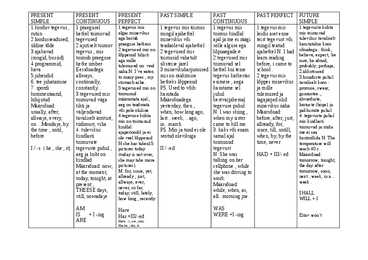
PRESENT PRESENT PRESENT PAST SIMPLE PAST PAST PERFECT FUTURE SIMPLE CONTINUOUS PERFECT CONTINUOUS SIMPLE 1.korduv tegevus , 1.praegusel 1.tegevus mis 1.tegevus mis toimus 1.tegevus mis 1.tegevus mis 1.tegevuste kohta rutiin hetkel toimuvad algas minevikus mingil ajahetkel toimus kindlal leidis aset enne mis toimuvad 2.loodusseadused, tegevused aga kestab minevikus või ajal ja me ei räägi teist tegevust või tulevikus tavaliselt
on Christmas Day (but at Christmas) We use at in these expressions: at night - at Christmas - at the moment / at present - at the same time - at weekends - at the age of... IN DURING
käsil/poolelo(It was 5 o'clock, he was having a cup of tea and chatting with his collaegues). Kahe samaaegselt toimunud tegevuse puhul, kus üks tegevus parajasti kestav, kui toimub teine tegevus. (Tom was chatting with his workmates when the boss came in). Sel ajal kui (while) 3. Past Perfect /enneminevik; perfekti minevik/ Formation/ Moodustamine: Had+ tegusõna III põhivorm (lõpuga ed või ebareeglipäraste sõnade puhul muu) Jaatav Eitav Küsiv (kas-küsimus) I had asked/ gone I had not asked/gone Had I asked/gone? (Olin ma küsinud/läinud?)
Will + infinitive (will go) Am/is/are going to + infinitive (is going to rain) 1.A decision at the moment of 1.Future plans made before the speaking: moment of speaking: A: 'I'm cold'. A: 'We've run out of milk.' B: 'I'll close the window'. B: 'I know, I'm going to buy some.' 2.Prediction based on opinion: 2.Prediction based on present I think the Conservatives will win the evidence: next election. Look at those boys playing football! 3.A future fact: They're going to break the window. He will be ten next year. 4.Promises / requests / refusal / willingness: I'll help you with your homework. Will you give me a hand? 5.In the same way as the future continuous, but with state verbs: I'll be at the station when you arrive. 'Shall' is used mainly in the forms 'shall I
3 TALLEGG 11 MIZDE 4 VESITERM 12 LADA 5 STOW 13 SCHWUNG 6 KALEV 14 MAIASMOKK 7 YAMAHA 15 ISKU 8 ESTRAVEL 2 Affirmative tense Use Signal Words Negative/Questions · action in the present taking always, Present Simple A: He speaks. place once, never or several every ..., N: He does not speak. normally, often, Q: Does he speak? times seldom, · facts sometimes,
et rääkida mineviku situatsioonidest I lived next door to my best friend. kaudses kõnes 4.2b Kestev minevik Kasutame: et rääkida asjades, mis on minevikus kestvad. They were walking along the bank of a river. et rääkida sündmusest, mis oli kestev, kui teine sündmus aset leidis They were driving down the road when a dog ran in front of the car. et rääkida tegevustest, mis leidsid aset samal ajal minevikus While I was cooking lunch, Gina was washing the floor. 4.2c Past perfect simple (Had+past participle) Kasutame et rääkida sündmustest, mis leidsid aset enne, kui teine mineviku vorm When I saw her, I realised I had met her before kaudses kõnes 4.2c Kestev täisminevik Kasutame: et rääkida tegevusest, mis kestsid kuni nimetatud sündmuseni minevikus I had been walking for three hours when I came to a small village. kaudses kõnes UNIT 5 5
sentences. All students of English, be they native speakers or those who are studying English as a second language, will profit from the fundamental introduction and review of grammar provided by SADDLEBACK'S BASIC ENGLISH GRAMMAR 1 and 2. Helpful marginal notes throughout the books have been provided to reinforce existing skills and call attention to common problem areas. We wish you every success in your pursuit of English proficiency. 1 What is Grammar? 5 The Simple Past Tense 98 Regular and Irregular Verbs 99 Was and Were 104 2 The Capital Letter 6 The Past Progressive Tense 106 The Future Tense 108 Can and Could 112
The vast majority of English nouns follow the regular pattern. Thus, new nouns that enter the language usually take the regular plural. Irregular patterns are not extended to new nouns usually (vax vaxen). The strong or irregular nouns are relatively stable and show little speaker variation. There is some variation regarding nouns such as scarf, dwarf. Some frequently-occurring foreign formations have been nativised in Modern English, while others remain confined to particular registers. Irregular plurals occur in compounds, while regular plurals don't: oxen cart / *dogs cart lice-infested / *fleas-infested teeth cleaner / *hands cleaner clothes basket savings bank arms race -- collective compounds b) Gender: Gender is a grammatical classification of nouns, pronouns, or other words in the NP, according to certain meaning-related distinctions, especially a distinction related to the
Kõik õigused on kaitstud. Ilma autoriõiguse omaniku eelneva kirjaliku loata pole lubatud ühtki selle töövihiku osa paljundada ei elektroonilisel, mehaanilisel ega muul viisil. Töövihik on kooskõlas 2009. a uuendatud õppekomplektiga I Love English 6. Tartu, 2014 ISBN 978-9949-436-59-0 Kirjastus Studium Riia 15b, Tartu 51010 www.studium.ee Trükitud OÜ Greif trükikojas Lohkva, Luunja vald Tartumaa 62207 --- 3 xxx 1. The Big Apple 1. Write the verbs in the present continuous or the past continuous tense. Do you remember? am is are was were verb -ing 1 Sorry. I ... (write) a report at the moment. I can't come with you. 2 When Peter arrived, his friends ... (play) football. 3 I ... (sleep) when the alarm went off in my sister's room. 4 Dad's mobile phone is switched off because he ... (fly) to Paris. He's on the plane at the moment. 5 I ... (read) an interesting book. It's a collection of memories. 6 Leo was late again. He ..
Lihtlause (The simple sentence) Lauseliikmed on alus (t/ie subject),iildis (the predicale), sihitis lthe objecr) ja mddrus (.the adver- blal1. Lau.eliikmek. rdih olla iiLl.,siksona r0i terve:dnade riihm ehl< lraas. faraline sdnajiirg on: Alus Oeldis Sihitis MAarus
Tests Superstar 1 Luke Prodromou Test 1 Name____________________ Class_______ Use your English 1 Complete these sentences using the correct form (present simple or present continuous) of the verb in brackets. _ 1 She is in a band and she _________________________________ (record) a CD at the moment. _ 2 She is an actress and often _________________________________ (appear) on television. _ 3 At the moment she _________________________________ (have) a rest because she is tired. _ 4 Mike is a doctor and he _________________________________ (live) in Manchester. _ 5 I _________________________________ (start) work at 8.30 every morning.
f) Is his new job easier than the one he had in London? g) How does the writer feel about his new situation? Informal (friendly) letters are normally written to relatives, friends or other people we know very well. A good informal letter should be divided into paragraphs. Each paragraph should deal with one aspect of the subject and start with a topic sentence which gives the main idea of the paragraph. Tenses Present Perfect and Past Simple are often used in letters giving news. The Present Perfect is used to refer to recent activities and the Past Simple to refer to activities which happened at a stated time in the past. TASK 7 Read the following letter and correct the mistakes. Write S for spelling, P for punctuation, WO for word order, G for grammar or WW for wrong word. Dear Jenny , How are you ? I hope that you're very well. I've got so many to tell you that I don't know where to begin
Human independence and solitarity. Jordan dies, he is left to die. Maria problably is pregnant. Towards the end of his life Heingay wrote short stories. 1952 novella ,,The old man and the sea". The protagonist is an old cuban fisherman. Cuba was that time almost the colony of usa. Santiago is an old fisherman who isn't able to catch anything for several days. One day he catches enormous fish. He is exhausted from trying to fight that fish and has to tie the fish to the boat. While he is rowing back to village the sharks eat the fish when he arrives back to village. It is a moral victory of defeat. Man may be destroyed but not defeated. Even the names are quite important in the novels. Santiago (in spanish-saint) is almost a christ like figure. He has scars that are similiar to stigmata. The novella can be guarded as a religious story, even though hemingway wasn't very religious man. Hemingway commited suicide by blowing his head off. 1930's in American literature
3 He's working at his father's shop inherited. 1 1 staunchly / resolutely for the time being. 3 When it comes to politics, 2 By and large 4 They'll be here any moment now. Edward and his dad have a lot in 3 swiftly 5 Everybody makes mistakes once common. 4 loosely in a while. 4 Luke is the spitting image of Matt 5 categorically 6 My brother was still a baby at the Damon. 6 widely time. 5 Personality-wise, I take after my 7 resolutely / staunchly mum. 8 strictly 5 unaffected inappropriate
tricacies of social influence to the fact that he was raised in an entirely Italian family, in a predominantly Polish neighborhood, in a historically German city (Milwaukee), in an otherwise rural state. Preface The initial version of Influence was designed for the popular reader, and as such, an attempt was made to write it in an engaging style. In the subsequent versions, that style is retained, but in addition, I present the research evidence for my statements, recommendations, and conclusions. Although they are dramatized and corrobo- rated through such devices as interviews, quotes, and systematic personal observa- tions, the conclusions of Influence are based on controlled, psychological research. This fact allows the reader to feel confident that the book is not "pop" psychology but represents work that is scientifically grounded. The subsequent versions also
3 The wooden floor had rotted. Challenge! 4 The little boy was sobbing and Transcript Students' own answers pointing to his sister's ice cream. 5 The thief grabbed my bag and ran The photos are connected with the 1B Past and perfect tenses off. topic of school. Both photos show page 4 6 He dropped a leaf into the water students in class. In the first photo I imagine that 1 1 ate and watched it drift under the
3 What did the British learn from their defeat in Seringapatam, India? 4 What other fields of application the rockets had by the 1880s? 5 Which invention made the rockets even more powerful and where did it lead to? 6 How did the Germans use rockets in the World War II? 7 Speak about the first steps in conquering the space. 8 How long have people explored the Mars and which invention enhanced the exploration? 9 Find the main points about the Mars One mission. 10 What is the difference between a cosmonaut, astronaut and taikonaut? 11 Explain the difference between the words corps and corpse? How do you pronounce these words? 12 Translate the italicized expressions and bold words in the text. Make sure that your translation is appropriate! 13 Derivation is the process of forming a new word from an existing word, often by adding a prefix or suffix
per-copy fee to the Copyright Clearance Center, Inc., 222 Rosewood Drive, Danvers, MA 01923, (978) 750-8400, fax (978) 750-4470, or on the web at www.copyright.com. Requests to the Publisher for permission should be addressed to the Permissions Department, John Wiley & Sons, Inc., 111 River Street, Hoboken, NJ 07030, (201) 748-6011, fax (201) 748-6008, e-mail: [email protected]. Limit of Liability/Disclaimer of Warranty: While the publisher and author have used their best efforts in preparing this book, they make no representations or warranties with respect to the accuracy or completeness of the contents of this book and specifically disclaim any implied warranties of merchantability or fitness for a particular purpose. No warranty may be created or extended by sales representatives or written sales materials. The advice and strategies contained
117. laialdane vaatlus - comprehensive review 118. vaba, mahajäetud ja saastatud maa - vacant, derelict and contaminated land 119. tasakaaluhind - clearing price 120. laiaulatuslik väljaehitamine - large-scale building 121. alternatiivkulu/loobumiskulu - opportunity cost 122. taastuvenergia allikad - renewable energy sources 123. tarbjakulutuste järk kasv - gradual growth of consumer costs Passive 1.Sein kaeti värviga The wall is being painted 2.See töö on kella viieks lõpetatud This work will have been finished by five o´clock 3.Meie teste parandatakse ikka veel Our tests are being checked on 4.Liiklusmärki ei olnud märgatud The traffic sign was not taken notice of 5.Sõnaraamatut otsiti parajasti The dictionary is being looked for 6.Selle probleemiga tegeletakse hiljem This problem will be dealt with later 7.Anne tänaval ehitati parajasti uut maja A new house is being built in Anne street 8.Oodatakse kirjakandjat The postman is being waited for 9
Communicative language use Automatic use (habit formation) Teacher is a model for imitation Dialogues, drills (substitution, transformation, chain, etc) Right answers are positively reinforced Reading and written work is based on oral work Teacherled interaction Simple forms (everyday language) Focus on language structures 2 The goals are drilling communicative skills, drilling and repeating simple forms (everyday language). It was a teacher-led interaction, they focused on language structures: complete sentences: questions and answers. No native language was used. The teacher encouraged students with compliments: Good job! Well-done! The teacher repeated yourself and asked students to repeat the sentence or question when the error occurred. · Humanistic Methods: The Total Physical Response (TPR) http://www.youtube.com/watch?v=ikZY6XpB214 TPR and Language Acquisition
 annaabi.ee