CANADIAN PATRIOTIC SONGS "Ca-na-da", or "The Centennial Song" (French version: "Une chanson du centenaire") was written by Bobby Gimby in 1967 to celebrate Canada's centennial and Expo 67. The Canadian Centennial was a year long celebration held in 1967 when Canada celebrated the 100th anniversary of the Canadian Confederation. The 1967 International and Universal Exposition, or Expo 67 as it was commonly known, was the general exhibition, category one World's Fair held in Montreal, Quebec, Canada from April 27 to October 29 The "Canadian Railroad Trilogy" is a song by Gordon Lightfoot that describes the building of the Canadian Pacific Railway. "Farewell to Nova Scotia" is a popular folk song from Nova Scotia of unknown authorship. It is believed to have been written just prior to or during the First World War. "Farewell to Nova Scotia" brings the listener back t...
Cities of Canada Ottawa is the capital of Canada and a municipality within the Province of Ontario. Located in the Ottawa Valley in the eastern portion of Southern Ontario, the city lies on the southern banks of the Ottawa River, a major waterway forming the local boundary between the Provinces of Ontario and Quebec. Connected by several bridges to its Quebec neighbour, the City of Gatineau on the northern shores of the Ottawa River, the two cities had a combined 2009 population of 1,220,674, making it the country's fourth largest metropolitan area. Although a recent StatsCan estimate in February 2010 surmises that the Ottawa metropolitan area has recently been surpassed by the Calgary metropolitan area as the Canada's fourth largest metropolitan area. There is no federal capital district in Canada. Although it does not constitute a separate administrative district, Ottawa is part of the federally designate...
Tallinn English College CANADA Report Karin Kristen Tapupere 8.b Instructor: Tiiu Martma Intro: Canada is a country occupying most of northern North America, extending from the Atlantic Ocean in the east to the Pacific Ocean in the west and northward into the Arctic Ocean. It is the world's second largest country by total area and its common border with the United States to the south and northwest is the longest in the world. The land occupied by Canada was inhabited for millennia by various groups of Aboriginal people. Beginning in the late 15th century, British and French expeditions explored, and later settled along, the Atlantic coast. France ceded nearly all of its colonies in North America in 1763 after the Seven Years' War. In 1867, with the union of three British North American colonies through Confederation, Canada was formed as a federal dominion of four provinces. It is a bilingual and mult...
Olustvere Teenindus ja Maamajanduskool Kanada Referaat Autor:Cristian Villem Juhendaja:Endla Pesti Olustvere 2014 Sisukord 1.1 Riigi iseloomustus…………………………………………………………………………… ………3 1.2 Pinnamood…………………………………………………………………………… …………………4 1.3 Saared………………………………………………………………………………… …………………..4 1.4 Veekogud…………………………………………………………………………… …………………4-5 2.1 Rahvastik…………………………………………………………………………………… ………….5-6 2.2Keeled…………………………………………………………………………………… ……………….6 3.1Ajalugu…………………………………………………………………………………… ………………6 Kokkuvõte…………………………………………………………………………………… ………………..7 Kasutatud Kirjandus……………………………………………………………………………………… 8 2 1.1 Riigi üldiseloomustus Kanada on riik Põhja-Ameerikas. Kanada vapp Kanada Lipp Kanada on maailmas pindalalt Venemaa järel teine, samuti maailma kõig...
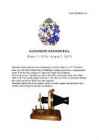
Karin Sabalisk 11A ALEXANDER GRAHAM BELL (March 3, 1874 August 2, 1922) Alexander Graham Bell was born in Edinburgh, Scotland on March 3, 1847. The family home was at 16 South Charlotte Street, Edinburgh, Scotland, and now has a commemorative marker at the doorstep, marking it as Alexander Graham Bell's birthplace. He had two brothers: Melville James Bell (18451870) and Edward Charles Bell (1848 1867). Both of his brothers died of tuberculosis. His father was Professor Alexander Melville Bell, and his mother was Eliza Grace (née Symonds). Alexander Graham Bell was an eminent scientist, inventor, engineer and innovator who is credited with inventing the first practical telephone. Many other inventions marked Bell's later life, including groundbreaking work in optical telecommunications, hydrofoils and aeronautics. I...
CANADA Geography Canada is the world's second largest country in total area after Russia , since it covers nearly 10 million square kilometres, but is one of the most sparsely populated, with only about 34 million inhabitants. The majority of them live within 300 kilometres of Canada's southern border. Much of the rest of Canada is uninhabited or thinly populated, because the country has a rugged terrain and severe climate. Canada extends across the continent of North America, from Newfoundland on the Atlantic coast to British Columbia on the Pacific coast and northward into the Arctic Ocean. Canada shares land borders with the United States to the south and north-west. Canada is a land of great variety. Towering mountains, crystal-clear lakes, and lush, green forests make Canada's far west a beautiful region. Farther inland, fields of wheat and other grains cover Canada's vast prairi...
Early History The first inhabitants of Canada were native Indian people who were called as Inuits. They are believed to be in Canada since about 10000 BC. The Inuits came to Canada from Asia crossing the Bering land bridge. The earliest discoveries in Canada were made by the Vikings. In AD 985 Vikings sailing from Iceland to Greenland were blown westward off their course and the Vikings sighted the coast of Labrador peninsula. The report of forested areas encouraged further exploration because the colonies in Greenland which belonged to the Vikings lacked lumber. In AD 1000 Leif Ericson became the first European to land in North America. The first colony was established what was described as Vinland by the Vikings. It was located on the northernmost tip of todays Newfoundland. There has also been a theory that the Vikings penetrated Hudson Bay and reached the Great Lakes region but recent investigations have...
KANADA Üldandmed Pealinn: Ottawa Keeled: inglise & prantsuse Pindala: 9 984 670 km² Rahvaarv: 33 617 000 Rahvastiku tihedus: 3,3 in/km² Iseseisvus: 1.juuli 1867 Haldusjaotus Föderatsioon, kus 3 ala: Loodealad, Nunavut ja Yukoni ala. Jaotatud 10 provintsiks: Alberta, Briti Columbia, Manitoba, New Brunswick, Newfoundland ja Labrador, Nova Scotia, Ontario, Prints Edwardi saar, Québec, Saskatchewan Haldusjaotus Valitsus Kanadas on parlamentaarne demokraatia ja konstitutsiooniline monarhia. Riigipea: Elizabeth II, Kindralkuberner: Michaëlle Jean Peaminister: Stephen Harper Monarh riigi sümbol - esindaja. Ajalugu 15. sajandil maabus John Cabot Nova Scotias ning kuulutas maa inglise krooni omandiks. 16. sajandil rändas Prantsuse maadeavastaja Jacques Ca...
History First people who lived in Canada came by a land bridge from Russia and Greenland. They were the ancestors of nowadays indigenous people of Canada. They just searched better for living places and followed their prey and they didn't even know they were on a different continent. The first explorers were Norse seafarers known as Vikings. As they sailed from Iceland to Greenland in AD 985, they were blown far off their course and they saw the coast what must have been Labrador. The forested areas of Canada's coast encouraged further explorations, because their settlement lacked lumber. They established a colony, what they called Vinland on Newfoundland. It died out during the 14th and 15th centuries. 500 years later Europeans started looking for a waterway to Asia, because travelling with spices over land wasn't very safe anymore. The first explorer was Christopher Kolumbus who reached America's shore in 1492, although he thought it ...
Canada Canada is a country occupying most of northern North America, extending from the Atlantic Ocean in the east to the Pacific Ocean in the west and northward into the Arctic Ocean. It is the world's second largest country by total area, and shares land borders with the United States to the south and northwest. Canada is a federation composed of ten provinces and three territories; in turn, these may be grouped into regions. Western Canada consists of British Columbia and the three Prairie provinces (Alberta, Saskatchewan, and Manitoba). Central Canada consists of Quebec and Ontario. Atlantic Canada consists of the three Maritime provinces (New Brunswick, Prince Edward Island, and Nova Scotia), along with Newfoundland and Labrador. Eastern Canada refers to Central Canada and Atlantic Canada together. Three territories (Yukon, Northwest Territories, and Nunavut) make up Northern Canada. ...
Canada's History North America was first settled by people who came from the northern and eastern parts of Asia about 15,000 years ago. They crossed the Bering Strait from Siberia to Alaska. Some of those people followed the Yukon River and found their way south. Others followed the MacKenzie River which opened the way to the plains of the interior, and then travelled on to the Great Lakes and the St. Lawrence River. The third group of people inhabited the Arctic regions. The first two groups were called Indians, the group that settled in the north were called Eskimos. These people are the only true native Canadians, the rest are new Canadians who have been transplanted from other parts of the world, especially from Europe. The first European visitors to North America were Norsemen who settled briefly in the 11th century. John Cabot, a Venetian seeking riches for England, made the next known voyage in 1...
Ice hockey Rauno leppik 7.a Ice Hockey Ice hockey is a team sport played on ice. It's a fastpaced and physical sport. Ice hockey is a most popular in areas that are sufficiently cold for natural reliable seasonal ice cover such as Canada, the northern United States, Scandinavia and Russia. History European immigrants brought various versions of hockey: like games to Canada, such as the Irish sport of hurling, the closely related Scottish sport of shinty, and versions of field hockey played in England. Where necessary, these seem to have been adapted for icy conditions; for example, a colonial Williamsburg newspaper records hockey being played in a snow storm in Virginia. Early paintings show "shinney", an early form of hockey with no standard rules, being played in Nova Scotia in Canada. ...
Superstore Sales [1] Row ID Order ID Order Date Order Priority Order Quantity 1 3 10/13/2010 Low 6 2 6 2/20/2012 Not Specified 2 3 32 7/15/2011 High 26 4 32 7/15/2011 High 24 5 32 7/15/2011 High 23 6 32 7/15/2011 High 15 7 35 10/22/2011 Not Specified 30 8 35 10/22/2011 Not Specified 14 9 36 11/2/2011 Critical 46 10 65 3/17/2011 Critical 32 11 66 1/19/2009 Low 41 12 69 6/3/2009 Not Specified ...
Kanada Esitlus geograafia vööndite kohta. Kanada Kanada on riik PõhjaAmeerikas. Kanada on maailmas pindalalt Venemaa järel teine, samuti maailma kõige pikema rannajoonega riik (58 500 km) Kanada vapp ja lipp psake juhtslaidi teksti laadide redigeerimiseks Teine tase Kolmas tase Neljas tase Viies tase Riigi Faktid Riigihümn O Canada Pealinn Ottawa Pindala 9 984 670 km2 Riigikeel(ed) inglise, prantsuse Rahvaarv 34 037 000 (2010) Riigipea Elizabeth II Saared Kanada rannikud, eriti aga arktiline, on tugevasti liigestatud ja nende lähedal asub arvukalt saari. Atlandi rannikul on tähtsaimad Newfoundlandi, Cape Bretoni, Prints Edwardi ning Anticosti saar ja Nova Scotia poolsaar. Vaikse ookeani ranniku lähedal asuvad Vancouve...
30,00010,000 BC Prehistoric hunters cross over into Canada from Asia circa 1000 AD Leif Ericsson leads a Viking expedition to the New World 1451 The Iroquois Confederacy is formed 1497 John Cabot reaches Newfoundland (or perhaps Cape Breton) 1534 Jacques Cartier first explores the St. Lawrence region 1608 Samuel de Champlain establishes a French colony at Québec City 1670 Hudson's Bay Company is formed 1755 Expulsion of the Acadians 1759 Battle of the Plains of Abraham: Québec City is captured 1763 New France is formally ceded to Britain; Pontiac Rebellion erupts 1783 Loyalist refugees begin arriving after the American Revolution 181214 War of 1812: U.S. invades Canada 183738 Rebellions against British rule in Upper and Lower Canada 1848 Responsible government is won, first in Nova Scotia, then in Canada 1867 Confederation (first four provinces: Québec, Ontario, N.S., and N.B.) 1870 Red River Resistance; province of Man...
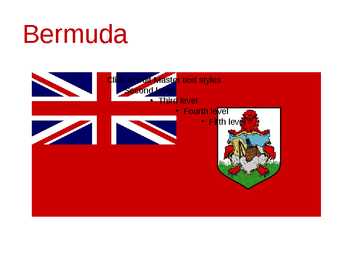
Bermuda Click to edit Master text styles Second level Third level Fourth level Fifth level Bermuda (officially, the Bermuda Islands or the Somers Isles) is a British overseas territory in the North Atlantic Ocean Located off the east coast of the United States, it is situated around 1,770 kilometres northeast of Miami, Florida, and 1,350 kilometres south of Halifax , Nova Scotia, Canada. The nearest landmass is Cape Hatteras, North Carolina, about 1,030 kilometres west-northwest. It is the oldest and most populous remaining British overseas territory, settled by England a century before the Acts of Union created the United Kingdom of Great Britain. Bermuda's first capital, St. George's, was settled in 1612 and is the oldest continuously inhabited English t...
Tartu Miina-Härma Gümnaasium KANADA Referaat Sirelin Tallo 10A klass Maiu Kaljuorg Juhendaja Tartu 2013 Sisukord Sissejuhatus ....................................................................................................................... 3 1. Riigi geograafiline asend ........................................................................................... 4 2. Riigi kuulumine suurregiooni .................................................................................... 4 3. Riigi arengutaseme näitajad. ...................................................................................... 5 4. Riigi kuulumine majandusorganisatsioonidesse. ....................................................... 6 5. Rahvastik ................................................................................................................... 7 ...
Saaremaa Ühisgümnaasium Kanada Referaat Autor: Tiina Ollema Juhendaja: Virge Ollema Kuressaare 2009 SISUKORD SISUKORD.......................................................................................................................2 1. ÜLDINFO KANADAST..............................................................................................4 2. KANADA AJALUGU.................................................................................................5 3. KANADA LOODUS....................................................................................................7 4. KANADA KINDRALKUBERNERID LÄBI AJALOO..............................................9 4.1 Kuningas George III ajal:.....................................................
Canada Geography The geography of Canada is vast and diverse. Occupying most of the northern portion of North America, Canada is the world's second largest country in total area. The highest point in Canada is Mount Logan 6,050 m, which is in the Yukon. The two principal river systems are the Mackenzie and the St. Lawrence. The St. Lawrence, with its tributaries, is navigable for over 3,058 km. The largest lake situated entirely in Canada is Great Bear Lake at 31,328 km2 in the Northwest Territories. The largest lake which is at least partly in Canadian territory is Lake Superior Climate Canada's climate is as diverse as its landscape. Generally, Canadians enjoy four very distinct seasons, particularly in the more populated regions along the US border. Daytime summer temperatures can rise to 35°C and higher, while lows of -25°C are not uncommon in winter. More moderat...
Topic Canada History The first people to live in what is now Canada arrive from Asia at least 20 000 years ago. They arrived by a way of a land bridge that once connected Asia and North America at what is now Alaska. In 1497, John Capot, an Italian navigator in the service of England found rich fishing grounds off Canada's southeast coast. France took the lead in exploring the country and set up a colony in eastern Canada in the early 1600's. Great Britain gained control of the country in 1763 and thousands of British immigrants began to join the French who remained in Canada. Canada gained its independence from Britain in 1931. Position/area Canada is the second largest country in the world. Canada extends across the continent of North America, from Newfoundland to British Columbia. Over 5000 km of border separate Canada and the United States...
Canada. Canada is a very big country in the continent of North America. It is about 10 million square kilometres and that makes it the second largest country in the world after Russia. Quebec (the province) is six times as big as the UK. Canada borders the Atlantic Ocean, the Pacific Ocean, the Arctic Ocean and the USA. The capital of Canada is Ottawa and other main cities are Toronto, Montreal and Vancouver. It is a very developed country. Montreal is the largest city and it is called the Paris of North America because most of the people there speak French. The population of Canada is 28 million people. It is a very multicultural country. People from many different countries have come to live there. The natives are Eskimos and Indians. Eskimos have their own self-governing homeland called Nunavut. In Canada there are also 2 official languages English and French. One third of th...
Territory and landscape Canada is one of the largest countries in the world. It covers nearly 4 million square miles. It is dividend into ten provinces( British Columbia, Manitoba, New Brunswick, Alberta, Nova Scotia, Ontario, Prince Edward Island, Quebec, Saskatchewan, Newfoundland ) along with two territories( the Yukon, the Northwest territories ). The capital city is Ottawa. Canada is a country rich in forests. It borders in the south with The United States and it's surrounded in the west by the Pacific Ocean, in the east by the Atlantic Ocean and above by many smaller bays, but is also borderedd with Alaska in the north-west. To the north of Canada is the broad Canadian Shield, an area of rock scoured clean by the last ice age, thinly soiled, rich in minerals, and dotted with lakes and rivers. Canada by far has more lakes than any other country and has ...
Tallinna Inglise Kolledz Canada. The land of diversity. Tallinn 2006 Canada. If you had to use two words to describe Canada, they might be large and diverse. Canada is the second largest country in the world with a territory of about 10 million square kilometers and it is bordered by three oceans: the Arctic, the Pacific and the Atlantic Oceans. The population of Canada is about 31 million people. About 77% of the people live in cities which lie in a band about 100 miles wide above the border of the United States. The capital of Canada is Ottawa. Other large cities are Montreal, Toronto, Vancouver, Winnipeg and Quebec. Canada has two official languages English and French. It's interesting to know that about 61% of Canadians name English and 24% French their mother tongue. There are also many other languages spoken in Canada such as: Italian, Chinese, German, Polish,...
KANADA Referaat Kanada. Kanada on riik Põhja-Ameerikas. Kanada lipp. Kanada riigipea on Elizabeth II . Kanada kogu pindala on 9 984 670 km² . Rahvaarv (2007) 33 025 900 Rahvastiku tihedus 3,3 in/km² Iseseisvus 1. juuli 1867. Rahaühik CAD (Kanada dollar- 100 senti) Kanada pealinn on Ottawa. Pindala: 2 778,64 km² Elanikke: 859 700 (2005) Ottawast sai Kanada pealinn 31. detsembril 1857. aastal. Riigikeeled: Inglise ja prantsuse Rahvuspüha: 1. juuli - Kanada päev (1867) Riigikord: Föderatiivne riik Haldusjaotus: 10 provintsi ja 2 territooriumi Asend. Kanada, mis on maailmas suuruselt teine riik, asub Põhja-Ameerikas. Kanada piirneb põhjast Põhja-Jäämerega, lõunast USA-ga, idast Atlandi ookeani ja Labradori merega, läänest Alaska ja Vaikse ookeaniga ning kirdest Baffini lahega. Pinnamood. Pinnamoe järgi saab Kanadat jaotada 6-ks osaks. Hudsoni lahe ääres asuvaks Laurentia kiltmaa...
Veljed ja rehvid Auto on liiklusvahend, paljudele tööriist, mõnele hobi või lõbusõiduk. Meie ühiskonnas ka tihti imago tõstmise vahend. Ilmselt seetõttu on ta muutunud tihti ka omaniku mänguasjaks, mida ehitatakse, nühitakse ja ümber ehitatakse - tuunitakse. Auto välimust mõjutavad märkimisväärselt tema rattad. Auto ratas ei ole nii lihtne ja iseenesest mõistetav, nagu ta pealtnäha võib paista. Kui me tahame teada, kas velg sobib teatud autole, peame teadma velje läbimõõtu, laiust, nihutust (offset), poldiringi läbimõõtu, tsentriava läbimõõtu ja kinnituspoltide arvu. Poldiringi läbimõõdu mõõtmine. Vasakul nelja, kuue ja kaheksa poldiga, paremal viie poldiga velje puhul. Nihutus (offset) on velje keskjoone ja kinnitustasandi vaheline kaugus. Tavaliselt on kinnitustasand velje välisservale lähemal - sel juhul on tegu sissenihutusega (inset); kui aga kinnitustasand on velje välisservast kaugemal...
Canada is the second largest country in the world. Situated to the north of the United States, in North America, it has both English and French as its official languages. Even though its area is bigger than that of the United States, its population is only about 11% of that of the USA some 35 million. Because of that, Canada has one of the lowest population densities in the world. The capital of Canada is Ottawa the name of whose comes from the old Algonquin language, with the original word meaning `to trade'. Due to the country's huge size and position, it is very diverse. It is bordered by the Pacific Ocean to the west, the Atlantic to the east, and the Arctic to the north. The landscapes differ greatly from rolling plains and mountains to the cold tundra in the northern part of the country. Geographically, the country's split into 5 major regions the Pacific, the Prairie Provinces, Central Canada, the Atlantic Provinces and...
CANADA Canada is a vast country, second largest country of the world after Russia. It stretches from the Atlantic Ocean in the east to the Pacific Ocean in the west and to the Arctic Ocean in the North. Canada Covers most of the northern part of North America and its geography is very diverse. Canada's area is about 10 million square kilometers and its population is 31 000 000. Its capital is Ottowa and other main cities are Toronto, Montreal and Vancouver. Almost 75 % of canadians lives within 300 kilometer of the USA border, because the climate is softer in the South. 89 % of Canada is almost unhabited. Its official languages are English and French, but many other languages are spoken too. Like Italian, Chinese, German, Polish, Ukrainian, Dutch and Creek. There are also many native languages such as Algonquian. Most of the canadian's speak English (67 %), but French is very...
Tallinn English College Report of Canada 8a Teacher: Merike Sisask Composer: Kärt Kalvet 2010 Canada, Kärt Kalvet 8a Canada General Information Canada is in North America. It's area is 9220970 sq km. Canada's population is 313.612.000 people. Canada is divided into 10 provinces and 3 territories. The capital of Canada is Ottawa. Canada has constitutional monarchy. The head of state in Canada's government is the Queen of England. There are two main languages in Canada: English and French. Canada's curreny is Canadian dollar (1 dollar=100 cents[Can$]). The highest peak of Canada is Mount Logan, 5959 metres. The lowest point is sea level. The longest river is the Mackenzie. The climate and geography of Canada vary greatly from temperate in the south to arctic in the north and from islands and plains in the east to mountains in the west. Location...
Society and culture of english-sspeaking countries Introduction 1. The countries of the world where the English language is spoken. 2. Approximate number of mother tongue speakers of English approximately 350-400 million native speakers. Which place does English occupy in the world by its number of speakers?After which language? English occupies second place by its number of speakers after Mandarin Chinese. 3. What is the difference between English as a Second Language, English as a Foreign Language and English for Specific Purposes? Give examples of situations where they are used. English as a Second Language (ESL or TESL) is a traditional term for the use or study of the English language by non-native speakers in an English-speaking environment. That environment may be a country in which English is the mother tongue (e.g., Australia, the U.S.) or one in which English has an established role (e.g., India, Nigeria) English as a...
Kool Nimi klass Õpimapp Maadeavastajad ja reisimehed Juhendaja: Asukoht Sisukord Sissejuhatus.................................................................................3 Vanaaja reisimehed........................................................................4 1. Hanno....................................................................................5 2. Pytheas Massaliast.......................................................................5 Keskaja maadeavastajad..................................................................6 3. Ibn Battuta...............................................................................7 4. Marco Polo..............................................................................7 5. Al Idrisi..................................................................................
Tartu Ülikool Filosoofiateaduskond Ajaloo ja arheoloogia instituut Kunstiajaloo osakond Lilija Soosaar Ristija Johannes Referaat Tartu 2014 Sisukord Sissejuhatus 3 1. Piiblilugu Ristija Johannesest 3 1.1. Ristija Johannese sündimise ettekuulutus 3 1.2. Maarja külastab Eliisabeti 3 1.3. Ristija Johannese sünd 4 1.4. Ristija Johannese kasvamine 4 1.5. Ristija Johannese jutlus 4 1.6. Jeesuse ristimine 4 1.7. Ristija Johannes satub vangi 5 1.8. Jeesus vastab vangistatud Ristija Johannesele ...
SOCIETY AND CULTURE OF ENGLISH-SPEAKING COUNTRIES Introduction 1. Nowadays, English is so widely spoken that it can hardly be considered "a one nation's" language. The main countries where English is spoken are: the U.K, the U.S, Canada, Australia, the Republic of Ireland, New Zealand, West Indies 2. There are approx. 300-400 million speakers of English in the world. English occupies the 3rd place by its number of speakers; it is right behind Mandarin and Spanish. 3. ESL (English as a Second Language) used in your own country (e.g. India) EFL (English as a Foreign Language) used in a foreign country ESP (English for Specific Purposes) used in business, airlines, hotels etc. 4. Settlement colonies people migrated into them from Britain and started their own communities, they are the present English-speaking countries (USA, Australia, Canada, New...
Table of contents 1. Introduction 2. Geographical position 3. Mountains, lowlands 4. Rivers, lakes 5. The territories and provinces 6. Towns, economy, agriculture 7. Climate 8. Animals, plantlife 9. Population 10. Sports 11. Culture 12. History 13. Political system, symbols 14. Conclusion 15. Materials 1. Introduction If you had to use two words to describe Canada, they might be large and diverse. Canada is the second largest country in the world, bordered by three oceans, and across the country, Canadians experience many different landscapes from rolling plains and mountains to the cold tundra of the north. Despite Canada's great size, it is one of the world's most sparsely populated countries. This fact, coupled with the grandeur of the landscape, has been central to the sense of Canadian national identity. 2. Geographical position Canada is the second largest country in the world after Russia. In the Arctic,...
Topic Canada Tallinn English College 2006 1. Introduction If you had to use two words to describe Canada, they might be large and diverse. Canada is the second largest country in the world with a territory of about 10 million square kilometers and it is bordered by three oceans: the Arctic, the Pacific and the Atlantic Oceans. The population of Canada is about 31 million people. About 77% of the people live in cities which lie in a band about 100 miles wide above the border of the United States. The capital of Canada is Ottawa. Other large cities are Montreal, Toronto, Vancouver, Winnipeg and Quebec. 2. Geographical position Canada is a huge country in the continent of North America. It is bordered with the Atlantic Ocean in the east, the Pacific Ocean in the west, the United States of America in the south and the Arctic Ocean in the north. Canada is a vast ...
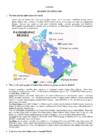
CANADA REVISION QUESTIONS 2010 1. The main physiographic regions of Canada. Canada may be divided into seven physiographic regions: Arctic Lowlands, Cordilleran Region, Interior Plains, Hudson Bay Lowlands, Canadian Shield (Forest Lands), St Lawrence Lowlands and Appalachian Region. Divisions are based on each area's relatively similar physical geography and landforms. Physiographic regionalization is defined here as the process by which regions with relatively homogeneous physical geography are determined 2. Who are the native people of Canada? Into which three groups can they be divided? Canada's constitution specifies three categories of aboriginal peoples: Indian (First Nations), Métis, Inuit. According to Canadian census 2011, 1.4 mln people of Aboriginal origin (4.3%): 852,000 First Nation...
1. The Queen’s official title. Elizabeth the Second, by the Grace of God, of the United Kingdom of Great Britain and Northern Ireland and of Her other Realms and Territories Queen, Head of the Commonwealth, Defender of the Faith. 2. The Queen’s working day. Starts after breakfast. Reads the newspapers which are prepared by the Press Secretary, and a report on the previous day’s proceedings in the Parliament and the letters she receives. Also phone calls. Once a month she attends the Privy Council in order to give Royal Assent to various items of government legislation. Discusses domestic matters with the Master of the Household. Towards the end of the day, there is always another pile of official papers and reports waiting to be read or acted upon. The business on constitutional monarchy never ends. 3. Who is the present heir to the throne? Speak about his education. Wh...
Tallinna Ülikool Loomade areng evolutsioonis Mihkel Tibar B-3 2008 1 Elu teke....................................................................................................................................... 2 Kambriumieelne periood ............................................................................................................3 Vara-Paleosoikum.......................................................................................................................3 Trilobiitide eelne Kambrium - Tommoti lade.....................................................................3 Trilobiitne Kambrium......................................................................................................... 4 Kesk- Paleosoikum..................................................................................................................... 7 ...
Suur Prantsuse Revolutsioon 1789-1799. · Hoolimata oma verisest iseloomust ja osalisest "ebaõnnestumisest" jõudis sellega lõpule uut tüüpi riigi- ja ühiskonna korralduse aluste väljakujunemine. · revolutsiooniline hüpe arengus (ajalooline pöördepunkt). · Euroopa ei olnud pärast revolutsiooni enam see, mis ta oli olnud enne. · Kolmekümneaastane sõda (1618-1648). Westphali rahuleping (1648). Mis iseloomustas keskaegset riiki? · Feodaalne hierarhia · Patrimonaalne võimukasutus riik nagu kuninga "eraomand". Suurfeodaalid püüdsid kuningavõimu igati järele aimata, see viis konfliktideni keskvõimuga. · Kuningal suspensiooniõigus ja erinevatel seisustel privileegid (kuningal võimalus kedagi vabastada seaduste täitmisest või anda eriõigusi, -vabadusi teatud ühiskonnakihtidele). · Erineva õigusega seisused · Erasõjad võimalikud. · Paralleelne vaimulik (kiriku) ja ilmalik võim. · suur ...
Uusaeg I Mõiste Uusaeg areng 1. Mõisted keskaeg ja uusaeg hakkasid arenema hiliskeskaja renessanssringkondades (15 saj. II poolel) 2.Cristoph Keller: MaailmaAjalugu (1675-96) I Antiik (Vanaaeg) II Keskaeg III Uusaeg 3. Läänemaailma traditsiooniline tõlgendus: Uusaeg algab aasta 1500 paiku (1450-1550) - Renessanss - Konstantinoopoli langemine (1453) - Maadeavastusretked (1492,1498) - Reformatsioon (1517-...) - Itaalias 15.saj. II poolel - Põhjamaades 1520-1540 4. Nõukogude liidu marksistlik tõlgendus: Uusaja algus inglise nn kodanlik revolutsioon (1640-1689) 5. Tänapäeva tõlgendus: Uusajani viinud üldine areng algas juba südakeskajal ja ülemineku aeg kestis rohkem kui kakssada aastat kuni 17.saj. alguseni. Varauusaeg 1450 -... Uusaeg ja uusim aeg ning lähiajalugu Uusim aeg algab Prantsuse revolutsioonist (1789): - Seisusliku ühiskonna lagunemine - Demokraatia (Ühisk. õigused , pol. õigus...
SISUKORD ENERGY STORY................................................................................................................4 USES OF ENERGY............................................................................................................. 4 2.1 Uses of energy in homes...............................................................................................5 2.2 Types of energy used in homes.................................................................................... 6 2.3 Energy use in different types of homes........................................................................ 6 2.4 Commercial Energy Use...............................................................................................9 2.5 Industrial and Manufacturing Energy Use..................................................................11 2.6 Transportation Energy Use.................................................
8 6 5 1 2 3 4 5 6 1 2 3 4 5 1 2 3 4 5 6 7 8 1 2 3 4 5 6 7 8 9 1 2 3 4 5 6 7 1 2 3 4 5 6 7 8 9 10 11 12 13 1 2 3 4 5 1 2 3 4 5 4. Kodutöö Ülesande variantide saamiseks sisestage oma õpingukoodi number lahtrisse, mille nimi Exceli valemeid, töövahendeid ja Visual Basic' protseduure kasutades lahendage allolevad ülesand Kasutage Exceli valemites nimesid, kui see on mõistlik. Määrake väärtustele sobivad vormingud. VBA programmides kasutage lahtritele ja lahtriplokkidele viitamisel kindlasti isemääratud nimesid, Valemid töölehel peavad olema kopeeritavad ühe veeru/rea või terve tabeli jaoks. Vajadusel lisage abilahtreid/abiveerge. Lahendada tuleb ainult enda variandi ülesanded, teiste variantide lahendusi ei tohi esitatavas failis Lahendustega fail laadige üles Moodle kursusel. Töö esitamise tähtaeg on 6. detsember kell 2 Töölehel Coronavirus on andmed koroonaviirusesse nakatunute kohta erinevates riik...
Malestrom Major Rivers N am e Continent Out fl o w T o tal Lengt h (mi.) Nile Africa Mediterran ean Sea 4,1 60 Am azo n South Am erica Atlantic Oce an 4,000 Ch ang (Yangtze) Asia East China Sea 3,964 M ississippi-M iss o u ri N o rt h Am eri ca Gul f of Mexico 3,710 Major Deserts Name ...
Some of the things you will learn in THE CODEBREAKERS • How secret Japanese messages were decoded in Washington hours before Pearl Harbor. • How German codebreakers helped usher in the Russian Revolution. • How John F. Kennedy escaped capture in the Pacific because the Japanese failed to solve a simple cipher. • How codebreaking determined a presidential election, convicted an underworld syndicate head, won the battle of Midway, led to cruel Allied defeats in North Africa, and broke up a vast Nazi spy ring. • How one American became the world's most famous codebreaker, and another became the world's greatest. • How codes and codebreakers operate today within the secret agencies of the U.S. and Russia. • And incredibly much more. "For many evenings of gripping reading, no better choice can be made than this book." —Christian Science Monitor THE ...
AMBER AND RUSSET - LATE COLOUR CHANGE GENES Copyright 2014, Sarah Hartwell The ancestors of the domestic cat were nondescript black/brown striped tabbies. Over the centuries, mutation produced a wide array of colours based on 2 different pigments. Eumelanin gives the blacks, browns and blues while phaeomelanin gives the reds, fawns and creams. A few other genes give further variations on those colours such silvers, colourpoints and solids/selfs. Mutations continue to occur and unexpected colours also turn up due to inbreeding where recessive genes, hidden for generations, start showing up. AMBER AND LIGHT AMBER During the 1990s, some purebred Norwegian Forest Cats in Sweden produced chocolate/lilac and cinnamon/fawn offspring. However, those colours are not found in the purebred Norwegian Forest Cat gene pool. Had the gene pool become polluted by someone, perhaps generations ago, breeding their Norwegian Forest Cat to another breed? ...
Handbook of Meat Processing Handbook of Meat Processing Fidel Toldrá EDITOR A John Wiley & Sons, Inc., Publication Edition first published 2010 © 2010 Blackwell Publishing Blackwell Publishing was acquired by John Wiley & Sons in February 2007. Blackwell’s publishing program has been merged with Wiley’s global Scientific, Technical, and Medical business to form Wiley-Blackwell. Editorial Office 2121 State Avenue, Ames, Iowa 50014-8300, USA For details of our global editorial offices, for customer services, and for information about how to apply for permission to reuse the copyright material in this book, please see our website at www.wiley.com/ wiley-blackwell. Authorization to photocopy items for internal or personal use, or the internal or personal use of specific clients, is granted by Blackwell Publishing, provided that the base fee is paid directly to the Copyright Clearance Cent...
 annaabi.ee