Leidsid 33 sarnast õppematerjali, mis on seotud failiga "Neurobioloogias sönade seletus, ingl keelne". Need materjalid aitavad sul teemat sügavamalt mõista.
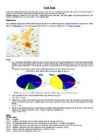
neuron, brain, neurotransmitter, synaptic, potential, part, axon, formation, control, structure, body, action, cortex, spinal, pons, activity, term, memory, release, blood, cord, hormones, left, function, protein, process, terminal, between, rate, located, important, include, role, change, glia, within, released, gland, other, speech, nerve, suchPsychology Gleitman Blood flow in the brain during different activities: the rate of blood flow is measured by special radiation counters that are placed at various points of the skull and that monitor radiation from mildly radioactive gas injected into the bloodstream. Blood flow pattern depends on what the patient does ( different pattern is found when person is reading aloud, yet another when he watches a moving light and so on).
switched on; 8 AVP; e.g. production of lactose permease / production of beta- galactosidase; max 5 [5] 4. a change in the genetic material; unpredictable / AW; extra detail; e.g. addition / substitution / deletion / frame shift / small part of chromosome / may code for different protein / may code for no protein [2] 5. 1 mark max for general effect of mutations: mutation may give different, amino acid / primary structure; A ref stop codon some mutations alter, molecular shape / tertiary structure / binding; max 3 for explaining data in Table: -
3) There are biological correlates of behavior. Cognitions, emotions and behaviors are products of the anatomy and physiology of our nervous and endocrine system. Explain how principles of the biological level of analysis may be demonstrated in research. 1) Correlational studies: Study by Buss, who hypothesized that across cultures, men will prefer to marry younger women because of greater reproductive capacity and women will place greater value on a potential mate's earning potential to provide survival advantages. This evolutionary hypothesis was tested in 37 cultures by sending out questioners. 2) Twin studies (type of correlational studies) compare trait similarities in identical and fraternal twins (Minnesota twin study by Tellegen, Buchard). 3) Experiment: Split-brain experiments by Gazzaniga & Sperry, brain plasticity experiments by Rosenzweig and Bennett. Neurotransmission experiment by Martinez and Kesner.
14 A normal dose of caffeine is generally considered to be 100 mg, which is roughly the amount 15 found in a cup of coffee. However, more than half of all American adults consume more than 300 16 mg of caffeine every day, which makes it America's most popular drug. Caffeine is generally 17 consumed in coffee, cola, chocolate, and tea, although it is also available over-the-counter as a 18 stimulant. 19 Caffeine is believed to work by blocking adenosine receptors in the brain and other organs. This 20 reduces the ability of adenosine to bind to the receptors, which would slow down cellular 21 activity. The stimulated nerve cells release the hormone epinephrine (adrenaline), which 22 increases heart rate, blood pressure, and blood flow to muscles, decreases blood flow to the skin 23 and organs, and causes the liver to release glucose. Caffeine also increases levels of the 24 neurotransmitter dopamine.
can sell them, and people are allowed to buy them. But it's not legal, or safe, for people to use these medicines any way they want. Cigarettes and Alcohol Cigarettes and alcohol are two other kinds of legal drugs. (In Estonia, adults 18 can buy cigarettes and alcohol.) But smoking and excessive drinking are not healthy for adults and off limits for kids. Nicotine is the drug in tobacco leaves. Whether someone smokes, chews, or sniffs tobacco, he or she is delivering nicotine to the brain. Each cigarette contains about 10 milligrams of nicotine. Nicotine is what keeps people smoking despite its harmful effects. Because the smoker inhales only some of the smoke from a cigarette and not all of each puff is absorbed in the lungs, a smoker gets about 1 to 2 milligrams of the drug from each cigarette. A drop of pure nicotine would kill a person-in fact, nicotine can be used as a pesticide on crops. You might hear cigarettes referred to as smokes, cigs, or butts
Smoking is a very addictive and risky hobby. So why do people start doing it in the first place? Firstly sometimes people try their first cigarette, they like it and so they start doing it more regularly. Secondly some people start smoking because there's a rumour saying that it's slimming. And another reason may be that it may relieve stress. After three or four cigarettes you get addicted to it because of nicotine. It is a drug that stimulates the brain. When the level of nicotine falls in your blood and you're a regular smoker, you usually develop withdrawal symptoms, such as craving, anxiety, restlessness, headaches, irritability, hunger, difficulty with concentration, or just feeling awful. These symptoms are relieved by the next cigarette. Most smokers need to smoke regularly to feel normal and to prevent nicotine withdrawal symptoms. So once you start smoking it is very hard to quit. But why is smoking so harmful?
A variety of abnormalities, including Neural tube defects, craniofacial abnormalities, and limb defects, have been reported after treatment of pregnant mammals with RA. The recent discovery that RA interacts with nuclear Receptors related to the steroid and thyroid hormone receptors, a family of proteins that function as ligand-dependent transcription factors, suggests that the morphogenetic functions of RA may result at least in part, from activation of developmentally regulated genes by RA receptor (RAR) complexes. An additional feature of retinoid physiology is the existence of a distinct class of molecules, the cellular retinol- and RA-binding proteins (CRBPs and CRABPs), which may modulate the accessibility of RA to the receptors. Representatives of each binding protein also show spatially restricted patterns of expression in the embryo. The
ER can be viewed as trait-like, that is individual tendencies and differences towards certain ER strategies. Individuals are regulating their emotions in communication in order to socially benefit and achieve the ambitions, as well as maintaining a balanced mental state. Also emotions are regulated in order to deal with extraordinary, special or unexpected situations. Although, the regulation of emotions has always been a crucial part of human existence, however, research into emotion regulation (ER) is relatively recent. Emotion regulation in relation.. 7 Nonetheless the research interest in processes involved in ER has grown rapidly. Increasingly attention has been directed to unintentional regulation of emotions and the ways of measuring the biological responses in ER (Wirtz et al., 2006, Rimmele et al, 2007)
ation. This work is sold with the understanding that the publisher is not engaged in rendering legal, accounting, or other professional services. If professional assistance is required, the services of a com- petent professional person should be sought. Neither the publisher nor the author shall be liable for damages arising herefrom. The fact that an organization or Website is referred to in this work as a cita- tion and/or a potential source of further information does not mean that the author or the publisher endorses the information the organization or Website may provide or recommendations it may make. Further, readers should be aware that Internet Websites listed in this work may have changed or disap- peared between when this work was written and when it is read. 1 2010 Contents Preface ix
Thematic Apperception Test Cattell Rogers Rotter Big Five Mischel · Objective tests (limited success) Behavioural (amount of laughter, rapid/inaccurate responses) Physiological (heart rate, skin conductance, brain imaging) Personality traits Developing a satisfactory personality trait theory · A characteristic or distinguishing feature · Consistent ways of thinking, behaving, or feeling · Trait `theories' are classifications of people's characteristics · Can't be accepted at face value
While the distorted shapes of the peaks with "front" and "tails" in the other chromatographic process can be eliminated by adoption of appropriate measures, such peaks shapes in CE should be considered as normal. They are caused by the strong differences in the conductivity of the sample and buffer. If the sample has a higher mobility than the separation buffer, the front part of the zone becomes diffusive, and the tail of the band becomes sharper ("front" peak). On the contrary, at a lower mobility of the sample, than a buffer received acute frontal zone and diffusive end zone ("tail" of the peak). Symmetrical peaks are observed only if both the conduction are identical.
He suggests that to avoid sensory overload, we need to select from the information surrounding us, therefore, we often supplement perception with unconscious inferences. Thus he argues that perception begins with an incomplete retinal image that is two- dimensional, flat and size depends on distance. He says that perception is a constructive process in which the two-dimensional retinal image is elaborated to a three- dimensional picture in our brain, based on personal knowledge and experience. In other words the processes of perception is essentially affected by our expectations and probability in perceiving the world. Therefore conceptually driven perceptual processing is called a top- down process due to the indirect process that involves making assumptions about the world. 1 05144023
0.07-0.09 BAC: Slight impairment of balance, speech, vision, reaction time, and hearing. Judgement and self-control are reduced, and caution, reason and memory are impaired. 0.10-1.125 BAC: Signficant impairment of moter coordination and loss of good judgement. Speech may be slurred; balance, vision,reaction time and hearing will be impaired. (It is illegal to operate a motor vehicle at this level of intoxication.) 0.13-0.15 BAC: Gross motor impairment and lack of physical control. BLurred vision and major loss of balance. Euphoria is reduced and dysphoria beginning to appear. 0.16-0.20 BAC: Dysphoria (anxiety,restlessness) predominates, nausea may appear. The drinker has the appearance of a "sloppy drunk." 0.25 BAC: Needs assistance in walking; total mental confusion. Dysphoia with nausea and some vomiting. 0.30 BAC: Loss of consciousness. 0.40 BAC and up: Onset of coma,possible death due to respiratory arrest. WHAT IS CONSIDERED A DRINK:
It has a pungent, distinct odor and may cause a burning sensation to the eyes, nose, and lungs at high concentrations. Formaldehyde is also known as methanal, methylene oxide, oxymethylene, methylaldehyde, and oxomethane. Formaldehyde can react with many other chemicals, and it will break down into methanol (wood alcohol) and carbon monoxide at very high temperatures. Formaldehyde is naturally produced in very small amounts in our bodies as a part of our normal, everyday metabolism and causes us no harm. It can also be found in the air that we breathe at home and at work, in the food we eat, and in some products that we put on our skin. A major source of formaldehyde that we breathe every day is found in smog in the lower atmosphere. Automobile exhaust from cars without catalytic converters or those using oxygenated gasoline also contain formaldehyde. At home, formaldehyde is produced by cigarettes and other tobacco products, gas
nutrients, pH, and many other factors which may vary between locations but also within a single plot and over very small distances (OECD, 2007). Nevertheless of the quantity of microflora, biomass of all microorganisms living in soil play an important role in the functioning of entire soil ecosystems because their enormous biochemical activity (Barabasz et al. 2002). Soil microflora cycles carbon, nitrogen, phosphorus, and sulfur, plays a role in soil structure formation, decomposition of organic matter, toxin removal, promoting plant growth, and in changes in vegetation (Canbolat at al. 2005 and Martin et al. 2012). Therefore, soil microflora plays a major role in preservation and the balance of life. Because of active role of soil micro- population, the diminution in microbial activity is always alarming (Barabasz et al. 2002). Factors influencing soil microflora Soil microorganisms depend on soil for their nutrition, growth and activity
Short and long term effects of alcohol Good morning. My name is NIMI. I'm going to talk about short and long term effects of alcohol consumption. Firstly I'll tell you about short term effects and then move on to long term effects. My presentation will take about 5 minutes. If you have any questions, you are welcome to ask them afterwards. Firstly I would focus on the short term effects of alcohol consumption. The amount and circumstances of alcohol consumption play a large part in determining the extent of intoxication; for instance, consuming alcohol after a heavy meal causes alcohol to absorb more slowly. Hydration also plays a role as for determining the extent of hangovers. Initially, alcohol produces feelings of relaxation and cheerfulness, but as a result of further consumption blurred vision and coordination problems generally occure. As far as cell membranes are concerned they are highly permeable to alcohol, once alcohol is in the
available. There is no specific class of technology that is high tech--the definition shifts over time--so products hyped as high tech in the 1960s would now be considered, if not exactly low tech, then at least somewhat obsolete. This fuzzy definition has led to marketing departments describing nearly all new products as high tech. Economy Because the high-tech sector of the economy develops or uses the most advanced technology known, it is often seen as having the most potential for future growth. This perception has led to high investment in high-tech sectors of the economy. High-tech startup enterprises receive a large portion of venture capital. However, if, as has happened in the past, investment exceeds actual potential, then investors can lose all or most of their investment. High tech is often viewed as high risk, but offering the opportunity for high profits. Like Big Science, high technology is an international phenomenon, spanning continents,
nytimes.com/2009/09/27/health/re search/27eye.html? pagewanted=1&_r=1&ref=technology A Burst of Technology, Helping the Blind to See Blindness first began creeping up on Barbara Campbell when she was a teenager, and by her late 30s, her eye disease had stolen what was left of her sight. Reliant on a talking computer for reading and a cane for navigating New York City, where she lives and works, Ms. Campbell, now 56, would have been thrilled to see something. Anything. Now, as part of a striking experiment, she can. So far, she can detect burners on her stove when making a grilled cheese, her mirror frame, and whether her computer monitor is on. She is beginning an intensive three-year research project involving electrodes surgically implanted in her eye, a camera on the bridge of her nose and a video processor strapped to her waist. The project, involving patients in the United States, Mexico and Europe, is part of a burst of
ELECTRICITY Electricity is the flow of electrical power or charge. It is a secondary energy source which means that we get it from the conversion of other sources of energy, like coal, natural gas, oil, nuclear power and other natural sources, which are called primary sources. The energy sources we use to make electricity can be renewable or non-renewable, but electricity itself is neither renewable or non-renewable. 20 Electricity is a basic part of nature and it is one of our most widely used forms of energy. Many cities and towns were built alongside waterfalls (a primary source of mechanical energy) that turned water wheels to perform work. Before electricity generation began over 100 years ago, houses were lit with kerosene lamps, food was cooled in iceboxes, and rooms were warmed by wood-burning or coal-burning stoves. Beginning with Benjamin Franklin's experiment with a kite one stormy night in Philadelphia, the principles of
I've already used his advice to go spear shing on remote islands and ski the best hidden slopes of Argentina. Simply put, do what he says and you can live like a millionaire." --Albert Pope, derivatives specialist at UBS World Headquarters "Reading this book is like putting a few zeros on your income. Tim brings lifestyle to a new level--listen to him!" --Michael D. Kerlin, McKinsey & Company consultant to Bush-Clinton Katrina Fund and a J. William Fulbright Scholar "Part scientist and part adventure hunter, Tim Ferriss has created a road map for an entirely new world. I devoured this book in one sitting --I have seen nothing like it." --Charles L. Brock, chairman and CEO of Brock Capital Group; former CFO, COO, and general counsel of Scholastic, Inc.; and former president of the Harvard Law School Association "Outsourcing is no longer just for Fortune 500 companies. Small and mid-sized rms, as well as
5. Pictures 7 Used sources 10 1. Addictions Addiction has been defined as physical and psychological dependence on psychoactive substances (for example alcohol, tobacco, heroin, caffeine and other drugs) which cross the blood-brain barrier once ingested, temporarily altering the chemical milieu of the brain. Drug addiction Drug addiction can simply be defined as a "chronic relapsing disorder characterized by persistent drug-seeking and drug-taking behaviours". Drug addiction is chronic, with no known cure. Controlled may be by means such as voluntary 12 step programs, group therapy, one on one therapy, and mandatory methadone maintenance. Treatment programs can be successful in treating the addiction. Without treatment, active drug addicts often end up dead, incarcerated, or in institutions.
pen. We instead have insatiable brains, with mental appetites. So our goal is to balance the brainwork with hearts and smiles. "Facts served with sauce." Where does common sense fit on? Is it teachable? To a degree, what we mean by common sense is simply learned experience. Something more exists, though. Those who we praise for common sense may be quick-witted, steady-nerved, and efficient at practical decision-making. It is likely some of those traits depend on genetic brain makeup. In any case, for purposes of an essay on education, I propose to say no more about common sense. Similarly, where do concentration, reflection, analysis and criticism enter? Are they best taught individually, or learned wholly as byproducts of studying mathematics, geography, history, etc? It is obvious that such skills are more valuable than any single subject which might be used as the vehicle to develop them. Inequality
D i ox i n s a n d f u r a n s i n t h e atmosphere. Their impact on humans and nature. Emission sources What are dioxines and furans? The term Dioxin is commonly used to refer to a family of toxic chemicals that all share a similar chemical structure and a common mechanism of toxic action. Most dioxins and furans are not manmade or produced intentionally, but are created when other chemicals or products are made. This family includes: seven of the polychlorinated dibenzo dioxins (PCDDs), ten of the polychlorinated dibenzo furans (PCDFs) and twelve of the polychlorinated biphenyls (PCBs). · PCDD · 2,3,7,8TCDD · PCDF · PCB · PCDDs and PCDFs are not commercial chemical products
They could set more than 6,000 letters per hour and an entire line of type at once. The centuries after the 15th century were thus spent on improving both the printing press and the conditions for freedom of the press through the gradual relaxation of restrictive censorship laws. See also intellectual property, public domain, copyright. In mid-20th century, European book production had risen to over 200,000 titles per year. Book structure Scheme of common book design 1. Belly band 2. Flap 3. Endpaper 4. Book cover 5. Top edge 6. Fore edge 7. Tail edge 8. Right page, recto 9. Left page, verso 10. Gutter The common structural parts of a book include: · Front cover: hardbound or softcover (paperback); the spine is the binding that joins the front and rear covers where the pages hinge. · Front endpaper · Flyleaf: The blank leaf or leaves following the front free endpaper.
based, controls = *.ocx files. --- .NET:Process: source code->compiler->metadata->CLR->result. CLR: .Net execution environment-execution management; provide services. Managed Code provides: cross-laguage integration; auto memory services; self-described objects; compile once- run everywhere. Metadata: describe components, objects and execution conditions; provide garbage collection. MSIL=Microsoft Intermediate language(between compiler and JIT) JIT=Just in Time compiling. Part of data compile only in run-time when it is needed.Loader creates stub for every method.After,querys go to mashinecode.Convert verification-safe code. Assembly is a partially compiled code library for use in deployment, versioning and security. Two types, process assemblies (EXE) and library assemblies (DLL). Process assembly use classes from library assemblies. Summary:assembly=component;MS computing distributes among servers and clients via .Net assemblies; .NET
” Oslo Manual 2005 3. Introduction of novel design solutions and sales methods (marketing innovation). “Is the implementation of an new marketing method involving significant changes in product design or packaging, product placement, product promotion or pricing” Oslo Manual 2005 A distinctive look for a product and appeal a new market segment; Celebrity endorsements; personalized IS; New brand, etc. P.S. Seasonal, regular and routine changes. 4. Changes in the structure of the enterprise or in the ways of organizing work (organizational innovation) “is the implementation of a new organisational method in the firm’s business practices, workplace organization or external relations”. Oslo Manual 2005 P.S. Mergers and acquisitions! National innovation system (NIS) The national innovation systems approach stresses that the flows of technology and information among people, enterprises and institutions are key to the innovative process
different oil fields, ranging from as much as 97 percent by weight in the lighter oils to as little as 50 percent in the heavier oils and bitumens. The hydrocarbons in crude oil are mostly alkanes, cycloalkanes and various aromatic hydrocarbons while the other organic compounds contain nitrogen, oxygen and sulfur, and trace amounts of metals such as iron, nickel, copper and vanadium. The exact molecular composition varies widely from formation to formation but the proportion of chemical elements vary over fairly narrow limits as follows: Composition by weight Element Percent range Carbon 83 to 87% Hydrogen 10 to 14% Nitrogen 0.1 to 2% Oxygen 0.05 to 1.5% Sulfur 0.05 to 6.0% Metals < 0.1% Four different types of hydrocarbon molecules appear in crude oil. The relative percentage of each varies from oil to oil, determining the properties of each oil. Composition by weight
Descriptive law – describes the way people or natural phenomena behave Break the law – do something illegal Penalty – punishment Government – system by which a state or community is controlled Law – the system of rules System of courts – all judicial institutions Enforce – to make people obey the law Authority – a group of people with official responsibility for a particular area of activity /the moral or legal right or ability to control Prescribe – to tell someone what they must have or do, or to make a rule of something Impose The word law can have several meanings, it can be divided into prescriptive and descriptive law. Descriptive law – describes the way people or natural phenomena behave, e. g. law of gravity Prescriptive law – prescribe how people ought to behave e.g. speed limits In all societies relations between people are regulated by prescriptive law; customs (informal
Other affected areas include the southeastern coast of China and Taiwan Causes · It is caused when sulfur dioxide and nitrogen oxides are released into the air. In the atmosphere they react with water, oxygen and other chemicals to form more acidic pollutants, known as acid rain. Sulfur dioxide and nitrogen oxides dissolve very easily in water and can be carried very far by wind. As a result, the two compounds travel long distances where they become part of the rain, sleet, snow or fog. SO2 and NOx come mainly from power stations and factories burning fossil fuels, or from motor vehicles. · Carbon dioxide in the air can dissolve in rain water to form carbonic acid, H 2CO3 CO2 + H2O H2CO3 · During the last century the rain water in some parts of the world has become far more acidic. This acid rain has been caused by the
ELEKTROENERGEETIKA INSTITUUT Referaat Taastvad Energiaallikad Esitamise tähtaeg 14.04.2009 Õppejõud: Hannes Agabus Tudeng: Sergei Belosapko Nikita Naumov Tallinn 2009 Contents: 1. Renewable energy 1.1. Costs................................................................................................................... 2 1.2. Potential future utilization..............................................................................4 1.3. Why Don't We Use More Renewable Energy? ...........................................5 2. Energy Types 2.1. Wind Energy.......................................................................................................6 2.1.1. Annual Generation........................................................................................7 2.1.2. Growth and cost trends................................
implementing key gas sector reforms, namely gas tariff increases (obviously politically very unpopular measure). Agriculture fell to 9.3% of the total GDP in 2011 compared with 14% in 1999. Industry, including mining, manufacturing and construction, continued to account for 34.7% in this period. Meanwhile, trade and other services grew from 51 to 56.1 percent. 15 1.1.4. Foreign Direct Investments Despite having huge potential, Ukrainian economy is critically lacking in foreign investments. Percentage of FDI to GDP was declining very year since 2007 and, according to BNP Paribas in Ukraine forecast, projected to continue declining during 2013-2104. According to State Statistics Service of Ukraine, foreign direct investment (FDI) in a form of equity capital slowed substantially in 2012. FDI for the period of January September 2012 (3 quarters) amounted to USD 2.6 billion, which was 29.4% down year of a year.
Solubility in ethanol: perfectly Viscosity: 3.71 cP (3.71 mPa·s at 25 °C) pH: >7 log Pow: 0.90/0.98 Koc: 25,5 3. Kinetics and metabolism The substance can be absorbed into the body by inhalation, through the skin and by ingestion, also as a vapour. The mean lethal dose of aniline may be between 15 and 30 grams. In case of short-term exposure the substance is irritating to the eyes and the skin. The substance may cause effects on the blood, resulting in the formation of methaemoglobin. Exposure at high levels may result in death. Repeated or prolonged contact may cause skin sensitization. The substance may have effects on the blood, resulting in formation of methaemoglobin. Tends to accumulate in the body, especially in bladder. Often leads to bladder cancer. Aniline was tested on animals, but in mice was observed no increase in tumour incidence, in rats, it produced fibrosarcomas, sarcomas and haemangiosarcomas of the spleen and peritoneal cavity. 4
pressure group (surve gurpp) - an interest group that attempts to influence legislation, for example through propaganda dangerous driving (ohtlik sõitmine) - a way of driving that threats other's safety or life international law (rahvusvaheline õigus) - body of rules that nations recognize as binding in their coundct towards one another operating law (õigusega töötamine) - ensuring obidieance to regulation; to have the rights to impliment justice on others political structure (poliitiline struktuur) - institutions or groups and their relations to each other within political systems as they constitute the political landscape of the political entity social values (sotsiaalsed väärtused) - larger concept which includes the subjective aspects of the citizens' well-being, such as their ability to participate in making decisions that affect them civil war (kodusõda) - (armed) conflict between politicalfactions or religions within same county
 annaabi.ee