Leidsid 33 sarnast õppematerjali, mis on seotud failiga "Martin Luther King". Need materjalid aitavad sul teemat sügavamalt mõista.
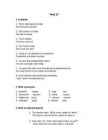
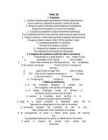
king, civil, rights, christ, tell, became, movement, christian, march, known, violent, biography, first, years, role, career, child, however, later, bible, during, church, montgomery, views, based, jesus, beliefs, them, almost, understand, success, went, struggle, workers, speech, black, introduction, hello, valeria, studying, today, favorite, interesting" The secretary asks me what my address is. 5 My little sistar asks, "Where is my teddy bear?" My little sister asks where her teddy bear is. 6 The man asks, "What time is the next train for Leeds?" The man asks what time the next train for leeds is. 7 Liz asks me, "Who is your favourite writer?" Liz asks me who my favourite writer is. 4 Read the text about Martin Luther King. Fill in the gaps with the missing parts of the sentences. A learned about the life and work. E received threats to his life B made his famous speech F helped lead a well-known civil rights march C stepped out of his motel room G unedrstood the importance of religion D organised many peaceful protests H had to experience racial problems
The most prominent Russian groups that immigrated in this period were the groups seeking freedom from religious prosecution. Nearly half of the immigrants were Jews. Religion of the Russian immigrants: Russian Orthodox, Jews, Nominal Jews (non-religious people of Jewish descent). Eastern European Jews dominated New York's garment industry!!! Immigration in 19201939: A large wave of Russians immigrated in the short time period of 19171922, in the wake of October Revolution and Russian Civil War as refugees from the Bolshevik regime due to the hatred for the new Bolshevik regime in their homeland. Great emphasis was put on education. Most notable immigrants from the cultural sphere were Vladimir Nabokov, Igor Stravinsky, and Isaac Asimov. Immigration in 19451955: During the Soviet era, emigration was prohibited, and limited to very few defectors and dissidents who immigrated to the United States of America and other Western Bloc countries for political reasons
herself to avoid capture Hadrian´s wall A defensive barrier builtin 122 AD by Roman emperor Hadrian to guard the northern part of Britain against barbarian invaders Most imposing frontier of Roman Empire, controlling peoples mobements Building took several years, builders kept changing minds about the size 119 km lenght, 5m high, 3m deep The Picts, Caledonia The painted ones, northern tribes, part of the Scots Inhabited an area known as eastern and th western Scotland, until 10 c Mysteriously disappeared Constantly fought with Romans Teir country- Caledonia- Pictland The Scots, Hibernia Raiders, Celts living in Ireland/Hibernia Migrated to Scotland Raided Roman Britain After Kenneth McAlpin united Scotland all inhabitants became Scots The Venerable Bede A monk in the Northumbrian monastery of Jarrow
Written task 2 - Outline Prescribed question: How does the text conform to, or deviate from, the conventions of a particular genre and for what purpose? Title of the text for analysis: I have a dream by Martin Luther King Jr, 1963. The part of the course to which the task refers: Part 2: Language and presentation of speeches and campaigns. My critical response will: • Analyse the rhetorical and literary devices used in Martin Luther King’s speech ‘’I have a dream’’ and state the reasons for why he had made use of them. • Examine the impact these devices have on the reader/listener. • State whether the speech conforms to, or deviates from, the conventions of a one.
bands(chief. Travelled together) and tribes land was owned by the tribe that occupied it. 200 different tribes Apache- "enemy"- hunted buffalos, oil and natural gas from their land Cherokee- largest tribe Cheyenne- from Minnesota and S & N Dakota. High system of laws Northwest Ordinance of 1787 Signed in 1787 by Thomas Jefferson. The creation of the Northwest Territory as the first organized territory Ohio River was settled, 5 new states Advancement of education, maintenance of civil liberties, exclusion of slavery Promised not to invade or disturb Indians Northwest Indian War-> to stop white expropriation (sundkoormis) · Indian Removal Act of 1830 Destructive to tribes. Many died when travelled to the other side of Missisippi. Signed on May 28 by Andrew Jackson "Trade" land with the tribes Resolve the Georgia crisis (dispute with Cherokee) Move of over 70,000 natives (vabatahtlik-sunniviisiline) Reservations (kaitsealad)1851- the Indian Appropriations Act
huge legacy: many types of animals and plants were brought to Britain in Roman times. Roman introduced theire measurements, Christianity, reading and writing. Also, many words in English and Welsh have been borrowed from the Latin language. An important legacy of the Romans was its roads, agriculture and cities. In the Roman times the land was dominated by rules and reguations. *Christianity in Roman Britain The Roman authorities were suspicious of Christianity because followers of Jesus Christ refused to take an oath of loyalty to the Roman emperor. For this reason the early Christians were regarded as dangerous enemies of the Empire. That ceased when the emperor Constantine converted to Christianity. Christianity became the official state religion of the Roman Empire in the early fourth century A.D. As the century progressed Christianity spread very quickly. Despite official recognition there was no mass
Medieval England 1066-1485 Eva Asper Anna Pohlak 11.c The Norman Dynasty The Norman Conquest In the 11th century, Normans conquered England - The Battle of Hastings 14.10.1066 The Anglo-Saxon forces had more soldiers but the Normans had better military tactics and won in the end thanks to a clever strategy William I, also known as William the Conqueror, replaced King Harold on the throne The invasion was completed by 1071 - The Norman invasion is depicted on the Bayeux Tapestry a long embroidered cloth The death of King Harold embroidered on the Bayeux Tapestry The Norman England William I ensured his power by dividing the land into parts and making 1/7 of it a royal domain He made his nobles swear an oath of allegiance and become his vassals Died in 1087 while fighting in France, was
They most probably came from Eastern Europe and belonged to the Celtic race and also spoke Celtic. They were primitive hunters- gatherers, farmers. Some Celtic words are still used in modern English, however they are used mostly in place names. For example: · avon river · cumb valley · ford shallow place in the river Ancient Britons had their own religion and priests or druids and temples. In the year 55 BC Britain became a Roman province. Romans were highly developed and had their own language latin, which has also greatly influenced English. The military occupation of the Isles ended in 410 AD. The Romans eventually brought Christianity to Britain. Hadrian's wall on the border of Scotland and England. It began construction in 122 AD. An Anglo-Saxon attack on Rome forced the Romans to leave The British Isles. They were
The Renaissance In the history the Middle Ages were followed by the Renassance period. During this period a new class called bourgeoeisie came into being. This is the period when monarchies based on nationality were estabilished. The Renaessance started in Italy In the 14th century. Then it spread all over Europe, reached England in 16th century. The struggle for power culminated in a war called The War of Roses. It was a civil war between two dynasties, families. They had different emblems on one side the Yorks (white rose) other Lancasters (red). They couldn't decide who gets the throne. War ended 1485. A new dynasty came to throne, Tudor, the first king in this dynasty was Henry Vll. When he came to throne a period of stability followed because he built a nation based state. He was good at diplomacy.He could avoid quarrels and wars with neigbouring countries. France, Spain - greatest enemies.So he could save much
figures of African American history during the 1800s, and one of the most influential lecturers and authors in American history. Douglass was a firm believer in the equality of all people, whether black, female, American Indian, or recent immigrant. He spent his entire life advocating the brotherhood of all humankind. One of his favorite quotations was: "I would unite with anybody to do right and with nobody to do wrong." Life as a slave Frederick Augustus Washington Bailey, who later became known as Frederick Douglass, was born a slave in Talbot County, Maryland near Hillsboro. He was separated from his mother, Harriet Bailey, when he was still an infant. She died when Douglass was about 7. The identity of Douglass' father is obscure; Douglass originally stated that his father was a white man, perhaps his master, Captain Aaron Anthony, but later said he knew nothing of his father's identity. When Anthony died, Douglass was given to Mrs. Lucretia Auld, wife of Captain Thomas Auld. Mrs
religion. American Enlightenment a gradual but powerful awakening that established the ideals of democracy, liberty, and religious tolerance in the people of America. If there were just one development that directly caused the American Revolution and uplifted the intellectual culture of the continent while it was only a British colony, it would be the American Enlightenment. Broadly, the Enlightenment was an intellectual movement that changed the fundamental perspective of the masses, urging them to foster skepticism and apply scientific principles in matters of religion and morality. Its chief values were: Liberty, Democracy, Republicanism, Religious Tolerance. The movement gained momentum with the publication of landmark texts like Thomas Paine's The Age of Reason, and the Jefferson Bible, but the most influential thinker was undoubtedly John Locke, whose ideas spread to the colonies and across Europe
Romans brought a lot with them. Their brought paved roads, the sites of important cities, the seeds of Christianity, the Roman law, Roman baths, language and advanced civilization. They also built Hadrian's Wall in 122 A.D. Romans occupied Britain for four centuries. The Roman way of life all vanished after the invasions from Northern Europe by the Angles, Saxons and Jutes from the 5th century onwards. They ruined Londinium, but they were easily turned into Christianity and religion became more and more important. The Vikings, who came in the 9th century, first raided England to plunder it, but then they decided to stay. In the 10th century England fell under Danish Rule, with King Canute finally managing to unite the Anglo-Saxons and Danes at the beginning of 11th century. Medieval England After defeating the Anglo-Saxon King Harold at the Battle of Hastings in 1066, William of Normandy (who became William I, also called William the Conqueror) introduced
Years 1154-1485 Henry I was the first unquestioned ruler. One of the most important kings in the Middle Ages. He had lands in Britain & France. Then the government was the monarch, a person, not a place. He had more land than any pervious king. After his marriage to Eleanor of Aquitaine, he also ruled the lands south of Anjou. His empire stretched from the Scottish border to the Pyrenees. England provided most of its wealth, but the heart was Anjou. Henry II began to regain royal control. During the war some barons had become very powerful. He pulled down some of their castles. He tried to restore law & order. He wanted the same kind of justice to be used everywhere. He appointed his own judges to travel around the country
Midwest have spectacular weather, with hot and humid summers. The rainfall decreases to the west due to rain shadow caused by Sierra Nevada. The southwest part of the Great Plains is the hottest and driest region of the U.S. The Pacific coast is almost rainless in the summer, but having often fog. IN the winter there is frequent drizzle, but the climate is still, warm. The eastern part of the county is moderately rainy and the summers are extremely humid. History The first known inhabitants of modern-day United States territory are believed to have arrived over a period of several thousand years by crossing Beringa into Alaska. Research has revealed much about the early Native American settlers of North America who are also called Indians. Columbus' men were the first documented Old Worlders to land in the territory of what is now the United States. In its beginnings, the United States of America consisted only of the Thirteen Colonies.
9. The Anglo-Saxon Invasion. The Angles, Saxons and Jutes came from present-day Northern-Germany and Denmark in 449. A number of tribes from the European mainland invaded and settled in large numbers; however, they were not always victorious. These Anglo- Saxons soon had the south-east of the country in their control. In the west, their advance was temporarily halted by an army of (Celtic) Britons under the command of the legendary King Arthur. By the 7th century the Anglo-Saxons were ruling most of Britain. 10. Scandinavian raids. In 789 three Viking ships landed on the coast of the kingdom of West Saxon. They were traders and raiders. In the 9th century they conquered and settled the islands around Scotland and some coastal regions of Ireland. Their conquest of England was halted when they were defeated by King Alfred of the Saxon kingdom of Wessex
M Mc`Donalds is good, there is a lot of food. N is for Nigga who pulled the trigger. O is for Osama who wears pyjamas. P is for Pamela who likes camera. Puritans The Puritans were a group of people who grew discontent in the Church of England and worked towards religious, moral and societal reforms. The writings and ideas of John Calvin, a leader in the Reformation, gave rise to Protestantism and were pivotal to the Christian revolt. They contended that The Church of England had become a product of political struggles and man-made doctrines. The Puritans were one branch of dissenters who decided that the Church of England was beyond reform. Escaping persecution from church leadership and the King, they came to America. Of Plymouth Plantation Of Plymouth Plantation is the single most complete authority for the story of the Pilgrims and the early years of the Colony they founded
Romans developed a number of towns and introduced schools, new language Latin large farms, baths. In AD 410 they had to leave. 11. The battle of hastings. Bayeux Tapestry. On I 4 October 1066 an invading army from Normandy defeated the English at the Battle of Hastings. The battle was close and extremely bloody. At the end of it, most of the best warriors in England were dead , including their leader, King Harold. On Christmas day that year the Norman leader, Duke William of Normandy, was crowned king of England. He is known in popular history as 'William the Conqueror'. The date is remembered for being the last time that England was successfully invaded. The Bayeux Tapestry is technically not a tapestry, but a huge band of embroidered linen, which describes the Norman invasion of England and the events that led up to it. The Tapestry contains
Jacob, son of Issac, stole his brother's birthmark. Jacob was a partiarch who brought up his twelve sons to be partiarchs, but they did not take to it. One of Jacob's sons, Joseph, gave refuse to the Israelites. Pharaoh forced the Hebrew slaves to make bread without straw. Moses led them to the Red Sea, where they made unleavened bread, which is bread made without any ingredients. Afterwards, Moses went up on Mount Cyanide to get the ten commandments. David was a Hebrew king skilled at playing the liar. He fougth with the Philatelists, a race of people who lived in Biblical times. Solomon, one of David's sons, had 500 wives and 500 porcupines. Without the Greeks, we wouldn't have history. The Greeks invented three kinds of columns - Corinthian, Doric and Ironic. They also had myths. A myth is a female moth. One myth says that the mother of Achilles dipped him in the River Stynx until he became intolerable. Achilles appears in "The Illiad", by Homer. Homer also
Europe, but the invaders introduced new developments in agriculture, urbanization, industry and architecture, leaving a legacy that is still apparent today. Historical records beyond the initial invasion are sparse, although many Roman historians mention the province in passing. Most of the knowledge of the period stems from archaeological investigations and especially epigraphic evidence. The invasion force in AD 43 was led by Aulus Plautius.It is not known how many Roman legions were sent; only one legion, the II Augusta, commanded by the future emperor Vespasian, is directly attested to have taken part. The IX Hispana,the XIV Gemina (later styled Martia Victrix) and the XX are attested in 60/61 during the Boudican Revolt, and are likely to have been there since the initial invasion. However, the Roman army was flexible, with units being used and moved whenever necessary, so this is not certain. Only the
Marilyn Monroe Marilyn Monroe (born Norma Jeane Mortenson;[1] June 1, 1926 August 5, 1962), was a Golden Globe award winning[2] American actress, singer, model, Hollywood icon,[3] cultural icon, fashion icon,[4] pop icon and sex symbol. She is known for her comedic acting roles and screen presence. Monroe became one of the most popular movie stars of the 1950s and early 1960s. During the later stages of her career, she worked towards serious roles and her fame surpassed that of many entertainers of her time.[5] Her death at thirty six was classified as "probable suicide."[6] Many individuals including Jack Clemmons, the first LAPD Police officer to arrive at the death scene[7] believed that she was murdered.[8] She is the only female on the Forbes top earning dead celebrities list.[9] Contents
Now the Tasmanian tiger, which hunted them, is dead; and thanks to protection from the government and farmers their number has risen. Tasmanian devils are (8) F as they feed on roads. They also die of differend diseases and they young are attacked by adult devils. Always an excellent student, he continued his sutides at Boston University and got a PhD in Philosophy in 1955. In the 50s and 60s he continued his work as one of the leaders of the civil rights movement in the USA. He (4) F and was against violence even when he and his family were atacced because of the work he was doing. On 28 August 1963 King (5) D that brought more that a quarter of a million people to the capital The march ended in front of the Lincoln Memorial and Marthin Luther King (6) B "I have a Dream". In his speech king told about the dream that he had for his and all children.
The early middle ages The Norman Conquest Since William was crowned king, there were many rebellions against the Normans. A small Norman army marched from village to village and destroyed the ones it couldn't control. The Normans took away the Saxon lords' land. Only a few Saxons who supported William could keep their land. Feudalism William gave parts of his conquered land to his captains around the country to avoid rebellions and uprisings. He also kept some land to himself to make sure his was much stronger than his nobles
The Middle Ages The Middle Ages are one of the most turbulent periods in English history. The Middle Ages are so called as the middle period between the decline of the Roman Empire and the Renaissance. The Middle Ages started in 1066. with the Battle of Hastings and the Norman Conquest. William the Conqueror took all the lands from the Saxon English and gave these to French nobles. Normans were known as great builders. This is assured by the fact that many great castles and other buildings, including the Tower of London, were built during the Norman Conquest. In 1086. Domesday Book was compiled. It is a detailed survey of England ordered by William the Conqueror. The reign of King William Rufus who was the son of William started in 1087 and lasted until 1100. Next king was Henry I who was the brother of William Rufus. His reign was from 1100-1135
Columbus discovered America while trying to reach India. He named the native people Indians, because he though he had reached India. He didn't stay either and in the sixteenth century the first Europeans to settle in America were the Spanish, the English and the French. The first village founded by the English settlers was in Virginia in 1607. It was called Jamestown. They didn't have good relations with the Indians and many of them died. But Pocahontas, the daughter of an Indian chief, became their friend and helped them. They started growing tobacco in Virginia, using African slaves in the fields. In 1620 a new group of British settlers reached Plymouth, Massachusetts, with a ship called Mayflower and they were called 'Pilgrim Fathers' due to their strong belief in religion. They left England because they didn't agree with the Church of England. They became farmers and businessmen who thought that all men were equal and they didn't have slaves. Many of the
Believed in the trimph of working man (marx), but at the same the in the necessity of of the survival of the strongest. Was attracted to the Nietzches theory of the superman- the true aristocrats. The rest are the slaves. Morality, conscious, christianity-are the inventions of the slaves. Because this is how slaves tried to control the masters. 27.02.13 1920-jazz, post war euphoria, people were more less ,,From whom the bell tolls" Hemingway. Spanish civil war. Franco vs the Republicans. Three days are described. Protagonist is Robert Jordan. American, but teaches Spanish, joins the Spanish guerillas-the spanish partisans, in the fight against the facist. He is wounded and left to die. We get this sense of betrayal-most powerful emotions. The bell tolls for everybody, the bell is symbolically the funeral bell, it conserns everybody. The message of the novel is presented through inner monologue
Finally, in 1613, Pocahontas was kidnapped by the English and held at Jamestown. While captive, Pocahontas studied English and converted to Christianity. Then, in 1614, she wed John Rolfe, one of the first tobacco farmers, and the union brought a modicum of peace to tidewater Virginia. Known as Lady Rebecca Rolfe, Pocahontas traveled with her husband and infant son, Thomas, to England, where she was received as foreign royalty, an Indian Princess. On March 17th, 1617, she died from an infection in Gravesend, England at the age of twenty-two. Immediately, the tenuous peace between the Powhatan and the English crumbled and the brutality rose on both sides. Northwest Ordinance of 1787 "An Ordinance for the Government of the Territory of the United States North West of the River Ohio," was adopted by the Confederation Congress on July 13, 1787. Also known as the the Ordinance of 1787,
The Roman Empire came under increasing attack across Europe and in AD 410 they retreated. The Romans gave us a language based on Latin, the calendar, law and legal system, the census and also straight roads, central heating and concrete. Anglo- Saxons around AD 400 Anglo- Saxons were warrior farmers from Germany, Denmark and the Netherlands. Later in the 5th century, Anglo-Saxons settled just west of Londinium, around the Strand, and formed the town of Lundenwic. The area of the old Roman city became a landing-place for ships and a centre for trade.The first English King to convert to Christianity, King Ethelbert, founded St Paul's Cathedral in 604. The Vikings 8th and 9th century By the 9th century, London was a very prosperous trading centre, and its wealth attracted the attention of Danish Vikings. The Danes periodically sailed up the Thames and attacked London. In 851 some 350 longboats full of Danes attacked and burned London to the ground.
Bob Marley This article is about the reggae musician. For the comedian, see Bob Marley (comedian). Bob Marley Bob Marley in concert, Zürich, 1980. Background information Birth name Robert Nesta Marley Also known as Tuff Gong February 6, 1945 Born Nine Mile, Saint Ann Parish, Jamaica May 11, 1981 (aged 36) Died Miami, Florida, United States Genre(s) Reggae, Reggae Rock, Ska, Rocksteady Occupation(s) Singer, songwriter, guitarist Instrument(s) Guitar, vocals, percussion Years active 1962 1981 Studio One, Beverley's, Upsetter/Trojan, Label(s) Island/Tuff Gong Associated
the main figures, events and ideas of the French Revolution. David had more than 5 pieces of art that captured the essence of the Revolution. His paintings represented political ethics, current ideals and foundations. Furthermore, the wider public was enthralled with his ability to represent brotherhood and patriotism while using the neoclassicistic style. (Friedlaender, 1952, p.16) Jacques-Louis David was born in Paris in 1748 as the son of an ironmonger. The leader of the French classical movement studied with the artist Joseph-Marie Vien. Although, he attained his real art education in Rome, where he was surrounded by ancient ruins and the masterpieces of great Italian painters. After returning to Paris in 1789 David started to shape his vision, connecting the themes from Antique with the themes of strict morality and heroic sacrifice. This was compatible with the new ideas of the French Republic and therefore David quickly turned into a national hero
1861. It was left up to his eldest son to conclude the house-hunt. After paying a visit to Sandringham on 3 February 1862, the Prince of Wales was impressed enough to have decided by the end of the day that he wanted to buy the house. For the house and furnishings, the Prince paid £220,000. Sandringham's first role was as a home for newly-weds. Prince Albert Edward married Princess Alexandra of Denmark on 10 March 1863, and they travelled to Norfolk 18 days later. The young couple made many extensions and improvements to the house and estate, including the construction of new roads, the rebuilding of cottages and landscaping. A new garden wall was built to accommodate the magnificent gift of the famous Norwich Gates - spectacular ironwork gates designed by Thomas Jekyll and presented as a wedding gift by the people of Norwich and Norfolk.
English Literature ,Victoria Age 1) Overview of the Victorian age · Periodization During the reign of Queen Victoria (1837-1901) · Why is the Victorian Age compared to the Elizabethan Age? Both are associated with the reign of a very popular queen; Victorian age idealised the Elizabethan Age; many changes in different fields- economy, religion etc.; focusing more on people's attitudes, political developments etc; Victorian age was inspired by Elizabethan era; Britain became an empire · What were the most important changes in politics, religion and social life that occurred during the Victorian age? Politics: 1848 Chartist movement (voting right for the working class); women's suffrage movements; feminist outburst (wanted to have business openly; own property, voting etc.); world dominion (British empire); Economy: Industrialization; urbanization (people moved to towns no agriculture & food); laissez-
HISTORY TEST 5 invasions to Britain until 1066 1) The Celts o Gaels in 600BC; Cymry(Britons) in 300BC o From present-day Austria, Switzerland o The Celtic language survives in the names of many places in England- Dover, Kent, Thames o The Celts are best known for their art- many bronze objects with elaborate designs; brooches; pins; mirrors; Celtic stone crosses o The Celts had 3 social orders: warriors, druids(priests) ordinary people 2) The Romans o (55 BC-Caesar) 43 AD- 410 AD- Claudius o From present-day Italy o Southern Britain became Britannia and was ruled by a roman governor o The Romans built over 20 towns: Colchester, Londinium, Winchester etc.
BRITISH HISTORY 17TH-19TH CENTURY SEVENTEENTH-CENTURY ☄ When James I became the first English king of the Stuart dynasty, he was already king of Scotland, so the crowns of these two countries were united. ☄ The kind of Middle English spoken in lowland Scotland had developed into a written language known as Scots ☄ The Scottish Protestant church adopted English rather than Scots bibles ☄ Religion and politics are inextricably linked ☄ Some people tried to kill the king because he wasn't Catholic enough and another king had been killed, partly because he seemed too Catholic ☄ Anger grew in the country at the way that the Stuart monarchs raised money ☄ Puritanism- ideological Protestantism
 annaabi.ee