Leidsid 33 sarnast õppematerjali, mis on seotud failiga "Loch Ness Monster Inglise keeles". Need materjalid aitavad sul teemat sügavamalt mõista.
ness, monster, loch, known, snake, photograph, scotland, best, back, described, twenty, forty, feet, tail, films, photos, might, exists, seventy, years, since, regular, major, tourist, there, identity, including, whale, floating, plants, diving, birds, seem, favour, case, occasionally, evidence, thoughThe largest islands that belong to the United Kingdom are the Isle of Man in the Irish Sea and the Isle of Wight which lies off of England's southern coast. The largest groups of islands are the Shetland Islands, the Orkney Islands and the Hebrides. Geographical Position The UK is situated in the Northern Hemisphere. The United Kingdom is bordered by the Atlantic Ocean in the west, the North Sea in the east, the Norwegian Sea in the north, and the English Channel, also known as La Manche, in the south and it also separates the country from the continent of Europe. The neighbours of the United Kingdom are Iceland in the north-west, Norway in the east and France in the south. Britain also has many dependant territories which are scattered throughout the world and are the remains of the huge former British Empire. Today Britain assists them, but they may become independent whenever they wish. There have been some difficulties with some of the territories
inbreeding where recessive genes, hidden for generations, start showing up. AMBER AND LIGHT AMBER During the 1990s, some purebred Norwegian Forest Cats in Sweden produced chocolate/lilac and cinnamon/fawn offspring. However, those colours are not found in the purebred Norwegian Forest Cat gene pool. Had the gene pool become polluted by someone, perhaps generations ago, breeding their Norwegian Forest Cat to another breed? Was it a spontaneous mutation? Crossing of those cats with known chocolate and cinnamon colour cats of other breeds ruled out chocolate/lilac and cinnamon/fawn genes. These cats were a totally new colour, peculiar to the Norwegian Forest Cat gene pool and dubbed the "X Colours". They are now called Amber and Light Amber. The Amber effect is due to the extension gene (also called red factor) which controls the production of red and black pigment. The dominant version of the gene produces normal black pigment in the coat while the recessive version
and "Speaker" series. He has also announced his plan to write two more novels: Shadows in Flight, a book that connects the "Shadow" series and "Speaker" series together, and Ender in Exile, a book that takes place after Ender's game and before Speaker for the Dead. Furthermore, Card recently announced that Ender's Game will soon be made into a movie. Though Card is best-known for "Ender's Game", he has also written in a variety of other genres, including plays, short stories, books on writing, the Homecoming series, other science fiction books, and nonfiction, such as articles on computer technology. Orson Scott Card in 2008 and when he was younger. The Setting The novel starts off on Earth, with scenes at the school and the Wiggin home. Little attention is given to the details of this setting, not even the name of the city, and so it comes across as a standard American neighborhood. A shuttle is used as a background in the fourth chapter
1 7.The Anglo-Saxon Chronicle The Anglo-Saxon Chronicle is a collection of annals in Old English chronicling the history of the Anglo-Saxons. The annals were initially created late in the 9th century, probably in Wessex, during the reign of Alfred the Great. Multiple manuscript copies were made and distributed to monasteries across England and were independently updated. In one case, the chronicle was still being actively updated in 1154. Nine manuscripts survive in whole or in part, though not all are of equal historical value and none of them are the original version. 8. Beowulf Beowulf is the most famous heroic poem (written down 8-9cc) Beowulf is a war-leader from Scandinavia.He rescued the land of the Danes from a man-like monster Grendel. The monster kills the hero.The poet describes the funeral and how warriors mourned their king. 9. The Vikings, their way of life
He became a very rich man and used his wealth for the causes closest to his heart, such as the antislavery movement, social housing projects and international copyrighting laws. The House of Saxe-Coburg-Gotha, later Windsor (1901-...): The first king of this period was Edward VII, the eldest son of Victoria and Albert. He enjoyed active social life and had several mistresses (hence the name `the Playboy King'). George V was confronted with many crises, including World War I, Ireland's fight for independence, women's battle to secure the vote, the General Strike, the Great Depression and the rise of Hitler's Nazis. The family name was changed into `Windsor' in 1917. World War I (1914-1918) was a war in Europe fought between France, the UK and the British Empire, Russia and the US (`the Allies') on one side and Germany, Austria-Hungary and Turkey on the other side. As for voting, the Reform Act of 1832 gave the vote to all men who owned a house
Elias and the Pelly Mountains in the northern regions. The vast majority of mountains in Canada lie in the western provinces of British Columbia and Alberta and the Yukon territory. Mountains can be found all over British Columbia while those in Alberta are mainly concentrated on the eastern side of the Canadian Rockies. The Saint Elias Mountains in the Yukon hold some of country's highest mountains, including the highest, Mount Logan at 5,959 metres. The Appalachian mountain range extends from Alabama in the southern United States through the Gaspe Peninsula and the Atlantic provinces, creating rolling hills indented by river valleys. It also runs through parts of southern Quebec. The Appalachian mountains are an old range of mountains about 380 million years old. Notable
northeast coast of Australia. It is the biggest coral reef in the world extending 2000 kilometers along the coast of Queensland. It consists of more than 600 coral islands. Some of them are true coral islands, other are the tops of submerged mountain ranges covered with lush tropical growth. Most of the islands are inhabited and many of them have been developed as tourist resorts. Scientists estimate that the reef is more than thirty million years old. It had its beginning as a tiny animal known as the polyp. It protects itself by forming an external skeleton of lime. When it dies its shell hardens. It has been growing for thirty million years. There are more than 300 varieties of coral with colours ranging from pale blue to bright yellow. Recently a black coral was found. Tourists visit it because it is beautiful, relaxing and interesting. Lakes The big lakes of the desert area are dry most of the time. Enormous Lake Eyre (70km
American nation.As a diplomat during the American Revolution he secured the French alliance that helped to make independence of the United States possible. A year after Benjamin Franklin's death, his autobiography, entitled "Memoires De La Vie Privee," was published in Paris in March of 1791. The first English translation, "The Private Life of the Late Benjamin Franklin, LL.D. Originally Written By Himself, And Now Translated From The French," was published in London in 1793. Known today as "The Autobiography of Benjamin Franklin," this classic piece of Americana was originally written for Franklin's son William, then the Governor of New Jersey. Noah Webster Noah Webster (October 16, 1758 May 28, 1843) was an American lexicographer, textbook author, spelling reformer, word enthusiast, and editor. He has been called the "Father of American Scholarship and Education." His "Blue-Backed Speller" books were used to teach
easily identify the object. But when it was shown so it would be projected in the right hemisphere, the participant could not verbally identify the object, although he or she could point out what it was, if cards with different words were shown. This evidence implicates that the language processing happens mainly in the left hemisphere of the brain. To test what the right hemisphere of the brain might localize in another test with a split-brain patient was carried out. It is known that the right hand is governed by the left hemisphere and the left hand by the right. So the patient was asked to solve a visual constructional task with blocks. He could solve it with his left hand, governed by the right hemisphere, but not with his right hand. This research makes it possible to localize in one half brain basic mental processes like learning and memory. In the future, we can expect deeper insights into the mechanics of how the brain works.
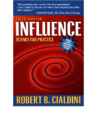
More praise for Influence: Science and Practice! "We've known for years that people buy based on emotions and justify their buying decision based on logic. Dr. Cialdini was able, in a lucid and cogent manner, to tell us why this happens." --MARK BLACKBURN, Sr. Vice President, Director of Insurance Operations, State Auto Insurance Companies "Dr. Cialdini's ability to relate his material directly to the specifics of what we do with our customers and how we do it, enabled us to make significant changes
Marilyn Monroe Marilyn Monroe (born Norma Jeane Mortenson;[1] June 1, 1926 August 5, 1962), was a Golden Globe award winning[2] American actress, singer, model, Hollywood icon,[3] cultural icon, fashion icon,[4] pop icon and sex symbol. She is known for her comedic acting roles and screen presence. Monroe became one of the most popular movie stars of the 1950s and early 1960s. During the later stages of her career, she worked towards serious roles and her fame surpassed that of many entertainers of her time.[5] Her death at thirty six was classified as "probable suicide."[6] Many individuals including Jack Clemmons, the first LAPD Police officer to arrive at the death scene[7] believed that she was murdered
Polish national hero General Tadeusz Kociuszko. Like many of Australia's highest peaks, Mount Kosciuszko is not particularly difficult to climb. There is a road to Charlotte Pass, from which it is a seven kilometre walk up a path to the summit. Anybody with a modest level of fitness should be able to climb it. Until the 1960s the road was open to motor vehicles and it was possible to drive close to the summit. Uluru, also known as Ayers Rock, is a large sandstone rock formation in central Australia, in the Northern Territory. It is located in UluruKata Tjuta National Park. Uluru is 346 metres high, more than 8 km (5 miles) around with a hard exterior compared to most other large rock formations which has prevented formation of scree slopes, resulting in the unusual steep faces down to ground level.
The United Kingdom The United Kingdom consists of England, Scotland, Wales and North Ireland and it is situated in the Atlantic Ocean near the mainland of Europe. The population of the UK is 58.6 million and area is 244,110 sq km. Britain has a temperate humid climate. Its characteristic features are mild winters, warm summer, no temperature extremes, abundant rain all year round and frequent changes of weather. The mild climate is partly due to the warm Gulf Stream and partly to the south westerly winds. Occasional winds from the east in winter may
Paine's The Age of Reason, and the Jefferson Bible, but the most influential thinker was undoubtedly John Locke, whose ideas spread to the colonies and across Europe. Main Ideas of the American Enlightenment: The Enlightenment caused a shift in the cultural and social attitudes of the people, bringing in some new and radical ideas. Republicanism: The doctrine of republicanism asserts a system of a government that is elected by the people of the nation. The roots of this ideology go back to ancient Greece, when the concept of a democratic government was examined by philosophers such as Plato and Aristotle. Individual Liberty: "Life, Liberty, and the pursuit of Happiness" developed as the motto of this era, which forms the cornerstone of the U.S. Constitution today. Since the colonies had very few individual rights, they declared certain fundamental rights that they deemed "inalienable
city under Danish king Canute and forced the then-English king to flee. Years later, following a victory at the Battle of Hastings, William the Conqueror was crowned King of England in the newly-finished Westminster Abbey in 1066. William granted the citizens of London special privileges while building a castle in the corner of the city to keep them under control. This castle was expanded by later kings and is now known as the Tower of London. The city grew in wealth and population during the Middle Ages. In 1100 its population was around 18,000 but after 200 years it had grown to nearly 100,000. However disaster struck during the Black Death, when London lost nearly a third of its population. After the defeat of the Spanish Armada, stability in politics allowed the city to grow even more. In 1603, James VI of Scotland came to the throne of England, essentially uniting the two countries. An
This edition published in the Taylor & Francis e-Library, 2008. "To purchase your own copy of this or any of Taylor & Francis or Routledge's collection of thousands of eBooks please go to www.eBookstore.tandf.co.uk." First edition © 2000 Taylor & Francis Group Second edition © 2008 Taylor & Francis Group All rights reserved. No part of this book may be reprinted or repro- duced or utilised in any form or by any electronic, mechanical, or other means, now known or hereafter invented, including photocopying and recording, or in any information storage or retrieval system, without permission in writing from the publishers. Trademark Notice: Product or corporate names may be trade- marks or registered trademarks, and are used only for identification and explanation without intent to infringe. Library of Congress Cataloging in Publication Data Lycan, William G. Philosophy of language: a contemporary introduction/William G. Lycan. 2nd ed. p. cm
most importantly the masses of public and the church that were at the heart of Darwin's contribution to biological science. Charles Darwin did not invent the concept of evolution. A number of prominent scientists and other thinkers during the eighteenth century and the first half of the nineteenth century (among them Charles Darwin's grandfather, Erasmus Darwin) had offered detailed theories of evolution (Clark, 1984, pg.24-25). Therefor the idea of evolution went very far back in Western history. At that time this concept was referred to as The Great Chain Of Life and was conceived in the middle ages, based on a mixture of classical and Biblical ideas. The ranking order ranged from the "lowest" forms of life to "higher" living beings (lion), through the various classes of human beings from peasants to nobles to Popes, and upwards through the hierarchy of angles to God. This concept, in and of itself, has nothing to do with
for the holidays. There are many variations of osechi, and some foods eaten in one region are not eaten in other places (or are even banned) on New Year's Day. Another popular dish is ozni (?), a soup with omochi (?) and other ingredients that differ based on various regions of Japan. Today, sashimi and sushi are often eaten, as well as non-Japanese foods. To let the overworked stomach rest, seven-herb rice soup (, nanakusa-gayu?) is prepared on the seventh day of January, a day known as jinjitsu (?). Bell ringing At midnight on December 31, Buddhist temples all over Japan ring their bells a 108 times to symbolize the 108 human sins in Buddhist belief, and to get rid of the 108 worldly desires regarding sense and feeling in every Japanese citizen. A major attraction is The Watched Night bell, in Tokyo. Japanese believe that the ringing of bells can rid off their sins during the previous year. Postcards
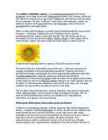
The stem has frozen, typically in an eastward orientation. The stem and leaves lose their green color. The wild sunflower typically does not turn toward the sun; its flowering heads may face many directions when mature. However, the leaves typically exhibit some heliotropism. Cultivation and uses A sunflower farm near Mysore, India. Sunflower heads solds as snacks in China. Sunflowers are native(pärit) to the Americas. The earliest known examples of a fully domesticated sunflower were found at the Olmec site of San Andrés dating some time before 2500 B.C.[1] The Incas used the sunflower as an image of their sun god. Gold images of the flower, as well as seeds, were taken back to Europe early in the 16th century. The Giant sunflower (Hlianthus giganteus) is native to Connecticut. They can grow to be between 3 and 12 feet tall. Their flower heads can be between 2 to 3 inches wide. They
measure of engineering prowess. In terms of engineering, bridges are discussed by design or type (beam, arch, truss, cantilever, suspension, or moveable); length (usually expressed in terms of clear or overall span); and materials (stone, wood, cast and wrought iron, and what we use today - concrete and steel). The purpose of this contextual essay is to provide parameters of value and significance so that we can focus our attention on those bridges - globally - that best illustrate the history of bridge building, and to encourage their preservation. What is a World Heritage bridge? The World Heritage Committee states that to be of World Heritage status a monument or site must be of outstanding universal value. It must illustrate or interpret the heritage of the world in terms of engineering, technology, transportation, communication, industry, history, or culture. World Heritage industrial sites and monuments must meet one or more of the
Farther west the trees disappear and the bushlands begin. The real desert occupies the centre of the Western Plateau. In the very southwest there are thin forests of evergreen trees. Most of Australian trees are kinds of eucalyptus (or gum tree to Australians) and acacia (wattle of Australians). Eucalyptuses give the people timber and eucalyptus oil. Of 600 kinds of acacias the golden wattle, the national flower of Australia, is the best known. Of other trees there grow bottle trees in the savannas, tree ferns in the tropical forests and many others. Lakes Australia has much underground water. There are only few lakes which are full of water only after it rains. The biggest lake is Lake Eyre which is a salt lake. The natural lakes of the interior of continental Australia are salt lakes. Fed by streams and rivers, they receive water rarely. Lake Eyre, Torrens, Frome and Gairdner are the remains of a
The Great Barrier Reef is one of the natural wonders of the modern world. It is located off the northeast coast of Australia. It's the largest coral reef on earth, extending for 2000 kilometres along the coast of Queensland. It consists of more than 600 islands. Most of the islands are uninhabited, but some have been developed as tourists resorts. Scientists estimate that the Reef is more than 30 millions years old and it had it beginning in a tiny animal known as polyp. There are more than 300 varieties of coral, which is a ultimate dream of every shell- collector. There are undersea observations, glass-bottomed boats and water scopes for undersea viewing, as well as skin-diving equipment. The Great Barrier Reef is and ideal place for a sunny holiday. The relief: Australia is an old and low continent with simple relief. Plains cover the greater part of the land
spears and boomerangs. They raised no crops and had no herds. For food, they hunted and fished and gathered wild fruits and nuts. But their had very well-worked-out customs. A few Aborigines still live in the emptier part of the continent and follow the thousands-of-years-old customs of their ancestors. th The discovery of Australia goes back to the 17 century. The first discoverers were Dutchmen, who visited the north, west and north-west coasts of Australia. The discovered continent was called New Holland. Therefore no interest was taken in it for more than 150 years, cause the land was described as sandy and waterless. In 1770 Captain James Cook, the famous sailor and explorer, reached Australia from the south-east and it differed from the other parts of Australia
so he may have travelled legally, tokens to two-dimensional signs exam practice or as independent began. Around 4000 BC the ancient whereas those in the second picture study for homework. All the audio Sumerian scribes started to imprint seem to have travelled in the back of a lorry, presumably illegally. material for the listening tasks is on shapes into clay tablets to represent the Solutions MultiROM. the tokens. Now one tablet could 4 Students' own answers · Reading: Elicit strategies for contain more than one word.
60.0 million people in mid-2009, it is the third most populous island in the world, after Java and Honsh. Great Britain is surrounded by over 1,000 smaller islands and islets. The island of Ireland lies to its west. Politically, Great Britain may also refer to the island itself together with a number of surrounding islands which comprise the territory of England, Scotland and Wales. All of the island is territory of the sovereign state of the United Kingdom of Great Britain and Northern Ireland, and most of the United Kingdom's territory is in Great Britain. Most of England, Scotland, and Wales are on the island of Great Britain, as are their respective capital cities: London, Edinburgh, and Cardiff. The Kingdom of Great Britain resulted from the political union of the kingdoms of England and Scotland with the Acts of Union 1707 on 1 May 1707 under Queen Anne
College of Art and Curator of the Lahore Museum. Kipling was to be assistant editor of a small local newspaper, the Civil & Military Gazette. He sailed for India on 20 September 1882 and arrived in Bombay on 18 October 1882. This arrival changed Kipling, as he explains, "There were yet three or four days' rail to Lahore, where my people lived. After these, my English years fell away, nor ever, I think, came back in full strength". Travels & First writings During the summer of 1883, Kipling visited Simla (now Shimla), well-known hill station and summer capital of British India. By then it was established practice for the Viceroy of India and the government to move to Simla for six months and the town became a "centre of power as well as pleasure." Kipling's family became yearly visitors to Simla and Lockwood Kipling was asked to serve in the Christ Church there
It had come out in the English in which Tokyo had framed it, and its ominous final sentence read: "The Japanese Government regrets to have to notify hereby the American Government that in view of the attitude of the American Government it cannot but consider that it is impossible to reach an agreement through further negotiations." Brotherhood had set it by for distribution early in the morning. The translation of the message directing delivery at one o'clock had not yet come back from S.I.S. when Brotherhood was relieved at 7 a.m., and he told his relief, Lieutenant (j.g.) Alfred V. Pering, about it. Half an hour later, Lieutenant Commander Alwin D. Kramer, the Japanese- language expert who headed GZ and delivered the intercepts, arrived. He saw at once that the all-important conclusion of the long Japanese diplomatic note had come in since he had distributed the 13 previous parts the night before. He prepared a smooth copy from the rough decode
They include more than 500 species of eucalyptus, or gum trees. Only the big river red gum is seen everywhere. These can be found beside rivers and dry riverbeds. Some gum trees are valuable timber species and have been cut down for many years. Gum tree leaves are full of oils, which evaporate easily. That why the Blue Mountains are called like that, because the evaporateing eucalypt oils, which make the air blue. Another big family of native plants is acacias. They are also known as wattles. There are about 900 species of wattles. The golden wattle is Australia's native flower. Its gold flowers and green leaves have inspired the colours worn by many Australian sporting teams. In Australia bushfires are very often to happen. Because the trees and shrubs do not lose their leaves in winter, but grow throughout the year. But when the dry leaves and branches fall down, then there is a lot of dry material and theat helps busfires to burn. Animals
can be used to carry people and freight. Barges and pipelines only carry freight. In 2005, 12 there were almost 239 million vehicles (cars, buses, and trucks) in the United States. That's more than three motor vehicles for every four people! Automobiles, motorcycles, trucks, and buses drove nearly 3.0 trillion miles in 2005. That's almost one-twelfth the distance to the nearest star beyond the solar system. It's like driving to the sun and back 13,440 times. Picture 2.11. Energy use for transportation Gasoline is used mainly by cars, motorcycles, and light trucks; diesel is used mainly by heavier trucks, buses, and trains. Together, gasoline and diesel make up 86 percent of all the energy used in transportation. There is currently a push to develop vehicles that run on fuels other than petroleum products, or on blended fuels. Today, there are some vehicles that run on electricity,
get there truly early or late. Wear something sensible and take a break, its a long, long day. So I am not sure about that theory is true. Anyway Chelsea Flower Show is so popular that it is always a sell-out. Last minute Chelsea wannabes hang out on street corners with signs asking for tickets, like with some world famous musical. 5 Most of the people who have been there want to go back there. Maybe it is because of that in Chelsea Flower Show country meets town; where chic urbanites drink champagne and wear their designer outfits alongside elderly squires in tattered Barbours and red faced countrywomen with muddy fingernails; where designers and architects encounter nurserymen and jobbing gardeners. Perhaps, as one exhibitor said, it is the quite indefinable thrill of being at the greatest, the best, and the most prestigious flower show in the world.
Nullarbor Plain. They are also called as the Western Australian Shield. The Nullarbor Plain is an uninhabited limestone plateau. It is characterized by amazing cave and tunnel systems, which contain valuable information about ancient Australia. The east is the mountainous part of the country. There is The Great Dividing Range. It runs along the Pacific coast and finds it end in Tasmania. The mountains are old and worn down. The highest mountains on the Australian mainland are in an area known as the Australian Alps. They are a small part of the Great Dividing Range. The Highest Peak on the mainland is 2228m high – Mt Kosciusko. One of the largest monoliths – Ayers Rock, also known as Uluru, can also be found in Australia. It’s located in the middle of the country. The monolith is 348 m high. The flat hot centre of Australia is called the outback. The Outback is more then two thirds of Australia, but less than 100 000 people live there.
and many other species of fish and sealife. There are five major Biomes in Canada: Arctic Biomes, Tundras, Taigas, Praeries and Deciduous Forests. The Tundra is located near the Arctic region. It is permafrost and desert-like. The area is very cold and windy. The growing season is 50-60 days. Some of the plants that can survive there are lichens and mosses. Typical animals for the Tundra are musk oxen, elks, moose, lemmings, wolves and foxes. The Taiga biome, also known as coniferous forests is located south of the Tundra region. Taigas are the largest biomes on Earth and they are a major source of oxygen. The Climate there is cold and harsh. Precipitation is low. The growing season is short. Only deciduous trees can grow there since the soil is acidic. Some typical animals are brown bears, foxes, geese, lynxes and moose. Prairies are temperate grassland. They consist of plains of grass that are hot in the summer and cold in the winter
expanded and Britain began exploring the world. Henry VIII also united England and Wales. During the reign of Elizabeth I, London was a wealthy and successful city. Culture was very important. London's first theatre " The Theatre" was opened in 1576. To escape censorship by the City's Lord Mayor the Globe and the Rose theatres were rebuilt in Southwark, in an area then largely occupied by prisons and bear pits. Stuart London 1603-1649; 1660-1714 In 1603 when James the IV of Scotland became James I of Scotland and England, he united the two countries under one king. In 1642 the Civil War broke out between supporters of the king and parliamentary forces, led by Oliver Cromwell. King Charles I lost the war and was beheaded in London in 1649. Britain became a republic known as the Commonwealth. In 1660 London welcomed the restoration of the monarchy. The second half of the century was even more devastating. Two Disasters stroke London. The Great Plague and the Great Fire
 annaabi.ee