Leidsid 33 sarnast õppematerjali, mis on seotud failiga "King james bible". Need materjalid aitavad sul teemat sügavamalt mõista.
bible, version, print, king, translation, english, testament, latin, greek, printing, refer, late, church, england, translated, hebrew, barker, printer, edition, 1611, first, started, while, century, work, original, sold, lease, bill, printed, oxford, copyright, than, geneva, prefer, meaning, commonly, known, christian, official, during, reign, henrySummary • Early history of translation studies – Cicero and St. Jerome (what did they do/how/why are they relevant to translation studies?) St. Jerome – Greek scholar, did some translation work. Lived during the 4th century. Jerome is best known as the translator of the Bible into Latin. A previous version (now called the Old Latin) existed, but Jerome's version far surpassed it in scholarship and in literary quality. Jerome was well versed in classical Latin (as well as Greek and Hebrew), but deliberately translated the Bible into the style of Latin that was actually spoken and written by the majority of persons in his own time. This kind of Latin is known as Vulgate Latin (meaning the Latin of the common people), and accordingly Jerome's translation is called the Vulgate. Cicero – Lived during the 1st century BC. Roman politician, philosopher & translator. Theory ‘‘word-for-word’’ & ‘‘sense-for-sense’’.
Suppletion Present in languages of different families. Present in Old, Middle and Modern English, though the general tendency is towards more regularity/iconicity so the number of suppletive forms has decreased.In the text: goon to go wenden - to turn Gan was suppletive in Old English, past form: eode.Eode was supplanted by went (past form of wenden) at the end of the Middle English period.To wend has survived in Modern English in phrases such as to wend one's way, we wended homewards (ironic usage). Thus: suppletivity- suppletion different parts of one and the same paradigm come from what were originally different paradigms (different words with close meanings or words in different but close dialects).Suppletion embraces verbs, adjectives, nouns. Be was/were been (Old English beon/wesan) (am, art, is, are); in Old English some suppletive
Many reforms were done. Victorian age was from 1837-1901. It was a time of prosperity. Industry grew and British Empire evolved. 6. What was the idea of Anglicanism? Calvinism? Anglicalism is not so very different from Catholicism in its organisation and ritual. But in the lowlands of Scotland it took a more idealistic form. Calvinism with its strict insistence on simplicity and its dislike of ritual and celebration became the dominant religion in England. 7. Who was the king who took the Union Flag into use? Why is it called the Union Flag? King James I took the Union Flag into use. The flag was a symbol of the united countries England and Scotland and the flag combined the English flag of St. George with the Scottish flag of St. Andrew. 8. What is the Gunpowder Plot? Why was it organised? Gunpowder Plot was the name of the conspiracy by Catholics who tried to kill James and the Members of the Parliament to regain for their religion the
1.SLAID Queen Mary I of England was born February 18, 1516. She was the daughter of King Henry VIII and his first of six wives, Catherine of Aragon. Mary was the only child from that union to survive infancy. She ruled as Queen of England from July 19, 1553 until her death on November 17, 1558. This era was known as the Marian Exile 2.SLAID Queen Mary I was rejected by her father during his divorce from her mother.
ENGLISH LITERATURE Ancient Britain Lived on the British Isles in the 1st millenium. They most probably came from Eastern Europe and belonged to the Celtic race and also spoke Celtic. They were primitive hunters- gatherers, farmers. Some Celtic words are still used in modern English, however they are used mostly in place names. For example: · avon river · cumb valley · ford shallow place in the river Ancient Britons had their own religion and priests or druids and temples. In the year 55 BC Britain became a Roman province. Romans were highly developed and had their own language latin, which has also greatly influenced English. The military occupation of the Isles ended in 410 AD
Medieval literature Religious literature- mostly written in church languages(Latin, Greek, Old Slavic) Secular literature- written in vernacular languages as well 6th -15th century Anonymity Religious writing Liturgical writing-hymns, psalms Theological writing-aquinas, abelard etc Religious poetry Mystery plays-reenactment of bible stories Secular writing Troubadour writing:"courtly love", romance Epic poem(song of roland) Travel writing History writing-chronicles Allegory The use of symbols and analogy to convey a certain meaning /message Literary output of medieval English Anglo-saxon or Old English literature(7th century-1066) Middle english literature(12th century-15th century) End of the period:1470s chancery standard(regulating english) and onset of renaissance Middle English literature
in art and literature. The middle class population also had more free time, which they spent learning foreign languages, reading, playing musical instruments and studying other things of interest. The Renaissance was especially strong in Italian cities. They became centres of trade, wealth and education. Many cities, like Venice, Genoa and Florence had famous citizens who were very rich and gave the city a lot of money. The printing of books led to a new way of thinking. Scholars of the Renaissance returned to the writings of Greek and Roman philosophers. These writings are called the "classics". More and more scholars learned to read Greek and Latin and studied old manuscripts on topics like science, art and life.During the Middle Ages people were guided by the church, which was against wealth, trading goods and other worldly interests. Humanists, however, did not believe that much in religion. They
25/11/2012 22:54 The World According to Student Bloopers Richard Lederer St. Paul's School One of the fringe benefits of being an English or History teacher is receiving the occasional jewel of a student blooper in an essay. I have pasted together the following "history" of the world from certifiably genuine student bloopers collected by teachers throughout the United States, from eight grade through college level. Read carefully, and you will learn a lot. The inhabitants of Egypt were called mummies. They lived in the Sarah Dessert and traveled by Camelot. The
Puritan society’s attitude and mindset as it is one of the most classical examples of the Puritan era literature. Although John Winthrop was the leader of the Massachusetts Bay Colony which was filled with corrupted chiefs, he vigorously emphasizes in his writings the unity of community, love of others and morals of equality. This sermon also represents the hope of the colony in God after repudiating the Church of England. In his sermon A modell of Christian charity, reliance to the Bible is the key element which reveals in the interpretation of God itself and morals of the Bible. He begins by offering explanation to the inequality of the human kind and why God wants such inequality to exist at all. Simple reciprocity is indicated by collating the rich and the poor as it follows: „soe that the riche and mighty should not eate upp the poore nor the poore and dispised rise upp against and shake off theire yoake” (Winthrop, 1996)
My languages I love different languages. I mean, I really, really love different languages. I also believe and have been told that I pick them up rather easily. That might be true, although I did not pick any Greek up in Greece but that might have been because they spoke so damn fast that I could not tell if it was a word or an entire sentence. The first foreign language I learned was Russian. Considering I was ten when Estonia became a Republic, it makes sense. We began studying Russian in first grade, though it was simplified – "koška" instead of "kot", "medvešonok" instead of "medved", "saichik" etc. Did not make much sense and we mostly played some games in Russian (Tare-tareke etc)
worked towards religious, moral and societal reforms. The writings and ideas of John Calvin, a leader in the Reformation, gave rise to Protestantism and were pivotal to the Christian revolt. They contended that The Church of England had become a product of political struggles and man-made doctrines. The Puritans were one branch of dissenters who decided that the Church of England was beyond reform. Escaping persecution from church leadership and the King, they came to America. Of Plymouth Plantation Of Plymouth Plantation is the single most complete authority for the story of the Pilgrims and the early years of the Colony they founded. Written between 1620 and 1647, the journal describes the story of the Pilgrims from 1608, when they settled in the Netherlands, through the 1620 Mayflower voyage, until the year 1647. The book ends with a list, written in 1650, of Mayflower passengers and what happened to them.
We know a lot of things thanks to books, but we do not know exactly when and where they originated, and what should be considered the first book in the world. Ancient document, written on parchment, papyri and vellum can hardly be qualified as books the way we understand the word today. Centuries went before paper replaced parchment and papyri. In the 15 th century Johann Gutenberg invented a mechanical process of duplicating texts, which we today call book printing. The first book was printed between 1444 and 1446, so these years can be considered as the beginning years of book printing. His most important preserved printings are the 40 copies of the Bible. By the end of the 15 th century there were about 1000 print-shops in Europe already. The oldest Estonian book dates back to 1535. Libraries form a vital part of education. They make available-through books, films, recordings and other media- knowledge that has been accumulated through the ages
monarchies based on nationality were estabilished. The Renaessance started in Italy In the 14th century. Then it spread all over Europe, reached England in 16th century. The struggle for power culminated in a war called The War of Roses. It was a civil war between two dynasties, families. They had different emblems on one side the Yorks (white rose) other Lancasters (red). They couldn't decide who gets the throne. War ended 1485. A new dynasty came to throne, Tudor, the first king in this dynasty was Henry Vll. When he came to throne a period of stability followed because he built a nation based state. He was good at diplomacy.He could avoid quarrels and wars with neigbouring countries. France, Spain - greatest enemies.So he could save much money and thus laid a good economic basis for his state. Besides that he built a merchant fleet (kaubalaevastik) England begun to dominate in international trade. Unfortunately the king got old and died.
Julius Caesar's first raid was in 55 BC but the romans left. Ad 43- the Romans came to stay. The army established Roman rule in the south and SW of the country. The Romans started to introduce their laws to a new province of the Roman Empire and started to build good roads. Officials were appointed (governors, procurators to collect taxes, look after the estates and mines and se that the gold, silver, iron and lead were exported back to Rome). Introduced schools,a new language Latin, large farms (villas), baths. In AD 410 they had to leave . roman occupation lasted nearly 400 years. They left behind very little. Roman province of Britannia covered most of present-day England and Wales. 4. Latin influence on English *The influence of Latin is noticeable also in the names of European cities: the Latin noun colonia (settlement, colony) may be found in numerous place-names: Lincoln, Colchester, Cologne ; from
english stock. A borrowing is a word taken from another language. Modern Engl is the result of development of Germanic trikes(inimhulk) that settled on Br isles on 5-6 century, they wre Angles, Saxons, Jutes. In Middle Engl periods (11-15 cent)there were 5 mail dialects: Northen, East-central, west-central, south-western, kentish. The basis of E became the London dialect. Due to the importance of London as the capital, the London dialect spread over the country. 15. Sources of borrowing: Latin, Old Scandinavian, French. Latin: there are 3 layers of Lain borrowings:1)these words stand for objects in everyday life (, nt pepper, plum, butter, wine, cup, dish, chalk, kitchen, street, mile, inch). 2)At the end of 6th cent christianity was introduced. Latin became the language of religion (nt, altar, angels, candle, devil, munk, nun, pope, preest) 3) During the Renaissance mainly abstract nouns and
the base of the welfare of the people. A passionate protest against social injustice. A time when peasants were slowly rising against their feudal lords. Descriptions of different social classes. Religious mysticism. Two great principles: 1) all men are equal before God; 2) honest labour is dignified. It is a dream allegory. A young maiden named Youth, Greed is an old witch. The greatest writer of this period and the whole of medieval times Geoffrey Chaucer (1340?-1400): · The father of English poetry · The creator of English versification · The first poet to use various metres · Laid the foundation of the new literary English language · Wrote in Middle English · An active man of affairs, who belonged to the middle class · Spoke Latin, French, Italian the important languages of the time · Worked as a diplomat for a time · Translated works into English (from Latin, French, Italian) · Favourite of the royal court
Outstanding figures in British literature Eva Martina Põder 11.b British literature Refers to all literature produced by British authors from the United Kingdom, which includes England, Scotland, Northern Ireland, Wales, the Channel Islands, and Isle of Man Includes early works written in Gaelic, Welsh, and Latin, works in Old, Middle, and Modern English, each of which represents a different period Full of great works British works in Latin Venerable Bede He lived between 673 and 735 AD The greatest of all the AngloSaxon scholars He's the earliest English historian, whose work has shed light on a period of English history that would have otherwise been unknown ,,The Father of English History" Wrote / translated about 40 books on almost every area of knowledge, i.e. nature, astronomy, and poetry His best known work is "The Ecclesiastical History of the English People"
Anglo Saxon Invasion 5th 6th century AD. Germanic tribes from Scandinavia: the Angles, the Saxons and the Jutes settle in what today is known as England and force the Celtic tribes to move to Scotland, Ireland, Wales. The Angles settled in Northumberland, East Anglia, Mercia; The Saxons in Essex, Sussex, Wessex and the Jutes in Kent. 569 AD Pope Gregory the great sends missionaries led by St. Augustine to Britain. The Benedictines establish a chain of monasteries; Britain is linked to the Latin civilization of the roman Church and Christian cultures of Western Europe. Aethelbert 1 of Kent becomes the first Christian King of England. By the end of the 7 th century all the kingdoms of the Anglo-Saxon Britain accepted the Christian faith. 3.) Describe Old English Poetry in terms of form and content. Old English poetry is highly formal. Each line of it is divides into two halves, separated by a caesura, or pause, and is often represented by a gap on the page.
стран мира. 6 INTRODUCTION Aspects of British History presents a brief outline of the most significant milestones in the long and eventful history of Great Britain, such as the five successful invasions of the island, the birth of Parliament and transformation of an absolute monarchy into a constitutional monarchy, the origin of the English language, the rise and fall of the British Empire. The units contain an informative reading text on an important issue, preceded by preparatory discussion questions and followed by notes offering some additional information, and a vocabulary with relevant language notes. The main reading text is accompanied by comprehension, vocabulary and grammar exercises and discussion activities. Some of the units include reading passages.
For the Indians of the Northeast area, the trees of the forest were the primary material for shelter, tools and fuel, and the animals of the forest were the primary food source. But the Northeast Woodland Native Americans were not solely hunters and gatherers, but also fishermen and farmers. The people of the Southeast were farmers first and hunters, gatherers, and fishermen second. Legend of Pocahontas Pocahontas is most famous for saving the life of John Smith, a leader among the English colonists. In 1607, Smith was captured by Powhatan warriors and held captive for four days. When two large rocks were brought in, the legend goes, Smith had a hunch his beheading was imminent. But Pocahontas begged Powhatan not to kill the Englishman and, being her father's favorite, the chief obeyed his daughter and spared Smith. It is true that Pocahontas had acted as an ambassador for her people to the English. In the first years of the
a British colony, it would be the American Enlightenment. Broadly, the Enlightenment was an intellectual movement that changed the fundamental perspective of the masses, urging them to foster skepticism and apply scientific principles in matters of religion and morality. Its chief values were: Liberty, Democracy, Republicanism, Religious Tolerance. The movement gained momentum with the publication of landmark texts like Thomas Paine's The Age of Reason, and the Jefferson Bible, but the most influential thinker was undoubtedly John Locke, whose ideas spread to the colonies and across Europe. Main Ideas of the American Enlightenment: The Enlightenment caused a shift in the cultural and social attitudes of the people, bringing in some new and radical ideas. Republicanism: The doctrine of republicanism asserts a system of a government that is elected by the people of the nation
American English Take-home exam 1) Discuss the significance of American English in the English-speaking world. English is one the most widely used languages in the world and globally acknowledged as the lingua franca. It is also the dominant business language. For these facts already, English has a great importance in the today’s world. As the United States of America is one of the leading countries of the world, American English has a certain authority as well. It is now an inescapable fact that America, through its worldwide influence and massive entertainment industry is the mighty power-house that drives the English language. Although British English is considered to be more sophisticated and prestigious than American English, the latter is clearly more featured in television, music, video games and internet, naturally appealing more to English learners than British English. Also, in international
in Sussex, Cerdic / Cynric in Wessex. So the first ,,English" became mainly from Northern Germany & Denmark. The resistance of the Celts was long. They were free at the time, not like other Roman provinces on the Continent. Around 500, the Britons seem to have won several victories. One of their leaders was Ambrosius Aurelianus and one of their victories was at the place called Mount Badon. The main leader of the Britons at this time may have been the warrior later called King Arthur. By the 7th cent. the invaders managed to conquer the greater part of the land. The invaders came from 3 powerful tribes: · The Saxons settled from the Thames Estuary westwards, in the south of England; they formed the kingdoms of Sussex, Wessex, Essex & Middlesex · The Angles settled in East Anglia, the Midlands & Northumbria · The Jutes settled mainly in Kent, Hampshire & the Isle of Wight
Years 1154-1485 Henry I was the first unquestioned ruler. One of the most important kings in the Middle Ages. He had lands in Britain & France. Then the government was the monarch, a person, not a place. He had more land than any pervious king. After his marriage to Eleanor of Aquitaine, he also ruled the lands south of Anjou. His empire stretched from the Scottish border to the Pyrenees. England provided most of its wealth, but the heart was Anjou. Henry II began to regain royal control. During the war some barons had become very powerful. He pulled down some of their castles. He tried to restore law & order. He wanted the same kind of justice to be used everywhere. He appointed his own judges to travel around the country
THE ANGLO-SAXON PERIOD English literature came when the Angles, the Saxons, the Jutes and the Frisians invaded Britain. During this time English was called Anglo- Saxon or Old English. In the chronicles of Roman history (composed in Latin) is said that Britain makes its first appearance in written language when Romans invade the England. BEOWULF most important poem, surviving in a 10th-cent manuscript. The historical period of the poem's events can be dated in the 6th to 8th century. Much of the material of the poem is legendary and paralleled in other Germanic historical-mythological literature in Norse, Old English, and German.
period. Importance of religion; the stories of King Arthur (also Tristan and Isolde, based on Celtic legends). Importance of the church during the Middle Ages (5th c to 15th c). Three languages used in England: French, English and Latin. Main literary genres: (1) chivalric romance, (2) the fabliau (a comic, often anonymous tale that is characterised by an excess of sexual and other types of obscenity) and (3) literature on religious topics – either moralistic (teach right from wrong) or ecclesiastical (biblical subject)
1. STYLE The term "style" is polysemantic (has many meanings): a Latin word "stilus" originally meant a writing instrument used by ancient people. Already in classical Latin the meaning was extended to denote the manner of expressing one's ideas in written or oral form. Jonathan Swift defined style as "proper words in proper places". In present day English the word "style" is used in about a dozen of principle meanings: 1. the characteristic manner in which a writer expresses his/her ideas (e.g. style of Byron) 2. the manner of expressing ideas, characteristic of a literary movement or period 3. the use of language typical of a literary genre (e.g. the style of a comedy, drama, novel). 4. the selective use of language that depends on spheres / areas of human activity (e.g. style of fiction, scientific prose,
sympathy with what was direct and heartfelt in the art of the past. The brotherhoods techniques came from the early Flemish art- especially Van Eyck. To imitate the work of great Italian artists the PRB-s studied the colours in nature. To have the effect of glowing colours they invented a new method called "wet white". It was very difficult and wasn't used a lot (except Hunt). The technique was to apply colour on a wet brilliant white ground. For inspiration the brotherhood turned to the bible because they wanted to portray significant themes. They applied much original thought to their subjects, and this made them excellent illustrators. Only Hunt stayed true to the ideals of the PRB. Other two soon replaced the biblical inspiration with the medieval world- the plays of Shakespeare. Their paintings were very realistic which drew a lot of negative attention on them from various critics, for example Charles Dickens
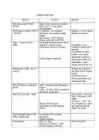
The Roman occupation (AD 43 Londinium not important Boadicea a revolt against - AD 410) politically. An important trading the Roman conquest centre. Devastation AD 61. Rebuilt. Roman walls built in AD 200. Anglo Saxons (AD 400 Destroyed the Roman towns. Many 1066) kingdoms. London in ruins. King Egbert one Flourishing. Attacks by Vikings. kingdom England (the 9th century) King Albert the Great London is the capital Edward the Confessor
and Julius Caesar never returned to Britain after that. The island was left undisturbed for nearly a century. *The Roman occupation of Britain 43-410 and its legacy Britain was conquered by Emperor Claudius, the Roman rule in England lasted up to 410. The Romans left behind a huge legacy: many types of animals and plants were brought to Britain in Roman times. Roman introduced theire measurements, Christianity, reading and writing. Also, many words in English and Welsh have been borrowed from the Latin language. An important legacy of the Romans was its roads, agriculture and cities. In the Roman times the land was dominated by rules and reguations. *Christianity in Roman Britain The Roman authorities were suspicious of Christianity because followers of Jesus Christ refused to take an oath of loyalty to the Roman emperor. For this reason the early Christians were regarded as dangerous enemies of the Empire. That
g. biographies), a book may be divided into several large sections, also called books (Book 1, Book 2, Book 3, etc.). A lover of books is usually referred to as a bibliophile, or, more informally, a bookworm. A store where books are bought and sold is a bookstore or bookshop. Books can also be borrowed from libraries. In 2010, Google estimated that there were approximately 130 million unique books in the world. Etymology The word book comes from Old English "bc" which itself comes from the Germanic root "*bk-", cognate to beech. Similarly, in Slavic languages (e.g. Russian, Bulgarian and Macedonian) "" (bukva--"letter") is cognate to "beech". It is thus conjectured that the earliest Indo-European writings may have been carved on beech wood. Similarly, the Latin word codex, meaning a book in the modern sense (bound and with separate leaves), originally meant "block of wood". History of books Antiquity
arriba, sólo que los veinte capítulos que son después fueron (probablemente) escrito por Rojas. Lo que hace un punto interesante: esperaría que los estilos de escritura a ser dramáticamente diferente. Sin embargo, creo que gran parte del estilo, muy sexual, alusiones a través del libro. Por ejemplo, cuando Celestina es alentador de preliminares (foreplay) de Sempronio y Pármepno con sus mujeres en la casa durante la cena (Finch 128). The first translation of the tragicomedia that is interesting for me is by James Mabbe and Dorothy Severin. It is one of the most well-known translations of La Celestina. Mabbe translated the work while Severin edited it and added the introduction and notes. The original translation by Mabbe was in 1631 in London, and uses English from that period. This is actually his second translation of the same work; the first was completed in 1598. In 1972 the Tamesis Press
headed openings. There are few remains of Anglo-Saxon architecture, with no secular work remaining above ground. All surviving churches, except one timber church, are built of stone or brick and in some cases show evidence of re-used Roman work. Art Anglo-Saxon art is mainly known today through illuminated manuscripts. Although they are the most well known to have survived. Perhaps the best known piece of Anglo-Saxon art is the Bayeux Tapestry which was commissioned by a Norman patron from English artists working in the traditional Anglo-Saxon style. The most common example of Anglo-Saxon art is coins, with thousands of examples extant. Anglo-Saxon artists also worked in fresco, ivory, stone carving, metalwork and enamel, but few of these pieces had survived. Literature Anglo-Saxon literary works include genres such as epic poetry, hagiography, sermons, Bible translations, legal works, chronicles, riddles, and others. The most famous works from this
 annaabi.ee