Leidsid 33 sarnast õppematerjali, mis on seotud failiga "Inglis keele spikker". Need materjalid aitavad sul teemat sügavamalt mõista.
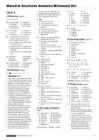
roman, impeerium, empire, money, rooma, part, famous, springs, linnarahvas, earn, ostsinnow, country, haigustestuumaveeallikad, mostly, countryside, teenima, sõjad, wars, alustama, rule, palee, queen, lives, suveniirid, londonist, these, england, friend, whose, father, talk, jokes, jope, jacket, bought, handogun, clock, four, centuries, allikaidI will call you back later. 7 Kus Maria on? - Ta räägib juba pool tundi telefoniga. Where is Maria? - She has been on the phone for half an hour, already. 8 Ma olin vapustatud kuuldes, et Kevin oli kauplusest ühe CD varastanud. I was shocked to hear that Kevin had shoplifted a CD from shop. 9 Meie jalgpallimeeskond on sel aastal olnud edukas. Our football team had been successfull this year. We have not lost any games. 10 Kas sa tead Roberti kodulehekülje aadressi? Do you know the adress of Robert´s webpage? _______________________________________________________________ UNIT 9: Töövihikust harjutus 4. 1 See on palee, kus kuninganna elab. This is the palace, where the quaan lives. 2 Need on suveniirid, mida ma vajan. These are souvenirs which I bought in London. 3 See on raamat, mida ma vajan. This is this book which I need. 4 See on sõber, kelle isa oskab häid anekdoote rääkida. This is the boy whose father can tell good jokes.
Test 9 1 Translate. 1 Ma loen sageli ajaloolisi romaane. I often read historical novels. 2 Paljud riigid on Eestit valitsenud. Many countries have ruled Estonia. 3 Rooma villas olid keskküte ja mosaiikpõrandad. A Roman villa had central heating and mosaic floors. 4 Roomlastel ei õnnestunud Sotimaad vallutada. The Romans didn´t manage to conquer Scotland. 5 See imeerium on eksisteerinud umbes 400 aastat. This empire existed foir about 400 years. 6 kohalikud elanikud inhabitants 7 lossivaremed ruins of a castle 8 restaureeritud mõis a restored manor house 2 Use the words who, whose, which or where to complete the sentences. 1 This is the house where I grew up. 2 The film which we saw yesterday was about a cowgirl called Calamity Jane. 3 The boy whose mother we met in Regent Street is my cousin. 4 This is the cafe where my mother has a cup of coffee after work.
Roman Britain 1.Ülesanne 1.Roman empire exited,more then 400 years ago. 2.Colchester was the capital of Britannia for some time,soon London or Londinium became the capital 3. Romans speaked Latin. 4. Roman rules Britannia. 5. Julius Ceasar ,Hadrian 6. Romans rules Britain before the Vikings. 2.Ülesanne a–2 b–5 c- 1 d-3 e–4 3.Ülesanne 1–d 2–g 3- i 4–h 5–j 6–a 7–b 8–f 4.Ülesanne 55- Julius Ceasar first came to Britain in the year 55 BC (before Christ ). 400- Britannia became a part of the Roman Empire for more than 400 years.
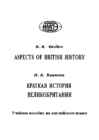
пособия. Пособие предназначено для студентов гуманитарных специальностей. Подготовлено на факультете лингвистики. The book contains an overview of the most important events in British history – from the first documented invasions of the island to the formation and fall of the British colonial empire. A series of exercises will help to remember the subject matter, practise the vocabulary and contribute to skills work. The book is intended for the Humanities students. Вавилов Н.А., 2008 3 4 Contents 5 ПРЕДИСЛОВИЕ Настоящее пособие содержит краткий очерк истории Великобритании от
History exam *Stonehenge - is a monument located in England. It is one of the most famous prehistoric sites in the world and is composed of earthworks surrounding a circular setting of large standing stones. The surrounding circular, earth bank and ditch, have been dated to about 3100 BC. Stonehenge was produced by a culture with no written language. Many aspects of Stonehenge remain subject to debate. There is little or no direct evidence for the construction techniques used by the Stonehenge builders.
THE U.K Different Parts The United Kingdom is a short way of saying the United Kingdom of Great Britain and Northern Ireland. The UK is the political name for those countries which share a parliament in London. All of them were at one time independent kingdoms with their own monarch. Now they are all part of the same kingdom and share the same monarch. The UK consists of Northern Ireland, Scotland, England and Wales. The peoples of these countries are British subjects; they hold British passports and therefore their nationality is British. The british Isles is the geographical name for all the islands off the west coast of Europe. These islands also include The Republic of Ireland, which is politically independent of the Britsh government
sheep raising. Tourism forms a big part of English economy. Britain is one of the world's leading tourist destinations. The industry is a big business and now about 2 million people are employed in this area. The majority of tourists come from Western Europe. It is good to travel all over Britain because there is a good railway and road network. It is also possible to travel by inland waterways. People come to Britain because the things that you can see there are very famous all over the world e.g. Stonehenge, Big Ben and of course the magnificent natural beauty. History. Britain was connected to the European mainland by a land bridge until the end of the last Ice Age. Afterwards the ice started to melt and oceans began to rise and the connection was covered with water. Britain became a separate island in about 6000 BC. From about 3000 to 2000 BC the British Isles were inhabited by a group of people called the Iberians
They lived in primitive society. Druids priests, more powerful than chiefs. Acted like prophets. 2. Stonehenge From prehistoric period. Was built on Salisbury plain between 2500 and 1500 bc. One of the most famous and mysterious archaeological sites in the world. One of the mysteries is how it was built at all with the technology of the time. Another is its purpose. It appears to function as a kind on astronomical clock and we know it was used by the Druids for ceremonies marking the passing of the seasons. It appears in number of novels. These days it is not only the interest of tourists but is also a gathering point of certain minority groups. It is now fenced off to protect it from damage. 3. The Roman conquest Julius Caesar's first raid was in 55 BC but the romans left. Ad 43- the Romans came to stay. The army established Roman rule in the south and SW of the country. The Romans started to introduce their
.................................................16 Literature used.............................................................................................................................17 Appendix 1...................................................................................................................................18 2 Introduction The aim of this research is to get know more about the Netherlands history and its geographical facts. This report is describing one of most the most beautiful countries in the Europe - Netherlands. Netherlands is famous for its windmills and flowers. Netherlands is also known unofficially as Holland. Government is constitutional monarchy of north-western Europe. Netherlands is bordered on the north and west by the North Sea, on the east by Germany and on the south by Belgium
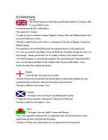
Wales: * the biggest cities are Cardiff, Swansea and Newport * these cities depended for their growths on surrounding mines and metal production, which started during the days of the Industrial Revolution * the flag is of Wales bears a Red Dragon (it is not represented on the Union Jack) Northern Ireland: * the capital city is Belfast * 54% of people regard themselves as Protestants and 42% as Roman Catholics * the flag is called the Saint Patrick's Cross 2) History Prehistoric Britain, Roman Britain, Anglo-Saxon, Danish, Norman invasions (...-1066): Britain was part of the European land mass until the end of the last Ice Age. It became an island by about 6000 BC. From about 3000 to 2000 BC the British Isles were inhabited by a group of people called the Iberians. These Stone Age people lived in limestone caves, they used stone
Headland / 'hedlnd / neem Scour / 'ska / küürima Foreshore / 'f:: / tõusu ja mõõna vaheline rand Recreational / rekr'enl / lõõgastumis-, vabaaja- Scenery / 'si:nr / maastik Juxtaposition / dkstpz'in / kõrvuti asetsev GB consists of England, Scotland and Wales. GB is only a dot on the world map. It offers a great variety and scenic contrasts are often within easy reach. The coastline is washed by the tidal system twice a day. Britain´s speciality is the man-made scenery. Each part of the country has its peculiar geographical features. England Indented / n'dentd / sakiline Estuary / 'estjr / suudmelaht Watershed / 'w:td /veelahe Pike / pak / haug Rugged / 'rgd / konarlik, karm
Gaels or Goehls(Ireland and Scotland),Cymri(Wales) and Brythons(gave name to Brittany) Fierce fighters,superb horsemen.Most of them farmers, lived in thatched houses Good at art, craftmanship, used iron Divided into tribes, ruled by kings, only in face of danger would they choose a single leader Legacy- hill-forts, farms, churches, field system, woodland, pasture, weapons, iron objects, langugae, culture Caesar in Britain The great Roman Emperor Firts came 55 BC to gather information, celts were doing agriculturally well,so romans wanted to get some food too In 54BC Caesar defeated Cassivelaunus Actual reasons why he made expeditions are unknown or wheteher he wanted to intend conquest The Roman Occupation 43-410 43 AD Emperor Claudius conquered Britain, it was easy, romans were more skilled and betetr equipped. Romans faced assaults of Picts, Scots, barbarians.
The Romans lead by Julius Caesar attempted to invade Britain twice before that in 55 and 54 BC but the invasions were unsuccessful. They made their way to the river Thames and sailed up it. The Romans knew it was important to control a crossing point at the river Thames, so they decided to build a settlement on the north bank. Although small settlements had been built on the banks of the Thames, the Romans were the ones who built the first city. They called their city Londinium. The Roman engineers noticed that the point where the swampy river narrowed would make an ideal crossing point, they built London Bridge. Less than 20 years later the native Iceni tribe, led by Queen Boudicca, rose up against the Romans in revenge for mistreatment and burnt Londinium to the ground. The well disciplined Roman army defeated her forces and Londinium was rebuilt. By AD 100 it had also become the capital of the Roman province. A massive wall was built to protect the city from further attacks
live in countryside and brought up Mary, who was also a Catholic. Next wife was Anne Bolyn, daughter of a knight. They had daughter called Elizabeth l. Time went by and Henry had to get rid of Anne, she was sent to tower accused of treason (riigi reetmine) and executed. Henry was free, needed another wife. Had six wives together. 1 died, 1 survived, 2 divorced, 2 killed. Henry had a son, was a king Edward Vl, died very young. Henry was a talented musican and scholar, spent much money on it. Soon he had spent all savings his father had collected, he needed money. He understood that monasteries had become useless. So he closed them, took away the riches dissolution of monasteries. When henry quarreled with the Pope, made England independent of Rome. Beginning of the Anglican church. Henry died 1547, only son came to throne Edward Vll, was too young to rule alone. There was acouncil of nobles who did it for him. Unfortunately
......................32 CONCLUSION..............................................................................................................................34 BIBLIOGRAPHY..........................................................................................................................36 2 INTRODUCTION Language is an important and prominent part of culture, so to learn the language well, it is necessary to understand cultural backgrounds of the language. The level of our learning cannot be judged just from the mastery of the vocabulary and grammar, it should also be judged from the point of view of country studies knowledge. This paper will try to explore the British National Symbols which is one of the themes in the school curriculum. The importance and choice of my research paper is explained by the following reasons:
6. Name 6 islands, 5 rivers, 3 lakes, 3 mountains in UK. Isle of Man, Isle of Wight, Isle of Lewis, Island of Mull, Island of Arran, Anglesey Island Severn, Thames, Tweed, Avon, Trent, Dove Ben Nevis, Snowdon, Ben Macdui 7. Stonehenge. Stonehenge was produced by a culture that left no written records. Built on Salisbury Plain, in Wiltshire, England some time between 5,000-4,300 years ago. One of the most famous megaliths in the world, dating from prehistoric times. Stonehenge consists of circles of stone arranged in complex patterns, and their origin is still being explored. Some of the stones come from over 200 miles away in Wales. There is little or no direct evidence revealing the construction techniques used by the Stonehenge builders. It was probably associated with sun-worship and other rites of prehistoric people. It appears to function as a kind of astronomical
Project ESTONIA MAP OF ESTONIA Southern Viljandimaa The southern part of Viljandi county catches the eye with its sublime scenery. The area today lies in the very heart of the historical Mulgimaa the home of hills, deep valleys and lakes brought together by a beauty spot Halliste primeval valley. According to several folk tales, it is also in these valleys, woods and bogs that Old Nick found refuge.The great variety displayed in the nature is also reflected in the local cultural heritage
They most probably came from Eastern Europe and belonged to the Celtic race and also spoke Celtic. They were primitive hunters- gatherers, farmers. Some Celtic words are still used in modern English, however they are used mostly in place names. For example: · avon river · cumb valley · ford shallow place in the river Ancient Britons had their own religion and priests or druids and temples. In the year 55 BC Britain became a Roman province. Romans were highly developed and had their own language latin, which has also greatly influenced English. The military occupation of the Isles ended in 410 AD. The Romans eventually brought Christianity to Britain. Hadrian's wall on the border of Scotland and England. It began construction in 122 AD. An Anglo-Saxon attack on Rome forced the Romans to leave The British Isles. They were
Guinea, the Solomon Islands, Tuvalu, Saint Lucia, Saint Vincent and the Grenadines, Belize, Antigua and Barbuda, and Saint Kitts and Nevis. In 1947 she married Prince Philip, Duke of Edinburgh, with whom she has four children: Charles, Anne, Andrew, and Edward. In 1992, which Elizabeth termed her annus horribilis ("horrible year"), Charles and Andrew separated from their wives, Anne divorced, and a severe fire damaged part of Windsor Castle. Revelations continued on the state of Charles's marriage to Diana, Princess of Wales, and they divorced in 1996. The following year, Diana died in a Paris car crash, and the media criticised the royal family for remaining in seclusion 4 in the days before her funeral. Elizabeth's
Words, words, words 4 Complete these sentences using the correct form of the words below. There is one extra word which you do not need to use. aggressive nervous dull funny easy-going ambitious expensive usual experienced successful practical 1 She told a very ________________________ joke and everyone laughed. 2 She's a very ________________________ person. She will do anything to become famous. 3 They didn't give him the job because he was ________________________. He had never done anything like that before. 4 This is a very ________________________ animal. I've never seen one like it before. 5 I get very ________________________ before an exam and when I go to the dentist. 6 It's a great jacket and quite ________________________ considering its quality. 7 He's always having fights with people. He's very ________________________.
Gümnaasium Prague referaat Autor: Klass: Juhendaja: 2010 CONTENTS 1. Contents 2. Introduction 3. Compendium about Prague 4. Important about Czech Republic and Prague 5.-7. History 8. Independence 9. Main sights 10. the Czech Republic 11. List of famous people from Prague 12. Geography 13. Weather and climate 14. Population 15. Culture 2 INTRODUCTION The Czech Republic lies at the heart of Central Europe and at its center is the beautiful and historic city of Prague. With a population of some 1.3 million residents, the city lies on either side of the Vltava River in the middle of Bohemia that is one of the three
Ameerika Kirjandus 30.01.13 Naturalism · France, Emile Zola · Put down his theory in 1879: Le Roman Experimental, attempt to explain the development of human society throuch biological laws · Outlook is deterministic, pessimistic, fatalistic (fate or biology) · Man as an animal-clever than other beasts, still explainable within the framework · Man is not a free agent, is govern by something · Unable to determine his own faith · Hereditary · Naturalists tried to apply in fiction the processes of natural sciences
tips and useful language notes Book 1 Anne Seaton · Y. H. Mew Three Watson Irvine, CA 92618-2767 Web site: www.sdlback.com First published in the United States by Saddleback Educational Publishing, 3 Watson, Irvine, CA 92618 by arrangement with Learners Publishing Pte Ltd, Singapore Copyright ©2007 by Saddleback Educational Publishing. All rights reserved. No part of this book may be reproduced in any form or by any means, electronic or mechanical, including photocopying, recording, or by any information storage and retrieval system, without the written permission of the publisher. ISBN 1-59905-201-6 Printed in the United States of America 13 12 11 10 09 08 07 9 8 7 6 5 4 3 2 1 Introduction Grammar is a very old field of study. Did you know that the sentence was first divided into subject and verb by Plato,
8. Have you ever been to an openair concert? What was it like? 9. Do you sing at family parties? Where else Estonians like to sing? 10. Have you got a collection of cassettes, CD´s or LP´s at home? 11. Have you watched a ballet on TV? 12. Which do you prefer ballet, drama or musical? 13. How often do you go to the theatre? 14. Do you prefer going to the theatre or watching TV? Why? 15. Do you prefer buying a cheap ticket and getting a seat at the back or spending more money and sitting in the front? Why? 16. Do you prefer going to the theatre with your family or friends? Why? 17. How old were you when you first went to see a puppet show? Do you remember what it was? 18. Who is your favourite actor/actress? 19. What performance or concert would you like to see if it were possible? Why? 20. Have you got a drama club at your school? Are you a member of it? 21. Have you ever worn a costume? When? Why? 22. Have you ever seen a rehearsal of a show? When
dining and drinking with friends. One popular New Year's Eve drink is eggnog, yellow mixture, Made with eggs, milk or cream, and sugar. One of the nosiest and most crowded of New Year's Eve celebrations takes place in Times Square, New York City. Many people travel from one party to another to celebrate with several different groups of friends. Following a long exciting New Year's Eve Americans spend a quiet New Year's Day. One famous New Year's Day festival is the Mummer's Parade. It takes place in Philadelphia. It is a ten hour spectacle. The mummer's parade is colourful and high-spirited. Men dress in splendid costumes. The tournament of roses takes place in Pasadena, California. All these events help to make the New Year's Day relaxing holiday. On new years day people talk about turning a new leaf. Many Americans make new years resolutions promising themselves to improve their behaviour
since prehistoric times. In the 8th century most of the Iberian Peninsula was conquered by Moorish invaders professing Islam, who were later expelled by the Knights Templar. During the Christian Reconquista, Portugal established itself as an independent kingdom from León in 1139, claiming to be the oldest European nation-state. In the 15th and 16th centuries, as the result of pioneering the Age of Discovery, Portugal expanded western influence and established the first global empire, becoming one of the world's major economic, political and military powers. In addition, the Portuguese Empire was the longest-lived of the modern European colonial empires, spanning almost 600 years, from the capture of Ceuta in 1415 to the handover of Macau in 1999 and grant of sovereignty to East Timor in 2002. The empire spread throughout a vast number of territories that are now part of 53 different sovereign states
.. 15 (hard/you/work?) .......................................... Indirect questions Direct questions Indirect questions Where are you from? Can you tell me where you are from? How is she? How she is? Where are we meeting? Can you remember where we're meeting? Where do you live? Could you tell me where you live? How much money does he earn? How much money he earns? Does he like football? Do you know if he likes football Has he got my address? If he has got my address? Differences: · Word order · No do or does · If in Yes/No questions When you make enquiries and requests, polite question forms and indirect questions are often more polite than imperatives and direct questions.
CHANGE YOUR LIFE How to Unlock Your Full Potential for Success and Achievement B R I A N T R AC Y JOHN WILEY & SONS, INC. ccc_tracy_fm_i-xviii.qxd 7/7/03 3:22 PM Page iv Copyright © 2003 by Brian Tracy. All rights reserved. Published by John Wiley & Sons, Inc., Hoboken, New Jersey. Published simultaneously in Canada. No part of this publication may be reproduced, stored in a retrieval system, or transmitted in any form or by any means, electronic, mechanical, photocopying, recording, scanning, or otherwise, except as permitted under Section 107 or 108 of the 1976 United States Copyright Act, without either the prior written permission of the Publisher, or authorization through payment of the appropriate per-copy fee to the Copyright Clearance Center, Inc., 222 Rosewood Drive,
wolf has had been having difficulty 2 well-drawn 9 series 4 They were horrified by it. getting enough to eat because 3 story-lines 10 half 5 Both attack the `American the shepherds in the area were 4 unlike 11 set Dream' as a way of life with its particularly vigilant. One day he was 5 such as 12 unwind overemphasis on making money. coming came across a sheep's fleece 6 portrayed 13 slushy which a sheep shearer had been 7 like 5 1 protagonist 4 livelihood throwing thrown on the floor and 2 exonerated 5 integrity forgotten. It had given gave the wolf
Vocabulary: to criticize - tasteless overcooked - ingredient - to invent - sauces - to disguise - spice herb - delicious - disappointing - to lend cuisine British Youth (2) Most 18 and 19 year-olds in Britain are quite independent people. English people say that children grow up more quickly now. Relationships within the British family are different now. Children have more freedom to make their own decisions. For example, children aged 13 may be employed part time in Great Britain. Age 15 is legally a "young person" not a "child". Age 16 is a school leaving age. They can leave home, drive a moped, marry with "parents' consent" buy beer. Age 17 can drive a car. Age 18 can vote, get married, drink in pubs. Education is a very important part in the life of British youth. One can't become an independent person without it. When time comes to enter a college a young Englishman chooses one far away from home. It is a necessary part of becoming adult.
How are you ? I hope that you're very well. I've got so many to tell you that I don't know where to begin! Visiting Kenya was fantastic so far! The beaches are absolutely wonderfully. The sea is like glass and the white sand is as soft like powder. I've collected loads of shells already and yesterday I have ridden on an elephant. The local people also are very friendly and almost every night we had the opportunity to watch traditional dancing. You'd love africa. The most excited part of the holiday was hot-air baloon safari last week. It was amazing ! we floated quietly above all these teams of wild animals. The scenery absolutely was breathtaking. I've never seen nothing like it before. As soon as I will get back, I'll phone you and tell you all about it. Till then, take care. Love, Fiona TASK 8 Put the verbs in brackets into the Past Simple or the Present Perfect . 1.We ................... (arrive) two days ago but we ................... (not/see) any of the
His surviv- ing works consist of 38 plays, 154 sonnets, two long narrative poems, and several other poems. His plays have been trans- lated into every major living language, and are performed more often than those of any other playwright. Shakespeare was born and raised in Stratford-upon-Avon. At the age of 18 he married Anne Hathaway, who bore him three children: Susanna, and twins Hamnet and Judith. Between 1585 and 1592 he began a successful career in London as an actor, writer, and part owner of the playing company the Lord Chamberlain's Men, later known as the King's Men. He ap- pears to have retired to Stratford around 1613, where he died three years later. Few records of Shakespeare's private life survive, and there has been considerable speculation about such matters as his sexuality, religious beliefs, and whether the works attributed to him were written by others. Shakespeare produced most of his known work between 1590 and 1613. His
DAA INTRODUCTION In October 1960, Nigeria received its independence from Britain. By then, Ghana the former Gold Coast had been independent for three years under the great Osagyefo Kwame Nkumah. It was a time for celebrating Africa’s coming of age, as more and more African countries received their independence either from Britain or France. It was especially a poignant time for Africa, as then British Prime Minister Harold McMillan articulated his now famous “winds of change” sweeping Africa. We had high hopes for Africa, for the Black race, that the insidious imposition of foreign rule on us, the looting of Africa’s natural resources by our colonial masters accorded us would be things of history. That is more than forty years ago. Unfortunately, the promise of independence has not been fulfilled. Today, Africa has become more desolate; there is more starvation, diseases and non-provision of
 annaabi.ee