Leidsid 33 sarnast õppematerjali, mis on seotud failiga "Iirimaa kultuur". Need materjalid aitavad sul teemat sügavamalt mõista.
dance, river, riverdance, production, irish, performed, bill, song, piece, traditional, score, performance, during, dublin, venues, seen, suite, influenced, band, section, later, call, theatres, than, live, pärtel, mainly, butler, husband, wife, team, expanded, february, since, worldwide, making, rooted, part, baroque, hosted, ireland, rhythm, electricPlacebo are best known for hit songs such as "Nancy Boy", "Pure Morning", "Every You Every Me", "Infra-Red", a cover of Kate Bush's "Running Up That Hill", and "For What It's Worth". Their style has varied greatly. The band's first album featured a raw sound and a fairly minimalistic instrumental lineup, but proceeding albums have had a slower, more melancholic tone and they started experimenting with synthesizers and other, less traditional, forms of sound production (particularly after Black Market Music).The band have gained some measure of notoriety for the sexualities of its members (Olsdal is gay and Molko is bisexual) as well as for their excessive lifestyles and Molko's androgynous image, which are often referred to in their songs. In 1998, Placebo switched to the major label Virgin Records, and issued their album Without You I'm Nothing in November. It was another large seller in England and initially appeared to
United Nations. In 1997 the population reached 1.462 million; from this Estonians total 65% (950,124) and other nationalities 35%. The capital Tallinn, mentioned for the first time in 1154, has a population of 434,800 (1995). Other important towns are Tartu, Kohtla-Järve, Narva and Pärnu. Estonia is a developed industrial and agricultural country. In industrial output: oil shale, electrical energy, mineral fertilisers, paper, chemicals, building material, and textile production are prominent. In agriculture: milk, milk products, meat, grain, potatoes, fruits and vegetables. Estonian cultural life is manifold and intense, initiated by the National Awakening movement during the second half of the 19th century. Estonian folk arts date back to the remote past. In Estonia there are 27 higher educational establishments, among them seven universities with more than 25,000 students and post-graduates
order to sneak into the castle. But, alas, the lord of the manor's son discovers the deception. He is overcome by jealous rage and orders his men to seal the girl inside the thick stone walls while still alive. Turned into an incarnation of undying love, the White Lady now appears every August, on the night of the full moon, in the Dome Church chapel window. Haapsalu is seven-and-a- quarter centuries old this year, and the townsfolk intend to make it a celebration to remember. The annual dance and light show dedicated to the Lady alone involves over 100 performers - and you'll have several chances to catch it over the four days of the event. Musical shows, dances and contests of strength and skill will be held all over town. This festival is held in August and it is said that Haapsalu, Estonia's most famous ghost, appears during this festival Black nights film festival http://www.tourism.tallinn.ee/fpage/events/newwinprint/ Beerfestival ( Õllesummer)
dance. Some of us just might not know it. But why are people dancing? With the latest decades more and more people have started dancing. They all have their own reasons and ways how and why they’re doing it. Some of us do it to entertain others and themselves, some are doing it as an art form. There’s people, who are communicaiting by dancing and those who work out or even meditate by doing it. In my case, I’m doing it because of all the above. [2] What is „A Dance“? Dance is the art of movement of the body, usually rhythmically and to music, using prescribed or improvised steps and gestures. "A dance" is any one prescribed sequence of such movements, or the music to which it is performed, or an event at which it takes place. It can be categorized and described in various ways. Still there’s many generic similarities in dances from many different times and places. Theatrical dance, also called performance or concert dance, is intended primarily as a
Extraordinary venues call for incredible performances, which is why the elegant Concert Hall is a natural home to the Sydney Symphony, Australian Chamber Orchestra and Sydney Philharmonia Choirs. It's also a prime location for screenings, spoken-word performances and large-scale events, the Sydney Festival being just one example. JOAN SUTHERLAND THEATRE is a proscenium arch lyric theatre with an orchestra pit. The traditional theatre seating is made of white birch timber with red woollen upholstery, and the stage boasts an impressive and extensive fly system and flexible staging, creating a state- of-the-art experience for performers, crews and audiences alike. Up to 70 musicians can be accommodated in the orchestra pit, which supports both intimate vocals and large-scale musical renditions.Booked out for much of the year for opera, ballet and contemporary dance
Ireland is the third largest island in Europe. It lies in between the Atlantic Ocean and the Irish Sea. Politically it is divided into a sovereign state, the Republic of Ireland, that covers about five-sixths of the island (south, east, west and north-west), and Northern Ireland, which is part of the United Kingdom, covering the northeastern sixth of the island.[1] The name 'Ireland' derives from the name Ériu (in modern Irish, Éire) with the addition of the Germanic word 'land'. The population of the island is just under 6 million (2006); just over 4.2 million in the Republic of
He has stated that his wild stage costumes and performances were his way of letting go after such a restrictive childhood. Both of John's parents were musically inclined, his father having been a trumpet player with a semi-professional big band that played military dances. The Dwights were avid record buyers, exposing John to all the popular singers and musicians of the day. John remembers being immediately hooked on rock and roll when his mother brought home records by Elvis Presley and Bill Haley & His Comets in 1956. The young Reginald Dwight was not merely interested in music -- he was extremely talented. He started playing the piano at the age of three, and within a year, his mother heard him picking out Winifred Atwell's "The Skater's Waltz" by ear. It wasn't long before the boy was being pressed into service as a performer at parties and family gatherings. He began taking piano lessons at the age of seven. He showed great
Wales was the headquarter. They had several beliefs. Boudica means "victory". They won several Roman troops. Roman Empire had 50 legions and over 5000 legionaries. Boudica´s army consisted of soldiers and families. There were several illnesses over the Rebel army. Boudica died shortly after the battle. She was forgotten by the Middle Ages. In Victorian era she became popular again. First play of her in 1610, 3 films, several novels, Henry Purcell has somposed a piece of music, 2 statues one of these was destroyed. Some politicians are sometimes called after her. Rogen: "The Great Fire of London" Drought, narrow streets, wooden buildings, floors of straw, much gunpowder and oil in houses. 2 diarists, no fire department, water was against smaller fires, houses were demolished, water hose was very short. 1666 September 2 fire started from a bakery near midnight. Fire lasted for 4 days, 80% of London burnt down. People flee over Thames
albums. Exodus stayed on the British album charts for 56 consecutive weeks. It included four UK hit singles: "Exodus", "Waiting In Vain", "Jamming", "One Love", and a rendition of Curtis Mayfield's hit, "People Get Ready". It was here that he was arrested and received a conviction for possession of a small quantity of cannabis while traveling in London. Main article: One Love Peace Concert In 1978, Marley performed at another political concert in Jamaica, the One Love Peace Concert, again in an effort to calm warring parties. Near the end of the performance, by Marley's request, Manley and his political rival, Edward Seaga, joined each other on stage and shook hands. Survival, a defiant and politically charged album, was released in 1979. Tracks such as "Zimbabwe", "Africa Unite", "Wake Up and Live", and "Survival" reflected Marley's support for the struggles of Africans
1. Feminism movement, ideology to defend women’s rights Suffrage – right to vote 2. Feminism isn’t a unitary movement because it represents different women and different experiences for them in different parts of the world. Different ideologies 3. Three waves of feminism • 1st wave – early 19th century – early 20th century (Political rights, suffrageright to vote) • 2nd wave – 1960s1980s (Social inequalities, gender norms, Women's Liberation Movement) • 3rd wave – 1990s2000s (ideas are the same, but they wanted to get rid of things the second wave had failed to do); feminisms, expansion, multiplicity, postcolonialism. 4. Anne Bradstreet the first feminist 17th century; the most prominent of early English poets of North America and first female writer in the British North Amer
Christmas.[8] This video was later featured in the episode "A Very Crappy Christmas" in which Stan, Kyle, Cartman, Kenny, and Mr. Hankey "save" Christmas for the town. The video was popular and was widely shared, both by duplication and over the Internet. This led to talks to create a series, first with FOX, then with Comedy Central, where the series debuted on August 13, 1997. EPISODES New episodes air on Wednesdays, so production begins the previous Thursday and takes the entire team 100120 hours each to complete in the ensuing week.[9] Almost all work on the series is done in-house at South Park Studios in Culver City, Los Angeles. Animation The show's style of animation was inspired by the paper cut-out cartoons made by Terry Gilliam for Monty Python's Flying Circus, of which Trey Parker and Matt Stone have been lifelong fans.[13] Construction paper and traditional stop motion cutout animation techniques
MGM's The Asphalt Jungle (both 1950). Even though the roles were small, moviegoers as well as critics took notice.[5] Hyde arranged for her to have minor plastic surgery on her nose and chin, adding that to earlier dental surgery.[18][19][20] The next two years were filled with inconsequential roles in standard fare such as We're Not Married! and Love Nest. However, RKO executives used her to boost box office potential of the Fritz Lang production Clash by Night. After the film performed well, Fox employed a similar tactic, and she was cast as the ditzy receptionist with Cary Grant and Ginger Rogers in Howard Hawks's slapstick comedy Monkey Business. Critics no longer ignored her, and both films' success at the box office was partly attributed to Monroe's growing popularity. Fox finally gave her a starring role in 1952 with Don't Bother to Knock, in which she portrayed a deranged babysitter who attacks the little girl in her care. It was a cheaply made B-movie, and although
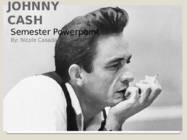
auditioned as solo artist for Sam Phillips' Sun Records, that following Spring he was in the Sun Studios to record with his new band; The Tennessee Three. Originally consisting of Luther Perkins, Marshall Grant and Red Kernodle. A most popular song of Johnny's was produced at this time by the name of "Hey Porter," however, it had a futile running. "Cash's time in the military may have been a short four years, but those years were crucial in the Vivian Liberto Becomes... Vivian Cash Vivian Liberto became Vivian Cash in 1954 upon his arrival home. They soon after
Some of the medieval residential structures still remain: furnace parts, traces of the old ceilings, niches, etc. Along with 28 Lai Street it forms Healthcare Museum. 38 Lai Street The house on 38 Lai Street deserves attention as "Mr Eggers house (well known Baltic German merchant and industrialist), where the singing society "Estonia" (established in 1865) rented rooms in 1870. Here, the first grand society anniversary celebrations were held. The society attended the first national Song Festival, where it was awarded with the first grade diploma. In 1871 it also set up an acting troupe. With society's leadership theatre was estblished in 1906 and theatre and concert hall 10 built in 1913. The singing society "Estonia" and singing society "Lootus" organized the VI Song Festival. The VII Song Festival was organized by society "Estonia" alone. 39/41 Lai Street The design of the three-storey office- and rental building is based on Neobaroque: the building is designed
efficiency, were sympathetic to dissenters and believed in government by monarchy and aristocracy together. The other group, the Tories, had a greater respect for the idea of the monarchy and the importance of the Anglican Church. This was the beginning of the party system in Britain. Today, the Liberals are the “descendants” of the Whigs and the Conservatives of the Tories. 20. The state opening of Parliament. It is a traditional ceremony which reminds MPs of their special status and of their togetherness. At first the “Black Rod”, a servant of the Queen, is knocking on the door of the House of Commons and demanding that the MPs let the Queen come in and tell them what “her” government is going to do in the coming year. However, the Commons refuses her entry. In the 17th century, Charles I once burst in and tried to arrest some MPs
Most of England, Scotland, and Wales are on the island of Great Britain, as are their respective capital cities: London, Edinburgh, and Cardiff. The Kingdom of Great Britain resulted from the political union of the kingdoms of England and Scotland with the Acts of Union 1707 on 1 May 1707 under Queen Anne. In 1801, under a new Act of Union, this kingdom merged with the Kingdom of Ireland to create the United Kingdom of Great Britain and Ireland. After the Irish War of Independence most of Ireland seceded from the Union, which then became the United Kingdom of Great Britain and Northern Ireland. The relatively limited variety of fauna and flora on the island is due to its size and the fact that wildlife has had little time to develop since the last glacial period. The high level of urbanisation on the island has contributed to a species extinction rate that is about 100 times greater than the background species extinction rate.
restaurant in Scollay Square in Boston to appeal to the mean serving at Charlestown Navy Yard. Because it resembled a submarine for its shape, people began to call them “submarine sandwiches”. According to another version, the sandwich was created during World War II by an Italian shopkeeper named Benedetto Capaldo in New London, CT. When the navy servicemen from the submarine base in the town of Groton across the river began ordering 500 sandwiches a day, the sandwich became irrevocably associated with submarines. The third popular theory claims that the term comes from Dominic Conti, an Italian who immigrated to New York in the early 1900s. His granddaughter Angela Zuccar has stated that her grandfather started a grocery store, called Dominic Conti's Grocery Store, on Mill Street in Paterson, New Jersey, selling the traditional Italian sandwiches there. He had brought the recipe from Italy
The natural lakes of the interior of continental Australia are salt lakes. Fed by streams and rivers, they receive water rarely. Lake Eyre, Torrens, Frome and Gairdner are the remains of a vast inland sea which once extended south from the Gulf of Carpentaria. Rivers Australia has only few rivers. Many of them are full of water only after it rains. There are many temporary rivers called creeks. The biggest rivers are in the east. All the rivers in Australia are short. Murray River is Australia's principal river. The Murray River and its tributaries run approximately 3,370km in length and form most of the border between New South Wales and Victoria. Climate Because of its size, Australia has many climates. The Tropic Capricorn cuts across the northern part of Australia so about 40per cent of the country lies in tropics. In the south, the island state of Tasmania lies in the cool roaring forties. In the north the climate is tropical
patched stone wall as a memorial. You can still see them on the tower's south east side. http://www.tourism.tallinn.ee/eng/fpage/explore/attractions/old_town #!p_174740 Tallinn Town Hall Nothing says power like the impressive, Gothic Town Hall that dominates Medieval Tallinn's main square. It was built in 1402-1404 as a meeting place for the ruling burgermeisters and has been a show piece of the city ever since. Nowadays the Town Hall is the only intact Gothic town hall in Northern Europe. It's used mainly for concerts or for entertaining visiting kings or presidents. In July and August it's open to visitors as a museum. The structure's interior is truly impressive, featuring colourful meeting halls, vaulted ceilings, intricate wood carvings and some of the city's most prized art treasures. Head down to the cellars for exhibitions during the summer season.
approximately 350-400 million native speakers. Which place does English occupy in the world by its number of speakers?After which language? English occupies second place by its number of speakers after Mandarin Chinese. 3. What is the difference between English as a Second Language, English as a Foreign Language and English for Specific Purposes? Give examples of situations where they are used. English as a Second Language (ESL or TESL) is a traditional term for the use or study of the English language by non-native speakers in an English-speaking environment. That environment may be a country in which English is the mother tongue (e.g., Australia, the U.S.) or one in which English has an established role (e.g., India, Nigeria) English as a foreign language A traditional term for the use or study of the English language by non-native speakers in countries where English is generally not a local medium of communication.
England was a separate realm before its royal union with Scotland. Shakespeare- was an English poet and playwright, widely regarded as the greatest writer in the English language and the world's pre-eminent dramatist. He is often called England's national poet and the "Bard of Avon". His surviving works, including some collaborations, consist of about 38 plays, 154 sonnets, two long narrative poems, and several other poems. His plays have been translated into every major living language and are performed more often than those of any other playwright 20. The Civil War - (16421651) was a series of armed conflicts and political machinations between Parliamentarians and Royalists. The first (164246) and second (164849) civil wars pitted the supporters of King Charles I against the supporters of the Long Parliament, while the third war (164951) saw fighting between supporters of King Charles II and supporters of the Rump Parliament
Influence: In art and literature, Freud's theories influenced surrealism . Like psychoanalysis, surrealistic painting and writing explores the inner depths of the unconscious mind. Freudian ideas have provided subject matter for authors and artists. Critics often analyze art and literature in Freudian terms. 2. Literary Modernism and its sub-movements. The influence of Structuralism and psychoanalysis. Main characteristic features of Modernism. Denial of conventions, traditional structure, plot and presentation of character. The stream of consciousness. Allusiveness. Virginia Woolf's Modern Fiction as a theoretical platform for Modernism. Criticism of Realist literary method. Literary modernism: end of the 19th century-1920 (reached its height) and ended 1940s. A self- conscious break with traditional aesthetic forms. Rejecting the sentiment and discursiveness typical
Lived last 20 lives in total misery, cinema had moved on and melies was more than a sidenote. People at the end of his life organised a retrospective. Wanted to shoot actuality but was interested in illusion. It is fundament that hollywood is built on. Hollywood is selling illusions. Cinema can become the theater, magicshow. Melies the first ,,auteur". Film is not like in hollywood, but the maker is an author. The keygenius to make it all happen-,,auteur". Demonstrated that feature film production can be the work of a single creative mind(not industry) Melies: wrote the scripts, controlled every aspect, in front of and behing the camera, hired the actors, took care of shooting, develping and editing of the film. The father of indipendent film . Cinem ais an art form that is controlled by an artist with a personal vision European film industry is cultural, state money. European art directors stand for the film they are making. People go there to see an art exhibition
raped. She swept trough Southern Britain with her tribe and tortured every Roman she met. A women having power seemed unnatural to the Romans. She fought back for 2 years, but finally took poison and died. *Hadrian's Wall It was built by the emperor Hadrian and it marked the Northen border of the Roman empire. Hadrian's Wall was built, beginning in 122, to keep Roman Britain safe from hostile attacks from the Picts. The wall stretched from the North Sea to the Irish Sea. In addition to the wall, the Romans built a system of small forts called milecastles. Sixteen larger forts holding from 500 to 1000 troops were built into the wall, with large gates on the north face. To the south of the wall the Romans dug a wide ditch with high earth banks. *The Picts, Caledonia The Romans called Scotland 'Caledonia' because the dominant tribe of Picts they encountered was the Calidonii. Romans thought they were barbarian savages, but
that leads nowhere. The final scene is the big indictment-critisism of america, road to nowhere. It is one of the experimental novels. The narrative structure is very complex. 12 fictional narratvies each told from the point of view, interrupted by three formal devices. The first device is the Newsreels, then the second is simply biographies and the third the camera eye. 69 newsreels, these are collages of real newspaper headlines. News story fragments, snatches of song lyrics, political speeches of that times and even advertisement. Mass culture and popular conscousness of that time is given. They also present the panorama of events. 27 biographies in the trilogy, these are very imaginative of famous public figures, people who shaped or represented the major social forces of that time, people who made history. Eugene Debs-one of the greates leiva movements, Valentino-major hollywood star, thomas edison, president wilson and many more
Now I now that there were three general groups that made up Creole society: 1) whites who were Creoles, Americans, and inhabitants of European origin made up the highest class; 2) free Blacks, emancipated slaves and their descendants made up the middle class; and 3) slaves who were household property, were the lowest class. The Creoles were the majority of the white population. They had a complex social organization, which included foreign groups such as Germans, Irish, and Spaniards whose names were given a French accent. The people who could trace their noble ancestors called themselves "Creole." Others were "chacas" or tradesmen, "chacalatas" or country folk (peasants), or "chacumas" for anyone with Black blood. All Creoles, no matter what level of society they were in, including slaves, looked down on the Americans. 3 Family life In the Creole family the father was dominant. His word was law. He was not always a
of Australia, but less than 100 000 people live there. Between the Western Australian Shield and the Great Dividing Range is the Great Artesian Basin region. It is an area of vast plains. It includes three major basins: The Carpentaria, the Eyre and the Murray basins. Lake Eyre is one of the largest salt lakes and also the lowest point of the country (15 m below seal level). The permanent rivers can be found in eastern Australia, in southwestern Australia and in Tasmania .The biggest river is the Murray River. Approximately 3,370 km in length. It is fed by melting snows. Other rivers are seasonal. The coastline of Australia is generally regular – with few bays and capes. The largest inlets are the Gulf of Carpentaria and the Great Australian Bight. In the northeast of the country a few km off the coast there is the Great Barrier Reef. It extends about 2000 km along the coast of Queensland. Made of coral, it is the world’s largest structure created by living organism. .
* the capital city is London * is made up of four constituent countries: England, Scotland, Wales and Northern Ireland which in turn are divided into counties * the flag is called the Union Jack which is a combination of the flags of England, Scotland and Northern Ireland * the population is about 60,000,000 people, the population density is 242 people/sq km * its coasts are washed by the Atlantic Ocean, the North Sea, the English Channel, the Celtic Sea, Saint George's Channel, and the Irish Sea. It is linked to France by the Channel Tunnel * the United Kingdom is a constitutional monarchy. The current monarch is Queen Elizabeth II, who is also the Queen and Head of State of fifteen other Commonwealth Realms, such as Canada, Australia, New Zealand and Jamaica. England: * it has 50 cities, the capital city is London * despite of the density of population and the high degree of urbanisation, England has many
nearly everything that could be written upon--stone, clay, tree bark, metal sheets--was used for writing. Alphabetic writing emerged in Egypt about 5,000 years ago. The Ancient Egyptians would often write on papyrus, a plant grown along the Nile River. At first the words were not separated from each other (scriptura continua) and there was no punctuation. Texts were written from right to left, left to right, and even so that alternate lines read in opposite directions. The technical term for this type of writing is 'boustrophedon,' which means literally 'ox-turning' for the way a farmer drives an ox to plough his fields. 1/15 Scroll
Kent-JUtes, Essex, Sussex, Vessex- Saxons East Anglia, Mercia, Nothumbria- Angles Series of over-kings from various kingdoms St Patrick Conversion of Irish- 432-461 Patron saint of Ireland, originally pagan, slave He escaped, became a Christian priest and later bishop. Ireland was largely christian by 6th C Monasteries multiplied, monastic lines, provinces were ruled by abbots St Columba 6th, 7th C Irish sent missionaries to Gaul, Germany, Scotland and England St Columba went to Scotland, converted Picts, 563 founded a monastery of island Iona Credited with major role in converting Scotland to Christianity St Aidan Irish missionary, King Oswalds of Northumbria bishop Had qualities to convet Northumbria. After monastery of Lindisfarne 635 had built he set up a church in royal village He always travelled on foot,
national flag is hoisted at sunrise and lowered at sunset except on June 23, Victory Day, when it is left out for the shortest night of the year, followed by another public holiday, Midsummer Day. The Estonian national anthem - entitled My Native Land, My Pride and Joy, was composed in 1848 by Friedrich Pacius, a Finn of German descent. The Estonian- language words were written by Johann Voldemar Jannsen. In 1869 it was performed at the first all-Estonian Song Festival in Tartu and gained popularity during the period of the national movement. After World War I the melody became the national anthem of Estonia and Finland. It was officially adopted in Estonia after the War of Independence in 1920. The anthem was banned during Soviet occupation and another song, My Native Land, My Dearest Love by Gustav Ernesaks (words by Lydia Koidula), became an unofficial anthem at that time and enabled the people to express their feelings of national identity.
houses are the mute witnesses of those times. The riches and cultural heritage of Mulgimaa owe to the diligence and tenacity of the local people. Village handicraftsmen and masters have always been honoured. Mulgikapsad (stewed sauerkraut with barley groats), Estonian cheesecakes and kama (a roasted meal-mixture) have not lost their popularity. However, linen growers have now been replaced by cereal grains growers and many farms have specialised on raising sheep or horses. And as the song goes: "Mulgimaa it's a place where life is good. It's a land of vast woods, fertile fields and nature's charms, the home of prosperous Estonian farms..." Tourism and handicraft in Lõuna-Viljandimaa Lõuna- Viljandimaa captivates senses with its beautiful landscapes. Lõuna- Viljandimaa as we know it today stays in the heart of the historic Mulgimaa. Mulgimaa is the home of mountains, deep valleys and lakes, its natural axis is the beautiful old valley of Halliste.
The ancestors of the aborigines come in all shapes and sizes, in some ways they are very similar to Greek Gods and Goddess', in that they usually represent a certain theme. Such as the sky, or water. During the Dreaming the ancestors criss-crossed Australia shaping the land into its current state as the went. The Aborigines also consider certain constellations to be ancestors . Death was always a time of sorrow and supernatural fear among traditional ATSI people(Aboriginal and Torres Strait Islander people.) . Wailing or crying was a common occurrence among the mourners who often painted their bodies with pipe clay, red ochre, or charcoal when a relative or friend died. In some districts people wore a head covering made of feathers. Others beat their bodies with sticks or clubs, or cut themselves with shells or stone knives to cause bleeding. In
 annaabi.ee