Leidsid 33 sarnast õppematerjali, mis on seotud failiga "Grammar Unit 9". Need materjalid aitavad sul teemat sügavamalt mõista.
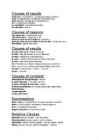
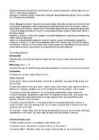
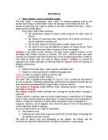
clause, fact, noun, idea, negative, öeldis, informal, though, join, ideas, other, either, clauses, adjective, reason, contrast, addition, before, however, hand, result, such, account, positive, although, points, already, known, even, both, besides, another, while, still, joining, therefore, furthermore, moreover, enamgi, consequence, mistõttu, adverbClauses of results Such a/an + omadussõna + ainsuses loendatav nimisõna Such + omadussõna + loendamatu nimisõna/mitmus Such a lot of + loendamatu nimisõna/mitmus So + omadussõna/määrsõna So much/little + loendamatu nimisõna So many/few + mitmus Clauses of reasons The reason for + nimisõna/-ing vorm The reason why + clause (he verb) Because of/on account of/due to + nimisõna Because of/on account of/due to the fact that + clause (he verb) Now (that) + clause (they verb) Clauses of results In order to/so as to + infinitive (formal) So that + can/will (present or future reference) So that + could/would (past reference) In case + present tense (present or future reference) In case + past tense (past reference) For + nimisõna (kui tahame väljendada tegevuse eesmärki) For + -ing vorm (kui tahame väljendada millegi funktsiooni) Prevent + noun/pronoun + (from) + -ing vorm Avoid + -ing vorm Clauses of contrast Although/even though/though + clause
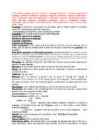
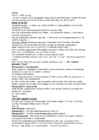
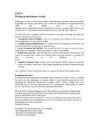
North Germanic languages → Swedish, Norwegian, Danish, Icelandic and Faroese. West Germanic languages → English, German, Dutch, Frisian, Afrikaans and Flemish. 2. How to classify words into different word classes? 1) One of the most common classification ways goes by the definition of words. Most of the linguists believe though, that this is not an absolute classification. Examples of definitions: Noun is the name of a person, place or a thing. (I love this place). A verb expresses an action, process or a state. (I love this place). An adjective describes a noun. (This place is lovely). 2) Distribution test → Takes the context in which the word occurs in, into consideration. Also the whereabouts of the word in a sentence
Notes: Proto-Germanic » Northwest Germanic » West Germanic » North Sea Germanic » Anglo Frisian » English 2. How to classify words into different word classes? (definition is that enough?, morphology, distribution and function tests); Grammatical categories for nominals, verbs, adjectives. "A set of words like dog, child, cat, man, bird where the individual words are mutually substitutable is known as a word class..." Definitions a) A noun is the name of a person, place or thing. b) A verb expresses an action, process or state. c) An adjective is a describing word which modifies a noun. "Although such definitions will identify many members of a word class, linguists generally agree that they need to be supplemented by formal tests. e.g. sincerity Sincerity can be frightening misery Lee is misery itself. Such miseries are uncommon Distribution:
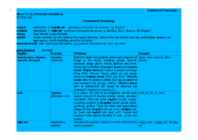
marker tunnus (mitmuse, oleviku, lihtmineviku, tingiva kõneviisi, käskiva kõneviisi, kaudse kõneviisi, umbisikulise tegumoe, ma- tegevusnime, oleviku kesksõna, mineviku kesksõna) derivational affix liide, tuletusliide, tuletusafiks (e.g. postwar, anti-American, wiser, greenish) parts of speech sõnaliigid English Estonian Definition Example noun (proper, common, nimisõna, Refers to words which denote classes and categories of book, water, sincerity, Mary, concrete, abstract) substantiiv things in the world, including people, animals, Estonia inanimate things, places, events, qualities, and states. Nouns can be divided into proper nouns and common
•He took his boots off. •They called the doctor in. apposition a grammatical construction in which two usually adjacent nouns having the same referent stand in the same syntactical relation to the rest of a sentence (as the poet and Burns in “a biography of the poet Burns”) back-reference In grammatical analysis, the term reference is often used to state a relationship of identity which exists between grammatical units, e.g. a pronoun 'refers' to a noun or noun phrase. When the reference is to an earlier part of the discourse, it may be called a 'back-reference' (or anaphora); collective noun Collective noun is the name we give to a group of nouns to refer to them as one entity. A crew of sailors. A flock of birds. A range of mountains. conjunction any member of a small class of words distinguished in manylanguages by their function as connecto rs between words, phrases,clauses, or sentences, as and, because, but, however. content words
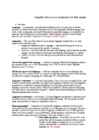
UNIT 6 Connecting Ideas Logically and Effectively The aim of the section is to assist you to produce an effective topic outline: a skeleton of your document. If this stage of the production process is done properly all you really need are the language control techniques to connect your ideas logically and effectively. If you have a well documented list of techniques to connect your ideas effectively the writing process is less formidable. You will want to know how to join similarities, compare and contrast certain facts, introduce the next topic, offer a supporting idea, or refer to previously presented facts. You will also need to know how to present different shades of argument to produce logically a recommendation you wish to make. This requires an ability to emphasise certain facts and 'bury' others. However, all facts need to be linked to give a logical flow.
keh ehs ehs-toh keh teh pah-sah spahn-yol What is that? What's the matter (with you)? How do you say ____ in Spanish? No importa. ¿Qué pasa? Sin novedad. noh eem-por-tah keh pah-sah seen noh-veh-dahd It doesn't matter. What's happening? Nothing much. No tengo ninguna idea. ¡Buena idea! ¡Pase! noh tehn-goh neen-goo-nah ee- bweh-nah ee-deh-ah pah-seh deh-ah Good idea! Go ahead! I have no idea. Estoy cansado / enfermo. Tengo hambre / sed. Tengo calor / frío. eh-stoy kahn-sah-doh / ehn-fehr-
Extended Rules for Using Commas Comma Use 1. Use commas to separate independent clauses when they are joined by any of these seven coordinating conjunctions: and, but, for, or, nor, so, yet. The game was over, but the crowd refused to leave. The student explained her question, yet the instructor still didn't seem to understand. Yesterday was her brother's birthday, so she took him out to dinner. 2. Use commas after introductory a) clauses, b) phrases, or c) words that come before the main clause. a. Common starter words for introductory clauses that should be followed by a comma include after, although, as, because, if, since, when, while. While I was eating, the cat scratched at the door. Because her alarm clock was broken, she was late for class. If you are ill, you ought to see a doctor. When the snow stops falling, we'll shovel the driveway. However, don't put a comma after the main clause when a dependent (subordinate) clause follows it (except for cases of extreme contrast).
Essay 200 (+/- 10%) words The text consists of 4-5 paragraphs discussing a specified topic. Usually the task contains points you have to discuss. Make sure they are all covered! Keep in mind! Formal language – no slang, so contracted forms, colloquialisms, try to avoid repetition of words. Indented lines! Clear paragraphs with one central idea. Avoid strong feelings 8everybody hates... it is absurd to believe...) and strong personal expressions Use generalization (children assume…), but do not use overgeneralizations (all children assume…) At least 2 linking words per paragraph (separate them from the rest of the sentence by commas!) that show the connection between paragraphs. Make references to other sources (Police officials believe that…) Give examples, not personal thoughts (expressive intake of alcohol can damage
words Main body (para. 2 - 4) Give the first, second and third argument and examples or reasons to support your opinion Conclusion Re-state your opinion, using different words Useful language To list points firstly, in the first place, first of all, to start with, secondly, thirdly, finally, last but not least To add more points to the same topic what is more, furthermore, also, apart from this, in addition to, moreover, besides, too, not to mention the fact that, another major reason To introduce conflicting viewpoints a lot of people believe/think, many people are in favour of/against, peopleoften claim that, it is popularly believed that, it is argued that, people argue that, opponents of this view say, however there are people/those who oppose, contrary to popular belief To express personal opinion in my opinion/view, to my mind, personally I believe, it
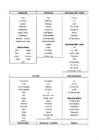
Adding and Contrasting Expressing cause / reason *and *but because as well as However, as besides Although since Moreover, despite This is why Furthermore, In spite of because of What is more, Nevertheless, Due to In addition, On the contrary, Owing to not only .... but also on the one hand For this reason, another point is that on the other hand, whereas Expressing effect / result relative clauses while
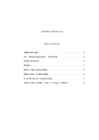
Overview 76 "Use" in a roughly Wittgensteinian sense 77 Objections and some replies 79 Inferentialism 83 Summary 84 Questions 85 Further reading 85 7 Psychological theories: Grice's program 86 Overview 86 Grice's basic idea 86 Speaker-meaning 88 Sentence meaning 92 Summary 96 Questions 96 Further reading 97 8 Verificationism 98 Overview 98 The theory and its motivation 98
1. STYLE The term "style" is polysemantic (has many meanings): a Latin word "stilus" originally meant a writing instrument used by ancient people. Already in classical Latin the meaning was extended to denote the manner of expressing one's ideas in written or oral form. Jonathan Swift defined style as "proper words in proper places". In present day English the word "style" is used in about a dozen of principle meanings: 1. the characteristic manner in which a writer expresses his/her ideas (e.g. style of Byron) 2. the manner of expressing ideas, characteristic of a literary movement or period 3. the use of language typical of a literary genre (e.g. the style of a comedy, drama, novel). 4. the selective use of language that depends on spheres / areas of human activity (e.g. style of fiction, scientific prose, newspapers, business correspondence, etc.). STYLISTICS Stylistics is the study of style
fashioned and long out of common use. 19th-Century Archaisms "We do not have to go back as far as Elizabethan English or the Middle Ages to encounter archaisms. Here are some from the Victorian and Edwardian eras: beastly (as in 'so beastly critical') blest, deuced (if I know) guv’nor luncheon spiffing 20th-Century Archaisms "Among the technological archaisms I've had to explain to the Tuned In children--what a 'record' is, why they call it 'dialing' a phone, the fact that, once, you couldn't rewind TV shows--is the fact that, a long time ago, musicians used to make little movies of their songs, and people would watch them on TV." 17. Neologisms A neologism is a newly coined word or term which has emerged into everyday usage. Some neologisms are formally accepted into mainstream language (at which point, they cease to be neologisms), and some wither until they can longer be considered everyday terms. A neologism can be:
Oxymoron Neologisms Functional styles / registers Hyperbole STYLE AND STYLISTICS FGI 1081 Stylistics (I. Ladusseva) 2 The term "style" is polysemantic (has many meanings): a Latin word "stilus" originally meant a writing instrument used by ancient people. Already in classical Latin the meaning was extended to denote the manner of expressing one's ideas in written or oral form. The precise definition was given by Jonathan Swift, who defined style as "proper words in proper places". In present day English the word "style" is used in about a dozen of principle meanings: 1. the characteristic manner in which a writer expresses his/her ideas (e.g. style of Byron). 2. the manner of expressing ideas, characteristic of a literary movement or period (e.g. symbolism, romanticism, renaissance). 3
the + comparative, the + comparative is used to say that a change in one thing goes with a change in another The sooner we leave, the sooner we’ll get there. The faster you drive, the better. The more you study, the more you know. So and such a So is followed by adjectives - be + so + adjective: The soup was so hot that I couldn’t eat it. You are so beautiful! 5 Such a(n) is followed by a noun or an adjective plus noun – be+ such + a(n) (+ Adjective) + noun: It was such an awful day! He is such a fool! With singular countable nouns such a(n) is used It was such a slow train that I arrived late for the meeting. With uncountable or plural countable nouns such is used. They were such large tablets that I couldn’t swallow them. It was such poor quality oil that it damaged my car engine. Adjectives ending in –ly
UNIT 1 Writing in the Business World Writing gives structure and form to our ideas. In the business world this is done for a purpose: to persuade, recommend, offer advice, give an order, etc. The business text must therefore be easily and quickly read and its message must be understood exactly as intended. If you learn to recognize and avoid the more common errors of information control, grammar and style, you will achieve this aim.
STYLISTICS 1. Style, stylistics, a survey of stylistic studies The term ,,style" is polysemantic. Latin ,,stilus"--a writing instrument used by the ancients for writing on waxed tablets. Soon, the meaning was extended to denote the manner of expressing one's ideas in written or oral form. Jonathan Swift said: ,, Style is proper words in proper places" Present day--half a dozen meanings: · the characteristic manner in which a writer expresses his ideas (Style of Byron) · the manner of expressing ideas characteristic of a literary movement or period (symbolism, romanticism) · the use of lg. typical of a literary genre (comedy, drama, novel)
What is a Sentence? 139 6 Determiners 71 Kinds of Sentences 140 The Imperative 141 The Articles 71 The Subject and the Object 143 Demonstrative Determiners 73 Direct and Indirect Objects 144 Interrogative Determiners 74 Positive and Negative Sentences146 Possessive Determiners 75 Questions 147 7 Verbs and Tenses 79 14 Punctuation 150 The Simple Present Tense 80 Period 150 Am, Is and Are 83 Comma 151 The Present Progressive Tense 89 Exclamation Point 152 Have and Has 93 Question Mark 152
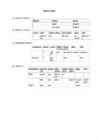
Word order: positive sentences subjects verb(s) object I speak English. I can speak English. Negative sentences subject verbs Indirect object Direct object place time I will not you the story at Tomorro tell school w. Subordinate Clauses conjunction subject verb(s) Indirec Direct place time
..) Some of the staff can speak Portuguese. Did any of your photos come out well? You can take any of these. Some is used: • with affirmative verbs: They bought some honey. • in questions where the answer ‘yes’ is expected: Did some of you sleep on the board? (I expect so.) • in polite offers and requests: Would you like some wine? Could you do some typing for me? Any is used: • With negative verbs: I haven’t got any matches. • With hardly, barely, scarcely (which are almost negatives): I have hardly any spare time. • With without when without any ...= with no ... : He crossed the frontier without any difficulty/with no difficulty. • With questions except the types noted above: Have you got any money? Did he catch any fish? • After if, whether and in expressions of doubt: If you need any money, please let me know.
· First / firstly, second / · So · Undoubtedly secondly, third / · As a result · Indeed thirdly etc · As a consequence · Obviously · Next, last, finally (of) · Generally · In addition, moreover · Therefore · Admittedly · Further / furthermore · Thus · In fact · Another · Consequently · Particularly / in · Also · Hence particular · In conclusion · Especially · Due to · Clearly · To summarise · Importantly
As an essay is a formal piece of writing, contractions (e.g. isn't, aren't, etc.) are not acceptable because they are not formal enough. S/he can be used instead of the cumbersome "he or she" to save space when having in mind a person of either sex, or the also politically correct "they" for the singular. There should be neither slang forms nor colloquialisms. It is important to be as precise and to the point as possible. Hinting at things is not a good idea because essays are not meant to be read by friends who know the writer's point of view anyway, but by mere acquaintances or most often even strangers who should also understand everything the writer is trying to say. As to the sentences, it is stylistically good to have them nicely balanced, some of them longer, some shorter, but not too long or too short. The formality of an essay and unfinished sentences do not go together well. Exclamation marks (!)
the end-of-grade tests have gone down from last year; teachers are not very motivated; and everyone is frustrated. To sum up, some improvements in the middle school program need to be made. To conclude, I want to wish you all a very happy holiday season. There was a malfunction in the smoke machines and lights, the curtains would not open and close properly, and one of the actors was sick with no stand-in. In conclusion, the play was a disaster. Words that REPEAT information · in fact · in other words · once again · to put it another way · to repeat That area is very dangerous for you to bike in. To repeat, I warn you not to go there. Lisa decided not to go to King Islands. In fact she told me, "No, way." I feel that our last Student Council meeting did not go well. In other words, it was a fine mess. Sally has lost an oar on her boat and she is in big trouble. Well, to put it another way, Sally has to find another way to row or she will sink!
or unwilling to proceed. A indicates strong emotions, paralyzing the speaker or his desire to conceal part of information. NT: she must leave or better yet drown herself make away with herself at some way or The speaker's strong emotions therefore inability to finish. NT: And it was so unlikely that she had stolen his wallet that... well. NOMINATIVE SENTENCES NOMINATIVE SENTENCES are just a noun-sentence, containing a noun or a nominal-noun-phrase sentence. NOMINATIVE SENTENCES strengthen the dynamic nature of the narrative. NT: London. Parks. Horse rides. Noisy streets. Noisy traffic. Policeman. Such sentences evoke a more or less isolated idea of an object without any connection with other objects. These sentences appeal to reader's imagination, and thus makes the reader active. ASYNDETON ASYNDETON means intentional omission of conjunctions between parts of a sentence or between sentences,
Style The term style is a polysemantic one. The latin word ,,stilus" meant a writing instrument used by the ancients for writing on waxed tablets. Already, in classical latin the meaning of style was extended to denote the manner of expressing one's ideas in written or oral form. One of the abts/the best was given by Jonathan Swift: ,,Proper words in proper places." In present- day english, the world style is used in about half a dozen basic meanings. 1. the characteristic manner in which a writer expresses his ideas. Some speak about the style of Hemingway, Dickens etc. 2. the manner of expressing ideas, characteristic of a literary movement or period. Style of symbolism, romanticism 3
I don't like to be shouted at. (NOT I don't like to be shouted.) This needs to be thought about some more. (NOT This needs to be thought some more.) 6. Don't use a present tense after It's time. It's time you went home. (NOT It's time you go home.) It's time we invited Bill and Sonia. (NOT It's time we invite Bill and Sonia.) 7. Use was/were born to give dates of birth. I was born in 1975. (NOT I am born in 1975.) Shakespeare was born in 1564. 8. Police is a plural noun. The police are looking for him. (NOT The police is looking for him.) I called the police, but they were too busy to come. 9. Don't use the to talk about things in general. Books are expensive. (NOT The books are expensive.) I love music. (NOT I love the music.) 10. Use had better, not have better. I think you'd better see the doctor. (NOT I think you have better see the doctor.) We'd better ask John to help us. 11
He never wrote a text comparable with Wordsworth’s “Preface” to Lyrical Ballads, Shelley’s “A Defence of Poetry” or Eliot’s “Tradition and the Individual Talent”. This lack of a conceptualized theory, however, does not indicate a lack of principles. In the first part of this study I will offer an outline of Larkin’s poetics, based on the form and the style he used to use, to get in to a second part in which I will assess the way he presents and expresses his ideas. 1.CHAPTER I 1.1. LARKIN STUDIES POINTS OF VIEW: BIOGRAPHY AND POETRY In the collection of essays edited by Stephen Regan (Philip Larkin, 1997) we can find some underlying question as: are we discussing the poem or the poet? Or, in Larkin’s terms: are we more deceived or less deceived by the metonymy of the phrase “we are reading Larkin”? The main purpose of the volume may be discussing and
Yours sincerely, Lee Jones 5. ... I would appreciate a reply at your earliest convenience. I look forward to meeting you to discuss employment opportunities. Yours faithfully, Nicole Porter Paragraph Plan for Letters · salutation · Paragraph 1 reasons for writing · Paragraphs 2, 3 development · Final paragraph closing remarks · Name · Letters are divided into two categories, formal and informal. There are various types of formal and informal letters . · It is important to think about the person who you are writing to before you begin writing a letter. If the wrong style is used, the letter will look impolite, silly or odd. For example, if you used formal language to write to a close friend, the letter would look odd, or if you used informal language to write a letter to a company, the letter would look impolite.
Conditionals Sentences with if are used to express possibilities. 0 Zero conditional If-clause present (past) simple Main clause present (past) simple Sometimes sentences with if express certainty rather than possibility. The zero conditional is used to talk about sth. that is always true (such as a scientific fact), or that was always true in the past. In this type of conditional we can use when instead of if. E.g., If/When you mix blue and red, you get purple. If/When you don't water flowers, they die. (present simple in both parts of the sentence) If/When I asked her to come with us, she always said no.
Happiness is something long-term and is more 'part' of a person than an experience its senses undergo. Utilitarianism believes a certain action should result in maximum happiness for the biggest group of people. The government should always think of the interests of the population. Eudemonism and hedonism are however more focused on the individual. Here, classical utilitarianism 1 justifications will be discussed (Ibid.). Classic utilitarianism departs from the idea that there are two intrinsic values, pain and happiness. Jeremy Bentham believed that happiness includes wellbeing and absence of pain. It was him who defined that utility holds that the good is what produces most happiness for the most amount of people. "The greatest happiness of the greatest number" was called the "Greatest happiness principle" and was according to him the base for moral and legislation. What was not considered was that people would
ideology and epistemology as standard textbook economics (STE) is based (for my take on this, see Drechsler 2000), and it has had, and still has, similar results. Already more on the defensive within public administration (PA) than STE is within economics, NPM also shows that such major paradigm shifts in theory and policy may actually happen. In addition, it occasionally appears that pae-oriented scholars have overlooked the fact that some features in public management reform, state organization, and the economic interpretation of state functions that they advocate from "Good Governance" to "efficiency" as a goal in itself actually belong into the "other camp" and by and large have a disastrous effect on "industrial" and "developing" countries alike, although the consequences for the latter are much more severe. NPM is the transfer of business and market principles and management techniques
paragraph is about. · Linking words should be used throughout your composition. Useful Language To express opinion: I believe, In my opinion, I think, In my view, I strongly believe, The way I see it, It seems to me (that) To list points: In the first place, first of all, to start with, Firstly, to begin with To add more points: what is more, another major reason, also, furthermore, moreover, in addition to this/that, besides, apart from this, not to mention the fact that To introduce contrasting viewpoints: It is argued that, People argue that, Opponents of this view say, There are people who oppose, Contrary to what most people believe, As opposed to the above ideas To introduce examples: for example, for instance, such as, in particular, especially To conclude: To sum up, All in all, All things considered, Taking everything into account OPINION ESSAY EXAMPLE Will life be better in the future?
 annaabi.ee