 10 punkti
Autor soovib selle materjali allalaadimise eest saada 10 punkti.
10 punkti
Autor soovib selle materjali allalaadimise eest saada 10 punkti.
 ~ 1 leht
Lehekülgede arv dokumendis
~ 1 leht
Lehekülgede arv dokumendis
 2011-03-01
Kuupäev, millal dokument üles laeti
2011-03-01
Kuupäev, millal dokument üles laeti
 26 laadimist
Kokku alla laetud
26 laadimist
Kokku alla laetud
 1 arvamus
Teiste kasutajate poolt lisatud kommentaarid
1 arvamus
Teiste kasutajate poolt lisatud kommentaarid
 ket142
Õppematerjali autor
ket142
Õppematerjali autor
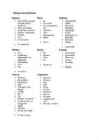
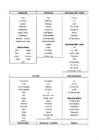
first, second, third for example in general first, furthermore, finally for instance generally to begin, to conclude as follows: on the whole next that is as a rule Reinforcement in this case for the most part also namely in most cases furthermore in other words usually moreover Result/consequence Highlighting what is more so in particular in addition therefore particularly besides as a result/consequence especially above all accordingly mainly as well (as) consequently Reformulation
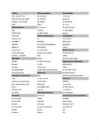
Linking Devices Transition words and phrases help establish clear connections between ideas and ensure that sentences and paragraphs flow together smoothly, making them easier to read. Use the following words and phrases in the following circumstances. To indicate more information: To indicate an example: Besides For example Furthermore For instance In addition In particular Indeed Particularly In fact Specifically
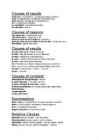
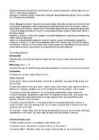
What (+ omadussõna) + loendamatu nimisõna/mitmus How + omadussõna/määrsõna Negative question (+ exclamation mark) Relative Clauses Who/what (people) subject - can't be omitted Who/whom/that (people) object - can be omitted Which/that (objects, animals) subject - can't be, object - can be Whose (people, animals, objects) possession - can't be Clauses of manner If/as though (räägime, kuidas keegi näeb välja, käitub jne) If/as though + past tense (ebareaalne situatsioon) Linking words Positive additions - and, both .. and, beside (this/that), too, moreover, what is more, in addition (to), also, as well as (this/that), Furthermore etc. Negative additions - neither .. nor, nor, neither, either Contrast - but, although, is spite of, while, whereas, even though, on the other hand, however, yet, still etc. Giving examples - such as, like, for example, for instance, especially, in particular etc.
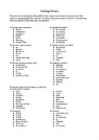
endiltteisele. Viimane lõik moodustab kokkuvõtte ja peaks esimeseslauses võtma eelpoolt oodud arutluse kokku ning seejärel lisamasellest tuleneva lõpumärkuse. · Expressing opinions Introduction State the topic and your own opinion clearly without using too many personal opinion words Main body (para. 2 - 4) Give the first, second and third argument and examples or reasons to support your opinion Conclusion Re-state your opinion, using different words Useful language To list points firstly, in the first place, first of all, to start with, secondly, thirdly, finally, last but not least To add more points to the same topic what is more, furthermore, also, apart from this, in addition to, moreover, besides, too, not to mention the fact that, another major reason To introduce conflicting viewpoints a lot of people believe/think, many people are
everyone is frustrated. To sum up, some improvements in the middle school program need to be made. To conclude, I want to wish you all a very happy holiday season. There was a malfunction in the smoke machines and lights, the curtains would not open and close properly, and one of the actors was sick with no stand-in. In conclusion, the play was a disaster. Words that REPEAT information · in fact · in other words · once again · to put it another way · to repeat That area is very dangerous for you to bike in. To repeat, I warn you not to go there. Lisa decided not to go to King Islands. In fact she told me, "No, way." I feel that our last Student Council meeting did not go well. In other words, it was a fine mess. Sally has lost an oar on her boat and she is in big trouble. Well, to put it another way, Sally has to find another way to row or she will sink! Words that show COMPARISON · as ..
Adding and Contrasting Expressing cause / reason *and *but because as well as However, as besides Although since Moreover, despite This is why Furthermore, In spite of because of What is more, Nevertheless, Due to In addition, On the contrary, Owing to not only .... but also on the one hand For this reason, another point is that on the other hand, whereas Expressing effect / result relative clauses while
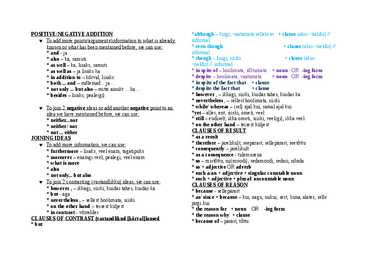
POSITIVE/NEGATIVE ADDITION *although kuigi, vaatamata sellele et + clause (alus->öeldis) // To add more points/arguments/information to what is already informal known or what has been mentioned before, we can use: * even though + clause (alus->öeldis) // * and - ja informal * also ka, samuti * though kuigi, siiski + clause (alus- * as well ka, lisaks, samuti >öeldis) // informal * as well as ja lisaks ka * in spite of hoolimata, sõltumata + noun OR -ing form * in addition to kõrval, lisaks * despite hoolimata, vaatamata + noun OR -ing form * both ... and mõlemad .. ja ... * in spite of the
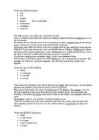
Although the makers have agreed to replace the system free of charge, the new equipment will not be installed for at least six months. Such a delay is clearly unacceptable to us. We should therefore insist that ICN send their own engineer to service the equipment. Alternatively, the equipment should be transported to the ICN plant for inspection and repair there. Discussion 1 Although Text 25 is not impossible to read, Text 26 is far easier. This is because in Text 26 the writer uses linking words moreover, however, consequently, although, therefore, alternatively to indicate the relationship between the ideas in the text. This makes it far easier for the reader to follow the writer's line of thought, or argument. Did you, for example, immediately realise that the last two sentences were alternative proposals when you read Text 25? If the writer's line of thought is not made clear to the reader in this way, there is a much greater chance that the reader will
 annaabi.ee






Kõik kommentaarid