Scotland Overview Flag-Saltire Royal Standard of Scotland Edinburgh, Glasgow First Minister Alex Salmond 78,387km² 5,222,100 St Andrew History Picts (Celtic tribe) Romans named scotland Caledonia The Scots Queen Mary was forced to abdicate the Scottish throne in 1567. National Symbols Thistle Declaration of Arbroath Tartan Bagpipes Kilt Honours of Scotland Crown, Sword and sceptre are from late fifteenth and early sixteenth century. Crown was made in 1540. Pope Julius II presented the sword to King James IV in 1507. The sceptre was made in 1494 and was presented to King James IV by Pope Alexander VI Honours of Scotland Language Have spoken Pictish, Scottish Gaelic similar Norse, Norman- to Irish, it is French and Brythonic recognised a...
Strange and mysticals places on Earth Eye of africa - Mauritania Eye of africa- Mauritania · The Richat structure (Sahara, Mauritania) appears as a large dome at least 40 km in diameter within a Late Proterozoic to Or- dovician sequence. · This natural phenomenon is actually a Richat structure caused by the dome shaped symmetrical uplifting of underlying geology now made visible by millennia of erosion. Socotra island · is a small archipelago of four islands in the India Ocean. The largest island, also called Socotra, is about 95% of the landmass of the archipelago. It lies some 240 kilometres (150 mi) east of the Horn of Africa and 380 kilometres (240 mi) south of the Arabian Peninsula. The island is very isolated and through the process of speciation, a third of its plant life is found nowhere else on the planet. It has been described as the most alien- looking place on Earth. So...
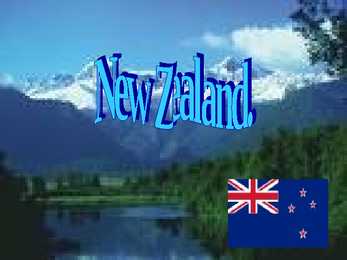
Data of New Zealand. · Capital - Wellington. · Largest city - Aucland. · Official languages - English, Maori, NZ Sign Language. · Government - Constitutional monarchy . · - Head of State Queen Elizabeth II . · - Governor-General Anand Satyanand . · - Prime Minister Helen Clark . · Independence from the UK in September 26, 1907. · Area- 268 680 km². Water (%)2.1. · Population - 4,143,279 . · Currency New Zealand dollar. New Zealand geography. · New Zealand is a country in the southwestern Pacific Ocean. · New Zealand comprises two main islands . · NZ has got many smaller islands. · NZ is mountanious country. The highest peak is Aoraki/Mount Cook at 3754 meters. · NZ have an active volcano Mount Ruapehu. · The climate throughout the country is mild, mostly cool temperate to warm temperate, with temperatures rarely falling below 0°C (32°F) or rising above 30°C (86°F) · The climate in West is different from...
Marie-Helene Sarapuu 8.b Uluru, also named as Ayers Rock, is a large sandstone rock in the central of Australia. Uluru and Kata Tjuta are the two major features of the Uluru-Kata Tjuta National Park. Uluru is sacred to the Pitjantjatjara and Yankunytjatjara, the Aboriginal people of the area. Uluru is one of Australia`s most recognisable natural icons (of course).The world-renowned sandstone is 348m high, 5 km long and 1,5km wide.It is interesting that Uluru changes colour as the different light strikes it at different times of the day and year.Uluru produce an incredible light show at sunset ,with crimsons turning to rusts and pinks to mauves.Uluru has also many springs, waterholes,rock caves and ancient paintings. Fauna and flora Historically, 46 species of native mammals are known to have been living in the Uluru region; ...
The Prarie Provinces Main Facts The Prairies comprise the states of Alberta, Saskatchewan and Manitoba Covers about 2,1 million square kilometers. About 5,7 million people live in that region. What is a Prarie? Prarie (aslo known as a temperate grassland) is a treeless ecozone in North America. Different names in different countries. Only about 400 mm per year. Hot summers and cold winters. Humans and the Prairies Almost 95 % of the Prairies are converted into farmland. The biggest towns are Calgary, Saskatoon and Winnipeg. The main argiculture industries are wheat, barely and canola. Rich in oil and natural gas. Fauna The most common carnivores are the Black Bear, Coyote and Badger. The most common herbivores are the Mule Deer, Pronghorne Antil...
Climate rodants. Some of the animals living in the Taiga has a harsh continental climate with taiga biome are for example: American Black Bear, Gray Wolf, Canadian Lynx, a very large temperature range between River Otter and Red Fox. As for the birds, summer and winter. Winters last at least 5- most common are Bald Eagle, Long-Eared 6 months, with average temperatures Owl and Ravens. below freezing. Temperatures vary...
Australia. Kadri Rampe 2012 Position in the world. Australia, officially the Commonwealth of Australia, is a country comprising the mainland of the Australia continent, the island of Tasmania and numerous smaller islands. Its the world`s sixthlargest country by total area. On 1 January 1901, the six colonies federated,forming a Commonwealth of Australia, since Federation, Australia has maintaned a stable liberal democratic political system. The population of 22,7 million is highly urbanised and heavily concentrated in eastern states due to geography and climate. A highly developed country, Australia is the world's 12th largest economy and has the world's fifthhighest per capita income. Enviroment. Although most of Australia is semiarid or desert, it includes a diverse range of habitats from alpine heaths to tropical rainforests. Australian forests are mostly made up of evergreen species, particularly eucalyptus ...
Form 10A 2009 Introduction The climate is cyclical England is in the middle latitude The English weather changes frequently 52% of the year is overcast England is washed by the warm Gulf Stream Spring March, April, May Wild areas may still be cold and muddy Animals start emerging from their hibernation Plants start blooming Sun and showers Summer Plants and animals start breeding Warm weathers The landscapes are covered with flowers Warm rain The average temperature ranges from 10 0C 150C Britain's highest temperature recorded is 38.5°C in August 2003 Autumn Birds are returning after migrating from the north Birds start growing their winter plumage. Many flowers fade Trees reveal their autumn colours It rains more often Winter Animals start hibernating Flowers are rare Not much snow because of the Gulf Stream The average temperature ranges from 0 0C 5 0C; The lowest temperature recorded is -27.2°C in 1895 Flora Plants usual...
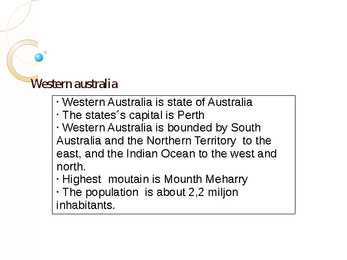
Western australia § Western Australia is state of Australia § The states´s capital is Perth § Western Australia is bounded by South Australia and the Northern Territory to the east, and the Indian Ocean to the west and north. § Highest moutain is Mounth Meharry § The population is about 2,2 miljon inhabitants. History Australian Aboriginal were the original inhabitants of Australia (60000 years ago). The first European visiter was Dutch explorer Dirk Hartog in 1616. On 1 January 1901, Western Australia joined the other Australia states. 1890 the population started to grow due to discovering gold. Coat of arms Flag Australian aboriginal culture According to Australian Aboriginal culture belief, spirit ancestors breathe life and energy into traditional dance, song and design and play a crucial role. Australian Aboriginal culture is widely seen as one of th...
AUSTRALIA Valeria Jegorova 10A 2013 a. Australian flag Coat of Arms Coat of Arms Anthem: "Advance Australia Fair" Royal Anthem: "God Save The Queen" ABOUT Australia's population is roughly 22.7 million people . Australia is the world's sixth-largest country by total area. Australia's military expenditure is the world's 13th-largest. Australia is a constitutional monarchy with a federal division of powers. CULTURE Australian culture is as broad and varied as the country's landscape. Australia is multicultural and multiracial and this is reflected in the country's food, lifestyle and cultural practices and experience. ENVIRONMENT Australia has the greatest number of reptiles of any country, with 755 species. Australian forests are mostly made up of evergreen species, particularly eucalyptus trees . Well-known Australian anima...
ITAALIA/ Italy · The ice cream cone is an Italian invention. · Eyeglasses are an Italian invention. · With almost 40 million visitors, Italy is the fourth most visited country in the world. · Italy`s national dish is pasta. The average Italian cunsumes 25 kg of pasta a year. · The colours of the Italian flag represent three virtues: hope (green), faith (white), and charity (red). · Parmesan cheese originated in the area around Parma, Italy. Italians also created many other cheeses, including gorgonzola, mozzarella, provolone, and ricotta. No one knows when the pizza was invented, but the people of Naples made it populaar. · Most of Italy's natural flora and fauna has disappeared due to centuries of cultivation. Most of its natural wildlife has also disappeared due to over-hunting · No other country in Europe has as many volcanoes as Italy. This is because the Italian p...
CITES CITES ehk Washingtoni (1973) konventsioon loodusliku loomastiku ja taimestiku ohustatud liikidega rahvusvahelise kaubanduse kohta Et vältida ohustatud loomade ja taimede hävimist looduses on sõlmitud rahvusvaheline kokkulepe "Loodusliku loomastiku ja taimestiku ohustatud liikidega rahvusvahelise kaubanduse konventsioon", mida laiemalt tuntakse CITES'i (Convention on International Trade in Endangered Species of Wild Fauna and Flora) nime all. See konventsioon kirjutati alla Washingtonis 3. mail 1973 aastal ja jõustus 1975 aasta 1. juulil. CITES'i eesmärgiks on reguleerida rahvusvahelist kaubandust ohustatud looma- ja taimeliikidega. Probleemid haruldaste looma- ja taimeliikidega kaubanduses on muutunud järjest teravamaks. Kauplemine loodusest hangitud looma- ja taimeliikide isenditega ongi suuruselt teine oht nende püsimajäämisele elupaikade hävimise järel. Ko...
The county of Saaremaa Siiri Tabri Kaia Vask Saaremaa - an exciting island Saaremaa - the biggest island of Estonia is known as a good recreation place with unique nature and a lot of sights. Saaremaa has retained its uniqueness due to its location and insulation. Junipers, dolomite, windmills and the famous local home- brewed beer are considered the symbols of Saaremaa. Rich nature. Because of its mild maritime climate and soil rich in lime, Saaremaa has very rich flora and fauna. In Saaremaa a great number of Roman snails, rare butterflies and beautiful orchids can be found. Each year hundreds of thousands of migratory birds visit Saaremaa and a great number of them are under protection, e.g. barnacle goose and mute swan. Besides Viidumae and Vilsandi Nature Reserves, there are over two hundred single nature objects under protection - parks,...
Jõgeva maakond Endla nature reserve It is located on the borderline of Järva, Jõgeva and West-Viru counties. It is mostly known for various marshes, fens, quaking bogs, lakes, canebrakes, wellsprings, rivers, fen forests, fens and mesotrophic mires, marsh forests, meadows, diverse flora and fauna. Jõgeva town The small town of Jõgeva town is located on the eastern side of Middle-Estonia. You won't find large buildings or breathtaking architecture here, but an overwhelming sense of togetherness and plenty of cultural events, the majority of them geared towards younger people. Jõgeva town was born 130 years ago, thanks to the Tapa-Tartu railway: this is where the first train stopped and a village formed around the railway station. Just half a century later, Jõgeva earned its town rights. There are about 6500 people living in Jõgeva. Jõgeva events · The festival year in Jõgeva starts with a music f...
Essee Great Britain or Britain (Welsh: Prydain Fawr, Scottish Gaelic: Breatainn Mhòr, Cornish: Breten Veur) is an island situated to the northwest of Continental Europe. It is the ninth largest island in the world, and the largest European island, as well as the largest of the British Isles. With a population of about 60.0 million people in mid-2009, it is the third most populous island in the world, after Java and Honsh. Great Britain is surrounded by over 1,000 smaller islands and islets. The island of Ireland lies to its west. Politically, Great Britain may also refer to the island itself together with a number of surrounding islands which comprise the territory of England, Scotland and Wales. All of the island is territory of the sovereign state of the United Kingdom of Great Britain and Northern Ireland, and most of the United Kingdom's territory is in Great Britain. Most of Eng...
TartuWaldorf School FINLAND Report Johan Mähar Tartu 2008 Contents p. 1. Introduction....................................................................................................1 2. Nature and geography.....................................................................................2 3. Position and size.............................................................................................2 4. Climate..............................................................................................
Võnnu Keskkool ESTONIA Referaat Autor: Klass : 9 Juhendaja: Võnnu 2013 Estonia officially the Republic of Estonia, is a state in the Baltic region of Northern Europe It is bordered to the north by the Gulf of Finland, to the west by the Baltic Sea, to the south by Latvia and to the east by Lake Peipus and Russia.Across the Baltic Sealies Sweden in the west and Finland in the north. The territory of Estonia covers 45,227km2 The Estonian climate resembles that of other countries on the Baltic littoral. On account of the country's proximity to the sea, the skies are often cloudy, and rain often falls in the spring and autumn, in the winter the rain turns to snow. The highest point in Estonia is Suur Munamäg It is in fact the highest point in the Baltic region Forest cover over one half of Estonia. The most common types of tree are pine, spruce and birch. Estonia, along...
Natural Zones and Flora. There are five distinguishable natural zones in Australia. In the very east there are wet forests (1.) that occupy the space between the Great Dividing Range and the eastern coast. Westward from the Great Dividing Range the wet forests give place to beautiful grasslands with some trees . These grasslands are called the savannas (2.). Farther west the trees disappear and the bushlands (3.) begin. The real desert (4.) occupies the centre of the Western Plateau. In the very southwest there are thin forests of evergreen trees (5.). Most of Australian trees are kinds of eucalyptus trees (or gum trees to Australians) and acacia ( wattle to Australians). Eucalyptus trees are found everywhere in Australia. There are many kinds of them and they greatly differ in size. One kind, the great mountain ash, can grow to 120 metres and it grows in the wet forests in the eastern part of the continent.These strong trees do not d...
Ireland is the third largest island in Europe. It lies in between the Atlantic Ocean and the Irish Sea. Politically it is divided into a sovereign state, the Republic of Ireland, that covers about five-sixths of the island (south, east, west and north-west), and Northern Ireland, which is part of the United Kingdom, covering the northeastern sixth of the island.[1] The name 'Ireland' derives from the name Ériu (in modern Irish, Éire) with the addition of the Germanic word 'land'. The population of the island is just under 6 million (2006); just over 4.2 million in the Republic of Ireland[2] (1.6 million in Greater Dublin[3]) and just over 1.7 million in Northern Ireland[4] (0.6 million in Greater Belfast[5])). Politics Politically, Ireland is divided into: · The Republic of Ireland, with its capital Dublin. · Northern Ireland, which is part of the United Kingdom, Geography A ring of coastal mountains surrounds low central plains. Th...
New Zealand New Zealand is an island country. It is in the south-western Pacific Ocean comprising two main island, North- and the South Island with lots of smaller islands. New Zealand is notable for its geographic isolation. It's about 1,600 kilometers from Australia and its closest neighbours to the north are New Caledonia, Fiji and Tonga. New Zealand's total land area is 268,021 square kilometers. The country extends more than 1600 kilometers along its main,north - north-east axis and has about 15,000 kilometers of coastline. The South Island is the largest land mass of New Zealand and is divided along its lenght by the Southern Alps and the highest mountain Mount Cook is 3,754 meters high. There are 18 peaks over 3000 meters in the South Island. The highest North Island mountain is Mount Ruapehu and it is an active cone volcano. There are also two oth...
Estonia. Estonia, officially the Republic of Estonia is a country in Northern Europe. It is the smallest of the three Baltic countries. Estonia has land borders with Latvia (339 km) to the south and Russia (229 km) to the east. It is separated from Finland in the north by the narrow Gulf of Finland and from Sweden in the west by the Baltic Sea. Estonia has been a member of the European Union since May 1, 2004 and of the NATO since March 29, 2004. The area of Estonia is about 45000 square kilometres and the population is about 1.4 million people. The capital of Estonia is Tallinn and the official language is Estonian. The currency is Eesti kroon. The main religion is Lutheran. Anniversary of the republic is celebrated on February 20. The national flower is cornflower, national bird is barn swallow and national stone is limestone. It is a land of great natural beaut...
Advantages and disadvantages of television Television is one of the greatest achievements of the 20-th century. It is the most popular part of mass media. Today every family has a TV-set. TV has changed much since the time of its invention and so has its role. There have been numerous debates concerning advantages and disadvantages of television. When TV first appeared its main purpose was to give official information to people. It was supported by the government. Now television plays a big role in every civilised society. Today television gives people a possibility to be well informed and enjoy "civilised pleasures." The programmes are various and people have a chance to select what they want to see. Television provides great opportunities for education. There are programmes devoted to specialised subjects. With the help of TV it is possible to learn foreign languages, to know a lot of wonderful th...
Adventure Tourism Project Management Madli Tuvike There is no such thing as a totally sustainable tourism (Swarbrooke, 1999). Tourism as one of the leading industries in the world is contributing to sustainable development (Mintel, 2005). Tourism needs to cope with changing world and world order, also trends that are occurring. Sustainable tourism is one rising industry in tourism market. Swarbroke (1999) and David (2011) are suggesting that sustainable tourism and sustainability is taking wider part in tourism industry. Moreover, Mintel (2005) states that tourism contribution to sustainable development is being recognised increasingly by governments and international organisations. In addition, United Nations World Tourism Organization (UNWTO, a.i.) states that tourism nowadays takes full responsibility of impacts that it is making, such as current and future economic, social and environmental. Therefore, this essay will i...
Tallinn English College Topic Estonia Tallinn 2008 1. Introduction Estonia is a small country about the size of Switzerland, or New Hampshire and Massachussetts combined. Estonia is named after the people called "Ests" who lived in the region in the 1 st century AD. The Republic of Estonia is one of the three countries commonly known as the "Baltic States". The other Baltic States are Latvia and Lithuania. 2. Geographical position Estonia is situated in northeastern Europe. Estonia is bounded on the north by the Gulf of Finland, on the east by Russia, on the south by Latvia and on the west by the Baltic Sea. In the north it borders on Finland. The coastline of the Baltic Sea in Estonia is characterized by numerous gulfs and bays, the biggest of them being the Gulf of Finland, the Gulf of Riga and the Gulf of Pärnu. Bays include the Narva Bay, Matsalu Bay, Kolga Bay, Kunda Bay, Tallinn Bay etc....
TARTU VEERIKU KOOL New Guinea animals and plants Koostaja: Tauri-Viljar Vahesaar Juhendaja: Priit Pensa Tartu 2009 Table of content Introduction................................................................................................................................................3 The forests of New Guinea .......................................................................................................................5 The problem with trading wildlife.....................................................................................................6 Animals of the lowlands....................................................................................................................8 Reptiles.......................................................
TARTU ÜLIKOOL ÖKOLOOGIA JA MAATEADUSTE INSTITUUT ZOOLOOGIA OSAKOND HÜDROBIOLOOGIA ÕPPETOOL Taavi Porkveli MEREKAITSEALADE VÕRGUSTIKU LOOMISE ALUSED JA RAHVUSVAHELINE KOOSTÖÖ LÄÄNEMERE TINGIMUSTES Bakalaureusetöö Juhendaja: Tiia Möller TARTU 2013 Sisukord Sissejuhatus ................................................................................................................................ 3 1 Merekaitsealad ........................................................................................................................ 4 1.1. Ajalugu ja merekaitsealade vajadus ................................................................................ 4 1.2. Mõiste ja aspektid merekaitsealade loomisel .................................
Great Britain Pärnu 2012 Contents Great Britain Great Britain or Britain is an island situated to the northwest of Continental Europe. It is the ninth largest island in the world, the largest European island, and the largest of the British Isles. With a population of about 60.0 million people in mid-2009, it is the third most populous isla...
Topic Australia Introduction Many people know Australia as the land down under because it is the only continent except for Antarctica that is all on the southern hemisphere. Its name means ,,Southland". The official name of the country is the Commonwealth of Australia. It's capital is Canberra. Australia is the sixth largest country in the world but the smallest continent. Australia has 6 states and 2 territories (New South Wales, Victoria, Tasmania, Queensland, Western Australia , South Australia, The Australian Capital Territory and the Northern Territory). The Australian people are culturally the same as the Anglo Americans. There also live aborigines. Aborigines are the ancestors of the people. Like the US and Canada, Australia was an English speaking colony of Great Britain. Today Australia is a modern developed country with a diversified economy. Australia is an island continent of 7.7 million square kilometres, which ma...
KESKKONNAKAITSE LK seaduse eesmärk – loodusvarade säästlik kasutamine, loomastiku ja taimestiku kaitse, looduslike elupaikade ja kultuuriväärtuste säilitamine. LK põhimõtted – looduslike alade säilitamine, piirates nende kasutamist. Loomastiku, taimestiku, seenestiku, mineraalide ja kivimitega tehtavate toimingute reguleerimine. Loodushariduse ja teadustöö soodustamine. Alternatiivsete lahenduste kasutamine. Kaitse alla võtmise eeldused - ohustatus, haruldus, tüüpilisus, teaduslik, ajalooline, kultuuriline, esteetiline väärtus või rahvusvahelistest lepingutest tulenev kohustus. 1) Aastaarvud: *1297- keelas taani kuningas Erik Menved metsaraie Tallinna lähedastel saartel: aegna, naissaare, paljassaare. 1642-toimus sõmerpalus talupoegade ülestõus, protestiti pühajärve voolu tõkestamise vastu. *1664-laienes eesti alale Rootsi metsaseadus, esimene teadaolev jahieeskiri. ...
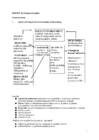
EKE8250 Environmental policy Exam questions 1. Inputs and outputs of environmental policymaking. Sisendid: Vajadused/nõudmised (erinevad huvid, vastandlikud nõudmised; valitsused, ettevõtted, kliendid, kohalikud ühingud, MTÜ-d, investorid, töötajad) Toetus (vähemalt minimaalne maksumaksjate toetus, lojaalsus- jälgimine, seadusandluse mõju valimiste tulemustele) Ressursid- raha ja informatsioon (nii teaduslik kui tehniline), looduslikud ressursid Avalik arvamus Meedia kajastus Valimiste tulemused Teadmised/info Millist infot on poliitika kujundajatel vaja teada? Milline on probleemi olemus, raskusaste ja ruumiline ulatus? Millised faktorid on probleemi põhjustajateks? 1 Kui probleemile ei reageerita, kuidas siis probleem aja jooksul muutub? Kas see probleem prob...
Miina Härma Gümnaasium “The aborigines of Australia Student:Kärt Erikson Teacher:Tiia Timma Tartu 2010 contents Introduction – page 3 History – page 3-4 Religion – page 4-7 Society - page 7-9 The British – page 9-10 Conclusion – page 10-11 Resources – page 11 Appendix – page 11-14 2 Introduction I selected this theme because it was the most interesting one for me. Aborigines have interested me for a long time now so doing this essay is really fun for me. Australian Aboriginal culture is one of the world's longest surviving cultures. Australian Aborigines, also known as Indigenous Australians , are the native people of Australia . Many of them suffered when white people from Britain arrived in Austra...
English lexicology 1. Size of English vocabulary Vocabulary is a sum total of words used in a language by speakers or for dictionary-making. Active and passive vocabulary. The Old English vocabulary was homogenous. There were about 50 000 – 60 000 words, 1/3 of which have survived. o About 450 loans from Latin o About 2000 from the Viking invasions. The Middle-English vocabulary became a heterogeneous hybrid of Germanic and Romanic languages. 100 000 to 125 000 words. o About 10 000 loans from Norman French, 75% are still in use o Continuing Latin influence Early Modern English. 200 000 – 250 000 words o English becomes a pluricentric language. o Polyglot. Cosmopolitan language Modern English. 500 000 words o At present at least 1 billion lexical units 2....
I. Portugal ABOUT Photo Location of Portugal (dark green) Portugal (Portuguese: Portugal, IPA: [putua]; officially the Portuguese Republic, Portuguese: República Portuguesa) is a country located in Southwestern Europe, on the Iberian Peninsula. It is the westernmost country of mainland Europe, and is bordered by the Atlantic Ocean to the west and south and by Spain to the north and east. The Atlantic archipelagos of the Azores and Madeira are Portuguese territory as well. The country is named after its second largest city, Porto, whose Latin name wa...
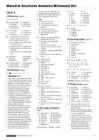
Maturita Solutions Advanced Workbook Key stand bananas and coffee! It's a bit 3 1 to 8 of Unit 1 uncanny really. Is it something she's 2 about 9 century passed on to me genetically, or is it 3 like 10 assumed / 1A Memories page 3 learned behaviour? Who knows? 4 of thought / 1 See exercise 2 2 5 6 any ...
Investor's Handbook A Legal Guide to Business in Georgia · Start Up · Privatization · Labor Legislation February 2011 1st Edition 1 CYAN MAGENTA YELLOW BLACK 1 This brochure is a publication by the Georgian National Investment Agency (GNIA) and was prepared by Georgian law firm Mgaloblishvili, Kipiani, Dzidziguri (MKD). The Brochure is intended to be a general guidance on start up, privatization and labor relations. It is thus not expected to be a substitute for detailed research or exercise of professional judgment on above mentioned topics. Companies and individuals operating in Georgia or planning to operate, are strongly advised to obtain current and detailed information from experienced professionals. None of the organizations mentioned above, nor their members, employees o...
Mõistete seletav sõnastik Abiootilised (keskkonna)tegurid organisme ümbritsevast anorgaanilisest (eluta) maailmast tulenevad ökoloogilised tegurid. Adaptatsioon, adapteerumine organismide või nende osade ehituse või talitluse kujunemine selliseks, st see tagab paremini isendi või liigi säilimise ja populatsiooni arvukuse suurenemise. A. tagajärjel suureneb organismi ja keskkonna kooskõla, tekib võimalus uut tüüpi toidu, uute elupaikade, signaalide jms. kasutuselevõtuks, suureneb organismi elutegevuse tõhusus. A. võib toimuda nii organismi elu jooksul (kohanemine e. isendiline a.) kui ka paljude põlvkondade kestel (kohastumine e. evolutsiooniline a.). A-ks nimet. ka kohastumise tulemust kohastumust. Aerotank aeratsioonikamber, kus reovesi kontakteerub aktiivmudaga või täpsemalt mikroorganismide biomassiga. Mikroorganismid kasutavad reovee orgaanilist ainet oma elutegev...
Ökoloogia ja keskkonnakaitse alused Kordamisküsimused: 1) Mis on ökoloogia? Ökoloogia teadus, mis uurib organismide ja neid ümbritseva keskkonna vahelisi seoseid. Ökoloogia jaguneb veel: Inimese ökoloogia - uurib inimese poolt mõjutatud ökosüsteeme, samuti kuidas keskkond ja selle muutumine mõjutab inimest. On kompleksteadus ühiskonna ja looduse suhetest, sotsioökoloogia osa, mis uurib inimese mõju looduslikele ja kultuurökosüsteemidele. 2) Mis on populatsioon? Populatsioon e. asurkond on ühte liiki kuuluvate isendite (organismide) rühm, mis asustab mingit kindlat territooriumi. Populatsiooni iseloomustavad arvukus, vanuseline, sooline ja geneetiline struktuur ning levila e. areaal. Populatsiooni moodustavad kogred tiigis, oravad pargis, hiired aidas jne. 3) Mis on biotsönoos? Biotsönoos e. elukooslus on kõikide liikide populatsioonide kogum antud territooriumil. Hõlmab kogu antud ala asustava elustiku. ...
AMBER AND RUSSET - LATE COLOUR CHANGE GENES Copyright 2014, Sarah Hartwell The ancestors of the domestic cat were nondescript black/brown striped tabbies. Over the centuries, mutation produced a wide array of colours based on 2 different pigments. Eumelanin gives the blacks, browns and blues while phaeomelanin gives the reds, fawns and creams. A few other genes give further variations on those colours such silvers, colourpoints and solids/selfs. Mutations continue to occur and unexpected colours also turn up due to inbreeding where recessive genes, hidden for generations, start showing up. AMBER AND LIGHT AMBER During the 1990s, some purebred Norwegian Forest Cats in Sweden produced chocolate/lilac and cinnamon/fawn offspring. However, those colours are not found in the purebred Norwegian Forest Cat gene pool. Had the gene pool become polluted by someone, perhaps generations ago, breeding their Norwegian Forest Cat to another breed? ...
· Demograafiline plahvatus- Inimeste arvu kiire kasv teatud perioodil. Antud juhul toimus 19.sajandi alguses inimkonna arengus suur läbimurre ja inimeste arv kasvas 90 aastaga 2 korda (s.t. 7 korda kiiremini kui muidu). · Urbanisatsioon- Inimeste kolimine maalt linna. Linnastumine arvudes: 1950 linnas 30%, 1960 linnas 33%, 2000 linnas 47%. Eestis elab linnades u. 69% elanikkonnast. Maailma suurimad linnad: Mexico City, Tokyo, Shanghai, Sao Paulo. · Tööstusrevolutsioon- Inimeste arvu hüppelist suurenemist mõjutas 19.sajandi alguses tööstusrevolutsioon, kus manufaktuurne tööstus asendati vabrikulisega. Toimus tänu ostuvõimelise turu moodustumisele, kapitali kuhjumisele, tööjõu vabanemisele põllumajandusest ja mehhaanika arengule. Tööstusrevolutsiooni algus 1760-1780 Inglismaal, alguses tekstiilitööstuses (orjatöö kasutamisele oli puuvill odav). · Teaduslik-tehniline revolutsioon- Algas 20.sajandi keskel, mil teaduse ...
Demograafiline plahvatus- Inimeste arvu kiire kasv teatud perioodil. Antud juhul toimus 19.sajandi alguses inimkonna arengus suur läbimurre ja inimeste arv kasvas 90 aastaga 2 korda.Urbanisatsioon- Inimeste kolimine maalt linna. Linnastumine arvudes: 1950 – linnas 30%, 1960 – linnas 33%, 2000 – linnas 47%. Eestis elab linnades u. 69% elanikkonnast. Maailma suurimad linnad: Mexico City, Tokyo. Tööstusrevolutsioon- Inimeste arvu hüppelist suurenemist mõjutas 19.sajandi alguses tööstusrevolutsioon, kus manufaktuurne tööstus asendati vabrikulisega. Toimus tänu ostuvõimelise turu moodustumisele, kapitali kuhjumisele, tööjõu vabanemisele põllumajandusest ja mehhaanika arengule. Tööstusrevolutsiooni algus 1760-1780 Inglismaal, alguses tekstiilitööstuses (orjatöö kasutamisele oli puuvill odav). Teaduslik-tehniline revolutsioon- Algas 20.sajandi keskel, mil teaduse areng sai aluseks ühiskonna heaolu kasvule ja tööstuse arengule. Selle käigus muu...
Avinurme Gümnaasium 10.klass Geograafia PORTUGAL Koostaja:Katrin Kõre Juhendaja: Ene Lüüs 2009/2010 1 SISUKORD Sissejuhatus.........................................................................................................................3 Üldandmed........................................................................................................................4-5 Riigivorm.........................................................................................................................6-11 Majandus.........................................................................................................................12-14 Tootmisviis........................................................................................................................15 Asend..............................
Arne Ader, Urmas Tartes Eesti looduskaitse Keskkonnaamet 2010 Sisukord Looduskaitse ajalugu Eestis . ...................................................................................................................................................................... 4 Looduskaitseseadus . ....................................................................................................................................................................................................8 Kaitstavad loodusob...
Inimese mõju tugevnemine loodusele Kauges minevikus reguleeris inimeste arvukust maa peal toit selle hankimine ja kättesaadavus. umbes 2 miljonit aastat tagasi kui inimesed toitusid metsikutest taimedest ja jahtisid metsloomi, suutis biosfäär st. loodus ära toita ca 10 miljonit inimest st. vähem, kui tänapäeval elab ühes suurlinnas. Põllumajanduse areng ja kariloomade kasvatamine suutsid tagada toidu juba palju suuremale hulgale inimestest. inimeste arvukuse suurenemisega suurenes ka surve loodusele, mida inimene üha rohkem oma äranägemise järgi ümber kujundas. Kiviaja lõpuks elas Maal ca 50 milj. inimest. 13. sajandiks suurenes rahvaarv 8 korda 400 milj. inimest. Järgneva 600 aasta jooksul, st. 19. sajandiks rahvaarv kahekordistus ning jõudis 800 miljoni inimeseni. Demograafiline plahvatus 19. sajandi alguses toimus inimkonna arengus läbimurre ja inimeste arv Maal suurenes 90 aastaga 2 kor...
LOENGUD MAASTIKUARHITEKTUURI AJALOOST 2010 Õppematerjal maastikuarhitektuuri ning maastikukaitse ja hoolduse üliõpilastele Koostanud Kadi Karro AEGADE ALGUS NING VARAJANE MAASTIKUKUJUNDUS. Esimesed maastikud, nende areng. Varajased tsivilisatsioonid: Egiptuse ning Mesopotaamia (Babüloonia, Assüüria ja Pärsia) kultuurid ja maastikukujundus. VANA-KREEKAST KESKAJANI: Antiik-Kreeka linnaplaneerimine ja aiad. Antiik-Rooma linnaplaneerimine ja aiad. Vitruvius "De Architectura". Islami aiad. Euroopa läbi keskaja: kloostriaiad, religioosne sümboolika; botaanikaaiad, linnakodanike aiad. RENESSANSS: Vararenessanss Itaalias 14. saj. Renessanss Itaalias 15.- 16. saj. Manerism ja barokk Itaalias 16.-18. saj. Linnaruum Itaalias: piazzad keskajast barokini. BAROKK: Barokk Prantsusmaal 17. saj. Prantsusmaa naabermaad 16.-18. saj: regulaarstiil Inglismaal, Hispaanias, Austrias, Saksamaal, Madalmaades, Venemaal, Rootsis, Taanis. EESTI VANEMAD MÕIS...
 annaabi.ee