Leidsid 33 sarnast õppematerjali, mis on seotud failiga "Ernst Julius Öpik". Need materjalid aitavad sul teemat sügavamalt mõista.
öpik, university, bodies, paper, moscow, minor, physical, first, named, distance, stars, moon, asteroid, julius, noted, study, comets, harvard, wide, dwarf, object, andromeda, cloud, solar, origin, meteor, these, journal, method, went, such, years, observatory, became, director, department, professor, scientist, sciences, among, density, body, nebulafor blowing things up. Growing up in the late 1950s in Texas, "I did everything you could do with potassium nitrate, perchlorate, and permanganate, mixed with a lot of other things," he says. "If you mixed potassium nitrate with sulfur and charcoal, you got gunpowder. If you mixed it with sugar, you got a lot of smoke and a nice pink fire." He tested his explosive concoctions on a Fort Worth golf course: "I screwed the jar down tight and ran like hell." "kaboomWoosley", now an astronomer at the University of California at Santa Cruz, has graduated to bigger explosions--much bigger. Woosley studies some of the most powerful explosions since the birth of the universe: supernovae, the violent deaths of stars. The universe twinkles with these cataclysms. They happen every second or so, usually in some unimaginably remote galaxy, blazing as bright as hundreds of billions of stars and creating a fireball that expands and cools for months. We're lucky that they rarely strike close to home
earth move downward. Likewise, since they are light and airy, air and fire move upward. Each of the four elements is constantly striving to reach its natural center. The striving [ püüdlus ] of all these elements is what kept the cosmos going. In this scheme of things, the elements of air and fire predominated and together they composed a fifth element, more pure than the rest, which the ancients called "the aether."[ eeter ] And since the heavenly bodies are "up there," they must be composed of "the aether." Which brings me to relate a brief story. In 1666, and with the city of London burning down, Isaac Newton left his study at Cambridge and made his way to his mother's home at Woolsthorpe in Lincolnshire. It was here, in his mother's garden, that the great Newton was struck by an idea the idea that the force which held the planets in their orbit was the same
massive worldwide popularity in his lifetime. Charles Dickens was born in Landport, Portsmouth in Hampshire, the second of eight children to John Dickens n 7 February 1812. The 12-year-old Dickens began working ten hour days in a Warren's boot-blacking factory. In May 1827, Dickens began work in the office of Ellis and Blackmore as a law clerk. At the age of seventeen, he became a court stenographer and, in 1830, met his first love, Maria Beadnell. Maria's parents disapproved of the courtship and effectively ended the relationship when they sent her to school in Paris. In 1834, Dickens became a political journalist, reporting on parliamentary debate and traveling across Britain by stagecoach to cover election campaigns for the Morning Chronice. His journalism, in the form of sketches which appeared in periodicals from 1833, formed his
It also has at least eighteen moons, more than any other planet in the solar system. There have been three voyages to this extraordinary planet, and one is still in process today. The Pioneer II traveled to Saturn in September of 1979, the Voyager missions took place in the 1980's and the Cassini probe began it's voyage in October of 1997 (Kuhn 280-282). There are many aspects of Saturn that make it one of the most extraordinary planets in this solar system. Galileo Galilei was the first to view Saturn's system of rings in the year 1610. Because he happened to be viewing their edge, he failed to recognize them as rings. In fact, he mistakenly interpreted the rings to be two moons similar to those he had discovered near the planet Jupiter. In 1655, a Dutch astronomer named Christiaan Huygens was able to discern what Galileo had thought to be moons as rings. Huygens benefited from a much improved telescope than that used by Galileo. A second moon of Saturn called
American literature The literary history of this nation when the first humanbeing living in what has since become the U.S used language creatively. · Mid to late 18 century put down · Words are powerful, magical · Words must be remembered · Native Americans stories creation of the world · Attidude thought their land/language · Similar stories Dates and names · America was discovered in 1492 by Columbus · 1497 John Cabot went to Canada · 1579 San Fransisco/St
surname is uncertain. Conan Doyle's father was an artist, as were his paternal uncles (one of whom was Richard Doyle), and his paternal grandfather John Doyle. Conan Doyle was sent to the Roman Catholic Jesuit preparatory school St. Mary's Hall, Stonyhurst, at the age of eight. He then went on to Stonyhurst College, but by the time he left the school in 1875, he had rejected Christianity to become an agnostic. From 1876 to 1881 he studied medicine at the University of Edinburgh, including a period working in the town of Aston (now a district of Birmingham). While studying, he also began writing short stories; his first published story appeared in Chambers's Edinburgh Journal before he was 20. Following his term at university, he served as a ship's doctor on a voyage to the West African coast. He completed his doctorate on the subject of tabes dorsalis in 1885. In 1882, he joined former classmate George Budd as his partner at a medical practice in
Department of Russian Literature and Modern Language Studies in 1948. Prof. Isacenko was still holding the leading post in 1950 when the Department of Russian Language and Literature came into being. In 1955, when Prof. A. V. Isacenko left Bratislava for Olomouc, the department already had ten full-time teachers. Russian studies continued developing in the second half of the 1950s and in the 1960s when Prof. A. V. Isacenko was replaced first by Assoc. Prof. . urovic (1955-1959) and then by Assoc. Prof. J. Kopanicák (1959-1970). The political turnaround in 1989, of course, also had impact on the evolution of Russian studies as an academic discipline. The department found itself in a peculiar situation. On the one hand, it represented one of the most developed philological disciplines with a large personnel and material base; on the other hand, the factors that had made Russian studies one
Libraries. We know a lot of things thanks to books, but we do not know exactly when and where they originated, and what should be considered the first book in the world. Ancient document, written on parchment, papyri and vellum can hardly be qualified as books the way we understand the word today. Centuries went before paper replaced parchment and papyri. In the 15 th century Johann Gutenberg invented a mechanical process of duplicating texts, which we today call book printing. The first book was printed between 1444 and 1446, so these years can be considered as the beginning years of book printing. His most important preserved printings are the 40 copies of the Bible. By the end of the 15 th century there were about 1000 print-shops in Europe already. The oldest Estonian book dates back to 1535.
process. Consequently, they were attracted to the idea of democracy, where the government is "of the people, by the people, for the people," as Lincoln later expressed in his Gettysburg Address. Religious Tolerance: Much impetus for the ideas of religious tolerance came from the rule of King George II, who was a staunch Catholic and did not allow freedom of religion to Protestants in New England. Voltaire was among the first to denounce Christianity and other organized religions as mere ploys to support monarchy. What emerged was Deism, which was more or less a new religion that considered reason its foundation. In Deism, there is no interference by a deity, and man controls his own destiny. These ideas stirred the masses into action, as the people dreamed of carving their own futures. Adopted by the Founding Fathers, Enlightenment
He travelled to fight the Ottomans in the Greek War of Independence, for which Greeks revere him as a national hero died at 36 years in Greece Lived as a true aristrocrat, had huge debts, numerous love affairs, there were rumors of a scandalous incestuous romance with his halfsister and selfimposed exile It has been speculated that he suffered from bipolar disorder and was bisexual The Byronic hero The Byronic hero is a variant of the Romantic hero as a type of character, named after Lord Byron. Both Byron's life and writings have been considered in different ways to exemplify the type. The Byronic hero first appears in Byron's semi autobiographical epic narrative poem Childe Harold's Pilgrimage Many of Byron's characters are a similar specific type of the Romantic hero: An idealised but flawed character with great talent and passion, a distaste for society, disrispect towards rank and privilege, arrogance, overconfidence, selfdistructiveness. Is rebellious, exiled
UNO SOOMERE ESTONIAN SYMPHONIC MUSIC. THE FIRST CENTURY 1896-1996. AN OVERVIEW With a Historical and Cultural Summary IN MEMORY OF THE GREAT ESTONIAN COMPOSERS CONTENTS ESTONIA AND THE ESTONIANS FOREWORD IN THE FOLD OF TSARIST RUSSIA. EMERGENCE AND FIRST STEPS ON THE CLASSICAL-ROMANTIC PATH. HISTORICAL INTRODUCTION I. MUSICAL LIFE IN TARTU AT THE TURN OF THE CENTURY. TRAILBLAZERS: ALEKSANDER LÄTE, RUDOLF TOBIAS, ARTUR KAPP. II. THE FIRST DECADE OF THE 20TH CENTURY. ARTUR LEMBA: THE BEGINNING OF ESTONIAN SYMPHONY AND OPERA. III. NEW DEVELOPMENTS IN CULTURAL AND MUSICAL LIFE: THE END OF THE TSARIST PERIOD. THE INDEPENDENT REPUBLIC OF ESTONIA: THE INTRODUCTION OF INNOVATIONS FROM WESTERN ART AND THE EVOLUTION OF
HECHO EN CHICAGO, U.S.A. SIGNET, SIGNET CLASSICS, SIGNETTE, MENTOR AND PLUME BOOKS are published by The New American Library, Inc., 1301 Avenue of the Americas, New York, New York 10019 FIRST PRINTING, FEBRUARY, 1973 PRINTED IN THE UNITED STATES OF AMERICA To my Parents and my Grandmother Contents A Note on the Abridged Version Preface A Few Words 1. One Day of Magic: I 2. One Day of Magic: II 3. The First 3,000 Years 4. The Rise of the West 5. On the Origin of a Species 6. The Era of the Black Chambers 7. The Contribution of the Dilettantes 8. Room 40 9. A War of Intercepts 10. Two Americans 11. Secrecy for Sale 12. Duel in the Ether: I 13. Duel in the Ether: II 14. Censors, Scramblers, and Spies 15. The Scrutable Orientals 16. PYCCKAJI Kranrojioras 17. N.S.A. 18. Heterogeneous Impulses 19. Ciphers in the Past Tense 20. The Anatomy of Cryptology Suggestions for Further Reading Index
Two kinds of football is played in Great Britain. One of them, which is called association football, is played all over Europe. The other kind: rugby football is also very popular in New Zealand, France, and some other European countries. English boys play it at school, and in public parks. When they grow up, they play as members of important amateur teams or as a professional in teams competing in football ,,leagues". Professional football is as much a business as a sport. Rugby football was first played in 1823. In rugby every player is allowed to carry the ball. The ball is oval, not round. Each team contains 15 players. The oldest game of football in England is probably the football match which takes place at Ashburn on Shrove Tuesday every year. The game starts in the centre of the town, and the distance between two goals is two miles. The only rule is not to use motorcycles, cars and lorries in the game. In 1958 one team buried the ball. The other team didn't know and ran after them
"[3] Father - John Lockwood Kipling. Lockwood Kipling, a sculptor, an illustrator, museum curator and pottery designer, was the principal and professor of architectural sculpture at the newly- founded Sir Jamsetjee Jeejeebhoy School of Art and Industry in Bombay. Later in life Kipling illustrated many of Rudyard Kipling's books, and other works. Kipling also remained editor of the Journal of Indian Art and Industry, which carried drawing works from the students of the Mayo School. COUPLE named their son after the place they had first met Rudyard Lake. Alice Kipling Fleming - Sister of British author Rudyard Kipling who became a well-known psychic, producing automatic writing under the name "Mrs. Holland." Born June 11, 1868, Alice Kipling was privately educated. She went to India at age 16 and married British army officer John Fleming. While in India she wrote a number of poems, and in 1893 initially experimented with automatic writing. After a
Republic 3. Philosophy of History Ancient Greece - Ancient Greece vs. Persia (300-Herodotus) Salamis - Ancient Greece vs. Troy (Homer-screen writer)Iliad o Achilles- Hero of the heroes (main hero in Greece)- handsome, strong, brave, fast, anger(tema viga), young, bad temper o Agamemnon- son of King Atreus - Olympics - Sculptures- more lifelike, human figures come out of the stone - Greek liked physical beauty - Development of medicine - Greeks are pirates, they steal- high technology - Bad tempered people Men's progress towards freedom. (Hegel) Persia is under emperor Xerxes- slaves, fighting for Xerxes and their country, but it does not mean anything to them Greece cities- Patriotism, they are fighting for their freedom and for their country, you can quit, because you volunteered, individuality. o Zeus (son of Chronos Time and Gaia Earth)
5 The thief grabbed my bag and ran The photos are connected with the 1B Past and perfect tenses off. topic of school. Both photos show page 4 6 He dropped a leaf into the water students in class. In the first photo I imagine that 1 1 ate and watched it drift under the they're about 13 years old. 2 have/'ve met bridge. It looks like a science lesson 3 have/'ve caught 7 As she got older, her health
He subscribed to William Lloyd Garrison's weekly journal, The Liberator, and in 1841, he heard Garrison speak at the Bristol Anti-Slavery Society's annual meeting. Douglass was inspired by Garrison, later stating, "no face and form ever impressed me with such sentiments (the hatred of slavery) as did those of William Lloyd Garrison." Garrison was likewise impressed with Douglass, and mentioned him in the 'Liberator'. Several days later, Douglass gave his first speech at the Massachusetts Anti-Slavery Society's annual convention in Nantucket. Twenty-three years old at the time, Douglass later said that his legs were shaking. He conquered his nervousness and gave an eloquent speech about his rough life as a slave. In 1843, Douglass participated in the American Anti-Slavery Society's Hundred Conventions project, a six month tour of meeting halls throughout the east and middle west of the United States
Discusses domestic matters with the Master of the Household. Towards the end of the day, there is always another pile of official papers and reports waiting to be read or acted upon. The business on constitutional monarchy never ends. 3. Who is the present heir to the throne? Speak about his education. Who are the 2nd and 3rd in line? Present heir is Prince Charles, The Prince of Wales. Has been an exchange student in Australia. Graduated from the university of Cambridge with BA (honors). 2nd and 3rd in line are Prince William of Wales and Prince Henry of Wales, respectively. 4. Make up your list of 5 top British people. Give your motivation. The Queen, Adele, Elton John, Shakespeare, JK Rowling. 5. Which 5 places attract visitors in Wales and Scotland? Edinburgh, Loch Ness, The Highlands, Snowdonia, Cardiff. 6. Name 6 islands, 5 rivers, 3 lakes, 3 mountains in UK.
3. Joseph Conrad and Literary Impressionism. New ways of presenting character and experience. Conrad's literary output. Lord Jim. Nostromo. Heart of Darkness and a critique of colonialism. Kurtz as Nietzsche's Superman. The darkness of human heart. Civilization and barbarism: which is which? Joseph Conrad and Literary Impressionism. Effect of light. Moments, very conscious of precious moments. Conrad: writer must do something like that on paper. Only by giving the impression can painter, writer can make people forget about their daily lives. New ways of presenting character and experience. Character is described as seen by other people. Impressionism in the description. Conrad's literary output -author suspects skepticism of the human condition. ,,Lord Jim"-Jim (his surname is never disclosed), a young British seaman, becomes first mate on the Patna, a ship full of pilgrims travelling to Mecca for the hajj
The origins of American literature The first Americans were explorers and settlers, adventurers and idealists who crossed the ocean in search of new opportunities or to escape the poverty and intolerance. Their writings were matter-of-fact accounts of life in America, which explained colonisation to Englishmen back in the homeland. An example of this form of writing is John Smith's A True Relation of Virginia, which is widely recognized to be the first example of Am lit. The early years of colonisation produced a mass of utilitarian writings including biographies, accounts of voyages, diaries, sermons, pamphlets. Much of the material addressed the problems of Church and State. There were few examples of fiction, poetry or drama. Anne Bradstreet of Massachusetts published some lyrical poems of high literary quality (1650) and Edward Taylor, who was born in England but lived in Boston,
Philip Larkin’s Poetry: Themes, Form, Style, Imagery and Symbolism Author: Sandra Olivares González Tutor: Jesús Marín Calvarro Degree in English Studies, English Department, Faculty of Philosophy and Letters, University of Extremadura Cáceres, 29th January 2016 Philip Larkin’s Poetry: Themes, Form, Style, Imagery and Symbolism The aim of this work is to obtain some characteristics of the poetry of Philip Larkin, such us the origin of his themes, the way in which he writes his poems and the symbolism he uses (which is a very controversial topic because some assume that he does use it, while some others say that he uses it in an ironic way). In this work we tried
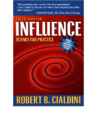
A Scientific Approach 113 Devictimizing Yourself 115 Monkey Me, Monkey Do 117 Monkey Die 120 Monkey Island 128 Defense 131 Sabotage 132 Looking Up 135 Summary 138 Study Questions 139 CHAPTER 5 Liking: The Friendly Thief 141 Making Friends to Influence People 144 Why Do I Like You? Let Me List the Reasons 146 Physical Attractiveness 146 Similarity 148 Compliments 149 Contact and Cooperation 151 Off to Camp 154" Back to School 156 Conditioning and Association 159 Does the Name Pavlov Ring a Bell? 163 From the News and Weather to the Sports 166 CONTENTS _ Defense 170 Summary 172
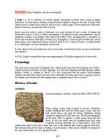
BOOKS (From Wikipedia, the free encyclopedia) A book is a set or collection of written, printed, illustrated, or blank sheets, made of paper, parchment, or other various material, usually fastened together to hinge at one side. A single sheet within a book is called a leaf, and each side of a leaf is called a page. A book produced in electronic format is known as an electronic book (e-book). Books may also refer to works of literature, or a main division of such a work. In library and information science, a book is called a monograph, to distinguish it from serial periodicals such as magazines, journals or newspaper
Three days of love bring him back to life. Maria was raped by facists and her father was killed by facists, disturbed girl. Secondary characters are rememorable. Men and women act differently to war. Men are carried away by war propaganda, women are shown to be wised and appreciate life more than political parties. Men think on taking sides but women value life more. Jordan is an idealist. He is willing to give his life for this cause. But Maria's first loyalty is to her lover, jordan. She places love above war, politics. Pablo is another type, he is a moral coward, he is a defeatist, who wants to avoid personal danger and wants to save his life, he is mean and betrays his country men. Pilar, Pablo's woman, strong, courageous, patriot, never the less understands the importance of individual human happiness. Human independence and solitarity. Jordan dies, he is left to die. Maria problably is pregnant.
This can be somewhat descriptive of the ideals represented by the gentry romanticism, aesthetic virtues, sentimentality. Also noticeable in this scene is the use of diminutive forms when portraying Nikolai -" ", " " that belittle Nikolai as a serious man and portray that the owner is "not a part of the adult world" (Bialyi 1968:13). The portrayal of rather clumsy and non-adult continues in Chapter 4 where Nikolai " ". All in all, the first impression of the older generation is rather naïve, yet unserious. As chapter 3 embarks, the koliaska moves towards the poorly managed Kirsanov estate, Marino, which is a reflection of Nikolai's lack of practical and organizational abilities. Nikolai himself says that " ." And truly, there is no improvement - there's " , ... , , - , ". The peasantry is poor and disobedient " ". In chapter 4, it is described that even Nikolais best efforts do not bare
One of the mysteries is how it was built at all with the technology of the time. Another is its purpose. It appears to function as a kind on astronomical clock and we know it was used by the Druids for ceremonies marking the passing of the seasons. It appears in number of novels. These days it is not only the interest of tourists but is also a gathering point of certain minority groups. It is now fenced off to protect it from damage. 3. The Roman conquest Julius Caesar's first raid was in 55 BC but the romans left. Ad 43- the Romans came to stay. The army established Roman rule in the south and SW of the country. The Romans started to introduce their laws to a new province of the Roman Empire and started to build good roads. Officials were appointed (governors, procurators to collect taxes, look after the estates and mines and se that the gold, silver, iron and lead were exported back to Rome). Introduced schools,a new language Latin, large farms (villas), baths.
The Life of Dante, the Inferno of Dante Dante Alighieri, one of the greatest poets of the Middle Ages, was born in Florence, Italy on June 5, 1265. He was born to a middle-class Florentine family. At an early age he began to write poetry and became fascinated with lyrics. During his adolescence, Dante fell in love with a beautiful girl named Beatrice Portinari. He saw her only twice but she provided much inspiration for his literary masterpieces. Her death at a young age left him grief-stricken. His first book, La Vita Nuova, was written about her. Sometime before 1294, Dante married Gemma Donati. They had four children. Dante was active in the political and military life of Florence. He entered the army as a youth and held several important positions in the Florence government during the 1290's. During his life, Florence was
scientist in the world. His name is synonymous with the debate that continues to swirl around the theory of evolution, a theory that deeply shook the Western view of humanity and its place in the world. We tend to speak simply of the theory of evolution, leaving off the explanatory phrase, "through natural selection." At most, perhaps, the general public has heard of "survival of the fittest" a poor phrase as far as I'm concerned, since fitness in everyday usage is associated with physical conditioning and athletic ability. "Survival of the most suited to its environment" would be a more accurate, and convincing expression for this pedicular concept. But to most of us, "evolution" simply means that human beings are descended from apes, a slight misunderstanding, since both humans and modern apes are descendants of a mutual ancestor that is now extinct. It's not evolution but the theory of natural selection and the evidence he
As a port, Taganrog was surrounded on all sides by the landscapes of the Steppe and Chekhov's earliest stories reveal how intensely aware he was of his bond with the Don Steppe. Chekhov had always claimed that medicine was his wife and literature his mistress. Chekhov had lived for much of his career as a writer under the shadow of the great literary colossus of the age, Lev Tolstoy. The Seagull [Chaika] suffered one of the most disastrous first nights of any of Chekhov's plays when it opened in St Petersburg, in 1896, as a benefit night for a comic actress who had a huge, rowdy, popular following. Chekhov ran out of the theatre after the second act and roamed the streets, swearing never to write for the stage again. Exactly two years later, the fledgling Moscow Arts Theatre, under the guidance of Stanislavsky and Nemerovich-Danchenko, began the first of twenty-six rehearsals of The Seagull. The director, Vladimir
"Anna Karenina" Lev Tolstoi Part 1 The novel opens with a scene introducing Prince Stepan Arkadyevitch Oblonsky, "Stiva", a Moscow aristocrat and civil servant who has been unfaithful to his wife Darya Alexandrovna, nicknamed "Dolly". Dolly has discovered his affair - with the family's governess - and the house and family are in turmoil. Stiva's affair and his reaction to his wife's distress shows an amorous personality that he cannot seem to suppress. In the midst of the turmoil, Stiva reminds the household that his married sister, Anna Arkadyevna Karenina is coming to visit from Saint Petersburg
Sculptures and monuments St. John's Lutheran Church St John's Church was probably built in the first third of the 14th century. There is no other brick church decorated with so much terracotta plastic in Europe Eduard Tubin Monument The Eduard Tubin monument, marking the 100th birthday of the composer, was dedicated in 2005. The authors of the statue are sculptor Aili Vahtrapuu, architect Veronika Valk, with sound installations by Louis Dandrel.Eduard Tubin (1905-1982) was a versatile composer and conductor, one of the most recognized symphonists throughout history. He served as concert
SCIENCE AND TECHNOLOGY A century ago communication across any distance was dependent upon the telegraph or letters. No jets crossed the ocean, no television pictures enabled us instantly to see events in any part of the world, there were no worldwide telephone networks and no computers. It is just a short lifetime since humanity first travelled into space and discovered how fragile our planet looks. FROM FIREWORKS TO THE MOON At first glance you might think that there couldn't possibly be anything common between a 13 th century festival in China and the Apollo 11 moon landing in 1969. However, there is a link and that is that they both relied on the use of rockets. The Chinese first developed rockets by filling bamboo tubes with an explosive made from saltpetre, charcoal, and sulphur. The sealed tubes would be thrown onto fires during celebrations because it was thought that the loud explosions would protect them
English literature is one of the oldest literatures in Europe; dates back to the 6th century AD. Oral literature, i.e. not written down, spread from person to person. In 449 AD Anglo-‐Saxon tribes invaded England – beginning of the Anglo-‐Saxon period in English literature. The first form of literature was folklore, carried by scops and gleemen, who sang in alliterative verse (a kind of simple poetry). Prose developed much later. The first form of recorded English literature was the epic Beowulf, which was produced sometime near the end of the 7th and beginning �
 annaabi.ee