Leidsid 33 sarnast õppematerjali, mis on seotud failiga "English history". Need materjalid aitavad sul teemat sügavamalt mõista.
empire, britain, british, german, nation, cause, germany, fall, irish, other, first, chamberlain, industrial, result, brought, pact, invade, poland, prime, wwii, caused, almost, colonies, than, often, such, north, race, ireland, rule, imperial, iraq, africa, wars, june, ferdinand, signed, lead, avoid, another, hitler, stalin, between, churchill, reasonsIt is one of the most famous prehistoric sites in the world and is composed of earthworks surrounding a circular setting of large standing stones. The surrounding circular, earth bank and ditch, have been dated to about 3100 BC. Stonehenge was produced by a culture with no written language. Many aspects of Stonehenge remain subject to debate. There is little or no direct evidence for the construction techniques used by the Stonehenge builders. *The Celts in Britain and their legacy The Cets lived in Britain in The Iron Age. They were warring tribes who were battleful amongst themselves as well as inter-tribal war. They were not centrally governed. The Celts brought iron working, iron ploughs and metal swords, horses, wheels and chariots - all these things gave them an instant superiority over the native tribes. The Celts built a number of hill forts throughout the region. The society was divided
Britain History Pre-Norman Britain The Iberians brought their metal-working skills and the first real civilization to Britain in the third millennium B.C and were overrun by various Celtic invasions that began in the 8th century. The Celts introduced their tribal organization and an early form of agriculture before they were forced westward by the Roman invasion. Forms of Celtic language are still spoken in Britain. Romans (with Julius Caesar in the head of them) first tried to occupy Britain in 55 B.C., but there was a rebellion in Gaul so they had to leave to fight against it. Next time they came in 43 A.D. and their leader was Emperor Claudius. Romans brought a lot with them. Their brought paved roads, the sites of important cities, the seeds of Christianity, the Roman law, Roman baths, language and advanced civilization. They also built Hadrian's Wall in 122 A.D
16. Britain in WW I Causes of WWI: Mutual defence alliances (if one country was attacked then allies would rush to help and it snowballed into a war between many countries) o The alliances at the time were: o Russia and Serbia o Germany and Austria-Hungary o France and Russia o Britain and France and Belgium o Japan and Britain Austria-Hungary declared war on Serbia, Russia got involved to defend Serbia. Germany seeing Russia mobilizing, declared war on Russia. France was then drawn in against Germany and Austria- Hungary. Germany attacked France through Belgium pulling Britain into war. Then Japan entered the war. Later, Italy and the United States would enter on the side of the allies. Imperialism: empires got bigger and with that the competition between the empires grew
immoral. They were also fiercely anti-Catholic and suspicious of the apparent sympathy towards Catholicism of the Stuart monarchs. ☄ This led to The Civil War ☄ Victory for the parliamentary force ☄ The king (Charles I) was captured and became the first monarch in Europe to be executed after a formal trial for crimes against his people. 1649 Charles I is executed. For the first and only time, Britain briefly becomes a republic and is called the Common wealth. 1660 The monarchy and the Anglican religion are restored. ☾ The church was restored. However, the conflict between monarch and Parliament soon re-emerged ☾ Prince William and Mary became the king and the queen so this way it was established that a monarch could rule only with the support of Parliament. ☾ Bill of Rights, which limited some of the powers of the monarch 1666
Stonehenge One of the best known ancient wonders of the world, 5000 years old Megalith monument, built by western mediterraneans during 3000-1600 BC Circular structure, large standing stones, aligned with rising sun at teh solstice Attlers and bones were sued to dig pits that hold the stones The Celts in Britain and their legacy 700-200 BC celts invade Britain Gaels or Goehls(Ireland and Scotland),Cymri(Wales) and Brythons(gave name to Brittany) Fierce fighters,superb horsemen.Most of them farmers, lived in thatched houses Good at art, craftmanship, used iron Divided into tribes, ruled by kings, only in face of danger would they choose a single leader Legacy- hill-forts, farms, churches, field system, woodland, pasture, weapons, iron objects, langugae, culture Caesar in Britain The great Roman Emperor
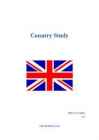
Country Study Mari-Liis Luukas 11c The British Isles Administrative / d'mnstrtv / haldus- Self-governing / self'gvn / isemajandav, iseseisev Legislative assembly/ 'ledsltv 'sembl/ seadusandlik kogu
High system of laws Northwest Ordinance of 1787 Signed in 1787 by Thomas Jefferson. The creation of the Northwest Territory as the first organized territory Ohio River was settled, 5 new states Advancement of education, maintenance of civil liberties, exclusion of slavery Promised not to invade or disturb Indians Northwest Indian War-> to stop white expropriation (sundkoormis) · Indian Removal Act of 1830 Destructive to tribes. Many died when travelled to the other side of Missisippi. Signed on May 28 by Andrew Jackson "Trade" land with the tribes Resolve the Georgia crisis (dispute with Cherokee) Move of over 70,000 natives (vabatahtlik-sunniviisiline) Reservations (kaitsealad)1851- the Indian Appropriations Act About 310 reservations 55,7 million acres Unevenly distributed Tribal sovereignty (iseseisvus) Poverty and unemployment · Indian citizenship Act of 1924 Granted citizenship to 300,000 indigenous people, to friendly tribes
monarchy and the establishment of the short-lived unitary republic of the Commonwealth of England, Scotland and Ireland. Acts of Union • On 1 May 1707, the united Kingdom of Great Britain came into being, the result of Acts of Union being passed by the parliaments of England and Scotland to ratify the 1706 Treaty of Union and so unite the two kingdoms • The term "United Kingdom" became official in 1801 when the parliaments of Britain and Ireland each passed an Act of Union, uniting the two kingdoms and creating the United Kingdom of Great Britain and Ireland Late history • After the defeat of France at the end of the Revolutionary and Napoleonic Wars (1792–1815), the UK emerged as the principal naval and imperial power of the 19th century • UK had the industrial monopoly World War I
Introduction The aim of this research is to get know more about the Netherlands history and its geographical facts. This report is describing one of most the most beautiful countries in the Europe - Netherlands. Netherlands is famous for its windmills and flowers. Netherlands is also known unofficially as Holland. Government is constitutional monarchy of north-western Europe. Netherlands is bordered on the north and west by the North Sea, on the east by Germany and on the south by Belgium. The European portion of the Netherlands has a total area of 41,528 sq km of which 33,939 sq km is land surface. Country's capital and largest city is Amsterdam. Population is about 16 million. 3 Chapter 1 The Netherlands 1.1 Mainly about the Netherlands Netherlands is also known unofficially as Holland. Netherlands is bordered on the north and
non-native speakers in countries where English is generally not a local medium of communication. English for specific purposes - a sphere of teaching English language including Business English, Technical English, Scientific English, English for medical professionals, English for waiters, English for tourism, English for Art Purposes, etc 4. What is the difference between settlement colonies and the trading empire (dependencies)? Settlement colonies were regions colonized by the UK that later established governments and became dominions and independent. Dependencies were regions in the world that became trading partners and where English became a second language. 5. Which British colonies became dominions? What was their status? Is the name dominion used for these countries nowadays? The first dominions were Canada (1867), Australia (1901), and New Zealand (1907)
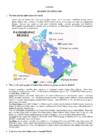
Northwest Territories. The largest lake which is at least partly in Canadian territory is Lake Superior Climate Canada's climate is as diverse as its landscape. Generally, Canadians enjoy four very distinct seasons, particularly in the more populated regions along the US border. Daytime summer temperatures can rise to 35°C and higher, while lows of -25°C are not uncommon in winter. More moderate temperatures are the norm in spring and fall. Summers can be hot and dry on the prairies, humid in central Canada, and milder on the coasts. Spring is generally pleasant across the country. Autumns are often crisp and cool, but brightened by rich orange and red leaves on trees. Winters are generally cold with periods of snow, although southern Alberta enjoys the occasional "Chinook", a warm dry wind from the Rocky Mountains that gusts through and melts the snow
Scotland with Edinburgh as the capital; and Northern Ireland with Belfast as the capital. 3. What is Remembrance Day all about and why is it celebrated at that time? It is about the men (and women) who lost their lives fighting in the World Wars. It's celebrated then, because that's the day WWI was ended with a treaty. 4. Which powers does the Queen of the UK have? The Queen has to sign all the bills for them to pass. She is the one who opens the Parliament every fall for the next session. She is however more of a representative than an actual decision maker these days. 5. What is the British Parliament made up of? What are their roles? It's made of 3 parts: the monarch, the House of Commons and the House of Lords. The House of Lords can ask the House of Commons to rewrite parts of the bill. The bill needs the Queen's signature to pass. The House of Commons writes the bills. 6. What do you know about the Wars of the Roses?
British history Roman Britain Roman Britain was those parts of the island of Great Britain controlled by the Roman Empire between 43 and about 410. The Romans referred to their province as Britannia. Prior to the Roman invasion, Iron Age Britain already had cultural and economic links with Continental Europe, but the invaders introduced new developments in agriculture, urbanization, industry and architecture, leaving a legacy that is still apparent today. Historical records beyond the initial invasion are sparse, although many Roman historians mention the province in passing. Most of the knowledge of the period stems from archaeological investigations and especially epigraphic evidence.
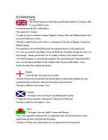
1) General facts The UK: * the United Kingdom of Great Britain and Northern Ireland was formed in 1801 * it covers 243,610 sq km * everybody from the UK is called British * the capital city is London * is made up of four constituent countries: England, Scotland, Wales and Northern Ireland which in turn are divided into counties * the flag is called the Union Jack which is a combination of the flags of England, Scotland and Northern Ireland * the population is about 60,000,000 people, the population density is 242 people/sq km * its coasts are washed by the Atlantic Ocean, the North Sea, the English Channel, the Celtic Sea,
was of mixed ethnicity or "blood." The term has historically been used to identify people that are now often called `Métis' in Canada. Many people back then considered the `half-breed' to be a degenerate, inferior sort of human. Some of this is related to racial theories of the 19th century that believed each `race' had a distinct origin, and that mixing would lead to serious troubles. That's why it is now considered to be a derogatory term. Métis, on the other hand, is a more general French term for mixed race, which has generally referred to a person of descent from two different major ethnic groups. Contemporary usage of Métis is also different from its historical meaning. At Red River in the 19th century there were two prominent communities of mixed-descent people. In addition to a sizeable French-speaking and nominally Catholic Métis population, there was a large
.......................................................................................... 8 Population and Ethnicity..............................................................................................9 3 Introduction The official name of the country is the United Kingdom. The United Kingdom is an island country. It consists of the island of Great Britain and Northern Ireland. Great Britain can be divided into three parts England, Wales and Scotland. Each of them has their own capital city. Glasgow in Scotland, Cardiff in Wales and London in England. The country is situated in the north-western Europe. The territory of the United Kingdom is about 244,000 square kilometres and about 60 million people live there. The UK contains a number of small islands. The largest islands that belong to the United
1. The Queen’s official title. Elizabeth the Second, by the Grace of God, of the United Kingdom of Great Britain and Northern Ireland and of Her other Realms and Territories Queen, Head of the Commonwealth, Defender of the Faith. 2. The Queen’s working day. Starts after breakfast. Reads the newspapers which are prepared by the Press Secretary, and a report on the previous day’s proceedings in the Parliament and the letters she receives. Also phone calls. Once a month she attends the Privy Council in order to give Royal Assent to various items of government legislation.
History Before Columbus came to the New World in 1492, the land were inhabited by Native Americans or Indians. After 1492, there was a struggle for land and domination in the New World. England defeated the Spanish navy in 1588. In 1607, it started its first successful colony in America, called ,,Virginia". That was where Captain John Smith met the beautiful Native american princess, Pocahontas. The colonies grew fast, they became the main colonies in the Americas. From 1754 to 1761, Britain fought a war against the French and drove them out of North America. After that the Americans no longer needed Britain to defend them. Britain tried to tax the colonies but the Americans resisted. Fighting began. The colonies formed a Continental Congress in 1774. In 1776, the Continental Congress decided to break away from England, form an alliance with France, and form a Union of the colonies. Thomas Jefferson wrote a Declaration of Independence. It was adopted on July 4. This meant war
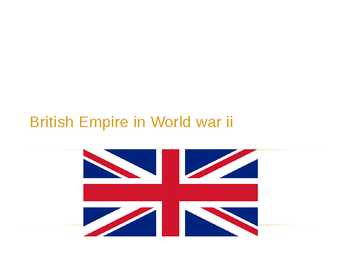
British Empire in World war ii BritISH empire in 1939 -1945 Prime minister: Winston Churchill 1940-1945 Preceded by Neville Chamberlain 1937-1940 King of the United Kingdom and the Dominions of the British Commonwealth: George VI Full name: Edward Albert Christian George Andrew Patrick David Population of Britain: ~47 million Same before and after the war Winston Churchill JOINING the war Britain declared war on Nazi Germany on 3 September 1939 rd British Empire in World war II On May 8, 1945, the Allies formally accepted the unconditional surrender of the armed forces of Nazi Germany. On 30 April Hitler committed suicide.
материала, закрепление словаря и развитие навыков ведения беседы по тематике пособия. Пособие предназначено для студентов гуманитарных специальностей. Подготовлено на факультете лингвистики. The book contains an overview of the most important events in British history – from the first documented invasions of the island to the formation and fall of the British colonial empire. A series of exercises will help to remember the subject matter, practise the vocabulary and contribute to skills work. The book is intended for the Humanities students. Вавилов Н.А., 2008 3 4 Contents 5 ПРЕДИСЛОВИЕ
Great Britain Pärnu 2012 Contents Great Britain Great Britain or Britain is an island situated to the northwest of Continental Europe. It is the ninth largest island in the world, the largest European island, and the largest of the British Isles.
2. There are approx. 300-400 million speakers of English in the world. English occupies the 3rd place by its number of speakers; it is right behind Mandarin and Spanish. 3. ESL (English as a Second Language) used in your own country (e.g. India) EFL (English as a Foreign Language) used in a foreign country ESP (English for Specific Purposes) used in business, airlines, hotels etc. 4. Settlement colonies people migrated into them from Britain and started their own communities, they are the present English-speaking countries (USA, Australia, Canada, New Zealand) Trading Empire (dependencies) mainly ESL countries; British people were seen more as a small ruling class (India, Africa) 5. Australia, The USA, Canada, Sri Lanka, India & Pakistan, Irish Free State, Newfoundland, New Zealand, South Africa were the British colonies that became dominions
The 18th Century in 1707, the Act of union was posed and the former two kingdoms became The united kingdom monarch and parliament on on quite well together the formation of 3 vaguely opposed loose collections of allies (The WIgs and the Tories) Two failed attempts to put a Stuart monarch back on the throne in the highlands of scotland The Celtic way of life was effectively destroyed Britain gradually acquired an empire in America, along with the west african coast and india The industrial revolution Greatest upheaval in the pattern of life since the germanic invasions Millions moved into new towns and cities The north became the industrial homeland in the country London came to dominate as a business and trading centre Queen Anne 1702-1714 , when she died , the Hannovelians took over
History of Great Britain Prehistory (55BC) no written records 6th 3rd c. BC the Celts came to British isles hill figures, hill forts, stone circles ( Stonehenge ) RomanBritain (55BC 400AD) Julius Caesar, named the country Albion Hadrian's Wall, villas, roads, the town of Bath The AngloSaxon, Danish and Norman invasions Germanic tribes settled and stayed Anglia Christianity was brought, religion became important, churches were built 8th century = raids by the Vikings and the Danes 1016 1042 : Under Danish rule ( York was the capital ) 1042 : local AngloSaxons regain their rule
seasons. It appears in number of novels. These days it is not only the interest of tourists but is also a gathering point of certain minority groups. It is now fenced off to protect it from damage. 3. The Roman conquest Julius Caesar's first raid was in 55 BC but the romans left. Ad 43- the Romans came to stay. The army established Roman rule in the south and SW of the country. The Romans started to introduce their laws to a new province of the Roman Empire and started to build good roads. Officials were appointed (governors, procurators to collect taxes, look after the estates and mines and se that the gold, silver, iron and lead were exported back to Rome). Introduced schools,a new language Latin, large farms (villas), baths. In AD 410 they had to leave . roman occupation lasted nearly 400 years. They left behind very little. Roman province of Britannia covered most of present-day England and Wales. 4. Latin influence on English
The Troubled Peace 1 a) The Nazis didn't care for any other nationalities, they used people who weren't German only for ''slave work'' . Germanys only concern was to keep themselves happy and powerful. They wanted to make themselves the superior race. Hitlers idea of the perfect race, the Aryan race also didn't help, because the Aryan race should have people with light eyes,hair and skin, they should be tall and powerful. He didn't care for people who didn't meet his expectations of the perfect race. In his eyes all other groups of people like the Russians, Jews and just crazy, crippled or diseased
The United Kingdom The United Kingdom consists of England, Scotland, Wales and North Ireland and it is situated in the Atlantic Ocean near the mainland of Europe. The population of the UK is 58.6 million and area is 244,110 sq km. Britain has a temperate humid climate. Its characteristic features are mild winters, warm summer, no temperature extremes, abundant rain all year round and frequent changes of weather. The mild climate is partly due to the warm Gulf Stream and partly to the south westerly winds. Occasional winds from the east in winter may bring cold and dry weather. The distribution of rainfall is influenced by the Atlantic Stream. The mountainous areas of the north and west have more rain than the
o The Celtic language survives in the names of many places in England- Dover, Kent, Thames o The Celts are best known for their art- many bronze objects with elaborate designs; brooches; pins; mirrors; Celtic stone crosses o The Celts had 3 social orders: warriors, druids(priests) ordinary people 2) The Romans o (55 BC-Caesar) 43 AD- 410 AD- Claudius o From present-day Italy o Southern Britain became Britannia and was ruled by a roman governor o The Romans built over 20 towns: Colchester, Londinium, Winchester etc. They were good engineers and built roads and villas that had central heating, glass windows and mosaic floors o 122 AD- Hadrian's Wall; 138 AD- Antonine Wall o Druids(celtic priests) were banned and Britain was influenced by christianity 3) The Germanic Invasions I
Estonian War of Independence During World War I the greatest colonial power in Europe the Russian Empire seized to exist. On its ruins the formerly enchained nations founded their own states. Among them was the Estonian Republic, officially declared on February 24, 1918. When Germany surrendered to the Western Allies on November 11, 1918 a strategic vacuum arose in Eastern Europe. The new rulers of Russia the Bolsheviks decided to use it as a proper moment to re-conquer their lost territories. The ultimate goal was international communist revolution and Germany was the first standing on their way. Thus on November 13, 1918 the Government of Soviet Russia denounced peace with Germany. On November 16 the Commander-in-Chief of the Red Army, Jukums Vacietis,
Was the British Empire a good thing that enlarged the world creating possibilities for everyone or was it just a way for some to gain power and wealth? How is the modern-day Commonwealth different? The British Empire used to be one of the largest and wealthiest empires in the world. Its prosperity started at the early 1600s and reached its high peak at the end of the World War I. The Empire faded into the Commonwealth at the end of 1930s as one colony after another gained its independence. After studying the topic I would say that it cannot be said whether the British Empire was a very good or a very bad thing. Of course any kind of oppression should not be approved of and actually the Empire and native British forced on their way of life and culture to the colonies. On the other hand the Empire also helped its subjects to develop in a positive sense.
The Most Influential Figures in British History There are many important historical figures, who have helped shape Britain into what it is today. In my opinion Elizabeth I, Queen Victoria and Winston Churchill are the ones who stand out and have had the biggest impact on British history. Firstly, Elizabeth I made a great impression on British history as she kept England from major wars during her reign, the kingdom expanded and she supported culture. The rule of Elizabeth I can be called a peaceful time as England did not enter any huge conflicts. She managed to keep good relations with other great countries. However, the defeat of the Spanish Armada left no one questioning the superiority of the British navy. In addition, the kingdom’s territories grew during her reign, Virginia in America being named after „The Virgin Queen“
since prehistoric times. In the 8th century most of the Iberian Peninsula was conquered by Moorish invaders professing Islam, who were later expelled by the Knights Templar. During the Christian Reconquista, Portugal established itself as an independent kingdom from León in 1139, claiming to be the oldest European nation-state. In the 15th and 16th centuries, as the result of pioneering the Age of Discovery, Portugal expanded western influence and established the first global empire, becoming one of the world's major economic, political and military powers. In addition, the Portuguese Empire was the longest-lived of the modern European colonial empires, spanning almost 600 years, from the capture of Ceuta in 1415 to the handover of Macau in 1999 and grant of sovereignty to East Timor in 2002. The empire spread throughout a vast number of territories that are now part of 53 different sovereign states
The natural course of the river flows into the Gulf of California, but the heavy use of the river as an irrigation source for the Imperial Valley has desiccated the lower course of the river in Mexico such that it no longer consistently reaches the sea. The Tennessee River is the largest tributary of the Ohio River. It is approximately 1049 km long and is located in the south-eastern United States in the Tennessee Valley. The river was once popularly known as the Cherokee River, among other names. The river has been dammed numerous times, primarily by Tennessee Valley Authority projects. The Ohio River is the largest tributary by volume of the Mississippi River. It is approximately 1,579 km long and is located in the eastern United States. The river had great significance in the history of the Native Americans. It was a primary transportation route during the westward expansion of the early U.S. It flows through or along the border of six states, and its watershed
 annaabi.ee