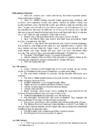
Statoil Looking for 23-35 years old sales manager. Previous experience essential Offering: competitive salary flexible hours if needed overtime payment Application send to: [email protected]
Why do I need to speak English in the English class? I am going to write why I need to use English in English class. Using English in theEnglish class is important, because it is the best practise for English pronunciation and the more I use English the more I will command the language. I must express strong regret that I have not been using English in English classes very often and because of that I have many cacoepies and I am not very good at speaking English and that is why I should speak English during the English classes much more. Using English frequently gives me better understanding of the language, I will become more fluent in it and my general intelligence improves remarkably. Human beings are unique species because of their ability to learn, but in order to use this ability's full capacity, I must study every day. As to languages, constant improving is even more important becaus...
1) Standard and non-standard varieties of English Standard varieties of English are the varieties of the English language that are considered to be a norm and are spoken and written by the minority (educated people). This is the optimum for educational purposes. The standard varieties of English are: BrEng (British), EngEng (English), NAmEng (North-America), USEng (United States), CanEng (Canada), AusEng (Australia), NZEng (New Zealand). Standard English (British English) is the most widely accepted and understood among native speakers, learned by foreigners. It is used in broadcasting, TV, news etc. It doesn't concern pronounciation (accent), but grammar and vocabulary. It includes formal and informal styles. British Standard English grammar and vocabulary, together with the RP accent should be called English English. RP (Received Pronounciation) is an accent that originates from South-East of England. A social accent, associated o...
Estuary English 1. The geographical dimension: Is `Estuary' English estuary? Estuary English is a dialect of English widely spoken in South East England, especially along the River Thames and its estuary. Phonetician John C. Wells defines Estuary English as "Standard English spoken with the accent of the southeast of England".[1] The name comes from the area around the Thames, particularly London, Kent, north Surrey and south Essex. The variety first came to public prominence in an article by DavidRosewarne in the Times Educational Supplement in October 1984. [2] Rosewarne argued that it may eventually replace RP (Received Pronunciation) in the south-east. Studies have indicated that Estuary English is not a single coherent form of English; rather, the reality behind the construct consists of some (but not a...
1. How many public holidays or Red-Letter Days are there in Britain? Name them. 8 public holidays in Britain: two at Christmas, one for the New Year(which was only introduced in the late 1970s) two at Easter and three Bank Holidays. 2. What is the same and what is different about the way Christmas is celebrated in England and Estonia? In England, there's common to sing Carol's and for children, Christmas means pantomimes plays based on fairy tales which combine comedy, dance and song. A traditional Christmas dinner includes roast turkey with roast potatoes, a range of vegetables, cranberry sauce etc., followed by Christmas pudding and Christmas cake. The pulling of crackers(and the wearing of paper hats) before the meal is quite popular. Afterwards many watch the Queen's traditional Christmas address on TV at 3 pm. Christmas actually contains of 3 days: Christmas Eve, Christmas Day and Boxing Day. The ...
The School I come from The school I come from, is named Anna Haava nimeline Pala school and there learns a little bit less than 100 students, I learned there from 7-9 grade. I started learning English in third grade and if I remember correctly then our teachers name was Reet Ernits but she is not the only who has taught me English So far I have had five teachers (not including my current teacher), who all have been very different but they had one thing in common, they all used I love English books. With my first teacher we wrote down lots of rules about grammar and other stuff like that but I did not understand them so for me it was more like a waste of time. With my second, third and fourth teacher I met in Jõhvi High school and they all were not good teachers because they did not want to teach us, during their lessons half of the class just played with their phones and other half of the class tried t...
Billy Elliot ,,Billy Elliot" is a movie directed by Stephen Daldry, which is amazingly touching and shouldn't be missed by anyone. When I first found out we were going to watch a film in our English class, at the beginning I was very sceptic, but after the first 15 minutes I already liked it. In fact, I ended up loving this film. This movie inspires lot's of young people to follow their dreams no matter how far they might have to reach and how difficult it might look in the beginning. The main character is this 11-year-old boy named Billy, played by Jamie Bell. His life is quite miserable as he lives in a small town with his father and an older brother. His father forces him to go boxing to continue a family tradition of boxers, but Billy is not really good at it and he doesn't like it either. Then suddenly Billy finds himself a new hobby he actually enjoys and that is ballet. There is a small ballet group in this town, taught by Ms Wil...
Why I came to study English Why I came to study English? Seems like a simple question, but it certainly made me think about it. Some of my friends have even said that majoring in English seems so boring and they constantly bombard me with questions about my future. That made me think about how exactly did I end up studying English? First of all, as a kid, I was so sure I would be a hairdresser or a teacher or a cook in the future. I am sure that almost every kid thinks the same, when all they have for inspiration are cartoons and toys to play with. When I started school, I was very interested in mathematics and other subjects that required logical thinking, because apparently I was smart in that area at the time. Up until 6th grade I was the best student in our class, winning mathematic competitions left and right and not only that. By that time I had also found out that I loved to write, specially po...
My languages I love different languages. I mean, I really, really love different languages. I also believe and have been told that I pick them up rather easily. That might be true, although I did not pick any Greek up in Greece but that might have been because they spoke so damn fast that I could not tell if it was a word or an entire sentence. The first foreign language I learned was Russian. Considering I was ten when Estonia became a Republic, it makes sense. We began studying Russian in first grade, though it was simplified – "koška" instead of "kot", "medvešonok" instead of "medved", "saichik" etc. Did not make much sense and we mostly played some games in Russian (Tare-tareke etc). Learned as much playing outside, since we had Estonian-Russian kids around as well. Not that we played with them. It's sad to say but it was not a nice time to be a Russian kid. We were mean to them, and we...
Dear Mr President , I am writing in order to invite you to our class during the ,,Back to school" week. I think that your coming to my class would be really instructive and interesting for students. It would give everyone an opportunity to ask about your school times, life as a president and your position. I am sure that find out about your professional knowledge, perks and official duties helps us to understand your profession better. However, the lesson would be in English, so students can express them thoughts and ask questions in English. It would help us to evolve our communication in the formal way and it makes us richer by the experience. Visiting our school would be useful for you too. We could discuss about the problems in the education system and offer our solutions to improve an education. You could communicate with the younger generation who respect you and will be indescribably happy about you visiting. It would...
CHARACTERISTIC FEATURES OF OLD ENGLISH - 15 monophtongs, (7 long, 7 short, 1 central), 4 diphtongs, 17 consonants. Free variaton of R, and it was pronounced everywhere. Very much Germanic in character. Quite some special consonants that no longer exist. About morphology: synthetic with numerous aglutinating tendencies. System of tenses Germanic, but with a reduction of tenses. Paradigmatic leveling; Stress shift; Word order; Loan words (Old Norse, Old French). Dual pronouns. Determiners - no separate definite article. Strong and weak verbs. Word order relatively free with tendencies towards SVO. SVO, SOV, VSO most common. Adposition and podposition were both possible (eesliide ja tagaliide). About syntax: clauses were joined much simpler than nowadays, using and, then etc. Because of case syncretion the word order in a sentence became much more important to be able to tell the difference between words. FIRST CONSONANT SHIFT (GRIMM'S L...
Years 1154-1485 Henry I was the first unquestioned ruler. One of the most important kings in the Middle Ages. He had lands in Britain & France. Then the government was the monarch, a person, not a place. He had more land than any pervious king. After his marriage to Eleanor of Aquitaine, he also ruled the lands south of Anjou. His empire stretched from the Scottish border to the Pyrenees. England provided most of its wealth, but the heart was Anjou. Henry II began to regain royal control. During the war some barons had become very powerful. He pulled down some of their castles. He tried to restore law & order. He wanted the same kind of justice to be used everywhere. He appointed his own judges to travel around the country. They dealt with crimes & disagreements over poverty. Serious offences were tried in the king's court. At first they had no special knowledge or training. They were trusted to use common se...
Estonian 31/01/11 Dear Annette , Thanks for the greetings.I wait for your letter a long time .But now i´m happy that i can write you back. How are you going ? I hope that you find the smaller house .If you find a new house, please send me a new letter and your new adress.Then i can write you a new letters.I hope that you move near us then we don´t have send letters and we can see every day. Idont like in the school, because it so hard to be in 9 class . Thanks for telling me that my english is better than last time , i´m so proud of it and now i can write you everything .In summer we have do to exsams of math , estonian and chemistry exam. What exams did you have do to in 9 class? I want do study harder and do the exsams better mark .Then i w...
Summary • Early history of translation studies – Cicero and St. Jerome (what did they do/how/why are they relevant to translation studies?) St. Jerome – Greek scholar, did some translation work. Lived during the 4th century. Jerome is best known as the translator of the Bible into Latin. A previous version (now called the Old Latin) existed, but Jerome's version far surpassed it in scholarship and in literary quality. Jerome was well versed in classical Latin (as well as Greek and Hebrew), but deliberately translated the Bible into the style of Latin that was actually spoken and written by the majority of persons in his own time. This kind of Latin is known as Vulgate Latin (meaning the Latin of the common people), and accordingly Jerome's translation is called the Vulgate. Cicero – Lived during the 1st century BC. Roman politician, philosopher & translator. Theory ‘‘word-for-word’’ & ‘‘sense-for-sen...
English Literature ,Victoria Age 1) Overview of the Victorian age · Periodization During the reign of Queen Victoria (1837-1901) · Why is the Victorian Age compared to the Elizabethan Age? Both are associated with the reign of a very popular queen; Victorian age idealised the Elizabethan Age; many changes in different fields- economy, religion etc.; focusing more on people's attitudes, political developments etc; Victorian age was inspired by Elizabethan era; Britain became an empire · What were the most important changes in politics, religion and social life that occurred during the Victorian age? Politics: 1848 Chartist movement (voting right for the working class); women's suffrage movements; feminist outburst (wanted to have business openly; own property, voting etc.); world dominion (British empire); Economy: Industrialization; urbanization (people moved to towns no agriculture & food); laissez- faire eco...
Tests Superstar 1 Luke Prodromou Test 1 Name____________________ Class_______ Use your English 1 Complete these sentences using the correct form (present simple or present continuous) of the verb in brackets. _ 1 She is in a band and she _________________________________ (record) a CD at the moment. _ 2 She is an actress and often _________________________________ (appear) on television. _ 3 At the moment she _________________________________ (have) a rest because she is tired. _ 4 Mike is a doctor and he _________________________________ (live) in Manchester. _ 5 I _________________________________ (start) work at 8.30 every morning. _ 6 He is a good cook but she _________________________________ (prefer) to eat out. _ 7 English tests _________________________________ (get) more and more interesting. _ 8 They _________________________________ (have) a party becau...
HISTORY TEST 5 invasions to Britain until 1066 1) The Celts o Gaels in 600BC; Cymry(Britons) in 300BC o From present-day Austria, Switzerland o The Celtic language survives in the names of many places in England- Dover, Kent, Thames o The Celts are best known for their art- many bronze objects with elaborate designs; brooches; pins; mirrors; Celtic stone crosses o The Celts had 3 social orders: warriors, druids(priests) ordinary people 2) The Romans o (55 BC-Caesar) 43 AD- 410 AD- Claudius o From present-day Italy o Southern Britain became Britannia and was ruled by a roman governor o The Romans built over 20 towns: Colchester, Londinium, Winchester etc. They were good engineers and built roads and villas that had central heating, glass windows and mosaic floors ...
Engl i s h do g s 8 english dogs Bred, Height, Weight, Fur, Colour , Character, Body English bulldog (British bulldog) Bred: 1209 Height: 31-40 cm Weight: 24-25 kg 22-23 kg Fur: short, smooth and tidht sitting coat Colour: red tones, plain or balck-white spots Character: peaceful, loves children, lovely familydog Body: small ears, screw-tail, wide shoulders, short muzzle English greyhound Height: 71-76 cm 68-71 cm Weight: 29-31 kg 27-29 kg Fur: tidht sitting coat and smooth Colour: black, white, red, blue or yellow-brown Character: friendly, true, gentle, loves children Body: long tail, small ears, deep chest, long muzzle English cocker spaniel Bred: 14 century Height: 39-43 cm 38-41 cm Weight: 12.5-14.5 kg Fur: tidht sitting coat, long, silky Colour: all colours Character: lovely, popular familydog a...
1. Be ready to explain the terms (lecture 1): language, linguistics, synchronic approach to language, diachronic approach to language, linguistic competence, linguistic performance, what is grammar?, prescriptive grammar vs. descriptive grammar; phonology, phonetics, phone, allophone, phoneme; morphology, morphemes (types of morphemes), morphs, allomorphs, types of affixes, derivational affixes, inflectional affixes; open vs closed class words; syntax. Language: a systematic, conventional use of sounds, signs or written symbols in a human society for communication and self-expression. - human language at all levels is rule- or principle-governed. Linguistics: the scientific study of human natural language Synchronic approach to language: Diachronic approach to language: Linguistic competence: Linguistic performance: What is grammar?: "The sounds and sound patterns, the basic units of meaning, such as words, and the rules to combine them...
The Road to WiganGeorge PierOrwell Compiled by Priit J oasoo 12D 2009 Author George Orwell =Eric Arthur Blair Born on J une 25, 1903 in India Brought to England at the age of one Indian Imperial Police in Burma 1922-1928 1936 fought in Spanish Civil War II World War wrote a political commentary Died of tuberculosis on J anuary 21, 1950 Animal Farm, Nineteen Eighty-Four and The Road to Wigan Pier Setting Location: Indrustrial towns of North England - Lancashire and Yorkshire Time: Before the World War II (1936) Main Character · George Orwell - an English author and journalist, who describes the living conditions of poor miners in northern England. He also talks about socialism and his life. The Plot Book is in two parts I part indrustrial towns & unemploiment He lives in Brookers lodging-house Mi...
Education and learning Task 1. Underline the most suitable word or phrase. a) Jack decided to take a course/lesson in hotel management. b) Sheila always got good marks/points in algebra. c) After leaving school, Ann studied/trained as a teacher. d) Peter decided not to go in/enter for the examination. e) My sister learned/taught me how to draw. f) I can't come to the cinema. I have to read/study for a test. g) In history we had to learn a lot of dates by hand/heart. h) I hope your work will improve by the end of course/term. i) Martin failed/missed his maths exam and had to sit it again. j) If you have any questions, raise/rise your hand. Task 2. Complete each sentence with a word from the box. Use each word once only. cheat copy memorise pay revise concentrate divide pass punish underline a) Our teachers used to punish us by ma...
16th century (Tudors) 1. Henry VII - avoided wars, careful with money, didnt have expensive parties, was a rather shadowy figure 2. Henry VIII- brilliant scholar, excellent knight, good-looking, ambitious, self- centered, loved expensive clothes and parties. Wasted his fathers money very quickly and had 6 wives. His first wife couldnt give birth to a baby boy and they only had a daughter. His next wife only gave birth to a girl too. His next wife gave birth to a boy but died after the labor. He didnt like his 4th wife so he sent her back. His fifth wife was young and beautiful but had many lovers and Henry didnt like it so she was sent to the Tower and was beheaded. HIs 6th wife survived. 3. Edward- was sickly and ruled only for a few years and then he died 4. Mary Tudor/Bloody Mary- was catholic and killed many protesntants. Ruled only f...
Jamaica report FORM: 10A 2009 Contents 1.Introduction........................................................ ....3 2.History................................................................ .....4 3.Geography......................................................... ......6 4.Economy............................................................ .....7 5.Crime................................................................. ......8 6.Sport.................................................................. ......9 7.Language........................................................... ....10 8.Conclusion......................................................... ....11 9.New words............................................................12 10.References...................................................... .....13 Introduction Jamaica is an island nation of the Great...
Test 2 1 Translate. 1 Küll on kahju, et sa ei saanud tulla. What a pity that you couldn´t came. 2 Mitte keegi ei olnud närvis. Nobody was nervous. 3 Klass oli täis juttu ja naeru. The classroom was full of laughter and talk. 4 Õpilased tervitasid oma õpetajat rõõmsalt. The students greeted their teacher cheerfully. 5 Ma õppisin selle luuletuse pähe. I learned this poem by heart. 6 Lapsed olid enne pidu ootusärevil. The children were excited before the party. 7 osasid vahetama swap the role 8 kahe nädala pärast in two time a week 2 Complete the sentences with the correct verb form 1 Did you meet Ann at the party last night? (meet) 2 Do you think our team will win the football match tomorrow? (win) 3 I can´t go out because I haven´t done my homework yet. (not do) 4 Somebody has broken the lock. I can´t get in. (break) 5 Next year Mary will spend two weeks in Liverpool. (spend) 6 I usual...
Anton Teljutsenko AAp-11 What is it? Ruby is a dynamic, reflective, general-purpose object- oriented programming language that combines syntax inspired by Perl with Smalltalk-like features It was also influenced by Eiffel and Lisp Ruby has "Ruby License" and "BSD License" Ruby was first designed and developed in the mid-1990s by Yukihiro "Matz" Matsumoto in Japan Ruby is cross-platform programming language History Ruby was conceived on February 24, 1993 by Yukihiro Matsumoto who wished to create a new language that balanced functional programming with imperative programming Ruby was disignet to be more powerful than Perl and more object-oriented than Python The name "Ruby" was decided on during an online chat session between Matsumoto and Keiju Ishitsuka on February 24, 1993, before any code had been written for the language. History Initially two names were proposed: "Coral" and "Ruby", with the latter being chosen by M...
Christmas differentces of 2 countries This reports purpose is to analyse Estonian and English Christmas traditions. It compares the meaning of this tradition, decorations, eating habits, activities and Father Christmas. Firstly, for English people this traditions means to celebrate the birthday of Jesus Christ , but on the other hand for Estonian peole it means to celebrate the mid-winter holidays and religous people go to church. Secondly, for Estonian people decorating their homes is big part of christmas. People in the countryside bring straw into the house, they decorate their homes and bring in fir-trees. The traditional Christmas flowers are hyacinth, Christmas cactus and the poinsettia. Differentce from the English people decoration is that their decarations are from paper, they have electric lights, also have evergreen plants: holly, mistletoe and ivy. They bring a huge fir-tree from Norway on Trafalg...
If I were an English teacher Being a teacher is not an easy task. Teachers have many problems with students who does not know how to behave. Some of them even make fun of teachers and I find this kind of behaviour disturbing, because it is not fair that urchins have more fun in school than decent students have. Yes, teachers can throw the rebels out or punish them in other ways, but that usually agitates the students against the teacher. Firstly, I would like to say that if I were an English teacher I would variegate the classes with subjects, which students would actually find interesting. I would find it exciting to let them think and explore more about politics, social issues, world news and of course other subjects that they really find interesting to speak about. I believe these subjects need also considering because the majority of youth actually has no idea or interest who represents...
The Renaissance Between 14th and 16th century in Europe From French word rebirth It was an age of growth in Europe. New, powerful city states emerged. A new middle class had more and more money to spend. Great artists, writers and thinkers lived during this time. During the Middle Ages many people who lived in the countryside worked on the land that they got from the noblemen. In return, they were protected by them Between the middle and the end of the 14th century, the plague, also called "Black Death" killed almost half of Europe's population. It spread most rapidly in the larger cities where many people lived. This led to economic depression. When the plague slowly decreased in the 15th century, the population in Europe began to grow. A new middle class emerged --bankers, merchants and trades people had a new market for their services. People became wealthier and had more than enough money to spend. They bega...
Confessions of a not it girl Confessions of a not it girl is written by Melissa Kantor. The author also has written books such as If I Have a Wicked September, Where's My Prince. The book is a booklist top ten Romance Novel for youth in 2004. Many well-known public magazines for e.g. The New York Times, Publishers Weekly and Voya, have given positive feedback to this book. The book is about a 17 years old high-school girl, named Jan Miller, who feels, like she has the most boring life ever, a teenage girl can have. She doesn't really like her parents and her best friend is lately been elected as an official It Girl. Te best friend seems to have a perfect life, that Jan would actually like to have. For many years, she has been in love with Tom, a classmate, but then, there comes Josh and suddenly Ian is in love with him. It starts at an English class, where Jan plays Juliet and Josh Romeo. They also meet somet...
Introduction: Hi, I'm here to talk about the advantages and disadvantages of using legal English. How many of you have had to use/have had any interaction with legal English? Well, I, myself, apart from learning it in this class, have never, but many others have. Legal English dates back to thousands of years and it is an essential part of law. Lately, in some cases, legalese has been smoothly replaced with plain language and for some it is unacceptable. So, why use legal English when there is already plain language that can be used instead? Body 1: Firstly, we all like to follow traditions, right? So do most lawyers. You know Latin was and is important for English law, the practice of using Latin word versus in case names (for "against") still occurs daily. Why change something that has been used and appreciated for thousands of years? Law is known for it's conservatism and legalese might have maintained so well because many lawyers h...
Chinese americans Chinese Americans (traditional Chinese or simplified Chinese) are Americans of Chinese descent. Chinese people came to the United States from Singapore, Vietnam, Malaysia, Indonesia, Burma, the Philippines, and Taiwan.[6] The first Chinese immigrants arrived in 1820 according to U.S. government records. 325 men are known to have arrived before the 1848California Gold Rush[7] which drew the first significant number of laborers from China who mined for gold and performed menial labor.[8] [9][10] There were 25,000 immigrants by 1852, and 105,465 by 1880, most of whom lived on the West Coast. They formed over a tenth of California's population. Nearly all the early immigrants were young males with low educational levels from six districts in the Guangdong province.[11] ...
Many students and their parents are in the position that every school should permit computers for their students. Is this a good idea if every student at school has their own computer what they can use in lesson? In my opinion having computers in our English class is very good idea. There is a lot of reasons why. Firstly, our textbooks and worksbooks are compiled that method that there are some excercises which we will have to check from internet like all kind of searching tasks what expect us to use Internet. It also simplify teacher work, teacher does not have to waste her time preparing the lessons.Because they can check out the difficult words quickly from internet. On the other hand, sitting in the computers every day is not good for our health, staring at a computer screen for several hours is enough to tire the eye muscles and it also causes stress and fatigue. Spending too much time in computer will lose students communication s...
Anglo-norman period (1066-1300) The normans · The name derives from "the Northmen" · Descendants of the Vikings · Seized the north-western part of France · The area known as Normandy · Adopted French customs and Christianity · Norman-French (their version of French). 1066 · Edward the Confessor dies in January · Harold Godwinson crowned as king in Westminster Abbey on the same day · Another candidate for the throne William, Duke of Normandy · Gathered an army · Invasion delayed (bad weather) · Harald, king of Norway, invades England from the North · A battle at Stamford Bridge · Harald's army defeated, leaders killed · The end of the Viking Age · The Normans land in Britain (a few days after Stamford Bridge) · The Battle of Hastings · Harold defeated ...
ENGLISH IDIOMS Nõmmik Vilian Apprentice 10 "A" class Ahtme Gymnasium Kohtla-Järve Relevance of the topic Ø The English language becomes the means of international communication, the language of trade, education, politics, and economics. People have to communicate with each other. It is very important for them to understand foreigners and be understood by them. Goal of my research work Ø Goal of my research work is to prove that idioms in the English language are integral part of it, which make our speech more colorful and authentically native. Tasks I like to achieve the following tasks: 1. To classify idioms; 2. To study the problem of the translation of idioms; 3. To understand the aim of the modern usage of idioms; 4. To distinguish different kinds of idioms; 5. To...
PANEME EI PANE Kui räägime spetsiifilisest Loendamatute ja mitmuses asjast,mida on enne mainitud-the loendatavate nimis kui räägime house, üldiselt- koalas,monkeys Unikaalsete nimis-the sun,the moonNimede ette-Anna KÕIK MÄRJAD KOHAD v.a järved Riikide nimed-Brazil aga The Netherlands Mäestikud-the Andes Kõrbed-the Linnad-Glasgow Sahara Grupp saari-the Virgin islands Tiitlitega kui inimese nime pole Tänavad-Oxford Street aga The mainitud the Prince,aga Prince High Street Charles Kui last,first,only on kasut Pargid-Hyde Park omadussõnana Riigid,kui sisaldavad sõnu: Mandrid-Europe, saared-Rhodes, state,kingdom,republic...-The United järved- Lake Geneva, Lake Peipsi, Kingdom jaamad- Charing Cross Station Muusikariistad-the guitar Kahesõnalised nimed,kui I ...
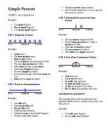
Windows are not made of wood. Simple Present · · New York is a small city. It is not important that this fact is untrue. [VERB] + s/es in third person USE 3 Scheduled Events in the Near Examples: Future · You speak English. · Do you speak English? · You do not speak English. USE 1 Repeated Actions Examples: · The train leaves tonight at 6 PM. · The bus does not arrive at 11 AM, it arrives at 11 PM. ...
adjective + preposition omadussõna + eessõna proud of, good at, married to adverb particle Some verbs are followed by adverb particles. Examples are: put on, take off, give away, bring up, call in. Sometimes the particle is detached from the verb and put after the object. •He took his boots off. •They called the doctor in. apposition a grammatical construction in which two usually adjacent nouns having the same referent stand in the same syntactical relation to the rest of a sentence (as the poet and Burns in “a biography of the poet Burns”) back-reference In grammatical analysis, the term reference is often used to state a relationship of identity which exists between grammatical units, e.g. a pronoun 'refers' to a noun or noun phrase. When the reference is to an earlier part of the discourse, it may be called a 'back-reference' (or anaphora); collective noun Collective noun is the name we give to a group of nouns...
Charles John Huffam Dickens was born on 7 February 1812 in Landport, Portsmouth, in Hampshire, the second of eight children to John Dickens. He was the most popular English novelist of the Victorian era and one of the most popular of all time. He created some of literature's most memorable characters. His novels and short stories have never gone out of print Sharles visited America twice, where he gave lectures, raised support for copyright laws, and recorded many of his impressions of America. In 1835 he met and became engaged to Catherine Hogarth. In 1844 Dickens and his family toured Italy, and were much abroad, in Italy, Switzerland, and France, until 1847 He died on the 9 June 1870 after a stroke. Much of his work first appeared in periodicals and magazines in serialised form, a favoured way of publishing fiction at the time. Other writers of the time would complete entire novels before serial publication commenced, but Dickens o...
English structure revision for the exam 1. Terms Language → A systematic, conventional (tavakohane) use of sounds, signs or written symbols in a human society for communication and self-expression. Human language at all levels is rule- or principle- governed (valitsema) meaning that language corresponds to the grammar. Natural language is usually spoken, while language can also be encoded into symbols (such as letters, morse etc) For example: Estonian, English. Linguistics → The scientific study of human natural language. Broadly, there are three aspects to the study which are Pragmatics (studies the use of language → interested in the gap between the sentence’s meaning and the speaker’s meaning). Semantics (concerned with the meaning of the language aspects and the way they change, also how objects and language and thinking and language are related). ...
Ralph Lauren Ralph Lifshitz was born on October 14, 1939, in the Bronx, New York. Growing up in a middle-class Jewish family, Ralph and his three older brothers were raised by his mother, while his artist father painted houses. Lauren's fashion sense was apparent at an early age when he would purchase expensive suits with the money he earned working at his after-school job. Although he knew he could find his clothes at a less expensive price, he made it a point to look stylish in his expensive threads -- and he has succeeded at looking cool in his attire since the age of 12. Lauren studied business at City College in Manhattan, and dropped out short of receiving his business degree. While working at A. Rivetz & Co., Lauren began designing wide ties, which spawned his first entrepreneurial career. With his tie designs and a $50,000 loan, Lauren founded the company Polo Fashions in 1968. Along with his older brother, he chose the name Po...
British Literature Ilya Zaitsev 10 class John Tolkien Was born in 3 January 1892 Bloemfontein. English writer, philologist, and Oxford university professor, best known as the author of the classic high- fantasy works The Hobbit, The Lord of the Rings. Tolkien was appointed a Commander of the Order of the British Empire by Queen Elizabeth II on 28 March 1972. His works The Hobbit and The Lord of the Rings form a connected body of tales, fictional histories, invented languages about a fantasy world called Arda, and Middle-earth. While many other authors had published works of fantasy before Tolkien,[ the great success of The Hobbit and The Lord of the Rings led directly to a popular resurgence of the genre. This has caused Tolkien to be popularly identified as the "father" of modern high fantasy literature. Biography. Childhood John Ronald Reuel Tolkien was born in Bloemfontein in South ...
Test on Romantic Poetry and Prose 1. Approximate dates of romanticism: in the second half of the 18th century. Major events on world history at that time: · Industrial revolution · In America the Declaration of Independence, July 4, 1776 · The French Revolution, 1789 · The King of England was George III, after him George IV and then Queen Victoria Outcomes: · Revolution did not bring welfare · Lives of the lower-classes worsened · Extended the distance between the lower and upper class · The rich got richer, the poor got poorer 2. Romanticism is a reaction against classicism, science and atomic (aesthetic ideal of order and unity) worldview. Romantic ideal is the organic world. Romanticism: · Returns to nature and belief in the goodness of mankind · Exaltation of the senses and emotion overcome reason and intellect i...
English speaking countries Ingrid Kaups X class Ireland The "Titanic'' made in Belfast Ireland Flag Orange- Irish Protestants Green- Irish Catholics White- peace Ireland No snakes in Ireland Wales Llanfairpwllgwyngyllgogerychwyrndrobwllllantysiliogogogoch Click to edit Master text styles Second level Third level Fourth level Fifth level New Zealand The southernmost capital. 11 sheep per citizen . England Shortest war in 1896 Less than 38 minutes Scotland Scotland prints its own banknotes which are accepted all over the UK The Usa Alaskan purchase check Canada ...
English studies British history Eleri Pärna Form 9 2010 About 1.What is Stonehenge? 2. Who were the Celts and the Druids? 3. When did the Romans invade Britain? 4. Why did Julius Ceasar call the land Albion ? 5.Why and who built the Hadrian Wall? 6. When did the Saxons settle in Britain? 7. When did the Vikings first raid Britain? 8. Who were the Normans? 9. When was the Battle of Hastings? 10. Who was William The Conquerer? What is Stonehenge? a prehistoric monument located in the English county of Wiltshire built in several stages from 2800 - 1800 BC. Druids built Stonehenge. Who were the Celts and the Druids? The Celts were a group of peoples that occupied lands stretching from the British Isles to Gallatia. The Druids were the wise ones, the educated class of the Celts. ( lawyers, doctors, teachers, storytellers, ...
Literature of the 14th century The highpoint of medieval literature, the best writer of late medieval lived then. William Langland 1332-1376 the last important poet of alliterative verse. His masterpiece "The Vision of Piers Ploughman" how important working hard is, the labour of peasants is the base of the welfare of the people. A passionate protest against social injustice. A time when peasants were slowly rising against their feudal lords. Descriptions of different social classes. Religious mysticism. Two great principles: 1) all men are equal before God; 2) honest labour is dignified. It is a dream allegory. A young maiden named Youth, Greed is an old witch. The greatest writer of this period and the whole of medieval times Geoffrey Chaucer (1340?-1400): · The father of English poetry · The creator of English versification · The first poet to use various metres · Laid the foundation of the new literary English ...
Estonian and British Education System Estonian and British education system is not quite different. In Estonia, the education system is based on six levels which include the: kindergarten, primary school, basic school, secondary school and university or vocational school. In Britain, the education system is also based on six levels which include the: nursery school, infant school, junior school, secondary school, 6th form and university or college. What is similar for both systems is that the first level of education starts at age of three. While in Estonia this level is called Kindergarten, then in Britain it is called Nursery school. Kindergarten is for children´s from age three to six, but Nursery school is for children´s three to four. Differently from Estonian system, at age of five to seven, British children ´s go to Infant school. This is called year one, year two and year three and all these three...
Vikings and Norman invasion, Jorvik Centre in York Who were normans? · They were descended from norse vikings. · Norman means norseman or viking. · They played a major political, military, and cultural role in medieval Europe. Invasion to England · The Norman conquest of England began on 28 September 1066 with the invasion of England by William, Duke of Normandy. · The Norman conquest largely removed the native ruling class, replacing it with a foreign, French-speaking monarchy. Battle of Hastings · The Battle of Hastings occurred on 14 October 1066. · Norman-French army was lead by Duke William II and the English army was lead by King Harold II. · The famous Bayeux Tapestry depicts the events before and during the battle. Bayeux Tapestry Jorvik Centre in York · Jorvik Centre in York is a museum and visitor attraction. · Well-preserved remains of some of...
British history Roman Britain Roman Britain was those parts of the island of Great Britain controlled by the Roman Empire between 43 and about 410. The Romans referred to their province as Britannia. Prior to the Roman invasion, Iron Age Britain already had cultural and economic links with Continental Europe, but the invaders introduced new developments in agriculture, urbanization, industry and architecture, leaving a legacy that is still apparent today. Historical records beyond the initial invasion are sparse, although many Roman historians mention the province in passing. Most of the knowledge of the period stems from archaeological investigations and especially epigraphic evidence. The invasion force in AD 43 was led by Aulus Plautius.It is not known how many Roman legions were sent; only one legion, the II Augusta, commanded by the future emperor Vespasian, ...
Paul McCartney Siim Jaanoja 11. A I wannabe musician Me and my Honey Click to edit Master text styles Second level Third level Fourth level Fifth level Girl's loves me Click to edit Master text styles Second level Third level Fourth level Fifth level Fame is good... Click to edit Master text styles Second level Third level Fourth level ...
18.09.2012 Mari-Liis Eha 120876KAKB My interest in chemical engineering I studied for 3 years in an english-science biased class in secondary school. My favourite subjects were chemistry and biology. We had many field trips. For instance, we had field trip to Kohtla-Järve to see the oil shale industry and also tours to see the wind generators. This is where my attraction to environment and chemistry grew together and I wanted to know more about further job and education opportunities in this field. I had a chance to be a job shadower at a company called ,,Orto", which is a chemical industry. One of the employees who I was shadowing had learned food chemistry and the other employee chemistry and environment. The job was truly fascinating and base...
 annaabi.ee