 50 punkti
Autor soovib selle materjali allalaadimise eest saada 50 punkti.
50 punkti
Autor soovib selle materjali allalaadimise eest saada 50 punkti.
 ~ 2 lehte
Lehekülgede arv dokumendis
~ 2 lehte
Lehekülgede arv dokumendis
 2017-05-17
Kuupäev, millal dokument üles laeti
2017-05-17
Kuupäev, millal dokument üles laeti
 7 laadimist
Kokku alla laetud
7 laadimist
Kokku alla laetud
 0 arvamust
Teiste kasutajate poolt lisatud kommentaarid
0 arvamust
Teiste kasutajate poolt lisatud kommentaarid
 siimu21
Õppematerjali autor
siimu21
Õppematerjali autor
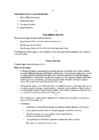
School system in the USA Education in the United States is provided by government. Each of the 50 states has its own laws regulating education. Children start school at the age of 5 or 6 and continue until the age of 18. Primary or grade school starts from the first grade up to the sixth grade. Then students attend middle school also called junior high school for three years. After middle school, students attend secondary schools, which are called "high schools" from ninth to twelfth grades. The idea of secondary school is to get a high school diploma. Students should take on average 17 or over 20 units during their studies
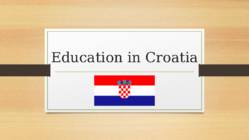
Education in Croatia Educational system in Croatia divided into: 1.Early childhood education 2.Primary education 3.Secondary education 4.Higher education Early childhood education There are three stages of early childhood education: · from when the child is 6 months old to when they're one · from the ages of one to three · from the age of three until the child stars attending primary school Even though these three stages are not compulsory, every child must attend kindergarten for a year prior to primary school. Primary education (Children begin school at the age of 6 or 7.) There are two stages: · 1st through 4th grade, being taught by one teacher per class that
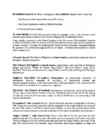
2 Educational system in Croatia divided into: 1. Early childhood education 2. Primary education 3. Secondary education 4. Higher education 3 Early childhood education There are three stages of early childhood education: • from when the child is 6 months old to when they're one • from the ages of one to three • from the age of three until the child stars attending primary school Even though these three stages are not compulsory, every child must attend kindergarten for a year prior to primary school. 4 Primary education (Children begin school at the age of 6 or 7.) There are two stages:
TALLINN COLLEGE OF ENGINEERING INGLISE KEEL Essee Differences between Estonian and USA school and education systems. Juhendaja: Koostanud: 2009 Differences between Estonian and USA school and education systems. Question is, how different are our own and this big country they call United States of America's education. Or maybe there is no difference at all, and our systems about school and education are more similar than they appear at first sight. After reading all the materials and all sorts of notes about USA's education systems and their school household. All at once I realized, that they are not so different at all. Like for example USA's kids have to go to school exactly the same amount of time as our Estonian children. And basically learn same amount of same things.
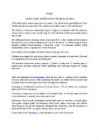
Essay United States and Estonian education systems USA and Estonian school systems are very similar. But still there are some differences. How children attend school and when? How chlidren are divided by age in USA and Estonia? The American school year traditionally begins in August or September, after the traditional summer recess, which is three months long. As well in Estonia. School year usually ends in may or june. First difference between Estonian school system and USA's is that children attend school at
The former are also known as Anglo-Catholic and the latter as Evangelical theologies and practices. Anglican church(es) The Anglican Communion is an international association of independent churches consisting of the Church of England and national and regional Anglican churches in full communion with it. Full participation in the sacramental life of each church is available to all communicant Anglicans. The Kirk = the Church of Scotland is Presbyterian in its structure, governed by a system of local, regional and national 'courts' or councils. 'Presbyterian' government refers to the sharing of authority in the church by an equal number of 'elders' (elected from the membership of the church) and ministers. Evangelical = low church The Low Church movement can trace its roots back to the early 18th century but is primarily associated with the opposition to the Anglo-Catholic movement of the later 19th century. Low Church placed great emphasis on preaching, personal piety and the
The Estonian Education System The current Estonian education system consists of pre-school education, basic education, general secondary education, vocational education and higher education. Basic education is the compulsory education minimum, whics is provided by basic schools. Estonian law requires all children to be in full-time education from age of seven. In Estonia the National Curriculum is compulsory for all schools. The academic year begin on the first of September and is divided into four terms. So pupils have four holidays: a week in October, two weeks at Christmas, a week in March and three months in summer. Most Estonian children receive free education in state schools. School uniform is not compulsory. At the end of basic school pupils take three exams and at the end of twelfth form pupil take five exams.
Hadrian’s Wall is an ancient wall which was built in 2nd century by Hadrian, the emperor of Rome from AD 117 to 138, and it marked the northern border of the Roman Empire in Britain. The wall was 80 Roman miles (117 kilometres) long and it is situated in northern Great Britain and stretched from Solway Firth in the west to the Tyne River near Newcastle in the east. It was built to keep the Caledonians of Scotland out of England. Windsor Castle, which is one of the official residents of British monarch, is located in the English country of Berkshire. It is the largest in habited castle in the world and the oldest in continuous occupation, since it dates back to the time of William the Conqueror. The castle’s area is approximately 484,000 square feet (44, 955 square metres). The castle has been garrison fortress, home, official palace and sometimes prison for most of the Kings and Queens of England/Great Britain. During the war, the castle has been heavily fortified but
 annaabi.ee






Kõik kommentaarid