 50 punkti
Autor soovib selle materjali allalaadimise eest saada 50 punkti.
50 punkti
Autor soovib selle materjali allalaadimise eest saada 50 punkti.
 ~ 8 lehte
Lehekülgede arv dokumendis
~ 8 lehte
Lehekülgede arv dokumendis
 2016-10-06
Kuupäev, millal dokument üles laeti
2016-10-06
Kuupäev, millal dokument üles laeti
 1 laadimist
Kokku alla laetud
1 laadimist
Kokku alla laetud
 0 arvamust
Teiste kasutajate poolt lisatud kommentaarid
0 arvamust
Teiste kasutajate poolt lisatud kommentaarid
 BigSawka
Õppematerjali autor
BigSawka
Õppematerjali autor
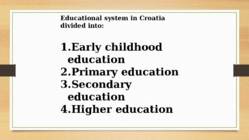
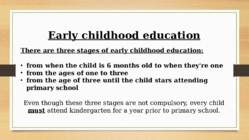
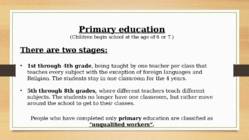
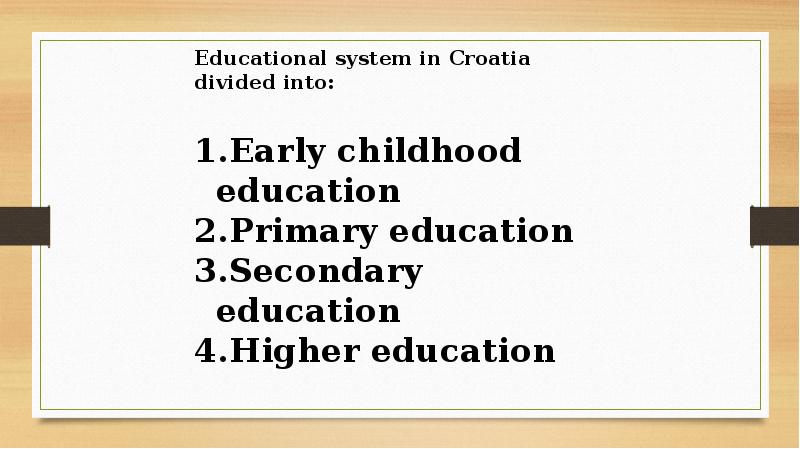
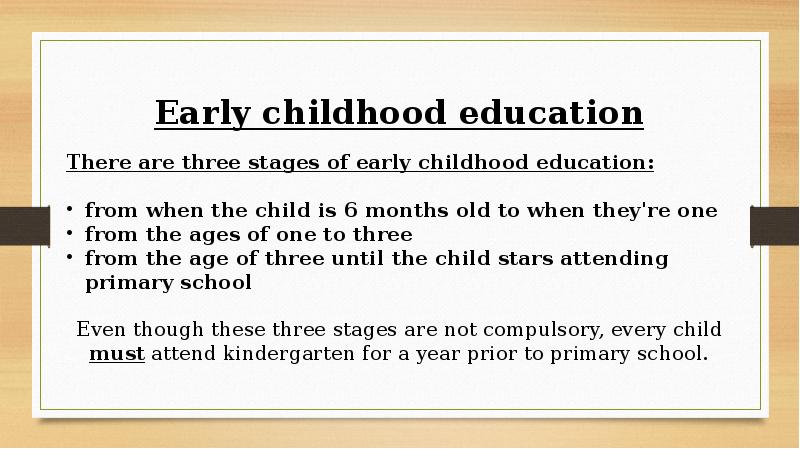
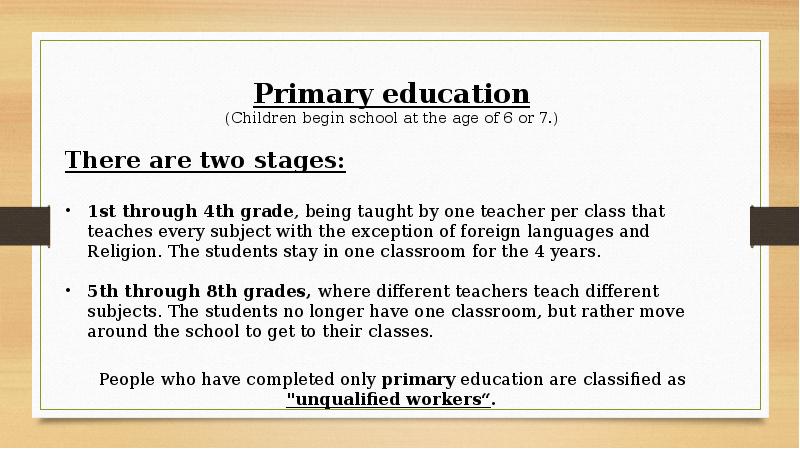
2 Educational system in Croatia divided into: 1. Early childhood education 2. Primary education 3. Secondary education 4. Higher education 3 Early childhood education There are three stages of early childhood education: • from when the child is 6 months old to when they're one • from the ages of one to three • from the age of three until the child stars attending primary school Even though these three stages are not compulsory, every child must attend kindergarten for a year prior to primary school. 4 Primary education (Children begin school at the age of 6 or 7.) There are two stages:
School system in the USA Education in the United States is provided by government. Each of the 50 states has its own laws regulating education. Children start school at the age of 5 or 6 and continue until the age of 18. Primary or grade school starts from the first grade up to the sixth grade. Then students attend middle school also called junior high school for three years. After middle school, students attend secondary schools, which are called "high schools" from ninth to twelfth grades. The idea of secondary school is to get a high school diploma. Students should take on average 17 or over 20 units during their studies
intrinsically separate from government (as opposed to a theocracy, or an "established" or state church). They operate under the guidelines of complete separation of church and state. A free church does not define government policy, and a free church does not accept church theology or policy definitions from the government. A free church also does not seek or receive government endorsements or funding to carry out its work. Maintained schools funded by the state. Schools maintained by the local education authority (LEA, or, in Northern Ireland, by Education Authority). Some of those schools are voluntary schools (also known as religious schools or faith schools) where the land and buildings are owned by a charity, often a religious organisation such as a church, but the school is at least partly funded by the local education authority. In all state schools, students must follow the National Curriculum. Independent schools independent fee-charging schools. Schools that are independent of
Education Estonian Style Until the age of 7 you usually go to kindergarten, which means that you obtain preschool education. In grades 1-9 you obtain basic education. In grades 7-9 in addition to obtaining basic education, it is possible for you to get prevocational training in basic school. For persons without basic education who have passed the minimum school-leaving age (17 years) it is possible to continue their education in vocational schools on vocational training programmes (within 0,52,5 years one obtains vocational skills) or in upper-secondary schools for adults. If you have basic education, then you have choices to continue your studies: Upper-secondary school for general upper-secondary education (3 years). Vocational school for vocational secondary education (at least 3 years). If you have (general or vocational) secondary education, then you have three choices to continue your studies.
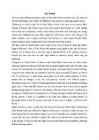
ESTONIAN EDUCATION POLICY. MAIN PROBLEMS AND POSSIBLE SOLUTIONS Hanna-Loora Bobrov Since I was a teenager, I remember thinking of the school education quality. How to improve it, where teacher could be more efficient and how to make a better environment for the pupils. And now all these years later I am a young teacher and it is still important for me what is going on within my society in education. I believe I have some kind of advance of knowing what is really going on in Estonian schools and how the education policy really works. Because not long ago I finished the high school, before that changing a lot of different schools and I think I can say that I superficially know how different schools are working in various regions of Estonia. Being a student at the faculty of education has opened my eyes for a lot of different things,
TALLINN COLLEGE OF ENGINEERING INGLISE KEEL Essee Differences between Estonian and USA school and education systems. Juhendaja: Koostanud: 2009 Differences between Estonian and USA school and education systems. Question is, how different are our own and this big country they call United States of America's education. Or maybe there is no difference at all, and our systems about school and education are more similar than they appear at first sight. After reading all the materials and all sorts of notes about USA's education systems and their school household. All at once I realized, that they are not so different at all. Like for example USA's kids have to go to school exactly the same amount of time as our Estonian children. And basically learn same amount of same things.
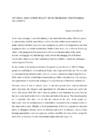
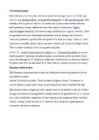
An Essay There are many different education systems in the world. Basics are pretty much the same, but ofcourse depending of the culture, the differences and interests of educating people, are big. Children go to school at age five in Great Britain, which is too early in my opinion. Most children in Estonia start school at age seven, only some of them at age six. I think starting with school and competition, rivalry, witch always associates with schooling, too young,
USA school system Most children enter the public education system around ages five or six. They may begin in preschoolpreschool, kindergartenkindergarten or first gradefirst grade. They normally attend 12 grades of study over 12 calendar years of primary and secondary education before graduating, earning a diploma that makes them eligible for admission to higher educationhigher education. Education is only mandatory until age 16, however. There are generally five years of primary (elementary) school, during which students customarily advance together from one grade to the next as a single cohort or "class", three years of middle school, which may have cohorts, and four years of high school. There is some variability in the arrangement of grades. In the U.S., ordinal numbersordinal numbers (e.g., first gradefirst grade) are used for identifying grades
 annaabi.ee







Kõik kommentaarid