Leidsid 33 sarnast õppematerjali, mis on seotud failiga "Education in Croatia esitlus". Need materjalid aitavad sul teemat sügavamalt mõista.
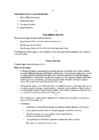
child, class, schools, primary, higher, ages, year, years, teach, science, secondary, student, early, childhood, stages, students, four, complete, universities, arts, divided, there, attend, through, grade, teacher, subject, foreign, languages, classroom, different, around, focus, harder, doctor, mostly, government, months, until, stars, even, though2 Educational system in Croatia divided into: 1. Early childhood education 2. Primary education 3. Secondary education 4. Higher education 3 Early childhood education There are three stages of early childhood education: • from when the child is 6 months old to when they're one • from the ages of one to three • from the age of three until the child stars attending primary school Even though these three stages are not compulsory, every child must attend kindergarten for a year prior to primary school. 4 Primary education (Children begin school at the age of 6 or 7.) There are two stages:
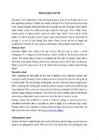
School system in the USA Education in the United States is provided by government. Each of the 50 states has its own laws regulating education. Children start school at the age of 5 or 6 and continue until the age of 18. Primary or grade school starts from the first grade up to the sixth grade. Then students attend middle school also called junior high school for three years. After middle school, students attend secondary schools, which are called "high schools" from ninth to twelfth grades. The idea of secondary school is to get a high school diploma. Students should take on average 17 or over 20 units during their studies. Public schools are free of charge and available for everybody. To which school a child attends is determined by where they live. Primary school American children start school at the age of five. The first year at school is called kindergarten
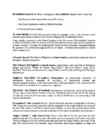
applied in the late 17th century to those individuals who were opposed to the Puritan wing of the Church of England. It is first and foremost associated with the Anglo-Catholic movement of the later 19th century (from 1833 onwards). High Churchmen placed great emphasis on liturgy and the sacraments, especially the weekly or daily celebration of the Eucharist as well as on the three orders of ministry (deacon, priest and bishop). Archbishop In Christianity, an archbishop is a bishop of higher rank or office. Like popes, patriarchs, metropolitans, cardinal bishops, diocesan bishops, and suffragan bishops, archbishops are in the highest of the three traditional orders of bishops, priests, also called presbyters, and deacons. An archbishop may be granted the title, or ordained as chief pastor of a metropolitan see or another episcopal see to which the title of archbishop is attached. Bishop is an ordained or consecrated member of the Christian clergy who is generally entrusted
Education Estonian Style Until the age of 7 you usually go to kindergarten, which means that you obtain preschool education. In grades 1-9 you obtain basic education. In grades 7-9 in addition to obtaining basic education, it is possible for you to get prevocational training in basic school. For persons without basic education who have passed the minimum school-leaving age (17 years) it is possible to continue their education in vocational schools on vocational training programmes (within 0,52,5 years one obtains vocational skills) or in upper-secondary schools for adults. If you have basic education, then you have choices to continue your studies: Upper-secondary school for general upper-secondary education (3 years). Vocational school for vocational secondary education (at least 3 years). If you have (general or vocational) secondary education, then you have three choices to continue your studies.
systems and their school household. All at once I realized, that they are not so different at all. Like for example USA's kids have to go to school exactly the same amount of time as our Estonian children. And basically learn same amount of same things. Like everywhere there are always differences. Education in the United States is mainly provided by the public sector, with control and funding coming from three levels: federal, state, and local. Child education is compulsory. A sub-type of compulsory education is public education. Public education is universal at the primary and secondary levels (known inside the United States as the elementary and high school levels). At these levels, school curricula, funding, teaching, and other policies are set through locally elected school boards with jurisdiction over school districts. School districts are usually separate from other local jurisdictions, with independent officials and budgets.
Children go to school at age five in Great Britain, which is too early in my opinion. Most children in Estonia start school at age seven, only some of them at age six. I think starting with school and competition, rivalry, witch always associates with schooling, too young, shortens the childhood and may affect negatively self-esteem, success and coping in the future. Children´s job is to play, it develops child the best, so I think anyone shouldn't forbit humans inherent needs. Children don´t have to become too fast to an adult. The high school in Great Britain starts at age eleven, but in Estonia at about age fifteen. Biggest difference is that in Great Britain they prepare young people to get a job or continue studing, but in Estonia this is only first step of educational life. After primary school in Estonia you have two ways to walk: high school or industrial school, where they get profession.
USA school system Most children enter the public education system around ages five or six. They may begin in preschoolpreschool, kindergartenkindergarten or first gradefirst grade. They normally attend 12 grades of study over 12 calendar years of primary and secondary education before graduating, earning a diploma that makes them eligible for admission to higher educationhigher education. Education is only mandatory until age 16, however. There are generally five years of primary (elementary) school, during which students customarily advance together from one grade to the next as a single cohort or "class", three years of middle school, which may have cohorts, and four years of high school. There is some variability in the arrangement of grades. In the U.S., ordinal numbersordinal numbers (e.g., first gradefirst grade) are used for identifying grades. Typical ages and grade groupings in contemporary, public and private schools may be found through the U.S
The high level of urbanisation on the island has contributed to a species extinction rate that is about 100 times greater than the background species extinction rate. 2 The History of the Great Britain The island was first inhabited by people who crossed over the land bridge from the European mainland. Traces of early humans have been found (at Boxgrove Quarry, Sussex) from some 500,000 years ago and modern humans from about 30,000 years ago. Until about 10,000 years ago, Great Britain was joined to Ireland, and as recently as 8,000 years ago it was joined to the continent by a strip of low marsh to what is now Denmark and the Netherlands. Britain in the reign of Elizabeth 3 Elizabeth II (Elizabeth Alexandra Mary; born 21 April 1926) is the
come to see them. Some of them are even like symbols of England. The most famous ones are: Stonehenge is one of the greatest national icons of Britain. That prehistoric monument is located in the plain of Salisbury, in the county of Wiltshire in the south-west of England. It is built of 150 enormous stones which are set in a purposive circular pattern. Stonehenge was probably built to mark the longest and shortest day of the year because it lies on the line of the midsummer sunrise and the midsummer sunset. That would have enabled people to keep a record of changing of seasons. Although it is still unclear who built it. Hadrian’s Wall is an ancient wall which was built in 2nd century by Hadrian, the emperor of Rome from AD 117 to 138, and it marked the northern border of the Roman Empire in Britain. The wall was 80 Roman miles (117 kilometres) long and it is situated in northern
(Other: muslin, orthodox, other Christian and so on). Birth rates: Switzerland has a birthrate of 9, 51 births to 1000 people, it's in the 199 place in the world's birth rate comparison. Leisure activities: Leisure activities range from taking part in grueling sports to relaxing with family and friends. Many people also devote part of their leisure time to the public service. Life expectancy at birth: total average is 81 years but if you look at genders separately it's: male 78 years and female 84 years. Environmental problems: air pollution from vehicle emissions and open-air burning; acid rain; water pollution from increased use of agricultural fertilizers. Education: The education system in Switzerland is very diverse, because the constitution of Switzerland delegates the authority for the school system mainly to the cantons. The Swiss constitution sets the foundations, namely that primary school is obligatory for every child and is free in public schools
Challenges of children`s “participation”: A Case Study of active citizenship in Cadle Primary School Gerli Orumaa – 662974 9th of May 2014 Word Count: 8,800 `Submitted in partial fulfilment of the requirements for the degree of B.A. International Relations` Table of Contents Abstract 3 Introduction 4 Chapter 1: Citizenship, Children`s Rights and Participation: from the UN to the UK 6
In England and Wales most school were established by private benefactors and operated as educational carities. Compulsory education was introduced in 1888. Maintained schools follow National Curriculum. National Curriculum core subjects are English, matematics and science. Foundation subjects are design and technology, history, music, art. Children in Englan begin with primary education and it may be divided into Infant and Junior school. After primary school they move secondary school. Nearly 88 pre cent of secondary school pupils in England go to comperhensive schools. After five years of secondary education students take examination in a range of subjects at the level of GCSI (general certificate of secondary edcation) and that marked by independent examination board. Following two years of study, students may take A-level examinationa, which are required for university entrance in the UK.
Education Education is so multifaceted that it is difficult for me to know where to begin discussing it, or how to prioritize the many factors. Relaying my own experience is easy: I had a standard classroom approach, supplemented by inordinate reading. In only the briefest and least memorable instances did I receive any individual tutoring. Education is commonly thought of as the job of schools. Adults cry "educate our children!" Everyone has opinions about the best way to do the job. It is of urgent importance, and all the numerous factors are much studied, debated, and new (or old) ideas continually tested or retested. Some people say "it's as simple as . . . " and then name their pet peeve or passion. My view is not of an education specialist, but of one who loves sharing what I learn, and owes much to educators
Comparison of Education in Britain and Estonia When looking into the educational systems of Britain and Estonia, several differences appear. In this essay I am going to point out some of the most distinguish features in the education of both countries. Firstly, there are dissimilarities in the age at which children go to school. In Estonia the age is 7 whereas in Britain children start their educational journey already as young as 5 years old. Primary school lasts 6 years just like in Estonia but the pupils in Britain are 2 years younger when they finish primary school than the pupils in Estonia. However, students in Britain and Estonia finish secondary school at the same age because secondary school lasts 5 years in Britain instead of 3 like it is in Estonia. Altogether, compulsory school in Britain lasts 11 years which is 2 years more than in Estonia. Moreover, there are slight differences as for the compulsory subjects taught in the first three
Estonian and British Education System Estonian and British education system is not quite different. In Estonia, the education system is based on six levels which include the: kindergarten, primary school, basic school, secondary school and university or vocational school. In Britain, the education system is also based on six levels which include the: nursery school, infant school, junior school, secondary school, 6th form and university or college. What is similar for both systems is that the first level of education starts at age of three. While in Estonia this level is called Kindergarten, then in Britain it is called Nursery school.
New Plymouth in North Island and around Dunedin and Invercargill on South Island. It lies just west of the International Date Line and is among the first into the new millennium. People : New Zealand has a population of around 3.65 million. People from a wide range of European countries have arrived since Captain James Cook to make up 75% of the population while Maori make up about 10%. The Maori first arrived on these shores just over a 1000 years ago at the close of the last millennium. Today, the Maori have adopted western lifestyles but have actively been encouraged to keep alive their culture, language and art. Other ethnic groups have arrived from Polynesia (Tonga, Samoa, Cook Islands) with Auckland now being the Polynesia capital of the South Pacific. People from China, Taiwan, Korea, Vietnam, etc have also settled in New Zealand making for a diverse population mix. History :
tributaries, is navigable for over 3,058 km. The largest lake situated entirely in Canada is Great Bear Lake at 31,328 km2 in the Northwest Territories. The largest lake which is at least partly in Canadian territory is Lake Superior Climate Canada's climate is as diverse as its landscape. Generally, Canadians enjoy four very distinct seasons, particularly in the more populated regions along the US border. Daytime summer temperatures can rise to 35°C and higher, while lows of -25°C are not uncommon in winter. More moderate temperatures are the norm in spring and fall. Summers can be hot and dry on the prairies, humid in central Canada, and milder on the coasts. Spring is generally pleasant across the country. Autumns are often crisp and cool, but brightened by rich orange and red leaves on trees. Winters are generally cold with periods of snow, although southern Alberta enjoys the
Education The education system is a little bit different in the UK than ours. For example they have go to school 2 years earlier than us. Primary school is for pupils aged 5-11. Though schooling is only compulsory from age 5 in the UK, children most commonly enter Reception Class aged 4 in the academic year in which they will reach their 5th birthday. When pupils are aged 7 they sit Key Stage 1 [SATs]. Key Stage 2 SATs are taken when pupils are aged 11. Secondary school is for pupils aged 11-16. 11-13 years old pupils study a broad range of 10–15 subjects. No public examinations are taken during this time. Traditionally, at the age of 14 students start a programme that lasts for 2 years and during which time they study up to 11 subjects of their choice
Compulsory education in Britain starts at the age of 3-5. Primary (infancy) School and move to a secondary school at 11 or 12. Primary (infant) Years 1-2 Age 5-7 Primary(junior) 3-6 5-7 secondary 7-9 11-14 Secondary 10-11 14-16 Sixth form Lower sixth form 1 year 16-18 Upper sixth form 1 year A-level advanced level. Higher level academic exams that are taken mostly by people around the ae of 18 who wish to go on to higher education. GCSE general certifcate of Secondary Education. The exams taken by 15 to 16 year olds in England, Wales and Northern Ireland. Marks are iven for each subject separately. Grades are A-G. A, B and C are regarded as good Grandes.
Patrick ;Scotland-thistle, St.Andrew 's cross . ; Wales-daffodil, leek, Prince of Wales's feathers; St.David, red dragon 8. How did the Romans influence Britain? The Romans built the first bridge(in London), the capital(London) is a Roman city, the street system(paved roads), benefits for the poor, public heated baths, art, architecture. They also influenced the language (pound, butter, cheese, wine, candle). 9. Which areas of life is English used in? technology, science, politics, tourism, aviation 10. Which languages influenced the Old English (until the 10th century) most?Anglo-Saxon, Celtic(the Celts), Scandinavian languages (Norse and Danish), Latin (the Romans) 11. Where do British people live? British Isles 12. Describe Ireland.- N I is famous for the Giant's causeway. Anthem God save the queen, 13. What is the approximate population of the 4 constituent countries? 62 million. England- 51,4 million, Scotland- 5,1
Why did I choose university education over vocational training? An essay Why more and more people nowadays tend to go to universities rather than to vocational schools? Will going to the university open all the doors in our lives? Is it necessary to have a higher education in order to survive in today’s economy? Those are just some of the questions that may arise when we start talking about the topic. Going to the university was once only for the children from wealthier families. Now as we have a lot of free higher education available, many people tend to use this wonderful opportunity. Although it might seem a great way to start building your way towards future career, it might not be the best way. Why? Because we have reached
Furthermore, Estonia has really outstanding level of education. Compared to other countries, our students get more thorough education and have good knowledge of languages. Based on the OECD’s Education at a Glance 2014 at least 90% of 25-64years old Estonians have secondary education, while average of OECD is 75%. Their level of education is more appreciated on the job market both in homeland and abroad. Moreover, due to countrys valuable workforce, Estonia has an effective job market. Higher standards of education do not only represent for an objective need for education, but it also provides an opportunity to legally restrict access to higher positions, which provide higher income. Innovative e-Services and even mobile-based services are hallmarks of Estonia's market economy. Estonia as also called as „e-Estonia“ is one of the most advanced e-societies in the world, offering services like e-elections, e-healthcare, e-school, etc to make people lives more simple and convenient
At the moment photography has compensated itself fully. The best thing about it is that I am really good at something and people respect me because of that. I am proud that I had enough determination in the past that I did not give up my hobby. Another well-known statement that I have heard is that small town inhabitants haven’t seen the world. As we know, travelling broadens the mind. I agree that in a small town it is often harder to find the right resources for going abroad. Some years ago I felt this kind of situation very clearly. I really wanted to see the world! The only question was how, because my financial resources were limited. Nevertheless, I think, it is the perfect situation in life. If you are eager to get something you have to think how it is possible to fulfill your dreams. I knew I was interested in writing and photography . Then came the question, how could I combine them. I examined the theme
III Exercise 1. John wondered what the doctor would charge him for the operation. 2. I received a fine for illegal parking yesterday. 3. As soon as the school as sufficient funds, they will build a new gym. 4. This jumper cost me a lot of money. 5. Embarrassingly, we nearly left the restaurant without paying the bill. 6. The instructor's fee for driving lessons is £10,00 per hour. 7. He wouldn't accept a cheque as payment. 8. I have had an account at that bank for years. IV Exercise In Britain, some children start their education by going to a kindergarten or nursery school when they are 2 or 3 years old. They must go to school from the age of 5, when they usually enter the state school system by attending primary school until they are 11 years old. Then they go on to a secondary school, which they can leave when they reach 16. Before leaving, students sit their GCSE examinations in 8 or 9 subjects. If they want to go on to study at
3. The Roman conquest Julius Caesar's first raid was in 55 BC but the romans left. Ad 43- the Romans came to stay. The army established Roman rule in the south and SW of the country. The Romans started to introduce their laws to a new province of the Roman Empire and started to build good roads. Officials were appointed (governors, procurators to collect taxes, look after the estates and mines and se that the gold, silver, iron and lead were exported back to Rome). Introduced schools,a new language Latin, large farms (villas), baths. In AD 410 they had to leave . roman occupation lasted nearly 400 years. They left behind very little. Roman province of Britannia covered most of present-day England and Wales. 4. Latin influence on English *The influence of Latin is noticeable also in the names of European cities: the Latin noun colonia (settlement, colony) may be found in numerous place-names: Lincoln, Colchester, Cologne ; from
Essay United States and Estonian education systems USA and Estonian school systems are very similar. But still there are some differences. How children attend school and when? How chlidren are divided by age in USA and Estonia? The American school year traditionally begins in August or September, after the traditional summer recess, which is three months long. As well in Estonia. School year usually ends in may or june. First difference between Estonian school system and USA's is that children attend school at the age of 5-6, but in Estonia children go to school at the age of 7-8. Before going to school american children attend preschool (selectively). Years 5-6 american children attend kindergarden, which is a preparation for the first grade. Most children enter the public education system around ages five or six.
If I Were a Minister of Education In the last five years we have witnessed several changes in the education system. Although some people find it useful and needed, others find it tragic. What has changed and what would I do to make school a better place? Firstly, there are several things that has been changed in the last few years, such as financing vocational schools. Students of vocational schools get paid for good grades and in some schools even for attending school. Even dorms are paid for students. That is true, we have a chance of getting a little scholarship in high schools, if we graduate with a medal, but it is times and times harder to achieve. In fact government has started to close high schools because they think that there are too many of them. It looks like our country wants only graduates with vocational education, which I find really sad.
faire economy new type, where government has no control over economy; booming economy- needed new markets and endless supply of raw materials; 1845- potato famine in Ireland, 1846- Corn Laws (import of cheap corn to feed hungry people); Social life: religious doubts (Darwin's The Origin of Species 1859)- question raised: is there a God at all?; sexual liberation- changed people thoughts about sex (before men & women had different bedrooms); problems: alcoholism, prostitution, child workforce, primitive technology. · How did the class structure change? Highest class was aristocracy (the Church and the nobility); the middle class/the bourgeoisie (shopkeepers, merchants, lawyers, businessmen etc.) was the biggest class; and the lowest class "the working class" and "the poor"; new change was the upward mobility people could become richer and move upward in social
Age 15 is legally a "young person" not a "child". Age 16 is a school leaving age. They can leave home, drive a moped, marry with "parents' consent" buy beer. Age 17 can drive a car. Age 18 can vote, get married, drink in pubs. Education is a very important part in the life of British youth. One can't become an independent person without it. When time comes to enter a college a young Englishman chooses one far away from home. It is a necessary part of becoming adult. During the last 30 years there were a lot of different trends in youth movements. All of them were characterized by their own philosophy, way of life, style of dressing. Each tendency was born by the influence of economic and political changes in the society. Those trends are known as the "hippies" the "punks" the "rockers". But certainly there are different traditional youth organizations in Great Britain. Among them -- the Scout Association, the Girl Guides Association, the National Union of
Truancy in school individual responsibility Hello ladies and gentlemen, today I am here to talk to you about truancy in school and why is it an individual responsibility. Truancy in school is a very serious problem nowadays. Unfortunately many students have lost their motivation to study. According to the BBC 400,000 children were persistently absent from England's schools in the past year and missed about one month of school each. The effect that poor attendance at school can have on a child's education can be permanent and damaging but skipping should be child's own responsibility and it is not right to punish the parents for it. Students have many reasons why they are skipping school, mostly they do not like the teachers or the subjects that they are taught. They tend think that they won't need those subjects in their future life. Some children are just lazy and irresponsible
By 2006, the state had over 130 km2 of vineyards, a harvest of 109,000t of grapes and exports going to over 40 countries around the world from the 600 wineries located in the state. While there are some viticultural activities in the cooler, wetter western half of the state, the majority (99%) of wine grape production takes place in the desert-like eastern half. Education Elementary and secondary As of the 2008–2009 school year, 1,040,750 students were enrolled in elementary and secondary schools in Washington, with 59,562 teachers employed to educate them.[106] As of August 2009, there were 295 school districts in the state, serviced by nine Educational Service Districts.[107] Washington School Information Processing Cooperative provides information management systems for fiscal & human resources and student data. Higher education There are more than 40 institutions of higher education in Washington
sunday my birthday is on the 27th dec my address is i was born in 1996 country city town parish cummune municipal village flat avenue street road kindergarten(nursery) to decide vocational school profession education speciality construction of cars to establish restuarant to continue to mend to repair 1.In the future 2.i have to stay in my new school do practical work 3.i entered vocational school. 4.at the age of seven 5.i was born in 23.10.1984 6.during my session 7.for almost four years 8.i want to be weiter 1. i was born in 3 nev 1984 2.i went to school at the age of seven 3.i have to studie almost four years 4.in september i went to vocational school 5.im interested in cars 6.in school we do practical work too 7.in the future im going to keep the family resourant school final certifacate 1. vocational 2.certificate 3.restaurant 1.traveled to alot of countrys 2.got into rakvere vocational school 3.finished basic school to christen-ristima
PHYSICAL EDUCATION Physical education has long been a staple in schools on a K-12 level and beyond, with all students required to participate in some form of physical education. Also referred to as "gym class" students participated in activities such as team sports, (volleyball, soccer, basketball, etc.) walking or running (running a mile was common), cardiovascular and strength training exercises (such as pull-ups and push-ups) and even swimming. Physical education provides children with an opportunity to exercise during the day
 annaabi.ee