Leidsid 33 sarnast õppematerjali, mis on seotud failiga "CONTEMPORARY SLAVERY". Need materjalid aitavad sul teemat sügavamalt mõista.
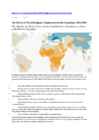
child, children, labor, forced, work, women, attention, definition, property, held, different, forms, marriage, domestic, migrant, method, typically, through, debt, majority, sometimes, regions, africa, middle, east, labour, workers, brazil, niger, haiti, preventive, measures, offers, police, communicationAbout 310 reservations 55,7 million acres Unevenly distributed Tribal sovereignty (iseseisvus) Poverty and unemployment · Indian citizenship Act of 1924 Granted citizenship to 300,000 indigenous people, to friendly tribes State support was limited Absorb Indians into the mainstream Didn't have the right to vote · Trail of Broken Treaties of 1972 Took place in 1972 Cross-country protest by American Indian organizations Intended to bring attention to American Indian issues such as treaty rights, living standards, and inadequate housing. Huge media coverage "20-Point Program" · Present situation 1 Reservations situated west of the Mississippi 1% of the population Minority group, less privileged Social problems Self-awareness Mixture of old and new HOW GOVERNMENT ACTS NOW- gives natives money and near Las Vegas the right to own casinos to compensate injustice and taking away land. II First Settlements
1627 no trace of the "Estonians and Livonians" who left their homeland to settle at the mouth of the Delaware River (a Swedish colony) · 1654 at least one Estonian in the settlement of New Sweden on the Delaware River Johan Schalbrick, a drummer from Tallinn (Reval) · New Sweden Swedish colony on the Delaware River from 16381655 · 1657 Martinus Hoffman, born in Tallinn (Reval), came to New York (New Amsterdam), started to work as a saddlemaker. · His great-granddaughter Cornelia Hoffmann (b. 1734) married Isaac Roosevelt, which makes her the great-great-grandmother of Franklin Delano Roosevelt, president of the US from 193345. · Hans Rebane = 1897 founded the first Estonian-language newspaper in the US Eesti Ameerika Postimees (published in NY until 1911) · 1898 founded an Estonian Lutheran congregation in NY (still exists today) 2
...............12 Introduction I chose this theme because I am really into all kinds of different cultures. What most exited me in this theme was that I had absolutely no idea who creoles were. Now I now that there were three general groups that made up Creole society: 1) whites who were Creoles, Americans, and inhabitants of European origin made up the highest class; 2) free Blacks, emancipated slaves and their descendants made up the middle class; and 3) slaves who were household property, were the lowest class. The Creoles were the majority of the white population. They had a complex social organization, which included foreign groups such as Germans, Irish, and Spaniards whose names were given a French accent. The people who could trace their noble ancestors called themselves "Creole." Others were "chacas" or tradesmen, "chacalatas" or country folk (peasants), or "chacumas" for anyone with Black blood. All Creoles, no matter what level of society they were in, including
Origin of Native Americans Nearly one-third of Native American genes come from west Eurasian people linked to the Middle East and Europe, rather than entirely from East Asians as previously thought, according to a newly sequenced genome. Native peoples of North and South America descended from ancestors who arrived via land bridges from East Asia, possibly in a single migration. Different tribes and their way of life The men were hunters, warriors, and protectors, while the women tended to the children, their homes, and farmed. It depended on the tribe when it came to artwork. In some tribes, the men would actually weave baskets and blankets. Natural foods were consumed and hunted. Deer, buffalo, fish, and various birds were the game of choice. Corn, beans, squash, berries, nuts, and melons were the fruits and vegetables that were consumed. Berries were also often used as a natural dye for fabrics.
He finds communism helpful. The question is wheter bloodshed is justified and humane. Unlike earlier hemingway heroes Jordan is an intellectual. Jordan is against suicide, which is major theme in the novel, because Jordan's father commited suicide. Falls in love with Maria, daughter of republican mayor. Three days of love bring him back to life. Maria was raped by facists and her father was killed by facists, disturbed girl. Secondary characters are rememorable. Men and women act differently to war. Men are carried away by war propaganda, women are shown to be wised and appreciate life more than political parties. Men think on taking sides but women value life more. Jordan is an idealist. He is willing to give his life for this cause. But Maria's first loyalty is to her lover, jordan. She places love above war, politics. Pablo is another type, he is a moral coward, he is a defeatist, who wants to avoid personal danger and wants to save his life, he is mean and
Dependent Territories citizens – British Overseas citizens = persons connected with former British colonies (Malaysia and Kenya) – British Nationals (Overseas) = status created by the Hong Kong Act 1985 – British Protected Person (BPP). 15. Right of abode- an individual's freedom from immigration control in a particular country. A person who has the right of abode in a country does not need permission from the government to enter the country and can live and work there without restriction. Generally, in order to have the right of abode in a certain country, a person must be a citizen of that country. Those with permanent residency of the country generally have a de facto right of residence but it can be revoked in certain circumstances, for example for being convicted of crimes. 16. Print media- (newspapers and magazines). Print media is one of the oldest and basic forms of mass communication
control of Jamaica), succeeded in organizing frequent uprisings against the European landowners. The sugar industry declined in the 19th cent., partly because of the abolition of slavery in 1833 (effective 1838) and partly because of the elimination in 1846 of the imperial preference tariff for colonial products entering the British market. Economic hardship was the prime motive behind the Morant Bay rebellion by freedmen in 1865. The British ruthlessly quelled the uprising and also forced the frightened legislature to surrender its powers; Jamaica became a crown colony. Poverty and economic decline led many blacks to seek temporary work in neighboring Caribbean areas and in the United States; many left the island permanently, emigrating to England, Canada, and the United States. Indians were imported to meet the labor shortage on the plantations after the slaves were freed, and agriculture was diversified to lessen dependence on sugar exports
State (def) "Inter-American convention on the rights and Duties of States!" (Montevideo 26.12.1933) A permanent population biggest part are citizens of the state, + citizens of other states, who have a residence permit, stateless person (apatrid), people with multiple citizenships (bipatrid). How to get citizenship by birth: lex sanguinis blood principle, by birth, given to the child according to the citizenship of the parents (if parents are citizens of different countries different legislation can provide different solutions, they could choose or the child could choose); lex soli ground principle, given due to the place of birth, typical for Anglo- America and Latin-American, this can lead to dual-citizenship. Child if found
American horse became game for the earliest humans and became extinct about 7,000 BC, just after the end of the last ice age. The re-introduction of the horse had a profound impact on Native American culture in the Great Plains of North America. As a new mode of travel the horse made it possible for some tribes to greatly expand their territories, exchange goods with neighboring tribes, and more easily capture game. In the nineteenth century, the incessant Westward expansion of the US forced large numbers of Native Americans to resettle further west. Under President Andrew Jackson, Congress passed the Indian Removal Act of 1830, which authorized the President to conduct treaties to exchange Native American land east of the Mississippi River for lands west of the river. As many as 100,000 Native Americans eventually relocated in the West as a result of this. 9. Culture The culture of the United States is a Western culture, and has been developing since long before
In the 32 years I have been in America, I have never had a discussion with any of my brothers or sisters without it resorting to the African (Black)/Caucasian (white) relationship. When we decide to buy a house in a Caucasian neighbourhood, we blame the people for refusing to sell to us because of their 1 belief that we spend more time and money on visible luxurious and ultimately worthless items, than in maintaining our property, which to everyone but us is a major part of their investment and retirement and retirement portfolio. The blame game has become a permanent part of our lives to the exclusion of any other solution that could be more viable in solving our problems. It has become the most productive part of our lives, because without it the African cannot really point to much that they are in charge of producing. It is
many changes in different fields- economy, religion etc.; focusing more on people's attitudes, political developments etc; Victorian age was inspired by Elizabethan era; Britain became an empire · What were the most important changes in politics, religion and social life that occurred during the Victorian age? Politics: 1848 Chartist movement (voting right for the working class); women's suffrage movements; feminist outburst (wanted to have business openly; own property, voting etc.); world dominion (British empire); Economy: Industrialization; urbanization (people moved to towns no agriculture & food); laissez- faire economy new type, where government has no control over economy; booming economy- needed new markets and endless supply of raw materials; 1845- potato famine in Ireland, 1846- Corn Laws (import of cheap corn to feed hungry people); Social life: religious doubts (Darwin's The Origin of Species 1859)- question raised: is there a God at all
especially by Thomas Paine in "The Age of Reason" and by Thomas Jefferson in his short Jefferson Bible from which all supernatural aspects were removed. Benjamin Franklin was influential in America, England, Scotland, and France, for his political activism and for his advances in physics. The American Dream is a national ethos of the United States, a set of ideals in which freedom includes the opportunity for prosperity and success, and an upward social mobility achieved through hard work. In the definition of the American Dream by James Truslow Adams in 1931, "life should be better and richer and fuller for everyone, with opportunity for each according to ability or achievement" regardless of social class or circumstances of birth. The idea of the American Dream is rooted in the United States Declaration of Independence which proclaims that "all men are created equal"
1. UN as a world organization The United Nations officially came into existence on 24 October 1945, when the UN Charter had been ratified by a majority of the original 51 Member States. The day is now celebrated each year around the world as United Nations Day. The purpose of the United Nations is to bring all nations of the world together to work for peace and development, based on the principles of justice, human dignity and the well-being of all people. It affords the opportunity for countries to balance global interdependence and national interests when addressing international problems. There are currently 192 Members of the United Nations. The Aims of the United Nations: -To keep peace throughout the world. -To develop friendly relations between nations. -To work together to help people live better lives, to eliminate poverty,
investment in renewable energy, funding of energy efficiency projects in the developing world, and incorporating post-consumer recyclate into our packaging. During 2003 The Body Shop launched a global campaign to help Stop Violence In The Home. This builds on almost a decade of campaigning on the issue in a number of our markets, including Canada, the USA, and West Malaysia. The campaign aims to highlight the issue, raise money to support the work of groups helping victims of violence, and ensure that customers and employees are provided with information on sources of advice and help. Anita Roddick is appointed as a Dame of the British Empire as part of the Queen's Birthday Honours on Saturday 14th June 2003. During 2003 The Body Shop launches in Estonia and Turkey. In 2004 The Body Shop is the first global retailer to join the Board of the Roundtable for Sustainable Palm Oil, working with NGOs and plantations to protect tropical
The Indian wars finally ended in 1890 with the Battle of Wounded Knee and after it the government gave the Indians reservations, pieces of land that belonged to them.At the beginning of the 19th century many settlers came to America, in search for a better life. By the middle of the 19th century there were already 34 states in the U.S.A. The United States grew to be one of the great powers of the world. The nation fought in the First World War. After the war women got the right to vote for the first time.In 1929 the Great Depression began with the stock market crash. Banks, factories and farms shut down and many Americans were unemployed. In 1941 the United States entered the Second World War when Japan attacked the Hawaiian Islands. The war ended in 1945 when the US dropped the first atomic bombs, and the world entered the Nuclear Age.Today about 30 million of 260 million Americans are black. When they were freed
Government - the group of people who officially control a country System of courts - a set of connected positions which operate together to ensure ... ? To commit a crime to do sth that is forbidden by law Corruption - illegal, immoral or dishonest behaviour, especially by people in positions of power Fine (trahv) - an amount of money that has to be paid as a punishment for not obeying a rule or law Suspension - when a person is temporarily not allowed to work, go to school or take part in an activity, as a punishment Prosecution - to officially accuse someone of committing a crime in a court of law, or to try to prove that a person accused of committing a crime is guilty of that crime Injury bodily harm, damage Public opinion sth that most of the ppl in a society think of sth Simple majority - sth is voted for or against by not more than half of the votes altogether
form of public entertainment. In the late 18th century the British army suffered two serious defeats at battles in Seringapatam, in India. The main reason for these defeats was that the Indian prince, Haidar Ali's army included a corps of rocket throwers. They used very large bamboo rockets which had a range of hundreds of metres. The British were determined to learn from their mistakes and a British officer, William Congrieve, began work on developing even bigger and better rockets. Within a few years Congrieve had developed 14 kg iron rockets that could be fired over 3200 m. These rockets were successfully used against Napoleon in the battle of Waterloo and during the US War of Independence. By the 1889s other applications for rockets were being developed. They were used for signalling, for whaling, and even for rescuing people from sinking ships. If a boat got into trouble near to the shore, a
East India Company to Java in the mid-1600s, and the need for a half-way refreshment stop for its ships rounding the Cape impelled the Company to plant a farm at the tip of Africa. There are sections of Commander Jan van Riebeeck's wild almond hedge still standing in the Kirstenbosch Gardens in Cape Town. That farm changed the region forever. The Company discovered it was easier to bring in thousands of hapless slaves from Java to work in the fields than to keep trying to entrap the local people, mostly Khoi and San, who seemed singularly unimpressed with the Dutch and their ways. The Malay slaves brought their cuisine, perhaps the best-known of all South African cooking styles. The French Huguenots arrived soon after the Dutch, and changed the landscape in wonderful ways with the vines they imported. They soon discovered a need for men and women to work in their vineyards, and turned to the Malay slaves (and the few
They were of varied cultural backgrounds, and many were recent immigrants. White Loyalists brought large numbers of slaves with them. Until 1834, slavery was legal in all British North American colonies but Upper Canada, where the institution was being phased out. The main waves of Loyalists came to what is now Canada in 1783 and 1784. 11. In which province is Scottish culture preserved? In 1910 an incredible 62,000 Scots emigrated to Canada. Tens of thousands of Scots men, women and children boarded ships to make the journey to Canada in the first half of the 20th century. Nova Scotia Gaelic is still spoken in Nova Scotia, hundreds of years after the first Scots settlement was founded.21st century Scots Canadians celebrate their Scots origins and share their traditions with people from around the world. Scots culture is not a museum piece; it is a living thing that grows and thrives as it is touched by other cultures and other traditions. In 2006, in the Canadian Census, 4
.Low Low budget budget deficit deficit and and rates rates government government debt debt Competitive Competitive costcost of of labor labor Favorable Favorable office office rents rents and
The power was regained after about 200 years and the Anglo-Saxon dynasty lasted until the year 1066. The period of Medieval England (1066-1483) started in 1066 when William of Normandy came defeated the Anglo-Saxon king Harold at the Battle of Hastings. Land was handed to the rich French who came to live in England. The power of these Norman Barons increased and they together with the Church began to challenge the king's absolute power. The king was forced to sign the Magna Carta in 1215 which significantly reduced the king's rights. The most important things that happened in this time were the Hundred Years' War, the Black Death and the Peasants' Revolt. The Hundred Years' War had a devastating effect on English economy. The Black Death killed about on third of all the population. The peasants wanted a better life and they started a revolt that was turned down but it led to greatly improved conditions for the peasant class.
west of the Cape Verde islands (off the west coast of Africa). In 1498, Vasco da Gama reached India and brought economic prosperity to Portugal and its population of 1.7 million residents. In 1500, Pedro Álvares Cabral discovered Brazil and claimed it for Portugal. Ten years later, Afonso de Albuquerque conquered Goa in India, Ormuz in the Persian Strait, and Malacca, now a state in Malaysia. Thus, the Portuguese empire held dominion over commerce in the Indian Ocean and South Atlantic. The Portuguese sailors set out to reach Eastern Asia by sailing eastward from Europe landing in such places as Taiwan, Japan, and the island of Timor. The Treaty of Zaragoza, signed on 22 April 1529 between Portugal and Spain, specified the antimeridian to the line of demarcation specified in the Treaty of Tordesillas. All these facts made Portugal the world's major economic, military, and political power from the 15th
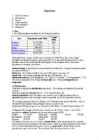
.................................................................................................... 5 1.1.2. Post-Independent Ukraine. Economy and politics ............................................... 6 1.1.3. Key Macroeconomic indicators ......................................................................... 14 1.1.4. Foreign Direct Investments ................................................................................ 16 1.1.5. Demographics and labor force .......................................................................... 17 1.1.6. New emerging industry....................................................................................... 19 1.2. The Business Environment ........................................................................................ 23 1.3. Banking system.......................................................................................................... 27 1.4
Britain History Pre-Norman Britain The Iberians brought their metal-working skills and the first real civilization to Britain in the third millennium B.C and were overrun by various Celtic invasions that began in the 8th century. The Celts introduced their tribal organization and an early form of agriculture before they were forced westward by the Roman invasion. Forms of Celtic language are still spoken in Britain. Romans (with Julius Caesar in the head of them) first tried to occupy Britain in 55 B.C., but there was a rebellion in Gaul so they had to leave to fight against it. Next time they came in 43 A.D. and their leader was Emperor Claudius. Romans brought a lot with them. Their brought paved roads, the sites of important cities, the seeds of Christianity, the Roman
economic situation of the country was extremely prejudiced by another crop failure. Thousands of poverty-stricken Irish were dying of starvation, causing the country's population to fall. However, despite the famine and constantly increasing number of deaths, the government did not implement measures to improve the existing situation. Thence, Swift, being an Irishman by birth and feeling disappointed of the ruling classes, proposes a solution to the problem by publishing his shocking work, the bitterest satire A Modest proposal for Preventing the Children of Poor People in Ireland from Being a Burden to Their Parents or Country, and for Making Them Beneficial to the Public (1729). In A Modest Proposal Swift finds out a solution to stop the famine. The author cites infants' breeding as an example for improving the economical conditions, finding the proposal "a fair, cheap and easy method of making these children sound and useful members of the common-wealth" (52)
key role in behavior. 2) Animals may be studied as a means of understanding human behavior. 3) There are biological correlates of behavior. Cognitions, emotions and behaviors are products of the anatomy and physiology of our nervous and endocrine system. Explain how principles of the biological level of analysis may be demonstrated in research. 1) Correlational studies: Study by Buss, who hypothesized that across cultures, men will prefer to marry younger women because of greater reproductive capacity and women will place greater value on a potential mate's earning potential to provide survival advantages. This evolutionary hypothesis was tested in 37 cultures by sending out questioners. 2) Twin studies (type of correlational studies) compare trait similarities in identical and fraternal twins (Minnesota twin study by Tellegen, Buchard). 3) Experiment: Split-brain experiments by Gazzaniga & Sperry, brain plasticity
The Indian wars finally ended in 1890 with the Battle of Wounded Knee and after it the government gave the Indians reservations, pieces of land that belonged to them. At the beginning of the 19th century many settlers came to America, in search for a better life. By the middle of the 19th century there were already 34 states in the U.S.A. The United States grew to be one of the great powers of the world. The nation fought in the First World War. After the war women got the right to vote for the first time. In 1929 the Great Depression began with the stock market crash. Banks, factories and farms shut down and many Americans were unemployed. In 1941 the United States entered the Second World War when Japan attacked the Hawaiian Islands. The war ended in 1945 when the US dropped the first atomic bombs, and the world entered the Nuclear Age. Today about 30 million of 260 million Americans are black. When they were freed
been falling – are likely to grow quickly. Much of the worldwide growth of Islam and Christianity, for example, is expected to take place in sub-Saharan Africa. Today’s religiously unaffiliated population, by contrast, is heavily concentrated in places with low fertility and aging populations, such as Europe, North America, China and Japan. Globally, Muslims have the highest fertility rate, an average of 3.1 children per woman – well above replacement level (2.1), the minimum typically needed to maintain a stable population.6 Christians are second, at 2.7 children per woman. Hindu fertility (2.4) is similar to the global average (2.5). Worldwide, Jewish fertility (2.3 children per woman) also is above replacement level. All the other groups have fertility levels too low to sustain their populations: folk religions (1.8 children per woman), other religions (1.7), the unaffiliated (1.7) and Buddhists (1.6).
English literature is one of the oldest literatures in Europe; dates back to the 6th century AD. Oral literature, i.e. not written down, spread from person to person. In 449 AD Anglo-‐Saxon tribes invaded England – beginning of the Anglo-‐Saxon period in English literature. The first form of literature was folklore, carried by scops and gleemen, who sang in alliterative verse (a kind of simple poetry). Prose developed much later. The first form of recorded English literature was the epic Beowulf, which was produced sometime near the end of the 7th and beginning �
redevelopment of slum areas in the conurbations (such as the Docklands development in London) has been the creation of New Towns such as Harlow in Essex. The industrial area in these purpose-built towns is separate from housing and there are more green, open spaces. New Towns have partially failed, however, especially since many are near enough to conurbations for people to use them as dormitory towns (towns where a large percentage of the population commutes daily to work in a conurbation) and recent government policy has been to expand existing towns like Telford and Milton Keynes (formed from the amalgamation of a group of villages), which is cheaper than creating an entirely new town. 1. Ethnic makeup English 81% Welsh 2% Scottish 10% Northern Irish 2% Irish 2% ethnic minority groups
degree of B.A. International Relations` Table of Contents Abstract 3 Introduction 4 Chapter 1: Citizenship, Children`s Rights and Participation: from the UN to the UK 6 Chapter 2: Citizenship Education in Wales………………………………………………14 Active Citizenship in Cadle Primary School: A Case Study 20 Conclusion 29 Bibliography 32 Appendices Appendix 1: The United Convention of the Rights of the Child Appendix 2: Interview with Jamie Richards, the Head Teacher of Cadle Primary School 2 Abstract: Children inherently have had a rather tenuous relationship with citizenship. Similarly to how women were once viewed, children have not been considered as subjects of rights due to their perceived incompetence and irrationality. Currently, children are not considered as being
Teir country- Caledonia- Pictland The Scots, Hibernia Raiders, Celts living in Ireland/Hibernia Migrated to Scotland Raided Roman Britain After Kenneth McAlpin united Scotland all inhabitants became Scots The Venerable Bede A monk in the Northumbrian monastery of Jarrow In 731 ,,The Great Ecclesiastical History of the English People"- overshaows all other sources of 7th, early 8th C Well-founded scraps of tradition, first work of history, where AD system is used Angles, Saxons, Jutes. Frisians 430´s onwards, Germans settlers arrived in large numbers. Anglo-Saxon invasions in 499 The Saxons- Saxon country to South and West The Angles- Angulus to East Anglia, Jutes in Kent Same culture as southern Scandinavia, Germany, northern France 600 they had founded their 7 kingdoms The Anglo-Saxon kingdoms Kent-JUtes, Essex, Sussex, Vessex- Saxons
This feast has become known as "The First Thanksgiving." The Civil War was the most bitter conflict within the United States. The source of the conflict between the North and the South was about different ways of life. Economy in the South was heavily based on agriculture and growing cotton. The North was heavily industrialized with factories and manufacturing being central to the economy. Growing and harvesting cotton required large numbers of workers. This work force was made up of about 4 million slaves. By the 1800's, the African slave trade had become illegal. But existing slaves were not freed. Men and women of the North wanted to abolish slavery. The South feared that losing the slaves would have a severe economic impact on cotton plantations. Abraham Lincoln was elected as the President in 1860, seven Southern states left, or seceded, from the United States. They formed the Confederate States of America. In
 annaabi.ee