Leidsid 33 sarnast õppematerjali, mis on seotud failiga "Clive Staples Lewis". Need materjalid aitavad sul teemat sügavamalt mõista.
lewis, known, other, death, years, clive, 1898, friends, belfast, ireland, work, four, later, before, cancer, same, commonly, referred, academic, christian, letters, narnia, space, killed, first, answer, accepted, restther, filled, books, sent, mother, married, writer, wife, result, renalilure, came, birthday, minimal, president, kennedy, anotherBecause of that he died.( 9 June1870) Oliver Twist (1837-39), Nicholas Nickleby (1838-39), The Old Curiosity Shop and, Barnaby Rudge: A Tale of the Riots of 'Eighty as part of the Master Humphrey's Clock series (1840- 41), A Christmas Carol written in 1843. Hard Times- For These Times. is a novel by Charles Dickens, first published in 1854. The book is a state-of-the-nation novel, which aimed to highlight the social and economic pressures that some people were experiencing. Unlike other such writings at the time, the novel is unusual in that it is not set in London. A Christmas Carol in Prose, Being a Ghost Story of Christmas (commonly known as A Christmas Carol) is a novella by Charles Dickens first published on December 19, 1843 with illustrations by John Leech. The story was an instant success, selling over six thousand copies in one week, and the tale has become one of the most popular and enduring Christmas stories of all time.
Lewis Carroll 27 January 1832 14 January 1898 Charles L. Dodgson Charles Lutwidge Dodgson (27 January 1832 14 January 1898), better known by the pseudonym Lewis Carroll, was an English author, mathematician, logician, Anglican deacon and photographer. His most famous writings are Alice's Adventures in Wonderland and its sequel Through the LookingGlass, as well as the poems "The Hunting of the Snark" and "Jabberwocky", all examples of the genre of literary nonsense. He is noted for his facility at word play, logic, and fantasy, and there are societies dedicated to the enjoyment and promotion of his
Bob Marley This article is about the reggae musician. For the comedian, see Bob Marley (comedian). Bob Marley Bob Marley in concert, Zürich, 1980. Background information Birth name Robert Nesta Marley Also known as Tuff Gong February 6, 1945 Born Nine Mile, Saint Ann Parish, Jamaica May 11, 1981 (aged 36) Died Miami, Florida, United States Genre(s) Reggae, Reggae Rock, Ska, Rocksteady Occupation(s) Singer, songwriter, guitarist Instrument(s) Guitar, vocals, percussion Years active 1962 1981 Studio One, Beverley's, Upsetter/Trojan, Label(s) Island/Tuff Gong Associated
vivacious woman about whom a future Viceroy of India would say, "Dullness and Mrs. Kipling cannot exist in the same room."[3] Father - John Lockwood Kipling. Lockwood Kipling, a sculptor, an illustrator, museum curator and pottery designer, was the principal and professor of architectural sculpture at the newly- founded Sir Jamsetjee Jeejeebhoy School of Art and Industry in Bombay. Later in life Kipling illustrated many of Rudyard Kipling's books, and other works. Kipling also remained editor of the Journal of Indian Art and Industry, which carried drawing works from the students of the Mayo School. COUPLE named their son after the place they had first met Rudyard Lake. Alice Kipling Fleming - Sister of British author Rudyard Kipling who became a well-known psychic, producing automatic writing under the name "Mrs. Holland." Born June 11, 1868, Alice Kipling was privately educated
He worked at Oxford, after that he was Reader of English Language and later Proffesor of Anglo-Saxon at Leeds University. Then he went back to Oxford. In 1968, he moves to Poole with his wife and children. His wife died in 1971. Tolkiend was awarded the title Commander of the British Empire by the Queen. He died in 1973, at the age of 81. His works: "The Lord of the Ring", "Beowolf", "Spiders of Mirkswood".' Lewis Carroll(1832-1898): Lewis Carroll is only a pen-name. The real name was Charles Dodgson. He was a professor of mathematics at Oxford University in England. Dodgson had no children of his own but he was always fond of shildren. Today nobody remembers him as a professor of mathematics but every child has read his stories. His works: "Alice's Adventures Underground", "Alice's Adventures in Wonderland", "Through the Looking-Glass and What Alice Found There", mathematics book.
· 1636 Harvard University · 1773 Boston Teaparty · 1775 War of Independence · 1776 4 July Declaration of Independence · First President George Washington Christopher Columbus Christopher Columbus (1451-1506) was an Italian explorer who sailed across the Atlantic Ocean in 1492, hoping to find a route to India (in order to trade for spices). He made a total of four trips to the Caribbean and South America during the years 1492-1504. He discovered America in 1492. I Indian sun, they pray for fan. J we hate Jews, they are fools. K Bush is okey, because he is not gay. L Americans are large, they eat much. M Mc`Donalds is good, there is a lot of food. N is for Nigga who pulled the trigger. O is for Osama who wears pyjamas. P is for Pamela who likes camera. Puritans The Puritans were a group of people who grew discontent in the Church of England and
to know her better. Diana Facts about Diana Main Facts Her full name is Diana Frances Spencer and she was the Princess of Wales. Diana was called people's Princess. She was born on 1. July 1961 in Park house, Sandringham, Norfolk. She was born at the same place as her mother. She was married to Charles, Prince of Wales in 1981 and divorced in 1996. She died in car a accident on 31. August 1997 when she was only 36 years old. She is buried at Althorp, Northamptonshire. Family Her mother's full name is Frances Ruth Shand Kydd (1936 - 2004) and father's full name is Edward John Spencer (1924 1992). She has two sons with Prince Charles: Prince William, aged 27 and Prince Harry, aged 25. She gave birth to both sons in St Mary's Hospital, London. She has two older sisters Jane and Sarah and younger brother Charles. Hobbies Diana's hobbies were Shopping, health and beauty treatments. In sports, she liked skiing.
..............................................................................................4 Autobiography................................................................................................................. 5 Travels to Europe.............................................................................................................5 Pre-Civil War...................................................................................................................6 Lincoln's death.................................................................................................................6 Reconstruction era........................................................................................................... 7 Later life...........................................................................................................................7 Death................................................................................................................
And the paintings and carvings are increaslibly falling victim to vandalism: they have been painted over, spoilt with knives, even used for target practice. The American Rock Art Research Association protects rock-art sites. 2) THE FAVOURITE SPORT IN BRITAIN The most popular sport is probably football. Two kinds of football is played in Great Britain. One of them, which is called association football, is played all over Europe. The other kind: rugby football is also very popular in New Zealand, France, and some other European countries. English boys play it at school, and in public parks. When they grow up, they play as members of important amateur teams or as a professional in teams competing in football ,,leagues". Professional football is as much a business as a sport. Rugby football was first played in 1823. In rugby every player is allowed to carry the ball. The ball is oval, not round. Each team contains 15 players
commercially successful and critically acclaimed acts in the history of popular music. From 1962 the group consisted of John Lennon (rhythm guitar, vocals), Paul McCartney (bass guitar, vocals), George Harrison (lead guitar, vocals) and Ringo Starr (drums, vocals). Rooted in skiffle and 1950s rock and roll, the group later worked in many genres ranging from folk rock to psychedelic pop, often incorporating classical and other elements in innovative ways. The nature of their enormous popularity, which first emerged as the "Beatlemania" fad, transformed as their songwriting grew in sophistication. The group came to be perceived as the embodiment of progressive ideals, seeing their influence extend into the social and cultural revolutions of the 1960s. With an early five-piece line-up of Lennon, McCartney, Harrison, Stuart Sutcliffe (bass) and
Argo Pihtjõe VLE-3 John R. "Johnny" Cash was born in February 26, 1932 Kingsland, Arkansas, U.S. He was the fourth of seven children to Ray Cash and Carrie Cloveree Rivers. Cash was named John R. Cash in a compromise made by his parents when they wanted to name him different names. He went by the name J. R. throughout his young life as a shortened version of his real name. In 1955, he took Johnny Cash as his stage name. In March 1935, when Cash was three years old, the family settled in Dyess, Arkansas. J.R. was working in cotton fields beginning at age five, singing along with his family simultaneously while working. The family farm was flooded on at least two occasions, which later inspired him to write the song "Five Feet High and Rising". His family's economic and personal struggles during the Great Depression inspired many of his songs, especially those about other people facing similar difficulties.
S. presidents. Early life and education Kennedy was born at 83 Beals Street in Brookline, Massachusetts on Tuesday, May 29, 1917, at 3:00 p.m. the second son of Joseph P. Kennedy, Sr., and Rose Fitzgerald; Rose, in turn, was the eldest child of John "Honey Fitz" Fitzgerald, a prominent Boston political figure who was the city's mayor and a three-term member of Congress. Kennedy lived in Brookline for his first ten years of life. He attended Brookline's public Edward Devotion School from kindergarten through the beginning of 3rd grade, then Noble and Greenough Lower School and its successor, the Dexter School, a private school for boys, through 4th grade. In September 1927, Kennedy moved with his family to a rented 20-room mansion in Riverdale, Bronx, New York City, then two years later moved five miles (8km)east to a 21-room mansion on a six-acre estate in Bronxville, New York, purchased in May 1929
1. Ancient Britain: the Celtic tribes. 2000 years ago there was an Iron Age Celtic culture throughout the Br Isles. It seems that the Celts, who had been arriving from Europe from the 8th cent BC onward, intermingled with the peoples who were already there. The Celts were extremely talented people, creative and artistic. More than 1 Celtic tribe invaded Br. The descendants of ancient Celts live in Wales, Scotland, Cornwall and Ireland. They lived in primitive society. Druids priests, more powerful than chiefs. Acted like prophets. 2. Stonehenge From prehistoric period. Was built on Salisbury plain between 2500 and 1500 bc. One of the most famous and mysterious archaeological sites in the world. One of the mysteries is how it was built at all with the technology of the time. Another is its purpose. It appears to function as a kind on
Interestingly, Rudyard Kipling congratulated Conan Doyle on his success, asking "Could this be my old friend, Dr. Joe?" Sherlock Holmes, however, was even more closely modelled after the famous Edgar Allan Poe character, C. Auguste Dupin. While living in Southsea he played football for an amateur side (that disbanded in 1894), Portsmouth Association Football Club. (This club had no connection with the Portsmouth F.C. of today.) In 1885, he married Louisa (or Louise) Hawkins, known as "Touie", who suffered from tuberculosis and died on 4 July 1906. He married Jean Leckie in 1907, whom he had first met and fallen in love with in 1897 but had maintained a platonic relationship with her out of loyalty to his first wife. Conan Doyle had five children, two with his first wife (Mary Louise (born 1889) and Alleyne Kingsley (1892 1918)) and three with his second wife (Jean Lena Annette, Denis Percy Stewart (17 March 1909 9 March 1955),
Marilyn Monroe Marilyn Monroe (born Norma Jeane Mortenson;[1] June 1, 1926 August 5, 1962), was a Golden Globe award winning[2] American actress, singer, model, Hollywood icon,[3] cultural icon, fashion icon,[4] pop icon and sex symbol. She is known for her comedic acting roles and screen presence. Monroe became one of the most popular movie stars of the 1950s and early 1960s. During the later stages of her career, she worked towards serious roles and her fame surpassed that of many entertainers of her time.[5] Her death at thirty six was classified as "probable suicide."[6] Many individuals including Jack Clemmons, the first LAPD Police officer to arrive at the death scene[7] believed that she was murdered
powerful. He pulled down some of their castles. He tried to restore law & order. He wanted the same kind of justice to be used everywhere. He appointed his own judges to travel around the country. They dealt with crimes & disagreements over poverty. Serious offences were tried in the king's court. At first they had no special knowledge or training. They were trusted to use common sense. By the end of the 12th cent. They had real knowledge & experience of the law which became known as ,,common law", based on custom, comparison, previous cases & decisions. It was unlike in the rest of Europe. In England trial by ,,ordeal" was replaced with trial by jury. The work of juries gradually changed from giving evidence to judging evidence of others. Now the king's laws were in force everywhere. In 1157 he forced Malcolm IV of Scotland to give up border regions to England. In 1171 he went to Ireland, took it under his rule & made his son John, Lord of Ireland. When he got the
traditions of governance. In the mid-5th cent, Vertigern, a British leader, hired Germanic mercenaries to help defend against peoples of the north (Picts & Scots). In the end they revolted & the process of invasion and settlement began. The first Saxon ,,kings" were Hengist & Horsa in Kent, Aelle in Sussex, Cerdic / Cynric in Wessex. So the first ,,English" became mainly from Northern Germany & Denmark. The resistance of the Celts was long. They were free at the time, not like other Roman provinces on the Continent. Around 500, the Britons seem to have won several victories. One of their leaders was Ambrosius Aurelianus and one of their victories was at the place called Mount Badon. The main leader of the Britons at this time may have been the warrior later called King Arthur. By the 7th cent. the invaders managed to conquer the greater part of the land. The invaders came from 3 powerful tribes:
was then dating her eldest sister, Lady Sarah. Diana was good at swimming and diving, and longed to be a professional ballerina with the Royal Ballet. She moved to London where she took an advanced cooking course, although she never became a cook, and worked as a dance instructor for youth, until a skiing accident caused her to miss three months of work. She then found employment as a playgroup assistant, did some cleaning work for her sister Sarah and several of her friends, and worked as a hostess at parties. MARRIAGE Prince Charles had known Diana for several years, but he first took a serious interest in her as a potential bride during the summer of 1980, when they were guests at a country weekend, where she watched him play polo. The relationship developed as he invited her for a sailing weekend to Cowes, followed by an invitation to meet his family. There, Diana was well received by Queen Elizabeth II, by Prince Philip, and by the Queen Mother
In the 2008 presidential election, he defeated Republican nominee John McCain, and was inaugurated as president on January 20, 2009. Nine months later, Obama was named the 2009 Nobel Peace Prize laureate. In April 2011, he announced that he would be running for re-election in 2012. As president, Obama signed economic stimulus legislation in the form of the American Recovery and Reinvestment Act of 2009 and the Tax Relief, Unemployment Insurance Reauthorization, and Job Creation Act of 2010. Other domestic policy initiatives include the Patient Protection and Affordable Care Act, the DoddFrank Wall Street Reform and Consumer Protection Act, the Don't Ask, Don't Tell Repeal Act of 2010, and the Budget Control Act of 2011. In May 2012, he became the first sitting U.S. president to openly support legalizing same-sex marriage. In foreign policy, he ended the war in Iraq, increased troop levels in Afghanistan, signed the New START arms control treaty with Russia, ordered U.S
That ceased when the emperor Constantine converted to Christianity. Christianity became the official state religion of the Roman Empire in the early fourth century A.D. As the century progressed Christianity spread very quickly. Despite official recognition there was no mass conversion to Christianity; worship of the pagan gods and goddesses was not even formally banned until late in the fourth century. *Boadicea/Boudica At his death bed, Boudica's husband left half his possession to the emperor, expecting that this would protect his family. However, his property was confiscated. When Boudica, the queen of the Celts, protested, she was flogged and her daughters were raped. She swept trough Southern Britain with her tribe and tortured every Roman she met. A women having power seemed unnatural to the Romans. She fought back for 2 years, but finally took poison and died.
Prof. A. V. Isacenko was replaced first by Assoc. Prof. . urovic (1955-1959) and then by Assoc. Prof. J. Kopanicák (1959-1970). The political turnaround in 1989, of course, also had impact on the evolution of Russian studies as an academic discipline. The department found itself in a peculiar situation. On the one hand, it represented one of the most developed philological disciplines with a large personnel and material base; on the other hand, the factors that had made Russian studies one of the favoured philological disciplines in the past ceased to be significant. What followed was a perceptible drop in the number of applicants for the Russian teaching programme as Russian gradually lost its dominant position at primary and secondary schools. In terms of research, literary studies, which had appeared to be less productive for decades, prevailed over Russian linguistics. Part 1. Linguistics
talented. He started playing the piano at the age of three, and within a year, his mother heard him picking out Winifred Atwell's "The Skater's Waltz" by ear. It wasn't long before the boy was being pressed into service as a performer at parties and family gatherings. He began taking piano lessons at the age of seven. He showed great musical attitude at school, including the ability to compose melodies, and gained some notoriety by playing like Jerry Lee Lewis at school functions. At the age of 11, he won a junior scholarship to the Royal Academy of Music. One of his instructors reports that, when he entered the Academy, she played a four-page piece by Handel, which he promptly played back like a "gramophone record." For the next five years, John took the tube (subway) into central London to attend Saturday classes at the Academy, in addition to his regular school duties at Pinner Country Grammar School
Tennessee Three. Originally consisting of Luther Perkins, Marshall Grant and Red Kernodle. A most popular song of Johnny's was produced at this time by the name of "Hey Porter," however, it had a futile running. "Cash's time in the military may have been a short four years, but those years were crucial in the Vivian Liberto Becomes... Vivian Cash Vivian Liberto became Vivian Cash in 1954 upon his arrival home. They soon after settled into a little placed they called home in Memphis. Johnny Get's Hitched... Cash's next release for Sun Records had a significant increase with "Cry,Cry,Cry"cracking the Billboard's Top 20 and peaking at No. 14. Than along came what we all know
Stonehenge One of the best known ancient wonders of the world, 5000 years old Megalith monument, built by western mediterraneans during 3000-1600 BC Circular structure, large standing stones, aligned with rising sun at teh solstice Attlers and bones were sued to dig pits that hold the stones The Celts in Britain and their legacy 700-200 BC celts invade Britain Gaels or Goehls(Ireland and Scotland),Cymri(Wales) and Brythons(gave name to Brittany) Fierce fighters,superb horsemen.Most of them farmers, lived in thatched houses
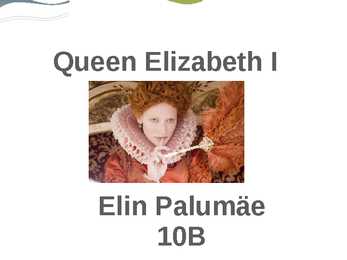
Anne. of England to survive infancy born in King Henry VIII had desperately wanted a wedlock; her mother was Henry's second legitimate son, to ensure the Tudor wife, Anne Boleyn. succession. Anne had been crowned with St. Edward's crown, unlike any other queen consort, while carrying Elizabeth. Historian Alice Hunt has suggested that this was done because Anne's pregnancy was visible at the moment of coronation and she was carrying an heir who was presumed to be male. Elizabeth was baptised on 10 September in a ceremony held at Greenwich On 2 May 1536, she was arrested and Palace. Archbishop Thomas Cranmer, imprisoned. Hastily convicted on charges
Margus Maasik G1a SANDRINGHAM HOUSE The Queen and other members of the Royal Family regularly spend Christmas at Sandringham and make it their official base until February each year. When The Queen or members of the Royal Family are not in residence, the house is open to the public. The Estate is run commercially by the Land Agent, on The Queen's behalf. Over half of the Estate is let to farm tenants, the remainder being farmed in hand or used for forestry (the Estate has its own sawmill). There are also two studs, a fruit farm and a country park
godfather, Tsar Alexander II of Russia. [2] Victoria's father died when she was eight months old. The Duchess of Kent developed a close relationship with Sir John Conroy, an ambitious Irish officer. Conroy acted as if Victoria was his daughter and had a major influence over her as a child. [2] Edward, Duke of Kent Victoria Maria Louisa of Saxe-Coburg When Princess Victoria of Kent was eleven years old, her uncle, King George IV, died childless, leaving the throne to his brother, the Duke of Clarence and St Andrews, who became King William IV. As the new king was childless, the young Princess Victoria became heiress-presumptive to the throne. Since the law at that time made no special provision for a child monarch, Victoria would have been eligible to govern the realm as would an adult. In order to prevent such a scenario, Parliament passed the Regency Act 1831, under which it was
1. The Queen’s official title. Elizabeth the Second, by the Grace of God, of the United Kingdom of Great Britain and Northern Ireland and of Her other Realms and Territories Queen, Head of the Commonwealth, Defender of the Faith. 2. The Queen’s working day. Starts after breakfast. Reads the newspapers which are prepared by the Press Secretary, and a report on the previous day’s proceedings in the Parliament and the letters she receives. Also phone calls. Once a month she attends the Privy Council in order to give Royal Assent to various items of government legislation.
The Girl Who Kicked the Hornets' Nest Author Stieg Larsson was a Swedish journalist and writer. He was born in 1954. He is best known for writing the "Millennium series". He died suddenly and unexpectedly in November 2004, soon after delivering the manuscripts for "the Millennium trilogy". Since his death, Stieg Larsson has been haunting the bestseller list and popular media worldwide. There are many millions of copies of the millennium tilogy that has been sold worldwide. Unfortunately Larsson did not live to see the phenomenon his work has become. Sweden has already produced a trilogy of films based on the novels, and now Hollywood is doing the same. Characters *Lisbeth Salander the headcharacter in the book. She is outsider and apparently enemy of society
Paul is the protagonist and narrator of the novel. He is, at heart, a kind, compas-sionate, and sensitive young man, but the brutal expe-rience of warfare teaches him to detach himself from his feelings. His account of the war is a bitter invective against sentimental, romantic ideals of warfare. Read an in-depth analysis of Paul Bäumer. Stanislaus Katczinsky - A soldier belonging to Paul's company and Paul's best friend in the army. Kat, as he is known, is forty years old at the beginning of the novel and has a family at home. He is a resourceful, inventive man and always finds food, clothing, and blankets whenever he and his friends need them. Albert Kropp - One of Paul's classmates who serves with Paul in the Second Company. An intelligent, speculative young man, Kropp is one of Paul's closest friends during the war. His interest in analyzing the causes of the war leads to many of the most critical antiwar sentiments in the novel.
During this period a new class called bourgeoeisie came into being. This is the period when monarchies based on nationality were estabilished. The Renaessance started in Italy In the 14th century. Then it spread all over Europe, reached England in 16th century. The struggle for power culminated in a war called The War of Roses. It was a civil war between two dynasties, families. They had different emblems on one side the Yorks (white rose) other Lancasters (red). They couldn't decide who gets the throne. War ended 1485. A new dynasty came to throne, Tudor, the first king in this dynasty was Henry Vll. When he came to throne a period of stability followed because he built a nation based state. He was good at diplomacy.He could avoid quarrels and wars with neigbouring countries. France, Spain - greatest enemies.So he could save much money and thus laid a good economic basis for his state. Besides that he built a
Taken at the Flood "There is a Tide" redirects here. "There is a Tide" is also the name of a short story by Larry Niven, set in the Known Space universe. Taken at the Flood is a work of detective fiction by British writer Agatha Christie, first published in the US by Dodd, Mead and Company in March 1948 under the title of There is a Tide...[1] and in the UK by the Collins Crime Club in the November of the same year under Christie's original title.[2] The US edition retailed at $2.50[1] and the UK edition at eight shillings and sixpence (8/6).[2] It features her famous Belgian detective, Hercule Poirot, and is set in 1946.
(1553-1558). Mary was born in London on February 18, 1516, the daughter of Henry VIII by his first wife, Catherine of Aragón. Because Henry divorced Catherine, Mary was declared illegitimate. Nonetheless, Henry included her in his will, and on the death of her half-brother, Edward VI, on July 6, 1553, she became the legal heir to the throne. Although Lord High Chamberlain John Dudley, Duke of Northumberland, favoured the succession of his daughter-in-law, Lady Jane Grey, and proclaimed her queen on July 10, the country supported Mary. As a Roman Catholic, Mary began her reign by sweeping away the religious innovations of her father and her brother. Henry VIII had separated England from the Church in Rome;
 annaabi.ee