Leidsid 33 sarnast õppematerjali, mis on seotud failiga "Articles". Need materjalid aitavad sul teemat sügavamalt mõista.
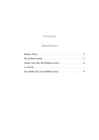
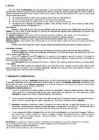
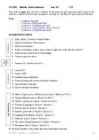
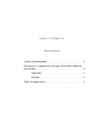
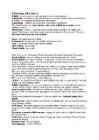
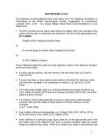
front, noun, names, times, nouns, place, definite, cinema, plural, building, mount, street, apple, ocean, theatre, desert, indefinite, singular, bought, jacket, other, talk, there, making, apples, places, hospital, university, islands, lakes, square, airport, something, river, canal, mountain, hotel, articles, first, dress, quite, cheap, someone, numbersThe Article Table of Contents General Rules....................................................................... 2 The Definite Article ............................................................... 5 Names that take the Definite Article...................................... 6 No article.............................................................................. 7 Countable and uncountable nouns ....................................... 9 General Rules There are two articles in the English language – the Indefinite Article and the Definite Article. The Indefinite Article has two forms – a and an (a precedes words beginning with a consonant sound and an precedes words beginning with a vowel sound). It comes from the Old English word ãn, which meant one. The Definite Article is the. It comes from the Old English word ţis, which meant this.
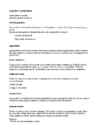
adjective + preposition omadussõna + eessõna proud of, good at, married to adverb particle Some verbs are followed by adverb particles. Examples are: put on, take off, give away, bring up, call in. Sometimes the particle is detached from the verb and put after the object. •He took his boots off. •They called the doctor in. apposition a grammatical construction in which two usually adjacent nouns having the same referent stand in the same syntactical relation to the rest of a sentence (as the poet and Burns in “a biography of the poet Burns”) back-reference In grammatical analysis, the term reference is often used to state a relationship of identity which exists between grammatical units, e.g. a pronoun 'refers' to a noun or noun phrase. When the reference is to an earlier part of the discourse, it may be called a 'back-reference' (or anaphora); collective noun
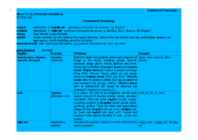
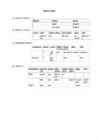
marker tunnus (mitmuse, oleviku, lihtmineviku, tingiva kõneviisi, käskiva kõneviisi, kaudse kõneviisi, umbisikulise tegumoe, ma- tegevusnime, oleviku kesksõna, mineviku kesksõna) derivational affix liide, tuletusliide, tuletusafiks (e.g. postwar, anti-American, wiser, greenish) parts of speech sõnaliigid English Estonian Definition Example noun (proper, common, nimisõna, Refers to words which denote classes and categories of book, water, sincerity, Mary, concrete, abstract) substantiiv things in the world, including people, animals, Estonia inanimate things, places, events, qualities, and states. Nouns can be divided into proper nouns and common
german science and german art and german culture. 5 Indicating the features of the charater's voice e.g ,,What do you feel now?" ,,Hatred," she said, her voice trembling with pleasure. 6 Inherent connotations may become different in the context, that is positive words may become negative and vice versa. e.g ,,What attracts me to him is his unique dishonesty. Honest people are so boring." Oscar Wilde Expressive features of separate parts of speech 1 Nouns are based on the unusual use of the number, case, and pronoun substitions. In other words, on a transfer of nouns from one lexico-semantic group to another. This is found in personification. Observing parts in which objects, animals are endowed (given) with human feelings, actions, the ability to think or speech. In this case, the noun that is personified, changes its usual connections with other words. e.g The wind laughed his evil laugh and ran away.
1. The closeness and neighbourhood of words with inherent positive overtones. 2. We may have comparison a part of which the word becomes. 3. Words "hope", "wish", etc. may affect a word in the context. 4. Repetition of a word. 5. Complementary words. 6. Character's voice (e.g. "Hatred", she said, her voice trembling with pleasure." "pleasure" turns "hatred" into positive). 4. STYLISTIC MORPHOLOGY NOUNS: the expressive features of nouns are based on non-typical use of the number, the case, and pronoun substitution. On a transposition of nouns this is observed in personification, in which objects, natural phenomenon and animals are attributed with human feelings or speech (e.g. "The Wind laughed his evil laugh." "wind" is combined with typically human aspects). Another case of transposition is zoonymic metaphor. Names of animals, birds, fantastic beings when applied
Ladusseva "Stylistic practice: Book I, Book II" - I. Ladusseva "A Guide to Punctuation" EXAMINATION TOPICS: 1. Style, stylistics, a survey of stylistic studies 2. Inherent connotations. Phonesthemes Use lecture notes 3. Adherent connotations 4. Stylistic morphology: articles, nouns, pronouns, adjectives, verbs, adverbs, number * 5. Expressiveness on the level of word-building 6. Phonetic expressive means Study independen tly 7. Phonetic SD ("Rhythm And Style") 8. Lexical SD* 9. Syntactic SD* Use lecture notes 10. Graphical means and devices 11
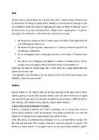
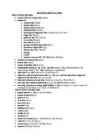
DEFINITE ARTICLE (THE) THE IS USED BEFORE: · nouns which are unique (the moon) · names of: o cinemas (the Opera) o hoteles (the Hilton) o theaters (the Palladium) o museums (the Louvre), o newspapers/magazines (the European but: Newseek) o ships (the Titanic), o galleries (the Tate Gallery) o rivers (the Thames) o seas (the Black Sea) o groups of islands/states (the USA) o mountain ranges (the Alps) o deserts (the Negev Desert) o oceans o canals
0 AP Kab. 420 03.09.2002. Writing a term paper (this spring) and graduation paper. To get a pass: one written task (part of introduction, thesis statement) Term paper should be printed (20-25 pages long). Graduation paper should be printed (50-60 pages long). First write term paper, and choose a topic right now (theme of term paper later will be developed into graduation paper). Rights: we have a right to have a supervisor. Supervisor writes on the front page "Lubatud kaitsmisele". You need time to: 1. read the theory 2. collect material 3. regularity (1-2 hours a day deal with your paper) The first draft of term paper should be ready by March. Supervisors are: 1. Suliko Liiv (country study, grammar, contrastive studies, methodology) 2. Liliana Skopinskaja (methodology) 3. Jaanika Marley (foneetika, methods) 4. Ene Alas (translation, methods) 5. Paul Rüsse (literature (Am.,Br.), methods) 6
15 monophtongs, (7 long, 7 short, 1 central), 4 diphtongs, 17 consonants. Free variaton of R, and it was pronounced everywhere. Very much Germanic in character. Quite some special consonants that no longer exist. About morphology: synthetic with numerous aglutinating tendencies. System of tenses Germanic, but with a reduction of tenses. Paradigmatic leveling; Stress shift; Word order; Loan words (Old Norse, Old French). Dual pronouns. Determiners - no separate definite article. Strong and weak verbs. Word order relatively free with tendencies towards SVO. SVO, SOV, VSO most common. Adposition and podposition were both possible (eesliide ja tagaliide). About syntax: clauses were joined much simpler than nowadays, using and, then etc. Because of case syncretion the word order in a sentence became much more important to be able to tell the difference between words. FIRST CONSONANT SHIFT (GRIMM'S LAW)
Degrees of Comparison are used to compare things (living beings, actions, phenomena, etc). We use the comparative degree to compare two things: She’s shorter than me. John works harder than Jim. After a comparative we use than. We use the superlative degree to compare more than two things: Mary is shorter than Jane but Judy is the shortest of the three sisters. Ben is the shortest boy in his class. The superlative degree is usually used with the definite article the. Formation of comparatives and superlatives from adjectives and adverbs: Adjectives 1) one-syllable Adjectives • for one-syllable adjectives, add –er to form the comparative and -est to form the superlative: sweet sweeter the sweetest If an adjective ends with a mute –e, it is omitted: late later the latest NOTE! For one-syllable adjectives ending in a vowel + consonant, we double the consonant:
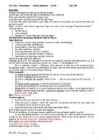
12. Articles zero, a/an, the Zero · Zero article is used, when article the or a/an is not used. · Articles are not used with the names of languages. Example: He was learning Chinese. · Is not used with the names of sports. Example: She plays badminton and basketball. · Is not used before academic subjects. Example: She's taking economics and math. · Is not used with seasons. Example: In spring, we like to clean the house. · Is not used with institutions. Example: He's in church/college/jail/class. · Is not used with meals. Example: Breakfast was delicious. · Is not used with diseases. Example: She has cancer. · Is not used with time of day.
· Fine, thanks. / On top of the world, thanks. · OK, thanks · Not so bad, thanks. / Can't complain, thanks. · So so, thanks. / So and so, thanks. · Not so good, actually 1 The English alphabet Spelling Work with your partner and spell out first your name and then some names of places. Write down each letter as you hear it, and then say the word. The English alphabet on the phone: You might find the following alphabet (used by international airlines) useful when trying to spell a word on the telephone. A Alpha O Oscar Ä Alpha-Echo Ö Oscar-Echo B Bravo P Papa C Charlie Q Quebec
1 SYNTACTIC STYLISTIC DEVICES SYNTACTIC STYLISTIC DEVICES are based on a peculiar place of the word or phrase in the utterance (text, sentence, etc).This special place creates emphasis irrespective of the lexical meaning of the words used. Categories: syntactic stylistic devises based on: SDD: based on ABSENCE OF LOGICALLY REQUIRED ELEMENTS OF SPEECH ELLIPSIS ELLIPSIS or ELLIPTICAL SENTENCES means leaving out one or both principle members of the sentence that is the subject or predicate. NT: Where is the man I'm going to marry? - Out in the garden. (no subject) What is he doing out there? - Annoying father.
· Verbs--hope, wish, and want (clever people everywhere. I wish to goodness we had a few fools left) · Repeated words (German art, G science and G culture) · Character's voice may be specified (hatred, she said with he voice trembling with pleasure) · Words with inherent connotation may change it in context, that is, pos may become negative and vice versa 4. Stylistic morphology: articles, nouns, pronouns, adjectives, verbs, adverbs, numerals Articles: · Article with proper names adds a colloquial touch (The Hardys, a Miss Smith) · The indefinite article (a) with a family name creates an evaluative meaning (a Caruso) · A+names of common, undistinguished names suggests contempt (a Malone, a Smith) · A may convey the meaning of belonging to a famous or aristocratic family (a Tudor) · In enumeration adj
3. We use no article when we are talking about people or things in general. English people drink a lot of tea. (English people in general) The English people in this hotel are very nice. (specific English people) 4. We use a / an to say what kind of person or thing someone or something is (often with an adjective, or to say it belongs to a particular group. You have a nice house. That's a very expensive car! A cat is an animal a bus is a vehicle. 5. We use the with singular countable nouns to talk about a type of thing. The computer was invented in the 20th Century. (not a particular computer) The computer in my office is broken. (a particular one) The crocodile is very dangerous. (this type of animal) The crocodile in the river is very big. (a particular one) She plays the piano. (not a particular piano but this type of instrument) The piano she is playing is very old. (a particular one) 7. We use the + adjective to talk about a group of people (including nationalities).
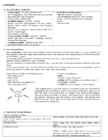
Infixation is common in languages of Southeast Asia and the Philippines, and it is also found in some Native American languages. circumfixes morphemes that are attached to a root or stem morpheme both initially and finally. Morphs: the concrete realisation of a morpheme (`was' be, past, singular) Allomorphs: a/an Types of affixes: Derivational and infelctional Derivational affixes: Derivational affixes may change the grammatical class of the root verbs into nouns, nouns into adjectives (boy, boyish), and so on. Derivation is a lexical process which actually forms a new word out of an existing one by adding affixes to stems or roots. consideration, considerate, inconsiderate, inconsiderateness Inflectional affixes: Inflectional affixes may be described as `relational markers' that fit words for use in a sentence (express a syntactic relation). Inflections do not change the grammatical class of a given item or produce new lexemes, just different word forms.
The hierarchical structure of the syllable: Onset the beginning of the syllable Nucleus/peak the open part of a syllable, generally a vowel. Coda a consonant sound which ends the syllable. Open syllable - has no coda Closed syllable - has a coda! Texts: [t-e-k-s-t-s]- (Consonant, Vowel, Consonant, Consonant, Consonant, Consonant). Strong syllables - has as its nucleus one of the vowel phonemes but not "schwa" Weak syllables has 4 types of nucleus 1) the vowel ,,schwa" 2) a close front unrounded vowel in the general area of i: and ý 3) a close back unrounded vowel in the general area of u: and 4) a syllabic consonant Close front vowels occur in word-final weak syllables (as in happy), weak initial syllables (as in react) and in unstressed personal pronouns (be, the), when preceding a vowel. NB. i: or ý, as in ,,easy, busy", is transcribed as i Close back vowels occur in unstressed syllables, when not preceding a consonant (you, to,
Word order: positive sentences subjects verb(s) object I speak English. I can speak English. Negative sentences subject verbs Indirect object Direct object place time I will not you the story at Tomorro tell school w. Subordinate Clauses conjunction subject verb(s) Indirec Direct place time t object object
technical as well). If you refer to your heart as your ticker, you have chosen a more colloquial or slangy term. 3. Native and foreign element. Native vocabulary. 3 strata: Indo-European words mother, father, night, foot, heart, bear (bore, born), see names of close relatives, names of natural objects, parts of the body, numerals Germanic words friend, bridge, ship, life, heaven, glass, death, make v, meet v Old English words Bad, bird, woman, lady, daisy, gospel 23,000 – 24,000 items. Only about 3 % are of non-
I don't like to be shouted at. (NOT I don't like to be shouted.) This needs to be thought about some more. (NOT This needs to be thought some more.) 6. Don't use a present tense after It's time. It's time you went home. (NOT It's time you go home.) It's time we invited Bill and Sonia. (NOT It's time we invite Bill and Sonia.) 7. Use was/were born to give dates of birth. I was born in 1975. (NOT I am born in 1975.) Shakespeare was born in 1564. 8. Police is a plural noun. The police are looking for him. (NOT The police is looking for him.) I called the police, but they were too busy to come. 9. Don't use the to talk about things in general. Books are expensive. (NOT The books are expensive.) I love music. (NOT I love the music.) 10. Use had better, not have better. I think you'd better see the doctor. (NOT I think you have better see the doctor.) We'd better ask John to help us. 11
The following recommendations have been taken from The Standing Committee on Publications of the British Psychological Society, Suggestions to Contributors, Leicester: BPS, 1979. You should always follow these recommendations in your written work. The BPS journals use the author-date method of citation, that is the surname of the author and the year of publication are inserted in the text at the appropriate point, for example: Rabbitt (1970) compared reaction times... Or In a recent study of reaction times, Rabbitt (1970) found... Or In 1970, Rabbitt compared.. These methods enable the reader to locate easily the citation in the reference list given at the end of the report. If a work has two authors, cite both names in the text every time, e.g. Smith & Jones (1974). If a work has three or more authors, give names in full when the reference is first cited and then use et al. on all subsequent occasions, e.g
in another state, autonomy; a fully independent state is only allowed if the nation is very repressed in a state, e.g. in Kosowa?, others are not recognized, even de facto states are not recognized sometimes. Self-determination means that nation has the right to freely exercise their culture and language) 3. Sovereign equality and independence of all States (all countries are equal in front of law, since the collapse of the colonial system) 4. Non-interference in the domestic affairs of States (all countries can decide what to do on their territory, others cannot dictate this, but sometimes it can contradict with the 7 th principle) 5. The prohibition of the threat or use of force 6. Peaceful settlement of international disputes 7. Universal respect for, and observance of, human rights and fundamental freedoms for all
Eode was supplanted by went (past form of wenden) at the end of the Middle English period.To wend has survived in Modern English in phrases such as to wend one's way, we wended homewards (ironic usage). Thus: suppletivity- suppletion different parts of one and the same paradigm come from what were originally different paradigms (different words with close meanings or words in different but close dialects).Suppletion embraces verbs, adjectives, nouns. Be was/were been (Old English beon/wesan) (am, art, is, are); in Old English some suppletive forms were used parallel to one another) Good better best Bad worse worst Much more most Little less least Estonian: hea parem (cf "paras" fitting, in Finnish "the best" - metonymical link), palju - rohkem Finnish: mennä (to go), lähteä (to leave) Estonian: minema, mine, lähen, läksin French: aller, je vais/nous allons, ira (future)
.) · Laws of nature and general truths (The sun sets in the west) · Timetables and programmes · Sporting commentaries, rewiews (Beckham wins the ball, crosses and Owen scores) · Feelings and emotions (I love Tallinn..) TIME EXPRESSIONS USED WITH PRESENT SIMPLE: usually, often, always, every day/week etc, in the morning/evening etc, at night/the weekend, on Fridays etc. Present Continuous · Actions taking place at or arount the moment of speaking (The kids are watching TV..) · Fixed arrangements in the near future (I'm going to the dentist tomorrow) · Currently changing ang developing situations (The number of burgularies is increasing) · With ,,Always" to express anger or irritation at a repeated action (You're always forgetting..) TIME EXPRESSIONS USED WITH PRESENT CONTINUOUS: now, at the moment, at present, these days, nowadays, still, today, tonight etc. Present Perfect
o 100 just (> Old French) Core vocabulary and syllable structure: o 93 of the first one hundred words in the Brown Corpus are monosyllabic, and the remaining have two syllables (only, about, other, also, many even people) Core vocabulary – often short (monosyllabic) words of Germanic and Old Norse origin. 3. Native and foreign element. The native vocabulary has 3 strata Indo-European words - names of close relatives, names of natural objects, parts of the body, numerals. o Mother, father, night, foot, heart, bear (bore, born), see Germanic words o Friend, bridge, ship, life, heaven, glass, death, make, meet Old-English words – o 23,000 – 24,000 items. Only about 3% are of non-Germanic origin. Etymologically homogeneous. 65-85% of the Old English vocabulary has been lost
............................................................................. 4 Both, either and neither ....................................................... 4 Few/a few – a little/little....................................................... 5 A lot of/lots of – much/many................................................ 5 Some, any + -body / -one, + -thing, + -where ........................ 6 Some and any Some and any mean a certain number or amount. They are used with or instead of plural or uncountable nouns. Some is a possible plural form of a/an and one: Have a biscuit/some biscuits. I bought a cake/some cakes. Some, any and none can be used with of + the/this/these/those (+ ...) Some of the staff can speak Portuguese. Did any of your photos come out well? You can take any of these. Some is used: • with affirmative verbs: They bought some honey. • in questions where the answer ‘yes’ is expected:
He plays the piano well. The rose is my favourite flower. We us a or an The dollar is a strong currency. only with singular nouns. The tiger lives in Asia. when we are talking about a thing in general. • when we refer to a system or service. Examples: When does the train arrive? We should call the ambulance.
To discuss this we need some terminology for talking about word-formation and diachronic lexical changes. The main grammatical mechanisms that languages have for creating new words are derivation and compounding. Some languages prefer one mechanism over the other. These mechanisms are fairly systematic and predictable and hence tend to feature in discussions of language structure. Derivation generally involves the use of affixation of various types, e.g. getting the noun derivation from the verb derive. Compounding involves putting together two existing elements of the lexicon (normally "content" words rather than grammatical words and affixes) to create a new word, like matchbox. In both derivation and compounding there is a strong element of compositionality, meaning that the meaning of the new word is broadly predictable from the meaning of its component parts. Probably the main non-grammatical way in which languages get words for new things is by
The restaurant is called "Luigi's". Italian food is great! Here are the rules for when to use "A, An or The": · a = indefinite article (not a specific object, one of a number of the same objects) with consonants She has a dog. I work in a factory. · an = indefinite article (not a specific object, one of a number of the same objects) with vowels (a,e,i,o,u) Can I have an apple? She is an English teacher. · the = definite article (a specific object that both the person speaking and the listener know) The car over there is fast. The teacher is very good, isn't he? · The first time you speak of something use "a or an", the next time you repeat that object use "the". I live in a house. The house is quite old and has four bedrooms. I ate in a Chinese restaurant. The restaurant was very good.
Almost no true infixes in English, except for colloquial speech and chemical terminology. (Shiznit) Combining forms A modified form of an independent word that occurs only in combination with words, affixes, or other combining forms to form compounds or derivatives, as electro- in electromagnet or geo- in geochemistry. Back-formation new words are formed by taking away affixes. (nt, connection, to connect). This process is based on analogy. Back-form is word building and it means coining verbs. (nt, butcher, to butch; sculptor, to sculpt, television, to televise). Rarely some other parts of speech are found (nt, nasty, to nast) Alphabetisms, initialisms, acronyms words made up of the initial letters (nt, USA, WC) Clippings, fore clippings, back clippings, ambiclippings Clipping is the word formation process which consists of the reduction of a word to one of its parts- shortening. Three types of clipping:
Complete sentences instead of vocabulary lists The purpose of language learning is communication Pronunciation Self correction The goals of the teacher are communication, demonstration instead of translation (the teacher used pictures and pointed to yourself....), they studied complete sentences. It is a teacher-centred method. (T. was the leader, asked questions). The teacher and students were sociable and easy-going. Students´ presentations were approved for several times. When an error occurred the teacher encouraged students to correct it themselves. No native language was used. · Traditional: audio-lingual method http://www.youtube.com/watch?v=Mqd7OdJoLn0 Audiolingual method Communicative language use Automatic use (habit formation) Teacher is a model for imitation Dialogues, drills (substitution, transformation, chain, etc) Right answers are positively reinforced Reading and written work is based on oral work Teacherled interaction
Was and Were 104 2 The Capital Letter 6 The Past Progressive Tense 106 The Future Tense 108 Can and Could 112 May and Might 113 3 Nouns8 Do, Does and Did 115 Common Nouns 8 Would and Should 120 Proper Nouns 13 Singular Nouns 21 Plural Nouns 23 8 Subject-Verb Agreement 123 Collective Nouns 34 Masculine and Feminine Nouns 37 9 Adverbs 127 4 Pronouns 44 Personal Pronouns 44 10 Prepositions 132
............................................... 6 Adverbs and Adverbial Phrases An adverb describes a verb, an adjective, another adverb or a whole sentence. Adverbs can be divided according to the information that they give. Types of Adverbs 1. Some adverbs tell us how somebody does something or how something happens. These are called Adverbs of Manner. Please speak quietly. Tom drove carefully along the narrow road. 2. Some adverbs tell us where. These are called Adverbs of Place: She put the book on the table. 3. Some adverbs tell us when. These are called Adverbs of Time. We met them at five o´clock. 4. Some adverbs tell us how often. These are called Adverbs of Frequency. E.g. always, sometimes, often, never, usually, seldom, hardly ever, and rarely: She never comes on time. They usually work on Saturday mornings. I have always loved plays written by Oscar Wilde. 5. Some adverbs tell us how much. These are called Adverbs of Degree
 annaabi.ee