Leidsid 33 sarnast õppematerjali, mis on seotud failiga "Antique Garden Ornament". Need materjalid aitavad sul teemat sügavamalt mõista.
garden, ornament, gardens, land, these, taste, europe, early, grounds, creation, discuss, guidance, abstract, century, establishment, virginia, eastern, pennsylvania, built, handsome, walls, gates, dignity, same, beginning, little, known, hundred, years, between, 1740, important, development, terms, historic, consider, materials, domestic, productscategory with a good range of prices, from expensive to economic. They try to pick those with good after sales service. If we discovered a rogue exhibitor and it has happened once or twice we swiftly replace them. The second mine theory was that maybe some scientist or just amateurs want to learn something new, change experiences with others. But so many people can also make it uncomfortable and even stressful unless you go simply relax and go with the flow, or get there truly early or late. Wear something sensible and take a break, its a long, long day. So I am not sure about that theory is true. Anyway Chelsea Flower Show is so popular that it is always a sell-out. Last minute Chelsea wannabes hang out on street corners with signs asking for tickets, like with some world famous musical. 5 Most of the people who have been there want to go back there. Maybe it is because of
The First Anniversary. An Anatomy of the World; The Flea; Love’s Alchemy; Elegy XIX To His Mistress Going To Bed; Holy Sonnets (9, X, XIV); Hymn To God My God, in My Sickness. Francis Quarles: emblem poems Canticle George Herbert: courtly urbanity of language, certain neatness and point, his wit „homely” (simple), sometimes queer, conceits in title. The Dawning; The Altar; The Collar; The Pilgrimage Richard Crashaw: paradoxes, sensuous warmth, conceit as isolated ornament rather than integral part of poem’s meaning To the Noblest & best of Ladyes, the Countesse of Denbigh Henry Vaughan: many obvious borrowings, striking opening lines. The World Andrew Marvell: many strands of 17thC thought, feeling and style, created the tradition of garden poems The Definition of Love, To His Coy Mistress, The Garden Ben Jonson: IX: Song: To Celia, II: To Penshurst; Hymn to Cynthia. 4. The arrival of classicism in England
The interior design process follows a systematic and coordinated methodology, including research, analysis, and integration of knowledge into the creative process, whereby the needs and resources of the client are satisfied to produce an interior space that fulfills the project goals. Baroque Baroque (pronounced /brok/ b-ROHK in American English or /brk/ in British English) is an artistic style prevalent from the late 16th century to the early 18th century in Europe.[1] It is most often defined as "the dominant style of art in Europe between the Mannerist and Rococo eras, a style characterized by dynamic movement, overt emotion and self-confident rhetoric". The popularity and success of the Baroque style was encouraged by the Roman Catholic Church, which had decided at the time of the Council of Trent, in response to the Protestant Reformation, that the arts should communicate religious themes in direct and emotional involvement. The
designated. Introduction The first bridges were natural, such as the huge rock arch that spans the Ardèche in France, or Natural Bridge in Virginia (USA). The first man-made bridges were tree trunks laid across streams in girder fashion, flat stones, such as the clapper bridges of Dartmoor in Devon (UK), or festoons of vegetation, twisted or braided and hung in suspension. These three types - beam, arch, and suspension - have been known and built since ancient times and are the origins from which engineers and builders derived various combinations such as the truss, cantilever, cable-stayed, tied- arch, and moveable spans. The essential difference among types is the way they bear their own weight - the "dead load" and the "live load" - a person, the railway train, wind, or snow that is applied to the bridge. The weight of
perspective of the masses, urging them to foster skepticism and apply scientific principles in matters of religion and morality. Its chief values were: Liberty, Democracy, Republicanism, Religious Tolerance. The movement gained momentum with the publication of landmark texts like Thomas Paine's The Age of Reason, and the Jefferson Bible, but the most influential thinker was undoubtedly John Locke, whose ideas spread to the colonies and across Europe. Main Ideas of the American Enlightenment: The Enlightenment caused a shift in the cultural and social attitudes of the people, bringing in some new and radical ideas. Republicanism: The doctrine of republicanism asserts a system of a government that is elected by the people of the nation. The roots of this ideology go back to ancient Greece, when the concept of a democratic government was examined by philosophers such as Plato and Aristotle
American Art Revision Materials Colonial Period Portraiture. The first typically American paintings were illustrated maps but painting remained scarce during C17. There were 4 reasons: settlers came from backgrounds where art was unusual, Protestant attitudes was averse to imagery and painting, the English were not yet distinguished in visual arts and religious art was non-existent. The colonial period is almost entirely limited to portraiture (deemed as `useful' by settlers). These first paintings were made by limners and artisans without formal training and were based on what was popular in England during the Tudors. The paintings are technically unskilled, strongly patterned, flat and linear. Spanish painting in America was mostly religious. In C18, painting was a luxury and necessitated wealth that had by then become available. Portraitures remained at
American Art Revision Materials Colonial Period Portraiture. The first typically American paintings were illustrated maps but painting remained scarce during C17. There were 4 reasons: settlers came from backgrounds where art was unusual, Protestant attitudes was averse to imagery and painting, the English were not yet distinguished in visual arts and religious art was non-existent. The colonial period is almost entirely limited to portraiture (deemed as `useful' by settlers). These first paintings were made by limners and artisans without formal training and were based on what was popular in England during the Tudors. The paintings are technically unskilled, strongly patterned, flat and linear. Spanish painting in America was mostly religious. In C18, painting was a luxury and necessitated wealth that had by then become available. Portraitures remained at
Juhendaja: 2010 CONTENTS 1. Contents 2. Introduction 3. Compendium about Prague 4. Important about Czech Republic and Prague 5.-7. History 8. Independence 9. Main sights 10. the Czech Republic 11. List of famous people from Prague 12. Geography 13. Weather and climate 14. Population 15. Culture 2 INTRODUCTION The Czech Republic lies at the heart of Central Europe and at its center is the beautiful and historic city of Prague. With a population of some 1.3 million residents, the city lies on either side of the Vltava River in the middle of Bohemia that is one of the three historic Czech territories; the others being Moravia and Silesia. The city has seven "Chapter Divisions" or districts. 3
Great Britain Pärnu 2012 Contents Great Britain Great Britain or Britain is an island situated to the northwest of Continental Europe. It is the ninth largest island in the world, the largest European island, and the largest of the British Isles. With a population of about 60.0 million people in mid-2009,
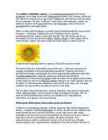
However, the leaves typically exhibit some heliotropism. Cultivation and uses A sunflower farm near Mysore, India. Sunflower heads solds as snacks in China. Sunflowers are native(pärit) to the Americas. The earliest known examples of a fully domesticated sunflower were found at the Olmec site of San Andrés dating some time before 2500 B.C.[1] The Incas used the sunflower as an image of their sun god. Gold images of the flower, as well as seeds, were taken back to Europe early in the 16th century. The Giant sunflower (Hlianthus giganteus) is native to Connecticut. They can grow to be between 3 and 12 feet tall. Their flower heads can be between 2 to 3 inches wide. They are most commonly found in valleys with wet meadows or swamps. The Giant sunflower grows between July and October. To grow well, sunflowers need full sun. They grow best in fertile, moist, well-drained soil with a lot of mulch. In commercial planting, seeds are planted 45 cm (1.5') apart and 2
American literature The literary history of this nation when the first humanbeing living in what has since become the U.S used language creatively. · Mid to late 18 century put down · Words are powerful, magical · Words must be remembered · Native Americans stories creation of the world · Attidude thought their land/language · Similar stories Dates and names · America was discovered in 1492 by Columbus · 1497 John Cabot went to Canada · 1579 San Fransisco/St. Fransis · 1607 Jamestown collony/John Smith · 1620 a boat called MayFlower · 1630 Boston was established · 1636 Harvard University · 1773 Boston Teaparty · 1775 War of Independence
During the 1990s, some purebred Norwegian Forest Cats in Sweden produced chocolate/lilac and cinnamon/fawn offspring. However, those colours are not found in the purebred Norwegian Forest Cat gene pool. Had the gene pool become polluted by someone, perhaps generations ago, breeding their Norwegian Forest Cat to another breed? Was it a spontaneous mutation? Crossing of those cats with known chocolate and cinnamon colour cats of other breeds ruled out chocolate/lilac and cinnamon/fawn genes. These cats were a totally new colour, peculiar to the Norwegian Forest Cat gene pool and dubbed the "X Colours". They are now called Amber and Light Amber. The Amber effect is due to the extension gene (also called red factor) which controls the production of red and black pigment. The dominant version of the gene produces normal black pigment in the coat while the recessive version produces red pigment. The name comes from the effect of black or brown pigment not being
· Man is not a free agent, is govern by something · Unable to determine his own faith · Hereditary · Naturalists tried to apply in fiction the processes of natural sciences · Writers task is to record facts, systems of behaviour, living conditions, never revealing any natural unbiased (completely natural) · Point of view: amoral-outside the category of morality, neither good or bad · Naturalist find it absurd to blame the wicked. These criminals are doing what nature, environment, their unconscious tells them to do. Naturalists do not judge their characters, they simply report. Try to describe facts like they are. Naturalists depict the lower, coarser forms of life. · Drab, squallid set of scene. Revolting, disgusting · Characters are people with strong animal desires · Neurotic characters unable to understand the forces that control them
I have tried in this book to write a serious history of cryptology. It is primarily a report to the public on the important role that cryptology has played, but it may also orient cryptology with regard to its past and alert historians to the sub rosa influence of cryptanalysis. The book seeks to cover the entire history of cryptology. My goal has been twofold: to narrate the development of the various methods of making and breaking codes and ciphers, and to tell how these methods have affected men. When I began this book, I, like other well-informed amateurs, knew about all that had been published on the history of cryptology in books on the subject. How little we really knew! Neither we nor any professionals realized that many valuable articles lurked in scholarly journals, or had induced any cryptanalysts to tell their stories for publication, or had tapped the vast treasuries of documentary material,
anyone to leave the Soviet Union. The major group of post-Soviet immigrants were the political refugees, persons who claim persecution or reasonable fear of persecution in Russia. Largest Russian communities today are in New York, California and Florida. 5. From where did the Indians come to America? *Native Americans aka. Indians, Red Indians, Redskins, American Indians, Amerindians, Namerind, First Nations people (Canada) *Origins of N-Am, theories = Bering Land Bridge theory = North American Indians are the people whose ancestors were living in North America when the Europeans discovered the Western Hemisphere. They often are called red men, or redskins, and they were named Indians because Columbus thought that he had reached the East Indies in his voyage across the Atlantic. Stone-age people who were to become American Indians began entering America at least 10,000 years ago. Most experts believe the first Indian
ideal crossing point, they built London Bridge. Less than 20 years later the native Iceni tribe, led by Queen Boudicca, rose up against the Romans in revenge for mistreatment and burnt Londinium to the ground. The well disciplined Roman army defeated her forces and Londinium was rebuilt. By AD 100 it had also become the capital of the Roman province. A massive wall was built to protect the city from further attacks. The Roman Empire came under increasing attack across Europe and in AD 410 they retreated. The Romans gave us a language based on Latin, the calendar, law and legal system, the census and also straight roads, central heating and concrete. Anglo- Saxons around AD 400 Anglo- Saxons were warrior farmers from Germany, Denmark and the Netherlands. Later in the 5th century, Anglo-Saxons settled just west of Londinium, around the Strand, and formed the town of Lundenwic. The area of the old Roman city became a landing-place for ships and a centre for trade
The origins of American literature The first Americans were explorers and settlers, adventurers and idealists who crossed the ocean in search of new opportunities or to escape the poverty and intolerance. Their writings were matter-of-fact accounts of life in America, which explained colonisation to Englishmen back in the homeland. An example of this form of writing is John Smith's A True Relation of Virginia, which is widely recognized to be the first example of Am lit. The early years of colonisation produced a mass of utilitarian writings including biographies, accounts of voyages, diaries, sermons, pamphlets. Much of the material addressed the problems of Church and State. There were few examples of fiction, poetry or drama. Anne Bradstreet of Massachusetts published some lyrical poems of high literary quality (1650) and Edward Taylor, who was born in England but lived in Boston, wrote some poetry in the style of John Donne and the metaphysical poets. All 17 th cent
language throughout the world. Some scholars claim that it has already become the first global language. And this statement isn't far from truth. But what does it mean to say that a language is a global language? Why is English the language which is usually cited in this connection? How did the situation arise? And could it change? Or is it the case that, once a language becomes a global language, it is there for ever? [1, pg.2] These are fascinating questions to explore, whether your first language is English or not. A global language is a language that is spoken internationally and is learned and spoken by a large number of people as a second language. A global language is characterized not only by the total number of speakers (native and second language speakers), but also by its geographical distribution, as well as use ininternational organizations and diplomatic relations. [4]
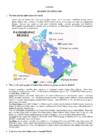
3. Relief The USA is situated in the central part of the North American continent. Its western coast is washed by the Pacific Ocean and its eastern coast is washed by the Atlantic Ocean and in the south its coast is washed by the Gulf of Mexico. The coastline is even. There are no big islands belonging to the USA except the Hawaiian Islands which lie halfway the continents of America and Asia. The biggest peninsulas are the Florida Peninsula and Alaska. 4. Land Regions Mountains The Appalachian Mountains are a vast system of North American mountains, partly in Canada, but mostly in the United States, forming a zone, from 100 to 300 miles wide, running from the island of Newfoundland some 150 miles south-westward to central Alabama in the United States. The Rocky Mountains, often called the Rockies, are a broad mountain range in western North America. The Rocky Mountains stretch more than 4800 km. The Rocky Mountain System within
that go back that far. Many scientists now believe that some of the First Peoples may have been here for much longer than that. For a long time, scientists believed that the ancestors of all North American First Nations people crossed over on foot to North America from Asia at the end of the last ice age, about 12,000 years ago. At that time Asia and North America were joined, and what is now the bottom of the Bering Sea between Russia and Alaska was dry land, (a "land bridge) because sea levels were much lower than they are now. The earliest man-made artifacts tools or ornaments that archaeologists have found date from that time. The theory is that nomadic hunting people followed the big animals (moose, deer, elk, buffalo) for food, and eventually moved south and spread out as the ice sheets melted back. Then they evolved different cultures to suit different environments.
Many aspects of Stonehenge remain subject to debate. There is little or no direct evidence for the construction techniques used by the Stonehenge builders. *The Celts in Britain and their legacy The Cets lived in Britain in The Iron Age. They were warring tribes who were battleful amongst themselves as well as inter-tribal war. They were not centrally governed. The Celts brought iron working, iron ploughs and metal swords, horses, wheels and chariots - all these things gave them an instant superiority over the native tribes. The Celts built a number of hill forts throughout the region. The society was divided into warrior aristocracy, agricultural commons and the priests, the druids. *Caesar in Britain - Britain was very rich in minerals but that wasn't the main reason Caesar wanted to defeat it. He could clearly see that Britain was a threat to his latest and greatest conquest - France. He invaded Britain twice, in 55 and 54 BC
states differ in some details, but generally follow the general laws. The government. Relief The country naturally presents a tremendous variety in physical features. The highest peak of US is Mt. McKinley in Alaska at ~6000 metrs, while part of Death Valley in California is 89 metres below sea level. At the western edge of the Atlantic coast plain, are almost unbroken mountains, stretching from the Maine into Alabama, called the Appalachian Mountains. These mountains contain coal and iron. The heart of the U.S is a vas plain named interior plains and are divided into two major parts: the wetter, eastern part is called the Central Plains and the western part the Great Plains, both with very good soil. To the west of the Great Plains is the Cordillera. It is a region of tremendous variety, which can be subdivided into various other regions. On the eastern border the Rocky Mountains, a high, discontinuous mountains stretching from Alaska down to
remarriage of a widow or widower. 5 Creole culture It has been handed down through the years that Creoles are both BLACK and FRENCH in heritage. Creoles are among a rich cultural heritage of people. For many centuries, the word Creole has had as many as 30 known definitions. It is a fact that the word Creole had its origin in Africa, citing the countries of Senegal and Mali. In these areas, it is believed that in the 11th century is when Creolism began. In search of new lands, ideas, riches, knowledge and to dispute the philosophers and historians, men became brave explorers. It is through their discoveries that these varying cultures co-existed in harmony to form the structure of Creolism. It is documented in the records of history that Creoles of Senegal, whether as freemen or as slaves, traveled directly from Senegal and Mali to Louisiana. People
· The more prominent artistic and cultural movements of Victoria Britain: The Arts and Crafts Movements, Anglican Oxford Movement, Public Health Act; (founding of the National Trust and National Arts Collections Fund and Society for the Protection of Ancient Buildings); conservation movement · What were their aims/concerns? Main aims were to restore old things; make new things more like Gothic (old); displaying old things etc. · What was the ides behind the creation of the public park? In towns there was a need for "green lungs"; air of the city was problematic; people had a place to go on a free day (people started to work 6 days in a week- 1 day off); a place for different classes to mingle and mix (Georgian/landscape park with Romantic/pleasure garden etc.) 3) Lord Tennyson and Victorian poetry · What was his main source of inspiration? He was inspired by romantic authors, especially Keats; another source was King Arthur and Arthurian
1. Ancient Britain: the Celtic tribes. 2000 years ago there was an Iron Age Celtic culture throughout the Br Isles. It seems that the Celts, who had been arriving from Europe from the 8th cent BC onward, intermingled with the peoples who were already there. The Celts were extremely talented people, creative and artistic. More than 1 Celtic tribe invaded Br. The descendants of ancient Celts live in Wales, Scotland, Cornwall and Ireland. They lived in primitive society. Druids priests, more powerful than chiefs. Acted like prophets. 2. Stonehenge From prehistoric period. Was built on Salisbury plain between 2500 and 1500 bc. One of the most
Walter Pater – theorist of English aestheticism. Experience as an ever-‐vanishing flux (flow/continuous movement). Oscar Wilde (1854-‐1900). Born in Ireland but lived in England and travelled to America and many countries in Europe. Gave lectures on aestheticism, became known for his sharp wit and flamboyant dress. Also worked as a journalist and wrote essays, poetry and drama. Believed in the supremacy of art. Only novel The Picture of Dorian Gray, first
vandalism-graffiti-or-public-art-part-i/] 14.01.18) 2. WHERE DID IT COME FROM? Some of the earliest expressions of street art were certainly the graffiti which started showing up on the sides of train cars and walls. This was the work of gangs in the 1920s and 1930s New York. The impact of this subversive culture was extraordinarily felt in the 1970s and 1980s. This cultural movement was recorded in the book The History of American Graffiti, by Roger Gastman and Caleb Neelon. These decades were a significant turning point in the history of street art – it was a time when young people, by responding to their socio-political environment, started creating a movement, taking the ‘battle for meaning’ into their own hands. Soon, this subcultural phenomenon gained the attention and respect in the ‘grown-up’ world. From the fingers and cans of teenagers, it had taken a form of true artistic expression. Although
The White House 5 The history of the United States of America The first people arrived to USA about 12-40 thousand years ago from Asia. After that, they founded their own cultures and lived there quite peacefully until 1492 when European explorer Cristopher Columbus discovered America and European settlers were starting to settle to just discovered land to get easily rich because of the people who had been there and went back to Europe got rich overnight. European settlers brought with themselves many easily cureable diseases which were unknown for Native Americans and those simple diseases killed over million Natives. The Natives who lived there helped new settlers but the settlers thought that they are better and acted presumingly. I think that European settlers shouldn't have done that because they went
permanent exhibition of Estonian art from 1945-1991 and contemporary art at Kumu Art Museum; · ecclesiastical Medieval and Baroque art from the period between 13th 18th century, silverware of guilds, craft corporations, Brotherhood of the Black Heads and churches at Niguliste Museum; · European and Russian art from the period between 16th 20th century in the Kadriorg Palace, and a valuable collection of the 16th 20th c. art from Western Europe, Russia and China, donated to the museum by Johannes Mikkel, at Mikkel Museum at Kadriorg Art Museum; · Art of Adamson-Eric (19021968), one of the most outstanding Estonian painters of the 20th century, at Adamson-Eric Museum; · national romanticism of an Estonian artist of the first generation, Kristjan Raud (1865 1943), at Kristjan Raud House Museum located in Nõmme, in the premises of the final home of the artist. Kadriorg Art Museum
Race. Truth shall set you free, it has set me free. RAPE OF A RACE Let’s take slavery for instance. We attribute everything that has happened to the Black race to slavery. We delude ourselves about African Kingdoms which had thrived before the onslaught of first the Arabs, and later the Caucasians. We talk about the Pyramids of Egypt, the great empire of Mali and the learning capital of Timbuktu. Yes, I am constrained to agree that these were great legacies that our ancestors left us, but one cannot deny the fact that in the middle Passage of the 19th century we stopped functioning as a people with intelligence and the instinct to defend ourselves. In the 17th century, more than 36 million African men and women were taken into slavery and to the shores of America. Of that 36 million, more than 18 million died in the Trans-Atlantic crossings. Listen, don’t get me wrong
The Rocky Mountain region includes the earth's youngest mountains. They have steep slopes and many peaks and picturesque valleys. The region isn't very populated. Most of the population is engaged in mining, cattle-breeding and farming. The Pacific Northwest and Alaska region is noted for its natural beauty: high steep mountains, forests and greatly indented coastlines. Portland and Seattle are important ports for trade with Asia. California and Hawaii. These two states are grouped together mainly because they are relatively near each other: California is the state which is situated nearer to Hawaii than any other state. They are not alike: California is one of the largest and most populated 5 states; Hawaii is one of the smallest and least populated ones. Yet there is one thing these two states have in common: lots of sun and sand. Rivers, Lakes
7 UNIT 1 THE ISLAND Pre-reading questions What is the name of the island group Britain belongs to? Where is it situated? What seas surround it? What kind of climate do you think Britain has? What is its surface like? What countries are situated on the islands? Which country are we going to study? Why? Location Land and climate affect life in every country. Britain is no exception. Britain is the largest island of the British Isles 1. It is just under 1,000 km long and just under 500 km across in its widest part. Britain is separated from the mainland of Europe by the North Sea on the east and the English Channel on the south – by only about 35 km of water at its closest point (the Strait of Dover 2). Most of the coastline is so broken by bays and inlets that no point on the island is more
I Native Americans · Origin of Native Americans Origin is debatable Siberia->Alaska Crossed the land bridge around 14,000 years ago "ice-free corridor" Hunters, searching for fresh grounds · Different tribes and their way of life In tents, dark skin, hair is long, black and straight, women-agriculture, men- hunting. bands(chief. Travelled together) and tribes land was owned by the tribe that occupied it. 200 different tribes Apache- "enemy"- hunted buffalos, oil and natural gas from their land Cherokee- largest tribe Cheyenne- from Minnesota and S & N Dakota. High system of laws Northwest Ordinance of 1787 Signed in 1787 by Thomas Jefferson.
 annaabi.ee