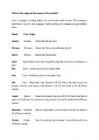
What is the origin of the names of the months? A lot of languages, including English, use month names based on Latin. Their meaning is listed below. However, some languages (Czech and Polish, for example) use quite different names. Month / Latin /Origin January Januarius Named after the god Janus. February Februarius Named after Februa, the purification festival. March Martinus Named after the god Mars. April Aprilis Named either after the goddess Aphrodite or the Latin word aperire, to open. May Maius robably named after the goddess Maia. June Junius Probably named after the goddess Juno. July Julius Named after Julius Caesar in 44 B.C.E. Prior to that time its name was Quintilis from the word quintus, fifth, because it was the 5th month in the old Roman calendar. August Agustus Named after emperor Augustus in 8 B.C.E. Prior to...
1.Lexicology as a science L. studies the voc of lg as a system. Word-learning, lexis-logos. The task of L is to establish the general features of modern Engl voc. Theoretical L. gives a complete picture of voc. Practical value lies in using and appretiating the lg more conciously. There is diachronic (historical) L that studies origin and development; syncronic studies voc at a given historical period. There are general L (studies words disregarding particular features of any particular lg); special L (studies specific features of a separate lg, there is Engl that bases on general L); contrastive (compares vocabularys in different languages). 2. Connection of L with other linguistic disciplines a) the word performes a certain grammatical function (nt, he always misses the class, how many misses are there; the girl powders her nose, soliders face powder)In speech words are combined according to grammatical rules. The plural of nouns m...
LEXICOLOGY 1. Size of English vocabulary 1) Old English – 50,000 to 60,000 words Vocabulary of Shakespeare OE – homogeneous; 1/3 of the vocabulary has survived • 884,647 words of running text About 450 Latin loans (Amosova) • 29,000 different words (incl. work, working, Viking invasions added 2,000 worked, which are counted here as separate 2) Middle English – 100,000 – 125,000 words) English becomes heterogeneous (Norman French, • 21,000 words English, Latin), hybrid of Germanic and Romance languages Norman French influence – about 10,000 words, 75 % are still in use (Baugh) Latin influence continues 3) Early Modern English – 200,000 – 250,000 English becomes a polycentric language; polyglot, cosmopolitan lang...
Creole Culture Report Table of contents INTRODUCTION.........................................................................................................................................................2 FAMILY LIFE..............................................................................................................................................................3 HISTORICAL CREOLE GENDER ROLE...............................................................................................................4 CREOLE CUSTOMS.......................................................................................................................................................5 CREOLE CULTURE...................................................................................................................................................5 PEOPLE.......................
1)Which elements does alchemy combine? Alchemy combines elements of chemistry, physics, astrology, art, semiotics, metallurgy, medicine, mysticism and religion. 2) 3 goals of alchemy 1.transmutation of any metal into gold or silver 2.creating universal panacea, remedy what would cure all diseases and prolong life indefinetely. – philospher´s stone was the key in these goals 3. creating human life 3) Idea of making gold and silver. Where does it originate and / how to Western Europe? The idea of transmutation arose among the Alexandrian Greeks in the early centuries of the Christian era, then it passed to Arabs and then from Arabs to Western Europe. Since then realization was very important to all chemical workers down to the time of Paracelus and even later. 4)narrow and wider meaning of alchemy Narrow sense of the word, alchemy is pretended art of making gold and silver, or transmuting the base metals into the noble ones. Wid...
English lexicology 1. Size of English vocabulary Vocabulary is a sum total of words used in a language by speakers or for dictionary-making. Active and passive vocabulary. The Old English vocabulary was homogenous. There were about 50 000 – 60 000 words, 1/3 of which have survived. o About 450 loans from Latin o About 2000 from the Viking invasions. The Middle-English vocabulary became a heterogeneous hybrid of Germanic and Romanic languages. 100 000 to 125 000 words. o About 10 000 loans from Norman French, 75% are still in use o Continuing Latin influence Early Modern English. 200 000 – 250 000 words o English becomes a pluricentric language. o Polyglot. Cosmopolitan language Modern English. 500 000 words o At present at least 1 billion lexical units 2....
American English Take-home exam 1) Discuss the significance of American English in the English-speaking world. English is one the most widely used languages in the world and globally acknowledged as the lingua franca. It is also the dominant business language. For these facts already, English has a great importance in the today’s world. As the United States of America is one of the leading countries of the world, American English has a certain authority as well. It is now an inescapable fact that America, through its worldwide influence and massive entertainment industry is the mighty power-house that drives the English language. Although British English is considered to be more sophisticated and prestigious than American English, the latter is clearly more featured in television, music, video games and internet, naturally appealing more to English learners than Brit...
Tiger HannaHelene Hang Naming The word "tiger" is taken from the Greek word "tigris", which is possibly derived from a Persian source meaning "arrow", a reference to the animal's speed and also the origin for the name of the Tigris river. Physical characteristics Tigers are easy to recognise. They typically have rustyreddish to brownrusty coats, a whitish medial and ventral area, a white "fringe" that surrounds the face, and stripes that vary from brown or gray to pure black. The form and density of stripes differs between subspecies, but most tigers have over 100 stripes. Subspecies There are nine recent subspecies of tiger, three of which are extinct. The surviving subspecies, in descending order of wild population, are: The Bengal tiger or the Royal Bengal tiger; The Indochinese Tiger, also called Corbett's ...
Brittish common welth Bahamas Madis Trossmann 2012 Click to edit Master text styles Second level 2.Flag Third level Fourth level · black triangle Fifth level · Aquamarine · Gold · aquamarine Click to edit Master text styles Second level Third level 3.Coat of arms Fourth level Fifth level · contains a shield with the national symbols · The shield is supported by a...
NEON Symbol: Ne Atomic number: 10 Date of Discovery: 1898 Discoverer: Sir William Ramsay Name Origin: Form the Greek word neos (new) Uses: lighting Obtained From: liquid air Respected teacher, classmates today I am going to speak about a chemical element neon. it will take me about 2-3 minutes. I am going to talk about Neon's history extraction physical properties chemical properties uses health effect Neon is the chemical element that has the symbol Ne and atomic number 10. Neon was discovered in 1898 by British chemists William Ramsay (1852-1916) and Morris Travers (1872-1961). It occurs naturally in the atmosphere, but only in very small amounts. Extraction Neon can be obtained from air by fractional distillation(murdosaline destilatsioon). The first step in fractional distillation of air is to change a container of air to a liquid. The liquid air is then allowed to warm up. As the air warms, each element in air changes...
Prague Basic information Prague is the capital of the Czech Republic Population about 1.3 million Area of the city is 496 km². Prague is situated on the Vlatava river. The Old Town is included in the UNESCO list of World Heritage Sites. Coat of Arms Flag The location of Prague in the Czech Republic Name The name Prague is derived from an old Slavic root, praga, which means "ford", referring to the city's origin at a crossing point of the Vltava river. The native name of the city, Praha, is also related to the modern Czech word práh which means threshold. History The area of Prague was settled as early as the Paleolithic age. By the year 800 there was a simple fort fortified with wooden buildings. It was founded during the Romanesque era c. 885 and flourished in the Gothic and Renaissance eras. Prague flourished during the reign of Charles IV. Charles IV founded the first university in MiddleEurope Charles...
History of Philosophy James Thurlow, Ph.D. 01.02.2012 Books to read · Plato's Republic · G.W.F. Hegel's Philosophy of History 1. Greek philosophy 2. Republic 3. Philosophy of History Ancient Greece - Ancient Greece vs. Persia (300-Herodotus) Salamis - Ancient Greece vs. Troy (Homer-screen writer)Iliad o Achilles- Hero of the heroes (main hero in Greece)- handsome, strong, brave, fast, anger(tema viga), young, bad temper o Agamemnon- son of King Atreus - Olympics - Sculptures- more lifelike, human figures come out of the stone - Greek liked physical beauty - Development of medicine - Greeks are pirates, they steal- high technology - Bad tempered people Men's progress towards freedom. (Hegel) Persia is under emperor Xerxes- slaves, fighting for Xe...
INDIAN SPORTS ANDRES MÄLLO 9.A INDIAN SPORTS • Kabaddi • Kho kho • Pehlwani • Gilli-danda • Contact sport KABADDI • Originated in ancient India • It is known by its regional names in different parts of the subcontinent, such as kabadi in Tamil Nadu, Kabaddi in Karnataka, hadudu in Bengal, bhavatik in Maldives, kauddi in the Punjab region and chedugudu in Andhra Pradesh KHO KHO • Tag sport • Indian subcontinent • Played by teams of twelve players • Nine enter the field • Who try to avoid being touched by members of the opposing team • One of the two most popular traditional tag games of the South Asia • Form of wrestling PEHLWANI • Developed in the Mughal Empire • The words pehlwani and kushti derive from the Persian terms pahlavani and koshti respectively • Many southern Indian practitioners of traditional malla-y...
INDIAN SPORTS ANDRES MÄLLO 9.A INDIAN SPORTS · Kabaddi · Kho kho · Pehlwani · Gilli-danda · Contact sport KABADDI · Originated in ancient India · It is known by its regional names in different parts of the subcontinent, such as kabadi in Tamil Nadu, Kabaddi in Karnataka, hadudu in Bengal, bhavatik in Maldives, kauddi in the Punjab region and chedugudu in Andhra Pradesh KHO KHO · Tag sport · Indian subcontinent · Played by teams of twelve players · Nine enter the field · Who try to avoid being touched by members of the opposing team · One of the two most popular traditional tag games of the South Asia · Form of wrestling PEHLWANI · Developed in the Mughal Empire · The words pehlwani and kushti derive from the Persian terms pahlavani and koshti respectively · Many southern Indian practitioners of traditional malla-y...
Review questions English lexicology Size of English vocabulary. Average speaker 45,000-60,000 words, a total of about 200,000. Core and periphery. English has been heavily influenced by other languages. 31.8 % comes from Old English, 45% comes from French, 16,7% comes from Latin, 4,2% other germanic languages and 2,3 other languages. The very core is mono-syllabic (93 of the first 100 words and the other seven are two-syllabic). The core vocabulary is predominantly germanic. Native and foreign element. Native words belong to very important semantic group (modal verbs-shall, will, can, may; pronouns- I, you, he, my, his; preps- in, out, under; numerals and conjunctions::but, till, as. Native words are head, arms, back; mother, brother, son, wife; snow, rain, wind, sun; cat, sheep, cow; old, young, cold, hot, dark; do, make, go, come, see. Many native words have developed many meanings (nt, hand, man, head). Most native words have become ...
ENGLISH IDIOMS Nõmmik Vilian Apprentice 10 "A" class Ahtme Gymnasium Kohtla-Järve Relevance of the topic Ø The English language becomes the means of international communication, the language of trade, education, politics, and economics. People have to communicate with each other. It is very important for them to understand foreigners and be understood by them. Goal of my research work Ø Goal of my research work is to prove that idioms in the English language are integral part of it, which make our speech more colorful and authentically native. Tasks I like to achieve the following tasks: 1. To classify idioms; 2. To study the problem of the translation of idioms; 3. To understand the aim of the modern usage of idioms; 4. To distinguish different kinds of idioms; 5. To...
1. What does the word “philosophy” mean? The study of proper behaviour and the search for wisdom, in greek means love for wisdom 2. Is philosophy a science? Why? What kind of science it is? Yes it is. It tries to understand the meaning of reality. It’s the science of truth. Science, as it exists today, happens within the framework of philosophy. Philosophy, however, is bigger than science. It is also a form of art and discipline…... 3. Name three characteristics of Classical philosophy? deeply rooted in religious traditions ; believes that inferior was created by superior ; more positive ; seeks the real truth ; about intelligence ; reaalsuse üle mõtisklus ; believes that god is truth 4. Name three characteristics of Modern philosophy. believes that superior was created by inferior (!) ; more negative ; about will ; power ; domain of reality ; believes that knowledge is truth ; man is god 5. What was the problem that the first philo...
CANADA Geography Canada is the world's second largest country in total area after Russia , since it covers nearly 10 million square kilometres, but is one of the most sparsely populated, with only about 34 million inhabitants. The majority of them live within 300 kilometres of Canada's southern border. Much of the rest of Canada is uninhabited or thinly populated, because the country has a rugged terrain and severe climate. Canada extends across the continent of North America, from Newfoundland on the Atlantic coast to British Columbia on the Pacific coast and northward into the Arctic Ocean. Canada shares land borders with the United States to the south and north-west. Canada is a land of great variety. Towering mountains, crystal-clear lakes, and lush, green forests make Canada's far west a beautiful region. Farther inland, fields of wheat and other grains cover Canada's vast prairi...
SOCIETY AND CULTURE OF ENGLISH-SPEAKING COUNTRIES Introduction 1. Nowadays, English is so widely spoken that it can hardly be considered "a one nation's" language. The main countries where English is spoken are: the U.K, the U.S, Canada, Australia, the Republic of Ireland, New Zealand, West Indies 2. There are approx. 300-400 million speakers of English in the world. English occupies the 3rd place by its number of speakers; it is right behind Mandarin and Spanish. 3. ESL (English as a Second Language) used in your own country (e.g. India) EFL (English as a Foreign Language) used in a foreign country ESP (English for Specific Purposes) used in business, airlines, hotels etc. 4. Settlement colonies people migrated into them from Britain and started their own communities, they are the present English-speaking countries (USA, Australia, Canada, New...
London London is one of the world's great cities. Located in the southeast of England, on the River Thames, it is the capital of the United Kingdom and has been the heart of its political, cultural and business life for centuries. London has always been the centre of the world. The origin of the city may be dated around the beginning of the 1st century when a Celtic tribe settled near the Thames. The Romans founded London about 50 AD. Its name is derived from the Celtic word Londinios, which means `the place of the bold one'. The Romans brought with them forts, roads and the rule of law. Then in 61 AD Queen Boudicca led a rebellion against the Romans. Her army marched on London. No attempt was made to defend London. Boudicca burned London but after her rebellion was crushed it was rebuilt. By the end of the 2nd century, a 6metre stone wall was ...
1) Standard and non-standard varieties of English Standard varieties of English are the varieties of the English language that are considered to be a norm and are spoken and written by the minority (educated people). This is the optimum for educational purposes. The standard varieties of English are: BrEng (British), EngEng (English), NAmEng (North-America), USEng (United States), CanEng (Canada), AusEng (Australia), NZEng (New Zealand). Standard English (British English) is the most widely accepted and understood among native speakers, learned by foreigners. It is used in broadcasting, TV, news etc. It doesn't concern pronounciation (accent), but grammar and vocabulary. It includes formal and informal styles. British Standard English grammar and vocabulary, together with the RP accent should be called English English. RP (Received Pronounciation) is an accent that originates from South-East of England. A social accent, associated o...
Tim Chiu April 4th , 2009 Topics y Lao Zi The Person y Tao Te Ching The Book and the Name y Ch. 1 & 14 Describing the indescribable Tao y Ch. 2 & 11 On duality and Formlessness y Ch. 8 & 78 The Virtues of Water Lao Zi The Person y Real name was Lee Er, who was a highly regarded philosopher of his time y Keen observer of the virtues of Nature and the relationship between man and his environment y Realized the existence of a formless and indescribable origin: Tao y Can not thoroughly analyzed by our thoughts and logic y Its existence gave rise to everything and pervades all that we know y The manifestation of Tao in humans is called our True Nature y Purity and innocence of a child y Spring and Autumn, Warring States Era of the Chou dynasty (~500BC), during a time of turmoil and spiritual disintegration ...
The Death of the Author The Death of the Author - Roland Barthes Source: UbuWeb | UbuWeb Papers 1 The Death of the Author In his story Sarrasine, Balzac, speaking of a castrato disguised as a woman, writes this sentence: “It was Woman, with her sudden fears, her irrational whims, her instinctive fears, her unprovoked bravado, her daring and her delicious delicacy of feeling” Who is speaking in this way? Is it the story’s hero, concerned to ignore the castrato con- cealed beneath the woman? Is it the man Balzac, endowed by his personal experience with a philosophy of Woman? Is it the author Balzac, professing certain “literary” ideas of femininity? Is it universal wisdom? or romantic psychology? It will always be impossible to know, for the good reason that all writing is itself this special voice, consisting of several indiscernible voices, and t...
Society and culture of english-sspeaking countries Introduction 1. The countries of the world where the English language is spoken. 2. Approximate number of mother tongue speakers of English approximately 350-400 million native speakers. Which place does English occupy in the world by its number of speakers?After which language? English occupies second place by its number of speakers after Mandarin Chinese. 3. What is the difference between English as a Second Language, English as a Foreign Language and English for Specific Purposes? Give examples of situations where they are used. English as a Second Language (ESL or TESL) is a traditional term for the use or study of the English language by non-native speakers in an English-speaking environment. That environment may be a country in which English is the mother tongue (e.g., Australia, the U.S.) or one in which English has an established role (e.g., India, Nigeria) English as a...
WORD FORMATION Exercise I 1. Chestnut honey provides quick and ............. relief.(EFFECT) 2. Come rain, wind or shine these snapdragons give a superb display over an ....................... long period. (EXCEPTION) 3. Dreaming of a beautiful home for your ........................... .(RETIRE)? Enjoy lifetime ownership of a luxury home for an ................. price.(AFFORD) 4. The post-war decline in beer ......................... was practically halted last year. (CONSUME) 5. Better is a dinner of herbs where love is, than a stalled ox and ..................therewith.(HATE) 6. In the first quarter of the 18th century people began to realise the ......................... of hygiene to public health.(IMPORTANT) 7. The ....................collapse of the Roman Empire lasted for nearly three hundred years before its final dissolution in AD 476.(GRADE) 8. Jamie's ....................of the night's events is hazy but the tabloids will re...
CITATION FORM The citation form of the lexeme is the form that is employed to refer to the lexeme; it is also the form that is used for the alphabetical listing of lexemes in a conventional dictionary. In English, the citation form of a noun is the singular: e.g., mouse rather than mice. For multi-word lexemes which contain possessive adjectives or reflexive pronouns, the citation form uses a form of the indefinite pronoun one: e.g., do one's best, perjure oneself. In many languages, the citation form of a verb is the infinitive: French aller, German gehen, Spanish ir. In English it usually is the full infinitive (to go) although alphabetized without 'to' (go); the present tense is used for some defective verbs (shall, can, and must have only the one form). In Latin, Ancient Greek, and Modern Greek (which has no infinitive), however, the first person singular present tense is normally used, though occasionally the infinitive may also ...
1. Feminism movement, ideology to defend women’s rights Suffrage – right to vote 2. Feminism isn’t a unitary movement because it represents different women and different experiences for them in different parts of the world. Different ideologies 3. Three waves of feminism • 1st wave – early 19th century – early 20th century (Political rights, suffrageright to vote) • 2nd wave – 1960s1980s (Social inequalities, gender norms, Women's Liberation Movement) • 3rd wave – 1990s2000s (ideas are the same, but they wanted to get rid of things the second wave had failed to do); feminisms, expansion, multiplicity, postcolonialism. 4. Anne Bradstreet the first feminist 17th century; the most prominent of early English poets of North America and first female writer in the British North American colonies to be published Mary Wollstonecraft education; an eighteenthcentury English wr...
Topic Health Introduction Good health is very important for us. We should do everything we can to stay healthy. Being in good health means having our body and mind in good working order, free from disease and pain. Ways of keeping health There are many ways for keeping health. To stay healthy we should eat right foot, dress comfortably, spend much time in fresh air, have enough rest, keep ourselves clean and have regular checkups with the doctor and the dentist. A big part of prevention of diseseases is sporting. Poeple need to have phsical exercise. If they can not have it, they will get stressed and they will be infected with dieseases much easier. For example it would be good to run every day for some time. That way one probably will not become fat, he or she will get fresh air and rest from daily problems. There are many other health-sports also. Many people go swimming. During winter people go skiing. Some people also do a...
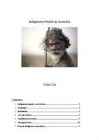
Indigenous People in Australia Class 12a Contests: 1. Indigenous peoples: an overview.................................................................. 3 2. Language......................................................................................................... 3 3. Spirituality...................................................................................................... 3 4. Art and culture.............................................................................................. 4 5. Traditional recreation.................................................................................... 4 6. Aboriginal food............................................................................................ 4-5 7. Famous indigenous Australians.................................................................... 5 8. Int...
CHAPTER 1 GETTING TO KNOW THE TOEFL WHAT IS THE TOEFL? The TOEFL is a comprehensive English language examination required by more than 3,000 colleges and universities in the United States, Canada, and other parts of the world. In addition, foreign born professionals frequently need a TOEFL score for certification to practice their profession in the United States or Canada. The TOEFL is a timed test that consists of the three sections listed here. THE TOEFL Section 1 Listening Comprehension 50 questions 35 minutes Part A Statements 20 questions Part B Short Dialogs 15 questions ...
THE U.K Different Parts The United Kingdom is a short way of saying the United Kingdom of Great Britain and Northern Ireland. The UK is the political name for those countries which share a parliament in London. All of them were at one time independent kingdoms with their own monarch. Now they are all part of the same kingdom and share the same monarch. The UK consists of Northern Ireland, Scotland, England and Wales. The peoples of these countries are British subjects; they hold British passports and therefore their nationality is British. The british Isles is the geographical name for all the islands off the west coast of Europe. These islands also include The Republic of Ireland, which is politically independent of the Britsh government. Many people refer to the inhabitants of the British isles as 'the English', but England is only one of the countries. The other countries are Scotla...
English structure revision for the exam 1. Terms Language → A systematic, conventional (tavakohane) use of sounds, signs or written symbols in a human society for communication and self-expression. Human language at all levels is rule- or principle- governed (valitsema) meaning that language corresponds to the grammar. Natural language is usually spoken, while language can also be encoded into symbols (such as letters, morse etc) For example: Estonian, English. Linguistics → The scientific study of human natural language. Broadly, there are three aspects to the study which are Pragmatics (studies the use of language → interested in the gap between the sentence’s meaning and the speaker’s meaning). Semantics (concerned with the meaning of the language aspects and the way they change, also how objects and language and thinking and language are related). ...
Style The term style is a polysemantic one. The latin word ,,stilus" meant a writing instrument used by the ancients for writing on waxed tablets. Already, in classical latin the meaning of style was extended to denote the manner of expressing one's ideas in written or oral form. One of the abts/the best was given by Jonathan Swift: ,,Proper words in proper places." In present- day english, the world style is used in about half a dozen basic meanings. 1. the characteristic manner in which a writer expresses his ideas. Some speak about the style of Hemingway, Dickens etc. 2. the manner of expressing ideas, characteristic of a literary movement or period. Style of symbolism, romanticism 3. the use of language to pick a literary genre-comedy, novel, drama, O.D (poetic form) etc. 4. the selective use of language that depends on spheres of human activity fiction, scientific prose, newspape...
1. Society- people who interact in such a way as to share a common culture. The cultural bond may be ethnic or racial or geographical, based on gender, or due to shared beliefs, values, and activities. 2. Culture- beliefs, behaviors, objects, and other characteristics common to the members of a particular group or society. 3. A unitary state- a state governed as one single power in which the central government is ultimately supreme and any administrative divisions (subnational units) exercise only powers that their central government chooses to delegate. The majority of states in the world have a unitary system of government. 4. A federal state-- a political entity characterized by a union of partially self- governing states or regions under a central (federal) government. 5. A multinational state- A multinational state is a sovereign state which is viewed as comprising two or more nations. Such a state contrasts with a nation-state...
STYLISTICS 1. Style, stylistics, a survey of stylistic studies The term ,,style" is polysemantic. Latin ,,stilus"--a writing instrument used by the ancients for writing on waxed tablets. Soon, the meaning was extended to denote the manner of expressing one's ideas in written or oral form. Jonathan Swift said: ,, Style is proper words in proper places" Present day--half a dozen meanings: · the characteristic manner in which a writer expresses his ideas (Style of Byron) · the manner of expressing ideas characteristic of a literary movement or period (symbolism, romanticism) · the use of lg. typical of a literary genre (comedy, drama, novel) · the selective use of lg that depends on spheres of human activity. These are called functional styles or registers (fiction, newspaper) Stylist...
AUSTRALIA Tallinn 2008 Only one country in the world fills a whole continent. That country is Australia. The continent it fills is Australia, too. Australia, then, is both a country and a continent. Australia is one only continent except Antartctica that is all south of the equator. Since it is south of the equator, its seasons are just the opposite of ours. It has summer while we have winter, and the other way round. Sometimes Australia is called the island continent. There is a good reason why. It is an island. It is 1800 miles from the mainland of Asia and almost half way round the world from Europe. More than 6000 miles of ocean separate it from the America. Australia is the world's smallest, flattest and driest continent. It is also the oldest some of the rocks are more than 3,000 million years old. It is the 6th largest country. Its territory is 7 700 000 km2. Australia is...
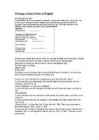
Writing a formal letter in English An example of a task: You are trying to find accommodation for yourself in London while studying at a college there. You have the task of writing to Mr Sabir Siddique who has put the following advertisement in the newspaper. Read the advertisement and the notes you have made. Then write your letter to Mr. Siddique. Write a letter of 120 words. Do not write any addrsses. Flat to let Finsbury Park how far from central London? 10 minutes from Manor House tube Self-contained ground floor flat big enough for two? Bedroom, living room, study room Fully furnished what furniture? 90 pounds per week any extras to pay like electricity? Ideal for student 36 Stewart Street does it have a phone? available how soon? London N4 2PP 0181 809 7985 A letter starts with a date, except when it is said that the date is not necessary. Usually on national exam...
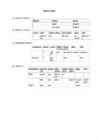
Word order: positive sentences subjects verb(s) object I speak English. I can speak English. Negative sentences subject verbs Indirect object Direct object place time I will not you the story at Tomorro tell school w. Subordinate Clauses conjunction subject verb(s) Indirec Direct place time t object object I will you the story...
Book 1 BASIC ENGLISH BASIC ENGLISH GRAMMAR GRAMMAR BASIC ENGLISH GRAMMAR Book 1 Book 1 Younger students at beginning to intermediate levels will greatly benefit from this step-by-step approach to English grammar basics. This is the ideal supplement to your language arts program whether your students are native English speakers or beginning English language learners. Skill-specific lessons make it easy to locate and prescribe instant reinforc...
Washington Washington is a state in the Pacific Northwest region of the United States located north of Oregon, west of Idaho, and south of the Canadian province of British Columbia on the coast of the Pacific Ocean. It was named after George Washington, the first President of the United States, the state was made out of the western part of the Washington Territory, which had been ceded by Britain in 1846 in accordance with the Oregon Treaty in the settlement of the Oregon Boundary Dispute. It was admitted to the Union as the 42nd state in 1889. Olympia is the state capital of Washington. Washington is sometimes referred to as Washington State or the State of Washington to distinguish it from Washington, D.C., the capital of the U.S., which is often shortened to Washington. Washington is the 18th largest with an area of 184,827 sq/km and the 13th most populous state with over 7 million pe...
Australia Australia is the only country in the world that covers an entire continent, yet also the smallest and the driest of all the continents. It's almost the same size as continental USA, being the sixth largest country in the world. It's also the oldest some of the rocks are more than 3,000 million years old. Australia is often called `Down Under', because it lies in the Southern Hemisphere. As a result, its seasons are the opposite of ours. Australia, Tasmania and a number of smaller islands form the Commonwealth of Australia. Because of the country's great size, the climate in Australia ranges from tropical regions of the Northern Territory to the cool temperate conditions in the southeast and Tasmania, where it often snows in winter. In the north, half the year is `wet' and half is `dry'. From November to April heavy rain fills the rivers and makes enormous lakes where thousands of birds come for the summer. From May to Octobe...
Ireland is the third largest island in Europe. It lies in between the Atlantic Ocean and the Irish Sea. Politically it is divided into a sovereign state, the Republic of Ireland, that covers about five-sixths of the island (south, east, west and north-west), and Northern Ireland, which is part of the United Kingdom, covering the northeastern sixth of the island.[1] The name 'Ireland' derives from the name Ériu (in modern Irish, Éire) with the addition of the Germanic word 'land'. The population of the island is just under 6 million (2006); just over 4.2 million in the Republic of Ireland[2] (1.6 million in Greater Dublin[3]) and just over 1.7 million in Northern Ireland[4] (0.6 million in Greater Belfast[5])). Politics Politically, Ireland is divided into: · The Republic of Ireland, with its capital Dublin. · Northern Ireland, which is part of the United Kingdom, Geography A ring of coastal mountains surrounds low central plains. Th...
1. Be ready to explain the terms (lecture 1): language, linguistics, synchronic approach to language, diachronic approach to language, linguistic competence, linguistic performance, what is grammar?, prescriptive grammar vs. descriptive grammar; phonology, phonetics, phone, allophone, phoneme; morphology, morphemes (types of morphemes), morphs, allomorphs, types of affixes, derivational affixes, inflectional affixes; open vs closed class words; syntax. Language: a systematic, conventional use of sounds, signs or written symbols in a human society for communication and self-expression. - human language at all levels is rule- or principle-governed. Linguistics: the scientific study of human natural language Synchronic approach to language: Diachronic approach to language: Linguistic competence: Linguistic performance: What is grammar?: "The sounds and sound patterns, the basic units of meaning, such as words, and the rules to combine them...
Homereading 4 Changing world Religions Islam Islam is a monotheistic Abrahamic religion originating with the teachings of Muhammad, a 7th century Arab religious and political figure. The word Islam means "submission", or the total surrender of oneself to God An adherent of Islam is known as a Muslim, meaning "one who submits (to God)". There are between 1.1 billion and 1.8 billion Muslims, making Islam the secondlargest religion in the world, after Christianity. Muslims believe that God revealed the Qur'an to Muhammad, God's final prophet, and regard the Qur'an and the Sunnah (words and deeds of Muhammad) as the fundamental sources of Islam.They do not regard Muhammad as the founder of a new religion, but as the restorer of the original monotheistic faith of Abraham, Moses, Jesus, and other prophets. Islamic tradition holds t...
1. What is known about the earliest settlers from Estonia to the territory of the present-day US? *The first immigrants from Estonia in the US = 1627 no trace of the "Estonians and Livonians" who left their homeland to settle at the mouth of the Delaware River (a Swedish colony) · 1654 at least one Estonian in the settlement of New Sweden on the Delaware River Johan Schalbrick, a drummer from Tallinn (Reval) · New Sweden Swedish colony on the Delaware River from 16381655 · 1657 Martinus Hoffman, born in Tallinn (Reval), came to New York (New Amsterdam), started to work as a saddlemaker. · His great-granddaughter Cornelia Hoffmann (b. 1734) married Isaac Roosevelt, which makes her the great-great-grandmother of Franklin Delano Roosevelt, president of the US from 193345. · Hans Rebane = 1897 founded the first Estonian-language newspaper in the US Eesti Ameerika Po...
Mass Media What is Mass Media? Statistics show that there are few things which impact the human mind more than mass media. The advice of teachers, parents and relatives may fall on deaf ears, but the mass media influence holds us all spellbound! At this point, it becomes necessary to define mass media. Mass media may be defined as any form of communication which is meted out to the people at large, through the various forms of communication. What modes of communication are we talking about? Well there can be no static definition for the channels of mass communication as they are increasing all the time. But any form of communication which is seen and understood by a large mass of people can be taken to mean mass communication or mass media channels. Why is mass media so attractive to people? Mass media holds a kind of mystique in the minds of the people. It is because the communication is designed in ...
N. A. Vavilov ASPECTS OF BRITISH HISTORY Н. А. Вавилов КРАТКАЯ ИСТОРИЯ ВЕЛИКОБРИТАНИИ Учебное пособие на английском языке Москва Институт международного права и экономики имени А. С. Грибоедова 2008 2 УТВЕРЖДЕНО кафедрой лингвистики и переводоведения Вавилов Н.А. Краткая история Великобритании: Учебное пособие на английском языке. – 2-е изд., пересмотр. и испр. – М.: ИМПЭ им. А.С. Грибоедова, 2008. – 88 с. Пособие содержит краткий очерк важнейших событий в истории Великобритании – от первых документально засвидетельствованных вторжений на остров (кельтов, римлян и англосаксов) до создания и распада Британск...
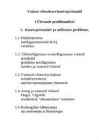
Vaimse võimekuse kontseptsioonid I Ülevaade probleemidest 1. Kontseptsioonide ja mõõtmise probleem. 1.1 Psühhomeetria intelligentsustestid & IQ valiidsus 1.2. Üldintelligentsus vs intelligentsuse vormid moodulid praktiline intelligentsus haridus ja vaimsed võimed 1.3. Vaimsed võimed ja kultuur sotsialiseerumine naiivne kontsepsioon võimetest 1.4. Areng ja vaimsed võimed Piaget, Võgotski staadiumid, "dünaamiline" testimine 1.5. Bioloogiline lähenemine aju anatoomia ja füsioloogia 2. Intelligentsustestide reliaabluse probleem 2.1. Testide reliaablus IQ ja vanuselised muutused (kuni 18 punkti) madal korrelatsioon (keskmine r =.36) 2.2. Testide ennustav valiidsus IQ ja akadeemiline edukus (keskmine r = .50 ) IQ ja hariduse kestvus ( keskmine r = .55) IQ ja vanemate SES IQ ja professionaalne edukus (keskmine r = .30 kuni .5...
Intercultural communication What is business English? Loosely defined, BE refers to the Engl lg used in international trade or business. Loosely defined, BE refers to the Engl lg used in international trade or business. It is a specialized area of the Engl lg learning and teaching largely attributed to non-native English speakers Aim to enhance their chances of doing business with companies from English speaking countries. BE can refer to the study of business Engl voc used in the fields of trade, business, finance, or international relations. If the study focuses on techniques on business presentations, negotiations, correspondence, writing and other skills needed for business communications, then it can be classified as the study of Business English communication skills in the workplace. Both are important and used usually together. Culture. Barriers to Intercultural communication Synergy (from Greek for "working together") means ...
Vaimse võimekuse kontseptsioonid I Ülevaade probleemidest 1. Kontseptsioonide ja mõõtmise probleem. 1.1 Psühhomeetria intelligentsustestid & IQ valiidsus 1.2. Üldintelligentsus vs intelligentsuse vormid moodulid praktiline intelligentsus haridus ja vaimsed võimed 1.3. Vaimsed võimed ja kultuur sotsialiseerumine naiivne kontsepsioon võimetest 1.4. Areng ja vaimsed võimed Piaget, Võgotski staadiumid, "dünaamiline" testimine 1.5. Bioloogiline lähenemine aju anatoomia ja füsioloogia 2. Intelligentsustestide reliaabluse probleem 2.1. Testide reliaablus IQ ja vanuselised muutused (kuni 18 punkti) madal korrelatsioon (keskmine r =.36) 2.2. Testide ennustav valiidsus IQ ja akadeemiline edukus (keskmine r = .50 ) IQ ja hariduse kestvus ( keskmine r = .55) IQ ja vanemate SES IQ ja professionaalne edukus (keskmine r = .30 kuni .5...
 annaabi.ee