Leidsid 33 sarnast õppematerjali, mis on seotud failiga "Wooden pallets". Need materjalid aitavad sul teemat sügavamalt mõista.
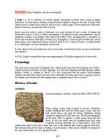
pallets, wood, ment, europ, code, wooden, storage, size, these, during, companies, shows, good, answer, date, back, sheets, skids, stored, allowed, production, sizes, canadian, grocery, quality, came, association, burnt, country, heat, typical, weather, resistance, ones, them, build, going, talk, finished, might, still, shape, changed, early, inventedBooks can also be borrowed from libraries. In 2010, Google estimated that there were approximately 130 million unique books in the world. Etymology The word book comes from Old English "bc" which itself comes from the Germanic root "*bk-", cognate to beech. Similarly, in Slavic languages (e.g. Russian, Bulgarian and Macedonian) "" (bukva--"letter") is cognate to "beech". It is thus conjectured that the earliest Indo-European writings may have been carved on beech wood. Similarly, the Latin word codex, meaning a book in the modern sense (bound and with separate leaves), originally meant "block of wood". History of books Antiquity Sumerian language cuneiform script clay tablet, 24002200 BC When writing system were invented in ancient civilization, nearly everything that could be written upon--stone, clay, tree
5 Geothermal power plants..........................................................................................45 13.6 Geothermal heat pumps............................................................................................ 46 13.7 Geothermal energy and the environment..................................................................46 BIOMASS............................................................................................................................46 14.1 Wood and wood waste..............................................................................................47 14.2 Municipal solid waste, landfill gas, and biogas........................................................48 14.3 Biofuels - ethanol and biodiesel............................................................................... 48 2 14.4 Biomass and the environment..........................................
INTRODUCTION OF SUPPLY CHAIN MANAGEMENT (SCM) A supply chain is a network of facilities and distribution options that performs the functions of procurement of materials, transformation of these materials into intermediate and finished products, and the distribution of these finished products to customers. Supply chains exist in both service and manufacturing organizations, although the complexity of the chain may vary greatly from industry to industry and firm to firm. Supply chain management is typically viewed to lie between fully vertically integrated firms, where the entire material flow is owned by a single firm and those where each channel member operates independently. Therefore
............................................................................................... Introduction To be honest I got the list of topics after most interesting ones for me were taken. At first I was not very satisfied with my topic but then I realized that this could be actually really interesting thing to make a report of. I chose this particular topic because I have always been interested in green energy. This topic gave me an excellent opportunity to improve my knowledge about these kinds of things. For me this report is a great challenge because I have not done anything like this before, especially in English. Primary goal for me is to improve my knowledge about renewable energy and also usage of English language. This report is going to talk about biogas. It provides a brief review of usage and future prospects of the biogas. I have tried to make this report as understandable as possible. By the end of this report I want to come to a conclusion whether biogas is
food for birds and can be used directly in cooking and salads. Sunflower oil, extracted from the seeds, is used for cooking (but is less cardiohealthy than olive oil), as a carrier oil and to produce biodiesel, for which it is less expensive than the olive product. During the 18th Century, the use of sunflower oil became very popular in Europe, particularly with members of the Russian Orthodox Church because sunflower oil was one of the few oils that was not prohibited during Lent. The cake remaining after the seeds have been processed for oil is used as a livestock feed. Some recently developed cultivars have drooping heads. These cultivars are less attractive to gardeners growing the flowers as ornamental plants, but appeal to farmers, because they reduce bird damage and losses from some plant diseases. There are also new breeds of sunflowers which are transgenic, so that they are resistant to some diseases
22. Semidry and Dry Fermented Sausages 379 Graciela Vignolo, Cecilia Fontana, and Silvina Fadda 23. Restructured Whole-Tissue Meats 399 Mustafa M. Farouk 24. Functional Meat Products 423 Keizo Arihara and Motoko Ohata PART III. Controls 441 25. Physical Sensors for Quality Control during Processing 443 Marta Castro-Giráldez, Pedro José Fito, Fidel Toldrá, and Pedro Fito 26. Sensory Evaluation of Meat Products 457 Geoffrey R. Nute 27. Detection of Chemical Hazards 469 Milagro Reig and Fidel Toldrá 28. Microbial Hazards in Foods: Food-Borne Infections and Intoxications 481 Daniel Y. C. Fung
During the 1990s, some purebred Norwegian Forest Cats in Sweden produced chocolate/lilac and cinnamon/fawn offspring. However, those colours are not found in the purebred Norwegian Forest Cat gene pool. Had the gene pool become polluted by someone, perhaps generations ago, breeding their Norwegian Forest Cat to another breed? Was it a spontaneous mutation? Crossing of those cats with known chocolate and cinnamon colour cats of other breeds ruled out chocolate/lilac and cinnamon/fawn genes. These cats were a totally new colour, peculiar to the Norwegian Forest Cat gene pool and dubbed the "X Colours". They are now called Amber and Light Amber. The Amber effect is due to the extension gene (also called red factor) which controls the production of red and black pigment. The dominant version of the gene produces normal black pigment in the coat while the recessive version produces red pigment. The name comes from the effect of black or brown pigment not being
toaster, embedded systems must measure, analyze, and control analog values. That’s what this book is about—connecting analog input and output devices to microprocessors for embedded applications. xi System Design 1 Most embedded microprocessor designs involve processing some kind of input to produce some kind of output, and one or both of these is usually analog. The digital portions of an analog system, such as the microprocessor- to-memory interface, are outside the scope of this book. However, there are some system considerations in any design that must interface to the real world, and these will be considered here. Dynamic Range Before a system can be designed, the dynamic range of the inputs and outputs must be known. The dynamic range defines the precision that must be applied to measuring the inputs or generating the outputs
is growing for many forms of renewable energy. Climate change concerns coupled with high oil prices, peak oil and increasing government support are driving increasing renewable energy legislation, incentives and commercialization. New government spending, regulation, and policies should help the industry weather the 2009 economic crisis better than many other sectors. Costs Renewable energy systems encompass a broad, diverse array of technologies, and the current status of these can vary considerably. Some technologies are already mature and economically competitive (e.g. geothermal and hydropower), others need additional development to become competitive without subsidies. This can be helped by improvements to sub-components, such as electric generators. The table shows an overview of costs of various renewable energy technologies. For comparison with the prices in the table, electricity production from a conventional coal-fired plant costs about 4¢/kWh
boomed on the back of fast international economic growth while the price of gas imported from Russia remained low, terms of trade improved by 50 percent. Monetization also helped to drive this boom, as the ratio of credit to GDP grew extremely fast--from 7 to almost 80 percent over just several years. 7 In less than a decade, Ukraine leaped from an economy not based on money to having a banking sector comparable in relative size to that of many well-established market economies. Credit was at last available, and not only from state-controlled and other politically connected banks, but from reputable foreign banks channeling easy international liquidity to Ukraine as they did to other emerging economies. From 2000 to 2007, Ukraine's real growth averaged 7.4 percent and was thus very similar to Russia's. In both countries, this growth was driven by domestic demand: orientation toward
District heating can utilise the heat from electricity generation in combined heat and power (CHP) plants. District heating can also use other heat sources that are difficult to use for individual buildings, such as unrefined biomass fuels, heat from waste incineration and industrial surplus heat. The latter may, for example, be a by-product from production of automotive biofuel. District heating can provide cheap energy to consumers by using low-cost energy sources, such as wood, waste and surplus heat. Many of these resources can be of local origin and promote local business and industry. The main advantages with district heating are high security of supply through utilisation of domestic renewable energy resources, if available, low primary energy demand due to high conversion efficiency, as well as small CO2 emissions thanks to low fossil fuel use and the high energy efficiency. Incineration of waste with heat recovery to district heating may be used at very low cost
letter gets delivered. Why is this so easy, because there are certain international conventions that regulate postal services. E.g. traffic signs are almost the same everywhere, why? Because of certain int conventions that require the states to have more or less unified traffic signs. States apply international regulations to national regulations and they have to be in accordance with each other, the states can always specify these regulations. Therefore, PIL regulates people indirectly. Another unique feature: domestic law sources have a clear pyramid (top to bottom: constitution, laws, individual contracts, they cannot contradict each other) and all sources are written. In PIL there is no such hierarchy, but there are primary sources (all are equally important) and secondary sources and all are not written. Primary sources: written documents
Race. Truth shall set you free, it has set me free. RAPE OF A RACE Let’s take slavery for instance. We attribute everything that has happened to the Black race to slavery. We delude ourselves about African Kingdoms which had thrived before the onslaught of first the Arabs, and later the Caucasians. We talk about the Pyramids of Egypt, the great empire of Mali and the learning capital of Timbuktu. Yes, I am constrained to agree that these were great legacies that our ancestors left us, but one cannot deny the fact that in the middle Passage of the 19th century we stopped functioning as a people with intelligence and the instinct to defend ourselves. In the 17th century, more than 36 million African men and women were taken into slavery and to the shores of America. Of that 36 million, more than 18 million died in the Trans-Atlantic crossings. Listen, don’t get me wrong
produce less carbon emissions than any other masonry material. History (slide 3) In more detail the earliest bricks were dried bricks, meaning they were formed from clay- bearing earth or mud and dried usually in the sun until they were strong enough for use. The oldest discovered bricks, originally made from shaped mud and dating before 10000 BC, were found in Mesopotamia related to the first known cities. Ceramic or fired bricks were first introduced by the Romans. These were mainly flat, broad thin sections, not unlike a tile, which is probably why they `burnt' so well, causing them to last for centuries. In Estonia the fired clay bricks came in to use in 13 century. The greatest buildings from that time are the St John's Church and the Tartu Cathedral. (Jaani kirik ja Toomkirik) Moving on, What is clay? (slide 4) Clay is fine-grained, firm earthy material that is plastic when wet and hardens when heated. Clay minerals are size of (point zero one mm)0,01mm
6 Facts about chart carriage reguirements IMO SOLAS V/2: Nautical chart or nautical publication is a special-purpose map or book, or a specially compiled database from which such a map or book is derived, that is issued officially by or on the authority of a Government, authorized Hydrographic Office or other relevant government institution and is designed to meet the requirements of marine navigation. IMO SOLAS V/19 2.1 All ships irrespective of size shall have: (…) 2.1.4 nautical charts and nautical publications to plan and display the ship’s route for the intended voyage and to plot and monitor positions throughout the voyage; an Electronic Chart Display and Information System (ECDIS) may be accepted as meeting the chart carriage requirements of this subparagraph; 2.1.5 back-up arrangements to meet the functional requirements of subparagraph 2.1.4, if this
its low weight and high strength in both compression and tension. Therefore, the steel design and construction industry has been on the forefront of technical innovation. The purpose of this study is to determine how 3D and BIM are changing the design, fabrication and construction of complex steel structures. The thesis is qualitative in nature, in that it tries to determine the effects of virtual design and construction based on in-depth analysis of two case studies. Data were collected during 5 interviews with people who were intimately involved in the projects. Background information was obtained from professional journals, engineering articles and conference papers. During analysis, the data were compared to propositions that emerged from the literature review to determine whether a clear pattern was present. A comparison table was created to compare the effects of virtual design and construction of the two projects. Additionally, a schedule is
Misusing and Abusing the IoT - Now and in the Future The Internet of Things is the network of physical objects—devices, vehicles, buildings and other items which are embedded with electronics, software, sensors, and network connectivity, which enables these objects to collect and exchange data [1]. As the amount of devices connected to the internet of things is constantly on the rise, making it innately more secure and protecting those devices from abuse, in a sense of unwanted access , manipulation by third parties and other scenarios, is rapidly turning into a pressing issue. According to some sources there were about 13.4 billion connected devices back in 2015 and the projections show there might be up to 38.5 billion such devices in 2020 [2]
Cuisine of South Africa has had a variety of sources and stages: · Cookery practised by indigenous people of South Africa such as the Khoisan and Xhosa- and Sotho-speaking people · Settler cookery introduced during the colonial period by people of Indian and Afrikaner and British descent and their slaves and servants - this includes the cuisine of the Cape Malay people, which has many characteristics of Malaysia and Java, and recipes from neighbouring colonial cultures such as Portuguese Mozambique. Indigenous cookery traditional South African cuisine In the precolonial period, indigenous cuisine was characterized by the use of a very
I have tried in this book to write a serious history of cryptology. It is primarily a report to the public on the important role that cryptology has played, but it may also orient cryptology with regard to its past and alert historians to the sub rosa influence of cryptanalysis. The book seeks to cover the entire history of cryptology. My goal has been twofold: to narrate the development of the various methods of making and breaking codes and ciphers, and to tell how these methods have affected men. When I began this book, I, like other well-informed amateurs, knew about all that had been published on the history of cryptology in books on the subject. How little we really knew! Neither we nor any professionals realized that many valuable articles lurked in scholarly journals, or had induced any cryptanalysts to tell their stories for publication, or had tapped the vast treasuries of documentary material,
Title: Integration of Lean Construction and Building Information Modelling Archived: University of Applied Sciences, Faculty of Construction ABSTRACT This research can be divided into two. The first part investigates the current state of the construction industry, while the second part looks at new emerging business models in particular, Lean Construction (LC) and Building Information Modelling (BIM), as well as an integration of these two. Given that the construction industry does not have a particularly good reputation among the public, the first part of this thesis focuses mainly on this problem and its sources. It is the reason why we need new and better business models, like LC and BIM, or even an integration of the two models. Both LC and BIM have been shown to have a profound impact on improving construction processes and therefore, project outcomes, as discussed in the third and the fourth chapters
behavior. They work on a micro-level of research, breaking down complex behavior into its smallest parts (e.g. genes, neurotransmitters or proteins). This approach is sometimes criticized for being overly simplistic, but it is important to have detailed information of the components of human behavior in order to understand the interaction of several factors. Kasamatsu and Hirai studied a group of Buddhist monks who went on a 72-hour pilgrimage to a holy mountain in Japan. During this time the monks did not eat, drink or speak and were exposed to cold, autumn weather. About 48 hours later they started to have hallucinations, often about their ancestors. The researchers took blood samples from the monks before the ceremony and immediately after the monks reported seeing hallucinations. They found that serotonin levels had increased in their brains. Serotonin activated the hypothalamus and the frontal cortex resulting in hallucinations
(elaion) for oil. The term was found (in the spelling "petraoleum") in 10th-century Old English sources. It was used in the treatise De Natura Fossilium, published in 1546 by the German mineralogist Georg Bauer, also known as Georgius Agricola. In the 19th century, the term "petroleum" was frequently used to refer to mineral oils produced by distillation from mined organic solids such as cannel coal (and later oil shale), and refined oils produced from them; in the United Kingdom, storage (and later transport) of these oils were regulated by a series of Petroleum Acts, from the Petroleum Act 1862 onwards. Composition In its strictest sense, petroleum includes only crude oil, but in common usage it includes all liquid, gaseous, and solid hydrocarbons. Under surface pressure and temperature conditions, lighter hydrocarbons methane, ethane, propane and butane occur as gases, while pentane and heavier ones are in the form of liquids or solids. However, in an
Milk cattle, also pigs and poultry are the main farm animals raised in Estonia. Field crops include cereal crops, potatoes and vegetables. Plant products are mostly for internal use, a considerable amount of meat is imported. Some dairy products and some specific products e.g. cultivated and wild berries, mushrooms, ecologically pure produce etc are for export. The forest is among Estonia's most important natural resources and a source of a considerable amount of raw material. Wooden construction details, wooden furniture and wooden houses are being exported. The main export destinations are Finland, Sweden, Germany, Norway and Great Britain. Estonian cellulose and paper industries have a long history, some factories have been in operation since the mid-19th century. Today the raw material comes from local forests as well as from Russia, Latvia and Lithuania. The most important branch among processing industries in Estonia is timber, paper and furniture industry
Since the beginning of time, the goal of bridge builders has been to create as wide a span as possible which is commodious, firm, and occasionally delightful. Spanning greater distances is a distinct measure of engineering prowess. In terms of engineering, bridges are discussed by design or type (beam, arch, truss, cantilever, suspension, or moveable); length (usually expressed in terms of clear or overall span); and materials (stone, wood, cast and wrought iron, and what we use today - concrete and steel). The purpose of this contextual essay is to provide parameters of value and significance so that we can focus our attention on those bridges - globally - that best illustrate the history of bridge building, and to encourage their preservation. What is a World Heritage bridge? The World Heritage Committee states that to be of World Heritage status a monument or site must be of outstanding universal value
In summer 2000 the restored Kadriorg Palace was opened, but not as the main building of the Art Museum of Estonia, but as a branch. Kadriorg Art Museum now exhibits the foreign art collection of the Art Museum of Estonia. At present there are five active branches of the Art Museum of Estonia: Kadriorg Art Museum (Kadriorg Palace and Mikkel Museum), Niguliste Museum, Adamson-Eric Museum, and Kumu Art Museum (the new main building of the Art Museum of Estonia) For the first time during its nearly 100-year-old history, the Art Museum of Estonia has a building that both meets the museum's requirements and is worthy of Estonian art in its collections. Kumu Art Museum is a multifunctional art museum that includes exhibition halls, an auditorium that offers diverse possibilities, and an education centre for children and art lovers of all ages. Collection The collection that consists of 55 823 titles is displayed in the following branches:
competitors, suppliers, distributors, employees and stakeholders. Also this assignment is provided with the SWOT analysis, where strengths, weaknesses, opportunities and threats are examined. Mini Mini was at first manufactured by the Austin Motor Company Ltd. In 1957 Alec Issigonis was commissioned to develop a new type of small car. At the same year were the first sketches of Mini made and after that the Mini model is been created from wood and also the most important mechanical parts for Mini has been developed. Four years later the Mini hits the streets. In 1965 the first Mini with an automatic transmission enters the market and in 1969 Mini gets itself an own badge. In 1971 Mini was the best-selling British car in the world. 1994 BMW group bought the Mini and year after that Mini was voted as the best car of the century by the car magazine readers in the UK and four years later Mini earned the same award in Europe
That's what this book is for. Diary of a Madman The spring of 2007 was an exciting time for me. My rst book, after being turned down by 26 out of 27 publishers, had just hit the New York Times bestseller list and seemed headed for #1 on the business list, where it landed several months later. No one was more dumbfounded than me. One particularly beautiful morning in San Jose, I had my rst major media phone interview with Clive Thompson of Wired magazine. During our pre-interview small chat, I apologized if I sounded buzzed. I was. I had just nished a 10-minute workout following a double espresso on an empty stomach. It was a new experiment that would take me to single-digit bodyfat with two such sessions per week. Clive wanted to talk to me about e-mail and websites like Twitter. Before we got started, and as a segue from the workout comment, I joked that the major fears of modern man could be
difficulties associated with finding and obtaining response to particular survey populations. Yet, all surveys face a common challenge, which is how to produce precise estimates by surveying only a relatively small proportion of the larger population, within the limits of the social, economic and technological environments associated with countries and survey populations in countries. This chapter is about solving these common problems that we described as the cornerstones of surveying. When understood and responded to, the cornerstone challenges will assure precision in the pursuit of one’s survey objectives. 1.2 What is a survey? A quick review of the literature will reveal many different definitions of what constitutes a survey. Some handbooks on survey methodology immediately describe the major components of surveys and of survey error instead of giving a definition (e.g
•Everything is an object •A program is a bunch of objects telling each other what to do by sending messages •Each object has its own memory made up of other objects •Every object has a type •All objects of a particular type can receive the same messages Domain Model •A domain model does not represent the entire domain as it is in the real world. It includes only the concepts that are needed to support the application. Object •Is a partitioned area of memory where object code is stored •The area of memory is protected •This code can function relatively independently of other objects •Can be used by many parts of one program or by parts of many programs Message Passing •The mechanism by which objects communicate •The object can accept or reject the message •From outside the object it appears to be active data •From inside the object the data is passive --the message tells the object what to do with the data Classes •A very basic concept in OOP
up to those who want to have only a recollection. Nowadays the chambers, they record audio, video, are better in resolution, offer incredible functions, are submersible to more of 3 meters of depth 5 Inventor of the photographic camera (CARLA) POWER inventor de la cámara: The first publication about camera obscura was made in 1521. The first photographer was Joseph Nicéphore Niépce in the year 1826, using a camera made of wood made by Charles and Jacques Vincent Louis Chevalier in Paris. However, although it is considered "officially" that this was the birth of photography, the invention of the camera obscura is earlier. The original darkroom was a room whose only source of light was a very small hole in one of the walls. The light that penetrated through the hole projected an image of the exterior on the opposite wall; The image was inverted and blurred.
that in Chelsea Flower Show country meets town; where chic urbanites drink champagne and wear their designer outfits alongside elderly squires in tattered Barbours and red faced countrywomen with muddy fingernails; where designers and architects encounter nurserymen and jobbing gardeners. Perhaps, as one exhibitor said, it is the quite indefinable thrill of being at the greatest, the best, and the most prestigious flower show in the world. So In my referent I will try to find out which of these three theories is right or for that popularity have some not mentioned reason. 6 Chelsea through the years, from beginnings to nowadays The Chelsea Flower Show came about practically by accident, as have many great traditions. The world's most famous flower show might have been the Inner Temple
Age 15 is legally a "young person" not a "child". Age 16 is a school leaving age. They can leave home, drive a moped, marry with "parents' consent" buy beer. Age 17 can drive a car. Age 18 can vote, get married, drink in pubs. Education is a very important part in the life of British youth. One can't become an independent person without it. When time comes to enter a college a young Englishman chooses one far away from home. It is a necessary part of becoming adult. During the last 30 years there were a lot of different trends in youth movements. All of them were characterized by their own philosophy, way of life, style of dressing. Each tendency was born by the influence of economic and political changes in the society. Those trends are known as the "hippies" the "punks" the "rockers". But certainly there are different traditional youth organizations in Great Britain. Among them -- the Scout Association, the Girl Guides Association, the National Union of
islands and plains in the east to mountains in the west. Location Canada is located in the northern-most region of North America. It's geographical position in co- ordinates is 83°N north, 42°N south, 53°W east, 141°W west. Canada borders with United States of America by land; Pacific Ocean, Arctic Ocean and Atlantic Ocean by coastline. Canada is one of the largest countries in the world, second only to Russia in territorial size. It has a total area of 9.9 million square kilometers. This includes 755,170 square kilometers of water. Toronto is the largest city in Canada with a population of 4.3 million. Other major cities include Montreal (3.3 million people), Vancouver (1.8 million people). Located in the southeast corner of the nation, Ottawa is the nation's capital. Relief Canada is a vast country comprised of a multitude of very different landscapes: Atlantic provinces, the Appalachians, St
 annaabi.ee