Leidsid 33 sarnast õppematerjali, mis on seotud failiga "The Yellow River". Need materjalid aitavad sul teemat sügavamalt mõista.
river, yellow, longest, fish, china, mouth, location, pandas, annabel, country, basin, jinan, millions, size, length, asia, mountains, county, tourism, bridge, waterfall, wild, single, near, chinese, extinct, snake, bird, them, cruise, creek, loses, turn, colour, mineral, rich, soil, fill, thus, change, course, thanksTopic Canada Tallinn English College 2006 1. Introduction If you had to use two words to describe Canada, they might be large and diverse. Canada is the second largest country in the world with a territory of about 10 million square kilometers and it is bordered by three oceans: the Arctic, the Pacific and the Atlantic Oceans. The population of Canada is about 31 million people. About 77% of the people live in cities which lie in a band about 100 miles wide above the border of the United States. The capital of Canada is Ottawa. Other large cities are Montreal, Toronto, Vancouver, Winnipeg and Quebec. 2
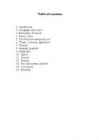
Table of contents 1. Introduction 2. Geographical position 3. Mountains, lowlands 4. Rivers, lakes 5. The territories and provinces 6. Towns, economy, agriculture 7. Climate 8. Animals, plantlife 9. Population 10. Sports 11. Culture 12. History 13. Political system, symbols 14. Conclusion 15. Materials 1. Introduction If you had to use two words to describe Canada, they might be large and diverse. Canada is the second largest country in the world, bordered by three oceans, and across the country, Canadians experience many different landscapes from rolling plains and mountains to the cold tundra of the north. Despite Canada's great size, it is one of the world's most sparsely populated countries. This fact, coupled with the grandeur of the landscape, has been central to the sense of Canadian national identity. 2. Geographical position Canada is the second largest country in the world after Russia. In the Arctic, Canada
region, because there is enough food. The savannas which are grasslands with some trees are mostly in the west. Farther west are the bushlands. The real deserts occupy the centre of the Western Plateau. In the very south west there are thin forests of evergreens trees. Australia is the driest inhabited continent, the flattest, and has the oldest and least fertile soils. Only the south-east and south-west corners of the continent have a temperate climate. The northern part of the country, with a tropical climate, has vegetation consisting of rainforest, woodland, grassland, mangrove swamps and desert. Climate is highly influenced by ocean currents, including the El Niño southern oscillation. 4. Land regions Mountains The Great Dividing Range runs along the Pacific ocean. These mountains are very old and much of worn down but the Australian Alps are the highest of them. The highest top Mount Kosciusko is 2228 metres above sea level
Victoria, Australian Capital Territory (ACT) and Northern Territory. Symbols: Australia had the British flag as their official flag until 1901, when the Commonwealth of Australia was formed. Over 30 000 entries attracted the official competition. Five of them, which contained almost identical designs, were placed equally first. The Australian flag symbolises Australia's historical links with Britain, because it has British flag on it, and Australia's location in the southern hemisphere, because it has stars of the Southern Cross on it. The large seven-pointed star represents the six original states and the territories of Commonwealth. There is also the Indigenous Australian flag, which represents the Aboriginal Australians. The flag with its colours of red (representing the land), black (representing the people) and the yellow in the middle (representing the sun) is a source of pride for Indigenous Australians.
Tallinna Inglise Kolledz Canada. The land of diversity. Tallinn 2006 Canada. If you had to use two words to describe Canada, they might be large and diverse. Canada is the second largest country in the world with a territory of about 10 million square kilometers and it is bordered by three oceans: the Arctic, the Pacific and the Atlantic Oceans. The population of Canada is about 31 million people. About 77% of the people live in cities which lie in a band about 100 miles wide above the border of the United States. The capital of Canada is Ottawa. Other large cities are Montreal, Toronto, Vancouver, Winnipeg and Quebec. Canada has two official languages English and French
Tallinn English College Topic The United States of America Form Tallinn 2005 Introduction The United States of America is a very big country. Its territory is about 9.4 million square kilometres and its population is more than 260 million people, 12% of them are the Afro-Americans. It is the world's third-largest country by size and by population. The population density is about 27 people per square kilometre. Most of the people live in towns. There are 50 states in America. The biggest of the state is Texas, next by size are California, Alaska and Montana. Six states - Maine, Vermont, New Hampshire, Connecticut ,Rhode Island and Massachusetts are called New England. They are all small states in the U.S. that lie in the north-east. The first colony of immigrants settled down in
non-native speakers. Spanish is the second language. The largest city is the New York City. The Government is Federal constitutional republic and the president is George W. Bush. 2. Geographical position The United States of America is located on the continent of North America. It has borders with two countries Mexico and Canada. There are also the Atlantic Ocean, the Pacific Ocean and the Gulf of Mexico surrounding the big country. There are 50 states in America. Most of the people live in towns. The biggest state is Alaska; next by size are California, Alaska and Montana. Six states - Maine, Vermont, New Hampshire, Connecticut, Rhode Island and Massachusetts are called New England. They are all small states in the USA that lie in the north- east. The first colony of immigrants settled down in Virginia, in the eastern part of the USA. 3. Relief The USA is situated in the central part of the North American continent
Topic Australia Introduction Many people know Australia as the land down under because it is the only continent except for Antarctica that is all on the southern hemisphere. Its name means ,,Southland". The official name of the country is the Commonwealth of Australia. It's capital is Canberra. Australia is the sixth largest country in the world but the smallest continent. Australia has 6 states and 2 territories (New South Wales, Victoria, Tasmania, Queensland, Western Australia , South Australia, The Australian Capital Territory and the Northern Territory). The Australian people are culturally the same as the Anglo Americans. There also live aborigines. Aborigines are the ancestors of the people. Like the US and Canada, Australia was an English speaking colony of Great Britain. Today
Australia Australia is a country and also a continent. If someone wants to make clear, that he is speaking of the country, he may call it by its full name of Commonwealth of Australia. Australia's name means "southland."It is south of the equator. Sometimes it is also called the island continent because it is an island. There are about twenty million people in Australia.It is 1,800 miles from the mainland of Asia and almost half way round the world from Europe. More than 600 miles of ocean separate it from Americas. Since Australia is south of the equator, its seasons are just the opposite of ours
..................................................................................................................8 Culture..........................................................................................................................9 Materials.................................................................................................................... 11 3 Introduction The United States of America is an enormous country. It is the third largest in the world after Russia and Canada. In the USA there are 50 states of which 48 lie together. The population of The USA is about 300 million people. The territory is about 10 million square kilometers. Its geography is very diverse ranging from moist rainforests to dry deserts and bald mountain peaks. There are two big mountain ranges, one of them is the Rocky Mountains and the other is The Appalachian Mountains. The Capital of The USA is Washington D.C
Introduction The United States of America is a very big country. Its territory is about 9.4 million square kilometres and its population is more than 260 million people, 12% of them are the Afro-Americans. It is the world's third-largest country by size and by population. The population density is about 27 people per square kilometre. Most of the people live in towns. There are 50 states in America. The biggest of the state is Texas, next by size are California, Alaska and Montana. Six states - Maine, Vermont, New Hampshire, Connecticut ,Rhode Island and Massachusetts are called New England. They are all small states in the U.S. that lie in the north-east. The first colony of immigrants settled down in
technological developments. A World Heritage bridge, like other properties, must meet the test of authenticity in design, materials, workmanship, or setting (the Committee has stressed that reconstruction is only acceptable if carried out on the basis of complete and detailed documentation of the original artefact and to no extent on conjecture). The criteria of authenticity may apply to Japanese bridges like the Kintaikyo spanning the Nishiki River in Iwakuni or Palladio's bridge over the River Brenta at Bassano a Grappa near Venice (Italy). In the same context, some bridges have been moved when unable to function at their original location. It is not unusual in the USA, for example, to relocate a metal truss bridge to a less travelled road when it can no longer handle the traffic; the same probably holds true for other countries. This is within the functional tradition of some bridge types and should
On specifically Royal occasions, both `Advance Australia Fair' and `God Save the Queen' are played. The second choice for the anthem was `Waltzing Matilda'. It is still a famous song and Australians like that song and they sing it. Government and Head of State. Australia is a constitutional monarchy, (queen + teda asendavad inimesed) based on a liberal democratic tradition. Queen Elizabeth II, queen of Great Britain, is also formally Queen of Australia. In reality the power or the country is put to life by the Parliament. Parliament consists of The House of Representatives (esindajate koda) and the Senat. The House of representatives consists of 150 members. The Senat comprises 12 representatives from each state and 2 from each territory. The executive power in Australia is in the hands of the Prime Minister. Today the Prime Minister is John Howard. History. The first inhabitants in Australia are the Aborigines who came there about 60000 years ago
) Nile Africa Mediterran ean Sea 4,1 60 Am azo n South Am erica Atlantic Oce an 4,000 Ch ang (Yangtze) Asia East China Sea 3,964 M ississippi-M iss o u ri N o rt h Am eri ca Gul f of Mexico 3,710 Major Deserts Name Continent Area (sq. m i.) Sa hara Africa 3,500 ,000
I. Portugal ABOUT Photo Location of Portugal (dark green) Portugal (Portuguese: Portugal, IPA: [putua]; officially the Portuguese Republic, Portuguese: República Portuguesa) is a country located in Southwestern Europe, on the Iberian Peninsula. It is the westernmost country of mainland Europe, and is bordered by the Atlantic Ocean to the west and south and by Spain to the north and east. The Atlantic archipelagos of the Azores and Madeira are Portuguese territory as well. The country is named after its second largest city, Porto, whose Latin name was Portus Cale. SETTLEMENT
8. Independence 9. Main sights 10. the Czech Republic 11. List of famous people from Prague 12. Geography 13. Weather and climate 14. Population 15. Culture 2 INTRODUCTION The Czech Republic lies at the heart of Central Europe and at its center is the beautiful and historic city of Prague. With a population of some 1.3 million residents, the city lies on either side of the Vltava River in the middle of Bohemia that is one of the three historic Czech territories; the others being Moravia and Silesia. The city has seven "Chapter Divisions" or districts. 3 I read one girl blog and she described Prague so beautifuly. She talked about her adventures. When i was reading that it seemed so real, that i was there to.
............................................................10 Conclusion....................................................................................................................11 Materials........................................................................................................................11 2 Australia Introduction Australia is the one and only country in the world which fills the whole continent. The continent it fills is called Australia too. So, Australia is both a country and a continent. If you want to make clear that you are speaking about the country, you may call it the Commonwealth of Australia. It’s the official name of the country. Australia is the smallest continent, but one of the largest countries on Earth. It’s 6th largest country. Its area is about 7.6 million sq km. One third of it is occupied by deserts. It’s both
crocodile bird bear Word File Here are more words for animals: cat goose cow hen dog horse dolphin mouse duck parrot fish shark goat whale These are words for places. They are common nouns. beach park Word File Here are more words for places: airport market cave mountain library church playground
All other types of buildings, like places of worship, fire stations, police stations, and laboratories, account for the remaining 10 percent of commercial building energy. 10 Picture 2.7 Energy use by type of building 2.5 Industrial and Manufacturing Energy Use The United States is highly industrialized. Industry accounts for about one-third of the energy used in the country. There are many different uses and a variety of different energy sources in the manufacturing sector. One main use is as boiler fuel, which means producing heat that is transferred to the boiler vessel to generate steam or hot water. Another use is as process heating, which is when energy is used directly to raise the temperature of products in the manufacturing process; examples are separating components of crude oil in petroleum
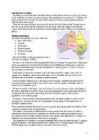
Introduction, Location Australia is a country between the Indian Ocean and the Pacific Ocean. It is the only country in the world that occupies an entire continent. The mainland covers an area of 7.7 million km² and it is about 3700 km from the most northern point to its most southern point and about 4000 km from east to west. There are also many different seas around Australia, like the Coral and the Tasman Seas in the west or the Timor and the Arafura Seas in the north, where the Indian and the Pacific Oceans meet. Because all seas and oceans near Australia are warm, surfing is a very popular hobby.
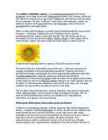
30 cm in diameter. The term "sunflower" is also used to refer(nimetama, viitama, üle andma) to all plants of the genus(perekond, sugu) Helianthus, many of which are perennial(alaline, aastaringne) plants. What is usually called the flower is actually a head (formally(ametlikult) composite(liit-, komposiit- ; korvõieline, komposiit) flower) of numerous flowers (florets) crowded(täistuubitud, tunglev, rahvarohke) together. The outer flowers are the ray florets(pähik (õisiku osa) and can be yellow, maroon, orange, or other colors, and are sterile(steriilne, viljatu). The florets inside the circular head are called disc florets. Sunflower head displaying florets in spirals of 34 and 55 around the outside The florets within this cluster(kobar, kimp, klaster, parv ; kobarasse kogunema) are arranged (korraldatud, ettekavatsetud)spirally(spiraalselt). Typically each floret is oriented(suunitlusega) toward(poole) the next by approximately(umbkaudu, ligikaudu)
reducing the amount of pigment in the hair and by producing elliptical pigment granules instead of round granules. Elliptical pigment granules refract light differently and give a reddish-brown colour instead of black/sepia. In Shaw's terminology which can confuse modern readers, chocolate is a dilute of black (while blue is "maltesing" of black). It became apparent that Barrington dilution gene was in a different location to the ordinary black/chocolate genes and was inherited independently of black/chocolate. That means it wasn't the modern cinnamon. Genes in different locations can affect different enzymes involved in production of the same protein, in this case the production of eumelanin pigment. Shaw referred to the “standard chocolate dilution" as affecting enzyme D while the Barrington system affected enzyme B. He identified Barrington Brown as having 2 alleles;
1. What is known about the earliest settlers from Estonia to the territory of the present-day US? *The first immigrants from Estonia in the US = 1627 no trace of the "Estonians and Livonians" who left their homeland to settle at the mouth of the Delaware River (a Swedish colony) · 1654 at least one Estonian in the settlement of New Sweden on the Delaware River Johan Schalbrick, a drummer from Tallinn (Reval) · New Sweden Swedish colony on the Delaware River from 16381655 · 1657 Martinus Hoffman, born in Tallinn (Reval), came to New York (New Amsterdam), started to work as a saddlemaker. · His great-granddaughter Cornelia Hoffmann (b. 1734) married Isaac Roosevelt, which makes her the great-great-grandmother of Franklin Delano Roosevelt, president of the US from 193345. · Hans Rebane = 1897 founded the first Estonian-language newspaper in the US
The Statue of Liberty, that is locatd in New York,is a gift from the France. The Libety Bell, that is a bronze bell that symbolizes freedom in the United States of America. It is located in Pennsylvania,U.S. Capital: Washington D.C Biggest city: New York National language: English Location U.S is located in North America, bordering both the North Atlantic Ocean and the North Pacific Ocean. United States neighbour countries are Canada and Mexico. The USA has the 8th longest coastline in the world at ~20 000 km. 62% of the perimeter of the USA is coastline. The USA's coastline is made up of beaches, cliffs, mangroves, and urban and developed areas, which make America very versatile country. Political division United States of America distributes into 50 states. The government power is limited by a dual system of government (federal government and individual state government). The federal
m. A traditional English breakfast is a very big meal. It consists of juice, porridge, a rasher or two of bacon and eggs, toast, butter, jam or marmalade, tea or coffee. Marmalade is made from oranges and jam is made from other fruit. Many people like to begin with porridge with milk or cream and sugar, but no good Scotsman ever puts sugar on it, because Scotland is the home of porridge. For a change you can have sausages, tomatoes, mushrooms, cold ham or perhaps fish. But nowadays in spite of the fact that the English strictly keep to their meals many people just have cereal with milk and sugar or toast with jam or honey. The two substantial meals of the day are lunch and dinner. Lunch is usually taken at one o'clock. For many people lunch is a quick meal. Office workers usually go to a cafe at this time. They take fish, poultry or cold meat (beef, mutton, veal and ham), boiled or fried potatoes and all sorts of salad
nearly everything that could be written upon--stone, clay, tree bark, metal sheets--was used for writing. Alphabetic writing emerged in Egypt about 5,000 years ago. The Ancient Egyptians would often write on papyrus, a plant grown along the Nile River. At first the words were not separated from each other (scriptura continua) and there was no punctuation. Texts were written from right to left, left to right, and even so that alternate lines read in opposite directions. The technical term for this type of writing is 'boustrophedon,' which means literally 'ox-turning' for the way a farmer drives an ox to plough his fields. 1/15 Scroll
the rock can be converted into crude oil using heat and pressure to simulate natural processes. The method has been known for centuries and was patented in 1694 under British Crown Patent No. 330 covering, "A way to extract and make great quantities of pitch, tar, and oil out of a sort of stone." Although oil shales are found in many countries, the United States has the world's largest deposits. Classification The petroleum industry generally classifies crude oil by the geographic location it is produced in (e.g. West Texas Intermediate, Brent, or Oman), its API gravity (an oil industry measure of density), and its sulfur content. Crude oil may be considered light if it has low density or heavy if it has high density; and it may be referred to as sweet if it contains relatively little sulfur or sour if it contains substantial amounts of sulfur. The geographic location is important because it affects transportation costs to the refinery
1 Germany 27.2 5.1% 533.7 30.7 5.4% 569.9 38.5 6.6% 584.9 2 United States 17.8 0.4% 4048.9 26.6 0.7% 4058.1 34.5 0.8% 4149.9 52.0 1.3% 4108.6 3 Spain 20.7 7.9% 260.7 22.9 8.5% 268.8 27.2 9.8% 276.8 31.4 11.1% 282.1 4 India 679.2 726.7 14.7 1.9% 774.7 5 China 2474.7 2.7 0.1% 2834.4 5.6 0.2% 3255.9 12.8 0.4% 3426.8 6 Italy 2.3 0.7% 330.4 3.0 0.9% 337.5 4.0 1.2% 339.9 7 Denmark 6.6 18.5% 35.7 6.1 16.8% 36.4 7.2 19.7% 36.4 6.9 19.1% 36.2 8 France 1.0 0.2% 482.4 2.2 0.5% 478.4 4.0 0.8% 480.3 5.6 1.1% 494.5 United 9 1.0 0.2% 407
2. what he/she did last night. 3. what sort of books he/she likes reading. 4. how he/she is. 5. how he/she usually gets home from here. 6. when he/she got up this morning. 7. when he/she first visited Helsinki. 8. how long he's/she's been learning English. 9. how long it takes him/her to get home from here. 10. where he/she lives. 11. where he/she went last summer. 12. which pop group he/she likes? 13. which country he/she comes from. 14. why he's/she's learning English. 14 Practise: Write questions. Use the words in brackets + do/does. Put the words in the right order. 1 (where/live/your parents?) Where do your parents live? 2 (you/early/always/get up?) Do you always get up early? 3 (how often/TV/you/watch?) ............................................. 4 (you/want/what/for dinner?) ..............................
1. (a) (i) gene length of DNA; codes for a (specific), polypeptide / protein / RNA; max 1 allele alternative form of a gene; found at a, locus / particular position on, a chromosome; max 1 (ii) assume allele refers to coat colour allele (coat colour) gene / alleles, only on X chromosome; A no (coat colour), gene / allele, on Y chromosome male cats, XY / only have one X chromosome; males have only one (coat colour) allele / cannot have two (coat colour) alleles; need black and orange alleles for tortoiseshell colour; 2 r r w w (b) parental genotypes C C × C C ; r w gametes C , C ; F1 genotypes and pheno
Students' own answers and for Chris's future. 6 been waiting, forgotten 3 Because although the pilots are prepared to give their lives in 4 There was once a wolf who used to 2B What's on the box? wander out every night in search of a page 12 the service of their country, their deaths are a result of Joe's lack of lamb for his dinner. But recently this 1 1 rubbish 8 as a sense of service to wider society. wolf has had been having difficulty 2 well-drawn 9 series 4 They were horrified by it. getting enough to eat because 3 story-lines 10 half 5 Both attack the `American the shepherds in the area were
scientific (17th-18th nucleus, formula, vertebra, corpuscle, atomic,carnivorous, incubate, aqueous, centuries) molecule The plurals of nucleus, verterbra, corpus, etc. Latin abbreviations in English i.e. = id est that is to say viz = namely etc = et cetera Latin adjectives for English nouns nose – nasal sun – solar son – filial mother – maternal mouth – oralmoon – lunar daughter – filial father – paternal stone – lithic 5. Greek borrowings The Greek language has contributed 50,000 words to the world. Christianity: New Testament in Greek. Catholic Church – Scclesiastical Latin. Examples: abbot, angel, apostle, bishop; school, cylinder, cycle, criterion, dialogue, cardiac, phonetic, gymnasium,
tenemos we have tuvimos we had tendremos we will have tenéis you have tuvisteis you had tendréis you will have tienen they have tuvieron they had tendrán they will have Highlighted forms are only used in Spain. Ser is used to identify or describe. It tells what something is, its basic characteristics, or its origin. Estar is used to tell the location of something or how someone feels. Uses of Ser El edificio es un templo. The building is a temple. Identify person/object La casa es grande. The house is large. Inherent characteristics Carlos es pobre. Charles is poor. or qualities Es carpintero
 annaabi.ee