 50 punkti
Autor soovib selle materjali allalaadimise eest saada 50 punkti.
50 punkti
Autor soovib selle materjali allalaadimise eest saada 50 punkti.
 ~ 7 lehte
Lehekülgede arv dokumendis
~ 7 lehte
Lehekülgede arv dokumendis
 2012-12-03
Kuupäev, millal dokument üles laeti
2012-12-03
Kuupäev, millal dokument üles laeti
 4 laadimist
Kokku alla laetud
4 laadimist
Kokku alla laetud
 0 arvamust
Teiste kasutajate poolt lisatud kommentaarid
0 arvamust
Teiste kasutajate poolt lisatud kommentaarid
 oscar eskor
Õppematerjali autor
oscar eskor
Õppematerjali autor
ship's chandler. He worked in his father's shop and he developed an interest in trying to make things "work like clockwork". In his late teens he went to London to learn to be a "mathematical and philosophical instrument maker", and when he returned to Glasgow he got a job making instruments with Glasgow University, who gave him a place where to live and a workshop. In 1763 John Andreson asked him to repair an early steam engine he had bought. This early model, known as a Newcomen engine, was very unefective. The cylinder (where the piston was) had to be heated when steam was admitted, and then cooled again to condense the steam. This wasted a lot of time and fuel. Two years later, while walking through Glasgow Green, Watt hit upon the idea of condensing the steam in a separate place. This removed the need for heating and cooling, making the engine faster, safer, and it used a lot less fuel
......12 References..........................................................................................................................................13 Introduction What is nuclear power? Nuclear power is any nuclear technology designed to extract usable energy from atomic nuclei via controlled nuclear reactions. The most common method today is through nuclear fission, though other methods include nuclear fusion and radioactive decay. All utility-scale reactors heat water to produce steam, which is then converted into mechanical work for the purpose of generating electricity or propulsion. In 2007, 14% of the world's electricity came from nuclear power. More than 150 nuclear-powered naval vessels have been built, and a few radioisotope rockets have been produced. Nuclear life cycle The Nuclear Fuel Cycle begins when uranium is mined, enriched, and manufactured into nuclear fuel, which is delivered to a nuclear power plant. After usage in the power plant, the spent fuel is
1)Main machinery On a ship, the engine room, or ER, is the propulsion machinery spaces of the vessel. To increase the safety and damage survivability of a vessel, the machinery necessary for operations may be segregated into various spaces. The engine room is one of these spaces, and is generally the largest physical compartment of the machinery space. The engine room houses the vessel's prime mover, usually some variations of a heat engine - diesel engine, gas or steam turbine. On some ships, the machinery space may comprise more than one engine room, such as forward and aft, or port or starboard engine rooms, or may be simply numbered. 1.1)Main engine The engine room of a motor vessel typically contains several engines for different purposes. Main, or propulsion engines are used to turn the ship's propeller and move the ship through the water. They typically burn diesel oil or heavy fuel oil, and may be able to switch between the two
Picture 2.5. How energy is used in commercial buildings Electricity and natural gas are the most common energy sources used in commercial buildings. Commercial buildings also use another source that you don't usually find used in residential buildings--district energy. When there are many buildings close together, like on a college campus or in a big city, it is sometimes more efficient to have a central heating and cooling plant that distributes steam, hot water, or chilled water to all of the different buildings. A district system can reduce equipment and maintenance costs, as well as save energy. 9 Picture 2.6. Types of energy used in commercial buildings Retail and service buildings use the most total energy of all the commercial building types. This isn't too surprising when you think of all the stores and service businesses in most towns
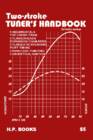
basics. There is a huge interest in vintage snowmobiles and their “simple” two stroke power plants of yesteryear. There is a wealth of knowledge contained in this manual. Let’s journey back to 1973 and read the book that was the two stroke bible of that era. Decades have passed since I hung around with John and Jim. John and I worked for the same corporation and I found a 500 triple Kawasaki for him at a reasonable price. He converted it into a drag bike, modified the engine completely and added mikuni carbs and tuned pipes. John borrowed Jim’s copy of the ‘Two Stoke Tuner’s Handbook” and used it and tips from “Fast by Gast” to create one fast bike. John kept his 500 until he retired and moved to the coast in 2005. The whereabouts of Wild Jim, his 750 Kawasaki drag bike and the only copy of ‘Two Stoke Tuner’s Handbook” that I have ever seen is a complete mystery. I recently acquired a 1980 Polaris TXL and am digging into the inner
Since the invention of the internal combustion engine, automotive engineers, speed junkies and racecar designers have been searching for ways to boost its power. One way to add power is to build a bigger engine. But bigger engines, which weigh more and cost more to build and maintain, are not always better. Another way to add power is to make a normal-sized engine more efficient. You can accomplish this by forcing more air into the combustion chamber. More air means more fuel can be added, and more fuel means a bigger explosion and greater horsepower. A turbo/supercharged engine produces more power overall than the same engine without the charging. Both superchargers and turbochargers do this. The difference between the two devices is their source of energy . TURBOCHARGER
faces the sun. Small tubes run through the box and carry the fluid either water or other fluid, such as an antifreeze solution to be heated. The tubes are attached to an absorber plate, which is painted black to absorb the heat. As heat builds up in the collector, it heats the fluid passing through the tubes. Solar Electricity Using the sun's heat to produce electricity. Many power plants today use fossil fuels as a heat source to boil water. The steam from the boiling water rotates a large turbine, which activates a generator that produces electricity. However, a new generation of power plants, with concentrating solar power systems, uses the sun as a heat source. There are three main types of concentrating solar power systems: parabolic-trough, dish/engine, and power tower. Parabolic-trough systems concentrate the sun's energy through long rectangular, curved (U-shaped) mirrors. The mirrors are tilted toward the
. . . . . . . . . . 0.8 ± 0.25% (cooling fan running) Air filter element type: 1.1 litre and 1.3 litre OHV engines . . . . . . . . . . . . . . . . . . . . . . . . . . . Champion W153 1.1 litre and 1.3 litre HCS engines . . . . . . . . . . . . . . . . . . . . . . . . . . . Champion W225 1.1 litre and 1.3 litre CVH engines . . . . . . . . . . . . . . . . . . . . . . . . . . . Champion W127 1.4 litre CVH engine: Carburettor engines . . . . . . . . . . . . . . . . . . . . . . . . . . . . . . . . . . . . Champion W179 Central Fuel Injection (CFI) engines . . . . . . . . . . . . . . . . . . . . . . . . Champion W201 1.6 litre CVH engine (except XR3 models): Up to 1986 . . . . . . . . . . . . . . . . . . . . . . . . . . . . . . . . . . . . . . . . . . . Champion W169 1986 to October 1988 . . . . . . . . . . . . . . . . . . . . . .
 annaabi.ee











Kõik kommentaarid