Leidsid 33 sarnast õppematerjali, mis on seotud failiga "The mysterious affair at styles". Need materjalid aitavad sul teemat sügavamalt mõista.
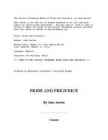
emily, cavendish, hastings, other, there, poirot, mary, could, murder, first, friend, alfred, than, money, control, lawrence, poison, evelyn, fool, village, affair, agatha, hercule, runs, attention, lady, person, even, husband, little, years, wife, place, daughter, took, tete, course, brother, doctor, live, through, verses, ward, convenient, woman, deep....................... 10 11. SOURCES.............................................................. 11 INTRODUCTION The Mysterious Affair at Styles is a detective novel by Agatha Christie. It was written in 1916 and was first published by John Lane in the USA in October 1920 and in the UK by The Bodley Head (John Lane's UK company) on January 21 1921. In her first novel, The Mysterious Affair at Styles(1920), she created the now-famous Belgian detective Hercule Poirot, the most popular sleuth in fiction since Sherlock Holmes. Poirot and Marple have also been portrayed in the many films, radio programmes and stage plays based on her books.It is Christie's first published novel, and introduces Hercule Poirot, Inspector Japp and Lieutenant Hastings (later, Captain) The story is told in first person by Hastings, and features many of the elements that, thanks to Christie, have become icons of the Golden Age of Detective Fiction. It is set in a large, isolated
Taken at the Flood "There is a Tide" redirects here. "There is a Tide" is also the name of a short story by Larry Niven, set in the Known Space universe. Taken at the Flood is a work of detective fiction by British writer Agatha Christie, first published in the US by Dodd, Mead and Company in March 1948 under the title of There is a Tide...[1] and in the UK by the Collins Crime Club in the November of the same year under Christie's original title.[2] The US edition retailed at $2.50[1] and the UK edition at eight shillings and sixpence (8/6).[2] It features her famous Belgian detective, Hercule Poirot, and is set in 1946. 1 Plot summary In a flashback from late Spring to early Spring, Lynn Marchmont, newly demobilised from the Women's Royal Naval Service, finds difficulty settling into the village life of Warmsley Vale
mother's fortune--which he inherited as eldest son--and by the money he received by marrying his own wife. (In general, a man inherited all of his wife's money upon marriage, though the wife usually entered into the marriage with a "settlement," a legal document ensuring that some of her property would revert to her or her children following her husband's death.) In this case, the money that Mr. Henry Dashwood's late first wife brought to the marriage was settled on their son John, and therefore could not be used to help his second wife or his daughters by that second wife. Since Henry's second wife and their three daughters could not inherit any of the money from that first marriage, they are in much greater need of the money from Old Mr. Dashwood's estate. The opening discussion of money and marriage immediately establishes the important role that ordinary economic concerns will play in Austen's novel. Unlike the authors of Gothic and sentimental novels fashionable in
as books the way we understand the word today. Centuries went before paper replaced parchment and papyri. In the 15 th century Johann Gutenberg invented a mechanical process of duplicating texts, which we today call book printing. The first book was printed between 1444 and 1446, so these years can be considered as the beginning years of book printing. His most important preserved printings are the 40 copies of the Bible. By the end of the 15 th century there were about 1000 print-shops in Europe already. The oldest Estonian book dates back to 1535. Libraries form a vital part of education. They make available-through books, films, recordings and other media- knowledge that has been accumulated through the ages. People in all walks of life use libraries to get information for their work. Libraries also play an important role in preserving people's cultural heritage.
The Moving Finger Agatha Christie The Moving Finger Agatha Christie Plot summary: Brother and sister Jerry and Joanna Burton bought a country house in an idyllic English town called Lymstock so that Jerry could recover from injuries received in a wartime plane crash. They had been living in London their whole life and thus were excited but intimidated to go. Lymstock was much like any other English village, no more than 300 people. Those that live there enjoy the peace of rural life and form a union to where it can be difficult for strangers to blend in. Fortunately, it wasn't much of a problem for Jerry and Joanna. They were just getting to know the town's strange members and their characters when an
The woman, without a word of who she was, died and left her new born boy, Oliver, to the drunken nurse that stood by. Chapter2: The State gave Oliver to Mrs. Mann who housed a number of orphaned children. Mrs. Mann took a large portion of the money given to her by the authorities for each child's food so Oliver grew up small and malnourished. On his ninth birthday, the town beadle, Mr. Bumble, came to collect Oliver and take him to the board for an interview. They told him he was to live with other wards of the state to become educated and learn a trade. Oliver did not mind this, but soon after he arrived, the state decided to implement a plan that would save money by feeding the people very little. After a time on this diet, the boys at the table chose Oliver to go ask the head cook for more gruel. Oliver did this, and was taken away. A flyer was then posted that said the state would give five pounds for someone to take young Oliver off their hands.
Because of that he died.( 9 June1870) Oliver Twist (1837-39), Nicholas Nickleby (1838-39), The Old Curiosity Shop and, Barnaby Rudge: A Tale of the Riots of 'Eighty as part of the Master Humphrey's Clock series (1840- 41), A Christmas Carol written in 1843. Hard Times- For These Times. is a novel by Charles Dickens, first published in 1854. The book is a state-of-the-nation novel, which aimed to highlight the social and economic pressures that some people were experiencing. Unlike other such writings at the time, the novel is unusual in that it is not set in London. A Christmas Carol in Prose, Being a Ghost Story of Christmas (commonly known as A Christmas Carol) is a novella by Charles Dickens first published on December 19, 1843 with illustrations by John Leech. The story was an instant success, selling over six thousand copies in one week, and the tale has become one of the most popular and enduring Christmas stories of all time.
Chapter 21 Chapter 42 Chapter 1 It is a truth universally acknowledged, that a single man in possession of a good fortune, must be in want of a wife. However little known the feelings or views of such a man may be on his first entering a neighbourhood, this truth is so well fixed in the minds of the surrounding families, that he is considered the rightful property of some one or other of their daughters. "My dear Mr. Bennet," said his lady to him one day, "have you heard that Netherfield Park is let at last?" Mr. Bennet replied that he had not. "But it is," returned she; "for Mrs. Long has just been here, and she told me all about it." Mr. Bennet made no answer. "Do you not want to know who has taken it?" cried his wife impatiently. "You want to tell me, and I have no objection to hearing it." This was invitation enough. "Why, my dear, you must know, Mrs
Topic Libraries Tallinn English College 8b form 2007 1. Introduction A library is a collection of books. Libraries are maintained by a public body such as an institution or an individual. These collections are used by people who choose not to (or cannot afford) purchase an extensive collection themselves or who need professional assistance with their research. However, with the collection of media other than books, many libraries are now also access points for maps, prints or other documents and artworks such as microfilm, audio tapes, CDs, cassettes and DVDs. So, modern libraries are being redifined as places to get access to information in many formats and from many sources. In addition to providing materials, they also provide the services of specialists who are experts in matters related to finding and organizing information, called librarians. 2. History
· Miss Maria Temple: The kind, superintendent of Lowood School, who treats Jane and Helen (and others) with respect and compassion. She helps clear Jane of Mr. Brocklehurst's false accusation of deceit. · Miss Scatcherd: A sour and vicious teacher at Lowood. · Helen Burns: An fellow-student and best friend of Jane's at Lowood School. She refuses to hate those who abuse her, trusting in God and turning the other cheek. She dies in Jane's arms. · Edward Fairfax Rochester: The master of Thornfield Manor. A Byronic hero, he makes an unfortunate first marriage before he meets Jane. · Bertha Antoinetta Mason: The violently insane first wife of Edward Rochester. · Adèle Varens: A French child to whom Jane is governess at Thornfield. She is Mr Rochester's ward. · Mrs. Alice Fairfax: An elderly widow and housekeeper of Thornfield Manor. She
Konstantin Dmitrievich Levin ("Kostya") arrives in Moscow with the aim of proposing to Dolly's youngest sister Princess Ekaterina Alexandrovna Shcherbatskaya, "Kitty". Levin is a passionate, restless but shy aristocratic landowner who, unlike his Moscow friends, chooses to live in the country on his large estate. He discovers that Kitty is also being pursued by Count Alexei Kirillovich Vronsky, an army officer. At the railway station to meet Anna, Stiva bumps into Vronsky. Vronsky is there to meet his mother. It surmises that Anna and the Countess Vronskaya have travelled together in the same carriage and talked together. As the family members are reunited, and Vronsky sees Anna for the first time, a railway worker accidentally falls in front of a train and is killed. Anna interprets this as an "evil omen." Vronsky is infatuated with Anna. Anna, who is uneasy about leaving her young son, Seryozha, alone for
); world dominion (British empire); Economy: Industrialization; urbanization (people moved to towns no agriculture & food); laissez- faire economy new type, where government has no control over economy; booming economy- needed new markets and endless supply of raw materials; 1845- potato famine in Ireland, 1846- Corn Laws (import of cheap corn to feed hungry people); Social life: religious doubts (Darwin's The Origin of Species 1859)- question raised: is there a God at all?; sexual liberation- changed people thoughts about sex (before men & women had different bedrooms); problems: alcoholism, prostitution, child workforce, primitive technology. · How did the class structure change? Highest class was aristocracy (the Church and the nobility); the middle class/the bourgeoisie (shopkeepers, merchants, lawyers, businessmen etc.) was the biggest class; and the lowest class "the working class" and
Kordamine inglise keele eksamiks A 1.1 Read the text and answer the questions below. Dear Mary-Alice, It's been ages since I last wrote to you, isn't it weird? Yes, so it is, but, I do have a certain reason. Do you remember Sir Thom of the Minquettes'? That fine young man with fascinating blue eyes... Oh, my sweet Mary, you will never guess what happened yesterday! It was about seven o'clock in the evening when Lillian called me out for a walk you know I can't say `no' to my little sis. Anyway we went to the forest near the Swan Lake and, believe it or not, got lost! Awful! I was so scared... We walked and walked, not even knowing the direction we were heading to, until we reached a huge mansion. And the garden around it was so extraordinary... That is something you just must see
Christopher Columbus (1451-1506) was an Italian explorer who sailed across the Atlantic Ocean in 1492, hoping to find a route to India (in order to trade for spices). He made a total of four trips to the Caribbean and South America during the years 1492-1504. He discovered America in 1492. I Indian sun, they pray for fan. J we hate Jews, they are fools. K Bush is okey, because he is not gay. L Americans are large, they eat much. M Mc`Donalds is good, there is a lot of food. N is for Nigga who pulled the trigger. O is for Osama who wears pyjamas. P is for Pamela who likes camera. Puritans The Puritans were a group of people who grew discontent in the Church of England and worked towards religious, moral and societal reforms. The writings and ideas of John Calvin, a leader in the Reformation, gave rise to Protestantism and were pivotal to the Christian revolt
During this period a new class called bourgeoeisie came into being. This is the period when monarchies based on nationality were estabilished. The Renaessance started in Italy In the 14th century. Then it spread all over Europe, reached England in 16th century. The struggle for power culminated in a war called The War of Roses. It was a civil war between two dynasties, families. They had different emblems on one side the Yorks (white rose) other Lancasters (red). They couldn't decide who gets the throne. War ended 1485. A new dynasty came to throne, Tudor, the first king in this dynasty was Henry Vll. When he came to throne a period of stability followed because he built a nation based state. He was good at diplomacy.He could avoid quarrels and wars with neigbouring countries. France, Spain - greatest enemies.So he could save much money and thus laid a good economic basis for his state. Besides that he built a
To her, the ideal marriage is based on rational love, mutual understanding and respect. The Bronte sisters, Ann, Emily and Charlotte, wrote a few decades later. Although often viewed collectively, their literary output differs greatly from each other. Wrote under male pen names – difficult to get published as a woman. At the time they wrote, their works were considered blasphemous (dealt with sexuality and death). Emily Bronte – Wuthering Heights, critics presumed was written by a woman. Not understood by her contemporaries
Ameerika Kirjandus 30.01.13 Naturalism · France, Emile Zola · Put down his theory in 1879: Le Roman Experimental, attempt to explain the development of human society throuch biological laws · Outlook is deterministic, pessimistic, fatalistic (fate or biology) · Man as an animal-clever than other beasts, still explainable within the framework · Man is not a free agent, is govern by something · Unable to determine his own faith · Hereditary · Naturalists tried to apply in fiction the processes of natural sciences · Writers task is to record facts, systems of behaviour, living conditions, never revealing any natural unbiased (completely natural) · Point of view: amoral-outside the category of morality, neither good or bad
Lord Byron 1788 1824 One of the greatest British poets and a leading figure in the romantic movement, he remains widely read and influential His bestknown works are the lengthy narrative poems ,,Don Juan" and ,,Childe Harold's Pilgrimage "and the short lyric "She Walks in Beauty". He travelled to fight the Ottomans in the Greek War of Independence, for which Greeks revere him as a national hero died at 36 years in Greece Lived as a true aristrocrat, had huge debts, numerous love affairs, there were rumors of a scandalous incestuous romance with his halfsister and selfimposed exile It has been speculated that he suffered from bipolar disorder and was bisexual The Byronic hero The Byronic hero is a variant of the Romantic hero as a type of character, named after Lord Byron. Both Byron's life and writings have been considered in different ways to exemplify the type. The Byronic hero first appears in Byron's semi autobiographical epic narrative poem Childe Harold's Pilgrimage
In one of her journeys, she bumped into an attractive man, Stefano. After a nice talk, he asked her to stay at the same hotel and the same room. At the time she agreed, it just began her betrayal and she didn't know how to stop it. Remembering her childhood, she was very frighten about her mom's betrayal and ran away in a long distance from home. And now, she was going home, she was beginning to believe that only her journey home would help her to bring her betrayal to an end...... Betrayal could happen so easily, that's why more and more people have extramarital relations recently. But, it's really hard to find something that good, and really easy to lose it. Just consider pro and con, and then keep what you really love. However, distance makes everything clearer; you can only see the whole when you are far enough. Take Alex for an example, as she had travelled ever further outwards, she found the answer. The Nature of Truth: Annie was a successful author and she met an old friend,
His modest background and upbringing are crucial to his development as a writer. Chekhov always felt that he missed out on childhood. It was a very hard lifeand it may have contributed to his poor health: he succumbed later on to the"family disease", tuberculosis, which led to his early death at the age of 44.His mother was a quiet, gentle soul who was full of stories of her early life. In later years, Chekhov would say that "we inherited our talent from our father,but mother gave us soul". The other great passion of his formative years was nature, the Russiancountryside. As a port, Taganrog was surrounded on all sides by the landscapes of the Steppe and Chekhov's earliest stories reveal how intensely aware he was of his bond with the Don Steppe. Chekhov had always claimed that medicine was his wife and literature his mistress. Chekhov had lived for much of his career as a writer under the shadow of the great literary colossus of the age, Lev Tolstoy.
probably been to add legitimacy to the already-existing trends towards greater psychological introspection and towards more prominent and franker discussions of sexuality. Main characteristic features of Modernism: Characteristics of Modernism Formal characteristics(11) · Open Form · Free verse · Discontinuous narrative · Juxtaposition (kõrvutamine) · Intertextuality · Classical allusions(vihje) · Borrowings from other cultures and languages · Unconventional(ebaharilik) use of metaphor · Metanarrative · Fragmentation · Multiple narrative points of view (parallax) Thematic characteristics(8) · Breakdown of social norms and cultural sureties(veendumus) · Dislocation(nihestus) of meaning and sense from its normal context · Valorization of the despairing individual in the face of an unmanageable future · Disillusionment (silmade avamine, illusioone purustama)
Othello opens in the stately city of Venice, a worldwide hub for trade and commerce. The first characters introduced are Iago, an ensign denied promotion by Othello, and Roderigo, a jealous ex- suitor of Desdemona. The two are in route to describing to Senator Brabantio the elopement of Othello and Desdemona, Brabantio’s daughter. Quickly revealing Iago’s deceitful nature, the matter is breached to Brabantio and soon afterward brought before the Duke of Venice to be discussed. Othello and Desdemona plead their love to the
vivacious woman about whom a future Viceroy of India would say, "Dullness and Mrs. Kipling cannot exist in the same room."[3] Father - John Lockwood Kipling. Lockwood Kipling, a sculptor, an illustrator, museum curator and pottery designer, was the principal and professor of architectural sculpture at the newly- founded Sir Jamsetjee Jeejeebhoy School of Art and Industry in Bombay. Later in life Kipling illustrated many of Rudyard Kipling's books, and other works. Kipling also remained editor of the Journal of Indian Art and Industry, which carried drawing works from the students of the Mayo School. COUPLE named their son after the place they had first met Rudyard Lake. Alice Kipling Fleming - Sister of British author Rudyard Kipling who became a well-known psychic, producing automatic writing under the name "Mrs. Holland." Born June 11, 1868, Alice Kipling was privately educated
The making of a new nation. The Enlightenment in America. The emergence of the notion of the American Dream. The great Enlighteners: Crèvecoeur, Jefferson, Paine, Franklin. The American Enlightenment is the intellectual thriving period in the United States in the midtolate 18th century (17151789), especially as it relates to American Revolution on the one hand and the European Enlightenment on the other. Influenced by the scientific revolution of the 17th century and the humanist period during the Renaissance, the Enlightenment took scientific reasoning and applied it to human nature, society, and religion. American Enlightenment a gradual but powerful awakening that established the ideals of democracy, liberty, and religious tolerance in the people of America.
Elizabeth also has a new position in the school as the new guidance counselor. Inception A maze. A trap. An enigma wrapped inside an enigma. Call Inception what you will, but overall it's a mind blowing cinematic experience. Written and directed by Christopher Nolan, this visually stunning film takes us on a journey through the dream scape. It's difficult to describe. It's a heist movie. It's a love story. It's a psychological thriller like no other before it. Leonardo DiCaprio plays Dom Cobb. Dom is a professional extractor, paid to invade people's subconscious and steal information that lays nuzzled in their psyche. His team consists of the point man Arthur (Joseph Gordon-Levitt), the architect Ariadne (Ellen Page), and the forger Eames (Tom Hardy). They are hired by Mr. Saito (Ken Watanabe) to infiltrate Robert Fischer's (Cillian Murphy) head to peform an inception to create and plant an idea in his mind
Hamlet - The Prince of Denmark, the title character, and the protagonist. About thirty years old at the start of the play, Hamlet is the son of Queen Gertrude and the late King Hamlet, and the nephew of the present king, Claudius. Hamlet is melancholy, bitter, and cynical, full of hatred for his uncle's scheming and disgust for his mother's sexuality. A reflective and thoughtful young man who has studied at the University of Wittenberg, Hamlet is often indecisive and hesitant, but at other times prone to rash and impulsive acts. Hamlet (In-Depth Analysis) Claudius - The King of Denmark, Hamlet's uncle, and the play's antagonist. The villain of the play, Claudius is a calculating, ambitious politician, driven by his sexual appetites and his lust for power, but he occasionally shows signs of guilt and human feeling--his love for Gertrude, for instance, seems sincere. Claudius (In-Depth Analysis) Gertrude - The Queen of Denmark, Hamlet's mother, recently married to Claudius
The room was warm and clean, the curtains drawn, the two table lamps alight - hers and the one by the empty chair opposite. On the sideboard behind her, two tall glasses, soda water, whiskey. Fresh ice cubes in the Thermos bucket. Mary Maloney was waiting for her husband to come him (correction: home) from work. Now and again she would glance up at the clock, but without anxiety, merely to please herself with the thought that each minute gone by made it nearer the time when he would come. There was a slow smiling air about her, and about everything she did. The drop of a head as she bent over her sewing was curiously tranquil. Her skin - for this was her sixth month with child - had acquired a wonderful translucent quality, the mouth was soft, and the eyes, with their new placid look, seemed larger darker than before. When the clock said ten minutes to five, she began to listen, and a few moments later, punctually as always, she heard the tires on the gravel outside, and the car door
DORINE If we must hark to him, and heed his maxims, There's not a thing we do but what's a crime; He censures everything, this zealous carper. MADAME PERNELLE And all he censures is well censured, too. He wants to guide you on the way to heaven; My son should train you all to love him well. DAMIS No, madam, look you, nothing--not my father Nor anything--can make me tolerate him. I should belie my feelings not to say so. His actions rouse my wrath at every turn; And I foresee that there must come of it An open rupture with this sneaking scoundrel. DORINE Besides, 'tis downright scandalous to see This unknown upstart master of the house-- This vagabond, who hadn't, when he came, Shoes to his feet, or clothing worth six farthings, And who so far forgets his place, as now To censure everything, and rule the roost! MADAME PERNELLE Eh! Mercy sakes alive! Things would go better If all were governed by his pious orders. DORINE He passes for a saint in your opinion.
It was believed that a witch often joined a pact with the devil to gain powers to deal with infertility, immense fear for her children's well-being, or revenge against a lover. The long-term result of amalgamation of distinct types of magic-worker into one is the considerable present-day confusion as to what witches actually did, whether they harmed or healed, what role they had in the community, whether they can be identified with the "witches" of other cultures and even whether they existed as anything other than a projection. Present-day beliefs about the witches of history attribute to them elements of the folklore witch, the charmer, the cunning man or wise woman, the diviner and the astrologer. Powers typically attributed to European witches include turning food poisonous or inedible, flying on broomsticks or pitchforks, casting spells, cursing people, making livestock ill and crops fail, and creating fear and local chaos.
continued by someone else than the original author. In general, The audience of the written task can be anyone who is interested in literature, particularly in Katherine Mansfield’s short stories. Word count: 245 Continuing Katherine’s Mansfield’s short story “Mrs. Brill” Her heart started trembling as she thought about the incident in the park. The tears ran from her eyes like a river and the faces of Ann and George kept coming into her head. She walked into the other end of her miniature room, sat down on a blue wooden chair and opened a little box next to the chair. The box was old and was covered with dust, it was clear that it had been untouched for a long time. Inside the box there were photos of a little girl and the little girl’s parents. Miss Brill looked at these photos very carefully for a long time one by one. The last picture that she took in her hands was again a photo of a little girl. The girl was on a grey bed and looked awfully pale
History exam *Stonehenge - is a monument located in England. It is one of the most famous prehistoric sites in the world and is composed of earthworks surrounding a circular setting of large standing stones. The surrounding circular, earth bank and ditch, have been dated to about 3100 BC. Stonehenge was produced by a culture with no written language. Many aspects of Stonehenge remain subject to debate. There is little or no direct evidence for the construction techniques used by the Stonehenge builders. *The Celts in Britain and their legacy The Cets lived in Britain in The Iron Age. They were warring tribes who were battleful amongst themselves as well as inter-tribal war. They were not centrally governed. The Celts brought iron working, iron ploughs and metal swords, horses, wheels and chariots - all these things gave them an instant superiority over the native tribes
Book Report Title ,,Othello" Author William Shakespeare Genre play, tragedy Setting time between 1489 and 1571 Setting place Venice and Cyprus Topics miscommunication, jealousy, revenge, hatred Othello was written in the 17th century and it is based on the Italian short story "Un Capitano Moro" (A Moorish Captain) by Cinthio (Giovanni Battista Giraldi). It was first published in 1565. The main characters of the play are Othello, Desdemona, Cassio and Iago. The play in this book has 91 pages and this book is published in 1996 by Dover Publications. Characters: Major characters: Othello he is the play's protagonist and hero. He has risen to high military prestige in Venice, after defeating the Turks and other enemies in battle. He is well-liked and honored, despite his racial difference. He moves to Cyprus after becoming a general and he
rest of the pack, who welcome her as a friend. She is surprised to find Sue Clearwater and her two children, Seth and Leah, at the bonfire as well, and surmises that they must now also be in on the secret. After a lighthearted meal, Bella realizes it's getting late and she needs to go home, but Jacob quickly lets her know the night is for more than fun. The elders then tell the stories of the pack's origins and legends that have been passed down for generations. While Emily takes notes, Billy tells the story of how the Quileutes came to be werewolves. They were originally spirit warriors, able to leave their bodies to defend their tribe, but when the last great chief, Taha Aki, merged his spirit with that of a wolf after Utlapa, a traitorous warrior, stole his body, the werewolves were created. They discovered that as long as a warrior chose to continue changing into his wolf form he would not age.
 annaabi.ee