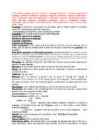
The Day After Tomorrow The Day After Tomorrow is a disaster film dealing with global warming starring with Dennis Quaid in the role of government climatologist Jack Hall, Jake Gyllenhaal in the role of Jack's son, Ian Holm in the role of Jack's colleague and Sela Ward in the role of Sam's best friend . Film is directed by Roland Emmerich who has also directed the film Independence Day. This film talks about global catastrophe, where second ice age is coming with a huge storm before it. A climatologist Jack Hall's researches show that his fears are coming true. He must go to the White House to warn everybody, but in addition he must reach to New York to save his son who is draped in a library by storm. On the plus side the movie is visually stunning. Special effects are great and there is plenty of action to keep you in front of the screen. On the other hand some people may not like how far all this climate changing has taken and f...
ACTIVE TENSES Active form You use an active verb when you want to say that the subject of a sentence does something. · [Thing doing action] + [verb] + · +[thing receiving action] · Examples The professor (subject doing action) teaches (verb) · the students (object receiving action). · Mary (subject doing action) · washes (verb) · the dishes ( object receiving action). The tenses of the verb 1.Present (olevik) 2.Past (minevik) 3.Future (tulevik) 4.Future in the past (kaudne tulevik) Iga aeg võib esineda neljas eri rühmas 1.IndefiniteTenses (üldajad) 2.Continious Tenses (kestvad ajad) 3.Perfect Tenses (perfekti ajad) 4.Perfect Continious Tenses (perfekti kestvad ajad) Indefinite Tenses (üldajad) used to describe actions but do not state whether the action is completed or on- going märgivad tegevuse sooritamise fakti Peter visits us every day. Peter visited ...
Say + no personal object. He said he was very hungry. Say + to + personal object. He said to us he was very hungry. Tell + personal object. He told us he was very hungry. Sa · Hello y · Good morning/afternoon · Something/nothing · So · A prayer · A few words · No more · For certain/sure Tel · The truth l · A lie, story, secret, joke · The time · The difference · One from another · Somebody one's name · Somebody the way · Somebody so · Someone's · fortune as · a question k · a favour · the price · after somebody · the time · around · something/somebo dy Direct speech Reported speech Present simple Past simple My flight leaves He said his flight left at 3 3 o'clock. o'clock. Present Past Continuous con...
We can report people's words by using direct speech or direct speech reported speech. speech `I'm tired!', Helen said. Helen said (that) she was tired. The main verb of the sentence is usually past ( Tom said that... / I told her that...) and the rest of the sentence is usually past too. Sequence of tenses if the verb in the main sentence is in the past tense the other verbs are usually in one of the past tense too. Present Simple Past Simple I'm a teacher. He said (that) he was a teacher Present Progressive Past Progressive I'm having lunch with my He said (that) he was having parents. lunch with his parents. Past Simple Past Perfect He said (that) he had bought a I bought a new car. new car. Future Simple ...
Once upon a time there was a boy named Sebastian. He had a gorgeous mother, who was very kind and helpful, her name was Cassy. One late night an old woman came to their door. She was sick and dieing and she said: ''I know you are helpful. So I ask you, could you go Far Far Away and bring me green flowers? These flowers could help me to heal.'' Cassy agreed and said: ''I pack my suitcase tomorrow morning.'' Then she went to Sebastian and told him: ''I'm going to leave tomorrow morning and will be back after a week.'' Sebastian was in the bed and very sleepy, he couldn't understand and he thought this was just a dream, but in the morning he understood this was real. Cassy was already half way to Far Far Away when she reached ocean. At the beach she saw red bubbles shaped as big basketballs. Crossing beach made her journey much harder. Finally she reached Far Far Away. It was really snowy there. Despite the snow there were green flowers ev...
Soome keel Tervehtimiset Greetings Anteeksi, mutta minä en puhu suomea. I am sorry, but I do not speak Finnish. Puhutteko Te englantia? Do you speak English? Anteeksi, kuinka? Excuse me? Anteeksi, en kuullut. I beg your pardon. Voisitteko toistaa? Could you repeat? Anteeksi, mutta minä en ymmärrä. I am sorry, but I do not understand? Anteeksi, mutta minä en tiedä. Sorry, I don't know. Anteeksi, että olen myöhässä. Excuse my being late. Ei se mitään. No problem. Voisitteko Te auttaa minua? Could you help me? Hetkinen, olkaa hyvä. Just a moment, please. Minä olen täällä ensimmäistä kertaa. This is the first time that I am here. Ihanko totta? Really? Ymmärrä...
FUTURE FORMS FUTURE SIMPLE WILL + OLEVIK Kasutan, kui.. · Ennustus tulevikust, põhineb arvamusel, tundel, uskumusel. Sõnad: think, believe, expect, be sure, be afraid, probably, certainly, perhaps Nt: I think Debbie will become a great artist some day. She is afraid her son will fail his exams. · On-the-spot otsus (rääkimise ajal tehtud otsus) Nt: I will buy the blue jacket, not the yellow one. · Lubadused, hoiatused, ähvardused, palve, lootused, pakkumised Nt: I will never speak to you again! Will you give me a hand with the washing-up? · Tegevused/sündmused, mis KINDLASTI toimuvad tulevikus, me ei saa neid kontrollida Nt: Valentine's Day will fall on a Saturday this year. BE GOING TO Kasutan, kui... · plaanid tulevikuks Nt: I am going to travel around the world one day. · otsused, mis on juba LÄHITULEVIKUKS tehtud ...
present simple past simple will would I'm a teacher. He said he was a teacher I'll come and see you He said he would come and see present continuous past continuous. soon. me soon. I'm having lunch with my He said he was having parents. lunch with his parents. can could present perfect simple past perfect simple I can swim under water He said he could swim under I've been to France three He said he had been to for two minutes. water for two minutes. times. France three times. present perfect past perfect continuous continuous ...
PRESENT SIMPLE [s] lihtolevik · kestvad tegevused. Tom works in the market. · rutiinid. He works every day. · loodusseadused. The sun sets in the west. · ajatabelid ja programmid. The buss leaves at 7 am. · (spordi) kommentaarid. Ben passes ball to Tom. väljendid, mida kasutatakse: usually, often, always, every day/week etc, in the morning/afternoon/evening, at night/the weekend, on Friday etc. He works He don't work Does he work PRESENT CONTINUOUS [ is + ing] kestev olevik · tegevused, mis praegu leiavad aset. Karl is doing his homework at the moment. · plaanitud tegevus lähitulevikus. I am going to school tomorrow. · kui midagi toimub/muutub praegu. The number of burglaries is increasing. · alati sama korduv tegevus. You are always eating, when i wake up. väljendid, mida kasutatakse: now, at the moment, at present, these days, nowdays, still, today, tonight etc. He is working He isn't ...
FUTURE FORMS Future Simple (will +I) a) in predictions about the future usually with the verbs think, believe, expect, etc., the expressions be sure be afraid, etc., and the adverbs probably perhaps, certainly, etc I'm afraid we won't be on time for the meeting. b) for on-the-spot decisions. c) for promises (usually with the verbs promise, swear, guarantee, etc.), threats, warnings, requests, hopes (usually with the verb hope) and offers. d) for actions/events/situations which will definitely happen in the future and which we cannot control. The temperature will reach 40°C tomorrow. Be going to a) for plans, intentions or ambitions we have for the future. ...
Tense Form Use Hints Example + I pv ((e)+s) Present Simple 1. daily routines, habits or repeated actions Every hour/day/week etc , I always play football in -? do/does not+I pv 2. permanent states usually, always, in the the evenings morning/evening/night, at night Present Am/is/are+Iing 1. actions happening now, at the moment of speaking Now, at the moment, these I am writing a lettesat Continuous 2.actions happening around th...
Affirmative tense Use Signal Words /Negative/Question · always · action in the present taking place Simple Present A: He speaks. · every ... once, never or several times N: He does not speak. tegevus, mis toimub ühe korra, mitte · never Lihtolevik Q: Does he speak? · normally kunagi või mitu korda · ...
Future Forms Future Forms · 1) Future Simple will work · 2) Be going to am/is/are going to work · 3) Present Continuous am/is/are working · 4) Present Simple start(s) Future Forms · 5) Future Continuous will be working · 6) Future Perfect will have worked · 7) Future Perfect Continuous will have been working Future Simple · We do our morning exercises and think, "I think we will have a nice day " · Prediction (ennustused kõhutunde põhjal) · verbs think, believe, guess, expect, hope etc · expressions be sure, be afraid etc · adverbs probably, perhaps, certainly Future Simple · You see your little brother carrying a very heavy suitcase and you think, "I will help him carry the suitcase." · on-the-spot decision (hetkeotsused) Future Simple "Will you help me if I forget my moves?" "Don't worry! I will ta...
FUTURE SIMPLE BE GOING TO Will + infinitive (will go) Am/is/are going to + infinitive (is going to rain) 1.A decision at the moment of 1.Future plans made before the speaking: moment of speaking: A: 'I'm cold'. A: 'We've run out of milk.' B: 'I'll close the window'. B: 'I know, I'm going to buy some.' 2.Prediction based on opinion: 2.Prediction based on present I think the Conservatives will win the evidence: next election. Look at those boys playing football! 3.A future fact: They're going to break the window. He will be ten next year. 4.Promises / requests / refusal / willingness: I'll help you with your homework. Will you give me a hand? 5.In the same way as the future...
tense Affirmative/Negative/Question Use Signal Words always, every ..., action in the present Simple Present A: He speaks. never, normally, N: He does not speak. taking place once, never or often, seldom, Q: Does he speak? several times sometimes, usually if sentences type I facts (If I talk, ...) ...
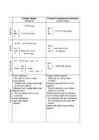
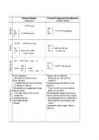
PRESENT PRESENT PRESENT PAST SIMPLE PAST PAST PERFECT FUTURE SIMPLE CONTINUOUS PERFECT CONTINUOUS SIMPLE 1.korduv tegevus , 1.praegusel 1.tegevus mis 1.tegevus mis toimus 1.tegevus mis 1.tegevus mis 1.tegevuste kohta rutiin hetkel toimuvad algas minevikus mingil ajahetkel toimus kindlal leidis aset enne mis toimuvad 2.loodusseadused, tegevused aga kestab minevikus või ajal ja me ei räägi teist tegevust või tulevikus tavaliselt üldine tõde 2.ajutiselt toimuv praeguse hetkeni teadaoleval ajahetkel selle alguse ega mingil teatud kasutatakse koos ...
Extended Rules for Using Commas Comma Use 1. Use commas to separate independent clauses when they are joined by any of these seven coordinating conjunctions: and, but, for, or, nor, so, yet. The game was over, but the crowd refused to leave. The student explained her question, yet the instructor still didn't seem to understand. Yesterday was her brother's birthday, so she took him out to dinner. 2. Use commas after introductory a) clauses, b) phrases, or c) words that come before the main clause. a. Common starter words for introductory clauses that should be followed by a comma include after, although, as, because, if, since, when, while. While I was eating, the cat scratched at the door. Because her alarm clock was broken, she was late for class. If you are ill, you ought to see a doctor. When the snow stops falling, we'll shovel the driveway. However, don't put a comma after the main clause when a dependent (subordinate) claus...
ESSAY "The soul should always stand ajar, ready to welcome the ecstatic experience." -- Emily Dickinson I have chosen this quotation because I think it is more than true. I think that you should always give a chance to every offer you have given. At least you should make a try for it. We have given only one life to live, we should not waste it. First of all, I think that everything happens for a certain reason. And every bad thing that will come to your life will come also because of something. For instance you have done something bad and then it would be like some kind of punishment and also a good lesson. It will show you that what goes around, comes around. It is karma and I believe in karma. As mentioned earlier, you should always be opened for new experiences and opportunities. That is so because they are meant to be come for a better life. But everything begin...
Konspekt 1.Kui me teame tulevikust, me tavaliselt kasutame oleviku. Me kasutame lihtoleviku selle jaoks mis on planeeritud või korraldatud. ● I have concert next week. ● The bus arrives at 7.30 in the morning. ● I have test tomorrow. ● We’ll have party next friday. Me saame kasutada kestva oleviku plaanide või korralduste jaoks. ● I’m playing basketball today. ● They are coming to see us tomorrow. ● I’am celebrating my birthday next week. 2.Me kasutame will et rääkida tulevikust. Kui me teeme ennustusi. ● It will be hard day tomorrow. ● I think my brother will buy me a car. ● I’m sure my ex will be jealous about my new girlfriend. Mõeldes want to(olla) või be willing to (olla valmis ehk abivalmis) ● I hope you will help me at my project. ● Marika says he will help me Teha Offers(pakkumisi) ja promises(lubadusi). ● We’ll talk abou...
Inglise keele kontrolltöö 7. klassile Õpik: I love English 4 Kokkuvõte aasta jooksul õpitust. Koostaja: Gea Gutmann Viljandi Maagümnaasium Juhendaja: Toomas Rähn Final Test Form 7 Name................. 1. Use the right tense. (15 p) 1) Look! She....................................(carry) a heavy bag. 2) Mrs. Brown...................................(play) the piano at the concert next week. 3) Mary is a good girl. My mother............................(meet) her every day since she and her father moved here. 4) Yesterday at two o`clock Tom ..............................(sing) and his sister ........................... (draw) a pictuture in the living room. 5) The wind ........................(be) very strong some days ago. 6) Where are the children? They .........................................
Reported speech is often also called indirect speech. When we use reported speech, we are usually talking about the past (because obviously the person who spoke originally spoke in the past). The verbs therefore usually have to be in the past too. For example: "I'm going to the cinema". He said he was going to the cinema. Basic tense chart The tenses generally move backwards in this way (the tense on the left changes to the tense on the right): present simple past simple I'm a teacher. He said he was a teacher past continuous. present continuous He said he was having lunch with his I'm having lunch with my parents. parents. p...
Kordamine inglise keele eksamiks II 1.1 Fill in the missing prepositions where necessary. 1) Mary sat ..... the window and read ..... interesting book. 2) Su was cooking ..... the garden. 3) Alice went ..... see Mr Thompson. 4) While waiting ..... the hospital, one nurse offered us ..... coffee. 5) Keith smiled ..... his idea it was total nonsense. 6) She looked ..... Charlie searching ..... something more than nothingness that echoed ..... his dark eyes. 7) It was too dark we could see nothing as we crossed .... field. 8) A kitten was playing ..... the tree. 9) She was knitting ..... total silence. 10) She jumped ..... the wooden table and walked slowly ..... the room. 11) After he had bent and taken a glance of the darkness, Tom whispered ..... Mark that no one was there; the thieves had escaped. 12) Sheila stood still as the wind was blowing ..... her silky hair in a pleasant way. ...
THE TENSES AJAVORMID JA NENDE KASUTAMINE AJAVORMI NIMETUS MOODUSTAMINE KASUTAMINE; SAGEDAMINI ESINEVAD AJAMÄÄRUSED THE PRESENT SIMPLE I pv. (+ s); do/does + I pv. Tegevus toimub korduvalt, on harjumuspärane. püsiv olukord, ajagraafikutega seotud tulevik Lihtolevik live, goes every day, usually, often, sometimes, always THE PAST SIMPLE II pv.; did + I pv. Tegevus toimub minevikus. Lihtminevik lived, went yesterday, last week two years ago, in 1998 THE FUTURE SIMPLE be going to/ will + I pv. Tegevus toimub tulevikus. Lihttulevik will go/ won´t tomorrow, next week, soon, later, in 2012 TH...
Present Simple (lihtolevik) Abitegusõnu do, does kasutatakse ainult + 1.põhivorm + (e)s he, she, it eitavates ja küsilausetes. - do (does) + not + 1.põhivorm ? do (does) + 1.põhivorm Väljendab: Korduvat tegevust, püsivat olukorda, sõiduplaanide jms. Seotud tulevikku Spikkrisõnad: always, sometimes, seldom, often, usually, once a week, twice a day, every day, on Mondays Present Continuous (kestev olevik) Be(am, is, are), kasutatakse jaatavates, + be (am, is, are) + 1.põhivorm ing eitavates ja küsilausetes. - be (am, is, are) + not+ 1.põhivorm -ing ? be (am, is, are) + 1.põhivorm ing Väljendab: Praegu toimuvat tegevust, praeguse momendi vältel toimuvat tegevust, ettekavatsetud tegevus tulevikus Spikkrisõnad: now, at the moment, at 6'clock, today Present perfect (täisminevik...
Test 14 1 Translate. 1 arstiabi puudumine lack of medical care 2 haiguste käes kannatama suffer from illnesses 3 saksa päritolu of german descent 4 Ameerikat avastama discover America 5 ametlik keel official language 6 orjusele lõppu tegema put an end to slavery 7 oma traditsioone ja kultuuri säilitama keep your traditions and culture 8 immigrantide arv the number of immigrants 2 Complete the sentences with the names of countries, nationalities, and languages. 1 The capital of Norway is Oslo. 2 Kevin lives in Chicago. He is American. 3 Michail comes from Moscow. He speaks Russian. 4 What nationality are you? I´m Estonian. 5 The descendants of the Africans brought to America are called settlers. 6 Uwe´s grandparents live in Germany. They speak German. 7 Michael comes from Australia. He speaks Australian English. 8 Eve lives in Ireland. She speaks English and Irish. 3 Write the sente...
Lying is a natural and inevitable part of any good relationship Most relationship experts note honesty as number one requirement to have a happy and successful relationship. Somehow many people seem to disagree. After all, if it was all that simple, why would anyone lie? Don't they want to be happy? Perhaps reality is not that straightforward. Sometimes telling the truth, the whole truth and nothing but the truth is the worst thing to be done. From time to time truth can be hurtful. Noone wants to hear that they look exceptionally bad today, especially when they really do. A little fiction can save the day for everyone. Furthermore truth can be so complicated that noone really knows , what is real and what is not. Particularly when it concernes human emotions. There is no certainity, everything changes in time, and what is said genuinely today may become a lie tomorrow. People can be upset, sad or angry and say somethi...
TENSES. ACTIVE VOICE. 1. Present Simple (üldolevik) I (he, she, it s) he works Eitav,küsiv do (I, you, we, they) he does not work does (he, she, it) does he work? Verbidele, mis lõpevad infinitiivis ss, -sh, -ch, -x või o, lisatakse ainsuse 3. pöördes es he touches, she goes Verbidel, mis lõpevad y-ga, mille ees on konsonant, muutub y->ies carry - he carries Vrdl: play he plays 1. Harjumuspärane, korduv tegevus või seisund olevikus. Tom drinks tea every day. He lives in Brussels. 2. Üldtuntud tõed, loodusseadused The earth goes round the sun. 3. Tulevikus toimuv tegevus a) Sõiduplaanid, planeeritud programmid. The train for Tallinn leaves at 10. The course begins on Monday. ...
Report To:headmaster From:Liis Subject: Suggested improvements Date:2nd May 2011 The purpose of this report is to comment on conditions in the college and to make recommendations for possible improvements. Although conditions are generally good, there are one or two problems. Firstly, in large classes, there is not much desk space. Secondly, the classrooms tend to be darl, especially in the winter months. Finally, during video lessons, some of us find it difficult to see screen properly. There are number of changes that could be made in order to improve the situation. To begin with, I would strongly suggest that the number of students per class kept to below ten. In this way... To sump up, while most of us are satisfied with the conditions, I feel that above improvements would make things even better. If these suggestions were carried out... Complaint Dear Sir I am writing to complain about the holiday apartment I rented from you on 15...
Inglise keeles Eesti keeles + -/? Usage Näited 1. Present Simple Lihtolevik I ajavorm Do, don't, does, doesn't A permanent state, a generally Every day, always, often, (He, she, it + -s) known fact, usual or repeated usually, sometimes, rarely, actions, timetables, sport never, on Monday, in the commentaries, other events morning. Facts. ...
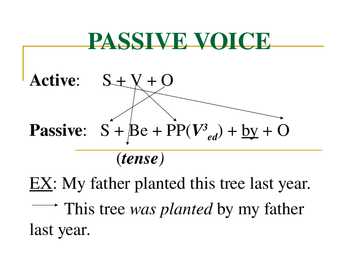
PASSIVE VOICE Active: S + V + O Passive: S + Be + PP(V3ed) + by + O (tense) EX: My father planted this tree last year. This tree was planted by my father last year. TABLE OF ENGLISH TENSES IN PASSIVE VOICE The Simple Present Tense Active: S + V(s/es) + O Passive: S + am/is/are + PP + by + O EX: He reads books every day. Books are read (by him) every day. TABLE OF ENGLISH TENSES IN PASSIVE VOICE The Present Continuous Tense Active: S + am/is/are + Ving + O Passive: S + am/is/are + being +PP + by + O EX: He is writing a novel at the moment. A novel is being written (by him) at the moment. TABLE OF ENGLISH TENSES IN PASSIVE VOICE The Present Perfect Tense Active: S + Has/Have + V3ed + O Passive: S + has/have + been +PP + by + O EX: He has just finished a novel. A novel has just been finished (by him). TABLE OF ENGLISH TENSES ...
Sleep Oxforddictionaries.com definition of sleep: A condition of body and mind which typically recurs for several hours every night, in which the nervous system is inactive, the eyes closed, the postural muscles relaxed, and consciousness practically suspended. We all sleep. But do we really know how important it is? You are going to watch a two-hour interview with Dr Walker, who has researched sleep for decades. He calls himself Sleep Diplomat – he is convinced that seep is the foundation of good health and productive life. 1. What words associate with sleep in context of beauty? Complete the mind map. You are allowed to draw as many arrows as you need. Sleep Beauty 2. Before watching the video, analyse your sleeping pattern a bit. How important is a good night sleep to you? When do you go to sleep? Do you have any difficulties in falling in sleep? How do you achieve it? OR Why ...
INGLISE KEELE KORDAMINE TIME CLAUSES Present Simple · Permanent states, facts (Tom works..) · Repeated and habitual actions, routines (She usually goes..) · Laws of nature and general truths (The sun sets in the west) · Timetables and programmes · Sporting commentaries, rewiews (Beckham wins the ball, crosses and Owen scores) · Feelings and emotions (I love Tallinn..) TIME EXPRESSIONS USED WITH PRESENT SIMPLE: usually, often, always, every day/week etc, in the morning/evening etc, at night/the weekend, on Fridays etc. Present Continuous · Actions taking place at or arount the moment of speaking (The kids are watching TV..) · Fixed arrangements in the near future (I'm going to the dentist tomorrow) · Currently changing ang developing situations (The number of burgularies is increasing) · Wi...
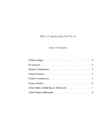
INGLISE KEEL Sisukord Sisukord.................................................................................................................................. 2 Ajavormid Tense vorms.......................................................................................................3 Lihtolevik The present simple..................................................................................... 3 Lihtminevik The past simple....................................................................................... 3 Lihttulevik The future simple...................................................................................... 3 Kestev olevik The present continuous......................................................................... 3 Kestev minevik The past continuous...................................................................
INGLISE KEEL Sisukord Sisukord 2 Ajavormid Tense vorms 3 Lihtolevik The present simple 3 Lihtminevik The past simple 3 Lihttulevik The future simple 3 Kestev olevik The present continuous 3 Kestev minevik The past continuous 4 Kestev tulevik The future conrinuous 4 Täisminevik The present perfect 4 Enneminevik The past perfect 4 Ennetulevik Future perfect 5 Üldminevik Past tense 5 Üldtulevik Future indefinite 5 Artiklid ja eessõnad 7 Eessõnad 7 Kesksõnad 8 Prefiksid ehk eesliited ...
Verbs of motion Verbs of motion ACTUAL HABITUAL MEANING To walk To ride To fly To carry, bring To lead To drive To swim, sail To run Unprefixed Verbs of M otion , , , , , , , , , , , , , , , , , , , , , , , , , , , , , , , , , , , , , , , , TO GO PAST PRESENT FUTURE PAST PRESENT FUTURE , as in the model. Use adverbs of time. Model: . . . 1. . 2. . 3. . 4. ? 5. ? 6. . The Past Tense of the Verb The verb in the past tense (, , , ) denotes movement in one direction. : , . . . . . Use the verbs , , , , , in the required form. 1. _______ . . ________ 2. . ...
English Grammar - The most common tenses in English Tense Signal words Use Estonian Form Examples · something happens repeatedly *korduv tegevus every day · how often something happens *püsiv olukord sometimes, *tulevikus · one action follows another I work Present twice a week toimuv, seotud · things in general infinitive he works Simple always, often sõiduplaanidega · after the following verbs (to love, ...
Book 1 BASIC ENGLISH BASIC ENGLISH GRAMMAR GRAMMAR BASIC ENGLISH GRAMMAR Book 1 Book 1 Younger students at beginning to intermediate levels will greatly benefit from this step-by-step approach to English grammar basics. This is the ideal supplement to your language arts program whether your students are native English speakers or beginning English language learners. Skill-specific lessons make it easy to locate and prescribe instant reinforc...
koolinimi Report Legends of Tallinn Student: nimi Supervisor: nimi Tallinn 2010 Table Of Contents Table of Contents..................................................................................................................................2 Introduction......................................................................................................................................3 Legend of St. Olav's Church.......................................................................................................4 True story of St. Olav's Church..............................................................................................5 Legend of Old Thomas.....................................................................................................6 True story of Old Thomas.....................................
Book Report on "Ender's Game" By Taavo Allik March 23, 2009 Book Report on "Ender's Game".................................................................................................. Orson Scott Card....................................................................................................................... The Setting................................................................................................................................ Main Characters........................................................................................................................ Ender..................................................................................................................................... Valentine............................................................................................................................... Peter...........................
INGLISE KEELE PÕHITÕED C.K 2017 A – AN – SOME Singular: a or an Use some for things you can't count ◦ *a banana *a car *a monkey *a football ◦ *some milk *some water *some coffee ◦ *an egg*an accident *an umbrella *an *some sugar eagle ◦ *some tea *some juice*some money *some butter Plural: some Exercises: 1. http://www.english-4u.de/a_an_some_ex1.htm ◦ *some bananas *some cats *some monkeys *some 2. http://www.english-4u.de/a_an_some_ex3.htm balls ◦ *some eggs*some oranges *some umbrellas *some 3. http://www.english-4u.de/a_an_some_ex6.htm eagles We us the ...
Meelis Kiisk Kirjand 25. veebruar 2009 Tänapäeva maailma hirmud Maailmas toimuvad protsessid, mis toovad lähemale loodusressursside lõppemist. Inimene kasutab maavarasid tohutu kiirusega, mis tuleb soovist kiiresti rikastuda, ega mõelda tagajärgedele. Just inimtegevus on planeedil Maa looduse ökosüsteemi tasakaalust välja viinud, mis paneb ka looduse paratamatult enese vastu tööle ja süvendab probleemi. Samas ei hävita inimene vaid loodust, kuid ka enda liigikaaslasi. Inimesed teavad, et nende tegevuse tagajärjel tekivad mitmesugused gaasid, mistõttu tekivad meie planeedi atmosfääri ümbritsevasse osoonikihti augud ja tekkival soojusel pole võimalik...
I'd like to present the main issues of our planet and today i'll name 5 of them. These are air pollution, water pollution, endangered animals, deforestation and rubbish. Air pollution Firstly, lets talk about air pollution, which endangeres our life in cities and also the forests near by. Cars and factories blow poisoned gas in the air and it mixes with the oxygen, so the air that we breathe, becomes dangerous to our health. The ozone layer around the Earth, there is a special type of oxygen called ,,ozone". Ozone is important because it stops ultraviolett radiation from the sun. Many aerosol sprays and factories destroy ozone and they have made a very big hole in the ozone layer. This means that too much ultraviolet radiation now enters the Earth. This is very dangerous because it can cause cancer. Poisonous chemicals ...
Põhikooli inglise keele eksam 2010 LUGEMINE Task 1 (5 points) Read the notices below and tick ( )the correct answer A, B , C , or D. An example (0) has been done for you. 0. Hotel. Free parking at rear. A You can park next to the hotel. B You can park in front of the hotel. C You can park under the hotel. D Y ou can park behind the hotel. 1. A You can buy a Niagara Falls Coffee mug if you have this voucher. B Many souvenirs are 20% cheaper with this voucher. C All souvenirs are 20% cheaper with this voucher. D You will get a coffee mug 20% cheaper with this voucher. 2. Summer Clearance today! Up to 30 % off many items. A After the sale many items will cost 30% less. B All items are 30% cheaper today. C All items will be 30% cheaper this summer. D Some items are 30% cheaper today. 3. This film is unsuitable for children under 16. A You cannot watch films until you are 16. B T...
Tests Superstar 1 Luke Prodromou Test 1 Name____________________ Class_______ Use your English 1 Complete these sentences using the correct form (present simple or present continuous) of the verb in brackets. _ 1 She is in a band and she _________________________________ (record) a CD at the moment. _ 2 She is an actress and often _________________________________ (appear) on television. _ 3 At the moment she _________________________________ (have) a rest because she is tired. _ 4 Mike is a doctor and he _________________________________ (live) in Manchester. _ 5 I _________________________________ (start) work at 8.30 every morning. _ 6 He is a good cook but she _________________________________ (prefer) to eat out. _ 7 English tests _________________________________ (get) more and more interesting. _ 8 They _________________________________ (have) a party becau...
Ing Present Simple Present Progressive/Continuous (lihtolevik) (kestev olevik) I vorm (play) am JAATAV he is I vorm+ing (playing) she I vorm+s (plays) are it do not I vorm (don't play) am EITAV he is not I vorm+ing she does not I vorm are (not playing) it (doesn't play) Do I vorm (Do ... play ... ?) KÜSILAUSE ...
Ing Present Simple Present Progressive/Continuous (lihtolevik) (kestev olevik) I vorm (play) am JAATAV he is I vorm+ing (playing) she I vorm+s (plays) are it do not I vorm (don't play) am EITAV he is not I vorm+ing she does not I vorm are (not playing) it (doesn't play) Do I vorm (Do ... play ... ?) KÜSILAUSE ...
Ing Present Simple Present Progressive/Continuous (lihtolevik) (kestev olevik) I vorm (play) am JAATAV he is I vorm+ing (playing) she I vorm+s (plays) are it do not I vorm (don't play) am EITAV he is not I vorm+ing she does not I vorm are (not playing) it (doesn't play) Do I vorm (Do ... play ... ?) KÜSILAUSE ...
Ways of expressing the Future Table of Contents Future Simple ...................................................................... 2 Be going to ........................................................................... 3 Present Continuous .............................................................. 3 Present Simple ..................................................................... 4 Future Continuous ............................................................... 4 Future Perfect....................................................................... 6 Other ways of referring to the future ..................................... 7 Other future references......................................................... 8 Future Simple In Future Simple we use the modal verb will + the verb. It is the same in all persons. I will work I’ll work ...
1. Be ready to explain the terms (lecture 1): language, linguistics, synchronic approach to language, diachronic approach to language, linguistic competence, linguistic performance, what is grammar?, prescriptive grammar vs. descriptive grammar; phonology, phonetics, phone, allophone, phoneme; morphology, morphemes (types of morphemes), morphs, allomorphs, types of affixes, derivational affixes, inflectional affixes; open vs closed class words; syntax. Language: a systematic, conventional use of sounds, signs or written symbols in a human society for communication and self-expression. - human language at all levels is rule- or principle-governed. Linguistics: the scientific study of human natural language Synchronic approach to language: Diachronic approach to language: Linguistic competence: Linguistic performance: What is grammar?: "The sounds and sound patterns, the basic units of meaning, such as words, and the rules to combine them...
http://www.abiks.pri.ee FREE TIME 1. Is music popular in your family? What music do you like? 2. What musical instruments have you got in your home? 3. Can you play any musical instruments? 4. Do you sing? 5. Have you sung at a song festival? 6. Has your school got a choir? 7. When do you last go to a concert? What concert was it? 8. Have you ever been to an openair concert? What was it like? 9. Do you sing at family parties? Where else Estonians like to sing? 10. Have you got a collection of cassettes, CD´s or LP´s at home? 11. Have you watched a ballet on TV? 12. Which do you prefer ballet, drama or musical? 13. How often do you go to the theatre? 14. Do you prefer going to the theatre or watching TV? Why? 15. Do you prefer buying a cheap ticket and getting a seat at the back or spending more money and sitting in the...
 annaabi.ee