Leidsid 33 sarnast õppematerjali, mis on seotud failiga "Teaching the Vocabulary of the Text". Need materjalid aitavad sul teemat sügavamalt mõista.
words, vocabulary, teach, meaning, based, cranmer, once, done, reason, learnt, find, them, able, taken, journal, letter, among, reasons, context, understood, easier, individual, scale, building, terms, therefore, another, important, possible, exploit, lexis, means, active, passive, understanding, sufficient, teachers, sure, taught, target, case, bestI think that teachers should be creative to blend so-called digital learning/teaching with old-fashioned learning/teaching. · Sir Ken Robinson: Do schools kill creativity? Sir Ken Robinson claims in the clip that " creativity in education is as important as literacy, we should treat it with the same status." I totally agree with all what he said. We have very strict education systems that don't allow a room for mistakes and they categorize people based on their achievements in exams. There is nothing like potentials, creativeness, possibilities or even 2nd chances. Families put high expectations on academic achievements and they always compare their kids with other's kids. A minority in each community will be really dedicated to help their kids explore their horizons. It is true that we should re-think the fundamental principles in which we educate our children
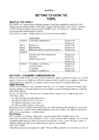
Part C Minitalks and Extended Conversations 15 questions Section 2 Structure and Written Expression 40 questions Structure 25 minutes Written Expression 15 questions 25 questions Section 3 Vocabulary and Reading 60 questions Comprehension 45 minutes Vocabulary 30 questions Reading Comprehension 30 questions SECTION 1: LISTENING COMPREHENSION This section of the TOEFL test your ability to understand spoken American English. You will hear taped conversations to which you will make responses
1. STYLE The term "style" is polysemantic (has many meanings): a Latin word "stilus" originally meant a writing instrument used by ancient people. Already in classical Latin the meaning was extended to denote the manner of expressing one's ideas in written or oral form. Jonathan Swift defined style as "proper words in proper places". In present day English the word "style" is used in about a dozen of principle meanings: 1. the characteristic manner in which a writer expresses his/her ideas (e.g. style of Byron) 2. the manner of expressing ideas, characteristic of a literary movement or period 3. the use of language typical of a literary genre (e.g. the style of a comedy, drama, novel). 4. the selective use of language that depends on spheres / areas of human activity (e.g
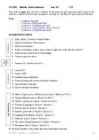
5. Expressiveness on the level of word-building 6. Phonetic expressive means Study independen tly 7. Phonetic SD ("Rhythm And Style") 8. Lexical SD* 9. Syntactic SD* Use lecture notes 10. Graphical means and devices 11. Common literary and common colloquial vocabulary 12. Special literary vocabulary 13. Special colloquial vocabulary 14. Metre in English poetry. Modifications of metre ("Rhythm and Text") 15. Typically English stanzas ("Rhythm and Text") 16. Rhythm in poetry and in prose ("Rhythm and Text") Study independently 17. Varieties of language (I
knowledge development through meaningful negotiation and communication. The web-based technology supports collaborative learning that enriches learning performance, both for individual knowledge construction and group knowledge sharing. I became interested in the field since I realised that nowadays in order to be an effective teacher one must know the `key' to the new generation of learners falling, to a category of `digital natives'. The research aims to determine the meaning of `blogs' and evaluate the extent to which they might be useful for the teaching of English. The primary purpose of this study is to collect evidence from numerous reviews of practices and summarize findings that will reflect on the ways in which social computing applications change learning patterns, give rise to new learning opportunities. This research project will sort out the best resources most suitable for the use in EFL classroom
UNIT 1 Writing in the Business World Writing gives structure and form to our ideas. In the business world this is done for a purpose: to persuade, recommend, offer advice, give an order, etc. The business text must therefore be easily and quickly read and its message must be understood exactly as intended. If you learn to recognize and avoid the more common errors of information control, grammar and style, you will achieve this aim. You will write more confidently and more correctly if you check everything you write. Pay
STYLISTICS 1. Style, stylistics, a survey of stylistic studies The term ,,style" is polysemantic. Latin ,,stilus"--a writing instrument used by the ancients for writing on waxed tablets. Soon, the meaning was extended to denote the manner of expressing one's ideas in written or oral form. Jonathan Swift said: ,, Style is proper words in proper places" Present day--half a dozen meanings: · the characteristic manner in which a writer expresses his ideas (Style of Byron) · the manner of expressing ideas characteristic of a literary movement or period (symbolism, romanticism) · the use of lg. typical of a literary genre (comedy, drama, novel) · the selective use of lg that depends on spheres of human activity. These
UNIT 6 Connecting Ideas Logically and Effectively The aim of the section is to assist you to produce an effective topic outline: a skeleton of your document. If this stage of the production process is done properly all you really need are the language control techniques to connect your ideas logically and effectively. If you have a well documented list of techniques to connect your ideas effectively the writing process is less formidable. You will want to know how to join similarities, compare and contrast certain facts, introduce the next topic, offer a supporting idea, or refer to previously presented facts.
Equally crucial, although often overlooked or misapplied, is the dimension of the syntagmatic and paradigmatic axes of linguistic description. Saussure's 'theory of the sign' defined a sign as being made up of the matched pair of signifier and signified. Signifier The signifier is the pointing finger, the word, the sound-image. A word is simply a jumble of letters. The pointing finger is not the star. It is in the interpretation of the signifier that meaning is created. Signified The signified is the concept, the meaning, the thing indicated by the signifier. It need not be a 'real object' but is some referent to which the signifier refers. The thing signified is created in the perceiver and is internal to them. Whilst we share concepts, we do so via signifiers. Whilst the signifier is more stable, the signified varies between people and contexts. The signified does stabilize with habit, as the signifier cues thoughts and images.
to the main issues and theories in twentieth and twenty-first-century phi- losophy of language, focusing specifically on linguistic phenomena. Topics are structured in four parts in the book. Part I, Reference and Referring, includes topics such as Russell's Theory of Descriptions, Donnellan's distinction, problems of anaphora, the description theory of proper names, Searle's cluster theory, and the causalhistorical theory. Part II, Theories of Meaning, surveys the competing theories of linguistic mean- ing and compares their various advantages and liabilities. Part III, Pragmatics and Speech Acts, introduces the basic concepts of linguistic pragmatics, includes a detailed discussion of the problem of indirect force and surveys approaches to metaphor. Part IV, new to this edition, examines the four theories of metaphor. Features of Philosophy of Language include: · new chapters on Frege and puzzles, inferentialism, illocutionary
of my perceptions, my intent is to address each educational ingredient that comes to my mind. After I've said what I think about each topic, readers may have a fair comprehension of my philosophy. First comes sensitivity. If a person be insensitive, be it from numbing cold, exhaustion, drugs, genetic makeup, or upbringing, then the process of education is bogged down, and results come only after great efforts. Sensitivity in my integrated meaning is broad, covering literally the senses, so that deaf and blind people are less sensitive, as well as people whose senses work perfectly, but whose receptivity or thought processes are blunted for whatever reason. A person can be insensitive in one way, such as blind, and extraordinarily sensitive in another way, such as in hearing. It is also possible to be so ultra-sensitive that the result is disadvantageous. I expect no argument in asserting that a normal sensitivity is a healthy,
1 SYNTACTIC STYLISTIC DEVICES SYNTACTIC STYLISTIC DEVICES are based on a peculiar place of the word or phrase in the utterance (text, sentence, etc).This special place creates emphasis irrespective of the lexical meaning of the words used. Categories: syntactic stylistic devises based on: SDD: based on ABSENCE OF LOGICALLY REQUIRED ELEMENTS OF SPEECH ELLIPSIS ELLIPSIS or ELLIPTICAL SENTENCES means leaving out one or both principle members of the sentence that is the subject or predicate. NT: Where is the man I'm going to marry? - Out in the garden. (no subject) What is he doing out there? - Annoying father. Here, in the dialogue, ellipsis creates the colloquial tone of the utterance. It also renders realistically the way the characters speak
Automated Essay Scoring 3 Automated essay scoring is a measurement technology in which computers evaluate written work (Shermis & Burstein, 2003). Most of the initial applications have been in English, but past work has been applied to Japanese (Kawate-Mierzejewska, 2003, March), Hebrew (Vantage Learning, 2001), and Bahasa Malay (Vantage Learning, 2002). Computers do not "understand" the written text being evaluated Unlike humans, a computer cannot interpret the play on words, and infer that the predicate in the answer (i.e., "ajar") is being cleverly used as a noun (i.e., "a jar"). What the computer does in an AES context is to analyze the written text into its observable components. Different AES systems evaluate different numbers of these components. Page and Peterson (1995) referred to these elements as "proxes" or approximations for underlying "trins" (i.e., intrinsic characteristics) of writing. It is the
Style The term style is a polysemantic one. The latin word ,,stilus" meant a writing instrument used by the ancients for writing on waxed tablets. Already, in classical latin the meaning of style was extended to denote the manner of expressing one's ideas in written or oral form. One of the abts/the best was given by Jonathan Swift: ,,Proper words in proper places." In present- day english, the world style is used in about half a dozen basic meanings. 1. the characteristic manner in which a writer expresses his ideas. Some speak about the style of Hemingway, Dickens etc. 2. the manner of expressing ideas, characteristic of a literary movement or period. Style of symbolism, romanticism 3. the use of language to pick a literary genre-comedy, novel, drama, O.D (poetic form) etc. 4
7. Irina Ladusseva (lexicology, methods, stylistics) Choose your topic and find a supervisor. Language needs to be very transparent, but do not use colloquial elements and abbreviations (e.g. I'll, you're). Start collecting the expressions you like (e.g. "many" "the abundance" etc.) How to elaborate a topic? collaborate with supervisor (a topic has to be narrowed down). Background studies who else has written about this topic (what has been already done and what else I can do here). Papers of this kind test logical thinking. What is assessed: - the ability to collect material (both theoretical (who has written about it) and practical; - the ability to classify it (grouping ability); - the ability to describe the material ("some say this ..., they are not wrong, but other say that ...." Etc.); - the ability to draw conclusions (on theoretical and practical materials);
English lexicology 1. Size of English vocabulary Vocabulary is a sum total of words used in a language by speakers or for dictionary-making. Active and passive vocabulary. The Old English vocabulary was homogenous. There were about 50 000 – 60 000 words, 1/3 of which have survived. o About 450 loans from Latin o About 2000 from the Viking invasions. The Middle-English vocabulary became a heterogeneous hybrid of Germanic and Romanic languages. 100 000 to 125 000 words. o About 10 000 loans from Norman French, 75% are still in use o Continuing Latin influence Early Modern English. 200 000 – 250 000 words o English becomes a pluricentric language. o Polyglot. Cosmopolitan language Modern English. 500 000 words o At present at least 1 billion lexical units 2
LEXICOLOGY 1. Size of English vocabulary 1) Old English – 50,000 to 60,000 words Vocabulary of Shakespeare OE – homogeneous; 1/3 of the vocabulary has survived • 884,647 words of running text About 450 Latin loans (Amosova) • 29,000 different words (incl. work, working, Viking invasions added 2,000 worked, which are counted here as separate 2) Middle English – 100,000 – 125,000 words) English becomes heterogeneous (Norman French, • 21,000 words English, Latin), hybrid of Germanic and Romance languages Norman French influence – about 10,000 words, 75 % are still in use (Baugh) Latin influence continues
PSYCHOLOGY PART 1: CORE Biological level of analysis Outline principles that define the biological level of analysis. 1) Behavior can be innate, because it is genetically based. Evolution may play a key role in behavior. 2) Animals may be studied as a means of understanding human behavior. 3) There are biological correlates of behavior. Cognitions, emotions and behaviors are products of the anatomy and physiology of our nervous and endocrine system. Explain how principles of the biological level of analysis may be demonstrated in research. 1) Correlational studies: Study by Buss, who hypothesized that across cultures,
them started back in the 1990s. It is not intended to make here a detailed review of all their contributions, since some of them like Díaz Cintas (2003) and Chaume (2004) have carried out this task with rigor and completeness. Instead, this pa- per is intended to focus on the viewer as the key element of subtitling reception, and more specifically, on the viewer's ability to read subtitles, which is usually ex- pressed by means of two different parameters: characters per second and words per minute. Karamitroglou published the article entitled "A Proposed Set of Subtitling Standards in Europe" in issue number 2 of Translation Journal in 1998. This art- icle covers many aspects in relation with subtitles, their format and the profession- al conventions at stake. With a somewhat prescriptive intention, the author pro- poses some linguistic "best practices", as far as creation of subtitles is concerned.
physical and cultural environment in which the language is spoken. A people unfamiliar with, say, horses is unlikely to have a word for `horse'; similarly with ploughs, printing presses, and internet porn sites. For the most part this is trivial it's hard to imagine how it could be otherwise, given the general nature of human language. People tend to make a great deal of the alleged fact (see Pullum 1989) that "the Eskimos have lots of words for snow", but it doesn't take much thought to realise that any language spoken in a given physical and cultural environment is likely to have efficient ways of referring to distinctions that are important in that environment. That doesn't mean that you can read very much into individual words and individual facts about the lexicon of a given language (this topic has already come up in connection with debates about the location of the Indo-European
Which sentences are beginnings and which are endings of a letter? What kind of letter does each sentence belong to? 1. We would be honoured if you could attend a reception for Ambassador Sarah Jacobs. 2. I can't wait to see you again , and don't forget to let me know if there's anything I should bring to the barbecue. 3. I am writing to inform you about some changes in the schedule for next term's courses. 4. We're organising a party and would be really glad if you could come. 5. Once again, I cant tell you how awful I feel about missing your birthday party. 6 I am writing to complain about the products I received from your company. 7 I look forward to receiving your advice on this matter. 8 Looking forward to seeing you and catching up on all your news. 9 Your thoughtful gift was greatly appreciated. Once again. , thank you for your generosity. 10 I am very sorry but unfortunately you won't be able to use my summer house during the first week of August.
fears, her unprovoked bravado, her daring and her delicious delicacy of feeling” Who is speaking in this way? Is it the story’s hero, concerned to ignore the castrato con- cealed beneath the woman? Is it the man Balzac, endowed by his personal experience with a philosophy of Woman? Is it the author Balzac, professing certain “literary” ideas of femininity? Is it universal wisdom? or romantic psychology? It will always be impossible to know, for the good reason that all writing is itself this special voice, consisting of several indiscernible voices, and that literature is precisely the invention of this voice, to which we cannot assign a specific origin: literature is that neuter, that composite, that oblique into which every subject escapes, the trap where all identity is lost, beginning with the very identity of the body that writes. —
3 d reminisce 6 e ingrained genetically 4 plausible 5 obsolete 4 1 I've asked you time and time 3 1 There's a strong resemblance again to keep the noise down. between Paul and Joe. 1D Sporting origins page 67 2 She recognised him at once. 2 Phobias can be genetically 3 He's working at his father's shop inherited. 1 1 staunchly / resolutely for the time being. 3 When it comes to politics, 2 By and large 4 They'll be here any moment now. Edward and his dad have a lot in 3 swiftly 5 Everybody makes mistakes once common
Review questions English lexicology Size of English vocabulary. Average speaker 45,000-60,000 words, a total of about 200,000. Core and periphery. English has been heavily influenced by other languages. 31.8 % comes from Old English, 45% comes from French, 16,7% comes from Latin, 4,2% other germanic languages and 2,3 other languages. The very core is mono-syllabic (93 of the first 100 words and the other seven are two-syllabic). The core vocabulary is predominantly germanic. Native and foreign element. Native words belong to very important semantic group (modal verbs-shall, will, can, may; pronouns- I, you, he, my, his; preps- in, out, under; numerals and conjunctions::but, till, as. Native words are head, arms, back; mother, brother, son, wife; snow, rain, wind, sun; cat, sheep, cow; old, young, cold, hot, dark; do, make, go, come, see. Many native words have developed many meanings (nt, hand, man, head)
What is the real meaning of life? Why prefer one thing to another? Can we trust observation? It’s raining outside - how do you know it is? I can see it’s raining. How to convince yourself its raining? A good reason to doubt - 49 other peaople have the same opinion. Falsifiable → possible; not falsified World disappeared in 2012 and got recreated 3 secs later → unfalsifiable - cannot prove it’s true/wrong, cannot provide any tests to prove it. Or - one or another but not both → exclusive - one or another (both) → inclusive (Invited those who are managers or specialists - both) Arguments valid or not - logic is a science where to decide it
How to Write a Design Report Summary A design report is the written record of the project and generally is the only record that lives once the design team disbands at the end of the project. The report has three sections. The first section describes the problem that was being solved and provides the background to the design. The second section describes the design and the third section evaluates how well the design worked by comparing its performance to the design requirements. The report starts with a short executive summary that contains a synopsis of the three sections. The body of the report is relatively short
More praise for Influence: Science and Practice! "We've known for years that people buy based on emotions and justify their buying decision based on logic. Dr. Cialdini was able, in a lucid and cogent manner, to tell us why this happens." --MARK BLACKBURN, Sr. Vice President, Director of Insurance Operations, State Auto Insurance Companies "Dr. Cialdini's ability to relate his material directly to the specifics of what we do with our customers and how we do it, enabled us to make significant changes. His work has enabled us to gain significant competitive differentiation and advantage"
English structure revision for the exam 1. Terms Language → A systematic, conventional (tavakohane) use of sounds, signs or written symbols in a human society for communication and self-expression. Human language at all levels is rule- or principle- governed (valitsema) meaning that language corresponds to the grammar. Natural language is usually spoken, while language can also be encoded into symbols (such as letters, morse etc) For example: Estonian, English. Linguistics → The scientific study of human natural language. Broadly, there are three aspects to the study which are Pragmatics (studies the use of language → interested in the gap between the sentence’s meaning and the speaker’s meaning).
8 have you phoned them are looking at the experiment each of the three disasters. 2 1 written 8 was trying and working together. They are 4 1 D 3 F 5 G all wearing uniform it's quite an 2 been meaning 9 came 2 A 4 B 6 E old-fashioned-looking uniform, so 3 got 10 grew 5 1 at first hand 5 maiden voyage I would guess that it's a private 4 fell 11 were chatting 2 tuberculosis 6 mine school, but it could be a state 5 seen 12 walked
REGISTERED TRADEMARK---MARCA REGISTBADA HECHO EN CHICAGO, U.S.A. SIGNET, SIGNET CLASSICS, SIGNETTE, MENTOR AND PLUME BOOKS are published by The New American Library, Inc., 1301 Avenue of the Americas, New York, New York 10019 FIRST PRINTING, FEBRUARY, 1973 PRINTED IN THE UNITED STATES OF AMERICA To my Parents and my Grandmother Contents A Note on the Abridged Version Preface A Few Words 1. One Day of Magic: I 2. One Day of Magic: II 3. The First 3,000 Years 4. The Rise of the West 5. On the Origin of a Species 6. The Era of the Black Chambers 7. The Contribution of the Dilettantes 8. Room 40 9. A War of Intercepts 10. Two Americans 11. Secrecy for Sale 12. Duel in the Ether: I 13. Duel in the Ether: II 14. Censors, Scramblers, and Spies 15. The Scrutable Orientals 16. PYCCKAJI Kranrojioras 17. N.S.A. 18. Heterogeneous Impulses 19. Ciphers in the Past Tense 20
species. Humans would increasingly be drawn to and fascinated by them. As the consciousness of human beings developed, flowers were most likely the first thing they came to value that had no utilitarian purpose for them, that is to say, was not linked in some way to survival. They provided inspiration to countless artists, poets, and mystics. Jesus tells us to contemplate the flowers and learn from then how to live. The Buddha is said to have given a “silent sermon” once during which he held up a flower and gazed at it. After a while, one of those present, a monk called Mahakasyapa, began to smile. He is said to have been the only one who had understood the sermon. According to legend, that smile (that is to say, realization) was handed down by twenty- eight successive masters and much later became the origin of Zen. Seeing beauty in a flower could awaken humans, however briefly, to
words; syntax. Language: a systematic, conventional use of sounds, signs or written symbols in a human society for communication and self-expression. - human language at all levels is rule- or principle-governed. Linguistics: the scientific study of human natural language Synchronic approach to language: Diachronic approach to language: Linguistic competence: Linguistic performance: What is grammar?: "The sounds and sound patterns, the basic units of meaning, such as words, and the rules to combine them to form new sentences constitute the grammar of a language" Prescriptive grammar vs. Descriptive garmmar: Descriptive grammar: the systematic study and description of a language. Descriptive grammar refers to the structure of a language as it is actually used by speakers and writers. Prescriptive grammar: a set of rules and examples dealing with the syntax and word
Yes, we own a BMW. 9 ____________________________________________________________________________________________ I don't know what the word means. Look it up in a dictionary. 10 ____________________________________________________________________________________________ No, I don't like the Spice Girls. Marks: /10 Words, words, words 4 Complete these sentences using the correct form of the words below. There is one extra word which you do not need to use. aggressive nervous dull funny easy-going ambitious expensive usual experienced successful practical 1 She told a very ________________________ joke and everyone laughed. 2 She's a very ________________________ person. She will do anything to become famous. 3 They didn't give him the job because he was ________________________
 annaabi.ee