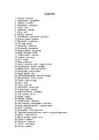
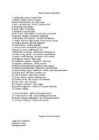
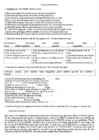
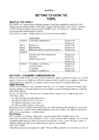
Character 1. Iseloom character 2. Kaasatundev sympathetic 3. Sõbralik friendly 4. Ebasõbralik unfriendly 5. Lahke kind 6. Mittelahke unkind 7. Kena nice 8. Meeldiv pleasant 9. Heasüdamlik, suuremeelne generous 10. Kohutav, õudne horrible 11. Ebameeldiv unpleasant 12. Õel, kade mean 13. Optimistlik optimistic 14. Pessimistlik pessimistic 15. Muretu, rahulik easy-going 16. Pinges, närviline tense 17. Tundlik, hooliv sensitive 18. Tundetu insensitive 19. Aus honest 20. Ebaaus- dishonest 21
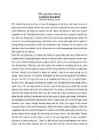
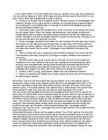
Having children while young Some people say that having childern while young is the best time of your life. However, being a child has both advantages and disadvantages. On the plus side, you will still remember what's like to be a kid. Sure you will remember that in your 30s and 40s, but the more younger you are the more likely you are able to truly understand and relate to your child. All in all It's difficult to be sympathetic to someones problems when you dont know what they are going throught. However, for every plus side there is a minus. For one thing, you have to spend all day with your kid and can't go out when ever you want to. Sometimes when you are getting a child while you are still studying in a school you have to drop out of scool and go to work. But that means you cant acquire better knowledge , that can help you get a better job in the future.
Founded a printing press with his poetry Succeeded in publishing numbers of poems over the next ten years. Novel Life Waverley and other to follow within the first five years all followed Scottish historical setting Always published novels under the name Autho r o f Wave rle y. Many years after he used the name The Wizard o f the No rth When he published ivanhoe he steered away from Scottish history to English romance in 12th -century. Wrote several books which were sympathetic towards J ews. He was granted title of the baronet, which became Sir Walter Scott. Included little punctuation in his drafts . Famous Works Writing Influence Work is influenced by the 18th century Enlightenment His work is popular throughout Europe during his time period Believed every human was practically decent regardless of class, religion, politics and ancestry Major theme in historical works is tolerance Waverley novels express belief in need for social progress
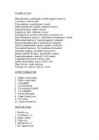
Rasestumisvastased vahendid- birth control Ekspluatatsioonikulud- running costs Omast käest teadma- know to one's cost Terav kriitika- harsh criticism Täismaja (nt. teatris)- capacity crowd WORD FORMATION 1. Explain-explanation 2. Shake-unshakeable 3. Deep-depth 4. Lie-underlying 5. Success-unsuccessful 6. Go-undergone 7. Notice-noticeable 8. Suspect-suspicious 9. Far-further 10. Disaster-disastrous PREPOSITIONS 1. Faithful--to 2. Foundations--of 4. in(the)--belief 5. Fight--for 6. Sympathetic--to 7. for--a good cause 8. Jump--at 9. Damage--to 10. Bring--about 11. Pace--of 12. Instruments--of 13. Ripe--for 14. Adapt--to 15. Comment--on 16. Referred--to 17. on--strike--for better pay 18. Absolutely no control--over 19. Singled--out--for COLLOCATIONS 1. Blanket ban 2. Outright ban 3. Anti-social behaviour 4. Bounds of acceptable behaviour 5. Fringe benefits 6. Further the cause 7. Change of hearth 8. issued a challenge 9. Sweeping changes 10
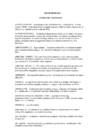
10.demanding, well-balanced- nõudlik, tasakaalukas 11.modest, reserved- tagasihoidlik, reserveetitud =kinnine 12.sensible, practical- mõistlik, praktiline 13.calm, realistic- rahulik, realistlik 14.rational, brave- ratsionaalne, julge=vapper 15.generous, lively- heldekäeline, elav 16.dedicated, considerate- pühendunud, tähelepanelik 17.tender, loving, gentle- õrn, armastav, õrnatundeline 18.tolerant, understanding- tolerantne=salliv, arusaav 19.thoughtful, creative- hooliv, loov 20.sympathetic, capable- kaasatudlik, võimukas 21.ingenious, enthusiastic- leidlik, innukas 22.positive, good-humoured- positiivne, hea tujuline 23.humorous, good-natured- humoorikas, hea loomuline 24.hard-working, diligent, industrious- töökas, usin, äärmiselt töökas 25.helpful, loyal- abivalmis, lojaalne=truu 26 kind, nice,polite- lahke, kena, viisakan 27.patient, reliable- rahulik, usaldusväärne 28.sociable, tactful- hea suhtleja, taktitundeline 29.wise, witty- tark, vaimukas 30
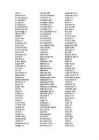
care of equal to link with careful to equivalent to long for careful with excess of look after careless with excited about look like certain of exclude from lose to characteristic of excuse me for make for charge for experience in married to matter with sufficient for mixture of suitable for name after suspicious of native of sympathetic with news of take after notice of talk about object to talk into opinion about talk out of opposite of tax on part with thank for pay for think of pessimistic about tired of pleased with trouble with popular with trust in prepare for truth about present with unite in prevent from unkind to protect against unknown to protect from unwilling to protest about use of
In many ways, she is a sensitive girl in her formative years, whose feelings fluctuate along with the values she assigns to the external world and objects. Also worth mentioning is the fact that when a nearby neighbor is killed she sympathizes the man with all her heart and intends to call off the garden party. However, her mother silences her by saying "You are being very absurd, Laura," she said coldly. "People like that don't expect sacrifices from us. And it's not very sympathetic to spoil everybody's enjoyment as you're doing now." True it is, that life has to go on and pleasure must serve a certain role even after someone dies, but Laura feels that this kind of action would be heartless and inappropriate. Her mother even tries to divert her attention with elegant hat, which she puts on Laura`s head and comments endlessly how it makes her beautiful. This brings along an internal conflict in Laura`s mind, either to grief, or to be vain and self- centered
and a neurotransmitter acting at the level of the autonomic nervous system and the brain. ADRENAL CORTEX – The outer layer of the adrenal, a small endocrine gland located near the kidney. It produces and secretes several hormones* (corticosteroids) e.g. cortisol. It is implicated in stress response. ADRENAL MEDULLA - The centre of the adrenal, a small endocrine gland located near the kidney. It produces and secretes noradrenaline and adrenaline for the activation of the sympathetic nervous system. It is implicated in stress response. AFFERENT – Carrying information towards a particular group of neurones (compare efferent*). AGONIST – A neurotransmitter or a drug which binds to a receptor and triggers a cascade of intracellular signalling leading to changes in the membrane potential. AMINO ACID – A chemical made of carbon, oxygen, hydrogen and nitrogen, which is a building unit of all proteins* and other biologically important substances.
using the school’s funds to provide a wealthy and opulent lifestyle for his own family. At Lowood, Jane befriends a young girl named Helen Burns, whose strong, martyrlike attitude toward the school’s miseries is both helpful and displeasing to Jane. A massive typhus epidemic sweeps Lowood, and Helen dies of consumption. The epidemic also results in the departure of Mr. Brocklehurst by attracting attention to the insalubrious conditions at Lowood. After a group of more sympathetic gentlemen takes Brocklehurst’s place, Jane’s life improves dramatically. She spends eight more years at Lowood, six as a student and two as a teacher. After teaching for two years, Jane yearns for new experiences. She accepts a governess position at a manor called Thornfield, where she teaches a lively French girl named Adèle. The distinguished housekeeper Mrs. Fairfax presides over the estate. Jane’s employer at Thornfield is a dark, impassioned man named
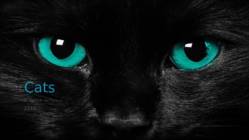
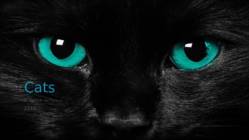
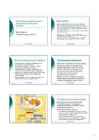
Cats C.Karus 2015 Cat independent Free Graceful the cat will always fall on his feet If the host has / owns a dog, a cat owns the master where the head goes through, there also goes the body through History It is known that people have been living with cats harmonically since 3000 BC in Ancient-Egypt. Cats, living along with humans, started to have sympathetic connection with humans. Probably thanks to cats' usefulness in protecting food, ancient Egyptian started to treats cats as saint animals. Cat was called "miw". Egyptian mourned and embalmed dead cats. They also made special wooden coffins for cats. Cat expressions Friendly Relaxed Fearful Negative
Cats C.Karus 2015 Cat independent Free Graceful the cat will always fall on his feet If the host has / owns a dog, a cat owns the master where the head goes through, there also goes the body through History It is known that people have been living with cats harmonically since 3000 BC in Ancient-Egypt. Cats, living along with humans, started to have sympathetic connection with humans. Probably thanks to cats' usefulness in protecting food, ancient Egyptian started to treats cats as saint animals. Cat was called "miw". Egyptian mourned and embalmed dead cats. They also made special wooden coffins for cats. Cat expressions Friendly Relaxed Fearful Negative
I mentioned Jack the Ripper earlier as perhaps one of the most famous historical serial killers. His exploits in 19th century London were the basis for a surge in public interest into serial killing. In the 1920s there were two films based on stories of serial killing. In the 2000s, more than 300 of the released films were based on serial killers, fictional and historical alike. (5) III. The psychology of serial killers "But she or he was a kind, sympathetic person!" is a common cry after ruling that someone is guilty of serial murder, because serial killers are normal people. There are lots of other problems with trying to profile serial killers - for example, Finnish serial killers tend to be alcoholics. German serial killers tend to have lower-than-average intelligence. That being said, here are some commonalities: Serial killers tend to be people of average intelligence from troubled homes. They
1. Length of the vessel. The longer the vessel the greater the resistance. 2. Viscosity of the blood. The greater the viscosity the greater the resistance. 3. Radius of the vessel. The smaller the radius the greater the resistance. Verevoolu kontroll/ regulatsioon http://www.biosbcc.net/doohan/sample/htm/COandMAPhtm.htm 1) Arterioraalse raadiuse sümpaatiline kontroll a. Arterioles are enervated (ослаблен) by the sympathetic nervous system only. b. Sympathetic nerve fibers secrete norepinephrine. c. Binding of norepinephrine to receptors on the smooth muscles of arterioles causes contraction and thus leads to vasoconstriction. d. Arterioles servicing tissues at rest receive a baseline amount of sympathetic stimulation and thus are slightly constricted (vessel b in the figure). e
public's. The phrase "one man's terrorist is another man's freedom fighter" is a view terrorists themselves would accept. Terrorists do not see themselves as evil. They believe they are rightful combatants, fighting for what they believe in, by whatever means possible. A victim of a terrorist act sees the terrorist as a criminal with no caring for human life. The general public's view is the most unstable. His sympathetic view of terrorism has become an integral part of their psychological warfare. Terrorism is a criminal act. So, whether the terrorist chooses to identify himself with military terminology, or with civilian term, he is a criminal either way. Terrorism is classified into six categories: civil disorder, political terrorism, non- political terrorism, quasi-terrorism, limited politival terrorist, official or state terrorism. These categories are further divided into different types
positively the mood (Hartig et al., 2003; Hartig, Mang, & Evans, 1991; Morita et al., 2007; Tsunetsugu et al. 2013), concentration and performance (van den Berg, Koole, & van der Wulp, 2003; Hartig et al. 2003, 1991; Laumann et al., 2003). · Studies exploring the relationship between physiological stress and environment demonstrate, that being in forest lowers blood pressure and pulse, cortisol level, supresses the activity of sympathetic nervous system and stimulates parasympathetic nervous system (Lee et al., 2012; Park, Tsunetsugu, Kasetani, Kagawa, & Miyazaki, 2010; Tsunetsugu et al., 2013). Satisfaction with the neighborhood and perceived safety related to the perceived health · General dissatisfaction with the neighborhood is related to poorer self-reported health state; also if the personality variables are taken into account · Also the self-reported health state is related to the
Regan and her husband, Cornwall, discover him helping Lear, accuse him of treason, blind him, and turn him out to wander the countryside. He ends up being led by his disguised son, Edgar, toward the city of Dover, where Lear has also been brought.In Dover, a French army lands as part of an invasion led by Cordelia in an effort to save her father. Edmund apparently becomes romantically entangled with both Regan and Goneril, whose husband, Albany, is increasingly sympathetic to Lear’s cause. Goneril and Edmund conspire to kill Albany.The despairing Gloucester tries to commit suicide, but Edgar saves him by pulling the strange trick of leading him off an imaginary cliff. Meanwhile, the English troops reach Dover, and the English, led by Edmund, defeat the Cordelia-led French. Lear and Cordelia are captured. In the climactic scene, Edgar duels with and kills Edmund; we learn of the death of Gloucester; Goneril poisons Regan out
"The English Patient" is the most well-known book by Canadian writer, poet and academician. The main activity happens in 1930.-1940. Egipt and during the last days of World War II in one Italy nunnery which was changed after the war to sickbay. · Almásy is not English. He is Hungarian by birth. Almásy's manner is knowledgeable and reflective. Almásy is not a highly dynamic character, he is intriguing and mysterious figure. He is portrayed in a sympathetic light. He was part of a British archaeological group and also as afterwards reveals a spy. · Hana was a twenty-year-old Canadian Army nurse. She put all of her energy into caring for the English Patient. When the hospital was abandoned, Hana refused to leave and instead stayed with her patient. She sees Almásy as saint like and with the "hipbones of Christ". She falls in love with the English Patient in a purely non-sexual way. She also cut off
It was very adorable/grateful/thoughtful of you. i) Teresa never gets angry with the children. She is very brave/patient/pleasant. j) Tom always pays for everyone when we go out. He's so cheerful/generous/honest. 2. Match the words in the box with the descriptions (a-l). Use each word once only. bad-tempered determined lazy reliable cheerful frank mean selfish considerate honest punctual sympathetic a) You always arrive on time e) You don't think about the needs of others i) You think about the needs of b) You are always happy f) You have a strong wish to get what you others c) You do what you say you will do want j) You tell the truth and obey the law d) You say exactly what you think g) You are unkind, or not willing to spend k) You understand the feelings of
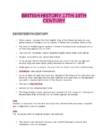
1688 The Glorious Revolution 1690 The Presbyterian Church becomes the official Church of Scotland" The Battle of the Boyne, in which William III and the Ulster Protestants defeat James II and the Irish Catholics. EIGHTEENTH-CENTURY ✿ Politically, this century was stable. Monarch and Parliament got on quite well together. ✿ The Whigs, were the political 'descendants' of the parliamentarians - supported the Protestant values of hard work and thrift, were sympathetic to Dissenters, and believed in government by monarch and aristocracy together. ✿ The Tories, had a greater respect for the idea of the monarchy and the importance of the Anglican Church ✿ The two terms, Whig and Tory, had in fact first been used in the late 1670s ✿ At the beginning of the century, by agreement, the Scottish Parliament joined with the English and Welsh Parliament at Westminster in London. ✿ Scotland retained its own system of law
{ Autonoomne närvisüsteem jaguneb { Närvisüsteem on kui psüühika riistvara - mahu ja toimimise kvaliteedi küsimus omakorda { Miks me käitume nii nagu me käitume - z sümpaatiliseks osaks (sympathetic teadlik otsustus või automaatne division), mille kaudu keha on tegutsemine juhusliku impulsi ajel? pingeolukorras kiirele reageerimisele { Individuaalsed omapärad me kõik reguleeritav ja oleme erinevad juba närvisüsteemi tasandil
bleak future the First Nations found themselves facing as a result of the colonization process and its after effects. The Trail of Broken Treaties was designed to generate media coverage, providing a useful medium to articulate the goals and changes they wanted to see occur in federal Indian policy. The activists, and in particular the American Indian Movement, used the mass media in an attempt to sway depictions of themselves, which allowed them to generate stronger political support by having sympathetic news reports. Present situation Today there are more than half a million Indians in the United States. Economically they range from pauperism to affluence. A few have made money from oil and other natural sources found on their lands, but many thousands live at near-starvation levels. Some are educated and completely assimilated in white society; many live in nearly complete isolation from non-Indian Americans. Relocation programs have
Malignant tumor containing embryonic nerve cells; usually metastasizes quickly. http://www.cancer.gov/cancerinfo/pdq/treatment/neuroblastoma/healthprofessional/ Neuroblastoma is predominantly a tumor of early childhood, with two thirds of the cases presenting in children younger than 5 years. In rare cases, neuroblastoma can be discovered prenatally by fetal ultrasonography. Neuroblastoma originates in the adrenal medulla or the paraspinal sites where sympathetic nervous system tissue is present. The most common symptoms are due to a tumor mass or to bone pain from metastases. Proptosis and periorbital ecchymosis are common and arise from retrobulbar metastasis. Extensive bone marrow metastasis may result in pancytopenia. Abdominal distention with respiratory compromise due to massive liver metastases occurs in infants. Because they originate in paraspinal ganglia, neuroblastomas may invade through neural foramina
Alcohol is one of the most severe addictions in today`s world next to smoking and drug usage. As modern trends change rapidly through spreading of information and globalization (variety in choice of the product, cheaper prices, advertisements etc.) alcohol consumption becomes more and more popular among young people more often teenagers. About 50 years ago alcohol was a taboo for people more desirable. Drunken people were looked at with a judging eye the and society was not sympathetic towards drinking and alcoholics. Nowadays consuming alcohol in the streets, bars, clubs, restaurants and other institutions of social interaction are considered a norm. As teenagers tend to gather in such places they are often the primary consumers. It`s catchy, stylish, cool and mostly fun, according to young people. Alcohol becomes more popular due to its intoxication characteristics which are caused by ethanol (one of the chemical compounds)
them or actually incorporating real objects. Pop Art debuted in 1962. The works spanned painting, sculpture and objects of daily use. "Happenings" (improvised semi-dramatic visual spectacles with audience participation) contributed to the Pop culture of the 1960s. The art form is based on the anonymous, mechanized and mass-produced images of advertisements, billboards, comic books and TV. Mass culture is the source of inspiration but it is neither critical nor sympathetic. Similarly to Regionalism, it stressed that which was generically American but concentrated on urban culture. By the late-1960s, Pop had lost its novelty but had turned artists from abstraction back towards recognizable imagery. Exemplary artists. Robert Rauschenberg (late-C20). He loaded his paintings with rags and tatters of cloth, reproductions, fragments of comic strips and other collage elements of discarded materials. He worked similarly to Action painters
them or actually incorporating real objects. Pop Art debuted in 1962. The works spanned painting, sculpture and objects of daily use. "Happenings" (improvised semi-dramatic visual spectacles with audience participation) contributed to the Pop culture of the 1960s. The art form is based on the anonymous, mechanized and mass-produced images of advertisements, billboards, comic books and TV. Mass culture is the source of inspiration but it is neither critical nor sympathetic. Similarly to Regionalism, it stressed that which was generically American but concentrated on urban culture. By the late-1960s, Pop had lost its novelty but had turned artists from abstraction back towards recognizable imagery. Exemplary artists. Robert Rauschenberg (late-C20). He loaded his paintings with rags and tatters of cloth, reproductions, fragments of comic strips and other collage elements of discarded materials. He worked similarly to Action painters
· Reconstruction Act Five main points: Creating five military districts in the seceded states Each district to be headed by a military official All voters were to be registered Old documents were to be re-evaluated to give the Black people the right to vote States were required to ratify the 14th Amendment · Formation of Ku Klux Klan Tortured and killed: Black people People who were sympathetic towards black people Immigrants Restore white rule · Grandfather clauses Tried to ban black people from voting Introduced by Southern legislatures Grandfather had to be in the Civil War · Jim Crow laws Black people were critizised for going to theatres, schools, restaurants, hotels etc. By 1954 black people could ride buses and trains Most of the Southern states still critizised African-Americans on buses or trains Separate bus lines and parts in restorans
The term is often used to refer to the entire period from 1660 to the fall of James II in 1688. 19. The Whigs and Tories. Within Parliament, the tensions and disagreements of the Civil War and its aftermath were echoed in the formation of two vaguely opposed, loose collections of allies. One group, the Whigs, were the political “descendants” of the parliamentarians. They supported the Protestant values of hard work and economic efficiency, were sympathetic to dissenters and believed in government by monarchy and aristocracy together. The other group, the Tories, had a greater respect for the idea of the monarchy and the importance of the Anglican Church. This was the beginning of the party system in Britain. Today, the Liberals are the “descendants” of the Whigs and the Conservatives of the Tories. 20. The state opening of Parliament.
Self- Activity Actions Compliant Achievement conscious striving · AGREEABLENESS: -cold, considerate, -harsh, kind, -rude, Impulsive Excitement Ideas Modesty Self discipline sympathetic, -unco-operative, -unkind, -unsympathetic, warm seeking Vulnerable Positive Values Tender- Deliberation · INTELLECT: artistic, complex, creative, deep, imaginative, emotion minded philosophical, -uncreative, -unimaginative, -unintellectual, -unintelligent Page
management of the damaging stress response. 1.3 Stress and physiological factors. Organisms respond to stress with secretion of neuroendocrine mediators. These hormones interact with physical, cognitive and emotional processes. (Steptoe et al., 2007; Herbert et al., 2006; De Kloet et al., 2005; Kiecolt-Glaser et al., 2003; Rohleder et al., 2002,). Psychological and other forms of stress influence the sympathetic nervous system, hypothalamuspituitary adrenal (HPA) - axis, and immune system; the interaction between these systems is complex (Raison et al., 2003, Pariante & Miller, 2001; Adler, Felten & Cohen, 2001). Activation of the HPA axis by physical or psychological stress begins with corticotrophin-releasing hormone (CRH) secretion from the Hypothalamus, CRH then signals the Anterior Pituitary gland to secrete Adrenocorticotropic hormone (ACTH), ACTH then acts on the Adrenal gland which
" Unlike Wordsworth, however, Whitman does not romanticize the proletariat or the peasant. Instead he takes as his model himself. The stated mission of his poetry was, in his words, to make "[a]n attempt to put a Person, a human being (myself, in the latter half of the 19th century, in America) freely, fully, and truly on record." A truly democratic poetry, for Whitman, is one that, using a common language, is able to cross the gap between the self and another individual, to effect a sympathetic exchange of experiences. This leads to a distinct blurring of the boundaries between the self and the world and between public and private. Whitman prefers spaces and situations --like journeys, the outofdoors, cities--that allow for ambiguity in these respects. Thus we see poems like "Song of the Open Road" and "Crossing Brooklyn Ferry," where the poet claims to be able to enter into the heads of others. Exploration becomes not just a trope but a mode of existence.
Concerning the Two Chief World Systems, Ptolemaic and Copernican, was cleared by Church censors, one of whom was Galileo's former student, and was published at Florence in 1632. As the title suggests, Galileo grounded his manifesto in the form of a dialogue rather than a treatise. The dialogue, Galileo reasoned, was a device through which an argument for Copernican theory could be made without violating the papal decree of 1616. Two of the conversants Salviati and Sagredo are sympathetic to Copernican theory. Simplicio, the third participant, represents Aristotle and the Scholastics and is presented as fool. Galileo's enemies were quick to inform the Pope that the official cosmology of the Roman Catholic Church had been put in the mouth of Simplicio. The Pope ordered an investigation and so in August 1632, less than six months after it had appeared, the Inquisition banned further sales of the book. Galileo's book was placed on the Index of
of action to alleviate suffering. The two-way arrow symbolizes that the action takes into consideration the wishes and, if possible, the involvement of the other in a reciprocal process to bring about change. Much of what passes for compassion is often an imposition from the outside, without regard for what might be best for the other nor for their input. There is nothing wrong with sympathy, per se, however. There are many times when the only action a person can take is limited at a sympathetic response. There are other times when one can go further and express empathy. And there will be times when the opportunity will be there to express compassion. The problem comes when one has the ability to demonstrate compassion, but for reasons of one¹s own choosing, decides to limit the action only to sympathy or at best empathy. The Goal of this process is Change!-things cannot continue as they presently are. This is because the
male counterpart. Such consciousness was radically different, and had been adversely treated. Simone de Beauvoir in The Second Sex documented the ways "Legislators, priests, philosophers, writers and scientists have striven to show that the subordinate position of women is willed in heaven and advantageous on earth." Women had been made to feel that they were inferior by nature and, though men paid lip-service to equality, they would resist its implementation. Some men might be sympathetic to women's issues, but only women themselves knew what they felt and wanted. Nonetheless, by the early eighties, feminists had advanced to a much more confrontational attack on male hegemony, advocating a complete overthrow of the biased (male) canon of literature. French feminists argued that women should write with a greater consciousness of their bodies, which would create a more honest and appropriate style of openness, fragmentation and non- linearity
logical way, e.g. paragraph 1 - reason for writing paragraph 2, - reason for buying the product paragraph 3 - why you were unhappy with it paragraph 4 - what action you would like the shop to take. Range: the letter should use common expressions for writing about complaint and asking for compensation. Register: fairly formal. Target reader: the store manager who have a clear understanding of the problem and be sympathetic enough to wish to offer compensation. Accuracy: should not contain major errors that lead to misunderstandings or have a negative effect on the reader. Now read this answer and do the questions below. Dear Sir, I'm writing this letter because I'm sure you can help me to overcome an unpleasant situation caused by my purchase of your 'Crazee 4 You' package. When I read the description of your special offer in the advertisement, I immediately thought about my niece: she is
words in the context (e.g. "He opened the window (direct meaning) and his heart to me (figurative metaphorical meaning).") When it applies to the first word it has direct meaning, when to the other metaphorical (e.g. "He took his hat and his leave." "Mrs. Turpin would get out of bed and humor, put on kimono, airs and the water to boil her coffee." "She possessed two false teeth and a sympathetic heart."). 2. Pun (play on words) the humorous use of a word in two meanings (polysemantic words) (e.g. "I am going to give (say) you some good advice. Oh, do not. One should never give (give) a woman anything she cannot wear in the evening." (O.Wilde) or the words that sound alike but have different meanings (homonyms) (e.g. "What makes the tower of Pisa lean (:1., 2. ) It never eats."; "Did
— R . Buckminster Fuller A book goes out like a wave rolling over the surface of the sea. Ideas radiate from the authors mind and collide with other minds, triggering new waves that return to the author. These generate further thoughts and emanations, and so it goes. T h e concepts described in The Writer's Journey have radiated and are now echoing back interesting challenges and criticisms as well as sympathetic vibrations. T h i s is my report on the waves that have washed back over me from publication of the book, and on the new waves I send back in response. In this book I described the set of concepts known as " T h e Hero's Journey," drawn from the depth psychology o f Carl G. Jung and the mythic studies o f Joseph Campbell. I tried to relate those ideas to contemporary storytelling, hoping to create a writer's guide to these valuable gifts from our innermost selves and our
There are not many suffixes on this part of the TOEFL, and you may already know many of them from your grammar study. Nevertheless, you should become familiar with all the English suffixes in the list here. ADJECTIVE SUFFIXES Suffix Meaning Example able capable of affordable ant tendency to dominant alive tendency to innovative ent tendency to persistent etic relating to sympathetic ful full of harmful ible capable discernible ical relating to identical less without harmless ous full of famous ry occupation ministry some tendency to bothersome y a quality of being arbitrary NOUN SUFFIXES Suffix Meaning Example ary place library ation process population cule small minuscule
were so precisely formulated that they would react with only one other chemical to form a visible compound. Eventually, the Allied chemists discovered a reagent that brought out secret writing in any kind of ink, even clear water. Crystals of iodine, heated gently, sublimated into fumes of a beautiful violet hue that settled more densely in those fibers of paper that had been disturbed by any kind of wetting action, thus tracing the pen's course. The Germans replied by writing in a sympathetic ink and then moistening the entire sheet. The Allies struck back with a chemical streak test that would show whether the paper surface had been dampened. This was almost as incriminating as actual development of a secret-ink letter, for who but a spy would wet a letter? The seesaw battle between the chemists of Germany, traditionally world leaders in that science, and those of the Allies reached a stalemate when both sides discovered the general
rect coercion, what the Chinese wanted. For example, the Chinese knew that many prisoners were anxious to let their families know that they were alive. At the same time, the men knew that their captors were censoring the mail and that only some letters were being allowed out of camp. To ensure that their own letters should be released, some prisoners began including in their messages peace appeals, claims of kind treatment, and statements sympathetic to communism. The hope was that the Chinese would want such letters to surface and would, therefore, allow their de- livery. Of course, the Chinese were happy to cooperate because those letters served their interests marvelously. First, their worldwide propaganda effort benefited greatly from the appearance of pro-Communist statements by American service- men. Second, in the service of prisoner indoctrination, the Chinese had, without
Street, a real place to this day, that it had had Holmes living in it. Also, if such sentences were true just in virtue of someone's having written them in popular books or stories, then it would be equally true that Holmes existed, Hamlet existed, and so on, since people say those things in books and stories too; this point is strangely overlooked.) Yet some people want to insist that fictional sentences are literally truth-valueless rather than false; if you are sympathetic to this, you will want to hold a Kripkean theory of fictional names rather than Russell's (Kripke 1972/1980:1568). Donnellan (1974) defends such a theory in more detail. Kripke has a further and in a way more fundamental objection to the Description Theory, but it requires a bit of technical apparatus. That appa- ratus is one we will be needing again anyway. I shall develop it in the next chapter. Summary · The four logical puzzles about reference arise just as insistently for
distraction that I tried not to look at it any more than courtesy absolutely demanded. "Why did you come here, then?" No one had asked me that -- not straight out like he did, demanding. "It's... complicated." "I think I can keep up," he pressed. I paused for a long moment, and then made the mistake of meeting his gaze. His dark gold eyes confused me, and I answered without thinking. "My mother got remarried," I said. "That doesn't sound so complex," he disagreed, but he was suddenly sympathetic. "When did that happen?" "Last September." My voice sounded sad, even to me. "And you don't like him," Edward surmised, his tone still kind. "No, Phil is fine. Too young, maybe, but nice enough." "Why didn't you stay with them?" I couldn't fathom his interest, but he continued to stare at me with penetrating eyes, as if my dull life's story was somehow vitally important. "Phil travels a lot. He plays ball for a living." I half-smiled. "Have I heard of him?" he asked, smiling in response.
 annaabi.ee