Leidsid 33 sarnast õppematerjali, mis on seotud failiga "Suhkru mõju inimesele". Need materjalid aitavad sul teemat sügavamalt mõista.
sugar, obesity, sweet, beginning, years, metabolized, body, candy, result, than, through, class, causes, lackercises, eating, island, guinea, throughout, resistance, diabetes, particularly, spent, billion, luxury, rich, itself, comes, arabic, back, 1675, western, europe, first, boom, makes, portion, diet, johnson, although, fruit, crave, tasty, foods" --Phil Town, New York Times bestselling author of Rule #1 "The 4-Hour Workweek is a new way of solving a very old problem: just how can we work to live and prevent our lives from being all about work? A world of in nite options awaits those who would read this book and be inspired by it!" --Michael E. Gerber, founder and chairman of E-Myth Worldwide and the world's #1 small business guru "Timothy has packed more lives into his 29 years than Steve Jobs has in his 51." --Tom Foremski, journalist and publisher of SiliconValleyWatcher.com "If you want to live life on your own terms, this is your blueprint." --Mike Maples, cofounder of Motive Communications (IPO to $260M market cap) and founding executive of Tivoli (sold to IBM for $750M) "Thanks to Tim Ferriss, I have more time in my life to travel, spend time with family, and write book blurbs. This is a dazzling and highly useful work." --A. J. Jacobs, editor-at-large of Esquire
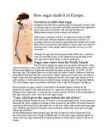
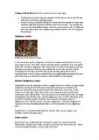
How sugar made it to Europe. Sweetness in older than sugar. Europeans and others have respected sugar for thousands of years. Prior to knowing sugar, our ancestors used honey and other sweet ingredients which were used as sweeteners. We know all that thanks to Mediterranean antique culture writings and bareljeefs . Oldest known sweetener is honey. In Arãna caves there are 12000 years old murals where are depicted woman honey collectors. As nowadays, womans used honey to make food, heal wounds and to make mead
(c) (i) 65; 130; 65; 3 (ii) 0.138 + 0.007 + 0.061; (or other suitable working) 0.206 – 0.208; 2 marks for correct value if no working shown ecf for both marks but calculated value must be to three decimal places 2 (iii) support, figure lower than 5.991 / figure lower than critical value; R ‘support’ on its own. ecf applies if value in (ii) is incorrect 1 [16] 2. named characteristic; named environmental factor; (mark first answer only) 2 [2]
Venables captured it; it was formally ceded to England in 1670, but the local European population obtained a degree of autonomy. Jamaica prospered from the wealth brought by buccaneers, notably Sir Henry Morgan, to Port Royal, the capital; in 1692, however, much of the city sank into the sea during an earthquake, and Spanish Town became the new capital. A huge, mostly African, slave population grew up around the sugarcane plantations in the 18th cent., when Jamaica was a leading world sugar producer. Freed and escaped slaves, sometimes aided by the maroons (slaves who had escaped to remote areas after Spain lost 3 control of Jamaica), succeeded in organizing frequent uprisings against the European landowners. The sugar industry declined in the 19th cent., partly because of the abolition of slavery in 1833 (effective 1838) and partly because of the elimination in 1846 of the imperial
and Java, and recipes from neighbouring colonial cultures such as Portuguese Mozambique. Indigenous cookery traditional South African cuisine In the precolonial period, indigenous cuisine was characterized by the use of a very wide range of fruits, nuts, bulbs, leaves and other products gathered from wild plants and by the hunting of wild game. The domestication of cattle in the region about two thousand years ago by Khoisan groups enabled the use of milk products and the availability of fresh meat. However, during the colonial period the seizure of communal land in South Africa restricted and discouraged traditional agriculture and wild harvesting, and reduced the extent of land available to black people. Decline of indigenous cookery Urbanization from the nineteenth century, coupled with close control over agricultural production, led black South Africans to rely more and more on comparatively
Drugs are chemicals that change the way a person's body works. You've probably heard that drugs are bad for you, but what does that mean and why are they bad? Medicines Are Legal Drugs If you've ever been sick and had to take medicine, you already know about one kind of drugs. Medicines are legal drugs, meaning doctors are allowed to prescribe them for patients, stores can sell them, and people are allowed to buy them. But it's not legal, or safe, for people to use these medicines any way they want. Cigarettes and Alcohol
10.2016 4 diet that has been approved to be healthy by many major health associations when planned and nutritionally adequate. 3 There are some key nutrients that vegans need to look out for, mainly vitamin B12 and vitamin D, but with the help of fortified foods and food supplements it’s found to be appropriate for all stages of life. 4 Individuals following vegetarian and vegan diets appear to have lower body mass indexes and lower rates of heart disease as well as lower blood pressure and cholesterol levels. 5 That being said, not all diets fit all individuals and any diet plan can turn out to be the opposite of healthful when not followed correctly. When comparing a plant based diet to a standard diet, both can be as equally beneficial when properly planned and balanced. However, plant based diets have been found to be more beneficial when it comes to
predicted to increase, more fuel needs to be dedicated to transport (Karp, 2011. There are many reasons why biofuels are necessary, but at the same time, they are controversial for a number of reasons. 2.2. Biofuels' feedstock and future projections There are mainly two types of liquid biofuels, which have significantly grown in the last decade: that is bioethanol and biodiesel. Bioethanol is based on sugar, extracted from sugarcane and beet, or starch, which mainly comes from maize, wheat or cassava. Starch- based crops must be first converted into sugars in the saccarification process, which requires substantial volumes of enzymes to turn starch into sugars (Soetaert, W. 2008). The starchy products represent only a small percentage of the total plant mass. Other plants' building blocks like cellulose and lignin are currently not being used to make biofuels as there is not a
alternative, Sunbutter, especially in China, the United States, the Middle East and Europe. In Russia it is probably the most wide spread snack.[citation needed] It is also sold as food for birds and can be used directly in cooking and salads. Sunflower oil, extracted from the seeds, is used for cooking (but is less cardiohealthy than olive oil), as a carrier oil and to produce biodiesel, for which it is less expensive than the olive product. During the 18th Century, the use of sunflower oil became very popular in Europe, particularly with members of the Russian Orthodox Church because sunflower oil was one of the few oils that was not prohibited during Lent. The cake remaining after the seeds have been processed for oil is used as a livestock feed. Some recently developed cultivars have drooping heads. These cultivars are less
· Brought a strong Socialist contingent to the United States; led to the formation of many Estonian American Socialist and Communist organizations. * The 1920s30s: · Establishment of independent Estonia · Tightening of American immigration laws · Estonian immigration to the United States slowed down dramatically 1924 The Estonian quota fixed at 116; even this small annual quota was not used up *After World War II = In the post World War II years, all three Baltic nations maintained consulates in the United States · About 15,000 Estonians came to the United States · This group was strongly anti-Communist and nationalistic 3. Russian colonization of America. What has preserved from this period to the present? The Russian colonization of the Americas covers the period, from 1732 to 1867, when the Tsarist Imperial Russian Empire laid claim to northern Pacific Coast territories in the Americas
00 Chocolate Chip $1.50 Chocolate Chip $1.50 Chocolate Chip $7.50 Chocolate Chip $14.00 Oatmeal Raisin $14.00 Peanut Butter $7.50 Snickerdoodle $1.50 Snickerdoodle $14.00 Butter Pecan $1.50 Butter Pecan $14.00 Lemon Sugar $14.00 Butterscotch $1.50 Cranberry Walnut $19.00 Cranberry Walnut $19.00 White Chocolate Macademia Nut $10.50 White Chocolate Macademia Nut $19.00 Fudge Brownie $2.00 Fudge Brownie $2.00 Fudge Brownie $19.00 Fudge Brownie $19.00
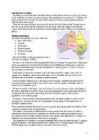
In 1788 on the 26th of January the first fleet arrived at Botany Bay and established a penal colony near modern-day Sydney. Geographical Position Australia is located in the Southern Hemisphere. It’s the only continent except for Antarctica that is all south of equator. Sometimes Australia is called the island continent. There is a great reason why. It really is an island. It is 2880 km from the mainland of Asia and is almost half way round the world from Europe. More than 9 600 km separates it from America. Australia lies between the Pacific and Indian oceans. The Timor Sea and the Arafura Sea separate Australia from Indonesia. In the north the coast is washed by Great Australian Bight and the Indian Ocean. In the northeast the Coral Sea washes the coasts and in the southeast there is the Tasman Sea which also separates Australia from New Zealand. The biggest island is Tasmania which is located to the south of the country.
· New South Wales · Victoria · Queensland · South Australia · Western Australia · Tasmania New South Wales is the most populous state in Australia. Its capital is Sydney. Victoria is one of the most densely populated states in Australia. Its capital city is Melbourne and it was named after the British Prime Minister Lord Melbourne. Melbourne is said to be the heart of Australian finance and the headquarters of industry giants. Victoria is more an industry than a tourist state. Queensland is known for its natural riches like huge coalfields, copper, silver, lead. Its capital city is Brisbane, which is the third largest city in Australia. Because it lies in the Northeast part of Australia, its climate is mainly tropical. South Australia is famous as it is the region of fruit farming, vineyards and olive groves. Only the southern coast is fertile, most of the state is arid. Its capital is Adelaide, which is known for the Adelaide circuit.
Introduction The United States of America is a very big country. Its territory is about 9.4 million square kilometres and its population is more than 260 million people, 12% of them are the Afro-Americans. It is the world's third-largest country by size and by population. The population density is about 27 people per square kilometre. Most of the people live in towns. There are 50 states in America. The biggest of the state is Texas, next by size are California, Alaska and Montana. Six states - Maine, Vermont, New Hampshire, Connecticut ,Rhode Island and Massachusetts are called New England. They are all small states in the U.S
wood products. Some people are exposed to higher levels of formaldehyde if they live in a new mobile home, as formaldehyde is given off as a gas from the manufactured wood products used in these homes. Formaldehyde is used in many industries. It is used in the production of fertilizer, paper, plywood, and urea-formaldehyde resins. It is present in the air in iron foundries. It is also used in the production of cosmetics and sugar, in well-drilling fluids, in agriculture as a preservative for grains and seed dressings, in the rubber industry in the production of latex, in leather tanning, in wood preservation, and in photographic film production. Formaldehyde is combined with methanol and buffers to make embalming fluid. Formaldehyde is also used in many hospitals and laboratories to preserve tissue specimens. Physical-chemical date: CAS number: 50-00-0 IUPAC name: Methanal Structure formula: HCHO
Age 15 is legally a "young person" not a "child". Age 16 is a school leaving age. They can leave home, drive a moped, marry with "parents' consent" buy beer. Age 17 can drive a car. Age 18 can vote, get married, drink in pubs. Education is a very important part in the life of British youth. One can't become an independent person without it. When time comes to enter a college a young Englishman chooses one far away from home. It is a necessary part of becoming adult. During the last 30 years there were a lot of different trends in youth movements. All of them were characterized by their own philosophy, way of life, style of dressing. Each tendency was born by the influence of economic and political changes in the society. Those trends are known as the "hippies" the "punks" the "rockers". But certainly there are different traditional youth organizations in Great Britain. Among them -- the Scout Association, the Girl Guides Association, the National Union of
language as there are different levels of technicality, foreignness, and so on. An item like heart is core and should be located in the centre of the diagram, whereas an item like cordial is probably more literary (more likely to be written than spoken), whereas an item like cardiac is more scientific (and perhaps more technical as well). If you refer to your heart as your ticker, you have chosen a more colloquial or slangy term. 3. Native and foreign element. Native vocabulary. 3 strata: Indo-European words mother, father, night, foot, heart, bear (bore, born), see
In the late 18th century the British army suffered two serious defeats at battles in Seringapatam, in India. The main reason for these defeats was that the Indian prince, Haidar Ali's army included a corps of rocket throwers. They used very large bamboo rockets which had a range of hundreds of metres. The British were determined to learn from their mistakes and a British officer, William Congrieve, began work on developing even bigger and better rockets. Within a few years Congrieve had developed 14 kg iron rockets that could be fired over 3200 m. These rockets were successfully used against Napoleon in the battle of Waterloo and during the US War of Independence. By the 1889s other applications for rockets were being developed. They were used for signalling, for whaling, and even for rescuing people from sinking ships. If a boat got into trouble near to the shore, a
Zdzisław E. Sikorski E-mail: [email protected] Department of Food Chemistry, Gdan´sk University of Technology Endre Zukál E-mail: [email protected] OR Hungarian Meat Research Institute, [email protected] Budapest 1097, Gubacsi út 6/b, Hungary. About the Editor Fidel Toldrá, Ph.D., is a research professor at years, including Handbook of Muscle the Department of Food Science, Instituto de Foods Analysis and Handbook of Processed Agroquímica y Tecnología de Alimentos Meats and Poultry Analysis (2009), Meat (CSIC), and serves as European editor of Biotechnology and Safety of Meat and Trends in Food Science & Technology, editor Processed Meat (2008, 2009), Handbook of in chief of Current Nutrition & Food Science, Food Product Manufacturing (2007),
............................................................24 Identification with Things........................................................................25 The Lost Ring...........................................................................................26 The Illusion of Ownership........................................................................29 Wanting: The Need for More....................................................................31 Identification with the Body.....................................................................33 Feeling the Inner Body.............................................................................34 Forgetfulness of Being.............................................................................35 From Descartes's Error to Sartre's Insight...............................................36 The Peace that Passes All Understanding................................................37
The dominant version of the gene produces normal black pigment in the coat while the recessive version produces red pigment. The name comes from the effect of black or brown pigment not being extended throughout the whole coat, but being restricted to the skin of the extremities and to the eyes (for example in bay horses). This Norwegian Forest Cat was bred by Yve Hamilton Bruce from a silver mackerel tabby female (imported from Denmark) and a classic red tabby and white male. The result was 1 silver tabbies and 2 silver tabbies with white. At just over 3 months old, this silver and white tabby male developed a large patch of bright red hair on his back which continued to spread. Eventually the whole fur will become amber. The effect of amber during the colour-change stage depends on the original colour - solid black or blue, bicolour or tabby. The cat pictured is not a typical amber as it has the silver gene so the amber effect is overlaid on silver.
The Indians taught the pilgrims how to hunt, fish, and grow food. Because of this help from Indians, the pilgrims had a good harvest that year. Governor William Bradford invited the Indians to a feast. It lasted three days. They ate, danced, sang, ran races, whistled. This was called thanksgiving day. On October 3, 1863 Abraham Lincoln proclaimed a national thanksgiving. Many of the traditions of the modern American thanksgiving come from that first thanksgiving celebration more than 300 years ago. People eat squash, corn, turkey, Indian pudding and pumpkin pie. Thanksgiving is a four-day holiday. Schools are closed on thanksgiving, and grownups don't work. People spend the holiday among family. 5) MICHAEL FARADAY Michael Faraday was a physics and chemist. he was born in 1791. He was a son of blacksmith. He invented many things, which are used nowadays. He made important discoveries. Young Faraday was apprenticed to a bookbinder was allowed to read books there
system. Some of the things alcohol effects you is, the alcohol intoxicated person exhibits lose muscle tone, loss of fine moter coordination,and often has a staggering "drunken" gait. The eyes may appear somewhat "glossy" and pupils may be slow to respond to stimulus. At high doses pupils may become constricted. At intoxing doses, alcohol can decrease heart rate, lower blood pressure and respiration rate, and result in decreased reflex and slower reaction times. Skin may be cool to touch but to the user may feel warm or normal, profuse sweating may accompany alcohol use. Loose muscle tone, lose of fine motor coordination,odor of alcohol on the breath,and a stagging "drunken"gait. The effects of alcohol intoxication are greatly influenced by individual variations among users. Some users may become intoxicated at a much lower Blood Alcohol Concentration (BAC) level that I am about to show you
(Gianola, 2008). This festival is held from late January to mid February. This festival features ice sculptures, small and large. At night the sculptures are illuminated by different colored lights. There is a fireworks show during the festival as well. Admission is free. Amasake (hot sake) is available for purchase to enjoy (2008 Ministry of Land). Lake Towada Snow Festival This lake festival is held in the beginning of February. Held in the town of Yasumiya, this festival is on the south side of lake Towada (near the wooden statues). This festival is open all day, but at 5pm one can enjoy activities such as going through a snow maze, exploring a Japanese igloo, and eat foods from Aomori and Akita prefectures. There is a fireworks show and events held on an ice stage. Aomori Nebuta Festival This festival is held annually and features colorful lantern floats called nebuta which are
We use a lot of energy - in our homes, in businesses, inindustry, and for traveling between all these different places. The industrial sector uses almost one-third of the total energy. The residential and commercial sectors combined use 39 percent of all energy. These two sectors include all 4 types of buildings, such as houses, offices, stores, restaurants, and places of worship. Energy used for transportation accounts for more than a quarter of all energy. Picture 2.1. Share of energy consumed by major selectors of the economy (2007) 2.1 Uses of energy in homes The ability to maintain desired temperatures is one of the most important accomplishments of modern technology. Our ovens, freezers, and homes can be kept at any temperature we choose, a luxury that wasn't possible 100 years ago. Keeping our homes comfortable uses a lot of energy. Over 40 percent of the average home's energy consumption is used for heating
and the Tasman Sea. Australia's coastline is about 37,000 km long. The Great Australian Bight washes the southern coast. The Gulf of Carpenteria and the Cape York Peninsula surround it in the south. 3. Relief Australia is the smallest continent in the world It is often called the island continent because is too big for an island but rather small for a continent. Australia is 1,800 miles from the mainland of Asia and almost half way round the world from Europe. More than 6,000 miles of ocean separate in from the America. Australia is the only continent except for Antarctica that lies all south of the equator. The natural zones of Australia are very various. There are deserts, semi deserts, grasslands, savannas, bushlands and rainforests. The wet forests occupy the narrow region in the east. Most of the animals, birds and insects live in that region, because there is enough food. The savannas which are grasslands with some trees are mostly in the west
with concentration, or just feeling awful. These symptoms are relieved by the next cigarette. Most smokers need to smoke regularly to feel normal and to prevent nicotine withdrawal symptoms. So once you start smoking it is very hard to quit. But why is smoking so harmful? Cigarettes have tar in them which contains many chemicals. These deposit in the lungs and can get into the blood vessels and are carried to other parts of the body. Cigarette smoke contains over 4,000 chemicals, including over 50 known carcinogens (causes of cancer) and other poisons. In addition to different kinds of cancer (mouth, nose, throat, larynx, gullet, pancreas, bladder, cervix, blood, and kidney) it also may cause heart diseases, rheumatoid arthritis, fasten your ageing and have impact on your fertility. There are also other conditions where smoking often causes worse symptoms. For example: asthma, flu, chest infections,
THE CAPITALIST NIGER Chika Onyeani ………………………Every African must internalise this book - period….DAA INTRODUCTION In October 1960, Nigeria received its independence from Britain. By then, Ghana the former Gold Coast had been independent for three years under the great Osagyefo Kwame Nkumah. It was a time for celebrating Africa’s coming of age, as more and more African countries received their independence either from Britain or France. It was especially a poignant time for Africa, as then British Prime Minister Harold McMillan articulated his now famous “winds of change” sweeping Africa. We had high hopes for Africa, for the Black race, that the insidious imposition of foreign rule on us, the looting of Africa’s
unnatural. I don't think we have a right 1 1 laboratory 5 crops to `play God' in this way. 2 controversy 6 harmful Leo I see what you mean. But to be 3 discredited 7 term honest with you, people have been 4 campaign 8 crisis crossing breeds for hundreds of years. 2 a, c, e, f It's just the methods that are new. Rosie Well, I think we're going to Transcript WB 02 have to agree to disagree here ... Anyway, talking about food, what shall Leo Did you watch that documentary we ...? about the latest advances in genetically modified food? They've 3
Territory). The Australian people are culturally the same as the Anglo Americans. There also live aborigines. Aborigines are the ancestors of the people. Like the US and Canada, Australia was an English speaking colony of Great Britain. Today Australia is a modern developed country with a diversified economy. Australia is an island continent of 7.7 million square kilometres, which makes it a little smaller than the USA. Located in south of Asia, between The Pacific and Indian Oceans, Australia is the World's driest continent. Although large areas of the centre are desert, Australia has a wide range of climate from tropical in the north to temperate in the south east, where it frequently snows in winter. Geographical position The coasts of Australia are surrounded by the Pacific Ocean, the Indian Ocean and the Southern Ocean.
Canada's climate and environment are one of the main reasons that Canada is such a succesful country. The blend of natural resources and climate sustains us. The seasons dictate the look of the land: according to whether the natural environment is in a state of dormancy or growth. Canada's climate is characterized by its diversity, as temperature and precipitation differ depending on where you are and what time of year it is. Other than the North where it's above freezing for only a few months a year, most Canadian cities are within 300 km of the southern border, where mild springs, hot summers and pleasantly crisp autumns are common during the majority of the year. Climate sculpts the landscape through heat, cold, humidity, light and wind. In Canada, the variety of landscapes shows the diversity of our climate. In the north, low precipitation and cold
eat three or more slices of brown bread per day, with only a quarter of respondents restricting themselves to one or two slices. Eating fat As regards fat consumption, the majority of the students eat margarine. Four students prefer butter, and another four eat neither. Conclusion It is noticeable that the eating habits of students in their final year at Freedonian Secondary School are not very healthy. Moreover, there are no students who have both breakfast and school lunch, eat more than four slices of brown bread per day, and avoid fat. In this essay, I will discuss whether prevention is better than trying to treat people who are ill and whether or not this is possible in all cases. I will divide the subject into illnesses caused by lifestyle, and illnesses caused by other factors such as genetic factors. First of all, a person's lifestyle can be a major factor in their wellbeing, both physical and mental. People who eat too much
the 1760s - The French founded New France and Québec City in 1608. 1760s to the end of the 19th century The French and Indian War (1754-1763) was the North American theater of the Seven Years' War. The British colonies in America defeated New France, forcing France to cede almost all of its territory to Britain and Spain.Subsequently, most immigrants arrived from Britain, either directly or via US Chinese immigration to British Columbia was extensive in the latter half of C19. In the beginning of 20th century, most immigrants were from Central and Eastern Europe, as well as Scandinavia After World War II,Canada accepted many immigrants from war-torn countries (e.g. Estonia, the Netherlands, and Italy). Since the 1970s, immigrants have mainly been visible minorities from the developing world. Most immigrants currently arrive from South Asia, China, and the Carribean. 7. Which province has the highest percentage of population of British origin? Newfoundland of French origin?
 annaabi.ee