Leidsid 33 sarnast õppematerjali, mis on seotud failiga "Stilistika materjalid". Need materjalid aitavad sul teemat sügavamalt mõista.
words, mean, express, stress, meaning, stylistic, here, noun, rhyme, speech, sound, come, part, poeting, character, motion, literary, function, other, call, nouns, person, phrase, lines, object, often, create, different, emotional, verb, negative, slang, means, speak, vice, syllable, english, context, idea, based, poetry, order, colour, writerese1. STYLE The term "style" is polysemantic (has many meanings): a Latin word "stilus" originally meant a writing instrument used by ancient people. Already in classical Latin the meaning was extended to denote the manner of expressing one's ideas in written or oral form. Jonathan Swift defined style as "proper words in proper places". In present day English the word "style" is used in about a dozen of principle meanings: 1. the characteristic manner in which a writer expresses his/her ideas (e.g. style of Byron) 2. the manner of expressing ideas, characteristic of a literary movement or period 3. the use of language typical of a literary genre (e.g. the style of a comedy, drama, novel). 4. the selective use of language that depends on spheres / areas of human activity (e.g
Galperin "Stylistics" - I. Ladusseva "Rhythm and Text" - I. Ladusseva "Vocabulary and Style" - I. Ladusseva "Stylistic practice: Book I, Book II" - I. Ladusseva "A Guide to Punctuation" EXAMINATION TOPICS: 1. Style, stylistics, a survey of stylistic studies 2. Inherent connotations. Phonesthemes Use lecture notes 3. Adherent connotations 4. Stylistic morphology: articles, nouns, pronouns, adjectives, verbs, adverbs, number * 5. Expressiveness on the level of word-building 6. Phonetic expressive means Study independen tly 7
Style The term style is a polysemantic one. The latin word ,,stilus" meant a writing instrument used by the ancients for writing on waxed tablets. Already, in classical latin the meaning of style was extended to denote the manner of expressing one's ideas in written or oral form. One of the abts/the best was given by Jonathan Swift: ,,Proper words in proper places." In present- day english, the world style is used in about half a dozen basic meanings. 1. the characteristic manner in which a writer expresses his ideas. Some speak about the style of Hemingway, Dickens etc. 2. the manner of expressing ideas, characteristic of a literary movement or period. Style of symbolism, romanticism 3. the use of language to pick a literary genre-comedy, novel, drama, O.D (poetic form) etc. 4
1 SYNTACTIC STYLISTIC DEVICES SYNTACTIC STYLISTIC DEVICES are based on a peculiar place of the word or phrase in the utterance (text, sentence, etc).This special place creates emphasis irrespective of the lexical meaning of the words used. Categories: syntactic stylistic devises based on: SDD: based on ABSENCE OF LOGICALLY REQUIRED ELEMENTS OF SPEECH ELLIPSIS ELLIPSIS or ELLIPTICAL SENTENCES means leaving out one or both principle members of the sentence that is the subject or predicate. NT: Where is the man I'm going to marry? - Out in the garden. (no subject) What is he doing out there? - Annoying father. Here, in the dialogue, ellipsis creates the colloquial tone of the utterance. It also renders realistically the way the characters speak. The elliptical sentences convoy/render carelessness, familiarity, harshness. It makes the
There are general L (studies words disregarding particular features of any particular lg); special L (studies specific features of a separate lg, there is Engl that bases on general L); contrastive (compares vocabularys in different languages). 2. Connection of L with other linguistic disciplines a) the word performes a certain grammatical function (nt, he always misses the class, how many misses are there; the girl powders her nose, soliders face powder)In speech words are combined according to grammatical rules. The plural of nouns may carry a new meaning (nt, arms-weapons, looks-appearance, works-plant) b)connected with phonetics. The meaning of a word is expressed by sounds and it depends on the order of sounds(spoonerism) c)history of the lg helps to understand ahanges in the meanings of words (nt, legend ment a book where a life of saints was described) d)stylistics is the sign of expressive means of the language. The same idea may be expressed in
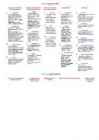
LEXICAL STYLISTIC DEVICES Based on: interaction of lexical and interaction of denotational interaction of primary circumlocution other cases contextual meaning and emotional meaning and secondary meaning 1. EPITHET 1. METAPHOR indicates individual 1. ZEUGMA 1. PERIPHRASIS 1. BATHOS based on similarity of 2 evaluation of sth. Logical "to join" w-d is use of longer spoiling the lofty effect. Function
LEXICOLOGY 1. Size of English vocabulary 1) Old English – 50,000 to 60,000 words Vocabulary of Shakespeare OE – homogeneous; 1/3 of the vocabulary has survived • 884,647 words of running text About 450 Latin loans (Amosova) • 29,000 different words (incl. work, working, Viking invasions added 2,000 worked, which are counted here as separate 2) Middle English – 100,000 – 125,000 words) English becomes heterogeneous (Norman French, • 21,000 words English, Latin), hybrid of Germanic and Romance languages Norman French influence – about 10,000 words, 75 % are still in use (Baugh) Latin influence continues 3) Early Modern English – 200,000 – 250,000 English becomes a polycentric language; polyglot,
English structure revision for the exam 1. Terms Language → A systematic, conventional (tavakohane) use of sounds, signs or written symbols in a human society for communication and self-expression. Human language at all levels is rule- or principle- governed (valitsema) meaning that language corresponds to the grammar. Natural language is usually spoken, while language can also be encoded into symbols (such as letters, morse etc) For example: Estonian, English. Linguistics → The scientific study of human natural language. Broadly, there are three aspects to the study which are Pragmatics (studies the use of language → interested in the gap between the sentence’s meaning and the speaker’s meaning).
Equally crucial, although often overlooked or misapplied, is the dimension of the syntagmatic and paradigmatic axes of linguistic description. Saussure's 'theory of the sign' defined a sign as being made up of the matched pair of signifier and signified. Signifier The signifier is the pointing finger, the word, the sound-image. A word is simply a jumble of letters. The pointing finger is not the star. It is in the interpretation of the signifier that meaning is created. Signified The signified is the concept, the meaning, the thing indicated by the signifier. It need not be a 'real object' but is some referent to which the signifier refers. The thing signified is created in the perceiver and is internal to them. Whilst we share concepts, we do so via signifiers. Whilst the signifier is more stable, the signified varies between people and contexts. The signified does stabilize with habit, as the signifier cues thoughts and images.
words; syntax. Language: a systematic, conventional use of sounds, signs or written symbols in a human society for communication and self-expression. - human language at all levels is rule- or principle-governed. Linguistics: the scientific study of human natural language Synchronic approach to language: Diachronic approach to language: Linguistic competence: Linguistic performance: What is grammar?: "The sounds and sound patterns, the basic units of meaning, such as words, and the rules to combine them to form new sentences constitute the grammar of a language" Prescriptive grammar vs. Descriptive garmmar: Descriptive grammar: the systematic study and description of a language. Descriptive grammar refers to the structure of a language as it is actually used by speakers and writers. Prescriptive grammar: a set of rules and examples dealing with the syntax and word
English lexicology 1. Size of English vocabulary Vocabulary is a sum total of words used in a language by speakers or for dictionary-making. Active and passive vocabulary. The Old English vocabulary was homogenous. There were about 50 000 – 60 000 words, 1/3 of which have survived. o About 450 loans from Latin o About 2000 from the Viking invasions. The Middle-English vocabulary became a heterogeneous hybrid of Germanic and Romanic languages. 100 000 to 125 000 words. o About 10 000 loans from Norman French, 75% are still in use o Continuing Latin influence Early Modern English. 200 000 – 250 000 words
g. Estonian, Latin, Russian, Old English) ending lõpp (käände- ja pöördelõpud) marker tunnus (mitmuse, oleviku, lihtmineviku, tingiva kõneviisi, käskiva kõneviisi, kaudse kõneviisi, umbisikulise tegumoe, ma- tegevusnime, oleviku kesksõna, mineviku kesksõna) derivational affix liide, tuletusliide, tuletusafiks (e.g. postwar, anti-American, wiser, greenish) parts of speech sõnaliigid English Estonian Definition Example noun (proper, common, nimisõna, Refers to words which denote classes and categories of book, water, sincerity, Mary, concrete, abstract) substantiiv things in the world, including people, animals, Estonia
•He took his boots off. •They called the doctor in. apposition a grammatical construction in which two usually adjacent nouns having the same referent stand in the same syntactical relation to the rest of a sentence (as the poet and Burns in “a biography of the poet Burns”) back-reference In grammatical analysis, the term reference is often used to state a relationship of identity which exists between grammatical units, e.g. a pronoun 'refers' to a noun or noun phrase. When the reference is to an earlier part of the discourse, it may be called a 'back-reference' (or anaphora); collective noun Collective noun is the name we give to a group of nouns to refer to them as one entity. A crew of sailors. A flock of birds. A range of mountains. conjunction any member of a small class of words distinguished in manylanguages by their function as connecto rs between words, phrases,clauses, or sentences, as and, because, but, however. content words
Review questions English lexicology Size of English vocabulary. Average speaker 45,000-60,000 words, a total of about 200,000. Core and periphery. English has been heavily influenced by other languages. 31.8 % comes from Old English, 45% comes from French, 16,7% comes from Latin, 4,2% other germanic languages and 2,3 other languages. The very core is mono-syllabic (93 of the first 100 words and the other seven are two-syllabic). The core vocabulary is predominantly germanic. Native and foreign element. Native words belong to very important semantic group (modal verbs-shall, will, can, may; pronouns- I, you, he, my, his; preps- in, out, under; numerals and conjunctions::but, till, as. Native words are head, arms, back; mother, brother, son, wife; snow, rain, wind, sun; cat, sheep, cow; old, young, cold, hot, dark; do, make, go, come, see
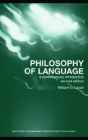
to the main issues and theories in twentieth and twenty-first-century phi- losophy of language, focusing specifically on linguistic phenomena. Topics are structured in four parts in the book. Part I, Reference and Referring, includes topics such as Russell's Theory of Descriptions, Donnellan's distinction, problems of anaphora, the description theory of proper names, Searle's cluster theory, and the causalhistorical theory. Part II, Theories of Meaning, surveys the competing theories of linguistic mean- ing and compares their various advantages and liabilities. Part III, Pragmatics and Speech Acts, introduces the basic concepts of linguistic pragmatics, includes a detailed discussion of the problem of indirect force and surveys approaches to metaphor. Part IV, new to this edition, examines the four theories of metaphor. Features of Philosophy of Language include: · new chapters on Frege and puzzles, inferentialism, illocutionary
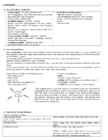
Syllable - is a phonological unit consisting of one or more phonemes. In phonetics a syllable is a unit which consists of a centre, that has little or no obstruction to airflow; it is comparatively louder than other sounds. In phonology syllables are the possible combinations of phonemes. The syllable consists of - onset, nucleus, coda. (every syllable has a nucleus: vowel, syllabic l, or m, n). Rhyme/rime nucleus + coda; the nucleus and the coda constitute a sub-syllabic unit rhyme. Words rhyme, when their nucleus and coda are identical. (E.g 'cr-o-wn', 'd-o-wn'). The hierarchical structure of the syllable: Onset the beginning of the syllable Nucleus/peak the open part of a syllable, generally a vowel. Coda a consonant sound which ends the syllable. Open syllable - has no coda Closed syllable - has a coda! Texts: [t-e-k-s-t-s]- (Consonant, Vowel, Consonant, Consonant, Consonant, Consonant).
Scotland and England merged politically together as Great Britain. English spread to Scotland. · 1607 - the first lasting settlement in North America was established in Virginia, Jamestown. · 1609 - the colonisation of Ulster. (first tried out by Queen Elizabeth I and later continued officially by James I). Ulster was colonised to prevent further rebellion. The Irish were forced to become protestants. Due to these events, we can now see some common features in speech between lowland Scotland and Northern Ireland. · 1620 - the English ship Mayflower sailed to North America from England. The ship failed to reach Virginia and landed in Plymouth instead. Jamestown and Plymouth were now the 2 settlements and grew rapidly. · 17th century - the English began to spread in Southern America as a result of slave trade. New kind of Englishes developed so that slaves and captors could understand eachother
Department of English. In the middle: write your title without quotation marks, and below in the middle write Term Paper. Then a little below write: by Xzzz Xzzzz, and below of that write: Supervisor: Lect. Zxxx Zxxxx. Below in the end write: Tallinn 200X. · title should be not a sentence use only phrases · chapters should have titles (not a sentence but a phrase). After title page comes page 2 and Table of Contents (in the top middle) here you indicate the division of your paper (Introduction, Chapter 1 (with title), etc.). · NB! People who have literary topic should write a Preface (short, normally 1 page long ) and only then comes Table of Contents and there mention your Preface (e.g. Preface, Introduction, Chapter 1 (with title), etc.). · all the following divisions start with a new page (e.g. Preface (1.5 pages), Table of Contents starts with a new page, etc.).
suppletive forms has decreased.In the text: goon to go wenden - to turn Gan was suppletive in Old English, past form: eode.Eode was supplanted by went (past form of wenden) at the end of the Middle English period.To wend has survived in Modern English in phrases such as to wend one's way, we wended homewards (ironic usage). Thus: suppletivity- suppletion different parts of one and the same paradigm come from what were originally different paradigms (different words with close meanings or words in different but close dialects).Suppletion embraces verbs, adjectives, nouns. Be was/were been (Old English beon/wesan) (am, art, is, are); in Old English some suppletive forms were used parallel to one another) Good better best Bad worse worst Much more most Little less least Estonian: hea parem (cf "paras" fitting, in Finnish "the best" - metonymical link), palju - rohkem Finnish: mennä (to go), lähteä (to leave) Estonian: minema, mine, lähen, läksin
He scorns the “literary life” and also the things that normally soften everybody: the romantic love, the memories of the childhood, the nature, etc. Keywords: Larkin, poetry, cruelty, suffering, nature Index Introduction 4 1. Chapter I 5 1.1. Larkin Studies Points of View: Biography and Poetry 5 1.2. Larkin Stylistic Map 8 2. Chapter II 11 2.1 Expressing Himself 11 3. Conclussion 15 4. References 16 INTRODUCTION Philip Larkin is one of the most important English poets of the new Era, due to
CHARACTERISTIC FEATURES OF OLD ENGLISH - 15 monophtongs, (7 long, 7 short, 1 central), 4 diphtongs, 17 consonants. Free variaton of R, and it was pronounced everywhere. Very much Germanic in character. Quite some special consonants that no longer exist. About morphology: synthetic with numerous aglutinating tendencies. System of tenses Germanic, but with a reduction of tenses. Paradigmatic leveling; Stress shift; Word order; Loan words (Old Norse, Old French). Dual pronouns. Determiners - no separate definite article. Strong and weak verbs. Word order relatively free with tendencies towards SVO. SVO, SOV, VSO most common. Adposition and podposition were both possible (eesliide ja tagaliide). About syntax: clauses were joined much simpler than nowadays, using and, then etc. Because of case syncretion the word order in a sentence became much more important to be able to tell the difference between words.
publisher. ISBN 1-59905-201-6 Printed in the United States of America 13 12 11 10 09 08 07 9 8 7 6 5 4 3 2 1 Introduction Grammar is a very old field of study. Did you know that the sentence was first divided into subject and verb by Plato, the famed philosopher from ancient Greece? That was about 2,400 years ago! Ever since then, students all over the world have found it worthwhile to study the structure of words and sentences. Why? Because skill in speaking and writing is the hallmark of all educated people. Lesson by lesson, this book provides basic instruction in the eight parts of speech--nouns, pronouns, verbs, adjectives, adverbs, prepositions, conjunctions, and interjections--as well as the standard patterns of English sentences. All students of English, be they native speakers or those who are studying English as a second language, will profit from the fundamental introduction and review of
12.2012 ESOL Teaching Skills TaskBook. Classroom dynamics: unit 1 a). Available at http://akoaotearoa.ac.nz/download/ng/file/group-4/n2431-esol-teaching-skills- taskbook-unit-1-a---classroom-dynamics.pdf accessed 27.12.2012 III Language teaching methods. · (Traditional: the grammar-translation method/ classical method.) · Traditional: the direct method Youtube: http://www.youtube.com/watch?v=XiQvG-fvzLM Kids lesson (direct method) Language is primarily speech Reading skills are developed through practice with speaking Realia is used to convey the meaning Demonstration instead of translation or explanation Complete sentences instead of vocabulary lists The purpose of language learning is communication Pronunciation Self correction The goals of the teacher are communication, demonstration instead of translation (the teacher used pictures and pointed to yourself....), they studied complete sentences. It is a teacher-centred method. (T
TOEFL WHAT IS THE TOEFL? The TOEFL is a comprehensive English language examination required by more than 3,000 colleges and universities in the United States, Canada, and other parts of the world. In addition, foreign born professionals frequently need a TOEFL score for certification to practice their profession in the United States or Canada. The TOEFL is a timed test that consists of the three sections listed here. THE TOEFL Section 1 Listening Comprehension 50 questions 35 minutes Part A Statements 20 questions Part B Short Dialogs 15 questions Part C Minitalks and Extended Conversations 15 questions Section 2
As well as reorganizing the information in the report the secretary also made a number of changes to the language which the writer had used. You probably noticed that Text 1 contained a number of grammatical and spelling mistakes. If not, look for them now before continuing with this Discussion section. Grammar `AMC's works have gone down' AMC's work has really gone down. (Work is a singular, uncountable noun.) `since five days' for five days (Since is used only with a point of time: since August, since 2001, etc. For a period of time use for.) `trucks have break down' trucks have broken down (The past participle must be used in this construction.)
Leixcology revision questions 1) Composition of english vocabulary Vobabulary is the sum of a total of words used in a language by speekers or used in a dictionary. English vocabulary cosists of six units: Simple words- fall Complex words- prefall Phrasal word- face up to Compound word- face lift Multiword expression- face the music Shortened forms- prefab (prefabely?) 2) Core and pherifery English has been heavily influenced by other languages. 31.8 % comes from old english, 45% comes from french, 16,7% comes from latin, 4,2% other germanic languages and 2,3 other languages
Yes, we own a BMW. 9 ____________________________________________________________________________________________ I don't know what the word means. Look it up in a dictionary. 10 ____________________________________________________________________________________________ No, I don't like the Spice Girls. Marks: /10 Words, words, words 4 Complete these sentences using the correct form of the words below. There is one extra word which you do not need to use. aggressive nervous dull funny easy-going ambitious expensive usual experienced successful practical 1 She told a very ________________________ joke and everyone laughed. 2 She's a very ________________________ person. She will do anything to become famous. 3 They didn't give him the job because he was ________________________
(www.ahdictionary.com). How did it get its name? It is difficult to say when the term submarine sandwich was first used for these types of large sandwiches. Although it is quite obvious that the sandwich got its name because of its long shape that resembles submarines, there are several myths around the origin of the term. The first theory is that at the beginning of World War II a sandwich was specifically created in a restaurant in Scollay Square in Boston to appeal to the mean serving at Charlestown Navy Yard. Because it resembled a submarine for its shape, people began to call them “submarine sandwiches”. According to another version, the sandwich was created during World War II by an Italian shopkeeper named Benedetto Capaldo in New London, CT. When the navy servicemen from the submarine base in the town of Groton across the river began ordering 500 sandwiches a day, the sandwich became irrevocably associated with submarines.
Louise Erdrich Love Medicine Assignment 1 (pages 142) 1. Define the following words and expressions (considering the context) and reproduce (in your own words) the situations in which they appear in the book: a beacon (2) (AmE) a fire or light set up in a high or prominent position as a warning, signal, or celebration, it appears as a metaphor to describe a white egg in her hand. Situation: June walked through the door and toward blue egg in the white hand of Andy, which she compares with a beacon in the murky air. a turtleneck (2) - Example
The Literary Analyses of "Beowulf" "Beowulf" is a heroic epic that was written down around 1000 AD in Old English. The poem's composition, however, is considered to date back to about 700 AD, meaning that it is from the Anglo-Saxon literary period. The epic was most probably created by scop(s) who composed it for entertainment and in praise of their master. Over the three centuries the epic was being changed and adapted by them, as it was inherited by word of mouth. The events occurring in the poem are set in Southern Scandinavia, Geatland and Denmark, in the fifth and sixth centuries. It should be observed that the narrative
Automated Essay Scoring 3 Automated essay scoring is a measurement technology in which computers evaluate written work (Shermis & Burstein, 2003). Most of the initial applications have been in English, but past work has been applied to Japanese (Kawate-Mierzejewska, 2003, March), Hebrew (Vantage Learning, 2001), and Bahasa Malay (Vantage Learning, 2002). Computers do not "understand" the written text being evaluated Unlike humans, a computer cannot interpret the play on words, and infer that the predicate in the answer (i.e., "ajar") is being cleverly used as a noun (i.e., "a jar"). What the computer does in an AES context is to analyze the written text into its observable components. Different AES systems evaluate different numbers of these components. Page and Peterson (1995) referred to these elements as "proxes" or approximations for underlying "trins" (i.e., intrinsic characteristics) of writing. It is the
Written task 2 - Outline Prescribed question: How does the text conform to, or deviate from, the conventions of a particular genre and for what purpose? Title of the text for analysis: I have a dream by Martin Luther King Jr, 1963. The part of the course to which the task refers: Part 2: Language and presentation of speeches and campaigns. My critical response will: • Analyse the rhetorical and literary devices used in Martin Luther King’s speech ‘’I have a dream’’ and state the reasons for why he had made use of them. • Examine the impact these devices have on the reader/listener. • State whether the speech conforms to, or deviates from, the conventions of a one. Martin Luther King’s speech ‘’I have a dream’’ has by far been one of the most powerful and memorable speeches ever given. He was the leader of the Civil Rights Movement and fought for the rights and social
Thus, with automation, for example, the new patterns of human association tend to eliminate jobs, it is true. That is the negative result. Positively, automation creates roles for people, which is to say depth of involvement in their work and human association that our preceding mechanical technology had destroyed. Many people would be disposed to say that it was not the machine, but what one did with the machine, that was its meaning or message. In terms of the ways in which the machine altered our relations to one another and to ourselves, it mattered not in the least whether it turned out cornflakes or Cadillacs. The restructuring of human work and association was shaped by the technique of fragmentation that is the essence of machine technology. The essence of automation technology is the opposite. It is integral and decentralist in depth, just as the machine was fragmentary, centralist, and superficial in its
 annaabi.ee